



Reactive Oxygen Species (ROS)
Reactive oxygen species (ROS), such as superoxide anion (O2-), hydrogen peroxide (H2O2), and hydroxyl radical (HO•), consist of radical and non-radical oxygen species formed by the partial reduction of oxygen. Cellular ROS are generated endogenously during mitochondrial oxidative metabolism as well as in cellular response to xenobiotics, cytokines, and bacterial invasion.
ROS also activates MAPK pathways by the direct inhibition of MAPK phosphatases. Through PTEN, the PI3K pathway is subject to reversible redox regulation by ROS generated by growth factor stimulation. The activation of autophagy may be a cellular defense mechanism in response to ROS.
All Product Categories
-
Reactive Oxygen Species (ROS) Inhibitors
(1091)
View all products
-
Reactive Oxygen Species (ROS) Agonists
(37)
View all products
-
Reactive Oxygen Species (ROS) Antagonists
(2)
View all products
-
Reactive Oxygen Species (ROS) Activators
(525)
View all products
-
Reactive Oxygen Species (ROS) Modulators
(22)
View all products
-
Reactive Oxygen Species (ROS) MDM2 Inhibitor
(1)
View all products
-
Reactive Oxygen Species (ROS) Inducers
(645)
View all products
-
Reactive Oxygen Species (ROS) Controls
(5)
View all products
-
Reactive Oxygen Species (ROS) Substrates
(3)
View all products
-
Reactive Oxygen Species (ROS) Related Products (2859)
Related Products (2859)

-
Antibodies (8)
-
Aminoadipic acid (Standard)
 0 ImagesAminoadipic acid (Standard) is the analytical standard of Aminoadipic acid. This product is intended for research and analytical applications. Aminoadipic acid is an orally active lysine oxide derivative. Aminoadipic acid induces ROS generation, increases free Ca2+, decreases SOD, and activates TXNIP/NLRP3 pathway. Aminoadipic acid has pro-inflammatory effects. Aminoadipic acid can be used in atherosclerosis research[1][2][3][4].
-
1-Methoxynaphthalene
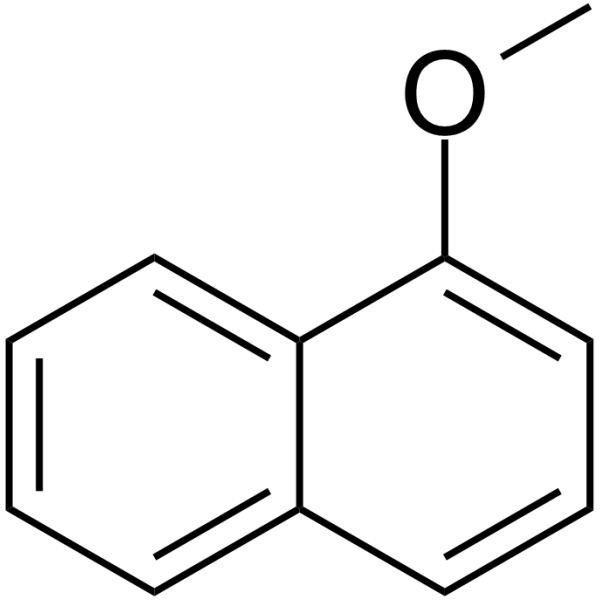 0 Images1-Methoxynaphthalene is used as the substrate to investigate the activity of cytochrome c peroxidase (CcP). 1-Methoxynaphthalene also can be used to synthesize prenyl naphthalen-ols.
-
Liensinine perchlorate
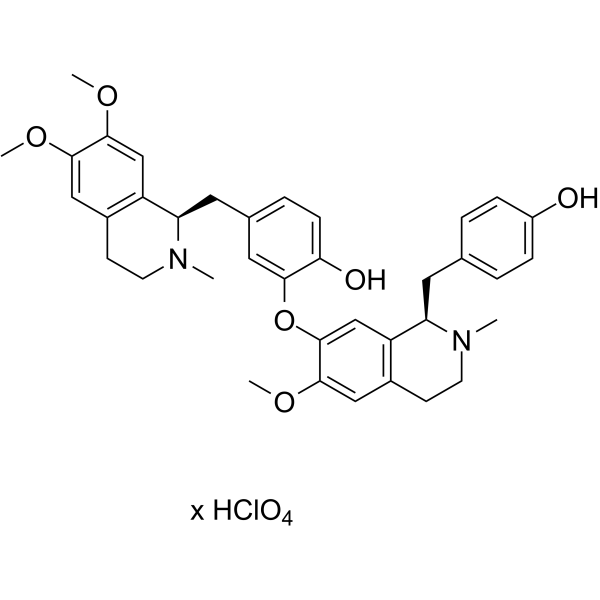 0 ImagesLiensinine perchlorate is a bisbenzylisoquinoline alkaloid. By inhibiting the PI3K/AKT and JNK/p38-MAPK signaling pathways, Liensinine perchlorate suppresses autophagy and apoptosis, clears Aβ, and exerts anti-inflammatory, antioxidant and neuroprotective effects. Liensinine perchlorate activates AMPK and inhibits the expression of HIF-1α and VEGF, thereby suppressing angiogenesis. Liensinine perchlorate exerts anti-tumor effects through ROS-mediated inhibition of the JAK2/STAT3 signaling pathway. Liensinine perchlorate can be used for the research of diseases such as Alzheimer's disease, hepatocellular carcinoma, osteosarcoma, sepsis-induced organ injury and stroke.
-
Methyl 3-hydroxy-4,5-dimethoxybenzoate
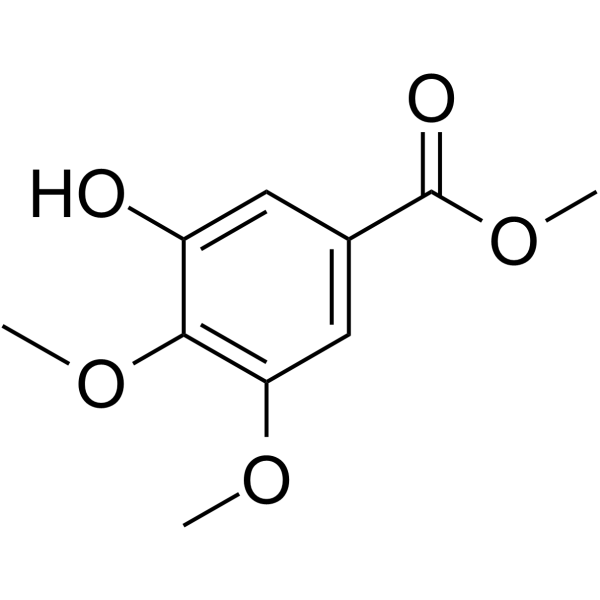 0 ImagesMethyl 3-hydroxy-4,5-dimethoxybenzoate is a gallic acid derivant that can be isolated from myricaria Laxiflora. Methyl 3-hydroxy-4,5-dimethoxybenzoate shows obvious antimicrobial activities. Methyl 3-hydroxy-4,5-dimethoxybenzoate shows fairly active for oxidation resistance in the presence of H2O2.
-
Pyridinium bisretinoid A2E
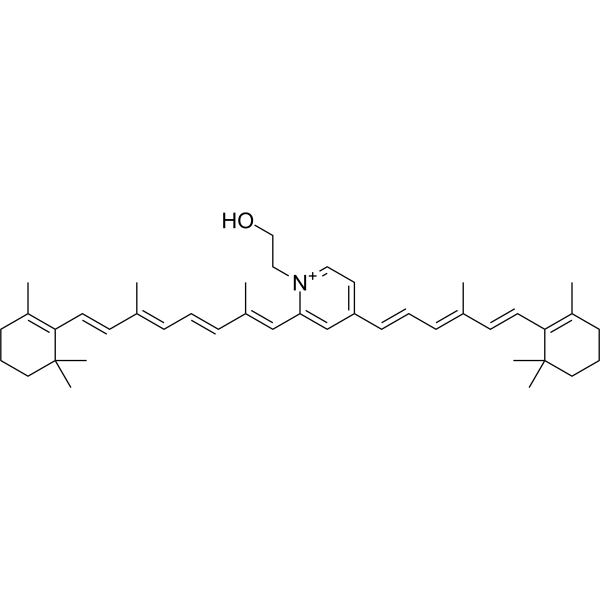 0 ImagesCat. No.: HY-134928CAS No.: 173449-96-2Synonyms: A2EPyridinium bisretinoid A2E (A2E) is a fluorophore that can be isolated from lipofuscin in the retinal pigment epithelium (RPE). Pyridinium bisretinoid A2E is an initiator of blue-light-induced apoptosis. Photoactivation of Pyridinium bisretinoid A2E mediates autophagy and the production of reactive oxygen species. Pyridinium bisretinoid A2E can be used in the study of retinal degenerative diseases.
-
Sinigrin hydrate
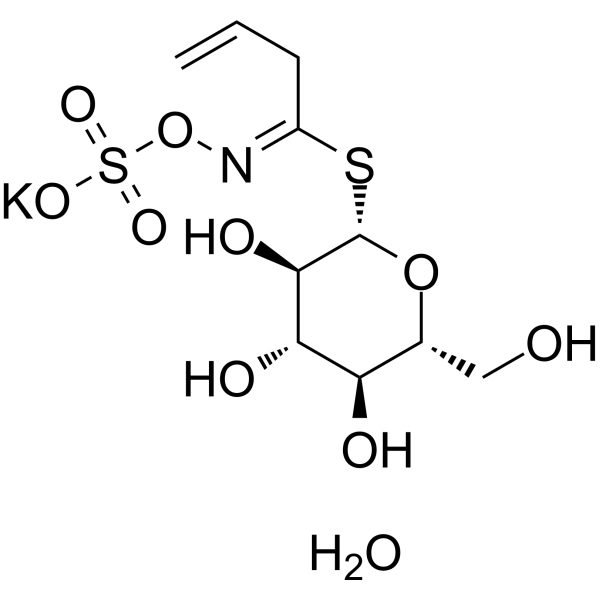 0 ImagesSynonyms: Allyl-glucosinolate hydrate; 2-Propenyl-glucosinolate hydrateSinigrin (Allyl-glucosinolate) hydrate is an orally active glucosinolate found in cruciferous plants. Sinigrin hydrate possesses multiple activities such as anti-cancer, antibacterial, antifungal, anti-inflammatory, antioxidant, and inhibition of fat synthesis. Sinigrin hydrate can be used in the research of tumors, inflammatory, and metabolic diseases.
-
Methylophiopogonone B
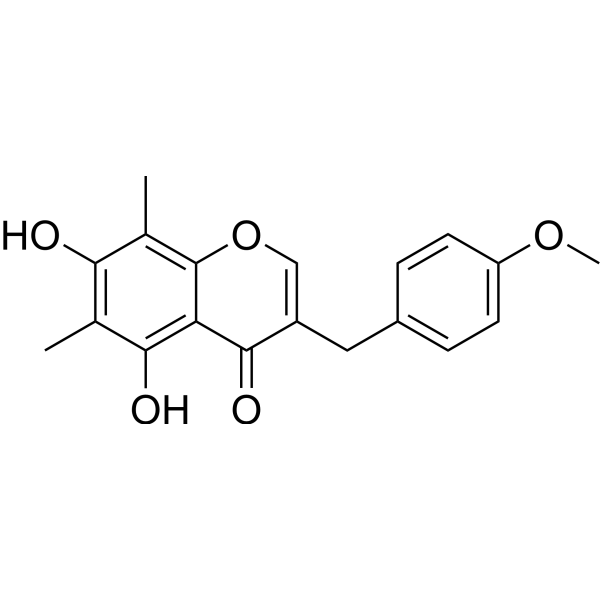 0 ImagesMethylophiopogonone B, a homoisoflavonoidal compound that could be isolated from Ophiopogonis Tiber, could scavenge •OH and H2O2 in vitro to a certain extent.
-
Pyruvic acid sodium (Standard)
 0 ImagesSynonyms: Sodium 2-oxopropanoate (Standard); Acetylformic acid sodium (Standard)Sodium 2-oxopropanoate (Standard) is the analytical standard of Sodium 2-oxopropanoate. This product is intended for research and analytical applications. Sodium 2-oxopropanoate (Sodium pyruvate), a three-carbon metabolite of Glucose, is a compound produced in the glycolytic pathway. Sodium 2-oxopropanoate is a free radical scavenger that can scavenge ROS.
-
Corza6
 0 ImagesCat. No.: HY-P10817Corza6 is a potent and selective human voltage-gated proton channel (hHv1) peptide inhibitor. Corza6 binds to the external voltage sensor domain (VSD) loop in hHv1 with a Kd of ~1 nM at the natural, hyperpolarized resting membrane potential (RMP) of mammalian cells. Corza6 allows capacitation in sperm and permits sustained reactive oxygen species (ROS) production in white blood cells (WBCs).
-
Anti-inflammatory agent 38
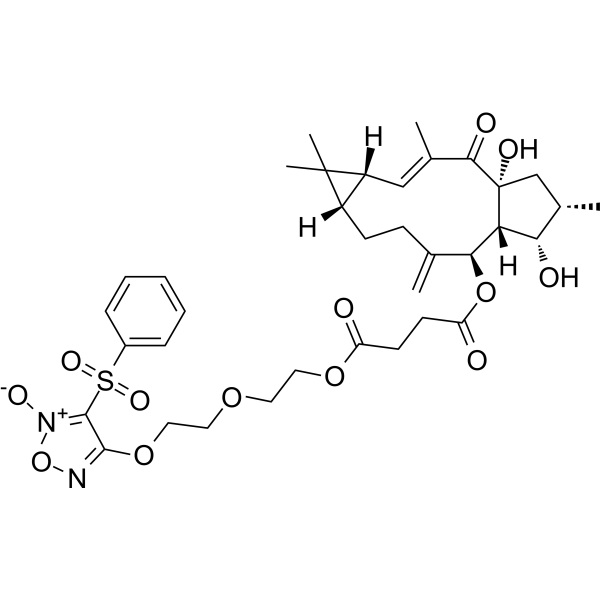 0 ImagesAnti-inflammatory agent 38 (compound 23d) is a potent Nrf2/HO-1 pathway inhibitor, with an IC50 value of 0.38 μM for NO. Anti-inflammatory agent 38 can significantly reduce the level of ROS in cells. Anti-inflammatory agent 38 can be used for researching anti-inflammatory.
-
m-THPP
 0 ImagesCat. No.: HY-W075248CAS No.: 22112-79-4Synonyms: Tetra(3-hydroxyphenyl)porphyrin; 3-THPPm-THPP (Tetra(3-hydroxyphenyl)porphyrin; 3-THPP) is a photosensitizer. m-THPP can weakly induce ROS production and shows antitumor and antibacterial activity. m-THPP can be used for the research of photodynamic therapy (PDT).
-
Phoxim
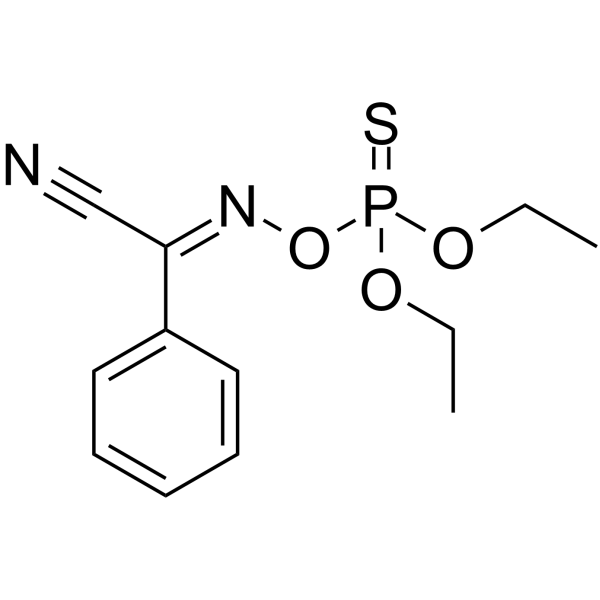 0 ImagesCat. No.: HY-B0819CAS No.: 14816-18-3Phoxim is an organophosphorus pesticide and an orally active inhibitor of cholinesterase and CYP3A, which induces neurotoxicity in Caenorhabditis elegans and causes nephrotoxicity characterized by glomerular atrophy and interstitial fibrosis. Phoxim induces inhibition of the autophagy pathway. Phoxim induces dopaminergic neuron degeneration and exacerbates Aβ-induced paralysis. Phoxim damages enterocytes and disrupts intestinal barrier integrity. Phoxim induces ROS accumulation. Phoxim induces mitochondrial apoptosis, involving upregulation of Bad, Bax, caspase-3, and caspase-9 and downregulation of Bcl-2. Phoxim inhibits mitochondrial functional enzymes (COX, Ca2+-Mg2+-ATPase, SDH). Phoxim upregulates Nrf2 mRNA expression in the jejunal mucosa. Phoxim increases TNF-α and decreases IL-6 and IL-8 in the intestinal mucosa. Phoxim alters gut microbial composition by increasing total bacteria and Escherichia coli and reducing Lactobacillus. Phoxim enhances energy metabolism in silver carp by upregulating key glycolytic and gluconeogenic enzymes. Phoxim is used in research on neurodegenerative diseases, nephrotoxicity, intestinal oxidative stress and barrier dysfunction, and bacterial sepsis.
-
LY231617
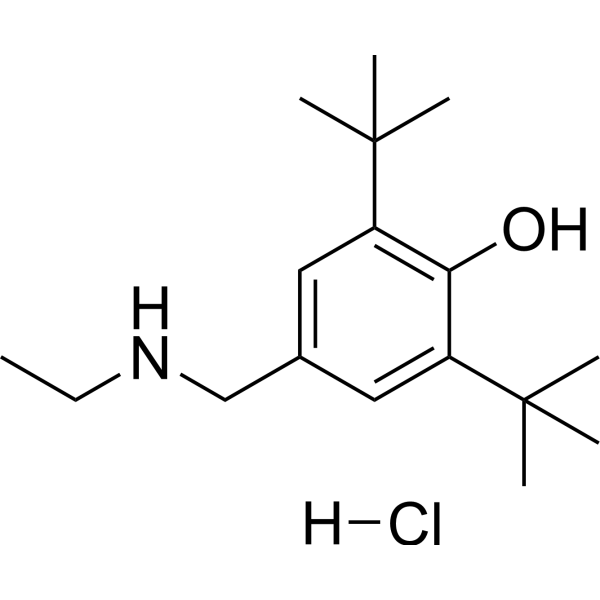 0 ImagesLY231617 is a potent and blood-brain barrier penetrable antioxidant. LY231617 is a neuroprotective agent in brain, it can be used for the research of nervous disease.
-
Dapsone-13C12
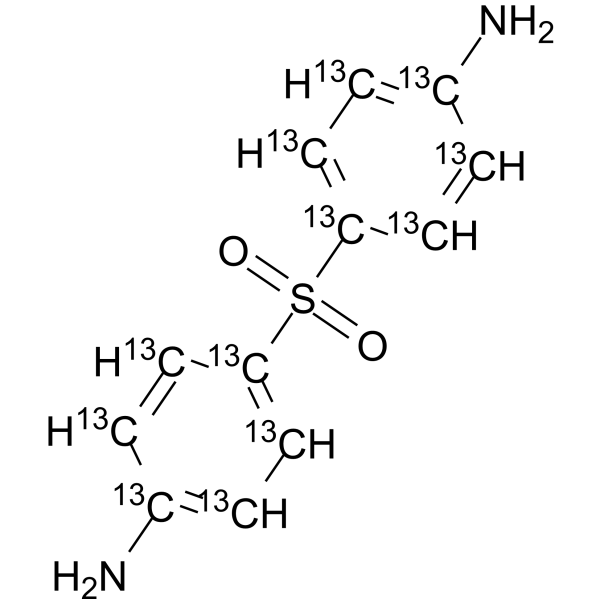 0 ImagesSynonyms: 4,4′-Diaminodiphenyl sulfone-13C12; DDS-13C12Dapsone-13C12 is the 13C12 labeled Dapsone (HY-B0688). Dapsone (4,4′-Diaminodiphenyl sulfone) is an orally active and blood-brain penetrant sulfonamide antibiotic with bacteriostatic, antimycobacterial and antiprotozoal activities. Dapsone exerts effective antileprosy activity and inhibits folate synthesis in cell extracts of M. leprae. Dapsone is used for dermatologic disorder research, including leprosy, dermatitis herpetiformis, acne vulgaris et al.
-
Corza6 TFA
 0 ImagesCat. No.: HY-P10817ACorza6 TFA is a potent and selective human voltage-gated proton channel (hHv1) peptide inhibitor. Corza6 TFA binds to the external voltage sensor domain (VSD) loop in hHv1 with a Kd of ~1 nM at the natural, hyperpolarized resting membrane potential (RMP) of mammalian cells. Corza6 TFA allows capacitation in sperm and permits sustained reactive oxygen species (ROS) production in white blood cells (WBCs).
-
Nrf2-IN-4
 0 ImagesCat. No.: HY-175209CAS No.: 2417486-06-5Nrf2-IN-4 is a Nrf2 inhibitor. Nrf2-IN-4 induces ferroptosis via NRF2 inhibition. Nrf2-IN-4 disrupts cellular iron homeostasis, facilitates ferritin degradation, and ultimately triggers ferroptosis. Nrf2-IN-4 induces lysosome activation by promoting iron-dependent ROS production and lysosomal acidification. Nrf2-IN-4 demonstrates significant antitumor efficacy. Nrf2-IN-4 can be used for the study of breast cancer.
-
Soyasaponin Aa
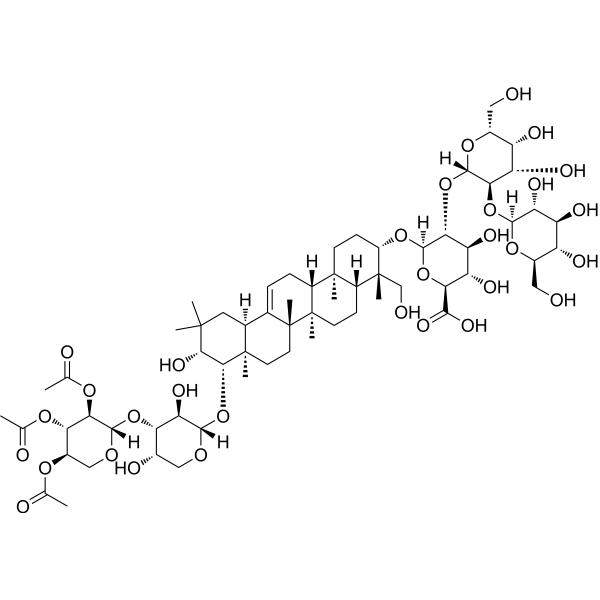 0 ImagesSoyasaponin Aa is a soyasaponin that can be found in soy. Soyasaponin Aa suppresses PPARγ transcriptional activity, reduces PPARγ and C/EBPα expression, inhibits adipocyte differentiation and lipid accumulation, and reduces adipogenic marker gene expression. Soyasaponin Aa reduces hydrogen peroxide-induced reactive oxygen species (ROS) production and malondialdehyde levels. Soyasaponin Aa exhibits cellular antioxidant activity. Soyasaponin Aa can be used for the research of obesity.
-
NCI-006
 0 ImagesNCI-006 is an orally active lactate dehydrogenase (LDH) inhibitor (LDHA IC50 = 0.06 μM; LDHB IC50 = 0.03 μM). NCI-006 inhibits intratumoral LDH activity, lactate production, and tumor growth in a mouse pancreatic cancer model. NCI-006 inhibits glycolysis and induces apoptosis in vitro. NCI-006 enhances the radiosensitivity of glycolytic tumor cell lines while sparing non-glycolytic/normal cells (1522, skin fibroblasts) in combination with ionizing radiation (IR). NCI-006 exhibits synergistic antitumor effects in combination with IACS-010759 (HY-112037) against colorectal and gastric cancers. NCI-006 targets glycolysis by inhibiting lactate dehydrogenase impairs tumor growth in an Ewing sarcoma model.
-
LM-021
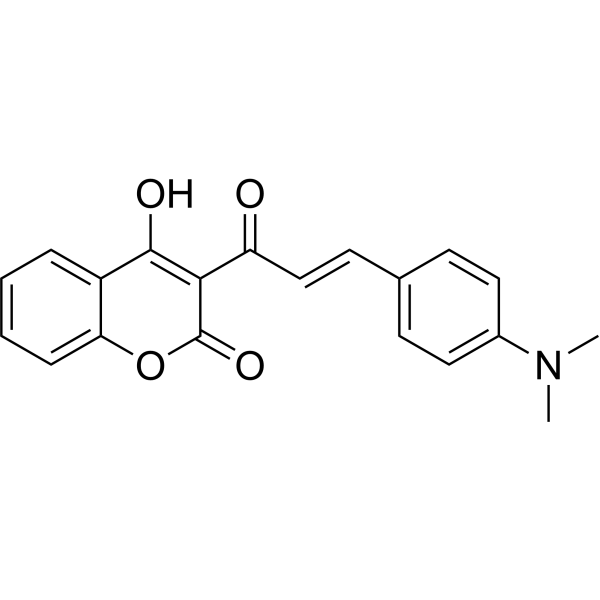 0 ImagesLM-021 is a coumarin-chalcone derivative with anti-aggregatory, antioxidant, neuroprotective and anti-inflammatory properties which suppresses nitric oxide (NO), IL-1β, IL-6, TNF-α production, CD68 antigen (CD68) and histocompatibility-2 (MHCII) expression. LM-021 also attenuates the increase of caspase 1 activity, lactate dehydrogenase release and ROS level. LM-021 can be used for neurological research.




