



Moxifloxacin Hydrochloride
Based on 23 publication(s) in Google Scholar
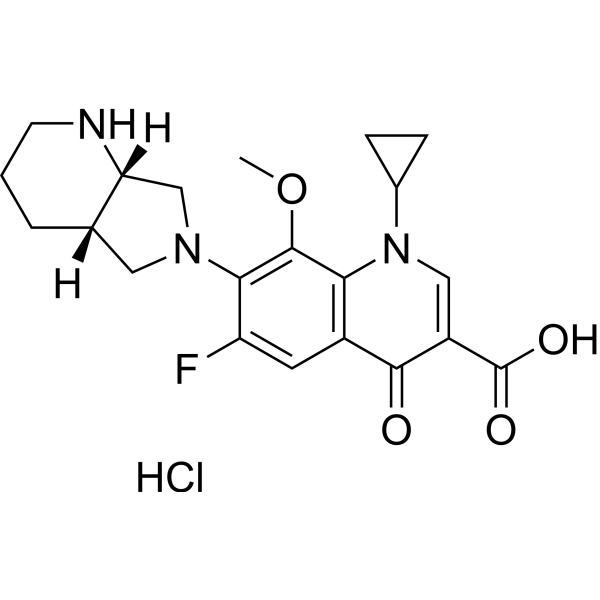
Moxifloxacin Hydrochloride (BAY 12-8039) is an oral 8-methoxyquinolone antimicrobial for use in the treatment of acute bacterial sinusitis, acute bacterial exacerbations of chronic bronchitis, and community-acquired pneumonia.
For research use only. We do not sell to patients.
- Purity : 99.99%
- CAS No.: 186826-86-8
- Formula: C21H25ClFN3O4
- Molecular Weight:437.89
-
Storage:
4°C, sealed storage, away from moisture and light
* In solvent : -80°C, 6 months; -20°C, 1 month (sealed storage, away from moisture and light)

To place orders, for customer services and technical support, please contact: MedChemExpress USA
Tel: 609-228-6898 E-mail: [email protected] [email protected]


-
 Biological Activity
-
Chemical Information
-
Solvent & Solubility
- Purity & Documentation
- References
-
 Help & FAQs


-
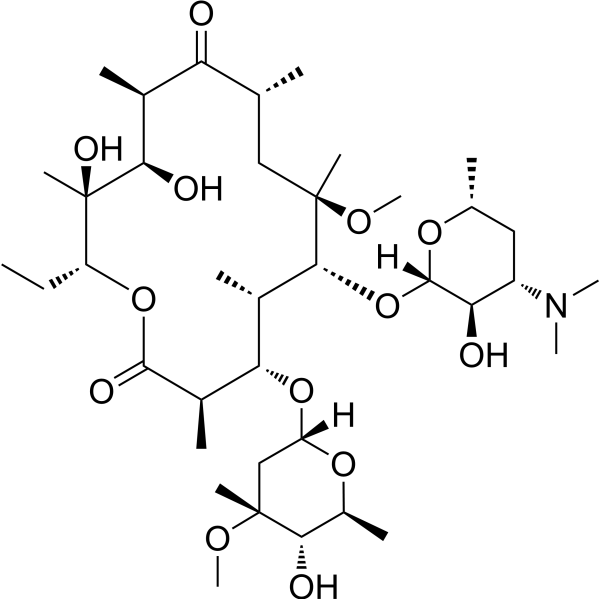
HY-17508
Clarithromycin -
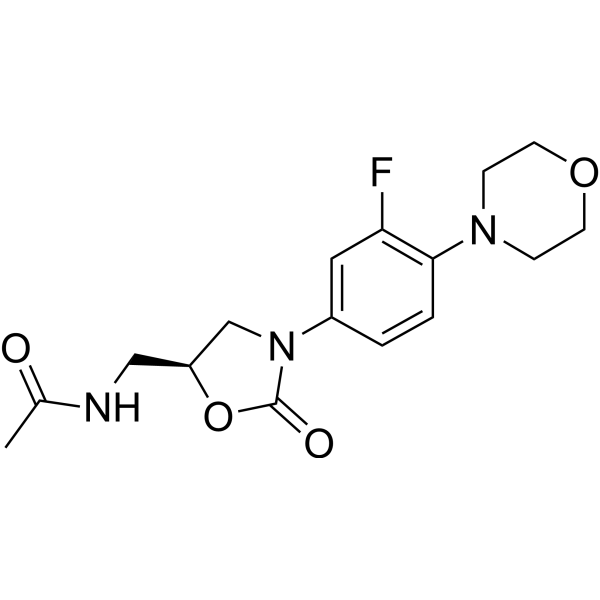
HY-10394
Linezolid -
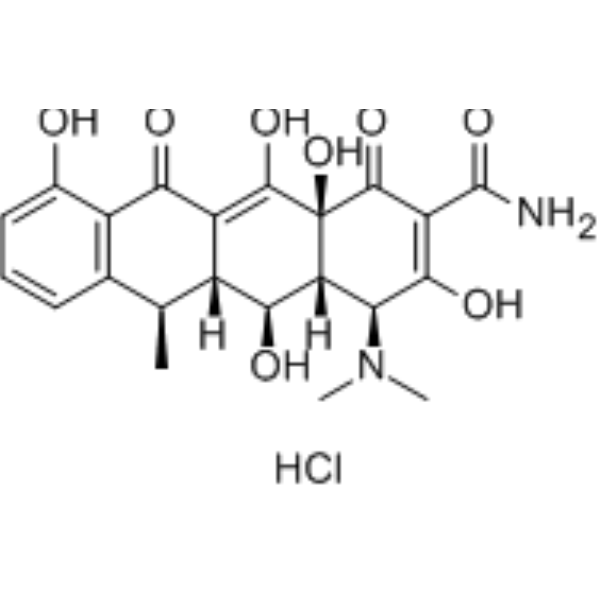
HY-N0565A
Doxycycline hydrochloride -
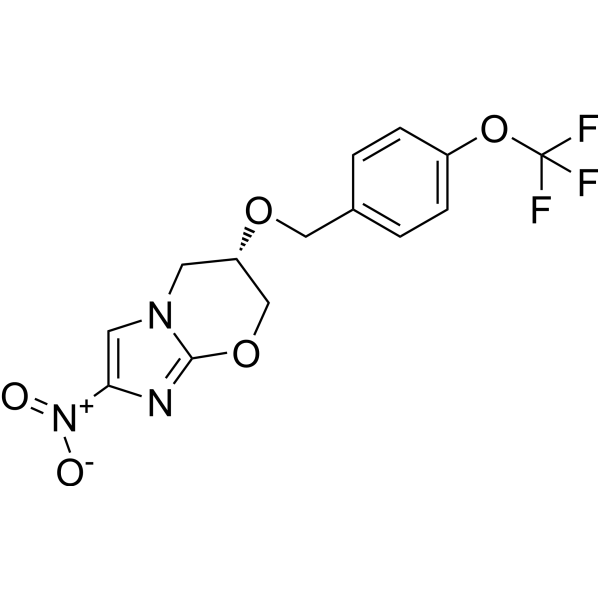
HY-10844
Pretomanid -
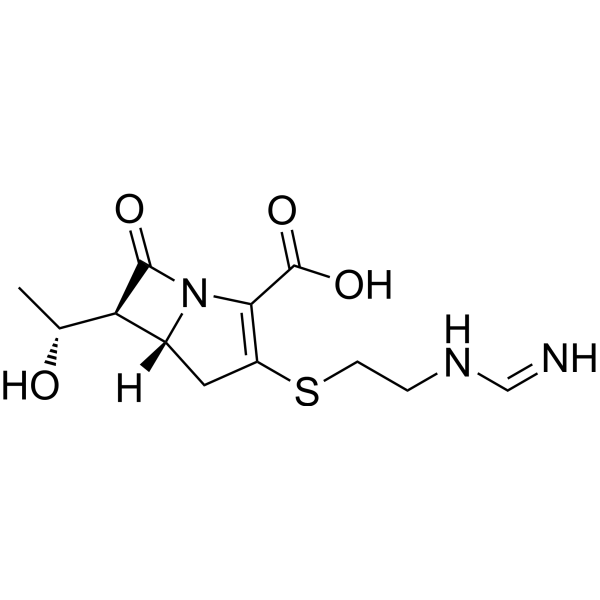
HY-B1369A
Imipenem -
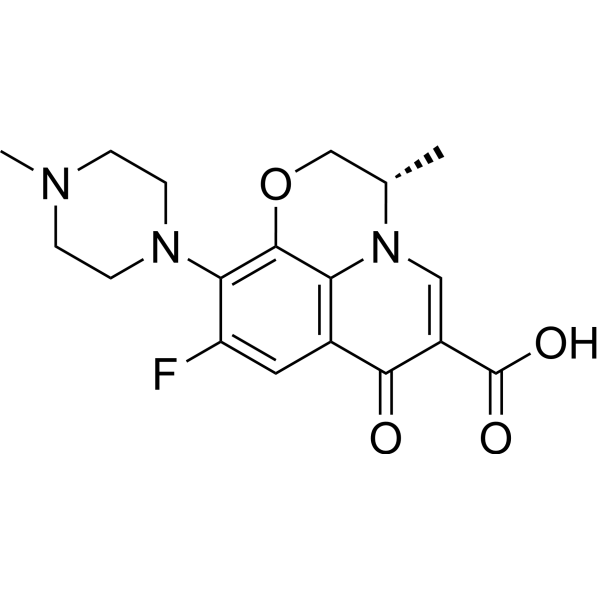
HY-B0330
Levofloxacin -
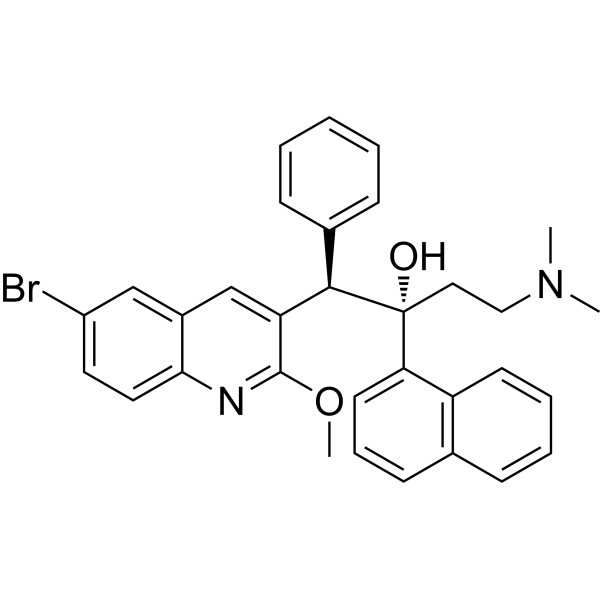
HY-14881
Bedaquiline -
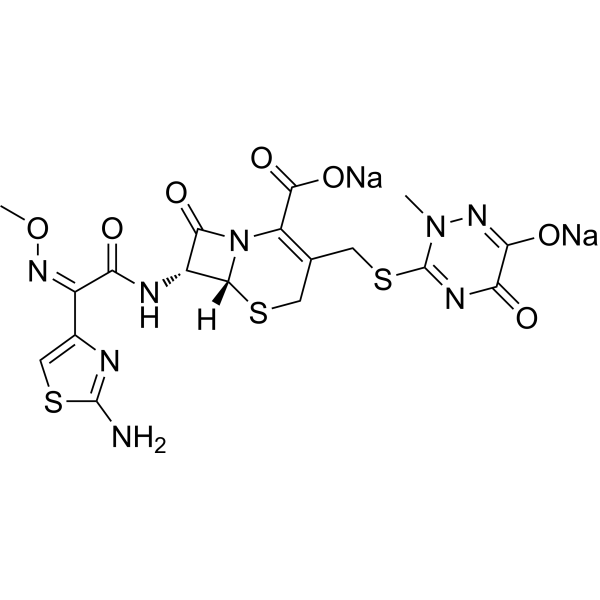
HY-B0712B
Ceftriaxone sodium salt -
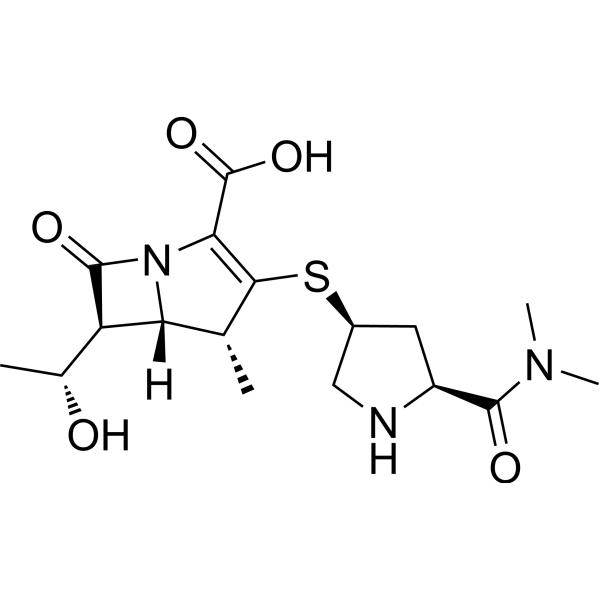
HY-13678
Meropenem -
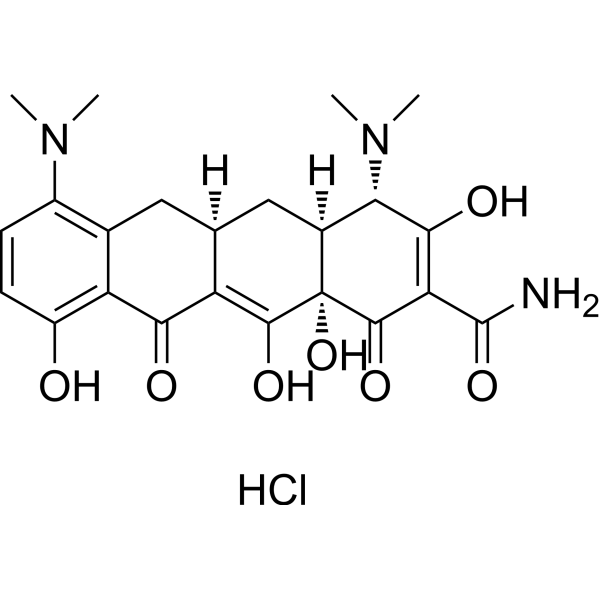
HY-17412
Minocycline hydrochloride -
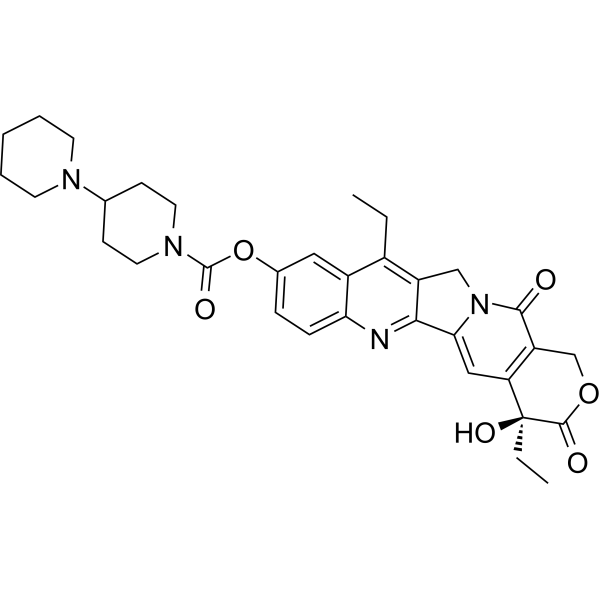
HY-16562
Irinotecan -
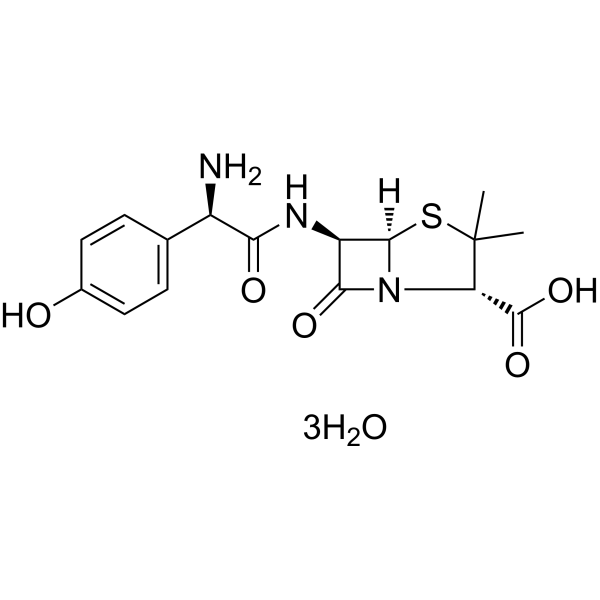
HY-B0467B
Amoxicillin trihydrate
Publications Citing Use of MedChemExpress (MCE) Moxifloxacin Hydrochloride
More- Signal Transduct Target Ther. 2025 Dec 15;10(1):406. [Abstract]
- Nat Microbiol. 2023 Mar;8(3):410-423. [Abstract]
- Nat Commun. 2022 Mar 2;13(1):1116. [Abstract]
- mLife. 2025 Apr 15;4(2):155-168. [Abstract]
- Cell Mol Life Sci. 2022 Jul 22;79(8):441. [Abstract]
- Int J Pharm. 2026 Jan 5:687:126356. [Abstract]
- J Clin Microbiol. 2025 Aug 20:e0084125. [Abstract]
- Antibiotics (Basel). 2022 Feb 1;11(2):192. [Abstract]
- Molecules. 2025 Mar 9;30(6):1224. [Abstract]
- FASEB J. 2026 Feb 28;40(4):e71586. [Abstract]
- Antimicrob Agents Chemother. 2025 Sep 11:e0079525. [Abstract]
- Antimicrob Agents Chemother. 2025 Jul 2;69(7):e0024925. [Abstract]
- Antimicrob Agents Chemother. 2024 Dec 5;68(12):e0094524. [Abstract]
- Antimicrob Agents Chemother. 2024 Dec 5;68(12):e0105124. [Abstract]
- Microbiol Spectr. 2025 Jul;13(7):e0307424. [Abstract]
- ACS Chem Biol. 2022 Jan 21;17(1):39-53. [Abstract]
- Water. 2025 Jun 6.
- Infect Drug Resist. 2021 Sep 14;14:3729-3736. [Abstract]
- SSRN. 2025 Oct 14.
- SSRN. 2025 Oct 20.
- Authorea. 2025 Sep 17.
- bioRxiv. 2024 Nov 06.
- Universität zu Lübeck. 2022.
 Customer Validation & Images

-
Cell Proliferation/Viability Assay

-
WB

-
Cell Imaging/Staining

-
Apoptosis Analysis

-
IF

All Antibiotic Isoforms
More

Biological Activity
Description
IC50 & Target
|
Quinolone |
In Vitro
The in vitro activities of Moxifloxacin Hydrochloride (BAY 12-8039) and Amoxicillin are compared by time-kill curve and inhibition of intracellular growth experiments by using a model of bone marrow-derived mouse macrophages infected by L. monocytogenes EGDe. Moxifloxacin acts much more rapidly, beginning to exert its effects in the first 3 h and achieving complete broth sterilization within 24 h of incubation. Moxifloxacin appears to have a protective effect against macrophage lysis, as many cells are still viable after 24 h of incubation[3].
MedChemExpress (MCE) has not independently confirmed the accuracy of these methods. They are for reference only.
In Vivo
MedChemExpress (MCE) has not independently confirmed the accuracy of these methods. They are for reference only.
-
Animal Model:144 white male Wistar rats (18-22 weeks; 300-400 g) infected Stenotrophomonas maltophilia[4]
-
Dosage:12 mg/kg
-
Administration:Intravenous injection; once per day, twice per day, three times per day; for 7 days
-
Result:Showed considerably less bacterial overgrowth in the spleens and lungs and without being toxic.


Chemical Information
-
CAS No. 186826-86-8
-
Appearance Solid
-
Molecular Weight 437.89
-
Formula C21H25ClFN3O4
-
Color Light yellow to green yellow
-
SMILES
O=C(C1=CN(C2CC2)C3=C(C=C(F)C(N(C4)C[C@]5([H])[C@@]4([H])CCCN5)=C3OC)C1=O)O.Cl
-
Synonyms
BAY 12-8039
-
Shipping
Room temperature in continental US; may vary elsewhere.
-
Storage
4°C, sealed storage, away from moisture and light
* In solvent : -80°C, 6 months; -20°C, 1 month (sealed storage, away from moisture and light)


Publications (23)
-
Journal Impact Factor
-
Most Recent
-
Signal Transduct Target Ther
Selective depletion of tumor-associated SAMHD1 enhances chemotherapeutic efficacy and antitumor immune responses. [Abstract]2025 Dec 15;10(1):406. PMID: 41392286 -
Nat Microbiol
Characterization of antibiotic resistomes by reprogrammed bacteriophage-enabled functional metagenomics in clinical strains. [Abstract]2023 Mar;8(3):410-423. PMID: 36759752 -
Nat Commun
Antimicrobial resistance and population genomics of multidrug-resistant Escherichia coli in pig farms in mainland China. [Abstract]2022 Mar 2;13(1):1116. PMID: 35236849 -
mLife
Identification of a phenyl ester covalent inhibitor of caseinolytic protease and analysis of the ClpP1P2 inhibition in mycobacteria. [Abstract]2025 Apr 15;4(2):155-168. PMID: 40313980 -
Cell Mol Life Sci
2022 Jul 22;79(8):441. PMID: 35864358
Moxifloxacin Hydrochloride purchased from MedChemExpress. Usage Cited in: Cell Mol Life Sci. 2022 Jul 22;79(8):441. [Abstract]
Moxifloxacin Hydrochloride (0.8, 1.6, 3.2, 6.3, 12.5, 25, 50, 100 μM; 10 days) significantly decreased the death rate of the SMA MNs, at levels similar to the healthy cells.
Moxifloxacin Hydrochloride purchased from MedChemExpress. Usage Cited in: Cell Mol Life Sci. 2022 Jul 22;79(8):441. [Abstract]
Moxifloxacin Hydrochloride (75 mg/kg; s,c,; daily from P2 to P12) increased the protein expression of SMN in the spinal cord of delta 7 mice.
Moxifloxacin Hydrochloride purchased from MedChemExpress. Usage Cited in: Cell Mol Life Sci. 2022 Jul 22;79(8):441. [Abstract]
Moxifloxacin Hydrochloride (75 mg/kg; s,c,; daily from P2 to P12) increased stereological MN counts in the lumbar (L3–L5) spinal cord tract of delta 7 mice.
Moxifloxacin Hydrochloride purchased from MedChemExpress. Usage Cited in: Cell Mol Life Sci. 2022 Jul 22;79(8):441. [Abstract]
Moxifloxacin Hydrochloride (75 mg/kg; s,c,; daily from P2 to P12) increased the percentage of Cleaved Caspase 3-positive cells in the ventral horns of the lumbar spinal cord tract (L1-L3)of delta 7 mice.
Moxifloxacin Hydrochloride purchased from MedChemExpress. Usage Cited in: Cell Mol Life Sci. 2022 Jul 22;79(8):441. [Abstract]
Moxifloxacin Hydrochloride (75 mg/kg; s,c,; daily from P2 to P12) significantly reduced the percentage of GFAP-immunopositive profile density by approximately 48% in delta 7 mice with respect to the control group in the ventral horns of the lumbar spinal cord tract of delta 7 mice.
-
Int J Pharm
Modelling lung permeability of pharmaceuticals: The effectiveness of biomimetic open tubular capillary electrochromatography and immobilised artificial membrane chromatography coupled with mass spectrometry. [Abstract]2026 Jan 5:687:126356. PMID: 41205685 -
J Clin Microbiol
Luciferase reporter mycobacteriophage (TM4:: GeNL) enables rapid assessment of drug susceptibilities and inducible macrolide resistance in Mycobacterium abscessus complex. [Abstract]2025 Aug 20:e0084125. PMID: 40833127 -
Antibiotics (Basel)
Antibacterial Activity of the Novel Drug Gepotidacin against Stenotrophomonas maltophilia-An In Vitro and In Vivo Study. [Abstract]2022 Feb 1;11(2):192. PMID: 35203795 -
Molecules
Seeking Correlation Among Porin Permeabilities and Minimum Inhibitory Concentrations Through Machine Learning: A Promising Route to the Essential Molecular Descriptors. [Abstract]2025 Mar 9;30(6):1224. PMID: 40142001 -
FASEB J
Moxifloxacin Inhibits Neutrophil Responses to Immune Complexes and Ameliorates Skin Inflammation in a Model of Pemphigoid Diseases. [Abstract]2026 Feb 28;40(4):e71586. PMID: 41676900 -
Antimicrob Agents Chemother
Incorporation of macrophage immune stresses into an intracellular assay of drug tolerance in Mycobacterium tuberculosis. [Abstract]2025 Sep 11:e0079525. PMID: 40934365 -
Antimicrob Agents Chemother
An enoyl-ACP reductase inhibitor, NITD-916, expresses anti- Mycobacterium abscessus activity. [Abstract]2025 Jul 2;69(7):e0024925. PMID: 40407337 -
Antimicrob Agents Chemother
2024 Dec 5;68(12):e0094524. PMID: 39470202 -
Antimicrob Agents Chemother
Multidrug tolerance conferred by loss-of-function mutations in anti-sigma factor RshA of Mycobacterium abscessus. [Abstract]2024 Dec 5;68(12):e0105124. PMID: 39470195 -
Microbiol Spectr
Antimicrobial resistance of rapidly growing mycobacteria isolated from companion animals in Taiwan. [Abstract]2025 Jul;13(7):e0307424. PMID: 40387379 -
ACS Chem Biol
Investigate Natural Product Indolmycin and the Synthetically Improved Analogue Toward Antimycobacterial Agents. [Abstract]2022 Jan 21;17(1):39-53. PMID: 34908399 -
-
Infect Drug Resist
In vitro Synergism of Six Antituberculosis Agents Against Drug-Resistant Mycobacterium tuberculosis Isolated from Retreatment Tuberculosis Patients. [Abstract]2021 Sep 14;14:3729-3736. PMID: 34548797 -
-
-
-
-


Solvent & Solubility
In Vitro:
DMSO : 25 mg/mL (57.09 mM; Need ultrasonic; Hygroscopic DMSO has a significant impact on the solubility of product, please use newly opened DMSO)
H2O : 16.67 mg/mL (38.07 mM; Need ultrasonic)
Please refer to the solubility information to select the appropriate solvent. Once prepared, please aliquot and store the solution to prevent product inactivation from repeated freeze-thaw cycles.
Storage method and period of stock solution: -80°C, 6 months; -20°C, 1 month (sealed storage, away from moisture and light). When stored at -80°C, please use it within 6 months. When stored at -20°C, please use it within 1 month.
* Note: If you choose water as the stock solution, please dilute it to the working solution, then filter and sterilize it with a 0.22 μm filter before use.
Please refer to the solubility information to select the appropriate solvent. Once prepared, please aliquot and store the solution to prevent product inactivation from repeated freeze-thaw cycles.
Storage method and period of stock solution: -80°C, 6 months; -20°C, 1 month (sealed storage, away from moisture and light). When stored at -80°C, please use it within 6 months. When stored at -20°C, please use it within 1 month.
* Note: If you choose water as the stock solution, please dilute it to the working solution, then filter and sterilize it with a 0.22 μm filter before use.
Concentration (start) × Volume (start) = Concentration (final) × Volume (final)
In Vivo:
Select the appropriate dissolution method based on your experimental animal and administration route.
- For the following dissolution methods, please ensure to first prepare a clear stock solution using an In Vitro approach and then sequentially add co-solvents:
- To ensure reliable experimental results, the clarified stock solution can be appropriately stored based on storage conditions. As for the working solution for In Vivo experiments, it is recommended to prepare freshly and use it on the same day.
- The percentages shown for the solvents indicate their volumetric ratio in the final prepared solution. If precipitation or phase separation occurs during preparation, heat and/or sonication can be used to aid dissolution.
Add each solvent one by one: 10% DMSO 40% PEG300 5% Tween-80 45% Saline
Solubility: ≥ 2.5 mg/mL (5.71 mM); Clear solution
This protocol yields a clear solution of ≥ 2.5 mg/mL (saturation unknown).
Taking 1 mL working solution as an example, add 100 μL DMSO stock solution (25.0 mg/mL) to 400 μL PEG300, and mix evenly; then add 50 μL Tween-80 and mix evenly; then add 450 μL Saline to adjust the volume to 1 mL.
Preparation of Saline: Dissolve 0.9 g sodium chloride in ddH₂O and dilute to 100 mL to obtain a clear Saline solution.
Add each solvent one by one: 10% DMSO 90% (20% SBE-β-CD in Saline)
Solubility: ≥ 2.5 mg/mL (5.71 mM); Clear solution
This protocol yields a clear solution of ≥ 2.5 mg/mL (saturation unknown).
Taking 1 mL working solution as an example, add 100 μL DMSO stock solution (25.0 mg/mL) to 900 μL 20% SBE-β-CD in Saline, and mix evenly.
Preparation of 20% SBE-β-CD in Saline (4°C, storage for one week): 2 g SBE-β-CD powder is dissolved in 10 mL Saline, completely dissolve until clear.
For the following dissolution methods, please prepare the working solution directly:
It is recommended to prepare fresh solutions and use them promptly within a short period of time.
The percentages shown for the solvents indicate their volumetric ratio in the final prepared solution. If precipitation or phase separation occurs during preparation, heat and/or sonication can be used to aid dissolution.
Add each solvent one by one: PBS
Solubility: 4 mg/mL (9.13 mM); Clear solution; Need ultrasonic and warming and heat to 60°C
In Vivo Dissolution Calculator
Please enter the basic information of animal experiments:
-
-
-
-
Recommended: Prepare an additional quantity of animals to account for potential losses during experiments.
Working solution concentration: 0.22 mg/mL
This product has good water solubility, please refer to the measured solubility data in water/PBS/Saline for details.


Purity & Documentation
-
Data Sheet (278 KB)
-
SDS (393 KB)
- English - EN (393 KB)
- Français - FR (393 KB)
- Deutsch - DE (393 KB)
- Norwegian - NO (393 KB)
- Español - ES (393 KB)
- Swedish - SV (393 KB)
- Italian - IT (393 KB)
- Korean - KR (393 KB)
- Portuguese - PT (393 KB)
-
Handling Instructions (2659 KB)
References
[1]. Culley CM, et al. Moxifloxacin: clinical efficacy and safety. Am J Health Syst Pharm. 2001 Mar 1;58(5):379-88. [Content Brief]
[2]. Balfour JA, et al. Moxifloxacin: a review of its clinical potential in the management of community-acquired respiratory tract infections. Drugs. 2000 Jan;59(1):115-39. [Content Brief]
[3]. Grayo S, et al. Comparison of the in vitro efficacies of moxifloxacin and amoxicillin against Listeria monocytogenes. Antimicrob Agents Chemother. 2008 May;52(5):1697-702. [Content Brief]
[4]. Ioannidis O, et al. Effect of moxifloxacin on survival, lipid peroxidation and inflammation in immunosuppressed rats with soft tissue infection caused by Stenotrophomonas maltophilia. Microbiol Immunol. 2014 Feb;58(2):96-102. [Content Brief]


Complete Stock Solution Preparation Table
Please refer to the solubility information to select the appropriate solvent. Once prepared, please aliquot and store the solution to prevent product inactivation from repeated freeze-thaw cycles.
Storage method and period of stock solution: -80°C, 6 months; -20°C, 1 month (sealed storage, away from moisture and light). When stored at -80°C, please use it within 6 months. When stored at -20°C, please use it within 1 month.
| Optional Solvent | Concentration Solvent Mass | 1 mg | 5 mg | 10 mg | 25 mg |
|---|---|---|---|---|---|
| H2O / DMSO | 1 mM | 2.2837 mL | 11.4184 mL | 22.8368 mL | 57.0920 mL |
| 5 mM | 0.4567 mL | 2.2837 mL | 4.5674 mL | 11.4184 mL | |
| 10 mM | 0.2284 mL | 1.1418 mL | 2.2837 mL | 5.7092 mL | |
| 15 mM | 0.1522 mL | 0.7612 mL | 1.5225 mL | 3.8061 mL | |
| 20 mM | 0.1142 mL | 0.5709 mL | 1.1418 mL | 2.8546 mL | |
| 25 mM | 0.0913 mL | 0.4567 mL | 0.9135 mL | 2.2837 mL | |
| 30 mM | 0.0761 mL | 0.3806 mL | 0.7612 mL | 1.9031 mL | |
| DMSO | 40 mM | 0.0571 mL | 0.2855 mL | 0.5709 mL | 1.4273 mL |
| 50 mM | 0.0457 mL | 0.2284 mL | 0.4567 mL | 1.1418 mL |
* Note: If you choose water as the stock solution, please dilute it to the working solution, then filter and sterilize it with a 0.22 μm filter before use.


Moxifloxacin Hydrochloride Related Classifications
HY-66011 Related Classifications
 Powered by Bioz