Search Result
Results for "
Alzheimer's disease mice
" in MedChemExpress (MCE) Product Catalog:
1
Biochemical Assay Reagents
1
Isotope-Labeled Compounds
| Cat. No. |
Product Name |
Target |
Research Areas |
Chemical Structure |
-
- HY-W017540
-
|
|
ATP Synthase
|
Cardiovascular Disease
Neurological Disease
Metabolic Disease
Cancer
|
|
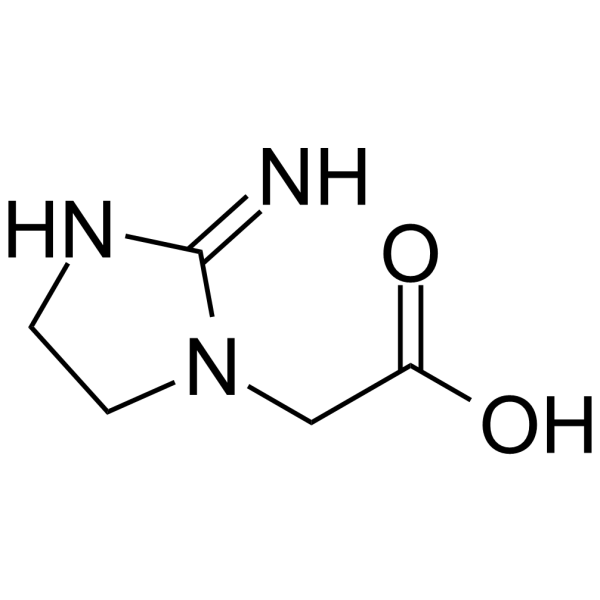
Cyclocreatine, a creatine analogue, acts as a brain-penetrant and potent bioenergetic protective agent by providing high levels of ATP. Cyclocreatine can be phosphorylated and dephosphorylated by creatine kinases. Cyclocreatine suppresses creatine metabolism ameliorating the cognitive, autistic and epileptic phenotype in a mouse model of creatine transporter defciency. Cyclocreatine protects against ischemic injury and enhances cardiac recovery during early reperfusion in dogs and rats. Cyclocreatine decreases plaque-adjacent neuronal dystrophy in TREM2-deficient mice with amyloid-β pathology. Cyclocreatine is proming for research of ischemic heart disease, cardiovascular diseases, Alzheimer’s disease and other neurodegenerative diseases associated with microglial dysfunction, prostate cancer .
|
-
-
- HY-126124
-
AP39
Maximum Cited Publications
6 Publications Verification
|
Reactive Oxygen Species (ROS)
|
Cardiovascular Disease
Neurological Disease
|
|
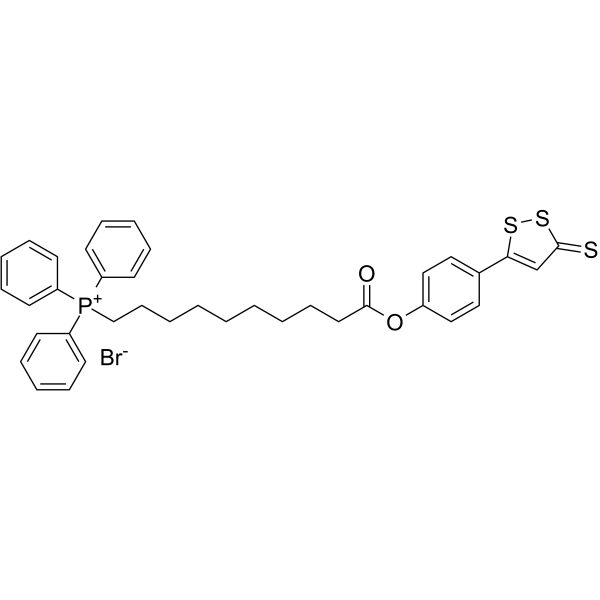
AP39 is a triphenylphosphonium derivatised anethole dithiolethione and mitochondria-targeting hydrogen sulfide (H2S) donor. AP39 increases intracellular H2S levels. AP39 exerts cytoprotective effects and maintains mitochondrial DNA integrity under oxidative stress conditions. AP39 protects against myocardial reperfusion injury in mice model and has the potential for Alzheimer's disease research .
|
-
-
- HY-NP0204
-
|
|
ELOVL
Apoptosis
NOD-like Receptor (NLR)
Caspase
Tau Protein
|
Neurological Disease
Inflammation/Immunology
|
|
Mouse Serum Albumin is most abundant protein in plasma, which leaks into the brain parenchyma when the blood-brain barrier (BBB) is impaired. Mouse Serum Albumin induces astrocytes to A1 phenotype to remarkably increase levels of Elovl1. Mouse Serum Albumin promotes VLSFAs secretion and causes neuronal lippoapoptosis through endoplasmic reticulum stress response pathway. MSA-activated microglia triggeres remarkable tau phosphorylation at multiple sites (Ser202/Thr205) through NLRP3 inflammasome pathway. Mouse Serum Albumin decreases the spatial learning and memory abilities in mice. Mouse Serum Albumin can be used for the study of neurodegenerative diseases like Alzheimer’s disease (AD) and frontotemporal dementia (FTD) .
|
-

-
- HY-109086
-
|
JNJ-40346527; JNJ-527
|
c-Fms
|
Neurological Disease
Inflammation/Immunology
Cancer
|
|
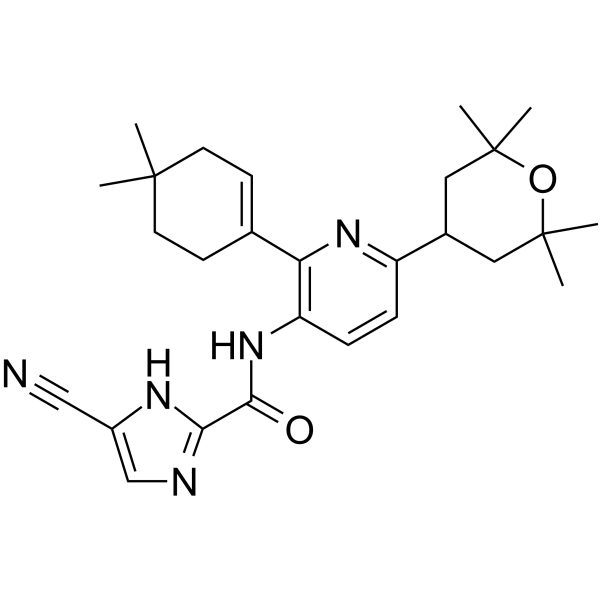
Edicotinib (JNJ-40346527) is a potent, selective, brain penetrant and orally active colony-stimulating factor-1 receptor (CSF-1R) inhibitor with an IC50 of 3.2 nM. Edicotinib exhibits less inhibitory effects on KIT and FLT3 with IC50 values of 20 nM and 190 nM, respectively . Edicotinib limits microglial expansion and attenuates microglial proliferation and neurodegeneration in mice. Edicotinib has the potential for Alzheimer’s disease and rheumatoid arthritis research .
|
-
-
- HY-P5381
-
-
-
- HY-P991373
-
|
|
Tau Protein
|
Neurological Disease
|
|
APNmAb005 is a human monoclonal antibody (mAb) targeting MAPT/Tau/PHF-tau. APNmAb005 blocks tau seeding in vitro and rescues neuronal loss in rTG4510 mice. APNmAb005 can be used in Alzheimer’s disease (AD) research .
|
-

-
- HY-112817
-
|
8-Oxo-Deoxyguanosine triphosphate
|
Apoptosis
|
Cardiovascular Disease
Neurological Disease
Cancer
|
|
8-Oxo-dGTP (8-Oxo-Deoxyguanosine triphosphate) is an oxidized guanine nucleotide formed by ROS-mediated oxidative modification of dGTP, and it also serves as a key substrate for 8-oxo-dGTP pyrophosphohydrolases (such as hMTH1 and E. coli MutT). 8-Oxo-dGTP acts as a DNA mutagen, inserts into nascent DNA and pairs with adenine and cytosine, inducing A:T to C:G transversion mutations. Furthermore, 8-Oxo-dGTP causes oxidative DNA base modification, strand breakage and S-phase arrest, and ultimately triggers AIF-mediated apoptosis and promotes spontaneous carcinogenesis in mth1-deficient mice. Accumulation of 8-Oxo-dGTP in cells induces genomic instability, but it exhibits a tumor-suppressive effect that reduces tumor incidence in mouse models instead. 8-Oxo-dGTP is widely used in studies related to spontaneous carcinogenesis, Parkinson's disease, Alzheimer's disease, heart failure and tumor mechanisms .
|
-

-
- HY-118363
-
|
|
mAChR
|
Neurological Disease
|
|
Lu AE51090 is selective muscarinic M1 receptor agonist with blood-brain barrier penetration. Lu AE51090 activates human M1 receptor with EC50 of 61 nM, while showing no significant agonism at M2-M5 receptors. Lu AE51090 exerts procognitive effects in mice. Lu AE51090 can be used for the study of Alzheimer’s disease (AD) and cognitive impairment associated with schizophrenia (CIAS) .
|
-

-
- HY-161723
-
|
|
Dopamine Transporter
CDK
|
Neurological Disease
|
|
LH2-051, a lysosome-enhancing compound (LYEC), is a brain-penetrant dopamine transporter (DAT) inhibitor (Ki: 0.95 μM). LH2-051 inhibits DAT-mediated dopamine uptake with an IC50 of 3.0 μM. LH2-051 promotes nuclear translocation of TFEB and lysosome biogenesis. LH2-051 improves the memory of amyloid precursor protein (APP)/Presenilin 1 (PS1) mice. LH2-051 can be used for the study of Alzheimer’s disease .
|
-

-
- HY-N3001
-
|
|
STAT
VEGFR
Bcl-2 Family
Survivin
IAP
NF-κB
Apoptosis
Caspase
|
Neurological Disease
Inflammation/Immunology
Cancer
|
|
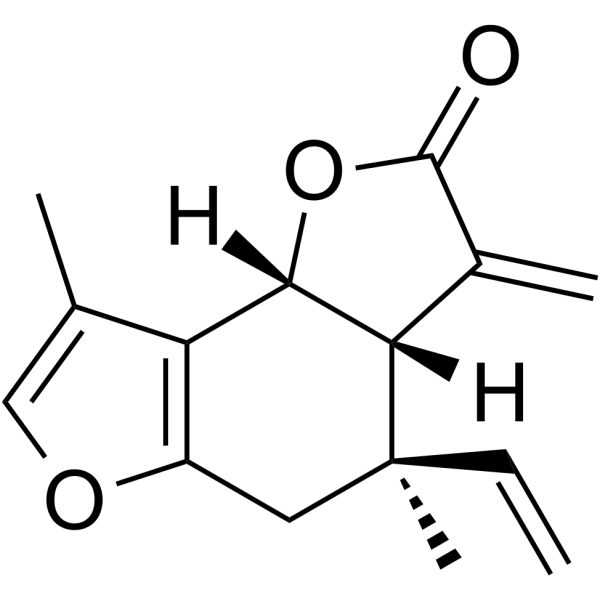
Isolinderalactone is a sesquiterpene that exhibits anti-cancer, anti-inflammatory, and neuroprotective effects. Isolinderalactone inhibits VEGF expression and tyrosine phosphorylation of VEGFR2. Isolinderalactone decreases viability and induces apoptosis in U-87 glioblastoma (GBM) cells and colorectal cancer (CRC) cells. Isolinderalactone induces G2/M phase cell cycle arrest, ROS generation, pJNK/p38 MAPK activation, in colorectal cancer (CRC) cells. Isolinderalactone blocks LPS (HY-D1056)-induced NF-κB activation while activating Nrf2-HMOX1 signaling in RAW264.7 macrophages. Isolinderalactone improves cognitive dysfunction in APP/PS1 mice. Isolinderalactone can be used for the study of Glioblastoma multiforme (GBM), colorectal cancer, Alzheimer’s disease and acute lung injury .
|
-
-
- HY-146619
-
|
|
Amyloid-β
Serotonin Transporter
|
Neurological Disease
|
|
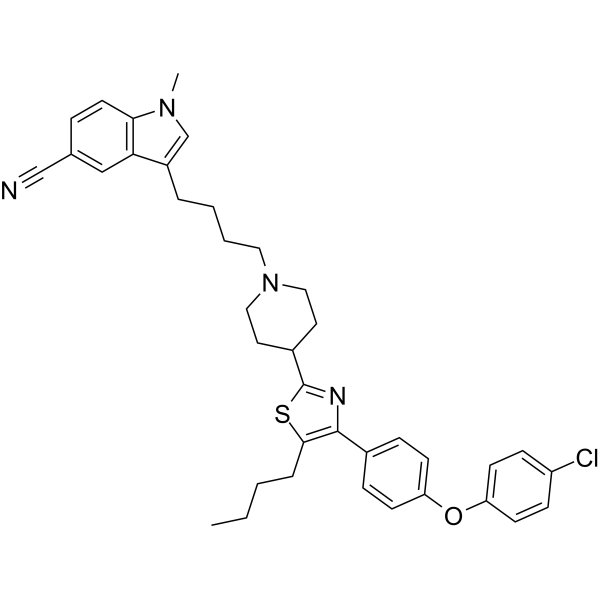
RAGE/SERT-IN-1 is a potent and orally active advanced glycation end products (RAGE) and serotonin transporter (SERT) inhibitor with IC50s of 8.26 μM and 31.09 nM, respectively. RAGE/SERT-IN-1 exhibits significant neuroprotective effect against Aβ25-35-induced neuronal damage and alleviates depressive behavior of mice. RAGE/SERT-IN-1 can be used for researching the comorbidity of Alzheimer's disease and depression .
|
-
-
- HY-175655
-
|
|
p38 MAPK
Cholinesterase (ChE)
Interleukin Related
|
Neurological Disease
Inflammation/Immunology
|
|
BChE/p38-α MAPK-IN-1 is a selective dual inhibitor of hBChE (IC50 = 772 nM) and p38α MAPK (IC50 = 191 nM). BChE/p38-α MAPK-IN-1 reduces the production of pro-inflammatory cytokines (IL-1β, IL-6, IL-8, TNF-α) in cells. BChE/p38-α MAPK-IN-1 improves Scopolamine (HY-N0296)-induced cognitive impairment, as well as alleviates LPS (HY-D1056)-induced spatial learning impairment and exerts anti-neuroinflammatory effects in mice. BChE/p38-α MAPK-IN-1 can be used for the study of Alzheimer’s disease (AD) by targeting both cholinergic deficit and neuroinflammation .
|
-

-
- HY-D0186R
-
|
|
Reference Standards
Endogenous Metabolite
Thymidylate Synthase
|
Infection
|
2'-Deoxyuridine (Standard) is the analytical standard of 2'-Deoxyuridine. This product is intended for research and analytical applications. 2’-deoxyuridine is a brain-penetrant pyrimidines nucleotide that is associated with nervous system diseases. 2'-Deoxyuridine could increase chromosome breakage and results in a decreased thymidylate synthetase activity. 2'-Deoxyuridine is a precursor in the synthesis of Edoxudine (HY-B1011) and also an analogue of 5-ethynyl-2'-deoxyuridine, EdU (HY-118411). 2’-deoxyuridine reduces microglial activation and improve oxidative stress damage by modulating glycolytic metabolism on the Aβ25-35-induced brain injury, which is promising for research of Alzheimer’s disease (AD) .
In Vitro:The interaction between the 2-deoxyuridine and the column increases the duration of retention of 2-deoxyuridine .
Gradient elution with sodium acetate buffer-ACN eluent on two ZIC-HILIC homemade columns separates 2-deoxyuridine in under 9 min .
In Vivo:2'-Deoxyuridine (34.42 ng/mL, gavage, 15 min) passes the blood-brain barrier (BBB) to enter the hippocampus of mice brain .
2'-Deoxyuridine (20 mg/kg, gavage, daily for 4 weeks) improves cognition and memory loss and attenuates the damage to the hippocampus in Aβ25-35-induced mice model .
|
-

-
- HY-137570
-
|
|
Monoamine Oxidase
|
Neurological Disease
|
|
Ethyl homovanillate (Compound 24) is an structural analog of Eugenol. Ethyl homovanillate is an inhibitor of monoamine oxidase A (MAOA) with an IC50 of 8.1 μM. Ethyl homovanillate significantly increases the forced swim test score in ICR mice. Ethyl homovanillate can be studied in research on neurological diseases such as Alzheimer’s disease .
|
-

-
- HY-W841438
-
|
|
Amyloid-β
Tau Protein
|
Neurological Disease
|
|
Lithium orotate is an orally active lithium supplement with reduced binding that can bypass amyloid sequestration in AD mice models. Lithium orotate can prevent Aβ plaque deposition and phospho-tau accumulation and reverse AD pathology, neuroinflammatory changes and memory loss in AD mice models and ageing wild-type mice. Lithium orotate can be used for the research of alcoholism and Alzheimer’s disease .
|
-

-
- HY-169080
-
|
|
Apolipoprotein
|
Neurological Disease
|
|
ABCA1 inducer 1 is a nonlipogenic ABCA1 inducer. ABCA1 inducer 1 increases ABCA1 expression, enhances apolipoprotein (APOE) lipidation and reverses multiple Alzheimer’s disease (AD) phenotypes, without increasing triglycerides in E3/4FAD mice that express human APOE 3/4 .
|
-

-
- HY-W017540R
-
|
|
Reference Standards
ATP Synthase
|
Cardiovascular Disease
Neurological Disease
Metabolic Disease
Cancer
|
|
Cyclocreatine, a creatine analogue, acts as a brain-penetrant and potent bioenergetic protective agent by providing high levels of ATP. Cyclocreatine can be phosphorylated and dephosphorylated by creatine kinases. Cyclocreatine suppresses creatine metabolism ameliorating the cognitive, autistic and epileptic phenotype in a mouse model of creatine transporter defciency. Cyclocreatine protects against ischemic injury and enhances cardiac recovery during early reperfusion in dogs and rats. Cyclocreatine decreases plaque-adjacent neuronal dystrophy in TREM2-deficient mice with amyloid-β pathology. Cyclocreatine is proming for research of ischemic heart disease, cardiovascular diseases, Alzheimer’s disease and other neurodegenerative diseases associated with microglial dysfunction, prostate cancer .
|
-

-
- HY-163885
-
SSZ
1 Publications Verification
|
Cholinesterase (ChE)
Beta-secretase
γ-secretase
|
Neurological Disease
|
|
SSZ is a multi-target inhibitor, which targets multiple pathological mechanisms of Alzheimer's disease (AD). SSZ targets acetylcholinesterase, butyrylcholinesterase, β-site amyloid precursor protein cleavage enzyme 1 (BACE1), and γ-secretase. SSZ ameliorates Alzheimer’s diseases and exhibits neuroprotective effect in mice .
|
-

-
- HY-146151
-
|
|
γ-secretase
Amyloid-β
|
Neurological Disease
|
|
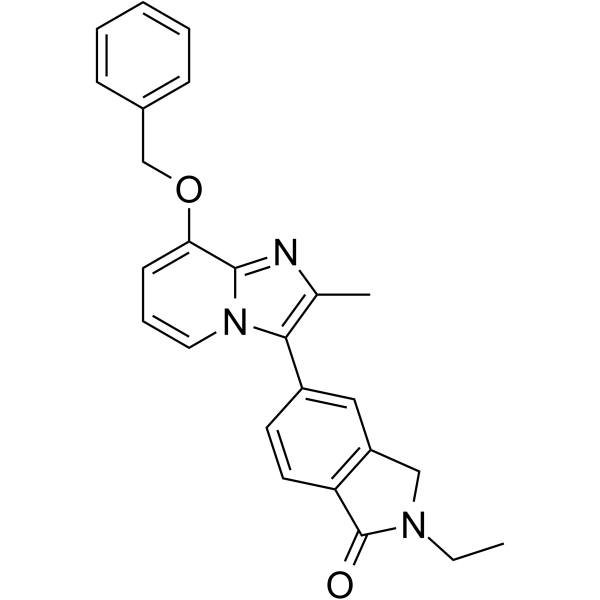
γ-Secretase modulator 12 (Compound 1a) is a γ-secretase modulator that can selectively decrease amyloid-β42 (Aβ42) levels (IC50 of 0.39 µM). γ-Secretase modulator 12 can be used for Alzheimer’s disease research. γ-Secretase modulator 12 has a good brain/plasma ratio (Kp, brain = 0.72) in mice .
|
-
-
- HY-109086A
-
|
JNJ-40346527 hydrochloride; JNJ-527 hydrochloride
|
c-Fms
|
Neurological Disease
Inflammation/Immunology
Cancer
|
|
Edicotinib hydrochloride is a potent, selective, brain penetrant and orally active?colony-stimulating factor-1 receptor (CSF-1R)?inhibitor with an IC50 of 3.2 nM. Edicotinib hydrochloride exhibits less inhibitory effects on KIT and FLT3 with IC50 values of 20 nM and 190 nM, respectively . Edicotinib hydrochloride limits microglial expansion and attenuates microglial proliferation and neurodegeneration?in mice. Edicotinib hydrochloride has the potential for Alzheimer’s disease and rheumatoid arthritis research .
|
-

-
- HY-P11092
-
|
|
Endogenous Metabolite
|
Neurological Disease
|
|
TLQP-62 (mouse,rat) is a secreted C-terminal peptide that can be derived from protein VGF. TLQP-62 activates the BDNF-TrkB signaling pathway, inducing acute, transient phosphorylation of TrkB receptor and downstream CREB (Ser133) phosphorylation. TLQP-62 demonstrates excellent efficacy in promoting long-term fear memory formationin wild-type mice and reversing memory impairment in VGF heterozygous knock-out mice. TLQP-62 can be used for the study of memory-related neurological disorders (e.g., Alzheimer’s disease, frontotemporal dementia) .
|
-

-
- HY-162860
-
|
|
mGluR
CaMK
Tau Protein
|
Neurological Disease
|
FO-4-15 is an mGluR1/CaMKIIα activator. FO-4-15 has a protective effect against H2O2 in human neuroblastoma (SH-SY5Y) cells. FO-4-15 can improve cognitive impairment in Alzheimer’s disease mice by activating the mGluR1/CaMKIIα pathway, and can reduce Aβ accumulation, hyperphosphorylated Tau, and synaptic damage .
|
-

-
- HY-130609A
-
|
|
γ-secretase
|
Neurological Disease
|
|
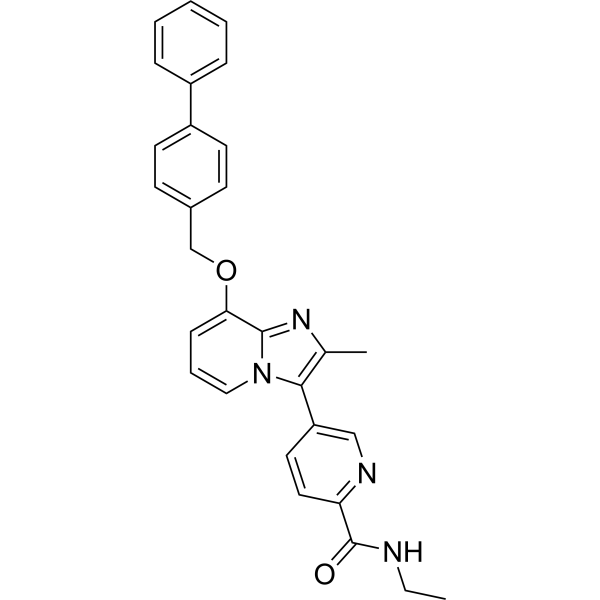
Aβ42-IN-1 free base (compound 1v) is an orally active, high brain exposure γ-secretase modulator. Aβ42-IN-1 free base potently reduces Aβ42 levels with an IC50 value of 0.091 μM, and significantly reduces brain Aβ42 levels in mice. Aβ42-IN-1 free base is a promising compound for the treatment of Alzheimer’s disease .
|
-
-
- HY-W017540S
-
|
|
Isotope-Labeled Compounds
ATP Synthase
|
Cardiovascular Disease
Neurological Disease
Metabolic Disease
Cancer
|
|
Cyclocreatine- 13C3 is the 13C-labeled Cyclocreatine (HY-W017540). Cyclocreatine, a creatine analogue, acts as a brain-penetrant and potent bioenergetic protective agent by providing high levels of ATP. Cyclocreatine can be phosphorylated and dephosphorylated by creatine kinases. Cyclocreatine suppresses creatine metabolism ameliorating the cognitive, autistic and epileptic phenotype in a mouse model of creatine transporter defciency. Cyclocreatine protects against ischemic injury and enhances cardiac recovery during early reperfusion in dogs and rats. Cyclocreatine decreases plaque-adjacent neuronal dystrophy in TREM2-deficient mice with amyloid-β pathology. Cyclocreatine is proming for research of ischemic heart disease, cardiovascular diseases, Alzheimer’s disease and other neurodegenerative diseases associated with microglial dysfunction, prostate cancer .
|
-

-
- HY-162681
-
|
|
Cholinesterase (ChE)
Interleukin Related
|
Neurological Disease
|
|
eeAChE-IN-3 (compound YS3g) is an orally active, potent EeAChE and IL-6 inhibitor with IC50s of 0.54 μM, 0.49 μM, 8.54 μM and 0.57 μM for EeAChE, RatAChE, RatBuChE and IL-6, respectively. eeAChE-IN-3 improves STZ (HY-13753) (Streptozotocin; HY-13753)-induced learning and memory impairment in mice. eeAChE-IN-3 has the potential for Alzheimer's disease (AD) research .
|
-

-
- HY-P991867
-
|
|
Amyloid-β
|
Neurological Disease
|
|
SHR-1707 is a humanized anti-Aβ IgG1 monoclonal antibody. SHR-1707 binds Aβ fibrils and monomers, blocking plaque formation and promoting the microglial phagocytosis of Aβ. SHR-1707 reduces brain Aβ deposition in 5xFAD transgenic mice. SHR-1707 can be used for Alzheimer’s disease research. Recommend Isotype Controls: Human IgG1 kappa, Isotype Control (HY-P99001) .
|
-

-
- HY-182429
-
|
|
Beta-secretase
Cathepsin
Amyloid-β
|
Neurological Disease
|
|
NB-533 is an orally active and brain-penetrant BACE-1 inhibitor with a human IC50 of 0.002 μM. NB-533 also inhibits human cathepsin D with an IC50 of 0.001 μM. NB-533 inhibits amyloidogenic amyloid precursor protein (APP) processing and reduces Aβ40 release. NB-533 reduces brain levels of APP metabolite C99 and Aβ40 in transgenic mice. NB-533 can be used for the research of Alzheimer’s disease .
|
-

-
- HY-119316
-
|
|
HDAC
Phosphodiesterase (PDE)
Amyloid-β
Tau Protein
|
Neurological Disease
|
|
CM-414 is a brain-penetrant phosphodiesterase 5 (PDE5) and HDAC inhibitor with IC50s of 60 nM, 91 nM, 310 nM, 322 nM and 490 nM for PDE5, HDAC6, HDAC1, HDAC3 and HDAC2, respectively. CM-414 diminishes brain Aβ and tau phosphorylation (pTau) level in Tg2576 mice. CM-414 can be used for the study of Alzheimer's disease (AD) .
|
-

-
- HY-183280
-
|
|
17β-HSD
CDK
Amyloid-β
Tau Protein
Reactive Oxygen Species (ROS)
|
Neurological Disease
|
|
17β-HSD10/CDK5-IN-1 is a poent dual 17β-HSD10 and CDK5 inhibitor with IC50s of 2.44 and 0.26 μM for 17β-HSD10 and CDK5, respectively. 17β-HSD10/CDK5-IN-1 reduces ROS accumulation, attenuates pathological Tau phosphorylation, reduces Aβ plaque deposition, and ameliorates cognitive deficits in Alzheimer's mice. 17β-HSD10/CDK5-IN-1 can be used for the research of Alzheimer's disease .
|
-

-
- HY-112817A
-
|
8-Oxo-Deoxyguanosine triphosphate trisodium
|
Apoptosis
|
Others
|
|
8-Oxo-dGTP (8-Oxo-Deoxyguanosine triphosphate) trisodium solution (100mM) is an oxidized guanine nucleotide formed by ROS-mediated oxidative modification of dGTP, and it also serves as a key substrate for 8-oxo-dGTP pyrophosphohydrolases (such as hMTH1 and E. coli MutT). 8-Oxo-dGTP trisodium solution (100mM) acts as a DNA mutagen, inserts into nascent DNA and pairs with adenine and cytosine, inducing A:T to C:G transversion mutations. Furthermore, 8-Oxo-dGTP trisodium solution (100mM) causes oxidative DNA base modification, strand breakage and S-phase arrest, and ultimately triggers AIF-mediated apoptosis and promotes spontaneous carcinogenesis in mth1-deficient mice. Accumulation of 8-Oxo-dGTP trisodium solution (100mM) in cells induces genomic instability, but it exhibits a tumor-suppressive effect that reduces tumor incidence in mouse models instead. 8-Oxo-dGTP trisodium solution (100mM) is widely used in studies related to spontaneous carcinogenesis, Parkinson's disease, Alzheimer's disease, heart failure and tumor mechanisms .
|
-

| Cat. No. |
Product Name |
Type |
-
- HY-NP0204
-
|
|
Biochemical Assay Reagents
|
|
Mouse Serum Albumin is most abundant protein in plasma, which leaks into the brain parenchyma when the blood-brain barrier (BBB) is impaired. Mouse Serum Albumin induces astrocytes to A1 phenotype to remarkably increase levels of Elovl1. Mouse Serum Albumin promotes VLSFAs secretion and causes neuronal lippoapoptosis through endoplasmic reticulum stress response pathway. MSA-activated microglia triggeres remarkable tau phosphorylation at multiple sites (Ser202/Thr205) through NLRP3 inflammasome pathway. Mouse Serum Albumin decreases the spatial learning and memory abilities in mice. Mouse Serum Albumin can be used for the study of neurodegenerative diseases like Alzheimer’s disease (AD) and frontotemporal dementia (FTD) .
|
| Cat. No. |
Product Name |
Target |
Research Area |
-
- HY-P5381
-
-
- HY-P11092
-
|
|
Endogenous Metabolite
|
Neurological Disease
|
|
TLQP-62 (mouse,rat) is a secreted C-terminal peptide that can be derived from protein VGF. TLQP-62 activates the BDNF-TrkB signaling pathway, inducing acute, transient phosphorylation of TrkB receptor and downstream CREB (Ser133) phosphorylation. TLQP-62 demonstrates excellent efficacy in promoting long-term fear memory formationin wild-type mice and reversing memory impairment in VGF heterozygous knock-out mice. TLQP-62 can be used for the study of memory-related neurological disorders (e.g., Alzheimer’s disease, frontotemporal dementia) .
|
| Cat. No. |
Product Name |
Target |
Research Area |
Image |
-
- HY-P991373
-
|
|
Tau Protein
|
Neurological Disease
|
|
APNmAb005 is a human monoclonal antibody (mAb) targeting MAPT/Tau/PHF-tau. APNmAb005 blocks tau seeding in vitro and rescues neuronal loss in rTG4510 mice. APNmAb005 can be used in Alzheimer’s disease (AD) research .
|
-

(5)
-
- HY-P991867
-
|
|
Amyloid-β
|
Neurological Disease
|
|
SHR-1707 is a humanized anti-Aβ IgG1 monoclonal antibody. SHR-1707 binds Aβ fibrils and monomers, blocking plaque formation and promoting the microglial phagocytosis of Aβ. SHR-1707 reduces brain Aβ deposition in 5xFAD transgenic mice. SHR-1707 can be used for Alzheimer’s disease research. Recommend Isotype Controls: Human IgG1 kappa, Isotype Control (HY-P99001) .
|
-
(5)
| Cat. No. |
Product Name |
Category |
Target |
Chemical Structure |
-
- HY-112817
-
|
8-Oxo-Deoxyguanosine triphosphate
|
Microorganisms
Source Classification
|
Apoptosis
|
|
8-Oxo-dGTP (8-Oxo-Deoxyguanosine triphosphate) is an oxidized guanine nucleotide formed by ROS-mediated oxidative modification of dGTP, and it also serves as a key substrate for 8-oxo-dGTP pyrophosphohydrolases (such as hMTH1 and E. coli MutT). 8-Oxo-dGTP acts as a DNA mutagen, inserts into nascent DNA and pairs with adenine and cytosine, inducing A:T to C:G transversion mutations. Furthermore, 8-Oxo-dGTP causes oxidative DNA base modification, strand breakage and S-phase arrest, and ultimately triggers AIF-mediated apoptosis and promotes spontaneous carcinogenesis in mth1-deficient mice. Accumulation of 8-Oxo-dGTP in cells induces genomic instability, but it exhibits a tumor-suppressive effect that reduces tumor incidence in mouse models instead. 8-Oxo-dGTP is widely used in studies related to spontaneous carcinogenesis, Parkinson's disease, Alzheimer's disease, heart failure and tumor mechanisms .
|
-
-
- HY-N3001
-
-
-
- HY-D0186R
-
|
|
Structural Classification
Natural Products
Immune System Disorder
Microorganisms
Disease markers
Endogenous metabolite
Source Classification
|
Reference Standards
Endogenous Metabolite
Thymidylate Synthase
|
2'-Deoxyuridine (Standard) is the analytical standard of 2'-Deoxyuridine. This product is intended for research and analytical applications. 2’-deoxyuridine is a brain-penetrant pyrimidines nucleotide that is associated with nervous system diseases. 2'-Deoxyuridine could increase chromosome breakage and results in a decreased thymidylate synthetase activity. 2'-Deoxyuridine is a precursor in the synthesis of Edoxudine (HY-B1011) and also an analogue of 5-ethynyl-2'-deoxyuridine, EdU (HY-118411). 2’-deoxyuridine reduces microglial activation and improve oxidative stress damage by modulating glycolytic metabolism on the Aβ25-35-induced brain injury, which is promising for research of Alzheimer’s disease (AD) .
In Vitro:The interaction between the 2-deoxyuridine and the column increases the duration of retention of 2-deoxyuridine .
Gradient elution with sodium acetate buffer-ACN eluent on two ZIC-HILIC homemade columns separates 2-deoxyuridine in under 9 min .
In Vivo:2'-Deoxyuridine (34.42 ng/mL, gavage, 15 min) passes the blood-brain barrier (BBB) to enter the hippocampus of mice brain .
2'-Deoxyuridine (20 mg/kg, gavage, daily for 4 weeks) improves cognition and memory loss and attenuates the damage to the hippocampus in Aβ25-35-induced mice model .
|
-
| Cat. No. |
Product Name |
Chemical Structure |
-
- HY-W017540S
-
|
|
|
Cyclocreatine- 13C3 is the 13C-labeled Cyclocreatine (HY-W017540). Cyclocreatine, a creatine analogue, acts as a brain-penetrant and potent bioenergetic protective agent by providing high levels of ATP. Cyclocreatine can be phosphorylated and dephosphorylated by creatine kinases. Cyclocreatine suppresses creatine metabolism ameliorating the cognitive, autistic and epileptic phenotype in a mouse model of creatine transporter defciency. Cyclocreatine protects against ischemic injury and enhances cardiac recovery during early reperfusion in dogs and rats. Cyclocreatine decreases plaque-adjacent neuronal dystrophy in TREM2-deficient mice with amyloid-β pathology. Cyclocreatine is proming for research of ischemic heart disease, cardiovascular diseases, Alzheimer’s disease and other neurodegenerative diseases associated with microglial dysfunction, prostate cancer .
|
-
| Cat. No. |
Product Name |
|
Classification |
-
- HY-112817A
-
|
8-Oxo-Deoxyguanosine triphosphate trisodium
|
|
Nucleotide Analogs
Guanine Nucleotide
|
|
8-Oxo-dGTP (8-Oxo-Deoxyguanosine triphosphate) trisodium solution (100mM) is an oxidized guanine nucleotide formed by ROS-mediated oxidative modification of dGTP, and it also serves as a key substrate for 8-oxo-dGTP pyrophosphohydrolases (such as hMTH1 and E. coli MutT). 8-Oxo-dGTP trisodium solution (100mM) acts as a DNA mutagen, inserts into nascent DNA and pairs with adenine and cytosine, inducing A:T to C:G transversion mutations. Furthermore, 8-Oxo-dGTP trisodium solution (100mM) causes oxidative DNA base modification, strand breakage and S-phase arrest, and ultimately triggers AIF-mediated apoptosis and promotes spontaneous carcinogenesis in mth1-deficient mice. Accumulation of 8-Oxo-dGTP trisodium solution (100mM) in cells induces genomic instability, but it exhibits a tumor-suppressive effect that reduces tumor incidence in mouse models instead. 8-Oxo-dGTP trisodium solution (100mM) is widely used in studies related to spontaneous carcinogenesis, Parkinson's disease, Alzheimer's disease, heart failure and tumor mechanisms .
|
Your information is safe with us. * Required Fields.
Inquiry Information
- Product Name:
- Cat. No.:
- Quantity:
- MCE Japan Authorized Agent:








