1. Search Result
Search Result
Results for "

B. cereus

" in MedChemExpress (MCE) Product Catalog:

22

Inhibitors & Agonists

1

Peptides

11

Natural
Products

1

Isotope-Labeled Compounds

Cat. No. Product Name Target Research Areas Chemical Structure
  • HY-N8016
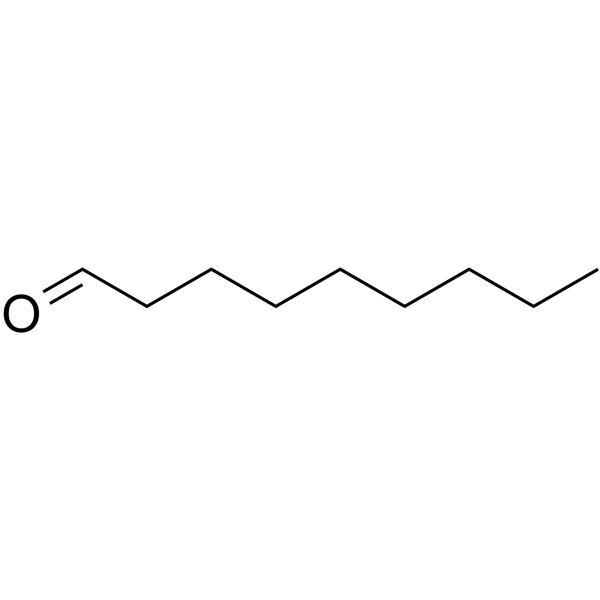
    Nonanal
    1 Publications Verification

    Environmental Pollutants Metabolic Disease Inflammation/Immunology
    Nonanal is a saturated fatty aldehyde with antidiarrhoeal activity .
    Nonanal
  • HY-N9690

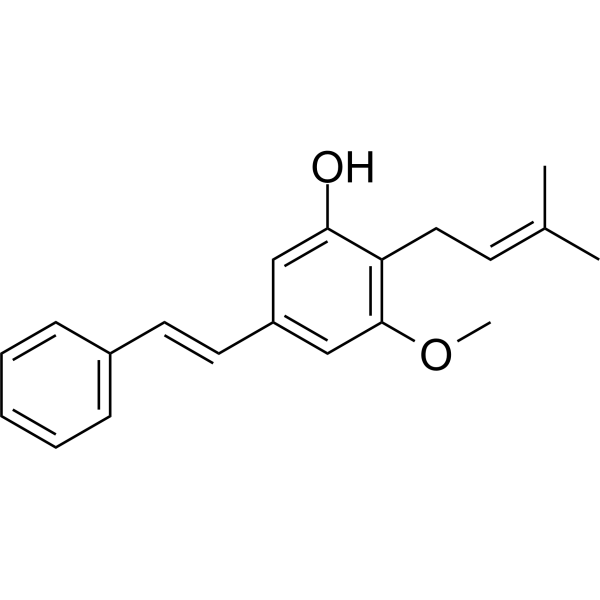
    Longistylin A

    Bacterial Infection Neurological Disease
    Longistyline A (Longistylin A) is a natural stilbene, it can be isolated from leaves of Cajanus cajan. Longistyline A shows antimicrobial activity against MRSA with an MIC value of 1.56 μg/mL. Longistyline A shows neuroprotective effects, it can be used for the research of infection and nerve diseases .
    Longistyline A
  • HY-N8016R

    Reference Standards Others Metabolic Disease Inflammation/Immunology
    Nonanal (Standard) is the analytical standard of Nonanal. This product is intended for research and analytical applications. Nonanal is a saturated fatty aldehyde with antidiarrhoeal activity .
    Nonanal (Standard)
  • HY-W160679

    Bacterial Fungal Infection
    7-(Carboxymethoxy)-4-methylcoumarin (Compound VIIIa) is the antibacterial and antifungal agent that exhibits inhibitory activity against S. aureus, B. cereus, S. lutea, C. albicans, C. glabrata, and C. parapsilosis .
    7-(Carboxymethoxy)-4-methylcoumarin
  • HY-N7454

    Drug Metabolite Bacterial Infection
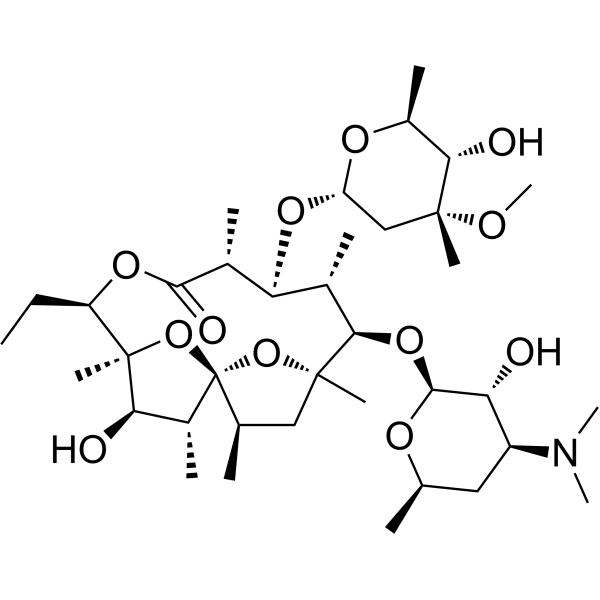
    Anhydroerythromycin A is a degradation product of the macrolide antibiotic erythromycin. Anhydroerythromycin A is formed via degradation of erythromycin in acidic aqueous solutions in vitro as well as in vivo. Anhydroerythromycin A is active against S. aureus and B. cereus in vitro (MICs = 12.5 and 6.25 μg/ml, respectively). Anhydroerythromycin A also inhibits steroid 6β-hydroxylase activity associated with the cytochrome P450 (CYP) isoform CYP3A in human liver microsomes.
    Anhydroerythromycin A
  • HY-170650

    Phospholipase Cholinesterase (ChE) Bacterial Infection Inflammation/Immunology
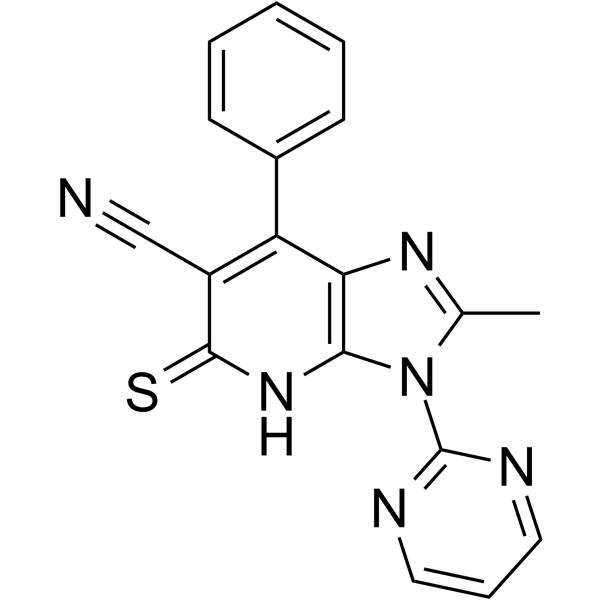
    SMase-IN-1 (Compound 4) is a bacterial sphingomyelinase enzyme (SMase) inhibitor (IC50 value for B. cereus SMase is 6.43 µM). SMase-IN-1 also inhibits eqBuChE (59.50% inhibition rate at 50 µM concentration). SMase-IN-1 forms a complex with Cu 2+ in biometal interactions. SMase-IN-1 reduces B. cereus-induced hemolysis on sheep erythrocytes .
    SMase-IN-1
  • HY-169338

    Bacterial Infection
    Antibacterial agent 253 (compound 7a) is a potent inhibitor of bacterial, with the MIC of 1.562 μg/mL for P. aeruginosa, S. aureus, L. monocytogenes, B. cereus, and S. typhi .
    Antibacterial agent 253
  • HY-N12096

    α-Acetylsalazinic acid

    Bacterial Infection
    Galbinic acid (α-Acetylsalazinic acid), a lichen acid, shows antibacterial activities against the Gram-positive bacteria B. cereus, B. subtilis, and S. aureus (MICs=62.5, 62.5, 250 μg/ml, respectively). Galbinic acid inhibits the Gram-negative bacterium E. coli (MIC=125 μg/ml) .
    Galbinic acid
  • HY-147878

    Bacterial Infection
    Antibacterial agent 111 (Compound 3) is an antibacterial agent with MIC values of 3.90 μg/mL and 0.49 μg/mL against B. cereus and K. pneumonia, respectively. Antibacterial agent 111 firmly binds with tyrosyl-tRNA synthetase residues .
    Antibacterial agent 111
  • HY-N7105S

    Isotope-Labeled Compounds Biochemical Assay Reagents Others
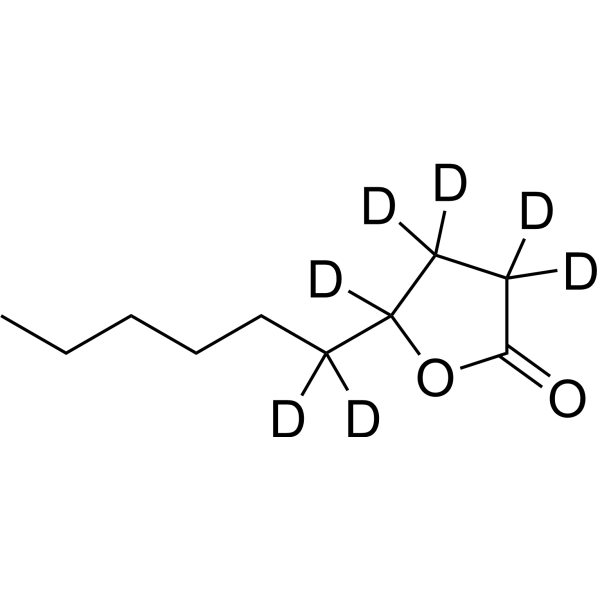
    γ-Decalactone-d7 is deuterated labeled γ-Decalactone. γ-Decalactone is a natural flavoring substance with the fruity aroma of juicy peaches. γ-Decalactone can be used as a food additive .
    γ-Decalactone-d7
  • HY-P10134

    Bacterial Infection
    Salivaricin B is a broad-spectrum bacteriocin produced by Lactobacillus salivarius M7, capable of inhibiting the growth of Listeria monocytogenes, Bacillus cereus, Brochothrix thermosphacta, Enterococcus faecalis, and various lactobacilli .
    Salivaricin B
  • HY-N10281

    Bacterial Infection
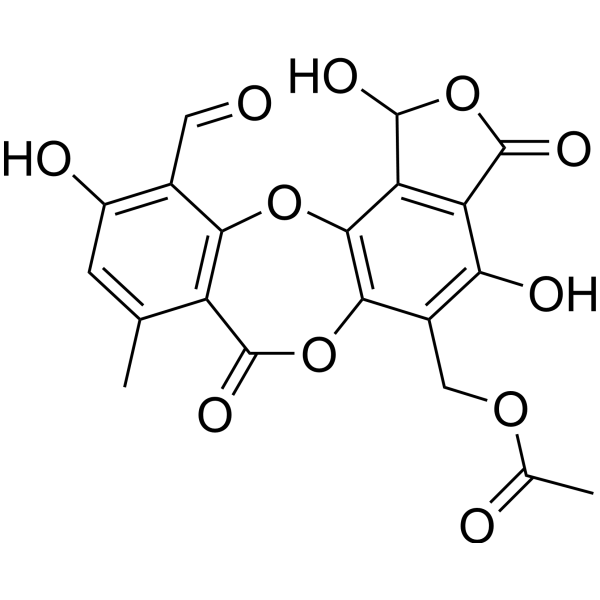
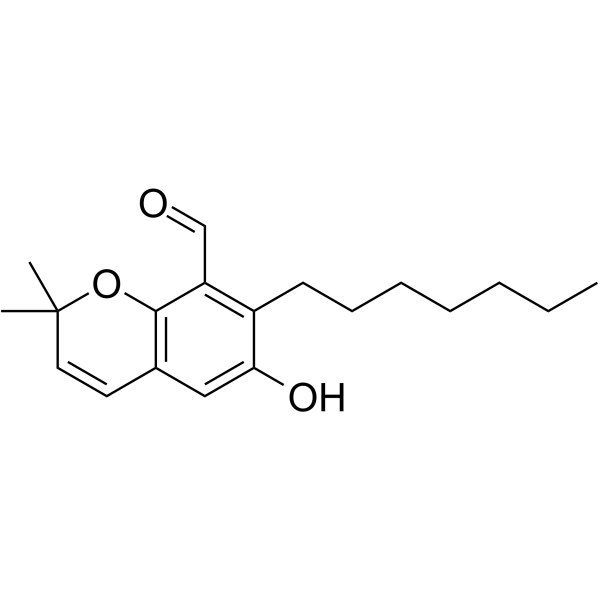
    Asperglaucin B is an alkylated salicylaldehyde derivative from the fungus Aspergillus chevalieri SQ-8, with antibacterial activities. Asperglaucin B displays potent antibacterial activities against two plant pathogens Pseudomonas syringae pv actinidae (Psa) and Bacillus cereus, with an MIC value of 6.25 μM .
    Asperglaucin B
  • HY-W781265

    L-755,805

    Endothelin Receptor Bacterial Infection
    BE 24566B is a polyketide fungal metabolite originally isolated from S. violaceusniger. It is active against B. subtilis, B. cereus, S. aureus, M. luteus, E. faecalis, and S. thermophilus (MICs=1.56, 1.56, 1.56, 1.56, 3.13, and 3.13 μg/mL, respectively). BE 24566B is an endothelin (ET) receptor antagonist (IC50s=11 and 3.9 μM for ETA and ETB receptors, respectively).
    BE 24566B
  • HY-N15344

    Antibiotic Bacterial SARS-CoV Infection Inflammation/Immunology
    Euryachin E is an antimicrobial and antiviral agent found in Eurya chinensis. It exhibits a MIC of 6.25 μg/mL against B. cereus and 0.78 μg/mL against S. aureus. Its IC50 against COVID-19 is 6.41 μM. Euryachin E can be utilized for research in the fields of infection and inflammation .
    Euryachin E
  • HY-137323

    Antibiotic Bacterial Infection
    Leucinostatin H is a polypeptide antibiotic discovered in Paecilomyces marquandii, characterized by a tertiary amine-oxide terminal group. Leucinostatin H exhibits inhibitory activity against Gram-positive bacteria, such as Bacillus subtilis, B. cereus, and Staphylococcus aureus (MIC 10-100 μg/mL). Leucinostatin H holds potential for research in anti-infective and plant disease control applications .
    Leucinostatin H
  • HY-N12230

    Bacterial Parasite Fungal Infection Cancer
    Penicolinate B is a picolinic acid derivative that can be isolated from Penicillium sp. Penicolinate B exhibits antimalarial activity (IC50: 1.40 μg/mL), antitubercular activity (MIC: 25.0 μg/mL), activity against Bacillus cereus (IC50: 25.0 μg/mL), and activity against Candida albicans (IC50: 1.45 μg/mL). Penicolinate B also has certain cytotoxicity against cancer cells such as MCF-7, KB, and NCI-H187. Penicolinate B can be used in research on malaria, tuberculosis, bacterial/fungal infections and tumors .
    Penicolinate B
  • HY-N0987

    Bacterial Infection
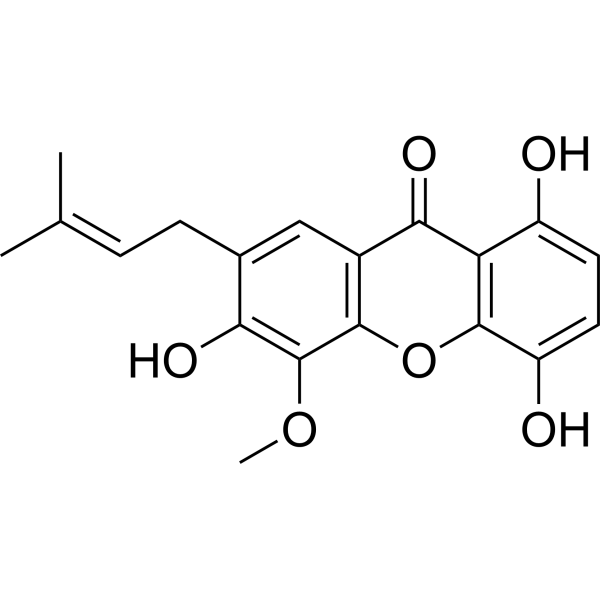
    1,4, 6-trihydroxy-5-methoxy-7-prenylxanthone is an antimicrobial agent that can be isolated from the genus garcinia. 1,4, 6-trihydroxy-5-methoxy-7-prenylxanthone inhibits S. aureus and B. cereus with MIC values of 128 μg/mL and 200 μg/mL, respectively .
    1,4,6-Trihydroxy-5-methoxy-7-prenylxanthone
  • HY-N8470

    NSC 204855; U 40615

    Bacterial Infection
    Steffimycin B is an anthracycline bacterial metabolite originally isolated from Streptomyces. It binds to DNA, preferentially intercalating at sites containing cytosine and guanine.2 Steffimycin B is cytotoxic to MCF-7, KB, NCI-H187, and Vero cells (IC50s=3.5, 6.75, 3.28, and 10.5 μM, respectively). It is active against M. tuberculosis (MIC=5.2 nM), B. cereus (MIC=1.56 μg/mL), and P. falciparum (IC50=2.19 μM).
    Steffimycin B
  • HY-122980

    (S)-Myxochelin A

    Lipoxygenase Infection
    Myxochelin A is a microbial metabolite that has been found in A. disciformis and has diverse biological activities. It is active against Gram-positive bacteria, including B. cereus, S. aureus, and M. luteus, but not Gram-negative bacteria or fungi in an agar diffusion assay when used at a concentration of 80 μg/disc. Myxochelin A inhibits 5-lipoxygenase (5-LO) activity with an IC50 value of 1.9 μM for the recombinant human enzyme. It is cytotoxic to 26-L5 colon cancer cells when used at a concentration of 3 μg/mL.
    Myxochelin A
  • HY-W587414

    Bacterial Antibiotic Infection
    Neospiramycin I is a macrolide antibiotic and a derivative of Spiramycin I (HY-N7141). Neospiramycin I is effective against the macrolide-sensitive KB210 strain of S. aureus, but ineffective against the macrolide-resistant KB224 strain, with minimum inhibitory concentrations (MIC) of 3.12 and greater than 100 µg/mL, respectively; it is also effective against B. cereus, B. subtilis, M. luteus, E. coli, and K. pneumoniae, with respective MIC values of 1.56, 3.12, 3.12, 0.2, 50, and 12.5 µg/mL. Neospiramycin I binds to the ribosomes of E. coli, with an inhibitory concentration 50 (IC50) of 1.2 µM. It protects mice from death in a type III S. pneumoniae infection model, with an effective dose 50 (ED50) of 399.8 mg/kg .
    Neospiramycin I
  • HY-115442

    HDAC Bacterial Infection Cancer
    NHNB is a selective HDAC8 inhibitor (IC50 = 66.0 μM) and Peptidoglycan N-acetylglucosamine (GlcNAc) deacetylases (PGNGdacs) inhibitor. NHNB shows antibacterial and bactericidal activity against B. anthracis and B. cereus. NHNB can be used for the research of acute myeloid leukemia, Bacillus anthracis infection, and Bacillus cereus infection .
    NHNB
  • HY-N8316

    Others Infection
    Rugulotrosin A is an antibiotic originally isolated from Penicillium. It is active against the Gram-positive bacteria E. faecalis, B. cereus, B. subtilis, and S. aureus with 99% lethal dose (LD99) values of 1.6, 3.1, 5.5, and 200 μg/mL, respectively.1 Rugulotrosin A is inactive against Gram-negative bacteria.
    Rugulotrosin A

Inquiry Online

Your information is safe with us. * Required Fields.

Salutation


Country or Region *

Applicant Name *


Organization Name *

Department *


Email Address *


Product Name *

Cat. No.


Requested quantity *

Phone Number *


Remarks

Inquiry Online

Inquiry Information

Product Name:
Cat. No.:
Quantity:
MCE Japan Authorized Agent:

