



Penicolinate B
Penicolinate B is a picolinic acid derivative that can be isolated from Penicillium sp. Penicolinate B exhibits antimalarial activity (IC50: 1.40 μg/mL), antitubercular activity (MIC: 25.0 μg/mL), activity against Bacillus cereus (IC50: 25.0 μg/mL), and activity against Candida albicans (IC50: 1.45 μg/mL). Penicolinate B also has certain cytotoxicity against cancer cells such as MCF-7, KB, and NCI-H187. Penicolinate B can be used in research on malaria, tuberculosis, bacterial/fungal infections and tumors.
Nur für Forschungszwecke. Wir verkaufen nicht an Patienten.
- CAS. Nr.: 1418291-70-9
- Formel: C23H30N2O4
- Molecular Weight:398.50
-
Speicherung:
Please store the product under the recommended conditions in the Certificate of Analysis.


To place orders, for customer services and technical support, please contact: MedChemExpress USA
Tel: 609-228-6898 E-mail: [email protected] [email protected]


-
 Biologische Aktivität
-
Chemical Information
- Protokoll
- Reinheit & Dokumentation
- Verweise
-
 Help & FAQs


-
HY-W042191
OxychlororaphineAntifungal Agent -
HY-W013331
DeoxyartemisininAnti-inflammatory and Analgesic Agent -

HY-W012088
(Z)-Methyl tetradec-9-enoate -
HY-111939
Amiprofos methylPlant Microtubule Polymerization Inhibitor -
HY-N8383
Butyrolactone VAntiplasmodial Agent -
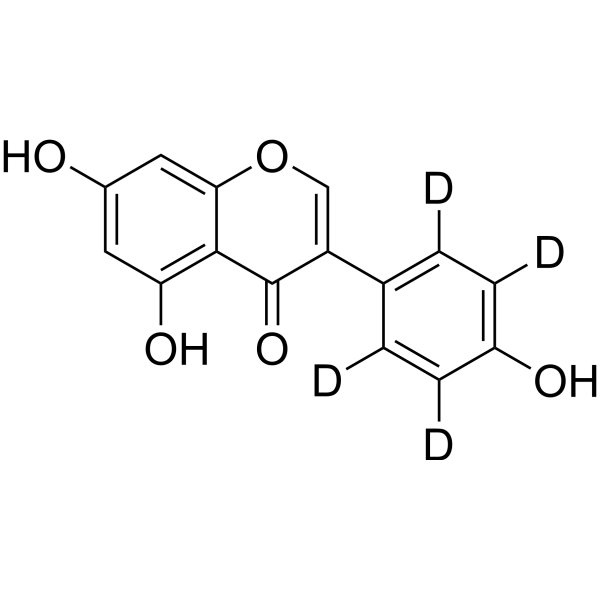
HY-14596S
Genistein-d4Stable Isotope -

HY-W042191R
Oxychlororaphine (Standard)Antifungal Agent -
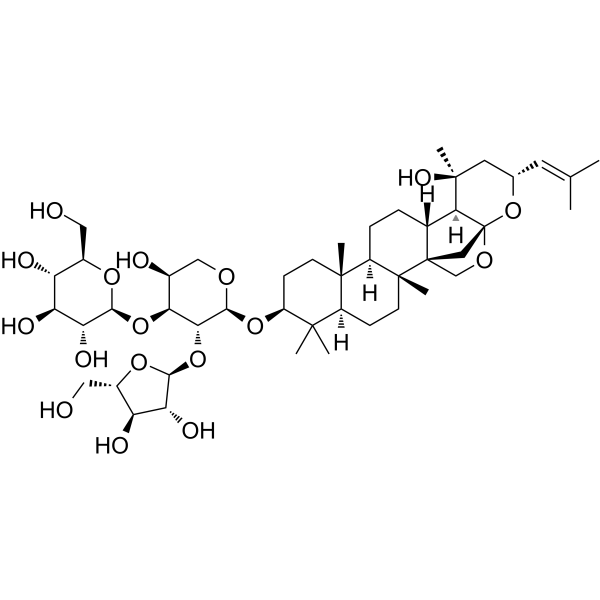
HY-N5140
Bacopaside XSaponin -

HY-127059
Clindamycin Sulfoxide -
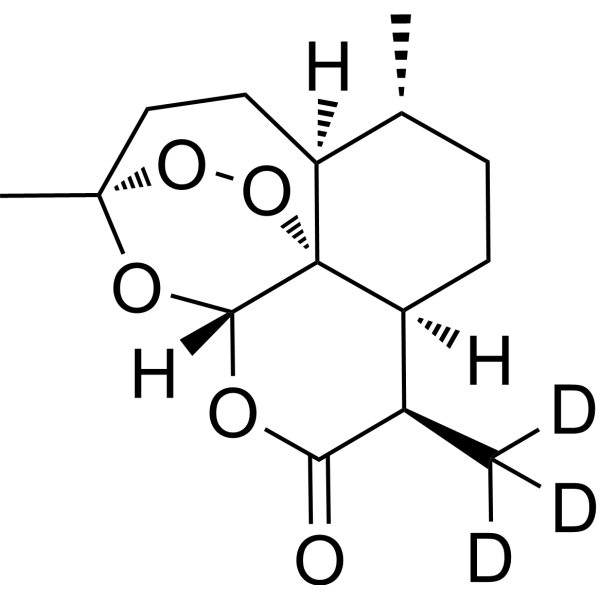
HY-B0094S
Artemisinin-d3Stable Isotope -
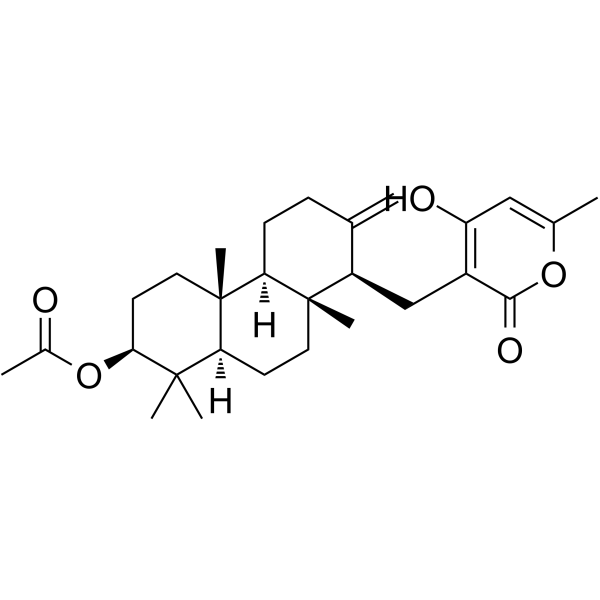
HY-N8258
Aszonapyrone AAntifungal Agent -
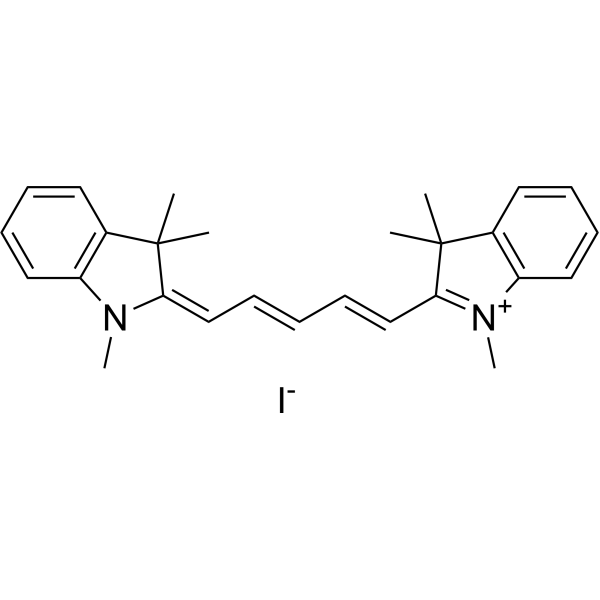
HY-D1075
1,1',3,3,3',3'-Hexamethylindodicarbocyanine iodideFluorochrome
Alle Parasite Isoform-spezifische Produkte anzeigen
More

Biologische Aktivität
Beschreibung


Chemical Information
-
CAS. Nr. 1418291-70-9
-
Molecular Weight 398.50
-
Formel C23H30N2O4
-
SMILES
O=C(C1=NC=C(CCCCCCCCCCC2=CN=C(C(OC)=O)C=C2)C=C1)O
-
Structure Classification
-
Initial Source
Penicillium sp.
-
Versand
Room temperature in continental US; may vary elsewhere.
-
Speicherung
Please store the product under the recommended conditions in the Certificate of Analysis.


Reinheit & Dokumentation
Verweise

Calculators
Konzentration (Stammlösung) × Volumen (Stammlösung) = Konzentration (Ziellösung) × Volumen (Ziellösung)


Penicolinate B Related Classifications
HY-N12230 Related Classifications
 Powered by Bioz