1. Search Result
Search Result
Pathways Recommended: Vitamin D Related/Nuclear Receptor
Results for "

D-( )-Glucose (Standard)

" in MedChemExpress (MCE) Product Catalog:

34

Inhibitors & Agonists

4

Biochemical Assay Reagents

24

Natural
Products

1

Isotope-Labeled Compounds

Cat. No. Product Name Target Research Areas Chemical Structure
  • HY-B0389A
    D-Glucose-13C6
    15+ Cited Publications

    Glucose-13C6; D-(+)-Glucose-13C6; Dextrose-13C6

    Endogenous Metabolite Metabolic Disease
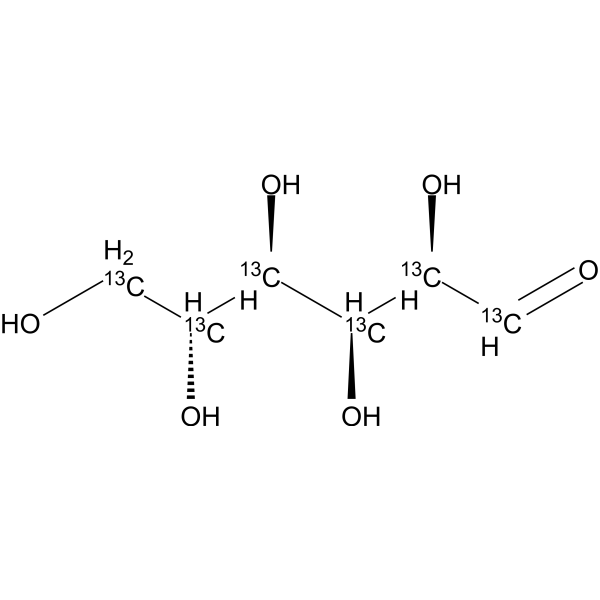
    D-Glucose- 13C6 is a stable isotope-labeled counterpart of D-glucose (HY-B0389). D-Glucose- 13C6 can be used as a metabolic tracer to trace glucose-related synthetic catabolism or as synthesis ingredient, minimal media reagent, and internal standard .
    D-Glucose-13C6
  • HY-113044R

    UDP-D-Glucose (Standard)

    Reference Standards Endogenous Metabolite P2Y Receptor Cardiovascular Disease Metabolic Disease Inflammation/Immunology
    Uridine 5′-diphosphoglucose (Standard) (UDP-D-Glucose (Standard)) is the analytical standard of Uridine 5′-diphosphoglucose (HY-113044). This product is intended for research and analytical applications. Uridine 5’-diphosphoglucose (UDP-glucose), secreted by cardiomyocytes during ischemia and reperfu, is a potent agonist of the proinflammatory P2Y14 receptor. It acts an important role in the regulation of inflammation and neutrophil polarization in neutrophils. Uridine 5’-diphosphoglucose is also the precursor of glucose-containing oligosaccharides, polysaccharides, glycoproteins, and glycolipids in animal tissues and in some microorganisms. Uridine 5’-diphosphoglucose is promising for research in counteracting myocardial infarction/reperfusion (MIR)-induced inflammation in the heart tissue.
    Uridine 5′-diphosphoglucose (Standard)
  • HY-B0389R

    Glucose (Standard); D-(+)-Glucose (Standard); Dextrose (Standard)

    Reference Standards Endogenous Metabolite Cardiovascular Disease Others Metabolic Disease Endocrinology Cancer
    D-Glucose (Standard) is the analytical standard of D-Glucose. This product is intended for research and analytical applications. D-Glucose is the naturally occurring form of glucose and the most abundant monosaccharide. D-Glucose is a critical components of the general metabolism, and serve as critical signaling molecules in relation to both cellular metabolic status and biotic or abiotic stress response .
    D-Glucose (Standard)
  • HY-B1779R

    D-(+)-Saccharose (Standard)

    Reference Standards Endogenous Metabolite Metabolic Disease Cancer
    Sucrose (Standard) is the analytical standard of Sucrose. This product is intended for research and analytical applications. Sucrose (D-(+)-Saccharose) is a disaccharide which is composed of two monosaccharides, glucose and fructose. Sucrose?can be applied in some animal models, including metabolic disease, obesity,?diet on preference,?and diabetes, et al .
    Sucrose (Standard)
  • HY-W134328

    Dextran blue (MW 2000000)

    Biochemical Assay Reagents Others
    Blue dextran (Dextran blue) (MW 2000000) is a high-molecular-weight long-chain polymer of D-glucose. Blue dextran (MW 2000000) serves as an important model macromolecular drug and molecular weight estimation marker, and can be used as a standard for gel permeation chromatography. The release of Blue dextran (MW 2000000) from alginate microspheres is regulated by preparation conditions; its release rate in a pH 6.8 environment is significantly faster than that in pH 1.2, and it exhibits release characteristics close to zero-order kinetics under this condition .
    Blue dextran (MW 2000000)
  • HY-100582R

    Adonitol (Standard); Adonite (Standard)

    Reference Standards Endogenous Metabolite Others
    Ribitol (Standard) is the analytical standard of Ribitol. This product is intended for research and analytical applications. Ribitol is a crystalline pentose alcohol formed by the reduction of ribose. Enhancing the flux of D-glucose to the pentose phosphate pathway in Saccharomyces cerevisiae for the production of D-ribose and ribitol.
    Ribitol (Standard)
  • HY-N0210R

    D-(+)-Galactose (Standard)

    Reference Standards Endogenous Metabolite Neurological Disease
    D-Galactose (Standard) is the analytical standard of D-Galactose. This product is intended for research and analytical applications. D-Galactose is a natural aldohexose and C-4 epimer of glucose.
    D-Galactose (Standard)
  • HY-N0379R

    Reference Standards Endogenous Metabolite Others
    D-Mannose (Standard) is the analytical standard of D-Mannose. This product is intended for research and analytical applications. D-Mannose is a C-2 superpolymer of glucose that occurs naturally in many plants and fruits. D-Mannose has anti-inflammatory and antitumor activity. D-Mannose plays an important role in immune regulation .
    D-Mannose (Standard)
  • HY-128417R

    Reference Standards Endogenous Metabolite Metabolic Disease
    alpha-D-glucose (Standard) is the analytical standard of alpha-D-glucose. This product is intended for research and analytical applications. \alpha-D-glucose is a monosaccharide that has a more significant insulin stimulating effect than beta-D-glucose[1][2].
    alpha-D-glucose (Standard)
  • HY-128374R

    Reference Standards Endogenous Metabolite Metabolic Disease
    D-Glucose 6-phosphate disodium salt (Standard) is the analytical standard of D-Glucose 6-phosphate disodium salt (HY-128374). This product is intended for research and analytical applications. D-Glucose-6-phosphate disodium salt is a glucose sugar phosphorylated at the hydroxy group on carbon 6.
    D-Glucose 6-phosphate disodium salt (Standard)
  • HY-128747R

    Reference Standards Endogenous Metabolite Cardiovascular Disease Metabolic Disease Inflammation/Immunology
    α-D-Glucose-1-phosphate disodium (Standard) is the analytical standard of α-D-Glucose-1-phosphate disodium (HY-128747). This product is intended for research and analytical applications. α-D-Glucose-1-phosphate disodium is used as a starting material for synthesis of glucuronic acid. α-D-Glucose-1-phosphate disodium can be used as a cytostatic compound essential for cardiopathic therapy, as an antibiotic, as an immunosuppressive agent, and as a circulatory system therapy element.
    α-D-Glucose-1-phosphate disodium (Standard)
  • HY-N11848R

    Glucosamine-6-phosphate (Standard)

    Endogenous Metabolite Reference Standards Metabolic Disease
    D-Glucosamine 6-phosphate (Glucosamine-6-phosphate; D-GlcN-6-P) (Standard) is an analytical standard for D-Glucosamine 6-phosphate. This product is used for research and analytical applications. D-Glucosamine 6-phosphate is a phosphorylated amino sugar synthesized by glutamine fructose-6-phosphate aminotransferase (GFAT). The expression level of D-Glucosamine 6-phosphate is regulated by glucose and glutamine concentrations .
    D-Glucosamine 6-phosphate (Standard)
  • HY-N0527R

    Penta-O-galloyl-β-D-Glucose (Standard); 1,2,3,4,6-Pentagalloyl Glucose (Standard)

    Reference Standards JAK Keap1-Nrf2 Apoptosis β-catenin Reactive Oxygen Species (ROS) Neurological Disease Inflammation/Immunology Cancer
    Pentagalloylglucose (Standard) is the analytical standard of Pentagalloylglucose. This product is intended for research and analytical applications. Pentagalloylglucose (Penta-O-galloyl-β-D-glucose) is an orally active gallic tannin compound and an inducer of apoptosis and autophagy. Pentagalloglucose induces cell apoptosis and autophagy through the GSK3β/β-catenin pathway. Pentagalloylglucose inhibits UBE2T-mediated p53 ubiquitination, upregulates p53, downregulates RRM1/RRM2 in pancreatic cancer organoids. Pentagalloglucose has antioxidant, anti mutagenic, anti-inflammatory, anticonvulsant, cardioprotective, anti allergic, cholesterol lowering, and anti-tumor activities .
    Pentagalloylglucose (Standard)
  • HY-113629R

    D-Glucosone (Standard); D-Arabino-hexos-2-ulose (Standard)

    Drug Metabolite Reference Standards Infection
    Cefixime (trihydrate) (Standard) is the analytical standard of Cefixime (trihydrate). This product is intended for research and analytical applications. Cefixime trihydrate (FR-17027 trihydrate) is an antibiotic and a third generation cephalosporin antibiotic, useful for the treatment of a number of bacterial infections .
    2-Keto-D-Glucose (Standard)
  • HY-W050145R

    1,6-Anhydro-β-D-glucopyranose (Standard); 1,6-Anhydro-β-D-Glucose (Standard)

    Reference Standards Endogenous Metabolite Metabolic Disease
    Levoglucosan (Standard) is the analytical standard of Levoglucosan. This product is intended for research and analytical applications. Levoglucosan (1,6-Anhydro-β-D-glucopyranose) is an anhydrosugar produced through glucan pyrolysis and is widely found in nature .
    Levoglucosan (Standard)
  • HY-W087904R

    α-D-Lactose hydrate (Standard)

    Endogenous Metabolite Reference Standards Others
    α-Lactose (hydrate) (Standard) is the analytical standard of α-Lactose (hydrate). This product is intended for research and analytical applications. α-Lactose (hydrate) (α-D-Lactose (hydrate)) is the principal carbohydrate in the milk of most mammals. α-Lactose (hydrate) consists of glucose and galactose and exists in the form of two anomers, α and β. α-Lactose (hydrate) has many uses in the food and pharmaceutical industries, such as a free-flowing or agglomerating agent, a diluent for pigments, flavors, or enzymes .
    α-Lactose hydrate (Standard)
  • HY-N6006R

    1,3,6-Tri-O-galloyl-β-D-Glucose (Standard)

    Reference Standards Others Others
    1,3,6-Tri-O-galloyl-beta-D-glucose (Standard) is the analytical standard of 1,3,6-Tri-O-galloyl-beta-D-glucose. This product is intended for research and analytical applications. 1,3,6-Tri-O-galloyl-beta-D-glucose (1,3,6-Tri-O-galloyl-β-D-glucose) is a phenolic compound in Black Walnut Kernels .
    1,3,6-Tri-O-galloyl-beta-D-glucose (Standard)
  • HY-A0132R

    N-Acetyl-2-amino-2-deoxy-D-Glucose (Standard)

    Reference Standards Endogenous Metabolite Metabolic Disease
    N-Acetyl-D-glucosamine (Standard) is the analytical standard of N-Acetyl-D-glucosamine. This product is intended for research and analytical applications. N-Acetyl-D-Glucosamine (N-Acetyl-2-amino-2-deoxy-D-glucose) is a monosaccharide derivative of glucose.
    N-Acetyl-D-glucosamine (Standard)
  • HY-N0468R

    Reference Standards Acetyl-CoA Carboxylase FXR Metabolic Disease
    Rebaudioside D (Standard) is the analytical standard of Rebaudioside D. This product is intended for research and analytical applications. Rebaudioside D is an orally active sweetener that targets and activates FXR, modulates Acetyl-CoA Carboxylase, and inhibits 3-hydroxy-3-methylglutaryl-CoA reductase. Rebaudioside D regulates bile acid homeostasis and lipid metabolism, reduces the synthesis rates of fatty acids and cholesterol, and exerts multiple effects including anti-adipogenesis, hepatoprotection, anti-steatosis, gut microbiota modulation, enhancement of secondary bile acid metabolism, anti-endotoxin activity, regulation of bile acid transport, and inhibition of bile acid efflux. Rebaudioside D also reduces body weight gain, visceral fat accumulation, hepatic triglyceride and cholesterol accumulation, hepatic lipid peroxidation, and decreases the circulating level of lipopolysaccharide-binding protein. Rebaudioside D additionally enhances the secondary bile acid metabolic pathway of intestinal bacteria, upregulates the gene expression of ileal organic solute transporter α, and downregulates the gene expression of hepatic bile salt export pump. Rebaudioside D does not affect glucose homeostasis, alter total caloric intake or fecal energy excretion, induce weight gain, exacerbate obesity, promote hepatic steatosis, impair brown adipose tissue function, nor change skeletal muscle metabolism-related proteins. Rebaudioside D can be used in diet-induced obesity and obesity-related research .
    Rebaudioside D (Standard)
  • HY-N7433R

    Ethylidene-Glucose (Standard)

    Reference Standards GLUT Endogenous Metabolite Metabolic Disease
    4,6-O-ethylidene-α-D-glucose (Ethylidene-glucose), a glucose derivative, is a competitive exofacial binding-site inhibitor on glucose transporter 1 (GLUT1) with a Ki of 12 mM for wild-type 2-deoxy-D-glucose transport .
    4,6-O-Ethylidene-α-D-glucose (Standard)
  • HY-N3018R

    6-O-α-D-Glucopyranosyl-D-Glucose (Standard); D-Isomaltose (Standard)

    Reference Standards Endogenous Metabolite Parasite Infection Metabolic Disease
    Isomaltose (Standard) is the analytical standard of Isomaltose (HY-N3018). This product is intended for research and analytical applications. Isomaltose induces G-CSF secretion via heat-induced oxidative polymerization of glucose groups into high-molecular-weight compounds. Isomaltose modulates cecal bacterial cluster structure in mice. Isomaltose exhibits low glycemic index, slow hydrolysis, and prebiotic properties. Isomaltose reduces in vivo Cryptosporidium parvum colonization in neonatal mice. Isomaltose can be used for the research of Cryptosporidium parvum infection .
    Isomaltose (Standard)
  • HY-111951R

    Endogenous Metabolite Reference Standards Others
    D-Panose (Standard) is the analytical standard of D-Panose (HY-111951). This product is intended for research and analytical applications. D-Panose is an oligosaccharide composed of glucose units linked by specific glycosidic bonds.
    D-Panose (Standard)
  • HY-107824R

    Endogenous Metabolite Reference Standards Inflammation/Immunology
    D-Melibiose (Standard) is the analytical standard of D-Melibiose. This product is intended for research and analytical applications. D-Melibiose is a disaccharide which is composed of one galactose and one glucose moiety in an alpha (1-6) glycosidic linkage.
    D-Melibiose (Standard)
  • HY-42680R

    D-(-)-Tagatose (Standard)

    Reference Standards Endogenous Metabolite Cardiovascular Disease Metabolic Disease Cancer
    D-Tagatose (Standard) is the analytical standard of D-Tagatose (HY-42680). This product is intended for research and analytical applications. D-Tagatose (D-(-)-Tagatose) is a natural low-calorie rare sugar. D-Tagatose inhibits the activities of sucrase, maltase and intestinal disaccharidases, reduces the digestion of sucrose and starch, and blocks the absorption of sucrose, maltose and glucose. D-Tagatose promotes glucokinase activity and inhibits glycogen phosphorylase activity via tagatose-1-phosphate, regulates the synthesis and decomposition of hepatic glycogen, reduces postprandial and fasting blood glucose levels, and improves hyperinsulinemia. D-Tagatose regulates lipid profiles, stimulates GLP-1 secretion, and exhibits prebiotic effects. D-Tagatose is a bulking sweetener. D-Tagatose can be used in research related to diabetes, hyperlipidemia, dental caries, atherosclerosis and type 2 diabetes.
    D-Tagatose (Standard)
  • HY-N1511R

    Reference Standards Sirtuin Apoptosis Cancer
    Ganoderic acid D (Standard) is the analytical standard of Ganoderic acid D. This product is intended for research and analytical applications. Ganoderic acid D, a highly oxygenated tetracyclic triterpenoid, is the major active component of Ganoderma lucidum. Ganoderic acid D upregulates the protein expression of SIRT3 and induces the deacetylated cyclophilin D (CypD) by SIRT3. Ganoderic acid D inhibits the energy reprogramming of colon cancer cells including glucose uptake, lactate production, pyruvate and acetyl-coenzyme production in colon cancer cells . Ganoderic acid D induces HeLa human cervical carcinoma apoptosis .
    Ganoderic acid D (Standard)
  • HY-128417AR

    Biochemical Assay Reagents Reference Standards Others
    alpha-D-glucose (hydrate) (Standard) is the analytical standard of alpha-D-glucose (hydrate). This product is intended for research and analytical applications. alpha-D-glucose hydrate is a monosaccharide and the most common form of glucose. It is a monosaccharide, which means it cannot be broken down into simpler sugars. alpha-D-glucose plays a vital role in energy metabolism and is the primary source of energy for many cells in the body. It is also a building block of larger carbohydrates such as starch and glycogen. The "α" prefix refers to the orientation of the hydroxyl group attached to the first carbon atom. Alpha-D-glucose exists in solution as a hydrate, which means it is bound to water molecules.
    alpha-D-glucose hydrate (Standard)
  • HY-W049706R

    Penta-O-acetyl-α-D-glucopyranose (Standard)

    Biochemical Assay Reagents Reference Standards Others
    α-D-Glucose pentaacetate (Standard) is the analytical standard of α-D-Glucose pentaacetate. This product is intended for research and analytical applications. α-D-Glucose pentaacetate (Penta-O-acetyl-α-D-glucopyranose) is a synthetic sugar compound.
    α-D-Glucose pentaacetate (Standard)
  • HY-N6082R

    Reference Standards Apoptosis Bacterial Bcl-2 Family Caspase TGF-beta/Smad Infection Metabolic Disease Inflammation/Immunology
    Rhein 8-O-β-D-Glucopyranoside (Standard) is the analytical standard of Rhein 8-O-β-D-Glucopyranoside (HY-N6083). This product is intended for research and analytical applications. Rhein 8-O-β-D-Glucopyranoside is an orally active glycoside found in Rhubarb. Rhein 8-O-β-D-Glucopyranoside attenuates high glucose-induced apoptosis, recovers altered lincRNA ANRIL and let-7a expression, reverses high glucose-altered Bcl-2 and cleaved caspase-3 protein expression, and inhibits TGF-β1/Smad signaling. Rhein 8-O-β-D-Glucopyranoside accelerates Sennoside A (HY-N0365) metabolism, stimulates sennoside A purgative activity. Rhein 8-O-β-D-Glucopyranoside inhibits bacterial biofilm formation, suppresses its virulence gene expression, and exerts antibacterial activity. Rhein 8-O-β-D-Glucopyranoside can be used for the research of diabetic nephropathy, constipation, and infection .
    Rhein 8-O-β-D-Glucopyranoside (Standard)
  • HY-B1092R

    Calcium D-gluconate (Standard); Gluconic acid hemicalcium salt (Standard)

    Reference Standards NO Synthase Endogenous Metabolite Interleukin Related ERK Cardiovascular Disease Inflammation/Immunology Cancer
    Gluconate Calcium (Standard) (Calcium D-gluconate (Standard)) is the analytical standard of Gluconate Calcium (HY-B1092). This product is intended for research and analytical applications. Gluconate (D-Gluconic acid) Calcium is an orally active glucose derivative. Gluconate Calcium reduces nitric oxide and inflammatory cytokines (IL-1β and IL-6). Gluconate Calcium inhibits ERK phosphorylation. Gluconate Calcium has antioxidant and antiplatelet activation activities. Gluconate Calcium has antitumor activity against colorectal cancer. Gluconate Calcium improves osteoarthritis, intestinal damage and acute lung injury .
    Gluconate Calcium (Standard)
  • HY-B1092AR

    D-Gluconic acid sodium salt (Standard); Sodium D-gluconate (Standard); D-Gluconate sodium salt (Standard)

    Reference Standards NO Synthase Endogenous Metabolite Interleukin Related ERK Cardiovascular Disease Inflammation/Immunology Cancer
    Gluconate (D-Gluconic acid) (Standard) is the analytical standard of Gluconate sodium (HY-B1092A). This product is intended for research and analytical applications. Gluconate (D-Gluconic acid) sodium is an orally active glucose derivative. Gluconate sodium reduces nitric oxide and inflammatory cytokines (IL-1β and IL-6). Gluconate sodium inhibits ERK phosphorylation. Gluconate sodium has antioxidant and antiplatelet activation activities. Gluconate sodium has antitumor activity against colorectal cancer. Gluconate sodium improves osteoarthritis, intestinal damage and acute lung injury .
    Gluconate sodium (Standard)
  • HY-113784R

    Isoxyl (Standard)

    Reference Standards Antibiotic Bacterial Infection
    β-Cyclodextrin (Standard) is the analytical standard of β-Cyclodextrin. This product is intended for research and analytical applications. β-Cyclodextrin is a cyclic polysaccharide composed of seven units of glucose (α-D-glucopyranose) linked by α-(1,4) type bonds. β-Cyclodextrin has often been used to enhance the solubility of agents. β-Cyclodextrin has anti-influenza virus H1N1 activities.
    Thiocarlide (Standard)
  • HY-113162R

    Reference Standards Endogenous Metabolite Metabolic Disease Cancer
    α-Lactose (hydrate) (Standard) is the analytical standard of α-Lactose (hydrate). This product is intended for research and analytical applications. α-Lactose (hydrate) (α-D-Lactose (hydrate)) is the principal carbohydrate in the milk of most mammals. α-Lactose (hydrate) consists of glucose and galactose and exists in the form of two anomers, α and β. α-Lactose (hydrate) has many uses in the food and pharmaceutical industries, such as a free-flowing or agglomerating agent, a diluent for pigments, flavors, or enzymes .
    Bovinic acid (Standard)
  • HY-B1114R

    AR-DF 26 (Standard)

    Potassium Channel Reference Standards ERK STAT NF-κB COX Interleukin Related Metabolic Disease
    Gliquidone (Standard) is the analytical standard of Gliquidone. This product is intended for research and analytical applications. Gliquidone can bind to the pancreatic β-cells and increases insulin release to regulate blood glucose levels. Gliquidone significantly decreases LPS (HY-D1056)-induced proinflammatory responses and inhibits ERK/STAT3/NF-κB phosphorylation in BV2 microglial cells. Gliquidone can suppress microgliosis, microglial hypertrophy mediated by LPS, and proinflammatory cytokine COX-2 and IL-6 levels in murine model. Gliquidone also exhibits good anticancer activity in lung carcinoma cells. Gliquidone has antioxidant property. Gliquidone can be studied in research for type 2 diabetes and cancers .
    Gliquidone (Standard)
  • HY-107785R

    D-Glucosamine-2-N-sulfate sodium (Standard)

    Reference Standards Endogenous Metabolite Metabolic Disease
    2-Deoxy-2-sulfoamino-D-glucose (sodium) (Standard) is the analytical standard of 2-Deoxy-2-sulfoamino-D-glucose (sodium). This product is intended for research and analytical applications. 2-Deoxy-2-sulfoamino-D-glucose sodium (D-Glucosamine-2-N-sulfate sodium) is an endogenous metabolite. The main regulatory mechanism of 2-Deoxy-2-sulfoamino-D-glucose sodium involves the interaction of sulfuric acid groups with biomolecules. Sulfate groups can influence the charge density and configuration of polysaccharides, thereby regulating their ability to bind to proteins such as antithrombin. This combination can enhance the activity of antithrombin, which in turn inhibits key enzymes in the blood clotting process to achieve anti-clotting effects. 2-Deoxy-2-sulfoamino-D-glucose sodium can be used to study the selective removal of n-sulfate groups from Heparin (HY-17567) which has important implications for understanding the biological activity of heparin and developing related drugs .
    2-Deoxy-2-sulfoamino-D-glucose sodium (Standard)

Inquiry Online

Your information is safe with us. * Required Fields.

Salutation


Country or Region *

Applicant Name *


Organization Name *

Department *


Email Address *


Product Name *

Cat. No.


Requested quantity *

Phone Number *


Remarks

Inquiry Online

Inquiry Information

Product Name:
Cat. No.:
Quantity:
MCE Japan Authorized Agent: