



Rebaudioside D (Standard)
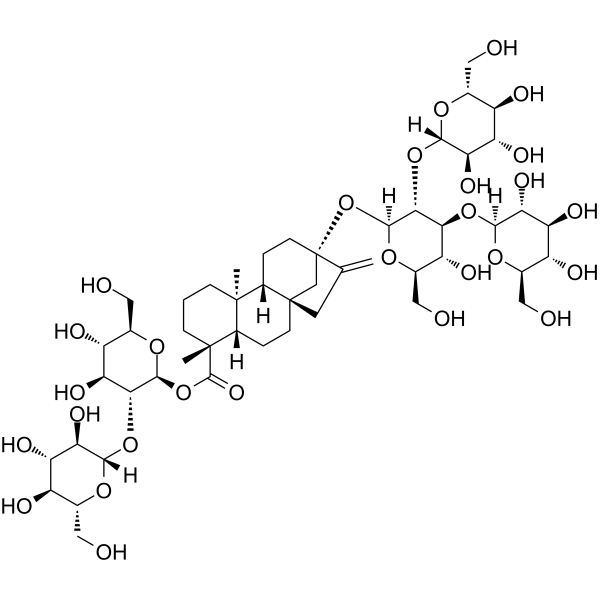
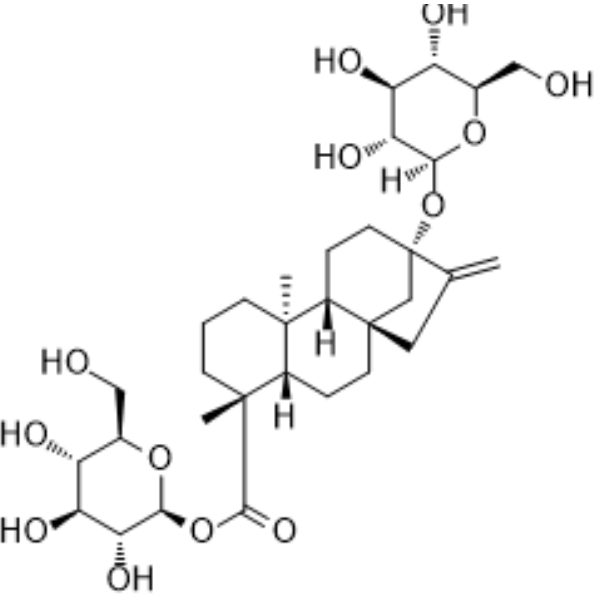
Rebaudioside D (Standard) is the analytical standard of Rebaudioside D. This product is intended for research and analytical applications. Rebaudioside D is an orally active sweetener that targets and activates FXR, modulates Acetyl-CoA Carboxylase, and inhibits 3-hydroxy-3-methylglutaryl-CoA reductase. Rebaudioside D regulates bile acid homeostasis and lipid metabolism, reduces the synthesis rates of fatty acids and cholesterol, and exerts multiple effects including anti-adipogenesis, hepatoprotection, anti-steatosis, gut microbiota modulation, enhancement of secondary bile acid metabolism, anti-endotoxin activity, regulation of bile acid transport, and inhibition of bile acid efflux. Rebaudioside D also reduces body weight gain, visceral fat accumulation, hepatic triglyceride and cholesterol accumulation, hepatic lipid peroxidation, and decreases the circulating level of lipopolysaccharide-binding protein. Rebaudioside D additionally enhances the secondary bile acid metabolic pathway of intestinal bacteria, upregulates the gene expression of ileal organic solute transporter α, and downregulates the gene expression of hepatic bile salt export pump. Rebaudioside D does not affect glucose homeostasis, alter total caloric intake or fecal energy excretion, induce weight gain, exacerbate obesity, promote hepatic steatosis, impair brown adipose tissue function, nor change skeletal muscle metabolism-related proteins. Rebaudioside D can be used in diet-induced obesity and obesity-related research.
For research use only. We do not sell to patients.
- CAS No.: 63279-13-0
- Formula: C₅₀H₈₀O₂₈
- Molecular Weight:1129.15
-
Storage:
Please store the product under the recommended conditions in the Certificate of Analysis.


To place orders, for customer services and technical support, please contact: MedChemExpress USA
Tel: 609-228-6898 E-mail: [email protected] [email protected]


-
 Product Information
-
Chemical Information
- Purity & Documentation
-
 Help & FAQs


-
HY-N0468
Rebaudioside DFarnesoid X Receptor Activator -
HY-N6808
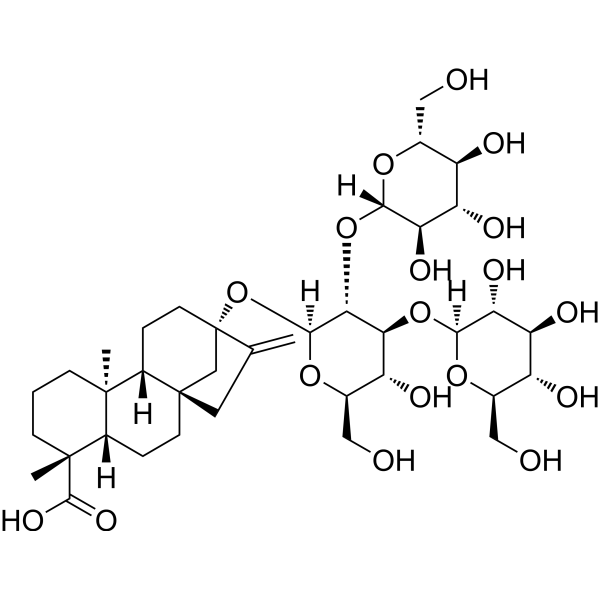
Rebaudioside BSweetener -
HY-N0466
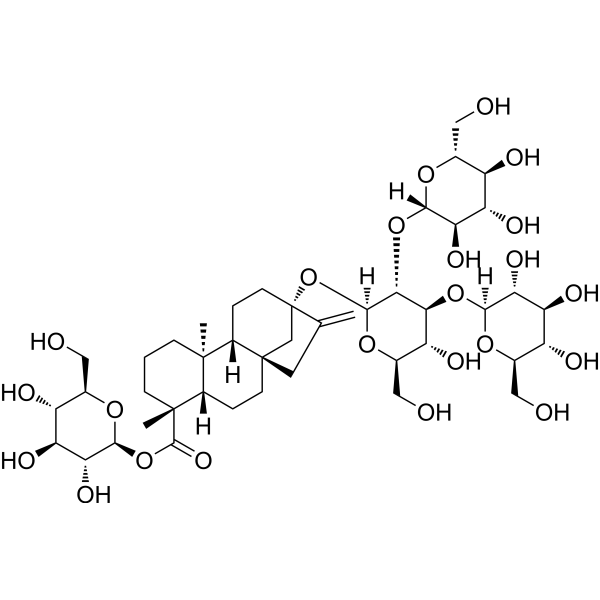
Rebaudioside Aα-Glucosidase Inhibitor -
HY-N0467
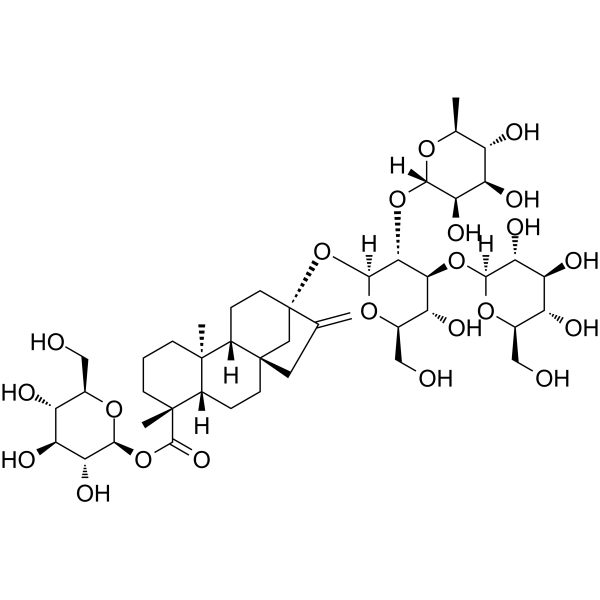
Rebaudioside CTAS1R2/TAS1R3 Activator -

HY-N6808R
Rebaudioside B (Standard)Sweetener -
HY-N0668
RubusosideSolubilizing Agent -

HY-N0466R
Rebaudioside A (Standard)Standard of Rebaudioside A -

HY-N0467R
Rebaudioside C (Standard)Endogenous Metabolite -

HY-N0668R
Rubusoside (Standard)Solubilizing Agent


Product Information
Information
Application
The compound is the grade of analytical standard, which is the reference standard supplied assay. It is commonly used in qualitative, quantitative and methodological research experiments in HPLC, GC and MS.


Chemical Information
-
CAS No. 63279-13-0
-
Molecular Weight 1129.15
-
Formula C₅₀H₈₀O₂₈
-
SMILES
O[C@H]1[C@H](O)[C@@H](CO)O[C@@H](OC([C@@]2(C)[C@](CC[C@]3(CC4=C)[C@@]5([H])CC[C@]4(O[C@]6([H])O[C@H](CO)[C@@H](O)[C@H](O[C@]7([H])O[C@H](CO)[C@@H](O)[C@H](O)[C@H]7O)[C@H]6O[C@@]8([H])[C@H](O)[C@@H](O)[C@H](O)[C@@H](CO)O8)C3)([H])[C@@]5(C)CCC2)=O)[C@@H]1O[C@@]9([H])[C@H](O)[C@@H](O)[C@H](O)[C@@H](CO)O9
-
Structure Classification
-
Initial Source
-
Shipping
Room temperature in continental US; may vary elsewhere.
-
Storage
Please store the product under the recommended conditions in the Certificate of Analysis.


Purity & Documentation
References
[1]. Morissette A, et al. Rebaudioside D decreases adiposity and hepatic lipid accumulation in a mouse model of obesity. Sci Rep. 2024;14(1):3077. Published 2024 Feb 6. [Content Brief]
[2]. Lim S, et al. Rebaudioside D and M, the next-generation sugar substitutes, do not exacerbate metabolic dysfunction in high-fat diet mice. Food Chem X. 2025;29:102679. Published 2025 Jun 19. [Content Brief]

Calculators
Concentration (start) × Volume (start) = Concentration (final) × Volume (final)


Rebaudioside D (Standard) Related Classifications
HY-N0468R Related Classifications
 Powered by Bioz