



Rebaudioside D
Based on 1 publication(s) in Google Scholar
Rebaudioside D is an orally active sweetener that targets and activates FXR, modulates Acetyl-CoA Carboxylase, and inhibits 3-hydroxy-3-methylglutaryl-CoA reductase. Rebaudioside D regulates bile acid homeostasis and lipid metabolism, reduces the synthesis rates of fatty acids and cholesterol, and exerts multiple effects including anti-adipogenesis, hepatoprotection, anti-steatosis, gut microbiota modulation, enhancement of secondary bile acid metabolism, anti-endotoxin activity, regulation of bile acid transport, and inhibition of bile acid efflux. Rebaudioside D also reduces body weight gain, visceral fat accumulation, hepatic triglyceride and cholesterol accumulation, hepatic lipid peroxidation, and decreases the circulating level of lipopolysaccharide-binding protein. Rebaudioside D additionally enhances the secondary bile acid metabolic pathway of intestinal bacteria, upregulates the gene expression of ileal organic solute transporter α, and downregulates the gene expression of hepatic bile salt export pump. Rebaudioside D does not affect glucose homeostasis, alter total caloric intake or fecal energy excretion, induce weight gain, exacerbate obesity, promote hepatic steatosis, impair brown adipose tissue function, nor change skeletal muscle metabolism-related proteins. Rebaudioside D can be used in diet-induced obesity and obesity-related research.
연구목적의 판매만을 진행합니다. 환자를 대상으로 한 판매는 하지 않습니다.
- Purity : 98.48%
- CAS No.: 63279-13-0
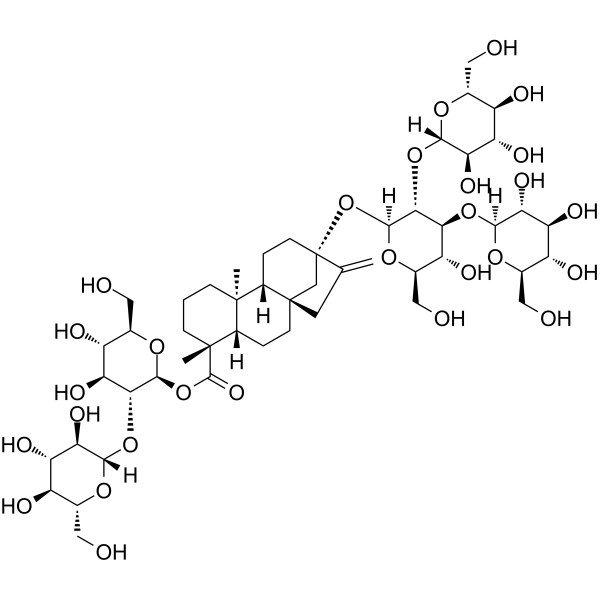
- 화학식: C50H80O28
- 분자량:1129.15
-
보관:
4°C, protect from light
* In solvent : -80°C, 6 months; -20°C, 1 month (protect from light)

To place orders, for customer services and technical support, please contact: MedChemExpress USA
Tel: 609-228-6898 E-mail: [email protected] [email protected]


-
 Biological Activity
-
Chemical Information
-
용액&용해도
- Protocol
- 순도&문서
- References
-
 Help & FAQs


-
HY-N0467
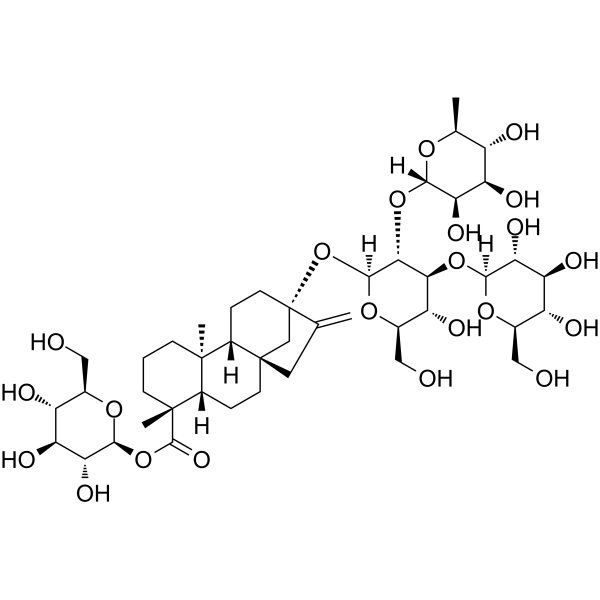
Rebaudioside CTAS1R2/TAS1R3 Activator -
HY-N6808
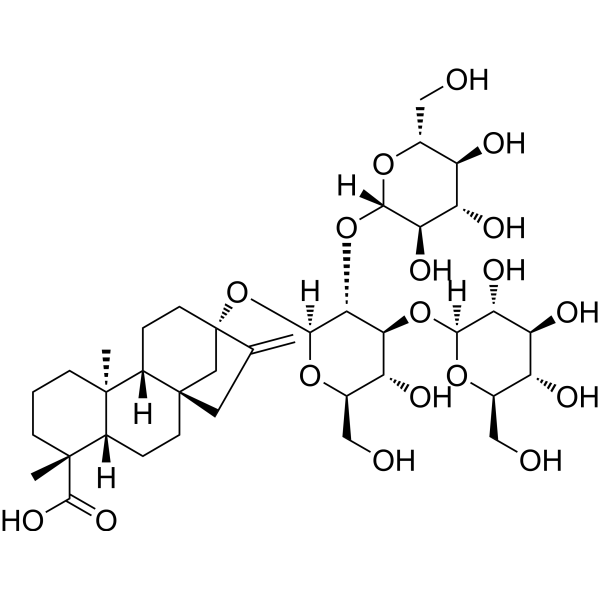
Rebaudioside BSweetener -
HY-N0466
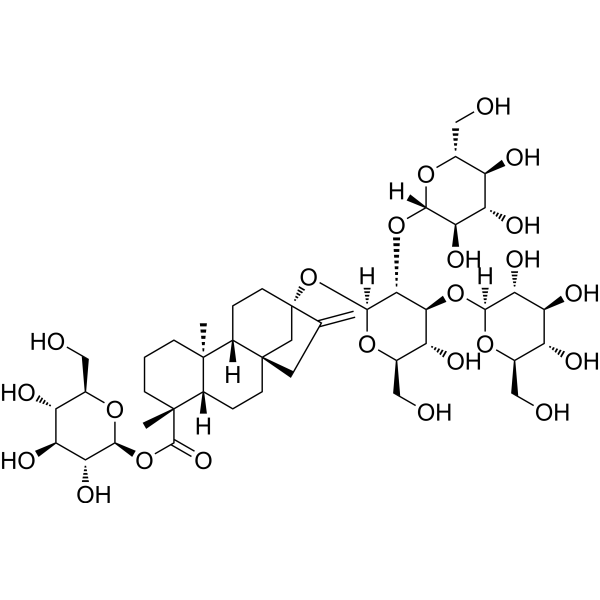
Rebaudioside Aα-Glucosidase Inhibitor -
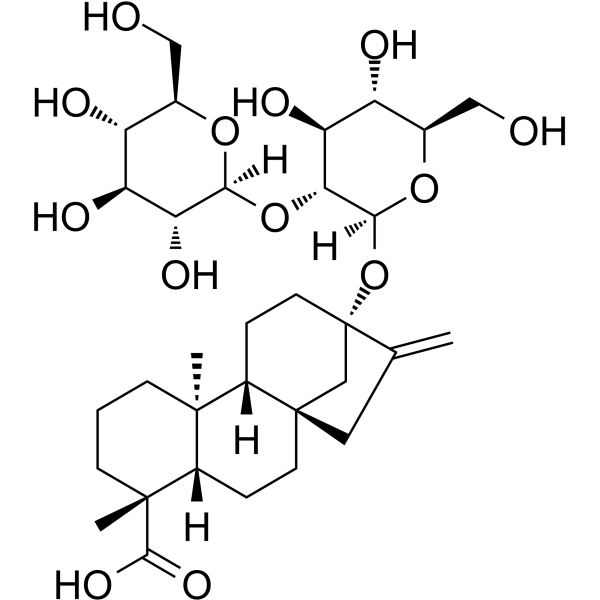
HY-N2547
SteviolbiosideSweetener -
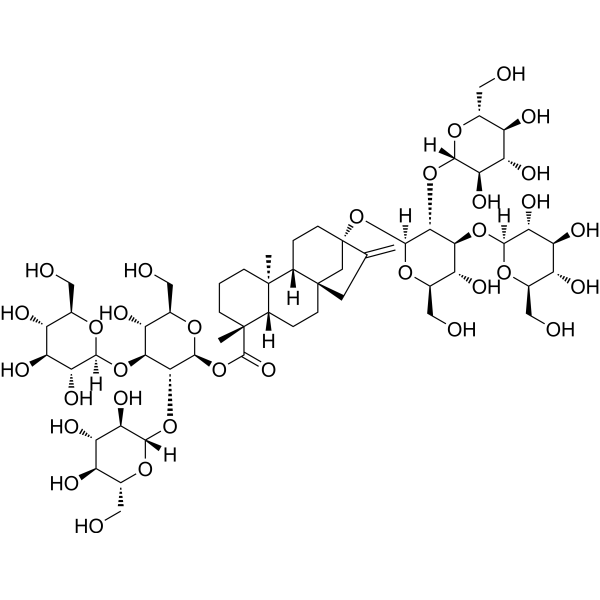
HY-N6833
Rebaudioside MSweetener -
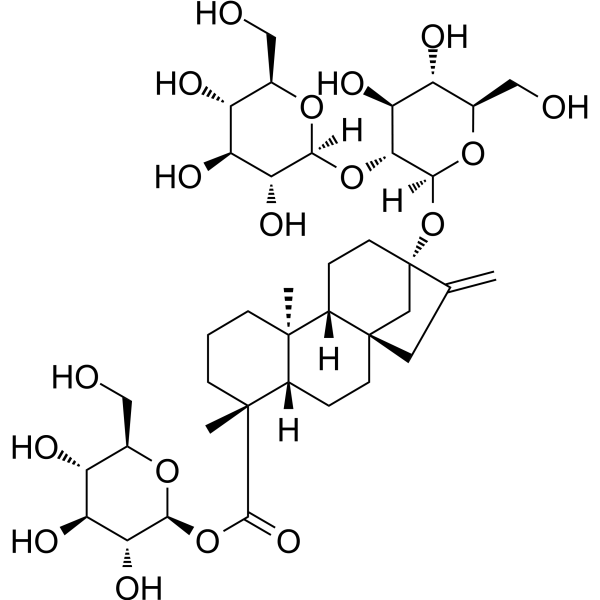
HY-N0669
Steviosidesweetener -
HY-N0668
RubusosideSolubilizing Agent -
HY-N6837
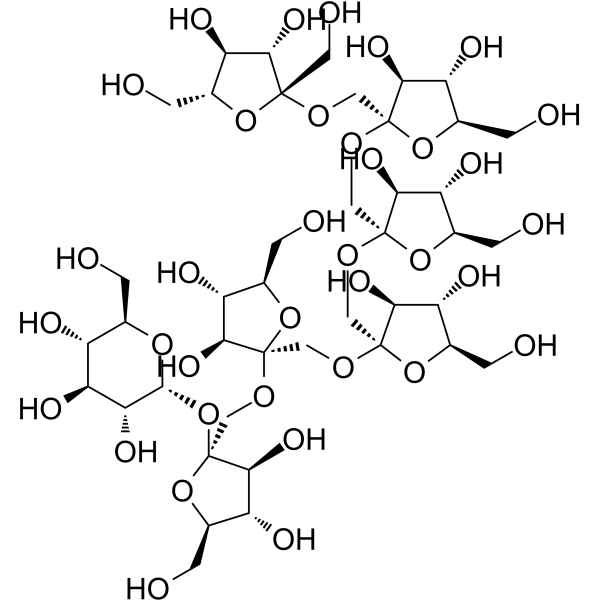
Fructo-oligosaccharide DP7/GF6 -

HY-N0468R
Rebaudioside D (Standard)Sweetener -

HY-N6808R
Rebaudioside B (Standard)Sweetener -

HY-N0466R
Rebaudioside A (Standard)Standard of Rebaudioside A -

HY-N0467R
Rebaudioside C (Standard)Endogenous Metabolite
Publications Citing Use of MedChemExpress (MCE) Rebaudioside D
More

Biological Activity
제품 설명
In Vivo
Rebaudioside D (0.2 g/L (0.02%); ad libitum access via drinking water; continuous administration for 16 weeks) does not induce obesity, hepatic steatosis or brown adipose tissue dysfunction, nor does it interfere with skeletal muscle metabolism in mice fed a regular diet[1].
Rebaudioside D (0.2 g/L (0.02%); free access via drinking water; ad libitum access; for 16 consecutive weeks) does not exacerbate obesity or hepatic steatosis in male mice fed a high-fat diet. It maintains the expression of thermogenic proteins in brown adipose tissue, reduces several serum lipid and blood glucose parameters, and shifts the gut microbiota toward a more beneficial profile[2].
Rebaudioside D (0.2 g/L (0.02%); ad libitum access via drinking water for 16 weeks) does not increase the expression of hepatic lipogenic proteins in female mice fed a high-fat diet[2].
MedChemExpress (MCE) has not independently confirmed the accuracy of these methods. They are for reference only.
-
Animal Model:C57BL/6 J (8-week-old male, high-fat/high-sucrose diet-induced obesity)[1]
-
Dosage:50 mg/kg
-
Administration:p.o.; daily; 12 weeks
-
Result:Reduced weight gain significantly at weeks 8 and 10 through 12 compared to HFHS-fed vehicle controls.
Decreased the sum of all white adipose tissues, with a specific reduction in epididymal adipose tissue weight.
Reduced liver triglyceride and cholesterol levels, and decreased hepatic lipid peroxidation (measured by TBARS).
-
Animal Model:C57BL/6J (male, 8-10 weeks old)[2]
-
Dosage:0.2 g/L (0.02%)
-
Administration:in drinking water; ad libitum; daily for 16 weeks
-
Result:Showed no significant difference in oral glucose tolerance test AUC, with a non-significant decreasing trend in fasting blood glucose levels compared to HFD controls.
Had a relative abundance of Bacillota phylum of 75.3%, relative abundance of Akkermansia of 8.07%, and relative abundance of Faecalibaculum of 13.57%.
Identified short-chain fatty acid-producing genera including Faecalibaculum, Acetatifactor, and Parabacteroides as biomarkers via LEfSe analysis.
- RT-PCR
- 3T3-L1 preadipocyte-to-adipocyte differentiation
- RNA extraction experimental
- Large-size fat particle sorting
- Research Protocol for Microbiome Analysis
- Ferroptosis Solutions
- Research Protocol for Metabolic Diseases
- Real Time qPCR (Q-PCR)
- Lipid Droplets: Oil Red O/Sudan Dye Lipid Staining
- Liver Histomorphometry


Chemical Information
-
CAS No. 63279-13-0
-
Appearance Solid
-
분자량 1129.15
-
화학식 C50H80O28
-
Color White to off-white
-
SMILES
O[C@H]1[C@H](O)[C@@H](CO)O[C@@H](OC([C@@]2(C)[C@](CC[C@]3(CC4=C)[C@@]5([H])CC[C@]4(O[C@]6([H])O[C@H](CO)[C@@H](O)[C@H](O[C@]7([H])O[C@H](CO)[C@@H](O)[C@H](O)[C@H]7O)[C@H]6O[C@@]8([H])[C@H](O)[C@@H](O)[C@H](O)[C@@H](CO)O8)C3)([H])[C@@]5(C)CCC2)=O)[C@@H]1O[C@@]9([H])[C@H](O)[C@@H](O)[C@H](O)[C@@H](CO)O9
-
Structure Classification
-
Initial Source
-
선적
Room temperature in continental US; may vary elsewhere.
-
보관
4°C, protect from light
* In solvent : -80°C, 6 months; -20°C, 1 month (protect from light)


Publications (1)
-
Journal Impact Factor
-
Most Recent


용액&용해도
In Vitro:
DMSO : 100 mg/mL (88.56 mM; Need ultrasonic; Hygroscopic DMSO has a significant impact on the solubility of product, please use newly opened DMSO)
H2O : < 0.1 mg/mL (insoluble)
Please refer to the solubility information to select the appropriate solvent. Once prepared, please aliquot and store the solution to prevent product inactivation from repeated freeze-thaw cycles.
Storage method and period of stock solution: -80°C, 6 months; -20°C, 1 month (protect from light). When stored at -80°C, please use it within 6 months. When stored at -20°C, please use it within 1 month.
Please refer to the solubility information to select the appropriate solvent. Once prepared, please aliquot and store the solution to prevent product inactivation from repeated freeze-thaw cycles.
Storage method and period of stock solution: -80°C, 6 months; -20°C, 1 month (protect from light). When stored at -80°C, please use it within 6 months. When stored at -20°C, please use it within 1 month.
Concentration (start) × Volume (start) = Concentration (final) × Volume (final)
In Vivo:
Select the appropriate dissolution method based on your experimental animal and administration route.
- For the following dissolution methods, please ensure to first prepare a clear stock solution using an In Vitro approach and then sequentially add co-solvents:
- To ensure reliable experimental results, the clarified stock solution can be appropriately stored based on storage conditions. As for the working solution for In Vivo experiments, it is recommended to prepare freshly and use it on the same day.
- The percentages shown for the solvents indicate their volumetric ratio in the final prepared solution. If precipitation or phase separation occurs during preparation, heat and/or sonication can be used to aid dissolution.
Add each solvent one by one: 10% DMSO 40% PEG300 5% Tween-80 45% Saline
Solubility: ≥ 2.5 mg/mL (2.21 mM); Clear solution
This protocol yields a clear solution of ≥ 2.5 mg/mL (saturation unknown).
Taking 1 mL working solution as an example, add 100 μL DMSO stock solution (25.0 mg/mL) to 400 μL PEG300, and mix evenly; then add 50 μL Tween-80 and mix evenly; then add 450 μL Saline to adjust the volume to 1 mL.
Preparation of Saline: Dissolve 0.9 g sodium chloride in ddH₂O and dilute to 100 mL to obtain a clear Saline solution.
Add each solvent one by one: 10% DMSO 90% (20% SBE-β-CD in Saline)
Solubility: ≥ 2.5 mg/mL (2.21 mM); Clear solution
This protocol yields a clear solution of ≥ 2.5 mg/mL (saturation unknown).
Taking 1 mL working solution as an example, add 100 μL DMSO stock solution (25.0 mg/mL) to 900 μL 20% SBE-β-CD in Saline, and mix evenly.
Preparation of 20% SBE-β-CD in Saline (4°C, storage for one week): 2 g SBE-β-CD powder is dissolved in 10 mL Saline, completely dissolve until clear.
In Vivo Dissolution Calculator
Please enter the basic information of animal experiments:
-
-
-
-
Recommended: Prepare an additional quantity of animals to account for potential losses during experiments.
Please enter your animal formula composition:
-
%DMSO +
Recommended: Keep the proportion of DMSO in working solution below 2% if your animal is weak.
-
%+
-
+%Tween-80 + +
-
%Saline +
The co-solvents required include: DMSO, . All of co-solvents are available by MedChemExpress (MCE). , Tween 80. All of co-solvents are available by MedChemExpress (MCE).
Working solution concentration: 0.22 mg/mL
Method for preparing stock solution: mg drug dissolved in μL DMSO. Stock solution concentration: mg/mL. * In solvent : -80°C, 6 months; -20°C, 1 month (protect from light)
1. Take μL DMSO stock solution;
2. Add μL .
μL , mix evenly;
3. Then add μL Tween 80, mix evenly;
4. Then add μL
Please ensure that the stock solution in the first step is dissolved to a clear state, and add co-solvents in sequence. You can use ultrasonic heating (ultrasonic cleaner, recommended frequency 20-40 kHz), vortexing, etc. to assist dissolution.


순도&문서
-
Data Sheet (285 KB)
-
SDS (394 KB)
- English - EN (394 KB)
- Français - FR (394 KB)
- Deutsch - DE (394 KB)
- Norwegian - NO (394 KB)
- Español - ES (394 KB)
- Swedish - SV (394 KB)
- Italian - IT (394 KB)
- Korean - KR (394 KB)
- Portuguese - PT (394 KB)
-
Handling Instructions (2659 KB)
References
[1]. Morissette A, et al. Rebaudioside D decreases adiposity and hepatic lipid accumulation in a mouse model of obesity. Sci Rep. 2024;14(1):3077. Published 2024 Feb 6. [Content Brief]
[2]. Lim S, et al. Rebaudioside D and M, the next-generation sugar substitutes, do not exacerbate metabolic dysfunction in high-fat diet mice. Food Chem X. 2025;29:102679. Published 2025 Jun 19. [Content Brief]


Complete Stock Solution Preparation Table
Please refer to the solubility information to select the appropriate solvent. Once prepared, please aliquot and store the solution to prevent product inactivation from repeated freeze-thaw cycles.
Storage method and period of stock solution: -80°C, 6 months; -20°C, 1 month (protect from light). When stored at -80°C, please use it within 6 months. When stored at -20°C, please use it within 1 month.
| Optional Solvent | Concentration Solvent Mass | 1 mg | 5 mg | 10 mg | 25 mg |
|---|---|---|---|---|---|
| DMSO | 1 mM | 0.8856 mL | 4.4281 mL | 8.8562 mL | 22.1405 mL |
| 5 mM | 0.1771 mL | 0.8856 mL | 1.7712 mL | 4.4281 mL | |
| 10 mM | 0.0886 mL | 0.4428 mL | 0.8856 mL | 2.2141 mL | |
| 15 mM | 0.0590 mL | 0.2952 mL | 0.5904 mL | 1.4760 mL | |
| 20 mM | 0.0443 mL | 0.2214 mL | 0.4428 mL | 1.1070 mL | |
| 25 mM | 0.0354 mL | 0.1771 mL | 0.3542 mL | 0.8856 mL | |
| 30 mM | 0.0295 mL | 0.1476 mL | 0.2952 mL | 0.7380 mL | |
| 40 mM | 0.0221 mL | 0.1107 mL | 0.2214 mL | 0.5535 mL | |
| 50 mM | 0.0177 mL | 0.0886 mL | 0.1771 mL | 0.4428 mL | |
| 60 mM | 0.0148 mL | 0.0738 mL | 0.1476 mL | 0.3690 mL | |
| 80 mM | 0.0111 mL | 0.0554 mL | 0.1107 mL | 0.2768 mL |


Rebaudioside D Related Classifications
HY-N0468 Related Classifications
 Powered by Bioz
Keywords
- Rebaudioside D
- 63279-13-0
- FXR
- Acetyl-CoA Carboxylase
- acetyl-CoA carboxylase
- 3-hydroxy-3-methylglutaryl-CoA reductase
- lipid metabolism
- Faecalibaculum rodentium
- HFHS-fed obese mice
- diet-induced obesity
- high-fat diet-fed male mice
- chow diet-fed mice
- bile acid homeostasis
- farnesoid X receptor
- Inhibitor
- inhibitor
- inhibit