



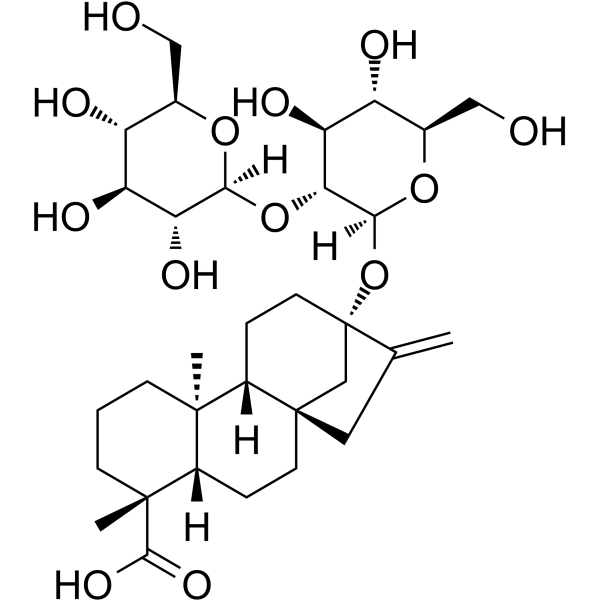
Steviolbioside
Based on 1 publication(s) in Google Scholar
Steviolbioside is a sweetener and also an important pharmaceutical intermediate. Steviolbioside can inhibit the proliferation of various tumor cells. Steviolbioside has an MIC of 3.8 µg/mL for Mycobacterium tuberculosis. Steviolbioside also has antidiabetic activity. Steviolbioside can be used in the research of tuberculosis, diabetes and tumors such as breast cancer.
For research use only. We do not sell to patients.
- Purity : 99.98%
- CAS No.: 41093-60-1
- Formula: C32H50O13
- Molecular Weight:642.73
-
Storage:
4°C, protect from light
* In solvent : -80°C, 6 months; -20°C, 1 month (protect from light)

To place orders, for customer services and technical support, please contact: MedChemExpress USA
Tel: 609-228-6898 E-mail: [email protected] [email protected]


-
 Biological Activity
-
Chemical Information
-
Solvent & Solubility
- Protocols
- Purity & Documentation
- References
-
 Help & FAQs


-
HY-N0669
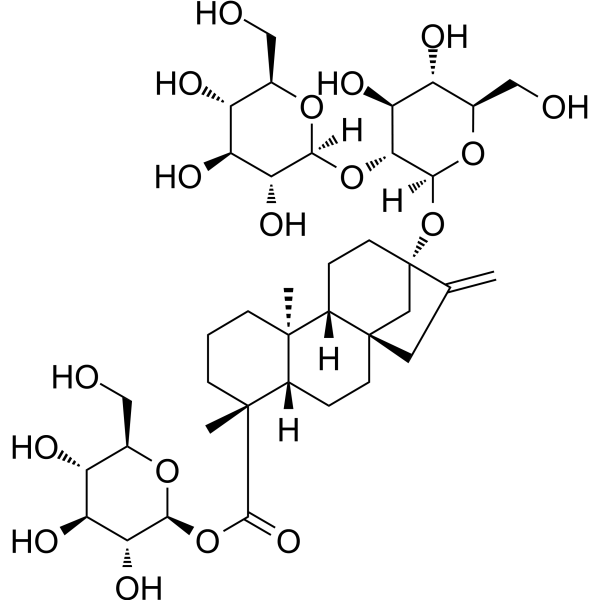
Steviosidesweetener -
HY-N0668
RubusosideSolubilizing Agent -
HY-17556
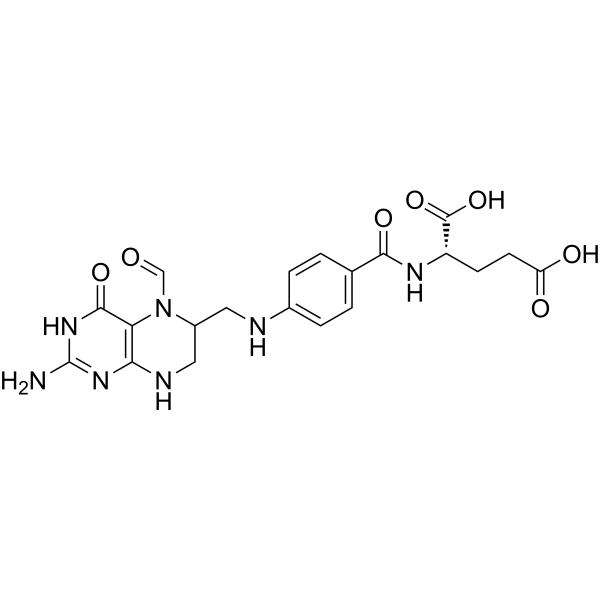
Folinic acidBiological Folic Acid -
HY-N0466
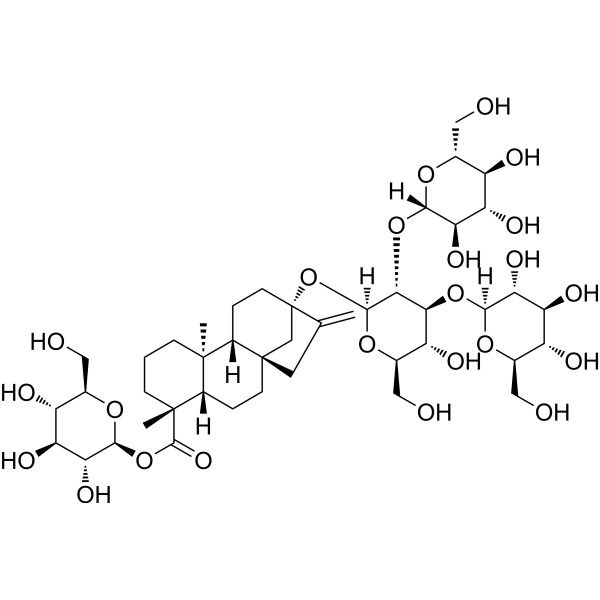
Rebaudioside Aα-Glucosidase Inhibitor -
HY-N0467
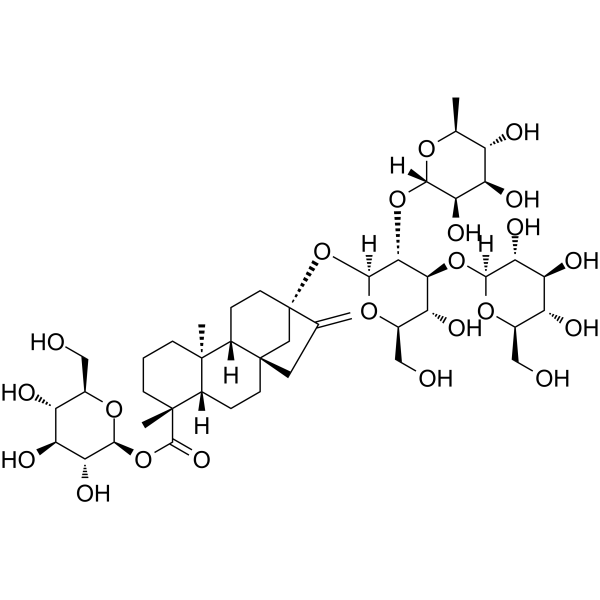
Rebaudioside CTAS1R2/TAS1R3 Activator -
HY-N0468
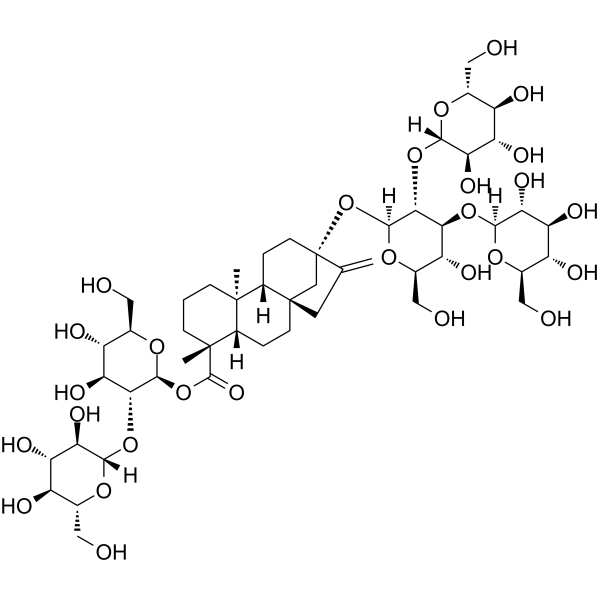
Rebaudioside DFarnesoid X Receptor Activator -

HY-N2547R
Steviolbioside (Standard)Standard of Steviolbioside -
HY-N6808
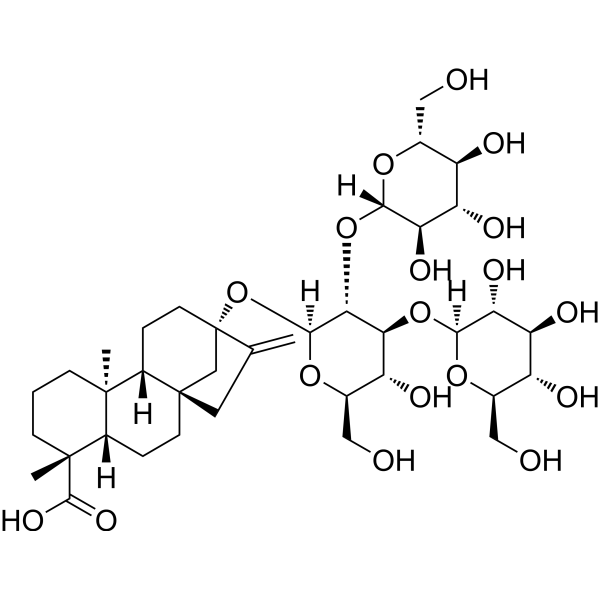
Rebaudioside BSweetener
Publications Citing Use of MedChemExpress (MCE) Steviolbioside
More

Biological Activity
Description
In Vitro
Steviolbioside (250 μg/mL; 48 h) can inhibit the proliferation of human hepatocellular carcinoma cells Hep3B, human breast cancer cells MDA-MB-231 and human pancreatic cancer cells BxPC-3[1].
MedChemExpress (MCE) has not independently confirmed the accuracy of these methods. They are for reference only.
In Vivo
MedChemExpress (MCE) has not independently confirmed the accuracy of these methods. They are for reference only.
-
Animal Model:Male ICR mice (5-6 weeks old, body weight 20±2 g) treated high-fat diet and Streptozotocin (HY-13753) to induce diabetes[2]
-
Dosage:8 mg/kg
-
Administration:6 weeks
-
Result:Increased the mice's body weight, reduced fasting blood glucose, improved glucose tolerance, promoted insulin secretion and hepatic glycogen synthesis.
Decreased the levels of triglycerides, total cholesterol and low-density lipoprotein cholesterol while increasing the level of high-density lipoprotein cholesterol.
Alleviated oxidative stress.


Chemical Information
-
CAS No. 41093-60-1
-
Appearance Solid
-
Molecular Weight 642.73
-
Formula C32H50O13
-
Color White to off-white
-
SMILES
C[C@]12[C@@]3([H])[C@@](C4)(CC[C@]1([H])[C@@](C)(CCC2)C(O)=O)C[C@@](C4=C)(O[C@@]5([H])[C@@H]([C@H]([C@H](O)[C@@H](CO)O5)O)O[C@]6([H])O[C@@H]([C@@H](O)[C@H](O)[C@H]6O)CO)CC3
-
Structure Classification
-
Initial Source
-
Shipping
Room temperature in continental US; may vary elsewhere.
-
Storage
4°C, protect from light
* In solvent : -80°C, 6 months; -20°C, 1 month (protect from light)


Publications (1)
-
Journal Impact Factor
-
Most Recent
-
Cancers (Basel)
2024 Nov 12;16(22):3807. PMID: 39594764


Solvent & Solubility
In Vitro:
DMSO : 100 mg/mL (155.59 mM; Need ultrasonic; Hygroscopic DMSO has a significant impact on the solubility of product, please use newly opened DMSO)
Please refer to the solubility information to select the appropriate solvent. Once prepared, please aliquot and store the solution to prevent product inactivation from repeated freeze-thaw cycles.
Storage method and period of stock solution: -80°C, 6 months; -20°C, 1 month (protect from light). When stored at -80°C, please use it within 6 months. When stored at -20°C, please use it within 1 month.
Please refer to the solubility information to select the appropriate solvent. Once prepared, please aliquot and store the solution to prevent product inactivation from repeated freeze-thaw cycles.
Storage method and period of stock solution: -80°C, 6 months; -20°C, 1 month (protect from light). When stored at -80°C, please use it within 6 months. When stored at -20°C, please use it within 1 month.
Concentration (start) × Volume (start) = Concentration (final) × Volume (final)
In Vivo:
Select the appropriate dissolution method based on your experimental animal and administration route.
- For the following dissolution methods, please ensure to first prepare a clear stock solution using an In Vitro approach and then sequentially add co-solvents:
- To ensure reliable experimental results, the clarified stock solution can be appropriately stored based on storage conditions. As for the working solution for In Vivo experiments, it is recommended to prepare freshly and use it on the same day.
- The percentages shown for the solvents indicate their volumetric ratio in the final prepared solution. If precipitation or phase separation occurs during preparation, heat and/or sonication can be used to aid dissolution.
Add each solvent one by one: 10% DMSO 40% PEG300 5% Tween-80 45% Saline
Solubility: ≥ 2.5 mg/mL (3.89 mM); Clear solution
This protocol yields a clear solution of ≥ 2.5 mg/mL (saturation unknown).
Taking 1 mL working solution as an example, add 100 μL DMSO stock solution (25.0 mg/mL) to 400 μL PEG300, and mix evenly; then add 50 μL Tween-80 and mix evenly; then add 450 μL Saline to adjust the volume to 1 mL.
Preparation of Saline: Dissolve 0.9 g sodium chloride in ddH₂O and dilute to 100 mL to obtain a clear Saline solution.
Add each solvent one by one: 10% DMSO 90% (20% SBE-β-CD in Saline)
Solubility: ≥ 2.5 mg/mL (3.89 mM); Clear solution
This protocol yields a clear solution of ≥ 2.5 mg/mL (saturation unknown).
Taking 1 mL working solution as an example, add 100 μL DMSO stock solution (25.0 mg/mL) to 900 μL 20% SBE-β-CD in Saline, and mix evenly.
Preparation of 20% SBE-β-CD in Saline (4°C, storage for one week): 2 g SBE-β-CD powder is dissolved in 10 mL Saline, completely dissolve until clear.
In Vivo Dissolution Calculator
Please enter the basic information of animal experiments:
-
-
-
-
Recommended: Prepare an additional quantity of animals to account for potential losses during experiments.
Please enter your animal formula composition:
-
%DMSO +
Recommended: Keep the proportion of DMSO in working solution below 2% if your animal is weak.
-
%+
-
+%Tween-80 + +
-
%Saline +
The co-solvents required include: DMSO, . All of co-solvents are available by MedChemExpress (MCE). , Tween 80. All of co-solvents are available by MedChemExpress (MCE).
Working solution concentration: 0.22 mg/mL
Method for preparing stock solution: mg drug dissolved in μL DMSO. Stock solution concentration: mg/mL. * In solvent : -80°C, 6 months; -20°C, 1 month (protect from light)
1. Take μL DMSO stock solution;
2. Add μL .
μL , mix evenly;
3. Then add μL Tween 80, mix evenly;
4. Then add μL
Please ensure that the stock solution in the first step is dissolved to a clear state, and add co-solvents in sequence. You can use ultrasonic heating (ultrasonic cleaner, recommended frequency 20-40 kHz), vortexing, etc. to assist dissolution.


Purity & Documentation
-
Data Sheet (285 KB)
-
SDS (393 KB)
- English - EN (393 KB)
- Français - FR (393 KB)
- Deutsch - DE (393 KB)
- Norwegian - NO (393 KB)
- Español - ES (393 KB)
- Swedish - SV (393 KB)
- Italian - IT (393 KB)
- Korean - KR (393 KB)
- Portuguese - PT (393 KB)
-
Handling Instructions (2659 KB)
References
[1]. Chen JM, et al. Production of a bioactive sweetener steviolbioside via specific hydrolyzing ester linkage of stevioside with a β-galactosidase. Food Chem. 2016 Apr 1;196:155-60. [Content Brief]
[2]. Myint KZ, et al. Structural dependence of antidiabetic effect of steviol glycosides and their metabolites on streptozotocin-induced diabetic mice. J Sci Food Agric. 2020 Aug;100(10):3841-3849. [Content Brief]
[3]. Kataev VE, et al. [Synthesis and antituberculosis activity of the derivatives of glycoside steviolbioside from the plant Stevia rebaudiana and diterpenoid isosteviol containing hydrazone, hydrazide and pyridinoyl moieties]. Bioorg Khim. 2011 Jul-Aug;37(4):542-51. [Content Brief]


Complete Stock Solution Preparation Table
Please refer to the solubility information to select the appropriate solvent. Once prepared, please aliquot and store the solution to prevent product inactivation from repeated freeze-thaw cycles.
Storage method and period of stock solution: -80°C, 6 months; -20°C, 1 month (protect from light). When stored at -80°C, please use it within 6 months. When stored at -20°C, please use it within 1 month.
| Optional Solvent | Concentration Solvent Mass | 1 mg | 5 mg | 10 mg | 25 mg |
|---|---|---|---|---|---|
| DMSO | 1 mM | 1.5559 mL | 7.7793 mL | 15.5586 mL | 38.8966 mL |
| 5 mM | 0.3112 mL | 1.5559 mL | 3.1117 mL | 7.7793 mL | |
| 10 mM | 0.1556 mL | 0.7779 mL | 1.5559 mL | 3.8897 mL | |
| 15 mM | 0.1037 mL | 0.5186 mL | 1.0372 mL | 2.5931 mL | |
| 20 mM | 0.0778 mL | 0.3890 mL | 0.7779 mL | 1.9448 mL | |
| 25 mM | 0.0622 mL | 0.3112 mL | 0.6223 mL | 1.5559 mL | |
| 30 mM | 0.0519 mL | 0.2593 mL | 0.5186 mL | 1.2966 mL | |
| 40 mM | 0.0389 mL | 0.1945 mL | 0.3890 mL | 0.9724 mL | |
| 50 mM | 0.0311 mL | 0.1556 mL | 0.3112 mL | 0.7779 mL | |
| 60 mM | 0.0259 mL | 0.1297 mL | 0.2593 mL | 0.6483 mL | |
| 80 mM | 0.0194 mL | 0.0972 mL | 0.1945 mL | 0.4862 mL | |
| 100 mM | 0.0156 mL | 0.0778 mL | 0.1556 mL | 0.3890 mL |


Steviolbioside Related Classifications
HY-N2547 Related Classifications
 Powered by Bioz