1. Search Result
Search Result
Pathways Recommended: Cell Cycle/DNA Damage
Results for "

DNA and RNA viruses

" in MedChemExpress (MCE) Product Catalog:

20

Inhibitors & Agonists

1

Biochemical Assay Reagents

2

Peptides

2

Natural
Products

2

Isotope-Labeled Compounds

1

Oligonucleotides

Cat. No. Product Name Target Research Areas Chemical Structure
  • HY-P2853

    p38 MAPK Reactive Oxygen Species (ROS) Bacterial Fungal Infection Inflammation/Immunology Cancer
    Hemocyanin is an extracellular giant copper-containing glycoprotein. Hemocyanin can be found in the hemolymph of both mollusk and arthropod. Hemocyanin is responsible for oxygen transport. Hemocyanin is also involved in several physiological processes, such as energy storage, osmoregulation, molt cycle and exoskeleton formation. Hemocyanin in shrimp can enhance its immune response by modulating the p38 MAPK pathway. Hemocyanin from Penaeus monodon could act as an antiviral agent against a variety of viruses including DNA and RNA viruses. Hemocyanin from horseshoe crab Carcinoscorpius rotundicauda could possess a strong antimicrobial defense by the production of ROS activated with microbial proteases. Hemocyanin from L. vannamei would be effective against cervical cancer cell growth .
    Hemocyanin
  • HY-P2310

    Bacterial Parasite Apoptosis HIV HSV CMV TNF Receptor NOD-like Receptor (NLR) DNA/RNA Synthesis Influenza Virus Cardiovascular Disease Infection
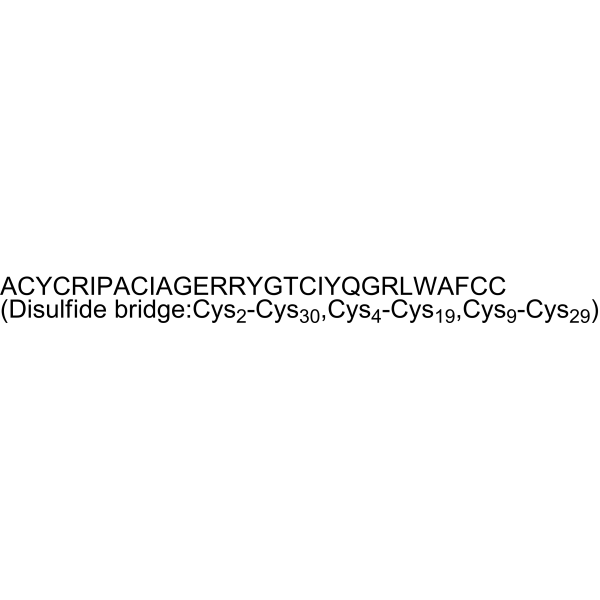
    Defensin HNP-1 human is a type of human neutrophil peptide (HNPs). Defensin HNP-1 human possesses immunomodulatory functions and can delay the apoptosis of neutrophils. Defensin HNP-1 human inhibits DNA/RNA/protein synthesis and interferes with metabolic pathways, thus exhibiting broad antibacterial activity. Defensin HNP-1 human has direct inactivation effects on HIV, HSV-1, HSV-2, CMV, influenza virus, etc. Defensin HNP-1 human has antileishmanial activity. Defensin HNP-1 human is involved in endothelial cell dysfunction during the early development of atherosclerosis .
    Defensin HNP-1 human
  • HY-B0420A
    Moroxydine hydrochloride
    1 Publications Verification

    ABOB hydrochloride

    Influenza Virus HCV HSV Apoptosis Caspase Infection
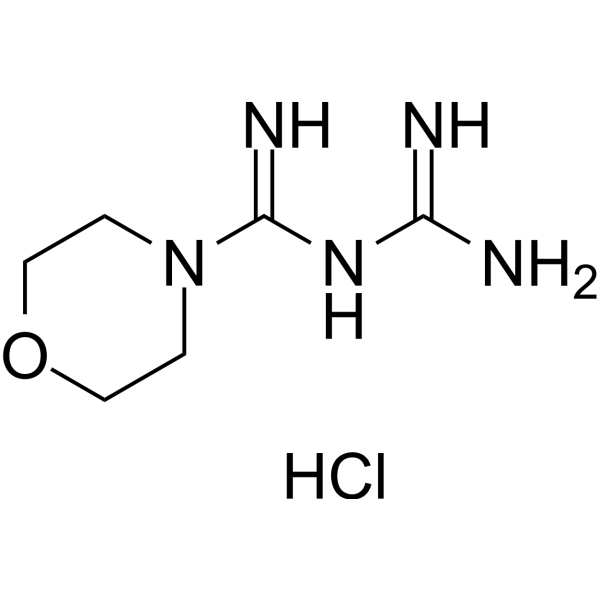
    Moroxydine (ABOB) hydrochloride is a broad-spectrum agent with multi-antiviral activities against DNA and RNA viruses, including influenza virus, herpes simplex, varicella zoster, measles, mumps disease, hepatitis C virus, etc. Moroxydine hydrochloride exhibits excellent antiviral activity and shows low cytotoxicity to cells infected by dsRNA viruses (grass carp reovirus, GCRV) and large DNA viruses (giant salamander iridovirus, GSIV). Moroxydine hydrochloride blocks the GCRV-induced cytopathic effects and eliminates nucleocapsids in ctenopharyngodon idella kidney (CIK) cells to keep the normal morphological structure. Moroxydine hydrochloride significantly inhibits the apoptosis, the caspase 3 activity, Bax expression and down-regulates Bcl-2 levels .
    Moroxydine hydrochloride
  • HY-138577

    Phosphoramidites DNA/RNA Synthesis Nucleoside Antimetabolite/Analog Cancer
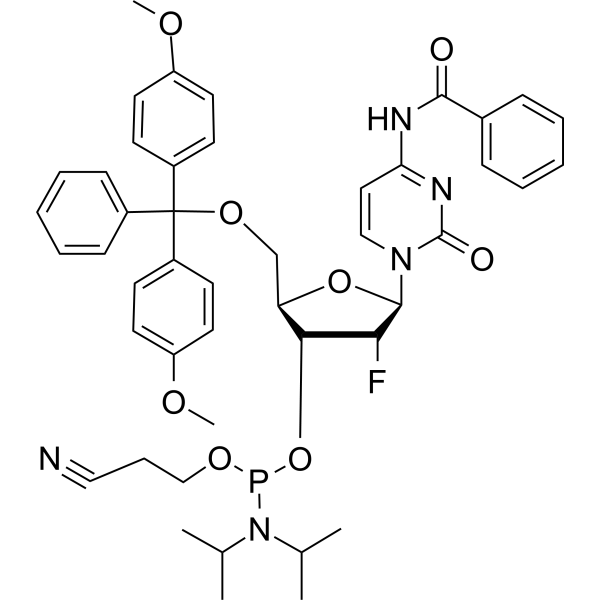
    2'-F-Bz-dC Phosphoramidite can be used in the synthesis of oligoribonucleotide (such as DNA and RNA). 2'-F-Bz-dC Phosphoramidite also used for synthesis antiviral agent to inhibit the replication of virus. 2'-F-Bz-dC Phosphoramidite contains a phosphorothioate backbone, to synthesise antisense oligonucleotide analogs to induce apoptosis in cancer cells .
    2'-F-Bz-dC Phosphoramidite
  • HY-P2310A

    Bacterial Parasite Apoptosis HIV HSV CMV TNF Receptor Interleukin Related NOD-like Receptor (NLR) DNA/RNA Synthesis Influenza Virus Cardiovascular Disease Infection
    Defensin HNP-1 human TFA is a type of human neutrophil peptide (HNPs). Defensin HNP-1 human TFA possesses immunomodulatory functions and can delay the apoptosis of neutrophils. Defensin HNP-1 human TFA inhibits DNA/RNA/protein synthesis and interferes with metabolic pathways, thus exhibiting broad antibacterial activity. Defensin HNP-1 human TFA has direct inactivation effects on HIV, HSV-1, HSV-2, CMV, influenza virus, etc. Defensin HNP-1 human TFA has antileishmanial activity. Defensin HNP-1 human TFA is involved in endothelial cell dysfunction during the early development of atherosclerosis .
    Defensin HNP-1 human TFA
  • HY-W013403

    IFNAR Infection
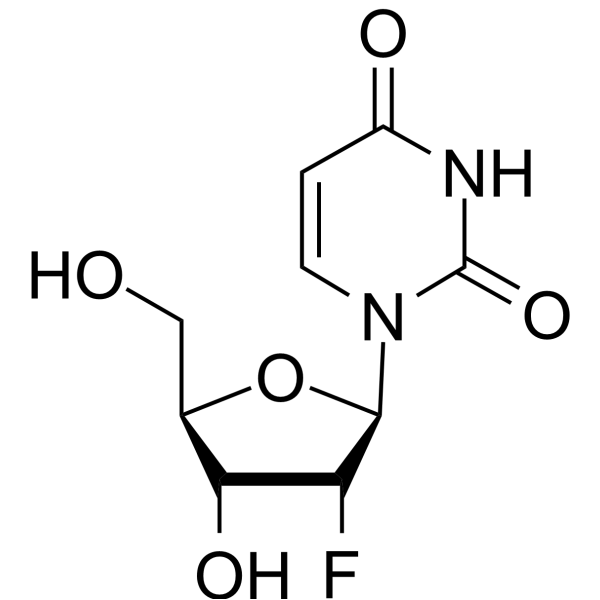
    2'-Deoxy-2'-fluorouridine is a derivative of the pyrimidine nucleoside uridine. 2'-Deoxy-2'-fluorouridine is a nucleoside analog that inhibits the replication of wild-type viruses by binding to the viral RNA. Hepatitis C polyU/UC RNA strands containing 2'-Deoxy-2'-fluorouridine, bind to RIG-I but do not activate RIG-I signaling in a reporter assay using Huh7 cells. 2'-Deoxy-2'-fluorouridine also has been used as a starting material in the synthesis of respiratory syncytial virus (RSV) polymerase inhibitors. 2'-Deoxy-2'-fluorouridine can incorporate into DNA and RNA in rat and woodchuck model upon administration. 2'-Deoxy-2'-fluorouridine can be studied in anti-viral research .
    2'-Deoxy-2'-fluorouridine
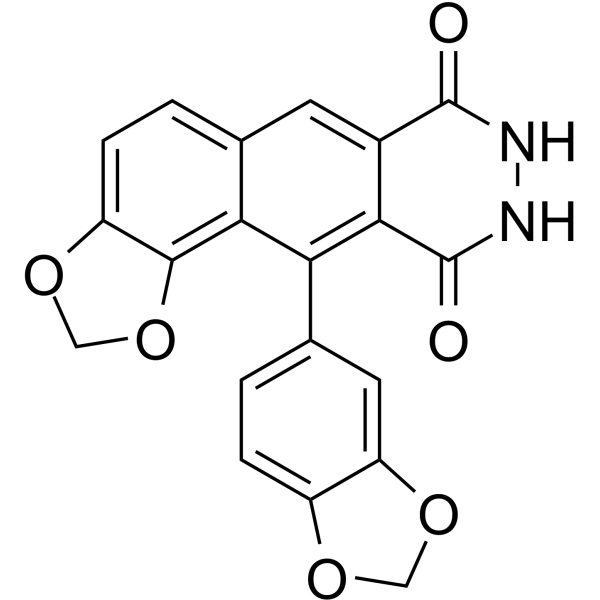
  • HY-16680

    Helioxanthin analogue 8-1

    HBV Infection
    Helioxanthin 8-1(Helioxanthin analogue 8-1) is an anti-HBV agent. Helioxanthin 8-1 exhibits anti-hepatitis B virus activity in both in vitro human hepatitis B virus models and animal models. Helioxanthin 8-1 inhibits the synthesis of duck hepatitis B virus (DHBV) DNA, covalently closed circular DNA, RNA and proteins, thereby blocking DHBV replication. Helioxanthin 8-1 shows higher cytotoxicity in virus-induced cells than in non-induced cells. Helioxanthin 8-1 can be used in studies related to hepatitis B virus infection .
    Helioxanthin 8-1
  • HY-106777
    Cyclopentenylcytosine
    1 Publications Verification

    CPEC; NSC 375575

    DNA/RNA Synthesis Nucleoside Antimetabolite/Analog Apoptosis Necroptosis Influenza Virus HSV Infection Cancer
    Cyclopentenylcytosine (CPEC), a carbocyclic nucleoside analog of cytosine, is a potent inhibitor of CTP synthetase and causes depletion of CTP and dCTP pools. Cyclopentenylcytosine shows broad-spectrum (both DNA and RNA viruses) antiviral activity. Cyclopentenyl cytosine increases Gemcitabine (HY-17026) radiosensitisation in human pancreatic cancer cells. Cyclopentenylcytosine shows effective antiviral activity in the Ad5/NZW rabbit ocular replication model and shows anti-tumor activity in various tumor xenografts model. Cyclopentenylcytosine can be used for the study of infection and cancer .
    Cyclopentenylcytosine
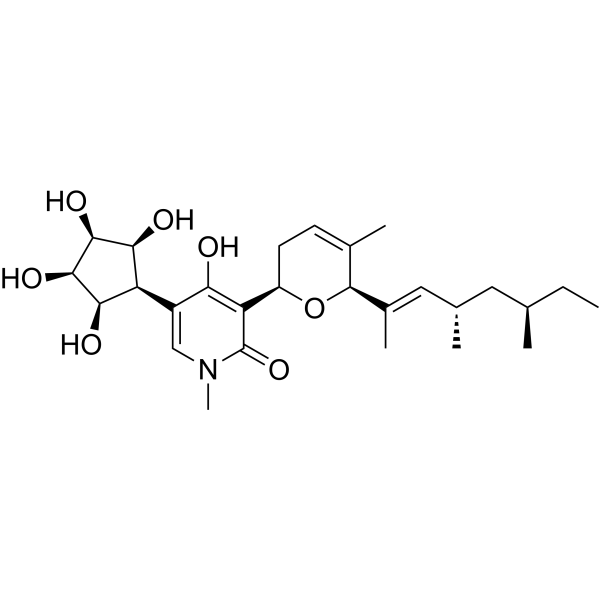
  • HY-N12201

    Antibiotic Fungal Infection
    Funiculosin is a neutral lipophilic antibiotic that inhibits DNA and RNA viruses. Funiculosin also has antifungal activity. Funiculosin inhibits infections caused by pathogenic fungi in primary chicken embryo fibroblasts .
    Funiculosin
  • HY-163532

    Sirtuin Infection
    FLS-359 is a selective, orally active allosteric modulator for sirtuin 2, with the IC50 of 3 μM. FLS-359 exhibits antiviral activity against RNA and DNA virus, through inhibition of DNA/RNA replication .
    FLS-359
  • HY-W016937

    ABOB

    Influenza Virus HSV HCV Apoptosis Caspase Infection Inflammation/Immunology
    Moroxydine (ABOB) is a broad-spectrum agent with multi-antiviral activities against DNA and RNA viruses, including influenza virus, herpes simplex, varicella zoster, measles, mumps disease, hepatitis C virus, etc. Moroxydine exhibits excellent antiviral activity and shows low cytotoxicity to cells infected by dsRNA viruses (grass carp reovirus, GCRV) and large DNA viruses (giant salamander iridovirus, GSIV). Moroxydine blocks the GCRV-induced cytopathic effects and eliminates nucleocapsids in ctenopharyngodon idella kidney (CIK) cells to keep the normal morphological structure. Moroxydine significantly inhibits the apoptosis, the caspase 3 activity, Bax expression and down-regulates Bcl-2 levels [1][2][3].
    Moroxydine
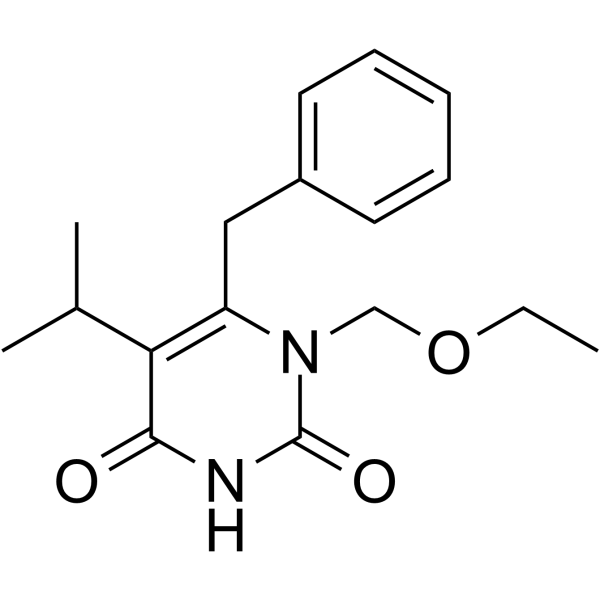
  • HY-15353

    MKC-442

    HIV Infection Inflammation/Immunology
    Emivirine (MKC-442) is a non-nucleoside reverse transcriptase inhibitors (NNRTIs) with Ki values of 0.20 and 0.01 μM for dTTP- and dGTP-dependent DNA or RNA polymerase activity, respectively. Emivirine displays potent and selective anti-human immunodeficiency virus type 1 (HIV-1) activity .
    Emivirine
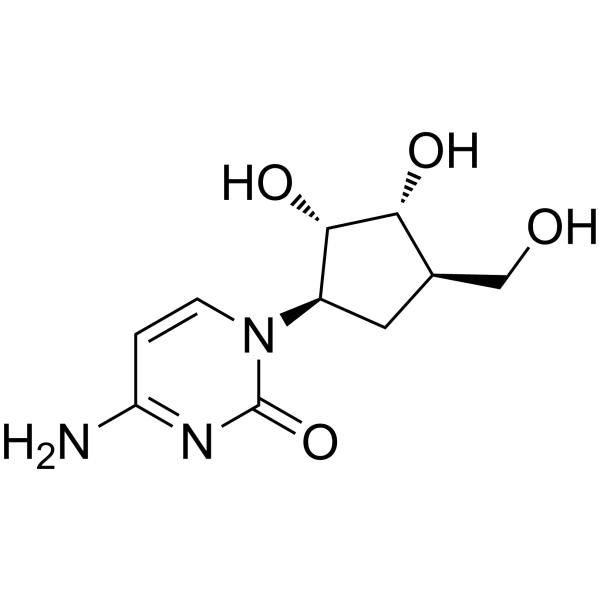
  • HY-128718

    Influenza Virus Infection
    Carbodine (Carbocyclic cytidine) is a broad-spectrum antiviral agent active against DNA viruses, (+)RNA viruses, (-)RNA viruses, paramyxo, rhabdo and (+/-)RNA viruses, targets CTP synthetase that converts UTP to CTP. Carbodine (Carbocyclic cytidine) possesses significant antiviral activity against influenza virus types A0/PR-8/34 and A2/Aichi/2/68 in vitro .
    Carbodine
  • HY-19111

    TIBO-R 82150

    HIV Reverse Transcriptase Infection
    R-82150 (TIBO-R 82150) is an HIV-1 reverse transcriptase inhibitor that blocks the reverse transcription of viral RNA by binding to the non-substrate binding site of reverse transcriptase, thereby inhibiting viral replication. R-82150 does not inhibit the replication of HIV-2, other RNA viruses, and DNA viruses .

    R-82150
  • HY-B0420AR

    ABOB hydrochloride (Standard)

    Influenza Virus HCV HSV Apoptosis Caspase Reference Standards Infection
    Moroxydine (ABOB) hydrochloride (Standard) is the analytical standard of Moroxydine (ABOB) hydrochloride (HY-B0420A). Moroxydine (ABOB) hydrochloride is a broad-spectrum agent with multi-antiviral activities against DNA and RNA viruses, including influenza virus, herpes simplex, varicella zoster, measles, mumps disease, hepatitis C virus, etc. Moroxydine hydrochloride exhibits excellent antiviral activity and shows low cytotoxicity to cells infected by dsRNA viruses (grass carp reovirus, GCRV) and large DNA viruses (giant salamander iridovirus, GSIV). Moroxydine hydrochloride blocks the GCRV-induced cytopathic effects and eliminates nucleocapsids in ctenopharyngodon idella kidney (CIK) cells to keep the normal morphological structure. Moroxydine hydrochloride significantly inhibits the apoptosis, the caspase 3 activity, Bax expression and down-regulates Bcl-2 levels.
    Moroxydine hydrochloride (Standard)
  • HY-W713297

    ABOB hydrochloride-d8

    Influenza Virus Isotope-Labeled Compounds HCV HSV Apoptosis Caspase Infection
    Moroxydine hydrochloride-d8 (ABOB hydrochloride-d8) is the deuterium labeled Moroxydine (ABOB) hydrochloride (HY-B0420A). Moroxydine hydrochloride is a broad-spectrum agent with multi-antiviral activities against DNA and RNA viruses, including influenza virus, herpes simplex, varicella zoster, measles, mumps disease, hepatitis C virus, etc. Moroxydine hydrochloride exhibits excellent antiviral activity and shows low cytotoxicity to cells infected by dsRNA viruses (grass carp reovirus, GCRV) and large DNA viruses (giant salamander iridovirus, GSIV). Moroxydine hydrochloride blocks the GCRV-induced cytopathic effects and eliminates nucleocapsids in ctenopharyngodon idella kidney (CIK) cells to keep the normal morphological structure. Moroxydine hydrochloride significantly inhibits the apoptosis, the caspase 3 activity, Bax expression and down-regulates Bcl-2 levels [1][2][3].
    Moroxydine hydrochloride-d8
  • HY-W013403S

    IFNAR Infection
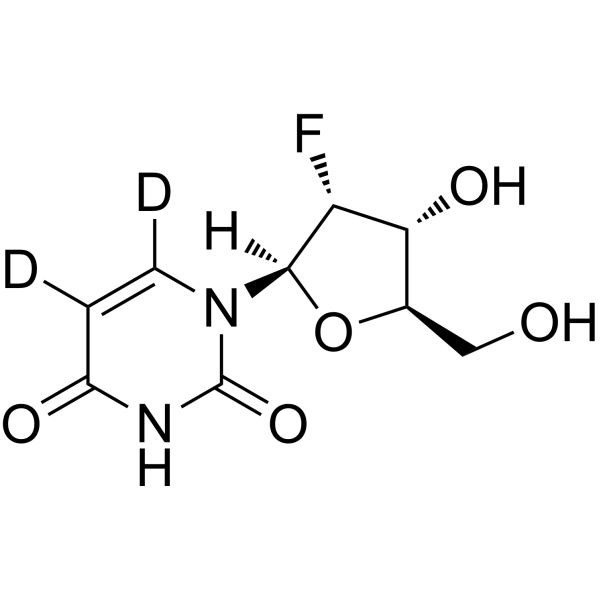
    2'-Deoxy-2'-fluorouridine-d2 is the deuterium labeled 2'-Deoxy-2'-fluorouridine . 2'-Deoxy-2'-fluorouridine is a derivative of the pyrimidine nucleoside uridine. 2'-Deoxy-2'-fluorouridine is a nucleoside analog that inhibits the replication of wild-type viruses by binding to the viral RNA. Hepatitis C polyU/UC RNA strands containing 2'-Deoxy-2'-fluorouridine, bind to RIG-I but do not activate RIG-I signaling in a reporter assay using Huh7 cells. 2'-Deoxy-2'-fluorouridine also has been used as a starting material in the synthesis of respiratory syncytial virus (RSV) polymerase inhibitors. 2'-Deoxy-2'-fluorouridine can incorporate into DNA and RNA in rat and woodchuck model upon administration. 2'-Deoxy-2'-fluorouridine can be studied in anti-viral research .
    2'-Deoxy-2'-fluorouridine-d2
  • HY-185183

    Enterovirus DNA/RNA Synthesis Infection
    DTriP-22 is a highly potent and low-toxicity inhibitor of enterovirus 71 3D polymerase (EV71 3D polymerase). DTriP-22 exhibits broad-spectrum anti-RNA virus activity (particularly against picornaviruses) beyond EV71, but shows no activity against DNA viruses. DTriP-22 acts at the early stage of viral replication and exerts its function by specifically inhibiting viral RNA synthesis. DTriP-22 can be used in anti-enterovirus research .

    DTriP-22
  • HY-105111

    Parasite Angiotensin-converting Enzyme (ACE) HSV DNA/RNA Synthesis Cardiovascular Disease Metabolic Disease
    P-536 is a ACE inhibitor that also inhibits herpes simplex virus HSV-1 thymidine kinase and Trypanosoma cruzi RNA polymerase. By inhibiting the renin-angiotensin system, downregulating the expression of AT1R and NOX4, and reducing oxidative stress (decreasing plasma hydrogen peroxide (H2O2) and 8-isoprostaglandin levels), P-536 effectively reduces systolic blood pressure and improves vascular reactivity. P-536 also inhibits the replication of DNA/RNA viruses such as HSV-1 by blocking nucleotide metabolism and nucleic acid synthesis, competitively inhibits RNA synthesis in Trypanosoma cruzi, and inhibits amastigote replication, thereby impeding its growth. P-536 is suitable for research on hypertension, insulin resistance, and Chagas disease .
    P-536
  • HY-126929

    TXN-B

    DNA Alkylator/Crosslinker Apoptosis Bacterial Parasite Fungal Infection Cancer
    Trioxacarcin B (TXN-B) is a potent cytotoxic agent and DNA-targeted inhibitor. Trioxacarcin B disrupts DNA function and induces apoptosis in cancer cells. Trioxacarcin B not only effectively inhibits the growth of various Gram-positive and Gram-negative bacteria as well as Plasmodium falciparum, but also blocks the colony formation of cancer stem cells, significantly reduces tumor volume and prolongs survival in preclinical in vivo models. The activity of Trioxacarcin B is highly dependent on its intact spiro-epoxide structure; it loses efficacy once this moiety undergoes hydrolysis, and Trioxacarcin B shows no activity against fungi, microalgae and small RNA viruses. Trioxacarcin B can be used for research on bacterial infections, malaria, and various cancers including colon cancer and melanoma .
    Trioxacarcin B

Inquiry Online

Your information is safe with us. * Required Fields.

Salutation


Country or Region *

Applicant Name *


Organization Name *

Department *


Email Address *


Product Name *

Cat. No.


Requested quantity *

Phone Number *


Remarks

Inquiry Online

Inquiry Information

Product Name:
Cat. No.:
Quantity:
MCE Japan Authorized Agent: