



Moroxydine hydrochloride
Based on 1 publication(s) in Google Scholar
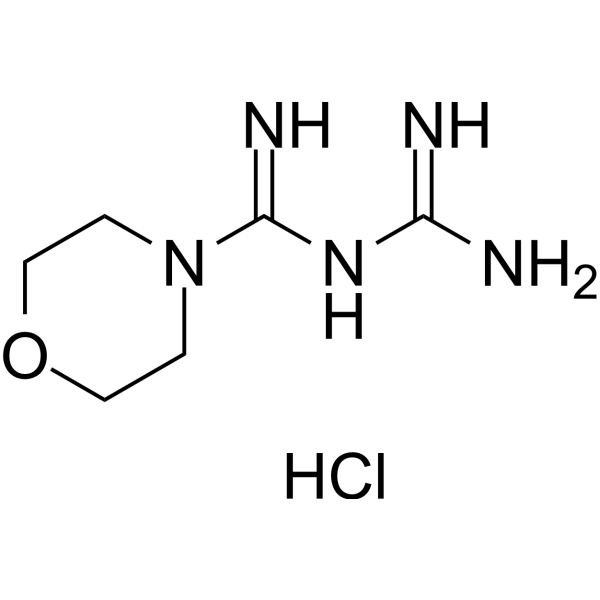
Moroxydine (ABOB) hydrochloride is a broad-spectrum agent with multi-antiviral activities against DNA and RNA viruses, including influenza virus, herpes simplex, varicella zoster, measles, mumps disease, hepatitis C virus, etc. Moroxydine hydrochloride exhibits excellent antiviral activity and shows low cytotoxicity to cells infected by dsRNA viruses (grass carp reovirus, GCRV) and large DNA viruses (giant salamander iridovirus, GSIV). Moroxydine hydrochloride blocks the GCRV-induced cytopathic effects and eliminates nucleocapsids in ctenopharyngodon idella kidney (CIK) cells to keep the normal morphological structure. Moroxydine hydrochloride significantly inhibits the apoptosis, the caspase 3 activity, Bax expression and down-regulates Bcl-2 levels.
For research use only. We do not sell to patients.
- Purity : 99.36%
- CAS No.: 3160-91-6
- Formula: C6H14ClN5O
- Molecular Weight:207.66
-
Storage:
4°C, sealed storage, away from moisture
* In solvent : -80°C, 6 months; -20°C, 1 month (sealed storage, away from moisture)

To place orders, for customer services and technical support, please contact: MedChemExpress USA
Tel: 609-228-6898 E-mail: [email protected] [email protected]


-
 Biological Activity
-
Chemical Information
-
Solvent & Solubility
- Purity & Documentation
- References
-
 Help & FAQs


-
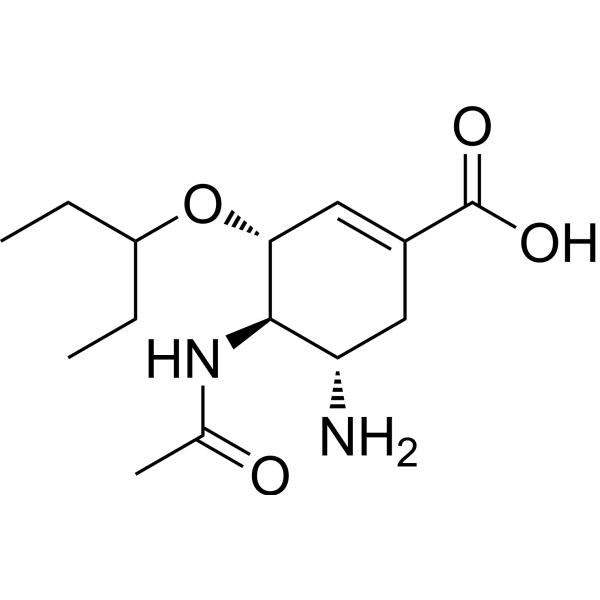
HY-13318
Oseltamivir acid -
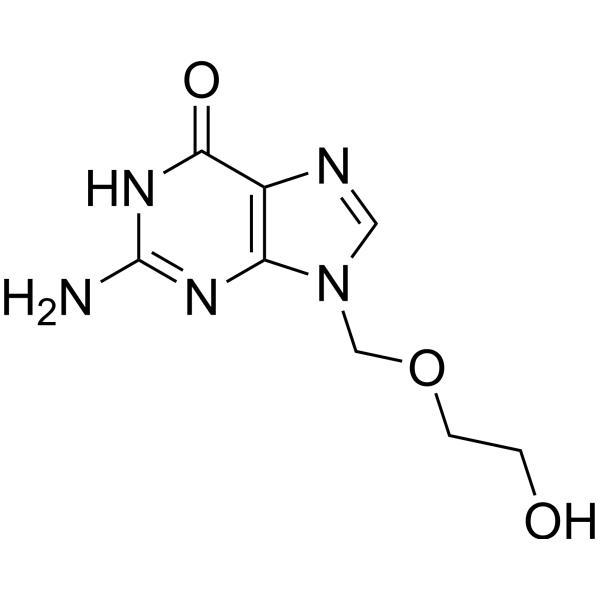
HY-17422
Acyclovir -
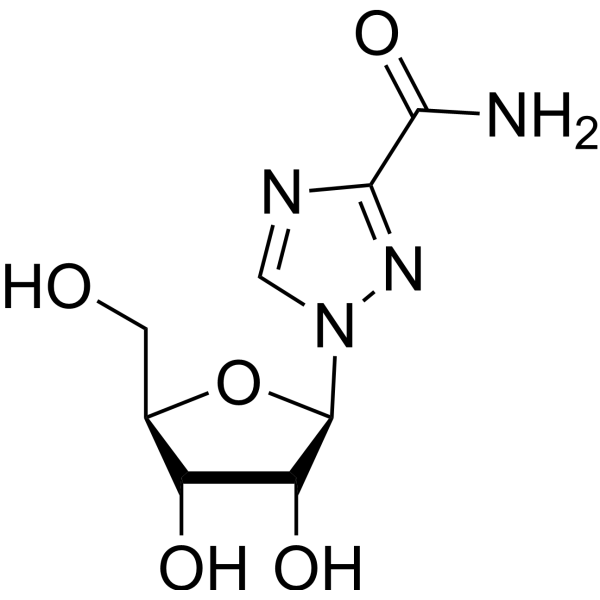
HY-B0434
Ribavirin -
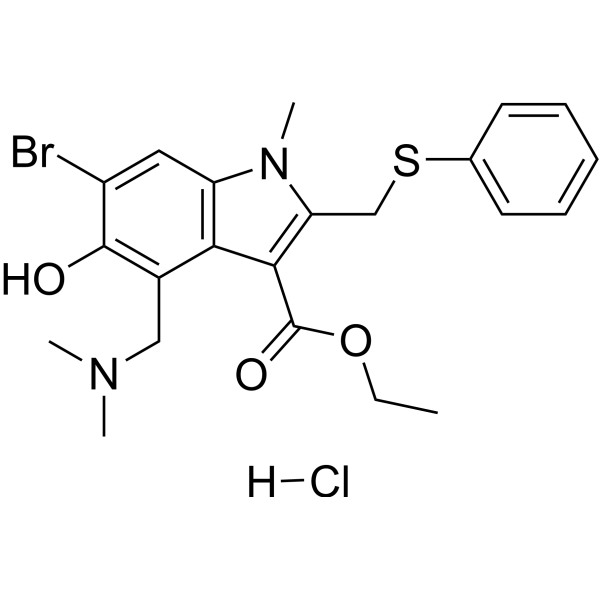
HY-14904A
Umifenovir hydrochloride -
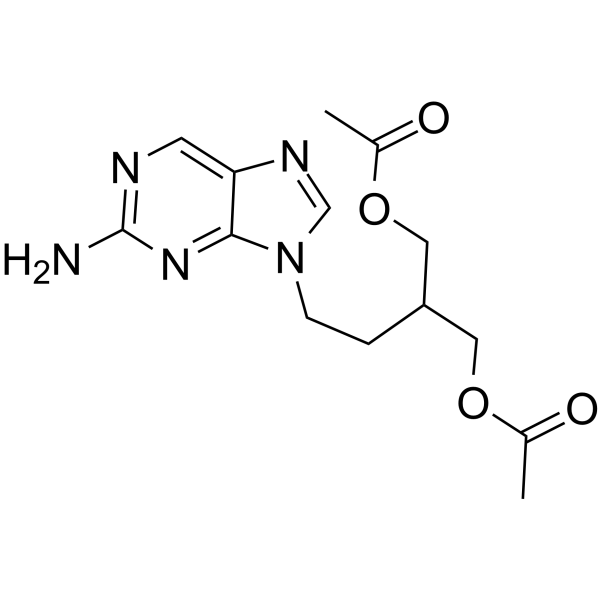
HY-17426
Famciclovir -
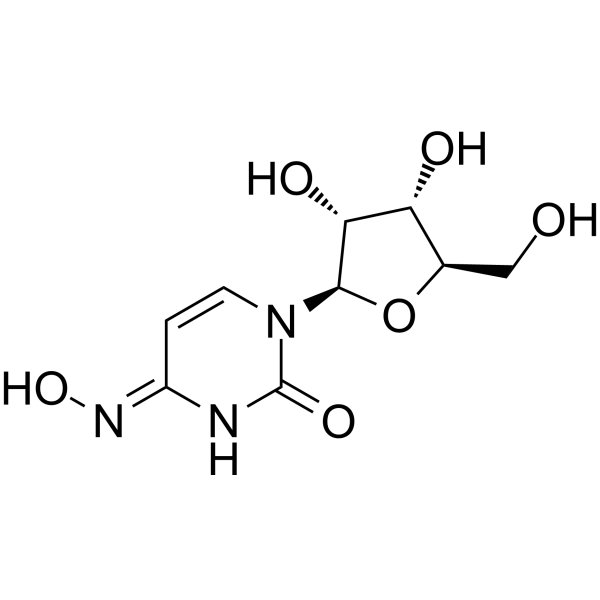
HY-125033
EIDD-1931 -
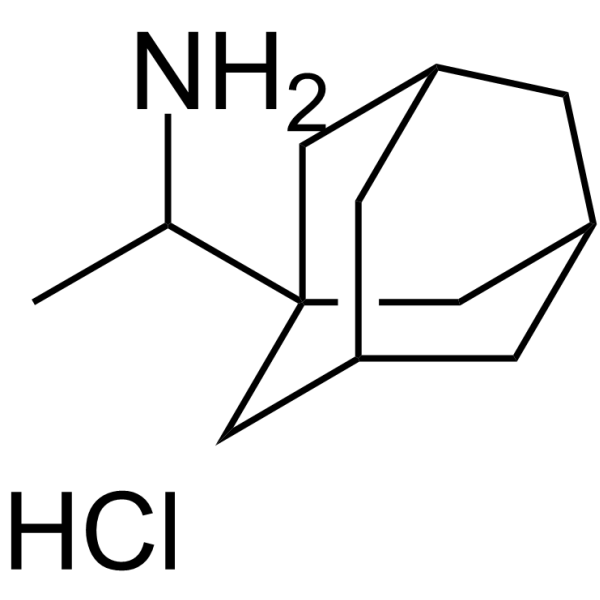
HY-B0338A
Rimantadine hydrochloride -
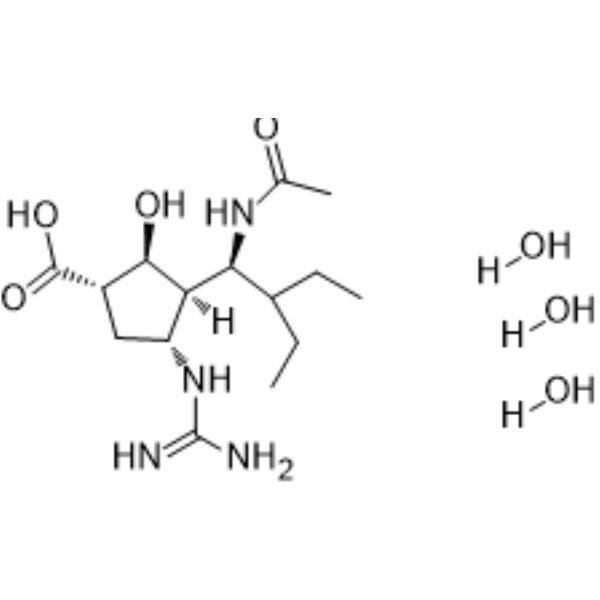
HY-17015
Peramivir trihydrate -

HY-17424R
Penciclovir (Standard) -

HY-B0420AR
Moroxydine hydrochloride (Standard) -
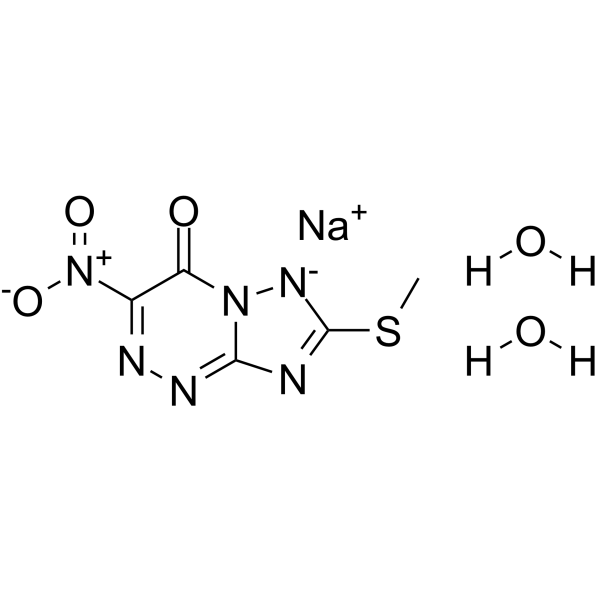
HY-19743
Triazavirin -
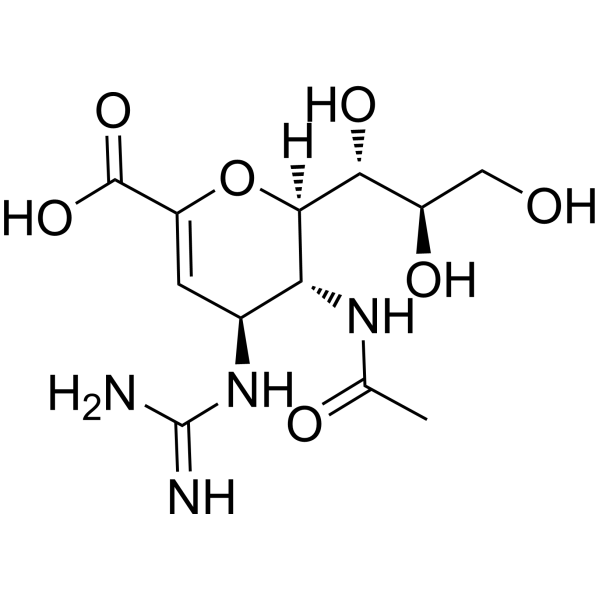
HY-13210
Zanamivir
Publications Citing Use of MedChemExpress (MCE) Moroxydine hydrochloride
MoreAll Caspase Isoforms
More

Biological Activity
Description
In Vitro
Moroxydine hydrochloride (1-100 μg/mL, 24-96 h) shows protective effects against grass carp reovirus (GCRV) in Ctenopharyngodon idella kidney (CIK) cells (TC50 = 1246.0 μg/mL, SC = 218.5 μg/mL) and grass carp ovary (GCO) cells (TC50 = 117.2 μg/mL, SC = 140.9 μg/mL)[1][2].
Moroxydine hydrochloride (1-100 μg/mL, 24-96 h) shows protective effects against giant salamander iridovirus (GSIV) in epithelioma papulosum cyprinid (EPC) cells, with a TC50 of 1486.3 μg/mL and a safe concentration (SC) of 209.7 μg/mL[2].
Moroxydine hydrochloride (40 μg/mL, 48-96 h) blocks the virus-induced CPE and cell death within 96 h and maintained the normal structure and nucleocapsids[1].
Moroxydine hydrochloride (40 μg/mL, 48-96 h) significantly decreases the apoptosis in CIK cells (GCRV), GCO cells (GCRV) and EPC cells (GSIV)[1][2].
Moroxydine (ABOB) hydrochloride (12-48 h) significantly inhibits the caspase 3 activity, Bax expression and down-regulates Bcl-2 at 48 h in CIK cells[1].
Moroxydine hydrochloride (20 μg/mL, 12-72 h) shows time-dependent suppression of viral gene expression in CIK cells(GCRV), GCO cells (GCRV) and EPC cells (GSIV)[1][2].
Moroxydine hydrochloride (20 μg/mL, 72 h) arrests cell cycle in the period of G1/S and G2/M of CIK cells[3].
Moroxydine hydrochloride (3-7 days) inhibits the GCRV-induced upregulation of immune genes (IL-1β, IFN-I, TNF-α) in the kidney, liver, muscle and gill[3].
MedChemExpress (MCE) has not independently confirmed the accuracy of these methods. They are for reference only.
-
Cell Line:GCRV infected CIK cells
-
Concentration:1, 2.5, 6.3, 15.9, 39.8, 100 μg/mL
-
Incubation Time:24, 48, 72, 96 h
-
Result:Presented a better protective-efficiency than Ribavirin(HY-B0434).
Showed no significant difference when expose GCRV-infected CIK cells in 39.8 μg/mL compared with virus-free group at 96 h.
-
Cell Line:GCRV infected CIK cells
-
Concentration:40 μg/mL
-
Incubation Time:48 h
-
Result:Exhibited a positive inhibition in the GCRV infected cells compared with negative control.
-
Cell Line:GCRV infected CIK cells
-
Concentration:20 μg/mL
-
Incubation Time:72 h
-
Result:Arrested cell cycle in the period of G1/S and G2/M of CIK cells
-
Cell Line:GCRV infected CIK cells
-
Concentration:20 μg/mL
-
Incubation Time:12, 24, 48, 72 h
-
Result:Suppressed viral genes (vp1, vp2, vp3 and vp4) at 12 h following a slow decrease from 12 h to 72 h post medication.
Inhibited the IL-1β expression.


Chemical Information
-
CAS No. 3160-91-6
-
Appearance Solid
-
Molecular Weight 207.66
-
Formula C6H14ClN5O
-
Color White to off-white
-
SMILES
N=C(N1CCOCC1)NC(N)=N.Cl
-
Synonyms
ABOB hydrochloride
-
Shipping
Room temperature in continental US; may vary elsewhere.
-
Storage
4°C, sealed storage, away from moisture
* In solvent : -80°C, 6 months; -20°C, 1 month (sealed storage, away from moisture)


Publications (1)
-
Journal Impact Factor
-
Most Recent
-
Pharmaceuticals (Basel)
2024 Sep 19;17(9):1234. PMID: 39338396


Solvent & Solubility
In Vitro:
H2O : ≥ 100 mg/mL (481.56 mM)
DMSO : 50 mg/mL (240.78 mM; Need ultrasonic; Hygroscopic DMSO has a significant impact on the solubility of product, please use newly opened DMSO)
* "≥" means soluble, but saturation unknown.
Please refer to the solubility information to select the appropriate solvent. Once prepared, please aliquot and store the solution to prevent product inactivation from repeated freeze-thaw cycles.
Storage method and period of stock solution: -80°C, 6 months; -20°C, 1 month (sealed storage, away from moisture). When stored at -80°C, please use it within 6 months. When stored at -20°C, please use it within 1 month.
* Note: If you choose water as the stock solution, please dilute it to the working solution, then filter and sterilize it with a 0.22 μm filter before use.
Please refer to the solubility information to select the appropriate solvent. Once prepared, please aliquot and store the solution to prevent product inactivation from repeated freeze-thaw cycles.
Storage method and period of stock solution: -80°C, 6 months; -20°C, 1 month (sealed storage, away from moisture). When stored at -80°C, please use it within 6 months. When stored at -20°C, please use it within 1 month.
* Note: If you choose water as the stock solution, please dilute it to the working solution, then filter and sterilize it with a 0.22 μm filter before use.
Concentration (start) × Volume (start) = Concentration (final) × Volume (final)
In Vivo:
Select the appropriate dissolution method based on your experimental animal and administration route.
- For the following dissolution methods, please ensure to first prepare a clear stock solution using an In Vitro approach and then sequentially add co-solvents:
- To ensure reliable experimental results, the clarified stock solution can be appropriately stored based on storage conditions. As for the working solution for In Vivo experiments, it is recommended to prepare freshly and use it on the same day.
- The percentages shown for the solvents indicate their volumetric ratio in the final prepared solution. If precipitation or phase separation occurs during preparation, heat and/or sonication can be used to aid dissolution.
Add each solvent one by one: 10% DMSO 40% PEG300 5% Tween-80 45% Saline
Solubility: ≥ 2.5 mg/mL (12.04 mM); Clear solution
This protocol yields a clear solution of ≥ 2.5 mg/mL (saturation unknown).
Taking 1 mL working solution as an example, add 100 μL DMSO stock solution (25.0 mg/mL) to 400 μL PEG300, and mix evenly; then add 50 μL Tween-80 and mix evenly; then add 450 μL Saline to adjust the volume to 1 mL.
Preparation of Saline: Dissolve 0.9 g sodium chloride in ddH₂O and dilute to 100 mL to obtain a clear Saline solution.
Add each solvent one by one: 10% DMSO 90% (20% SBE-β-CD in Saline)
Solubility: ≥ 2.5 mg/mL (12.04 mM); Clear solution
This protocol yields a clear solution of ≥ 2.5 mg/mL (saturation unknown).
Taking 1 mL working solution as an example, add 100 μL DMSO stock solution (25.0 mg/mL) to 900 μL 20% SBE-β-CD in Saline, and mix evenly.
Preparation of 20% SBE-β-CD in Saline (4°C, storage for one week): 2 g SBE-β-CD powder is dissolved in 10 mL Saline, completely dissolve until clear.
For the following dissolution methods, please prepare the working solution directly:
It is recommended to prepare fresh solutions and use them promptly within a short period of time.
The percentages shown for the solvents indicate their volumetric ratio in the final prepared solution. If precipitation or phase separation occurs during preparation, heat and/or sonication can be used to aid dissolution.
Add each solvent one by one: PBS
Solubility: 100 mg/mL (481.56 mM); Clear solution; Need ultrasonic
In Vivo Dissolution Calculator
Please enter the basic information of animal experiments:
-
-
-
-
Recommended: Prepare an additional quantity of animals to account for potential losses during experiments.
Working solution concentration: 0.22 mg/mL
This product has good water solubility, please refer to the measured solubility data in water/PBS/Saline for details.


Purity & Documentation
-
Data Sheet (279 KB)
-
SDS (393 KB)
- English - EN (393 KB)
- Français - FR (393 KB)
- Deutsch - DE (393 KB)
- Norwegian - NO (393 KB)
- Español - ES (393 KB)
- Swedish - SV (393 KB)
- Italian - IT (393 KB)
- Korean - KR (393 KB)
- Portuguese - PT (393 KB)
-
Handling Instructions (2659 KB)
References
[1]. Yu XB, et al. Moroxydine hydrochloride inhibits grass carp reovirus replication and suppresses apoptosis in Ctenopharyngodon idella kidney cells. Antiviral Res. 2016 Jul;131:156-65. [Content Brief]
[2]. Yu XB, et al. In vitro antiviral efficacy of moroxydine hydrochloride and ribavirin against grass carp reovirus and giant salamander iridovirus. Dis Aquat Organ. 2016 Oct 27;121(3):189-199. [Content Brief]
[3]. Yu XB, et al. Effects of moroxydine hydrochloride and ribavirin on the cellular growth and immune responses by inhibition of GCRV proliferation. Res Vet Sci. 2018 Apr;117:37-44. [Content Brief]


Complete Stock Solution Preparation Table
Please refer to the solubility information to select the appropriate solvent. Once prepared, please aliquot and store the solution to prevent product inactivation from repeated freeze-thaw cycles.
Storage method and period of stock solution: -80°C, 6 months; -20°C, 1 month (sealed storage, away from moisture). When stored at -80°C, please use it within 6 months. When stored at -20°C, please use it within 1 month.
| Optional Solvent | Concentration Solvent Mass | 1 mg | 5 mg | 10 mg | 25 mg |
|---|---|---|---|---|---|
| DMSO / H2O | 1 mM | 4.8156 mL | 24.0778 mL | 48.1556 mL | 120.3891 mL |
| 5 mM | 0.9631 mL | 4.8156 mL | 9.6311 mL | 24.0778 mL | |
| 10 mM | 0.4816 mL | 2.4078 mL | 4.8156 mL | 12.0389 mL | |
| 15 mM | 0.3210 mL | 1.6052 mL | 3.2104 mL | 8.0259 mL | |
| 20 mM | 0.2408 mL | 1.2039 mL | 2.4078 mL | 6.0195 mL | |
| 25 mM | 0.1926 mL | 0.9631 mL | 1.9262 mL | 4.8156 mL | |
| 30 mM | 0.1605 mL | 0.8026 mL | 1.6052 mL | 4.0130 mL | |
| 40 mM | 0.1204 mL | 0.6019 mL | 1.2039 mL | 3.0097 mL | |
| 50 mM | 0.0963 mL | 0.4816 mL | 0.9631 mL | 2.4078 mL | |
| 60 mM | 0.0803 mL | 0.4013 mL | 0.8026 mL | 2.0065 mL | |
| 80 mM | 0.0602 mL | 0.3010 mL | 0.6019 mL | 1.5049 mL | |
| 100 mM | 0.0482 mL | 0.2408 mL | 0.4816 mL | 1.2039 mL |
* Note: If you choose water as the stock solution, please dilute it to the working solution, then filter and sterilize it with a 0.22 μm filter before use.


Moroxydine hydrochloride Related Classifications
HY-B0420A Related Classifications
 Powered by Bioz