Search Result
Results for "
Dihydroxyacetone
" in MedChemExpress (MCE) Product Catalog:
-
- HY-17365
-
-
-
- HY-Y0335
-
|
Dihydroxyacetone
|
Bacterial
Antibiotic
Drug Intermediate
|
Infection
|
|
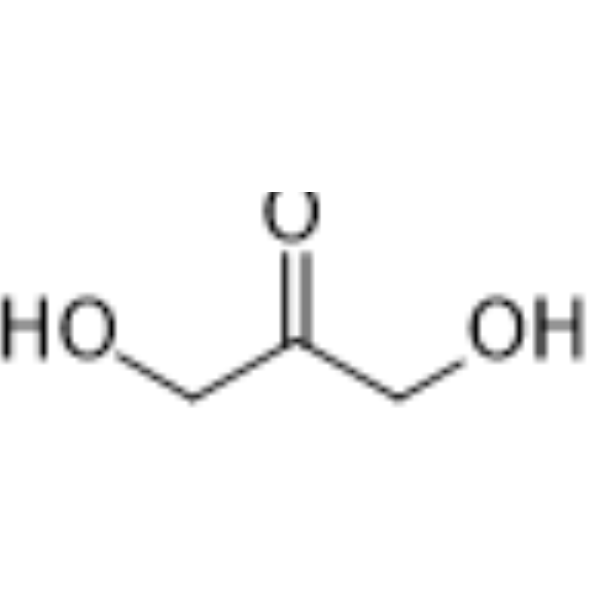
1,3-Dihydroxyacetone (DHA), the main active ingredient in sunless tanning skin-care preparations and an important precursor for the synthesis of various fine chemicals, is produced on an industrial scale by microbial fermentation of glycerol (HY-B1659) in Gluconobacter oxydans. 1,3-Dihydroxyacetone is also used for synthesis of new biodegradable polymers by combining with lactic acid (HY-B2227) .
|
-
-
- HY-113131
-
|
DHAP
|
Endogenous Metabolite
Biochemical Assay Reagents
|
Metabolic Disease
|
|
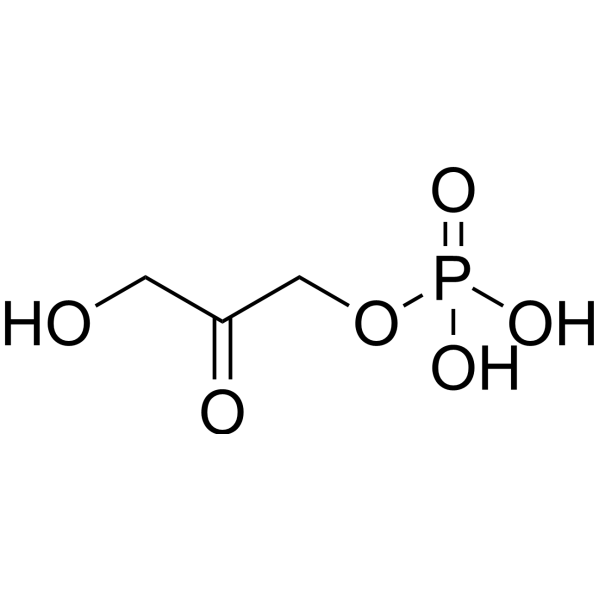
Dihydroxyacetone phosphate (DHPA), a derivative of Dihydroxyacetone (DHA), is an important intermediate that participates in key pathways including glycolysis, lipid biosynthesis, and the plant Calvin cycle. Dihydroxyacetone phosphate can be used as a substrate and metabolic marker in biochemical research .
|
-
-
- HY-113128A
-
|
|
Endogenous Metabolite
|
Metabolic Disease
|
|
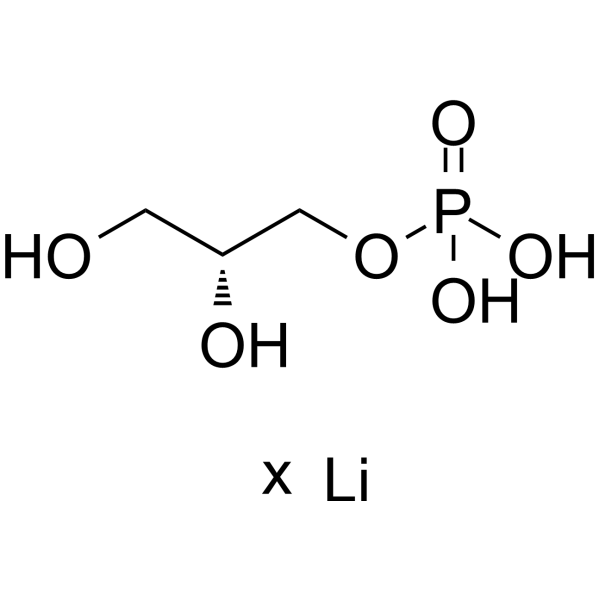
sn-Glycerol 3-phosphate lithium is an important intermediate in glycolysis and lipid metabolism. The cytosolic sn-Glycerol 3-phosphate dehydrogenase (GPDH) consumes NADH to generate sn-Glycerol 3-phosphate lithium from dihydroxyacetone phosphate (DHAP). Glyceroneogenesis is an important supplier of sn-Glycerol 3-phosphate lithium for lipid metabolism .
|
-
-
- HY-113128
-
|
|
Endogenous Metabolite
|
Metabolic Disease
|
|
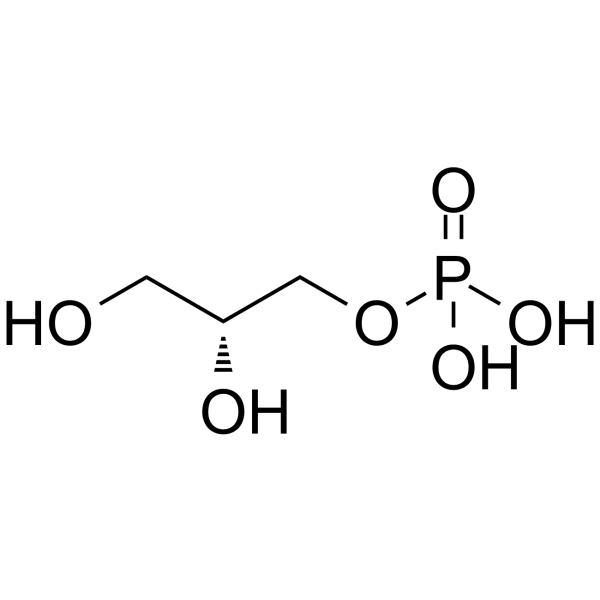
sn-Glycerol 3-phosphate is an important intermediate in glycolysis and lipid metabolism. The cytosolic sn-Glycerol 3-phosphate dehydrogenase (GPDH) consumes NADH to generate sn-Glycerol 3-phosphate from dihydroxyacetone phosphate (DHAP). Glyceroneogenesis is an important supplier of sn-Glycerol 3-phosphate for lipid metabolism .
|
-
-
- HY-125586
-
|
|
DNA/RNA Synthesis
ADC Payload
|
Cancer
|
|
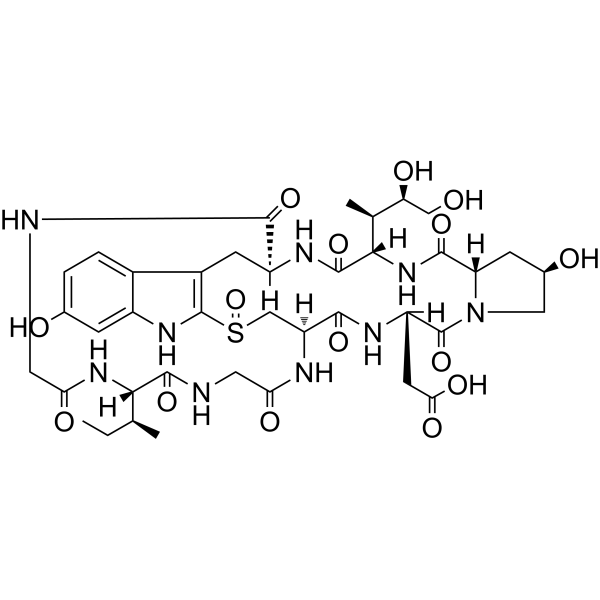
β-Amanitin is a cyclic peptide toxin in the poisonous Amanita phalloides mushroom. β-Amanitin inhibits inhibits eukaryotic RNA polymerase II and III. β-Amanitin inhibits protein synthesis. β-Amanitin can be used as a cytotoxic component of antibody-drug conjugates (ADCs) .
|
-
-
- HY-113131A
-
|
DHAP hemimagnesium hydrate
|
Endogenous Metabolite
Biochemical Assay Reagents
|
Metabolic Disease
|
|
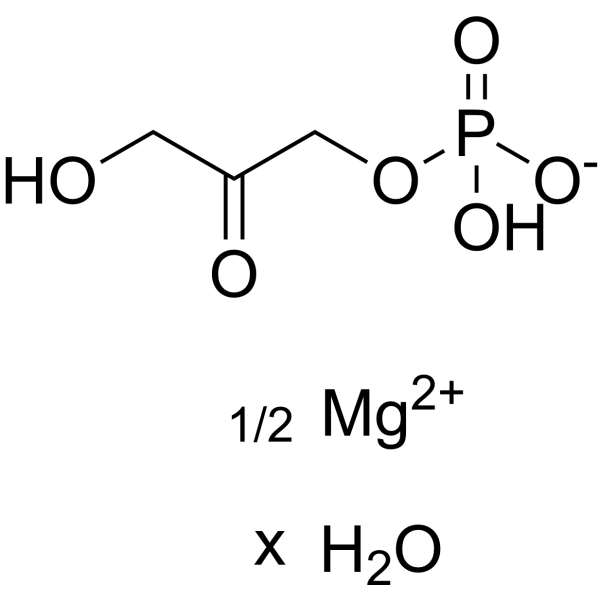
Dihydroxyacetone phosphate (DHPA) hemimagnesium hydrate, a derivative of Dihydroxyacetone (DHA), is an important intermediate that participates in key pathways including glycolysis, lipid biosynthesis, and the plant Calvin cycle. Dihydroxyacetone phosphate hemimagnesium hydrate can be used as a substrate and metabolic marker in biochemical research .
|
-
-
- HY-P2726
-
|
Fructose-diphosphate aldolase
|
Fructose-1,6-bisphosphate aldolase
Endogenous Metabolite
|
Metabolic Disease
|
|
Aldolase, Rabbit muscle (Fructose-diphosphate aldolase) is a glycolytic enzyme and glucose availability sensor. Aldolase, Rabbit muscle catalyzes the reversible carbon-carbon cleavage of fructose-1,6-bisphosphate to produce dihydroxyacetone phosphate and glyceraldehyde 3-phosphate. Aldolase, Rabbit muscle is an essential component for v-ATPase activity. Aldolase, Rabbit muscle participates in processes such as gluconeogenesis, the Calvin cycle and glycolysis .
|
-

-
- HY-113131B
-
|
DHAP dilithium
|
Biochemical Assay Reagents
Endogenous Metabolite
|
Metabolic Disease
|
|
Dihydroxyacetone phosphate (DHPA) dilithium, a derivative of Dihydroxyacetone (DHA), is an important intermediate that participates in key pathways including glycolysis, lipid biosynthesis, and the plant Calvin cycle. Dihydroxyacetone phosphate dilithium can be used as a substrate and metabolic marker in biochemical research .
|
-

-
- HY-P2765
-
|
GPDH; α-Glycerophosphate dehydrogenase; Glycerol phosphate dehydrogenase
|
Endogenous Metabolite
|
Metabolic Disease
|
|
Glycerol-3-phosphate dehydrogenase, rabbit muscle (GPDH) is an enzyme that catalyzes the reversible redox conversion of dihydroxyacetone phosphate to sn-glycerol 3-phosphate. Glycerol-3-phosphate dehydrogenase is a glycolytic enzyme and is responsible for the re-oxidation of NADH to NAD + and energy supply .
|
-
-
- HY-P2931
-
|
TPI
|
Biochemical Assay Reagents
|
Metabolic Disease
Cancer
|
|
Triosephosphate isomerase (TPI) is a biocatalyst that interconverts dihydroxyacetone phosphate and D-glyceraldehyde-3-phosphate. Triosephosphate isomerase utilises Glu167 as catalytic base, mediates proton shuttling, and stabilises a cis-enediolate intermediate via loop-6 and loop-7 closure to shield its catalytic site. Triosephosphate isomerase can be used for the research of triosephosphate isomerase deficiency .
|
-

-
- HY-P10447
-
|
Fengycin IX; SNA-60-367-3
|
Phospholipase
Fungal
|
Infection
|
|
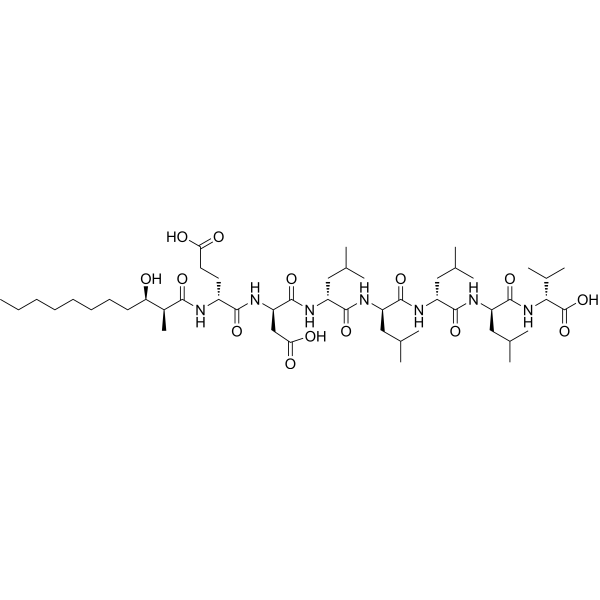
Plipastatin A1 (Fengycin IX; SNA-60-367-3) is a lipopeptide with phospholipase A2 inhibitory activity. Plipastatin A1 inhibits conidial germination of Botrytis cinerea in vitro and reduces the incidence of gray mold on tomato leaves. Plipastatin A1 is applicable to research related to gray mold [1][2].
|
-

-
- HY-113128S
-
|
|
Isotope-Labeled Compounds
Endogenous Metabolite
|
Metabolic Disease
|
|
sn-Glycerol 3-phosphate- 13C3 disodium is the 13C-labeled sn-Glycerol 3-phosphate disodium. sn-Glycerol 3-phosphate disodium is produced by cytosolic glycerol 3-phosphate dehydrogenase pathway through the reduction of dihydroxyacetone phosphate using NADH formed during glycolysis .
|
-

-
- HY-P2765A
-
|
GPDH, microorganism; α-Glycerophosphate dehydrogenase, microorganism; Glycerol phosphate dehydrogenase, microorganism
|
Endogenous Metabolite
|
Metabolic Disease
|
|
Glycerol-3-phosphate dehydrogenase, microorganism (GPDH, microorganism) is an enzyme that catalyzes the reversible redox conversion of dihydroxyacetone phosphate to sn-glycerol 3-phosphate.Glycerol-3-phosphate dehydrogenase is a glycolytic enzyme and is responsible for the re-oxidation of NADH to NAD + and energy supply .
|
-

-
- HY-P2725
-
|
|
Endogenous Metabolite
|
Metabolic Disease
|
|
Glycerol dehydrogenase is a polyol dehydrogenase that catalyzes the NAD-dependent oxidation of glycerol to dihydroxyacetone. Glycerol dehydrogenase can be used for glycerol metabolism in diverse microorganisms .
|
-

-
- HY-P3100
-
|
|
Parasite
|
Infection
|
|
Orfamide A is a major metabolite of insecticidal biosurfactant in Pseudomonas sp. F6 and has aphidicidal activity. Orfamide A can be used for aphid control in organic agriculture. Orfamide A exhibits dose-dependent mortality against aphids with an LC50 value of 34.5 μg/mL .
|
-

-
- HY-Y0335R
-
|
Dihydroxyacetone (Standard)
|
Reference Standards
Drug Intermediate
Bacterial
Antibiotic
|
Infection
|
|
1,3-Dihydroxyacetone (Standard) is the analytical standard of 1,3-Dihydroxyacetone. This product is intended for research and analytical applications. 1,3-Dihydroxyacetone (DHA), the main active ingredient in sunless tanning skin-care preparations and an important precursor for the synthesis of various fine chemicals, is produced on an industrial scale by microbial fermentation of glycerol (HY-B1659) in Gluconobacter oxydans. 1,3-Dihydroxyacetone is also used for synthesis of new biodegradable polymers by combining with lactic acid (HY-B2227) .
|
-

-
- HY-W012515
-
|
|
Biochemical Assay Reagents
|
Others
|
|
1,3-Dihydroxyacetone dimer can be used as an aldose, serving as a model compound for studying the structure and function of carbohydrates. 1,3-Dihydroxyacetone dimer is a kind of biological materials or organic compounds that are widely used in life science research .
|
-

-
- HY-113128B
-
|
|
Endogenous Metabolite
|
Metabolic Disease
|
|
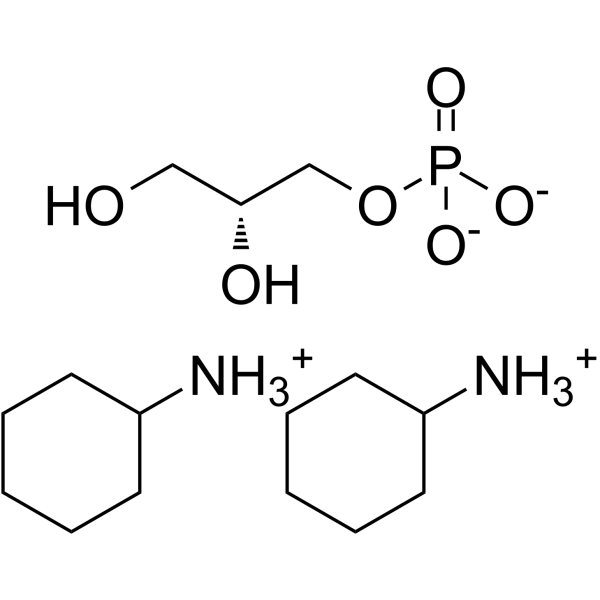
sn-Glycerol 3-phosphate biscyclohexylammonium salt is an important intermediate in glycolysis and lipid metabolism. The cytosolic sn-Glycerol 3-phosphate dehydrogenase (GPDH) consumes NADH to generate sn-Glycerol 3-phosphate biscyclohexylammonium salt from dihydroxyacetone phosphate (DHAP). Glyceroneogenesis is an important supplier of sn-Glycerol 3-phosphate biscyclohexylammonium salt for lipid metabolism .
|
-
-
- HY-P2733C
-
|
GPO, microorganism
|
Endogenous Metabolite
|
Metabolic Disease
|
|
Glycerol-3-phosphate oxidase, microorganism is an enzyme that catalyzes the oxidation of glycerol-3-phosphate to dihydroxyacetone phosphate, producing hydrogen peroxide in the process. Glycerol-3-phosphate oxidase is located in the mitochondria of microorganisms and is involved in the glycerol-3-phosphate cycle, regulating cellular energy metabolism. Glycerol-3-phosphate oxidase, microorganism can be used in conjunction with Lipoprotein Lipase and Glycerol Kinase to determine triglyceride levels .
|
-

-
- HY-158104
-
|
|
ATF6
|
Others
|
|
LPPM-8 is a ligand of Med25 and an inhibitor of Med25 protein-protein interactions (PPIs). LPPM-8 engages Med25 through interaction with the H2 face of its Activator Interaction Domain and stabilizes full-length protein in the cellular proteome. LPPM-8 is an orthosteric inhibitor of H2-binding transcriptional activators (such as ATF6a). LPPM-8 can be used for studying Med25 and Mediator complex biology .
|
-
-
- HY-P2733E
-
|
|
Biochemical Assay Reagents
|
Others
|
|
Chemically modified Glycerol-3-phosphate Oxidase, E. coli catalyzes the interconversion of glycerol 3-phosphate to dihydroxyacetone phosphate.
|
-

-
- HY-P2725A
-
|
|
Biochemical Assay Reagents
|
Metabolic Disease
|
|
Glycerol Dehydrogenase, Enterobacter aerogenes (EC 1.1.1.6) is an enzyme in the oxidoreductase family that utilizes the NAD+ to catalyze the oxidation of glycerol to form glycerone (dihydroxyacetone).
|
-

-
- HY-P2931A
-
|
|
Endogenous Metabolite
|
Metabolic Disease
|
|
Triosephosphate Isomerase, Rabbit (EC 5.3.1.1) catalyzes the reversible interconversion of the triose phosphate isomers dihydroxyacetone phosphate and D-glyceraldehyde 3-phosphate. Triosephosphate Isomerase plays an important role in glycolysis and is essential for efficient energy production.
|
-

-
- HY-E71030
-
|
|
Biochemical Assay Reagents
Fructose-1,6-bisphosphate aldolase
|
Others
|
|
Aldolase A, Human (EC 4.1.2.13) is a glycolytic enzyme that catalyzes the reversible conversion of fructose-1,6-bisphosphate to glyceraldehyde 3-phosphate and dihydroxyacetone phosphate. Aldolase A, Human (EC 4.1.2.13) , fused to His-tag at N-terminus, was expressed in E.coli.
|
-

-
- HY-P2931B
-
|
|
Endogenous Metabolite
|
Metabolic Disease
|
|
Triosephosphate isomerase in Baker's yeast (S. cerevisiae) (EC 5.3.1.1) catalyzes the reversible interconversion between the triose phosphate isomers dihydroxyacetone phosphate and D-glyceraldehyde-3-phosphate. Triosephosphate isomerase in Baker's yeast (S. cerevisiae) (EC 5.3.1.1) plays a crucial role in glycolysis and is essential for efficient energy production.
|
-

-
- HY-P2726A
-
|
|
Endogenous Metabolite
Fructose-1,6-bisphosphate aldolase
|
Metabolic Disease
|
|
Aldolase, Spinach (EC 4.1.2.13) is an enzyme catalyzing a reversible reaction that splits the aldol, fructose 1,6-bisphosphate, into the triose phosphates dihydroxyacetone phosphate (DHAP) and glyceraldehyde 3-phosphate (G3P). Aldolase, Spinach (EC 4.1.2.13) can also produce DHAP from other (3S,4R)-ketose 1-phosphates such as fructose 1-phosphate and sedoheptulose 1,7-bisphosphate.
|
-

-
- HY-E70417
-
|
GPDH, Saccharomyces cerevisiae
|
Endogenous Metabolite
|
Others
|
|
Glycerol-3-phosphate dehydrogenase, Saccharomyces cerevisiae, is an enzyme involved in glycerol metabolism and energy production, responsible for catalyzing the oxidation of glycerol-3-phosphate (G3P) to dihydroxyacetone phosphate (DHAP). Glycerol-3-phosphate dehydrogenase, Saccharomyces cerevisiae, is the rate-limiting enzyme in glycerol production in Saccharomyces cerevisiae, and helps Saccharomyces cerevisiae adapt to high osmotic environments by regulating glycerol production and accumulation. Glycerol-3-phosphate dehydrogenase, Saccharomyces cerevisiae, can be used in research within the field of metabolic engineering .
|
-

-
- HY-P11783
-
|
|
Fungal
|
Infection
|
|
Surfactin C2 is a lipopeptide produced by Bacillus subtilis A18 with antifungal activity. Surfactin C2 acts against Heterobasidion annosum and Heterobasidion parviporum. Surfactin C2 exerts its activity mainly through membrane‑active effects to disrupt fungal cell structures and inhibit mycelial growth. Surfactin C2 can be used for the research of butt rot and root rot of conifers .
|
-

-
- HY-P2209
-
|
Daechuine S27; N-Demethylamphibine H
|
Parasite
Phosphodiesterase (PDE)
|
Infection
|
|
Nummularine B (Daechuine S27; N-Demethylamphibine H) is an anti-parasite agent. Nummularine B inhibits calmodulin-dependent phosphodiesterase activity with an IC50 of 16.8 μM. Nummularine B inhibits the growth of Plasmodium and Leishmania donovani in vitro. Nummularine B inhibits the calmodulin-dependent activity of actomyosin Ca 2+-ATPase. Nummularine B is applicable to research related to malaria and visceral leishmaniasis .
|
-

-
- HY-P4948
-
|
|
Biochemical Assay Reagents
|
Others
|
|
Coumarin-phalloidin is a kind of phalloidin labeled with Coumarin (HY-N0709). Coumarin-phalloidin is a new type of actin probe that can be used for triple immunofluorescence microscopic observation of the cell skeleton .
|
-

-
- HY-W012515
-
|
|
生化学アッセイ試薬
|
|
1,3-Dihydroxyacetone dimer can be used as an aldose, serving as a model compound for studying the structure and function of carbohydrates. 1,3-Dihydroxyacetone dimer is a kind of biological materials or organic compounds that are widely used in life science research .
|
-
- HY-17365
-
-
- HY-125586
-
|
|
DNA/RNA Synthesis
ADC Payload
|
Cancer
|
|
β-Amanitin is a cyclic peptide toxin in the poisonous Amanita phalloides mushroom. β-Amanitin inhibits inhibits eukaryotic RNA polymerase II and III. β-Amanitin inhibits protein synthesis. β-Amanitin can be used as a cytotoxic component of antibody-drug conjugates (ADCs) .
|
-
- HY-105055
-
|
|
ペプチド
|
Cancer
|
|
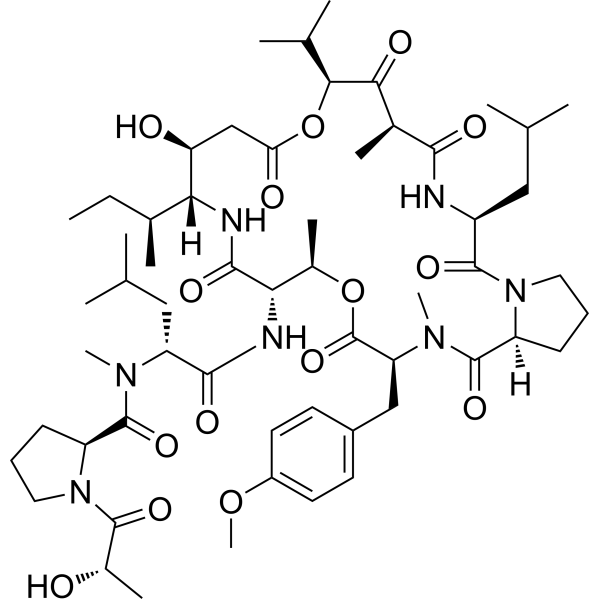
Didemnin B is a depsipeptide extracted from the marine tunicate Trididemnin cyanophorum. Didemnin B can be used for the research of cancer .
|
-
- HY-P10447
-
|
Fengycin IX; SNA-60-367-3
|
Phospholipase
Fungal
|
Infection
|
|
Plipastatin A1 (Fengycin IX; SNA-60-367-3) is a lipopeptide with phospholipase A2 inhibitory activity. Plipastatin A1 inhibits conidial germination of Botrytis cinerea in vitro and reduces the incidence of gray mold on tomato leaves. Plipastatin A1 is applicable to research related to gray mold [1][2].
|
-
- HY-P4755
-
|
|
ペプチド
|
Others
|
|
N-((RS)-2-Hydroxy-propyl)-Val-Leu-anilide is a polypeptide that can be found by peptide screening. Peptide screening is a research tool that pools active peptides primarily by immunoassay. Peptide screening can be used for protein interaction, functional analysis, epitope screening, especially in the field of agent research and development .
|
-
- HY-P3100
-
|
|
Parasite
|
Infection
|
|
Orfamide A is a major metabolite of insecticidal biosurfactant in Pseudomonas sp. F6 and has aphidicidal activity. Orfamide A can be used for aphid control in organic agriculture. Orfamide A exhibits dose-dependent mortality against aphids with an LC50 value of 34.5 μg/mL .
|
-
- HY-125357
-
|
|
ペプチド
|
Metabolic Disease
|
|
Ternatin (compound 2) is a cyclic heptapeptides that can be isolated from mushroom Coliorus versicolor. Ternatin inhibits fat-accumulation with an IC50 of 0.027 μM in 3T3-L1 adipocytes .
|
-
- HY-158104
-
|
|
ATF6
|
Others
|
|
LPPM-8 is a ligand of Med25 and an inhibitor of Med25 protein-protein interactions (PPIs). LPPM-8 engages Med25 through interaction with the H2 face of its Activator Interaction Domain and stabilizes full-length protein in the cellular proteome. LPPM-8 is an orthosteric inhibitor of H2-binding transcriptional activators (such as ATF6a). LPPM-8 can be used for studying Med25 and Mediator complex biology .
|
-
- HY-P11783
-
|
|
Fungal
|
Infection
|
|
Surfactin C2 is a lipopeptide produced by Bacillus subtilis A18 with antifungal activity. Surfactin C2 acts against Heterobasidion annosum and Heterobasidion parviporum. Surfactin C2 exerts its activity mainly through membrane‑active effects to disrupt fungal cell structures and inhibit mycelial growth. Surfactin C2 can be used for the research of butt rot and root rot of conifers .
|
-
- HY-P2209
-
|
Daechuine S27; N-Demethylamphibine H
|
Parasite
Phosphodiesterase (PDE)
|
Infection
|
|
Nummularine B (Daechuine S27; N-Demethylamphibine H) is an anti-parasite agent. Nummularine B inhibits calmodulin-dependent phosphodiesterase activity with an IC50 of 16.8 μM. Nummularine B inhibits the growth of Plasmodium and Leishmania donovani in vitro. Nummularine B inhibits the calmodulin-dependent activity of actomyosin Ca 2+-ATPase. Nummularine B is applicable to research related to malaria and visceral leishmaniasis .
|
-
- HY-P4948
-
|
|
Biochemical Assay Reagents
|
Others
|
|
Coumarin-phalloidin is a kind of phalloidin labeled with Coumarin (HY-N0709). Coumarin-phalloidin is a new type of actin probe that can be used for triple immunofluorescence microscopic observation of the cell skeleton .
|
| 製品番号 |
製品名 |
Category |
Target |
構造式 |
-
- HY-113128S
-
|
|
|
sn-Glycerol 3-phosphate- 13C3 disodium is the 13C-labeled sn-Glycerol 3-phosphate disodium. sn-Glycerol 3-phosphate disodium is produced by cytosolic glycerol 3-phosphate dehydrogenase pathway through the reduction of dihydroxyacetone phosphate using NADH formed during glycolysis .
|
-
入力情報は安全に管理されます. ※ 必須入力項目.
Inquiry Information
- 製品名:
- 製品番号:
- 数量:
- MCE 日本正規代理店: