



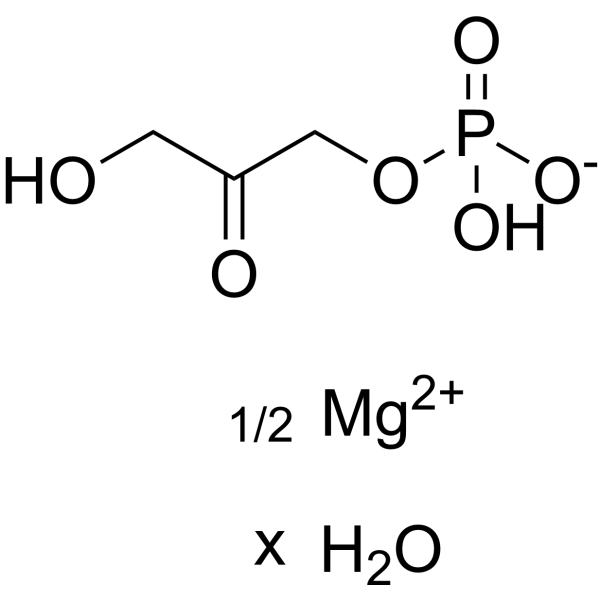
Dihydroxyacetone phosphate hemimagnesium hydrate

Based on 1 Customer Validation
Dihydroxyacetone phosphate (DHPA) hemimagnesium hydrate, a derivative of Dihydroxyacetone (DHA), is an important intermediate that participates in key pathways including glycolysis, lipid biosynthesis, and the plant Calvin cycle. Dihydroxyacetone phosphate hemimagnesium hydrate can be used as a substrate and metabolic marker in biochemical research.
For research use only. We do not sell to patients.
- Purity : 99.9%
- Formula: C3H7O6P·1/2Mg·xH2O
-
Storage:
4°C, sealed storage, away from moisture
* In solvent : -80°C, 6 months; -20°C, 1 month (sealed storage, away from moisture)

To place orders, for customer services and technical support, please contact: MedChemExpress USA
Tel: 609-228-6898 E-mail: [email protected] [email protected]


-
 Biological Activity
-
Chemical Information
-
Solvent & Solubility
- Purity & Documentation
- References
-
 Help & FAQs


-
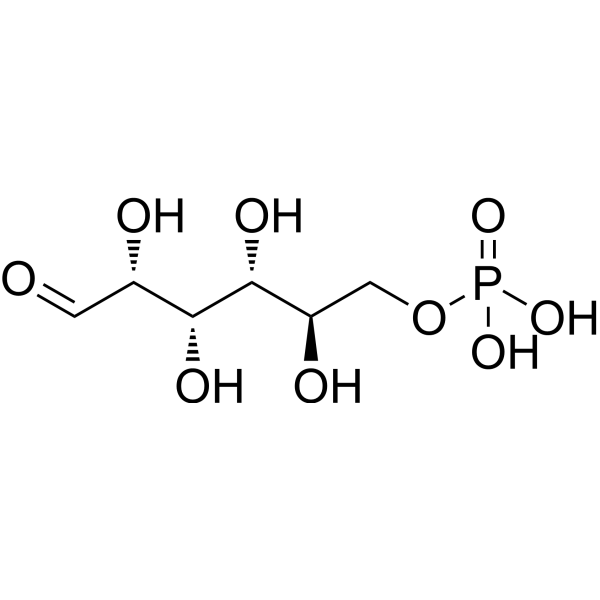
HY-112537
D-Glucose 6-phosphateEndogenous Metabolite -
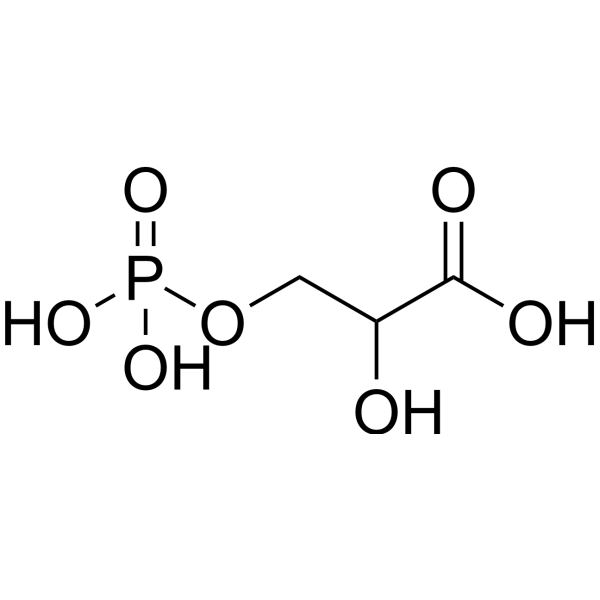
HY-113491
3-Phosphoglyceric acidMetabolic Intermediate -
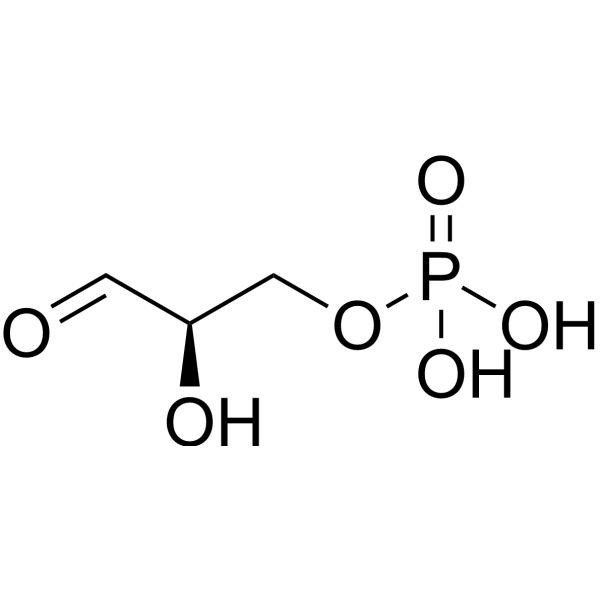
HY-151223
D-Glyceraldehyde 3-phosphateEndogenous Metabolite -
HY-W008807
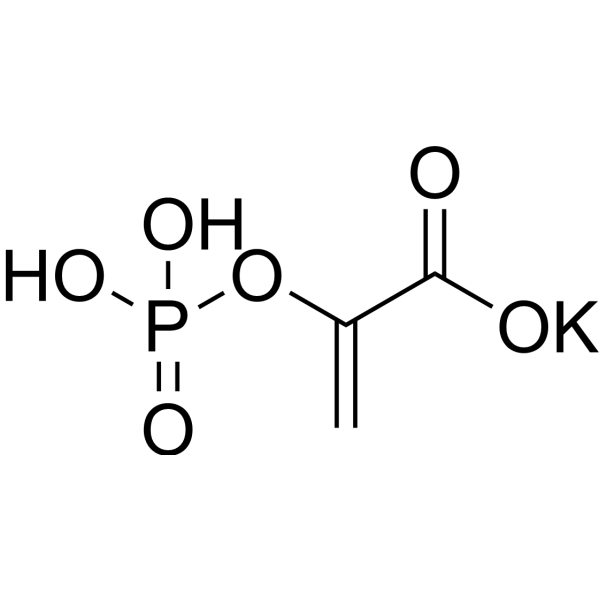
Phosphoenolpyruvic acid potassiumGlycolysis Metabolite -
HY-141412
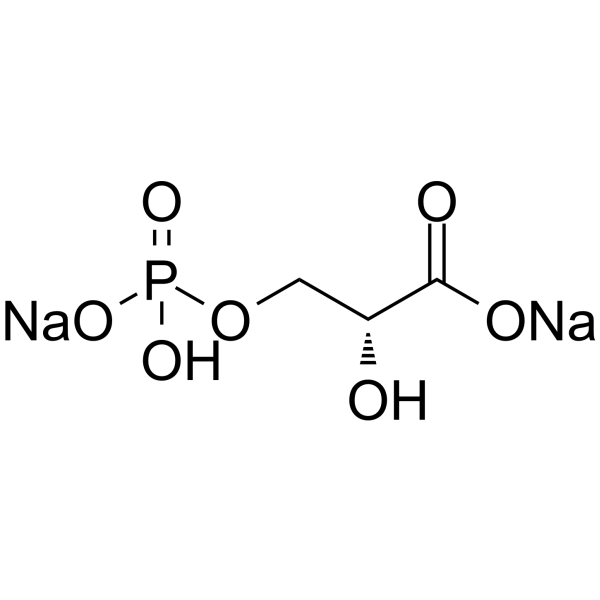
D-(-)-3-Phosphoglyceric acid disodiumYeast Enolase Inhibitor -
HY-F0001
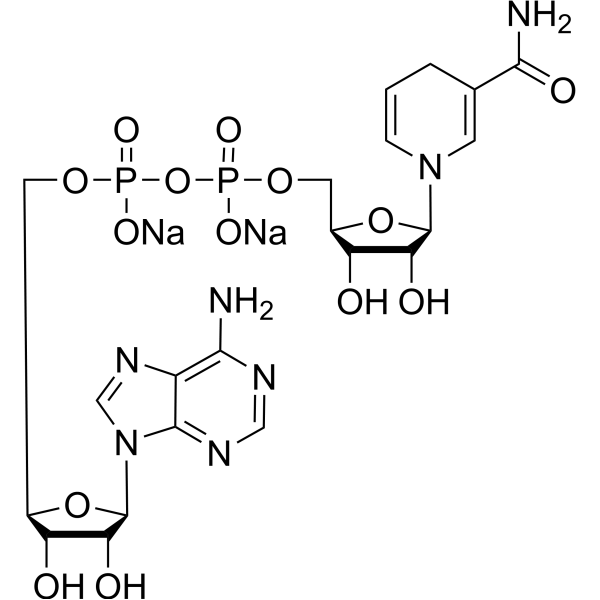
NADH disodium saltReduced Coenzyme -

HY-Y0781R
Pyruvic acid (Standard)Endogenous Metabolite -
HY-113054
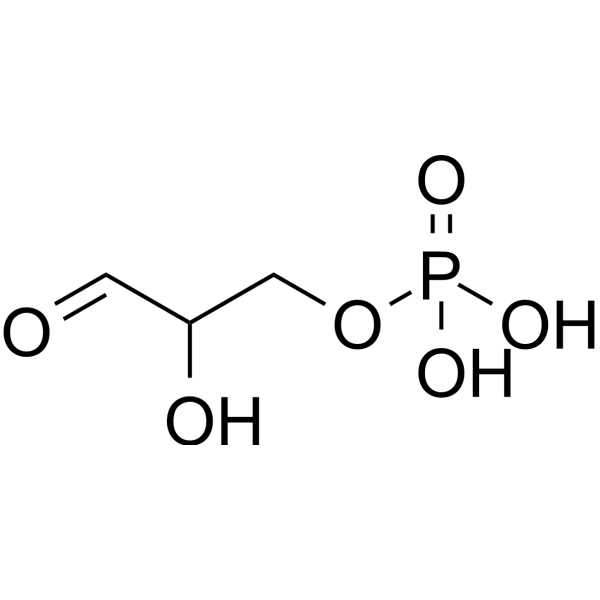
DL-Glyceraldehyde 3-phosphateEndogenous Metabolite -
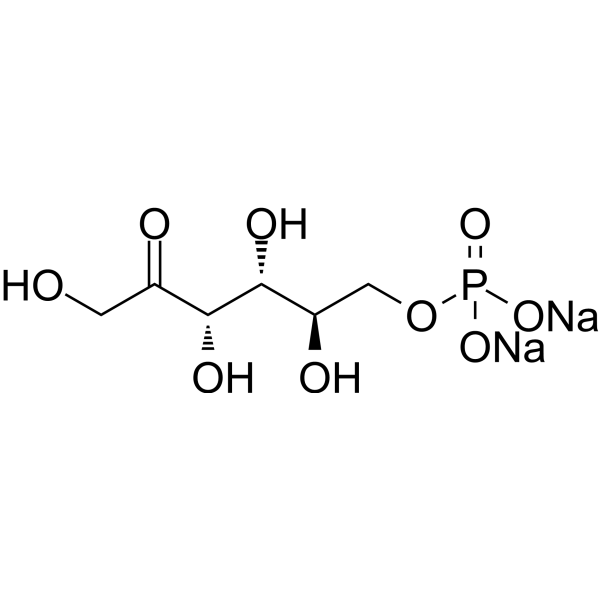
HY-113407A
D-Fructose-6-phosphate disodiumEndogenous Metabolite -
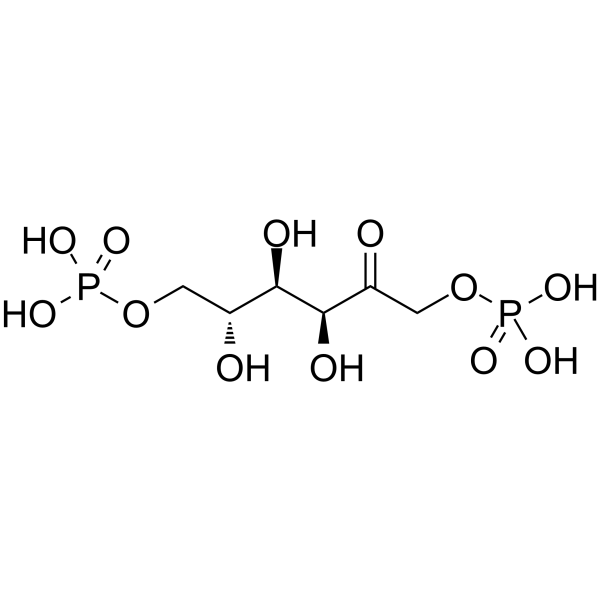
HY-106950
Fosfructosecyclooxygenase-2 Inhibitor, Toll-like receptor 4 Modulator -
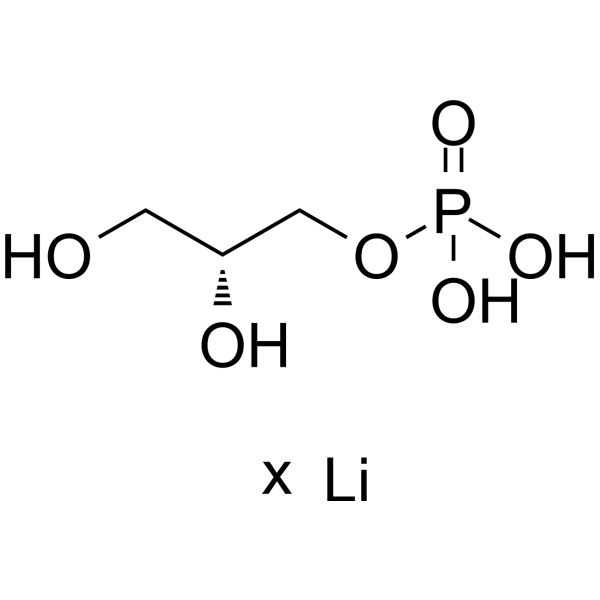
HY-113128A
sn-Glycerol 3-phosphate lithiumEndogenous Metabolite
All Endogenous Metabolite Isoforms
More

Biological Activity
Description
IC50 & Target
|
Human Endogenous Metabolite |
In Vitro
Dihydroxyacetone phosphate hemimagnesium hydrate can be used in fructose metabolism, triose and glycation research[1].
Dihydroxyacetone phosphate hemimagnesium hydrate has potential glycating effects to form advanced glycation end products (AGEs)[3].
MedChemExpress (MCE) has not independently confirmed the accuracy of these methods. They are for reference only.


Chemical Information
-
Appearance Solid-Liquid Mixture
-
Formula C3H7O6P·1/2Mg·xH2O
-
Color Colorless to off-white
-
SMILES
O=C(COP(O)([O-])=O)CO.[1/2].O.[Mg+2].[x]
-
Synonyms
DHAP hemimagnesium hydrate
-
Structure Classification
-
Initial Source
-
Shipping
Room temperature in continental US; may vary elsewhere.
-
Storage
4°C, sealed storage, away from moisture
* In solvent : -80°C, 6 months; -20°C, 1 month (sealed storage, away from moisture)


Solvent & Solubility
In Vitro:
H2O : 100 mg/mL (Need ultrasonic)
In Vivo:
For the following dissolution methods, please prepare the working solution directly:
It is recommended to prepare fresh solutions and use them promptly within a short period of time.
The percentages shown for the solvents indicate their volumetric ratio in the final prepared solution. If precipitation or phase separation occurs during preparation, heat and/or sonication can be used to aid dissolution.
Add each solvent one by one: PBS
Solubility: 100 mg/mL; Clear solution; Need ultrasonic


Purity & Documentation
-
Data Sheet (274 KB)
-
SDS (252 KB)
- English - EN (252 KB)
- Français - FR (252 KB)
- Deutsch - DE (252 KB)
- Norwegian - NO (252 KB)
- Español - ES (252 KB)
- Swedish - SV (252 KB)
- Italian - IT (252 KB)
- Korean - KR (252 KB)
- Portuguese - PT (252 KB)
-
Handling Instructions (2659 KB)
References
[2]. Shimakawa G, et al. The Calvin cycle inevitably produces sugar-derived reactive carbonyl methylglyoxal during photosynthesis: a potential cause of plant diabetes. Plant Cell Physiol. 2014 Feb;55(2):333-40. [Content Brief]
[3]. Ahmad S, et al. Inhibitory effect of metformin and pyridoxamine in the formation of early, intermediate and advanced glycation end-products. PLoS One. 2013 Sep 4;8(9):e72128. [Content Brief]

Calculators
Concentration (start) × Volume (start) = Concentration (final) × Volume (final)


Dihydroxyacetone phosphate hemimagnesium hydrate Related Classifications
HY-113131A Related Classifications
 Powered by Bioz