Delivery of temperature sensitive items including proteins and kits will be paused on 6/19 for the Juneteenth holiday. For urgent orders please contact customer service.
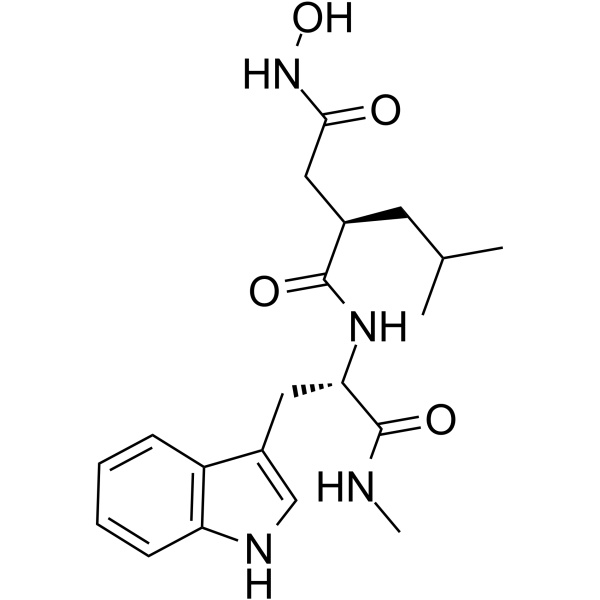
Ilomastat (GM6001) is a potent and broad spectrum matrix metalloprotease (MMP) inhibitor, inhibits MMPs (IC50s, 1.5 nM for MMP-1; 1.1 nM for MMP-2; 1.9 nM for MMP-3; 0.5 nM for MMP-9), with a Ki of 0.4 nM for human skin fibroblast collagenase (MMP-1).
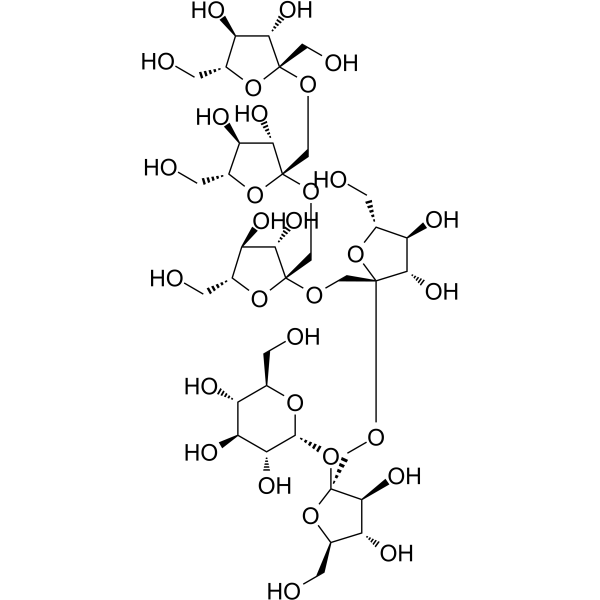
1,1,1,1-Kestohexaose (1,1,1,1-Kestohexose) is an insulin-type fructooligosaccharide hexasaccharide. 1,1,1,1-Kestohexaose exhibits neuroprotective and anti-depressant-like activities. 1,1,1,1-Kestohexaose can alleviate Corticosteron (HY-B1618)-induced decrease in cell viability and NGF expression in vitro .
Alcohol dehydrogenase, Saccharomyces cerevisiae is a dimeric protein in the cytosol of cells. Alcohol dehydrogenase, the key enzyme for alcohol consumption in the body, is the highest expressed in the liver and participates in the detoxification mechanism of environmental alcohol .
WX-02-23 is a small-molecule probe that stereoselectively and site-specifically binds to C258 of FOXA1 and C1111 of SF3B1. WX-02-23 remodels FOXA1's chromatin binding and pioneer activity in a DNA-dependent manner, disrupts spliceosome assembly, and enhances the thermal stability of SF3B1. WX-02-23 inhibits tumor cell proliferation and induces apoptosis. WX-02-23 can be used for research on cancers such as prostate cancer .
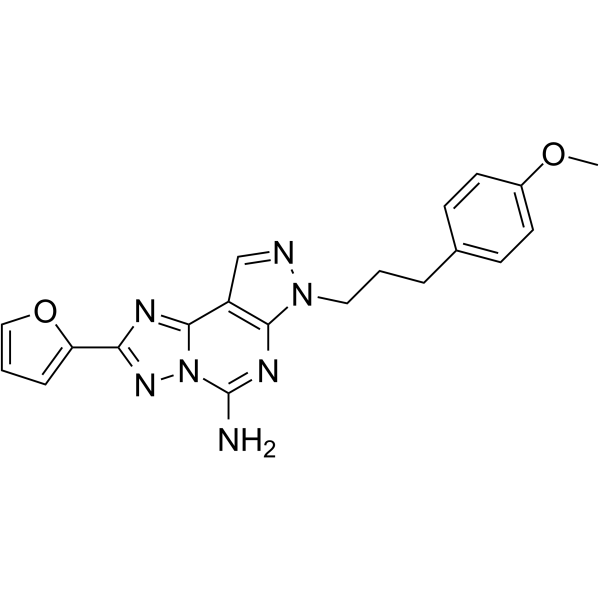
SCH442416 is a potent, selective and brain-penetrant antagonist of adenosine A2A receptor (A2AR), with Kis of 0.048 and 0.5 nM for human and rat A2AR respectively. SCH442416 displays more than 23000-fold selectivity over A1R, A2BR, and A3R (Ki=1111, 10000, and 10000 nM, respectively). SCH442416 can be used for imaging of adenosine A2A receptors in rat and primate brain .
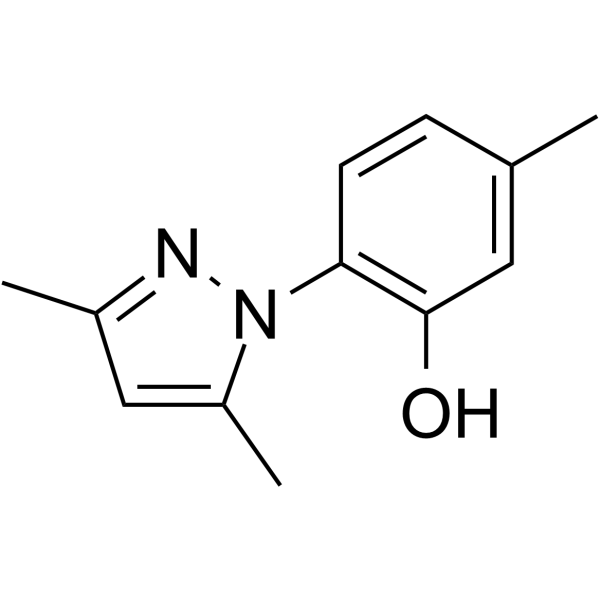
ME1111 is an antifungal agent that is active against dermatophytes. ME1111 is an inhibitor of the succinate dehydrogenase of Trichophyton species. ME1111 has an excellent ability to penetrate human nails and is used for onychomycosis research .
GE1111 is a MRGPRX2 antagonist (IC50 = 9.4 μM). GE1111 inhibits MRGPRX2/MRGPRB2-mediated mast cell activation. GE1111 reduces the expressions of TSLP, IL-13, MCP-1, TNF-α, IL-1β and periostin, maintains the expression levels of claudin 1 and involucrin, restores the phagocytic activity of macrophages, and attenuates the activation of STIM1 and phosphorylated AKT. GE1111 exerts anti-inflammatory and anti-allergic effects in multiple animal models. GE1111 is applicable to the research related to rosacea, atopic dermatitis and ulcerative colitis .
SOS1-IN-25 is an SOS1 inhibitor. SOS1-IN-25 exhibits inhibitory activity against KRAS G12C/SOS1 complex formation (IC50 = 11.11 nM). SOS1-IN-25 leads to a dose-dependent decrease in pERK levels. SOS1-IN-25 can be used for the study of leukemia .
JUN-1111 is an irreversible and selective Cdc25 phosphatase inhibitor with IC50 values of 0.38, 1.8, 0.66, 28, 37 µM for Cdc25A, Cdc25B, Cdc25C, VHR, PTP1B, respectively. JUN-1111 induces cell cycle arrest at G1 and G2/M phases. JUN-1111 decreases the expression of phosphoCdk1 .
Allyl (11S,11aS)-11-((tert-butyldimethylsilyl)oxy)-8-hydroxy-7-methoxy-2-methyl-5-oxo-11,11a-dihydro-1H-benzo[e]pyrrolo[1,2-a][1,4]diazepine-10(5H)-carboxylate is a drug intermediate for synthesis of various active compounds.
1-Oleoyl lysophosphatidic acid sodium (GMP) is the GMP-grade form of 1-Oleoyl lysophosphatidic acid sodium (HY-107614). GMP-grade small molecules serve as auxiliary reagents in cell therapy. 1-Oleoyl lysophosphatidic acid sodium is a bioactive lipid signaling molecule. 1-Oleoyl lysophosphatidic acid sodium inhibits lysoPLD-catalyzed hydrolysis of lysophosphatidylcholine and FS-3. 1-Oleoyl lysophosphatidic acid sodium activates LPA1 and LPA2, thereby triggering calcium mobilization, NFATc1 translocation, Rho/ROCK activation, Smad2/3 phosphorylation and c-Fos expression. 1-Oleoyl lysophosphatidic acid sodium induces anxiety-like, depression-like and hypoactivity phenotypes, regulates osteoclast cytoskeleton and viability, reduces osteoclast bone resorptive activity, and drives mesenchymal stem cell differentiation into myofibroblast-like cells. 1-Oleoyl lysophosphatidic acid sodium stimulates the secretion of transforming growth factor-β1 and stromal cell-derived factor-1. 1-Oleoyl lysophosphatidic acid sodium is applicable to research related to anxiety, depression and ovarian cancer .
Ilomastat (Standard) is the analytical standard of Ilomastat. This product is intended for research and analytical applications. Ilomastat (GM6001) is a potent and broad spectrum matrix metalloprotease (MMP) inhibitor, inhibits MMPs (IC50s, 1.5 nM for MMP-1; 1.1 nM for MMP-2; 1.9 nM for MMP-3; 0.5 nM for MMP-9), with a Ki of 0.4 nM for human skin fibroblast collagenase (MMP-1).
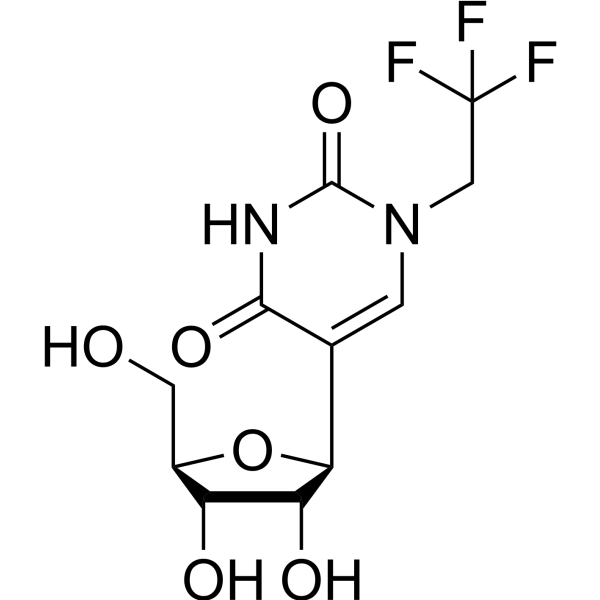
N1-(1,1,1-Trifluoroethyl)pseudouridine is a purine nucleoside analogue. Purine nucleoside analogs have broad antitumor activity targeting indolent lymphoid malignancies. Anticancer mechanisms in this process rely on inhibition of DNA synthesis, induction of apoptosis, etc .
SCH442416 (Standard) is the analytical standard of SCH442416. This product is intended for research and analytical applications. SCH442416 is a potent, selective and brain-penetrant antagonist of adenosine A2A receptor (A2AR), with Kis of 0.048 and 0.5 nM for human and rat A2AR respectively. SCH442416 displays more than 23000-fold selectivity over A1R, A2BR, and A3R (Ki=1111, 10000, and 10000 nM, respectively). SCH442416 can be used for imaging of adenosine A2A receptors in rat and primate brain .
1,1′,1′′,1′′′-[1,4-Piperazinediylbis(2,1-ethanediylnitrilo)]tetrakis[2-dodecanol] is a lipid/lipidoid used in preparation of lipid-based or lipidoid nanoparticles .
M-1111 is a Rapa-Link inhibitor. M-1111 is covalently linked by Rapamycin (HY-10219) and an inhibitor of the active site mTOR. M-1111 has strong inhibitory activity on the mTORC1 signaling pathway (pS6 and p4E-BP1). M-1111 has nanomolar-level inhibitory activity against various cancer cells. M-1111 completely inhibits p4E-BP1 without inhibiting pAkt S473. M-1111 can be used for research on liver cancer, kidney cancer, and colorectal cancer .
ME1111 (Standard) is the analytical standard of ME1111 (HY-108012). This product is intended for research and analytical applications. ME1111 is an antifungal agent that is active against dermatophytes. ME1111 is an inhibitor of the succinate dehydrogenase of Trichophyton species. ME1111 has an excellent ability to penetrate human nails and is used for onychomycosis research .
Demethyl-sapanisertib-C2-amide-PEG7-C2-N3 (Compound 10c) is an azide group linker used for coupling, which can be employed in the synthesis of "Rapa-Link" compounds, such as M-1111 (HY-176948), an mTOR inhibitor .
Tetrakis(4-(1H-imidazol-1-yl)phenyl)methane(1,1',1'',1'''-(Methanetetrayltetra-4,1-phenylene)tetrakis(1H-imidazole)) is a metal-organic framework (MOF).
1,1''-([1,1'-Biphenyl]-4,4'-diylbis(methylene))bis(([4,4'-bipyridin]-1-ium)) hexafluorophosphate(V)(1,1'-[Biphenyl-4,4'-diylbis(methylene)]bis(4,4'-bipyridinium) bis(hexafluorophosphate)) is a metal-organic framework (MOF).
(SP-5-12)-Chloro[[1,1′,1′′,1′′′-tetramethyl 4,4′,4′′,4′′′-(21H,23H-porphine-5,10,15,20-tetrayl-κN21,κN22,κN23,κN24)tetrakis[benzoato]](2-)]iron (5,10,15,20-Tetrakis(4-(methoxycarbonyl)phenyl)porphirinato]iron(III) chloride) is a metal-organic framework (MOF).
2,2'-Difluoro-[1,1'-biphenyl]-4,4'-dicarboxylic acid compound with 6-hydroxy-2-naphthoic acid and benzene-1,3,5-tricarboxylic acid and 4-(tert-butyl)benzene-1,2-diol and propane-1,2-diol (1:1:1:1:1) is a metal-organic framework (MOF).
1,1',1''-((2,4,6-Trimethylbenzene-1,3,5-triyl)tris(methylene))tris(1H-imidazole) (1,3,5-Tris(imidazol-1-ylmethyl)-2,4,6-trimethylbenzene) is a metal-organic framework (MOF).
1,1''-(1,4-Phenylenebis(methylene))bis(([4,4'-bipyridin]-1-ium)) (4-Pyridin-4-yl-1-[[4-[(4-pyridin-4-ylpyridin-1-ium-1-yl)methyl]phenyl]methyl]pyridin-1-ium) is a metal-organic framework (MOF).
1-Oleoyl lysophosphatidic acid sodium (GMP) is the GMP-grade form of 1-Oleoyl lysophosphatidic acid sodium (HY-107614). GMP-grade small molecules serve as auxiliary reagents in cell therapy. 1-Oleoyl lysophosphatidic acid sodium is a bioactive lipid signaling molecule. 1-Oleoyl lysophosphatidic acid sodium inhibits lysoPLD-catalyzed hydrolysis of lysophosphatidylcholine and FS-3. 1-Oleoyl lysophosphatidic acid sodium activates LPA1 and LPA2, thereby triggering calcium mobilization, NFATc1 translocation, Rho/ROCK activation, Smad2/3 phosphorylation and c-Fos expression. 1-Oleoyl lysophosphatidic acid sodium induces anxiety-like, depression-like and hypoactivity phenotypes, regulates osteoclast cytoskeleton and viability, reduces osteoclast bone resorptive activity, and drives mesenchymal stem cell differentiation into myofibroblast-like cells. 1-Oleoyl lysophosphatidic acid sodium stimulates the secretion of transforming growth factor-β1 and stromal cell-derived factor-1. 1-Oleoyl lysophosphatidic acid sodium is applicable to research related to anxiety, depression and ovarian cancer .
1-Oleoyl lysophosphatidic acid sodium (GMP) is the GMP-grade form of 1-Oleoyl lysophosphatidic acid sodium (HY-107614). GMP-grade small molecules serve as auxiliary reagents in cell therapy. 1-Oleoyl lysophosphatidic acid sodium is a bioactive lipid signaling molecule. 1-Oleoyl lysophosphatidic acid sodium inhibits lysoPLD-catalyzed hydrolysis of lysophosphatidylcholine and FS-3. 1-Oleoyl lysophosphatidic acid sodium activates LPA1 and LPA2, thereby triggering calcium mobilization, NFATc1 translocation, Rho/ROCK activation, Smad2/3 phosphorylation and c-Fos expression. 1-Oleoyl lysophosphatidic acid sodium induces anxiety-like, depression-like and hypoactivity phenotypes, regulates osteoclast cytoskeleton and viability, reduces osteoclast bone resorptive activity, and drives mesenchymal stem cell differentiation into myofibroblast-like cells. 1-Oleoyl lysophosphatidic acid sodium stimulates the secretion of transforming growth factor-β1 and stromal cell-derived factor-1. 1-Oleoyl lysophosphatidic acid sodium is applicable to research related to anxiety, depression and ovarian cancer .
1,1′,1′′,1′′′-[1,4-Piperazinediylbis(2,1-ethanediylnitrilo)]tetrakis[2-dodecanol] is a lipid/lipidoid used in preparation of lipid-based or lipidoid nanoparticles .
1,1,1,1-Kestohexaose (1,1,1,1-Kestohexose) is an insulin-type fructooligosaccharide hexasaccharide. 1,1,1,1-Kestohexaose exhibits neuroprotective and anti-depressant-like activities. 1,1,1,1-Kestohexaose can alleviate Corticosteron (HY-B1618)-induced decrease in cell viability and NGF expression in vitro .
Thyroid Peroxidase (TPO) orchestrates iodination and coupling within thyroglobulin, leading to the synthesis of thyroid hormones T(3) and T(4).TPO/Thyroid Peroxidase Protein, Mouse (HEK293, His) is the recombinant mouse-derived TPO/Thyroid Peroxidase protein, expressed by HEK293 , with C-His labeled tag.
The PRDX1 protein is a thiol-specific peroxidase that catalyzes the reduction of hydrogen peroxide and organic hydroperoxides to water and alcohols.Its key role in cellular protection against oxidative stress includes detoxifying superoxide and acting as a sensor of hydrogen peroxide-mediated signaling events.PRDX1 Protein, Mouse (His) is the recombinant mouse-derived PRDX1 protein, expressed by E.coli , with C-His labeled tag.
Demethyl-sapanisertib-C2-amide-PEG7-C2-N3 (Compound 10c) is an azide group linker used for coupling, which can be employed in the synthesis of "Rapa-Link" compounds, such as M-1111 (HY-176948), an mTOR inhibitor .
N1-(1,1,1-Trifluoroethyl)pseudouridine is a purine nucleoside analogue. Purine nucleoside analogs have broad antitumor activity targeting indolent lymphoid malignancies. Anticancer mechanisms in this process rely on inhibition of DNA synthesis, induction of apoptosis, etc .
1,1′,1′′,1′′′-[1,4-Piperazinediylbis(2,1-ethanediylnitrilo)]tetrakis[2-dodecanol] is a lipid/lipidoid used in preparation of lipid-based or lipidoid nanoparticles .
Western blot analysis of extracts from THP-1(lane 2(20μg), Jurkat (lane 3(20μg) and NIH3T3(lane 4(20μg) using FOXO1A (HY-P80132) Rabbit mAb. Proteins were transferred
to a PVDF membrane and blocked with 5% non-fat milk in TBST for 2 hour at room temperature. The primary antibody (1/1000) and Loading control antibody (Beta Actin, HY-P80438, 1/10000) was
used in 5% non-fat milk in TBST at 4°C overnight. Goat Anti-Mouse/Rabbit IgG-HRP Secondary Antibody (1/10000) was used for 1 hour at room temperature.
Western blot analysis of extracts from THP-1(lane 2(20μg), Jurkat (lane 3(20μg) and NIH3T3(lane 4(20μg) using FOXO1A (HY-P80132) Rabbit mAb. Proteins were transferred
to a PVDF membrane and blocked with 5% non-fat milk in TBST for 2 hour at room temperature. The primary antibody (1/1000) and Loading control antibody (Beta Actin, HY-P80438, 1/10000) was
used in 5% non-fat milk in TBST at 4°C overnight. Goat Anti-Mouse/Rabbit IgG-HRP Secondary Antibody (1/10000) was used for 1 hour at room temperature.
Western blot analysis of extracts from THP-1(lane 2(20μg), Jurkat (lane 3(20μg) and NIH3T3(lane 4(20μg) using FOXO1A (HY-P80132) Rabbit mAb. Proteins were transferred
to a PVDF membrane and blocked with 5% non-fat milk in TBST for 2 hour at room temperature. The primary antibody (1/1000) and Loading control antibody (Beta Actin, HY-P80438, 1/10000) was
used in 5% non-fat milk in TBST at 4°C overnight. Goat Anti-Mouse/Rabbit IgG-HRP Secondary Antibody (1/10000) was used for 1 hour at room temperature.
Western blot analysis of extracts from THP-1(lane 2(20μg), Jurkat (lane 3(20μg) and NIH3T3(lane 4(20μg) using FOXO1A (HY-P80132) Rabbit mAb. Proteins were transferred
to a PVDF membrane and blocked with 5% non-fat milk in TBST for 2 hour at room temperature. The primary antibody (1/1000) and Loading control antibody (Beta Actin, HY-P80438, 1/10000) was
MedchemExpress Validation 03
Western blot analysis of extracts from THP-1(lane 2(20μg), Jurkat (lane 3(20μg) and NIH3T3(lane 4(20μg) using FOXO1A (HY-P80132) Rabbit mAb. Proteins were transferred
MedchemExpress Validation 04
Western blot analysis of extracts from THP-1(lane 2(20μg), Jurkat (lane 3(20μg) and NIH3T3(lane 4(20μg) using FOXO1A (HY-P80132) Rabbit mAb. Proteins were transferred
to a PVDF membrane and blocked with 5% non-fat milk in TBST for 2 hour at room temperature. The primary antibody (1/1000) and Loading control antibody (Beta Actin, HY-P80438, 1/10000) was
used in 5% non-fat milk in TBST at 4°C overnight. Goat Anti-Mouse/Rabbit IgG-HRP Secondary Antibody (1/10000) was used for 1 hour at room temperature.
MedchemExpress Validation
Western blot analysis of extracts from THP-1(lane 2(20μg), Jurkat (lane 3(20μg) and NIH3T3(lane 4(20μg) using FOXO1A (HY-P80132) Rabbit mAb. Proteins were transferred
to a PVDF membrane and blocked with 5% non-fat milk in TBST for 2 hour at room temperature. The primary antibody (1/1000) and Loading control antibody (Beta Actin, HY-P80438, 1/10000) was
used in 5% non-fat milk in TBST at 4°C overnight. Goat Anti-Mouse/Rabbit IgG-HRP Secondary Antibody (1/10000) was used for 1 hour at room temperature.
Western blot analysis of extracts from THP-1(lane 2(20μg), Jurkat (lane 3(20μg) and NIH3T3(lane 4(20μg) using FOXO1A (HY-P80132) Rabbit mAb. Proteins were transferred
to a PVDF membrane and blocked with 5% non-fat milk in TBST for 2 hour at room temperature. The primary antibody (1/1000) and Loading control antibody (Beta Actin, HY-P80438, 1/10000) was
used in 5% non-fat milk in TBST at 4°C overnight. Goat Anti-Mouse/Rabbit IgG-HRP Secondary Antibody (1/10000) was used for 1 hour at room temperature.
MedchemExpress Validation
Western blot analysis of extracts from THP-1(lane 2(20μg), Jurkat (lane 3(20μg) and NIH3T3(lane 4(20μg) using FOXO1A (HY-P80132) Rabbit mAb. Proteins were transferred
to a PVDF membrane and blocked with 5% non-fat milk in TBST for 2 hour at room temperature. The primary antibody (1/1000) and Loading control antibody (Beta Actin, HY-P80438, 1/10000) was
used in 5% non-fat milk in TBST at 4°C overnight. Goat Anti-Mouse/Rabbit IgG-HRP Secondary Antibody (1/10000) was used for 1 hour at room temperature.
MedchemExpress Validation
Western blot analysis of extracts from THP-1(lane 2(20μg), Jurkat (lane 3(20μg) and NIH3T3(lane 4(20μg) using FOXO1A (HY-P80132) Rabbit mAb. Proteins were transferred
to a PVDF membrane and blocked with 5% non-fat milk in TBST for 2 hour at room temperature. The primary antibody (1/1000) and Loading control antibody (Beta Actin, HY-P80438, 1/10000) was
used in 5% non-fat milk in TBST at 4°C overnight. Goat Anti-Mouse/Rabbit IgG-HRP Secondary Antibody (1/10000) was used for 1 hour at room temperature.
MedchemExpress Validation
Western blot analysis of extracts from THP-1(lane 2(20μg), Jurkat (lane 3(20μg) and NIH3T3(lane 4(20μg) using FOXO1A (HY-P80132) Rabbit mAb. Proteins were transferred
to a PVDF membrane and blocked with 5% non-fat milk in TBST for 2 hour at room temperature. The primary antibody (1/1000) and Loading control antibody (Beta Actin, HY-P80438, 1/10000) was
used in 5% non-fat milk in TBST at 4°C overnight. Goat Anti-Mouse/Rabbit IgG-HRP Secondary Antibody (1/10000) was used for 1 hour at room temperature.
MedchemExpress Validation
Western blot analysis of extracts from THP-1(lane 2(20μg), Jurkat (lane 3(20μg) and NIH3T3(lane 4(20μg) using FOXO1A (HY-P80132) Rabbit mAb. Proteins were transferred
to a PVDF membrane and blocked with 5% non-fat milk in TBST for 2 hour at room temperature. The primary antibody (1/1000) and Loading control antibody (Beta Actin, HY-P80438, 1/10000) was
used in 5% non-fat milk in TBST at 4°C overnight. Goat Anti-Mouse/Rabbit IgG-HRP Secondary Antibody (1/10000) was used for 1 hour at room temperature.
MedchemExpress Validation
Western blot analysis of extracts from THP-1(lane 2(20μg), Jurkat (lane 3(20μg) and NIH3T3(lane 4(20μg) using FOXO1A (HY-P80132) Rabbit mAb. Proteins were transferred
to a PVDF membrane and blocked with 5% non-fat milk in TBST for 2 hour at room temperature. The primary antibody (1/1000) and Loading control antibody (Beta Actin, HY-P80438, 1/10000) was
used in 5% non-fat milk in TBST at 4°C overnight. Goat Anti-Mouse/Rabbit IgG-HRP Secondary Antibody (1/10000) was used for 1 hour at room temperature.
MedchemExpress Validation
Western blot analysis of extracts from THP-1(lane 2(20μg), Jurkat (lane 3(20μg) and NIH3T3(lane 4(20μg) using FOXO1A (HY-P80132) Rabbit mAb. Proteins were transferred
to a PVDF membrane and blocked with 5% non-fat milk in TBST for 2 hour at room temperature. The primary antibody (1/1000) and Loading control antibody (Beta Actin, HY-P80438, 1/10000) was
used in 5% non-fat milk in TBST at 4°C overnight. Goat Anti-Mouse/Rabbit IgG-HRP Secondary Antibody (1/10000) was used for 1 hour at room temperature.
MedChemExpress values your privacy and your trust is important to us. We use cookies to enhance your website experience. Some cookies are necessary to run the website.
Privacy and Cookie Policy









![Allyl (11S,11aS)-11-((tert-butyldimethylsilyl)oxy)-8-hydroxy-7-methoxy-2-methyl-5-oxo-11,11a-dihydro-1H-benzo[e]pyrrolo[1,2-a][1,4]diazepine-10(5H)-carboxylate](http://file.medchemexpress.com/product_pic/hy-w092607.gif)



![1,1′,1′′,1′′′-[1,4-Piperazinediylbis(2,1-ethanediylnitrilo)]tetrakis[2-dodecanol]](http://file.medchemexpress.com/product_pic/hy-112773.gif)


![1,1'-([1,1'-Biphenyl]-4,4'-diylbis(methylene))bis(4-carboxypyridin-1-ium) chloride](http://file.medchemexpress.com/product_pic/hy-w1049913.gif)


![1,1''-([1,1'-Biphenyl]-4,4'-diylbis(methylene))bis(([4,4'-bipyridin]-1-ium)) hexafluorophosphate(V)](http://file.medchemexpress.com/product_pic/hy-w333530.gif)

![(SP-5-12)-Chloro[[1,1′,1′′,1′′′-tetramethyl 4,4′,4′′,4′′′-(21H,23H-porphine-5,10,15,20-tetrayl-κN21,κN22,κN23,κN24)tetrakis[benzoato]](2-)]iron](http://file.medchemexpress.com/product_pic/hy-w456555.gif)

![1,1′,1′′-[1,3,5-Benzenetriyltris(methylene)]tris-1H-Benzimidazole](http://file.medchemexpress.com/product_pic/hy-w112795.gif)

![2,2'-Difluoro-[1,1'-biphenyl]-4,4'-dicarboxylic acid compound with 6-hydroxy-2-naphthoic acid and benzene-1,3,5-tricarboxylic acid and 4-(tert-butyl)benzene-1,2-diol and propane-1,2-diol (1:1:1:1:1)](http://file.medchemexpress.com/product_pic/hy-w586828.gif)


![1,1'-(1,4-Phenylene)bis[1H-benzimidazole]](http://file.medchemexpress.com/product_pic/hy-w112856.gif)


![1,1',1''-((2,4,6-Trimethylbenzene-1,3,5-triyl)tris(methylene))tris(1H-benzo[d]imidazole)](http://file.medchemexpress.com/product_pic/hy-w543672.gif)
![1,1',1''-((2,4,6-Triethylbenzene-1,3,5-triyl)tris(methylene))tris(1H-benzo[d]imidazole)](http://file.medchemexpress.com/product_pic/hy-w543679.gif)


![1,1',1''-((2,4,6-Trimethylbenzene-1,3,5-triyl)tris(methylene))tris(5,6-dimethyl-1H-benzo[d]imidazole)](http://file.medchemexpress.com/product_pic/hy-w543673.gif)


![1,1''-(1,4-Phenylenebis(methylene))bis(([4,4'-bipyridin]-1-ium))](http://file.medchemexpress.com/product_pic/hy-w248992.gif)



