



SCH442416
Based on 3 publication(s) in Google Scholar
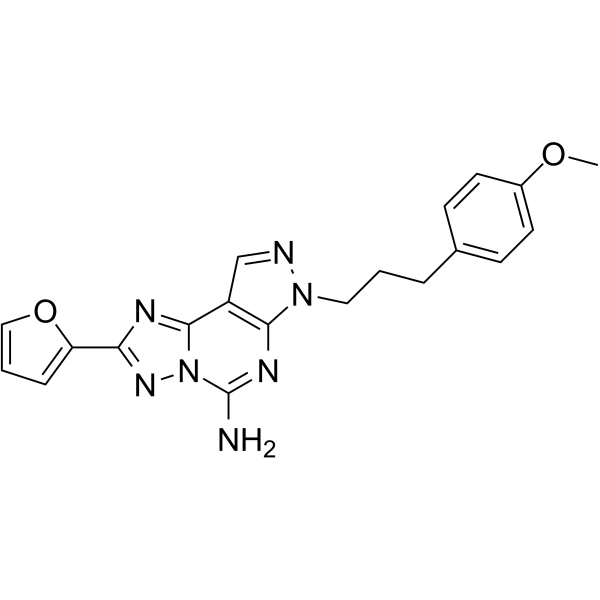
SCH442416 is a potent, selective and brain-penetrant antagonist of adenosine A2A receptor (A2AR), with Kis of 0.048 and 0.5 nM for human and rat A2AR respectively. SCH442416 displays more than 23000-fold selectivity over A1R, A2BR, and A3R (Ki=1111, 10000, and 10000 nM, respectively). SCH442416 can be used for imaging of adenosine A2A receptors in rat and primate brain.
商品は「研究用試薬」です。人や動物の医療用・臨床診断用・食品用の製品ではありません。
研究用途以外に使用した場合、当社は一切の責任を負いかねます。
- 純度 : 99.94%
- CAS 番号: 316173-57-6
- 分子式: C20H19N7O2
- 分子量:389.41
-
保管条件:Powder -20°C, 3 years , 4°C, 2 years ; In solvent -80°C, 2 years , -20°C, 1 year

To place orders, for customer services and technical support, please contact: MedChemExpress USA
Tel: 609-228-6898 E-mail: [email protected] [email protected]


-
 生物活性
生物活性
-
化学情報
-
溶剤 & 溶解度
- 純度とドキュメンテーション
- 参考文献
-
 Help & FAQs


-
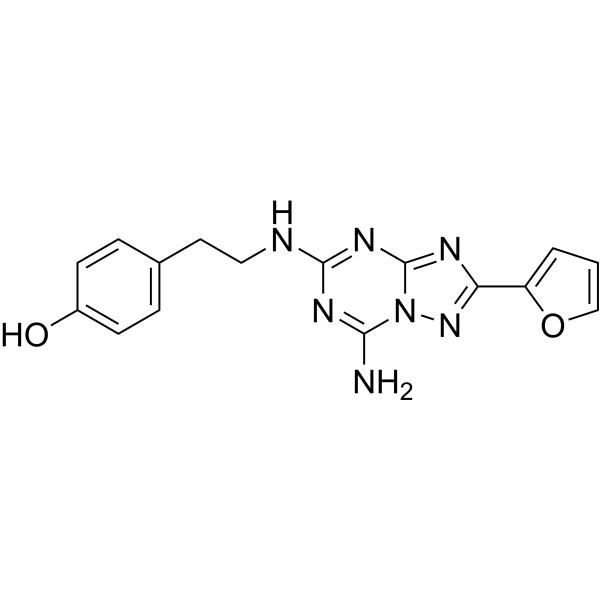
HY-19532
ZM241385A2A Receptor Antagonist -
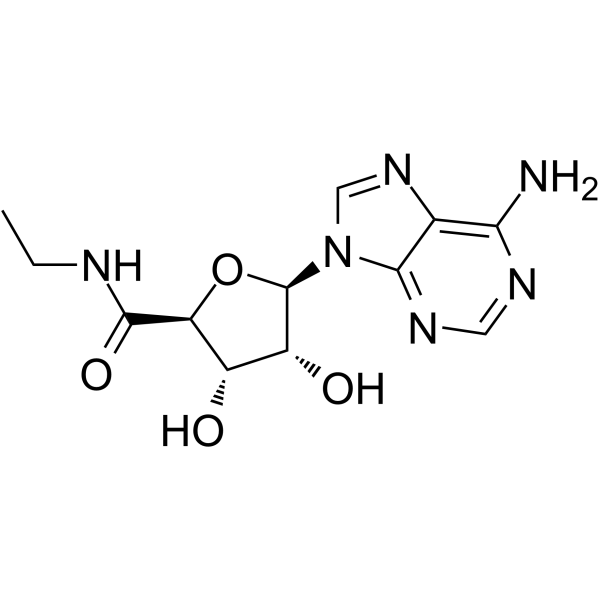
HY-103173
5'-N-EthylcarboxamidoadenosineAdenosine Receptor Agonist -
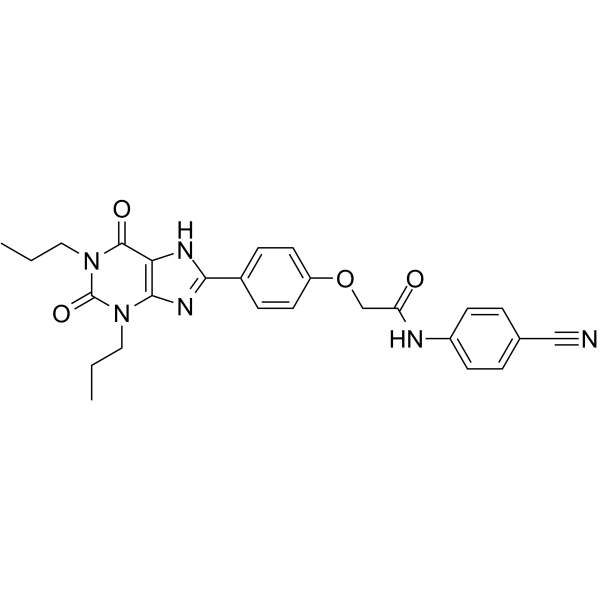
HY-14121
MRS 1754A2B Antagonist -
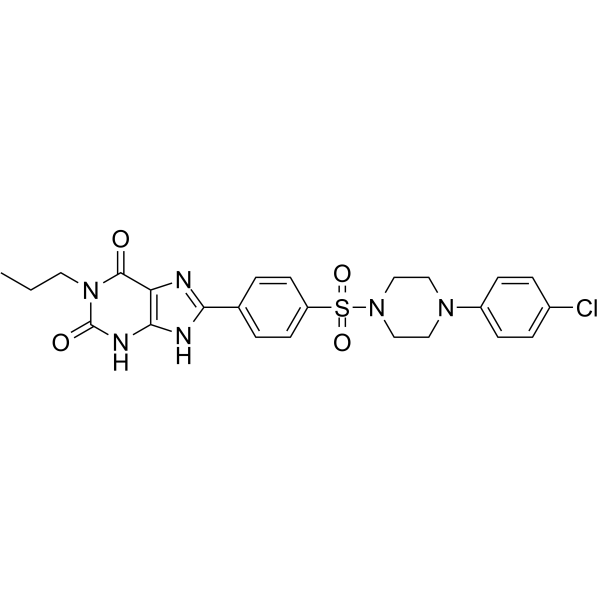
HY-103166
PSB-603A2B Receptor Antagonist -
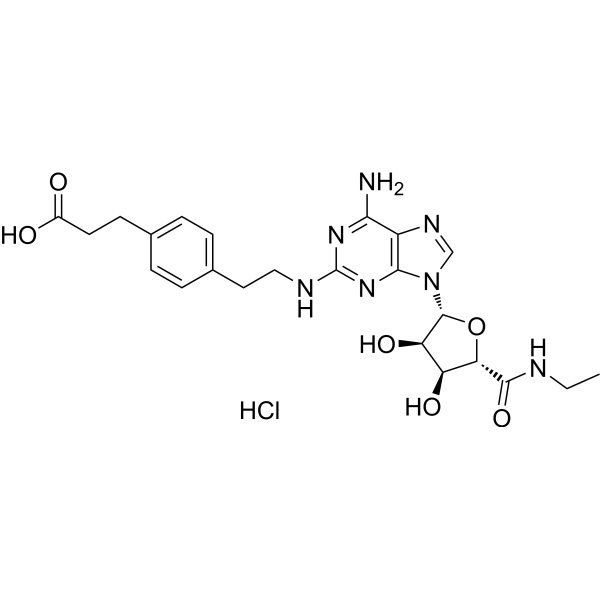
HY-13201A
CGS 21680 HydrochlorideAdenosine A2A Receptor Agonist -
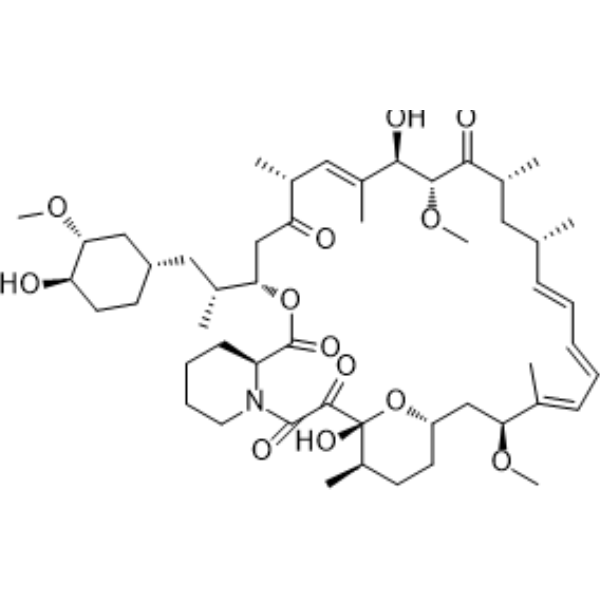
HY-10219
RapamycinmTOR Inhibitor -
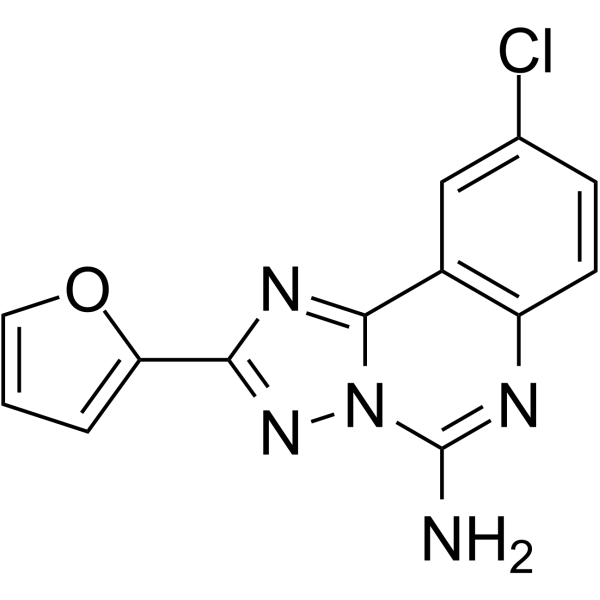
HY-100678
CGS 15943Adenosine Receptor Antagonist -
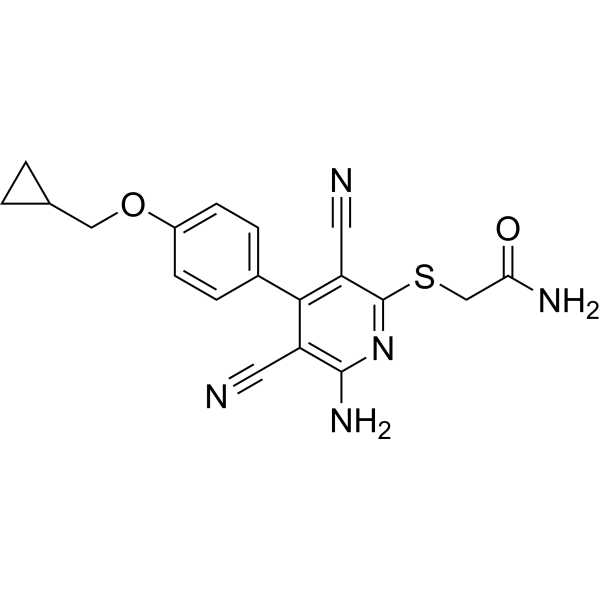
HY-103171
BAY 60-6583A2B Receptor Agonist -
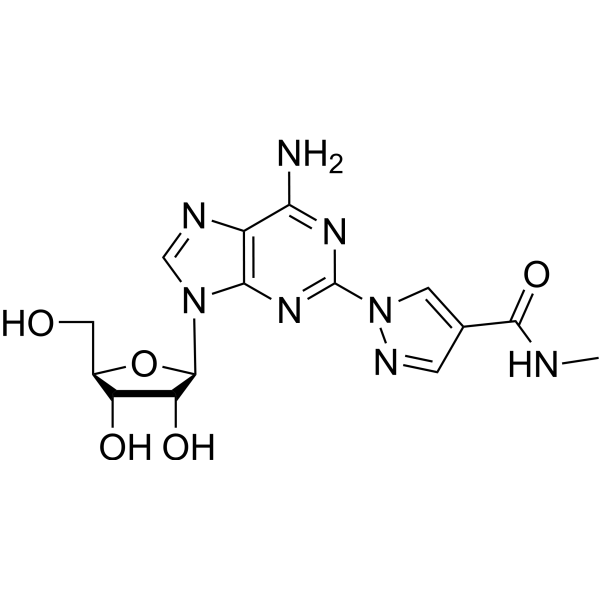
HY-A0168
RegadenosonVasodilator/A2A Adenosine Receptor Agonist -
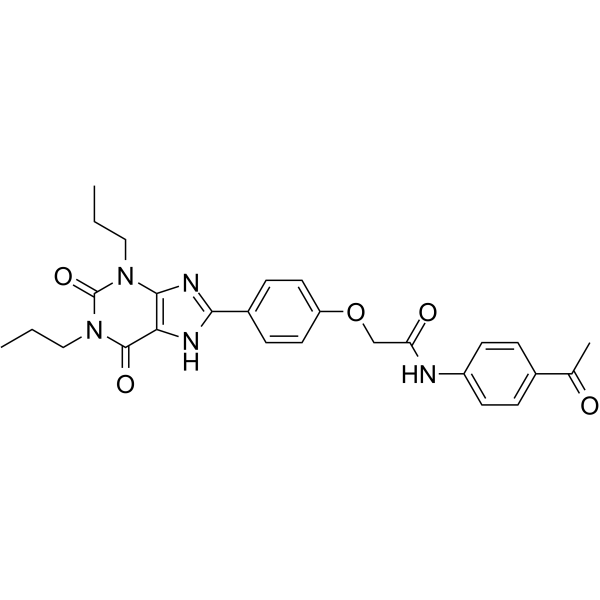
HY-103186
MRS-1706Adenosine A2B Inverse Agonist -
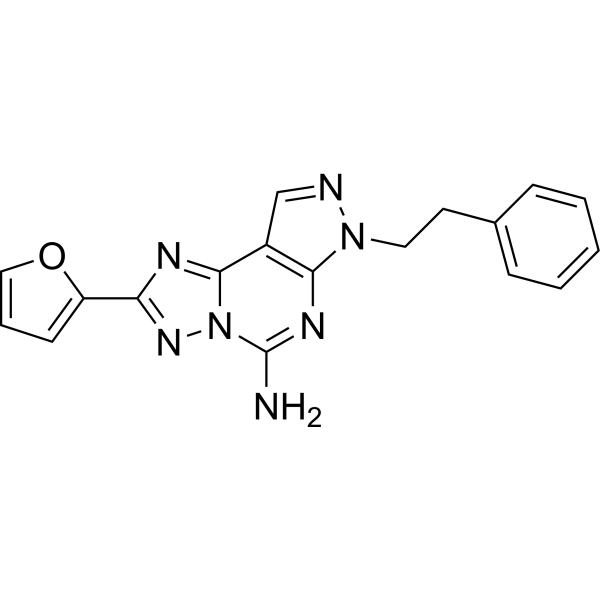
HY-19533
SCH 58261A2A Receptor Antagonist -
HY-10995
TozadenantAdenosine Receptor Antagonist
MedChemExpress(MCE)の使用を引用している文献 SCH442416
MoreAdenosine Receptor アイソフォーム固有の製品をすべて表示
More

生物活性
製品説明
IC50 & Target
IC50: 0.048 nM (hA2AR), 0.5 nM (rA2AR)[1]
体外実験
SCH442416 is selective for A2AR (Ki=0.50 nM) in rat striatal membranes over A1R and A3R (Ki=1815 and >10000, respectively)[1].
SCH442416 (0.1-10 μM) increases the glutamine synthetase (GS) and glutamate aspartate transporter (GLAST) proteins expression of Müller cells in Group 1 μM[5].
MedChemExpress (MCE) has not independently confirmed the accuracy of these methods. They are for reference only. .
体内実験
SCH-442416 (1 μM 2μL; i.v.) increases the GS and GLAST protein expression in rats[5].
SCH442416 (1 μM) significantly attenuates the adenosine-induced dilation (from 15.3 to 5.6 μm)[4].
MedChemExpress (MCE) has not independently confirmed the accuracy of these methods. They are for reference only.


化学情報
-
CAS 番号 316173-57-6
-
性状 Solid
-
分子量 389.41
-
分子式 C20H19N7O2
-
Color White to light brown
-
SMILES
NC1=NC(N(CCCC2=CC=C(OC)C=C2)N=C3)=C3C4=NC(C5=CC=CO5)=NN14
-
輸送条件
Room temperature in continental US; may vary elsewhere.
-
保管条件
Powder -20°C 3 years 4°C 2 years In solvent -80°C 2 years -20°C 1 year


Publications (3)
-
Journal Impact Factor
-
Most Recent
-
-
Eur J Med Res
A2AR regulate inflammation through PKA/NF-κB signaling pathways in intervertebral disc degeneration. [Abstract]2024 Aug 27;29(1):433. PMID: 39192377 -
J Physiol
Exacerbated ATP transmission in the carotid body is linked to glomus cell expansion in spontaneously hypertensive rats. [Abstract]2026 Jun;604(12):4678-4706. PMID: 42002401


溶剤 & 溶解度
体外:
DMSO : 62.5 mg/mL (160.50 mM; Need ultrasonic; Hygroscopic DMSO has a significant impact on the solubility of product, please use newly opened DMSO)
Please refer to the solubility information to select the appropriate solvent. Once prepared, please aliquot and store the solution to prevent product inactivation from repeated freeze-thaw cycles.
Storage method and period of stock solution: -80°C, 2 years; -20°C, 1 year. When stored at -80°C, please use it within 2 years. When stored at -20°C, please use it within 1 year.
Please refer to the solubility information to select the appropriate solvent. Once prepared, please aliquot and store the solution to prevent product inactivation from repeated freeze-thaw cycles.
Storage method and period of stock solution: -80°C, 2 years; -20°C, 1 year. When stored at -80°C, please use it within 2 years. When stored at -20°C, please use it within 1 year.
濃度 (開始) × 体積 (開始) = 濃度 (終了) × 体積 (終了)
体内:
Select the appropriate dissolution method based on your experimental animal and administration route.
- For the following dissolution methods, please ensure to first prepare a clear stock solution using an In Vitro approach and then sequentially add co-solvents:
- To ensure reliable experimental results, the clarified stock solution can be appropriately stored based on storage conditions. As for the working solution for In Vivo experiments, it is recommended to prepare freshly and use it on the same day.
- The percentages shown for the solvents indicate their volumetric ratio in the final prepared solution. If precipitation or phase separation occurs during preparation, heat and/or sonication can be used to aid dissolution.
Add each solvent one by one: 10% DMSO 40% PEG300 5% Tween-80 45% Saline
Solubility: 0.2 mg/mL (0.51 mM); Clear solution; Need ultrasonic
This protocol yields a clear solution of 0.2 mg/mL.
Taking 1 mL working solution as an example, add 100 μL DMSO stock solution (2.0 mg/mL) to 400 μL PEG300, and mix evenly; then add 50 μL Tween-80 and mix evenly; then add 450 μL Saline to adjust the volume to 1 mL.
Preparation of Saline: Dissolve 0.9 g sodium chloride in ddH₂O and dilute to 100 mL to obtain a clear Saline solution.
In Vivo Dissolution Calculator
Please enter the basic information of animal experiments:
-
-
-
-
Recommended: Prepare an additional quantity of animals to account for potential losses during experiments.
Please enter your animal formula composition:
-
%DMSO +
Recommended: Keep the proportion of DMSO in working solution below 2% if your animal is weak.
-
%+
-
+%Tween-80 + +
-
%Saline +
The co-solvents required include: DMSO, . All of co-solvents are available by MedChemExpress (MCE). , Tween 80. All of co-solvents are available by MedChemExpress (MCE).
Working solution concentration: 0.22 mg/mL
Method for preparing stock solution: mg drug dissolved in μL DMSO. Stock solution concentration: mg/mL.
1. Take μL DMSO stock solution;
2. Add μL .
μL , mix evenly;
3. Then add μL Tween 80, mix evenly;
4. Then add μL
Please ensure that the stock solution in the first step is dissolved to a clear state, and add co-solvents in sequence. You can use ultrasonic heating (ultrasonic cleaner, recommended frequency 20-40 kHz), vortexing, etc. to assist dissolution.


純度とドキュメンテーション
-
データシート (275 KB)
-
SDS (393 KB)
- English - EN (393 KB)
- Français - FR (393 KB)
- Deutsch - DE (393 KB)
- Norwegian - NO (393 KB)
- Español - ES (393 KB)
- Swedish - SV (393 KB)
- Italian - IT (393 KB)
- Korean - KR (393 KB)
- Portuguese - PT (393 KB)
-
取扱説明書 (2659 KB)
参考文献
[1]. Todde S, et, al. Design, radiosynthesis, and biodistribution of a new potent and selective ligand for in vivo imaging of the adenosine A(2A) receptor system using positron emission tomography. J Med Chem. 2000 Nov 16;43(23):4359-62. [Content Brief]
[2]. Moresco RM, et, al. In vivo imaging of adenosine A2A receptors in rat and primate brain using [11C]SCH442416. Eur J Nucl Med Mol Imaging. 2005 Apr;32(4):405-13. [Content Brief]
[3]. Zheng J, et, al. Protective roles of adenosine A1, A2A, and A3 receptors in skeletal muscle ischemia and reperfusion injury. Am J Physiol Heart Circ Physiol. 2007 Dec;293(6):H3685-91. [Content Brief]
[4]. Maimon N, et, al. Pre-exposure to adenosine, acting via A(2A) receptors on endothelial cells, alters the protein kinase A dependence of adenosine-induced dilation in skeletal muscle resistance arterioles. J Physiol. 2014 Jun 15;592(12):2575-90. [Content Brief]
[5]. Yu J, et, al. A 2A R Antagonists Upregulate Expression of GS and GLAST in Rat Hypoxia Model. Biomed Res Int. 2020 Oct 26;2020:2054293. [Content Brief]


Complete Stock Solution Preparation Table
Please refer to the solubility information to select the appropriate solvent. Once prepared, please aliquot and store the solution to prevent product inactivation from repeated freeze-thaw cycles.
Storage method and period of stock solution: -80°C, 2 years; -20°C, 1 year. When stored at -80°C, please use it within 2 years. When stored at -20°C, please use it within 1 year.
| Optional Solvent | Concentration Solvent Mass | 1 mg | 5 mg | 10 mg | 25 mg |
|---|---|---|---|---|---|
| DMSO | 1 mM | 2.5680 mL | 12.8399 mL | 25.6799 mL | 64.1997 mL |
| 5 mM | 0.5136 mL | 2.5680 mL | 5.1360 mL | 12.8399 mL | |
| 10 mM | 0.2568 mL | 1.2840 mL | 2.5680 mL | 6.4200 mL | |
| 15 mM | 0.1712 mL | 0.8560 mL | 1.7120 mL | 4.2800 mL | |
| 20 mM | 0.1284 mL | 0.6420 mL | 1.2840 mL | 3.2100 mL | |
| 25 mM | 0.1027 mL | 0.5136 mL | 1.0272 mL | 2.5680 mL | |
| 30 mM | 0.0856 mL | 0.4280 mL | 0.8560 mL | 2.1400 mL | |
| 40 mM | 0.0642 mL | 0.3210 mL | 0.6420 mL | 1.6050 mL | |
| 50 mM | 0.0514 mL | 0.2568 mL | 0.5136 mL | 1.2840 mL | |
| 60 mM | 0.0428 mL | 0.2140 mL | 0.4280 mL | 1.0700 mL | |
| 80 mM | 0.0321 mL | 0.1605 mL | 0.3210 mL | 0.8025 mL | |
| 100 mM | 0.0257 mL | 0.1284 mL | 0.2568 mL | 0.6420 mL |


SCH442416 関連分類
HY-103169 関連分類
 Powered by Bioz