1. Search Result
Search Result
Results for "

Jurkat+cells

" in MedChemExpress (MCE) Product Catalog:

33

Inhibitors & Agonists

1

Fluorescent Dyes

2

Peptides

1

Inhibitory Antibodies

2

Natural
Products

1

Isotope-Labeled Compounds

Cat. No. Product Name Target Research Areas Chemical Structure
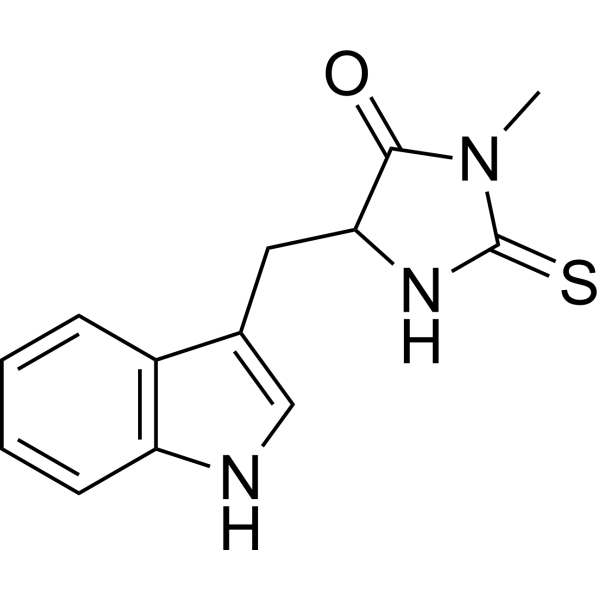
  • HY-15760
    Necrostatin-1
    505+ Cited Publications

    Nec-1

    RIP kinase Autophagy Indoleamine 2,3-Dioxygenase (IDO) Ferroptosis Necroptosis Cancer
    Necrostatin-1 (Nec-1) is a potent and cross the blood-brain barrier necroptosis inhibitor with an EC50 of 490 nM in Jurkat cells. Necrostatin-1 inhibits RIP1 kinase (EC50=182 nM). Necrostatin-1 is also an IDO inhibitor .
    Necrostatin-1
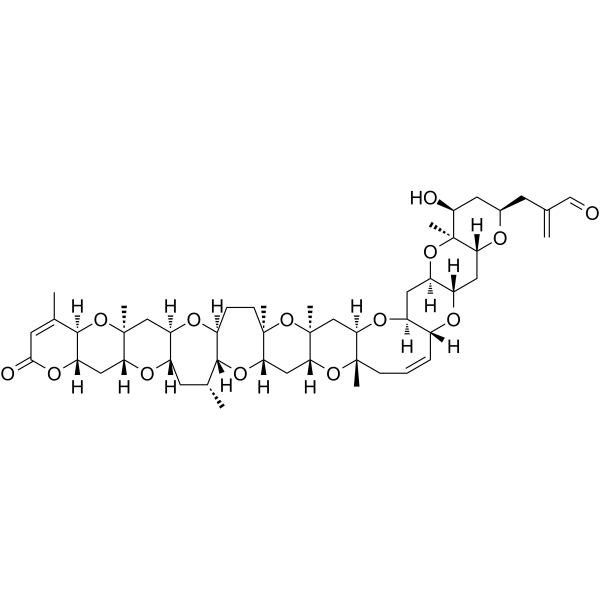
  • HY-12546

    Brevetoxin-2; PbTx-2

    Sodium Channel Apoptosis Calcium Channel Potassium Channel Caspase Neurological Disease Cancer
    Brevetoxin B (Brevetoxin-2) is a red tide toxin. Brevetoxin B affects sodium, potassium and calcium currents in nerve terminals. Brevetoxin B also modulates the metabolic activity of Jurkat cells, reduces cell viability and induces apoptosis. Brevetoxin B can be used in research on synaptic transmission and tumors .
    Brevetoxin B
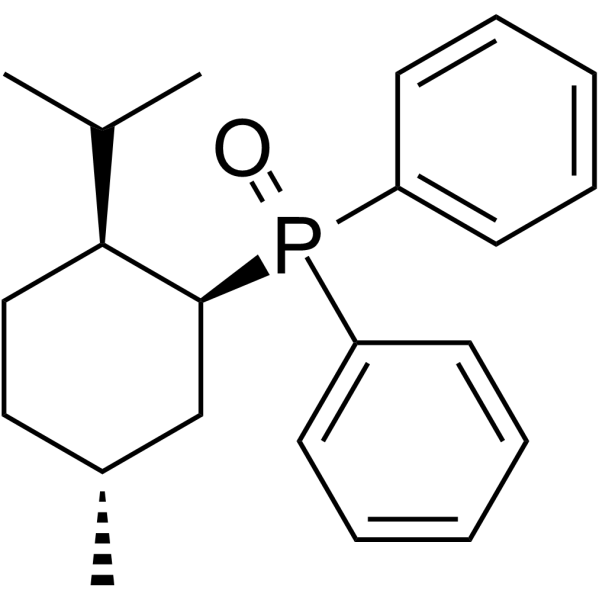
  • HY-100712
    DPO-1
    1 Publications Verification

    Potassium Channel Calcium Channel NOD-like Receptor (NLR) Interleukin Related Cardiovascular Disease Inflammation/Immunology
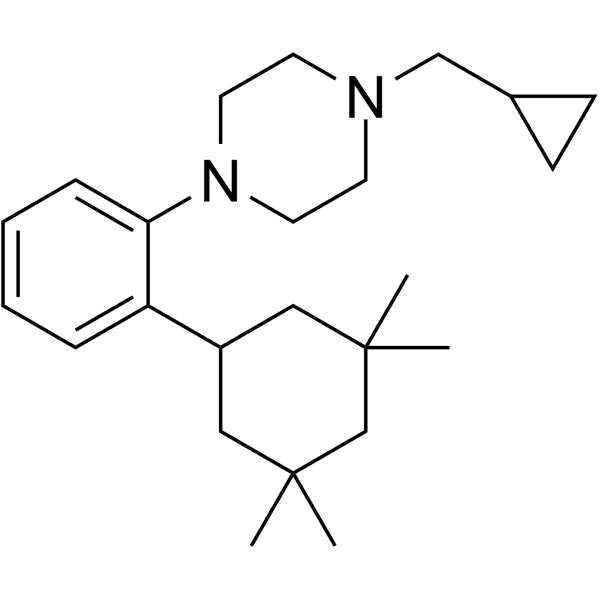
    DPO-1 is a potent Kv1.5 and Kv1.3 (EC50 = 3.1 μM) channels inhibitor with potential immunomodulatory and anti-inflammatory effects. DPO-1 reduces Kv1.3 current density, blunts Ca 2+ influx in Ca 2+-depleted Jurkat cells, and inhibits IL-2 secretion in activated Jurkat cells. DPO-1 inhibits Uric acid sodium (HY-B2130A) (MSU)-induced NLRP3 inflammasome activation by blocking Kv1.5-mediated K + efflux. DPO-1 can be used for the study of immunologic disorders and atrial fibrillation .
    DPO-1
  • HY-163786

    PROTACs CDK Apoptosis Cancer
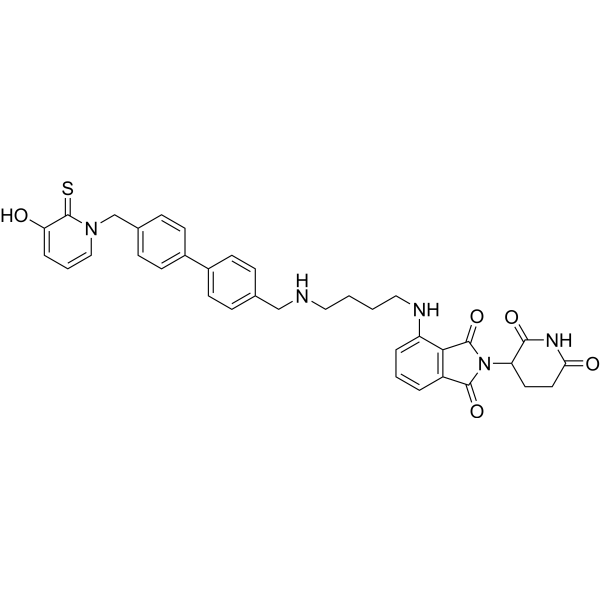
    PROTAC CDK4/6 degrader 1 is a CDK4/CDK6 PROTAC degrader, with DC50 values of 10.5 nM and 2.5 nM, respectively. PROTAC CDK4/6 degrader 1 inhibits the proliferation of Jurkat cells (IC50 = 0.18 μM), arrests the cell cycle at the G1 phase, and induces apoptosis. PROTAC CDK4/6 degrader 1 can be used for cancer research.
    PROTAC CDK4/6 degrader 1
  • HY-137325A

    Calcium Channel Metabolic Disease
    2-Chloro-ATP sodium (2-Chloro ATP) is an adenine nucleotide and an analog of ATP. It is an antagonist of the purinergic P2Y1 receptor and inhibits intracellular calcium mobilization induced by ADP (HY-W010918) in Jurkat cells expressing the human receptor (Ki=2.3 μM). 2-Chloro-ATP sodium is an agonist of the purinergic P2X receptor and induces inward currents in HEK293 cells expressing human bladder smooth muscle or rat PC12 forms of the receptor (EC50=0.5 and 2.5 μM). 2-Chloro-ATP sodium induces relaxation of precontracted guinea pig cecal strips in a concentration-dependent manner. 2-Chloro-ATP sodium has been used to study the substrate specificity of cyclic nucleotide-dependent protein kinases such as protein kinase A (PKA) and PKG.
    2-Chloro-ATP sodium
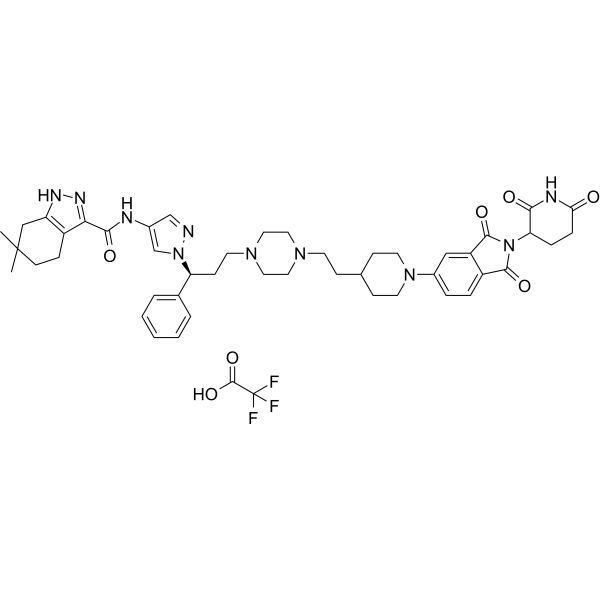
  • HY-149917

    PROTACs Itk Cancer
    ITK degrader 1 is a highly selective degrader of interleukin-2-inducible T-cell kinase (ITK; DC50=3.6 nM in vivo in mice), with good plasma exposure levels. ITK degrader 1 induces rapid, and prolonged ITK degradation and suppresses IL-2 secretion (EC50=35.2 nM, Jurkat cells) stimulated by anti-CD3 antibodyin vivo. ITK degrader 1 consists of target protein ligand (red part) ITK ligand 1 (HY-168387), PROTAC linker (black part) Piperidine-C2-piperazine-Boc (HY-168388) and E3 ubiquitinase ligand (blue part) Thalidomide 5-fluoride (HY-W087383). E3 ubiquitinase and PROTAC linker can form Thalidomide-piperidine-C2-piperazine-Boc (HY-168389) .
    ITK degrader 1
  • HY-W033813

    Caspase Apoptosis Cancer
    Caspase-3/7 inhibitor I is a potent and reversible inhibitor of caspase-3 and caspase-7, with Kis of 60 and 170 nM, respectively. Caspase-3/7 inhibitor I can inhibit apoptosis in Camptothecin (HY-16560)-treated Jurkat cells and in chondrocytes .
    Caspase-3/7 Inhibitor I
  • HY-P10815

    Apoptosis Calcium Channel Others
    IP3RCYT is an IP3R inhibitory peptide, which can inhibit the binding of cytochrome C to IP3R with an IC50 about 100 nM. IP3RCYT regulates calcium signaling within cells. P3RCYT inhibits apoptosis in HeLa and Jurkat cells treated with Staurosporine (HY-15141) or Membrane-bound Fas ligand (FasL) .
    IP3RCYT
  • HY-15760R

    Nec-1 (Standard)

    RIP kinase Autophagy Indoleamine 2,3-Dioxygenase (IDO) Ferroptosis Reference Standards Cancer
    Necrostatin-1 (Standard) is the analytical standard of Necrostatin-1. This product is intended for research and analytical applications. Necrostatin-1 (Nec-1) is a potent and cross the blood-brain barrier necroptosis inhibitor with an EC50 of 490 nM in Jurkat cells. Necrostatin-1 inhibits RIP1 kinase (EC50=182 nM). Necrostatin-1 is also an IDO inhibitor .
    Necrostatin-1 (Standard)
  • HY-179234

    PROTACs RIP kinase Apoptosis Caspase PARP Cancer
    LD5097 is a highly effective and selective PROTAC degrader targeting RIPK1. LD5097 can rapidly and efficiently downregulate RIPK1 and significantly enhance TNFα-mediated apoptosis in Jurkat cells. LD5097 significantly increases the levels of cleaved caspase-3/7 and PARP. LD5097 can be used for the study of acute T-lymphoblastic leukemia .
    LD5097
  • HY-109151

    E6007

    Integrin Inflammation/Immunology
    Milategrast is useful as cell adhesion inhibitor or cell infiltration inhibitor. Milategrast in vitro inhibites the adhesion of Jurkat cells to human fibronectin with an IC50 of <5 μM .
    Milategrast
  • HY-157838

    MAP4K Cancer
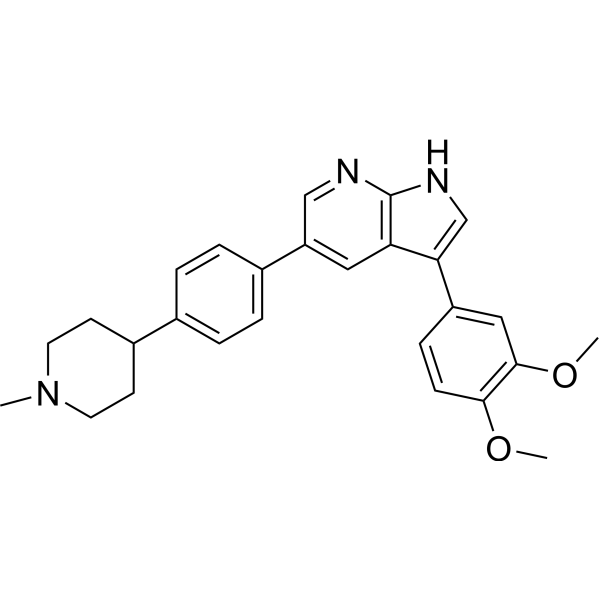
    HMC-B17 is a selective, orally bioavailable HPK1 inhibitor (IC50 = 1.39 nM) that potentiates anti-PD-L1 efficacy. HMC-B17 potently enhances the IL-2 secretion in Jurkat cells (EC50 = 11.56 nM). HMC-B17 can be used for the research of cancer .
    HMC-B17
  • HY-P991393

    Transmembrane Glycoprotein IFNAR TNF Receptor Cancer
    ASP8374 is a human IgG4 monoclonal antibody (mAb) targeting TIGIT. ASP8374 increases IL-2 production in Jurkat cells and IFN-γ and TNF-α production in human PBMCs. ASP8374 can be used in advanced solid tumors research. Recommended isotype control: Human IgG4 kappa, Isotype Control (HY-P99003) .
    ASP8374
  • HY-177786

    Molecular Glues CDK Cancer
    CDK12 ligand-3 is a molecular glucose degrading agent that targets the CDK12 protein (DC50 = 35 nM). CDK12 ligand-3 degrades CDK12, CDK13 and their regulatory subunit Cyclin K in a concentration dependent manner, and inhibits RNA polymerase II CTD (Ser2) phosphorylation. CDK12 ligand-3 exhibits potent anti proliferative activity against Jurkat cells. CDK12 ligand-3 can be used for research on cancers such as leukemia .
    CDK12 ligand-3
  • HY-135078

    NSC 270912

    DNA/RNA Synthesis Others
    2,5-Deoxyfructosazine is a pyrazine derivative that can be found in cured tobacco and is used as a flavoring agent in the food and tobacco industry. Pyrazines, including 2,5-deoxyfructosazine, can be produced either by pyrolytic decomposition of natural compounds or by the reaction of sugars with alcoholic ammonia. 2,5-Deoxyfructosazine is also formed by the breakdown of D-glucosamine at neutral pH. Like glucosamine, 2,5-deoxyfructosazine has DNA strand breakage activity and strongly inhibits IL-2 production by Jurkat cells stimulated with phytohemagglutinin (IC50=~1.25 mM).
    2,5-Deoxyfructosazine
  • HY-W048444

    Endogenous Metabolite Metabolic Disease
    Diaminobiotin is a biotin analog. Diaminobiotin can increase the transcriptional activity of IL-2 and IL-2R genes in Jurkat cells. Diaminobiotin does not affect the abundance of holocarboxylase and the activity of propionyl-CoA carboxylase in Jurkat cells .
    Diaminobiotin
  • HY-112335

    Src Interleukin Related Cancer
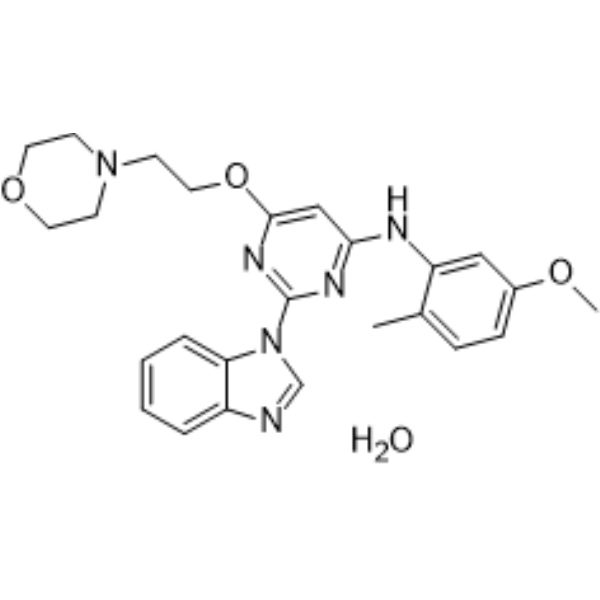
    Lck Inhibitor III (compound 12h) is a potent Lck inhibitor, with an IC50 of 867 nM. Lck Inhibitor III inhibits IL-2 synthesis in Jurkat cells, with an IC50 of 1.270 μM .
    Lck Inhibitor III
  • HY-155396

    PROTACs HDAC Cancer
    PRO-HD1 is a PROTAC HDAC6 degrader. PRO-HD1 degrades HDAC6 in A549 cells, and inhibits proliferation of Jurkat cells (IC50: 5.8 μM) .
    PRO-HD1
  • HY-153701

    JAK Cancer
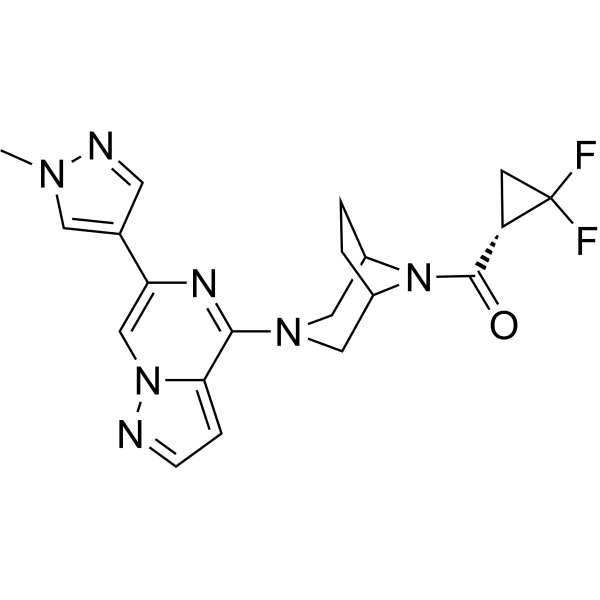
    JAK-IN-26 (compound 2) is an orally active JAK inhibitor with good pharmacokinetic characteristics. JAK-IN-26 inhibits IFN-α2B-induced phosphorylation of STAT3 in Jurkat cells (IC50=17.2 nM) .
    JAK-IN-26
  • HY-170814

    G-quadruplex Cancer
    G-quadruplex ligand 3 (Compound 16) is a G-quadruplex ligand with anticancer effects that chelate iron. G-quadruplex ligand 3 stabilizes G-quadruplexes in human leukemia Jurkat cells. G-quadruplex ligand 3 localizes in the cell nucleus, serving as a fluorescent nuclear tracer for the labile iron pool .
    G-quadruplex ligand 3
  • HY-153702

    JAK Cancer
    JAK-IN-27 (compound 1) is an orally active and potent JAKS family kinase inhibitor with IC50s of 3.0 nM (TYK2), 7.7 nM (JAK1), 629.6 nM (JAK3), respectively. JAK-IN-27 inhibits IFN-α2B-induced phosphorylation of STAT3 in Jurkat cells (IC50=23.7 nM) .
    JAK-IN-27
  • HY-172873

    HDAC Caspase Apoptosis Cancer
    HDSI-18 is an orally active HDAC6 selective inhibitor (IC50: 1.6 nM). HDSI-18 is cytotoxic to K562, MV4-11, MOLM-13, THP-1, and Jurkat cells (IC50: 0.48, 0.58, 0.91, 1.79, and 4.31 μM, respectively). HDSI-18 activates Caspase-3, induces mitochondrial depolarization and apoptosis, and has antitumor activity .
    HDSI-18
  • HY-P11019

    CXCR Calcium Channel Cancer
    IS4 is a selective CXCR4 competitive antagonist, with an IC50 of 0.65 nM in THP-1 cells and 38.75 nM in Jurkat cells. IS4 is stable in serum and non-cytotoxic. IS4 competitively binds to CXCR4 with CXCL12, thereby inhibiting CXCL12-induced intracellular Ca 2+ release and cancer cell migration. IS4 can be used in the research on the prevention of metastasis of breast cancer, prostate cancer, leukemia, and other diseases .
    IS4
  • HY-168770

    RIP kinase TNF Receptor Apoptosis Cardiovascular Disease
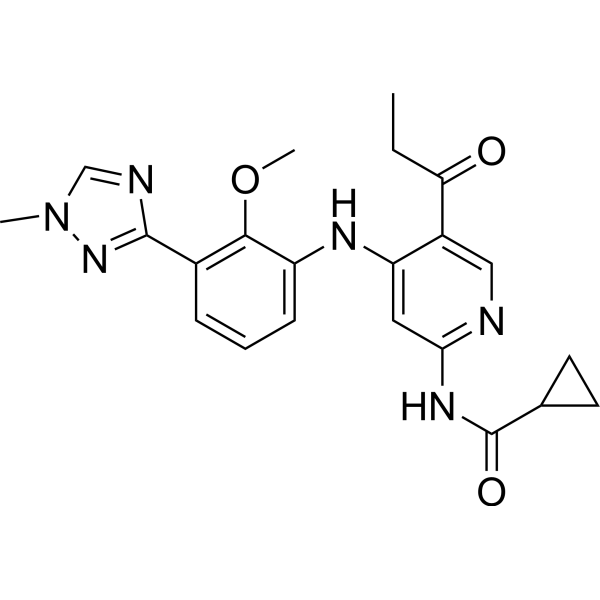
    Cl-Necrostatin-1 is a RIPK1 inhibitor. Cl-Necrostatin-1 can also inhibit TNF-α-induced necroptosis in Jurkat cells deficient in Fas-associated death domain protein (FADD; EC50 = 180 nM), a modification that prevents caspase activation in response to death-domain receptor signaling. Cl-Necrostatin-1 can also reduce infarct size in a mouse model of middle cerebral artery occlusion (MCAO). Cl-Necrostatin-1 is used for research in cardiovascular and cerebrovascular diseases .
    Cl-Necrostatin-1
  • HY-116692

    Apoptosis Caspase Mitochondrial Metabolism PARP DNA/RNA Synthesis
    Apoptosis inducer 34 (Compound 4) is a small molecule compound that induces apoptosis by directly activating the intrinsic apoptotic pathway. Apoptosis inducer 34 promotes Apaf-1 oligomerization to form mature apoptosomes, thereby activating caspase-9 and caspase-3. It significantly activates the apoptotic pathway in Jurkat cells by enhancing the cytochrome c-dependent apoptotic signaling pathway, inducing PARP cleavage and chromosomal DNA fragmentation. Furthermore, Apoptosis inducer 34 exhibits low toxicity to normal cells, demonstrating potential for selective targeting of cancer cells. Apoptosis inducer 34 is a promising candidate for studying cancer related to apoptotic pathways .
    Apoptosis inducer 34
  • HY-W777675

    NSC 270912-13C4

    Isotope-Labeled Compounds DNA/RNA Synthesis Others
    2,5-Deoxyfructosazine- 13C4 (NSC 270912- 13C4) is the 13C-labeled 2,5-Deoxyfructosazine (HY-135078). 2,5-Deoxyfructosazine is a pyrazine derivative that can be found in cured tobacco and is used as a flavoring agent in the food and tobacco industry. Pyrazines, including 2,5-deoxyfructosazine, can be produced either by pyrolytic decomposition of natural compounds or by the reaction of sugars with alcoholic ammonia. 2,5-Deoxyfructosazine is also formed by the breakdown of D-glucosamine at neutral pH. Like glucosamine, 2,5-deoxyfructosazine has DNA strand breakage activity and strongly inhibits IL-2 production by Jurkat cells stimulated with phytohemagglutinin (IC50=~1.25 mM).
    2,5-Deoxyfructosazine-13C4
  • HY-182765

    Molecular Glues Inflammation/Immunology
    VAV1 degrader-4 is a VAV1 molecular glue degrader with a DC50 value of 3.93 nM for VAV1 in Jurkat cells. VAV1 degrader-4 can dose-dependently inhibit the production of IL-2. VAV1 degrader-4 can be used for research on autoimmune diseases .
    VAV1 degrader-4
  • HY-100712R

    Potassium Channel Reference Standards Calcium Channel NOD-like Receptor (NLR) Interleukin Related Cardiovascular Disease Inflammation/Immunology
    DPO-1 (Standard) is the analytical standard of DPO-1 (HY-100712). This product is intended for research and analytical applications. DPO-1 is a potent Kv1.5 and Kv1.3 (EC50 = 3.1 μM) channels inhibitor with potential immunomodulatory and anti-inflammatory effects. DPO-1 reduces Kv1.3 current density, blunts Ca2+ influx in Ca2+-depleted Jurkat cells, and inhibits IL-2 secretion in activated Jurkat cells. DPO-1 inhibits Uric acid sodium (HY-B2130A) (MSU)-induced NLRP3 inflammasome activation by blocking Kv1.5-mediated K+ efflux. DPO-1 can be used for the study of immunologic disorders and atrial fibrillation .
    DPO-1 (Standard)
  • HY-W269270

    Drug Derivative Cancer
    1,3,5-Triphenyl-2-pyrazoline (Compound 12) is a pyrazoline derivative. 1,3,5-Triphenyl-2-pyrazoline exhibits weak cytotoxicity against K562 and Jurkat cells, with an IC50 of greater than 300 μM and 297.7 μM, respectively. 1,3,5-Triphenyl-2-pyrazoline has a predicted human intestinal absorption rate of 100% .
    1,3,5-Triphenyl-2-pyrazoline
  • HY-N17413

    Bacterial Na+/K+ ATPase NF-κB Nuclear Factor of activated T Cells (NFAT) Cardiovascular Disease Infection Inflammation/Immunology
    (-)-γ-Cuparenol is a sesquiterpene compound with an IC50 of 23.6 μg/mL against porcine Na +/K +-ATPase. (-)-γ-Cuparenol reduces phytohemagglutinin (PHA)-induced activation of NF-AT and NF-κB in Jurkat cells. (-)-γ-Cuparenol inhibits the growth of Gram-positive bacteria and some Gram-negative bacteria. (-)-γ-Cuparenol exhibits weak inhibitory activity against Candida albicans. (-)-γ-Cuparenol is applicable for research related to immunoregulation, cardiovascular diseases and bacterial infections .
    (-)-γ-Cuparenol
  • HY-179575

    E1/E2/E3 Enzyme Interleukin Related Inflammation/Immunology Cancer
    Cbl-b-IN-29 is an orally active CBL-B inhibitor. Cbl-b-IN-29 binds to the CBL-B active pocket. Cbl-b-IN-29 induces Jurkat cell release IL-2 with an EC50 of 159 nM, effectively inhibiting the function of immune E3 ubiquitin ligase. Cbl-b-IN-29 demonstrates robust anti-tumor efficacy in vivo with good tolerability and no observed adverse reactions. Cbl-b-IN-29 can be used for cancer immunotherapy, colorectal cancer and immune-oncology combination research .
    Cbl-b-IN-29
  • HY-180782

    DNA/RNA Synthesis Reactive Oxygen Species (ROS) Caspase Apoptosis Cancer
    Triphenyltin(IV) diisopropyl dithiocarbamate (Compound OC2) is an anti-leukemia agent. Triphenyltin(IV) diisopropyl dithiocarbamate exhibits extremely strong cytotoxicity towards Jurkat cells, with an IC₅₀ value of 0.1 μM. Triphenyltin(IV) diisopropyl dithiocarbamate causes DNA damage, which subsequently leads to mitochondrial dysfunction, a large amount of ROS production, and ultimately results in the activation of the mitochondrial apoptosis pathway (involving the activation of Caspase-9/-3) and the G0/G1 phase cell cycle arrest, all of which jointly lead to the death of leukemia cells .
    Triphenyltin(IV) diisopropyl dithiocarbamate
  • HY-182799

    PROTACs Molecular Glues IKZF Family Cancer
    IBA-12 is a IKZF2 molecular glue/PROTAC degrader with a DC50 of 276.2 nM (Jurkat cells) and 461.8 nM (Mino cells), and an IC50 of 179.9 nM. IBA-12 binds to the canonical tryptophan triad pocket of CRBN to form a ternary complex with IKZF2. IBA-12 induces IKZF2 degradation mediated by the CRBN-dependent ubiquitin-proteasome system, with no effect on other CRBN substrates. IBA-12 induces the production of interleukin-2 (IL-2) through degrading IKZF2. IBA-12 is applicable to cancer immunology research .
    IBA-12

Inquiry Online

Your information is safe with us. * Required Fields.

Salutation


Country or Region *

Applicant Name *


Organization Name *

Department *


Email Address *


Product Name *

Cat. No.


Requested quantity *

Phone Number *


Remarks

Inquiry Online

Inquiry Information

Product Name:
Cat. No.:
Quantity:
MCE Japan Authorized Agent: