



DPO-1 (Standard)
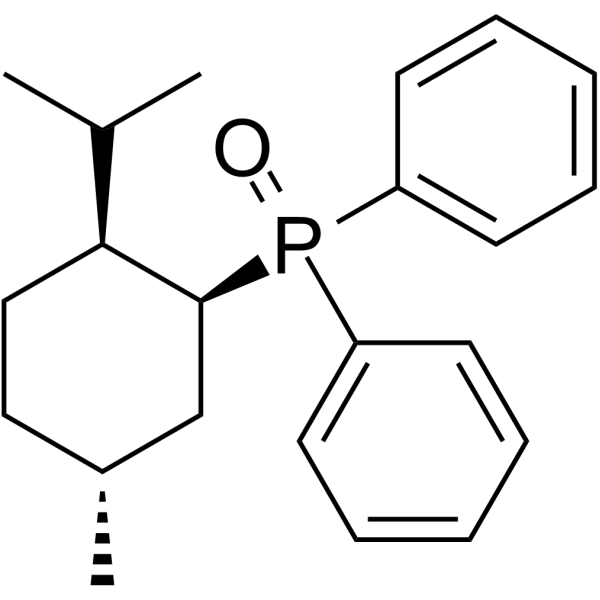
DPO-1 (Standard) is the analytical standard of DPO-1 (HY-100712). This product is intended for research and analytical applications. DPO-1 is a potent Kv1.5 and Kv1.3 (EC50 = 3.1 μM) channels inhibitor with potential immunomodulatory and anti-inflammatory effects. DPO-1 reduces Kv1.3 current density, blunts Ca2+ influx in Ca2+-depleted Jurkat cells, and inhibits IL-2 secretion in activated Jurkat cells. DPO-1 inhibits Uric acid sodium (HY-B2130A) (MSU)-induced NLRP3 inflammasome activation by blocking Kv1.5-mediated K+ efflux. DPO-1 can be used for the study of immunologic disorders and atrial fibrillation.
For research use only. We do not sell to patients.
- Purity : 98%
- CAS No.: 43077-30-1
- Formula: C22H29OP
- Molecular Weight:340.44
-
Storage:
Please store the product under the recommended conditions in the Certificate of Analysis.


To place orders, for customer services and technical support, please contact: MedChemExpress USA
Tel: 609-228-6898 E-mail: [email protected] [email protected]


-
 Product Information
-
Chemical Information
- Purity & Documentation
-
 Help & FAQs


-
HY-100712
DPO-1Potassium Channel Inhibitor -
HY-B0112
MinoxidilEndogenous Metabolite -
HY-15209
RepaglinideInsulin Secretagogue -
HY-B1793
Tetraethylammonium chloridePotassium Channel Inhibitor -
HY-B1114
GliquidoneAnti-Diabetic Drug -
HY-12496
NS-1619BK Channel Opener -
HY-B0753
GliclazidePotassium Currents Blocker -

HY-B0112R
Minoxidil (Standard)Endogenous Metabolite -
HY-15209R
Repaglinide (Standard)Insulin Secretagogue -
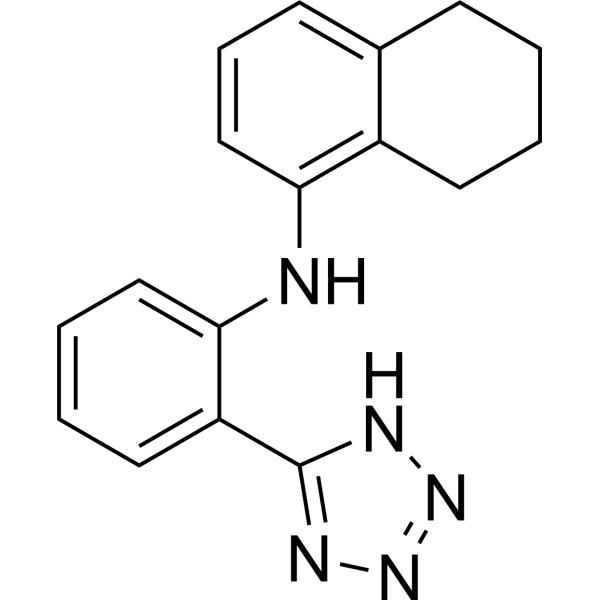
HY-108596
BL-1249TREK-1/2 Opener -
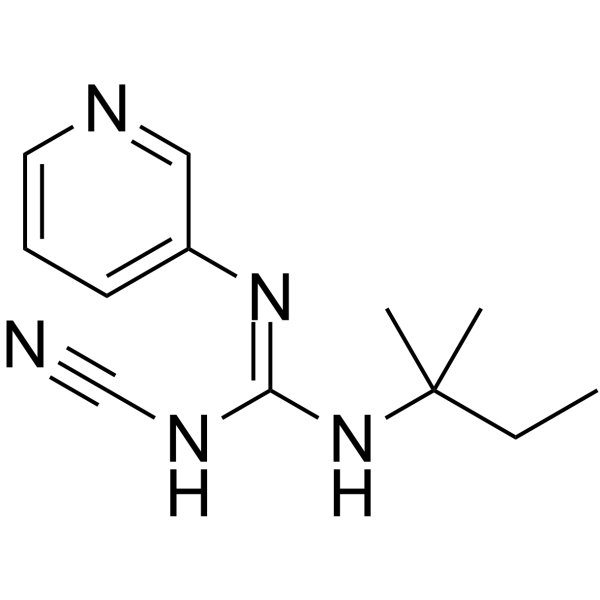
HY-108573
P-1075Potassium Channel Activator -
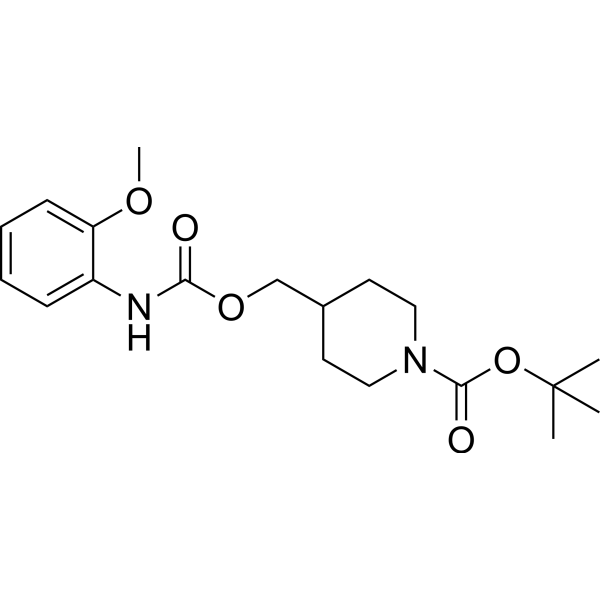
HY-12550
GW542573XSK2 Activator


Product Information
Information
Application
The compound is the grade of analytical standard, which is the reference standard supplied assay. It is commonly used in qualitative, quantitative and methodological research experiments in HPLC, GC and MS.


Chemical Information
-
CAS No. 43077-30-1
-
Molecular Weight 340.44
-
Formula C22H29OP
-
SMILES
CC([C@H]1[C@@H](P(C2=CC=CC=C2)(C3=CC=CC=C3)=O)C[C@H](C)CC1)C
-
Shipping
Room temperature in continental US; may vary elsewhere.
-
Storage
Please store the product under the recommended conditions in the Certificate of Analysis.


Purity & Documentation
References
[1]. Tsvetkov D, et al. The Role of DPO-1 and XE991-Sensitive Potassium Channels in Perivascular Adipose Tissue-Mediated Regulation of Vascular Tone. Front Physiol. 2016 Aug 4;7:335. [Content Brief]
[2]. Zhao N, et al. Potent suppression of Kv1.3 potassium channel and IL-2 secretion by diphenyl phosphine oxide-1 in human T cells. PLoS One. 2013 May 22;8(5):e64629. [Content Brief]
[3]. Li P, et al. Kv1.5 channel mediates monosodium urate-induced activation of NLRP3 inflammasome in macrophages and arrhythmogenic effects of urate on cardiomyocytes. Mol Biol Rep. 2022 Jul;49(7):5939-5952. [Content Brief]

Calculators
Concentration (start) × Volume (start) = Concentration (final) × Volume (final)


DPO-1 (Standard) Related Classifications
HY-100712R Related Classifications
 Powered by Bioz