




Search Result
Results for "
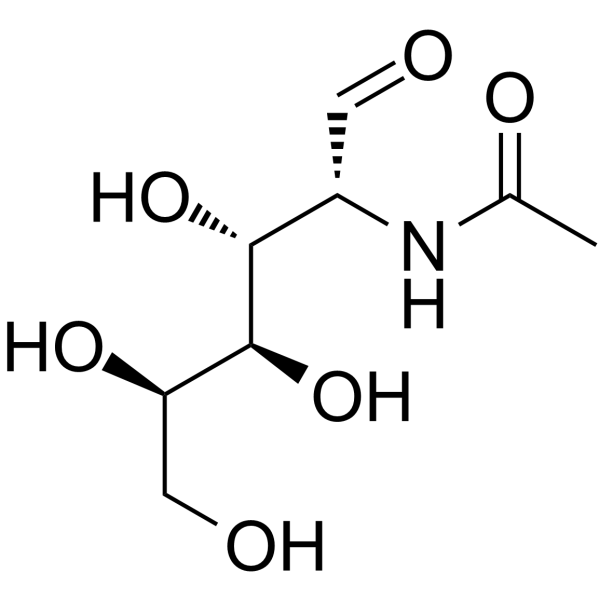
N-acetylgalactosamine
" in MedChemExpress (MCE) Product Catalog:
8
Biochemical Assay Reagents
1
Isotope-Labeled Compounds
| Cat. No. |
Product Name |
Target |
Research Areas |
Chemical Structure |
-
- HY-33212
-
-
-
- HY-148118A
-
|
|
LYTACs
|
Cancer
|
|
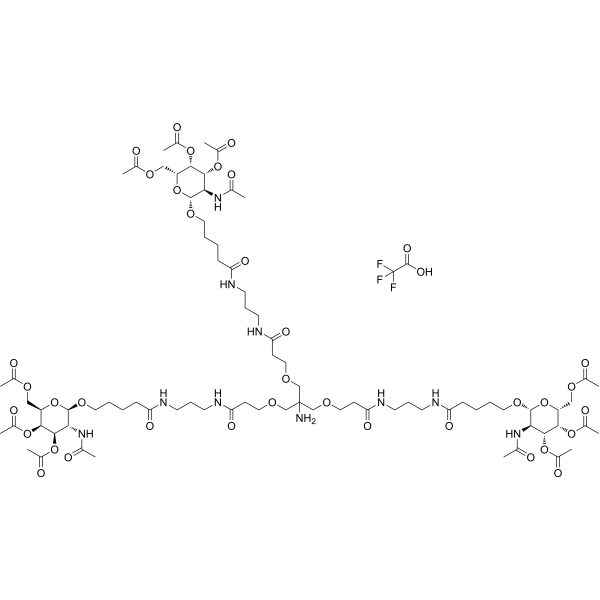
Tri-GalNAc(OAc)3 TFA is a trivalent N-acetylgalactosamine (GalNAc) derivative that can be used to synthesize GalNAc-LYTAC. Tri-GalNAc is a specific ligand targeting the asialoglycoprotein receptor (ASGPR), mediating the endocytosis and transport of cell surface proteins (such as EGFR, HER2) to lysosomes for degradation by lysosomal targeting chimeras (LYTACs). Tri-GalNAc significantly reduces the level of target proteins and inhibits downstream signaling pathways (such as EGFR-mediated Akt and MAPK signals). Tri-GalNAc(OAc)3 TFA can be used for hepatocyte targeting studies, and can degrade carcinogenic membrane proteins and inhibit tumor cell proliferation in liver cancer cell models .
|
-
-
- HY-E70055
-
|
|
Sialyltransferase
|
Others
|
|
alpha-2,6-Sialyltransferase (Pd26ST) (EC 2.4.99.1) is capable of sialylating both terminal and internal galactose and N-acetylgalactosamine, which producing terminal α2,6-sialosides .
|
-
-
- HY-148118
-
|
|
LYTACs
|
Cancer
|
|
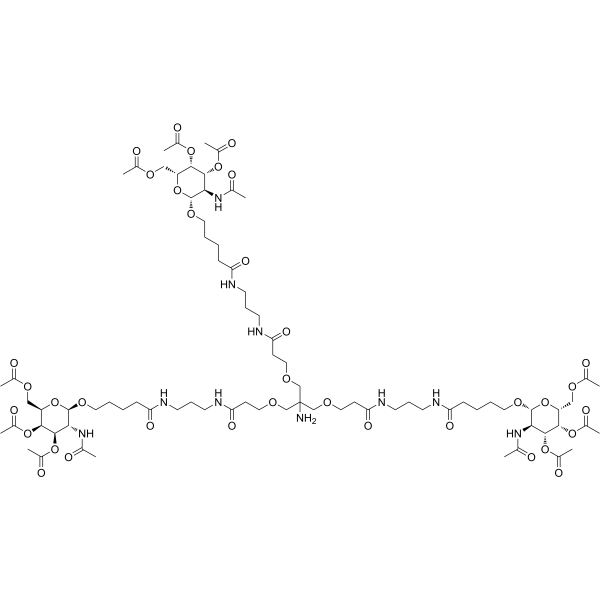
Tri-GalNAc(OAc)3 is a trivalent N-acetylgalactosamine (tri-GalNAc) derivative, which can be used as a linker to synthesize LYTACs .
|
-
-
- HY-147012
-
|
|
Drug Intermediate
|
Others
|
|
GalNAc-L96, a triantennary N-acetylgalactosamine (GalNAc), is a ligand of asialoglycoprotein receptor (ASGPR). GalNAc-L96 can be used to synthesize GalNAc-siRNA and can be used for oligonucleotide delivery .
|
-
-
- HY-157950
-
|
|
Liposome
|
Cancer
|
|
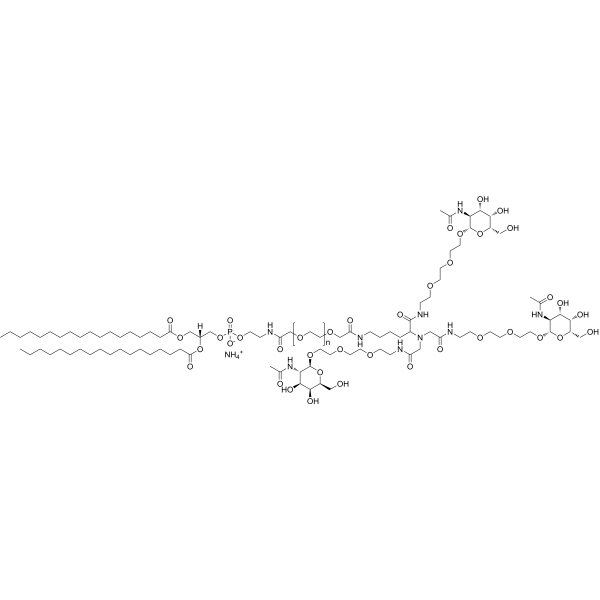
DSPE-PEG2K-triGalNAc ammonium is a polar lipid composed of DSPE and tri-N-acetylgalactosamine that can be used to construct liposomes target to asialoglycoprotein receptor (ASGPR).
|
-
-
- HY-145720
-
|
ALN-CC5
|
Complement System
Small Interfering RNA (siRNA)
|
Metabolic Disease
|
|
Cemdisiran (ALN-CC5) is an N-acetylgalactosamine-conjugated RNAi agent and also a complement component C5 inhibitor. Cemdisiran targets C5 mRNA, cleaves C5 mRNA via the endogenous RNA interference pathway, and inhibits the production of C5 protein in the liver. Cemdisiran exerts a dose-dependent inhibitory effect on total C5 concentrations in cynomolgus monkeys. When used in combination with Pozelimab (HY-P99786) in cynomolgus monkeys, Cemdisiran achieves a more sustained and complete inhibitory effect on complement activity. Cemdisiran can be used in the research of paroxysmal nocturnal hemoglobinuria and other complement-mediated diseases .
|
-
-
- HY-P2161B
-
|
|
Kisspeptin Receptor
|
Cancer
|
|
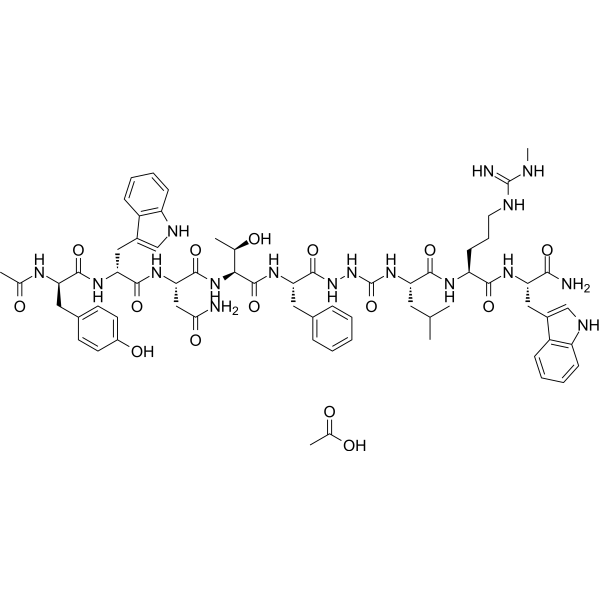
TAK-683 acetate is a potent full KISS1 receptor (KISS1R) agonist (IC50=170 pM) with improved metabolic stability. TAK-683 acetate is a nonapeptide metastin analog, exhibits agonistic activities to KISS1R with EC50 values of 0.96 nM and 1.6 nM for human and rat, respectively . TAK-683 acetate depletes GnRH in the hypothalamus and reduces plasma FSH, LH, and testosterone levels in vivo, it has the potential for the study of hormone-dependent prostate cancer .
|
-
-
- HY-173247
-
|
|
C-type Lectin-like Receptors (CTLRs)
|
Others
|
|
GalNAc-NAG37 phosphoramidite is an N-acetylgalactosamine (GalNAc) derivative that acts as a ligand for the asialoglycoprotein receptor (ASGPR). GalNAc-NAG37 phosphoramidite can be used to synthesize GalNAc-siRNA and for oligonucleotide delivery .
|
-
-
- HY-156905
-
|
|
Biochemical Assay Reagents
|
Others
|
|
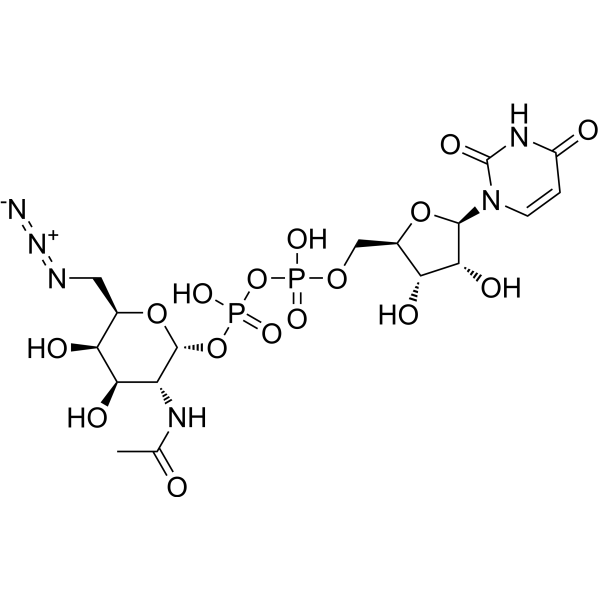
6-Azido-N-acetylgalactosamine-UDP (Compound 5) is a 6-azido-modified nucleotide sugar. It acts as an active sugar donor in lactose glycosylation catalyzed by beta-1,3-N-Acetylhexaminyltransferase (LgtA). Azido-modified nucleotide sugars are strategically used in copper-free click chemistry to modify the N-glycan core structure of IgG .
|
-
-
- HY-P5544
-
|
N-Acetylmuramyl-L-Ala-γ-D-Glu-meso-diaminopimelic acid
|
NOD-like Receptor (NLR)
|
Others
|
|
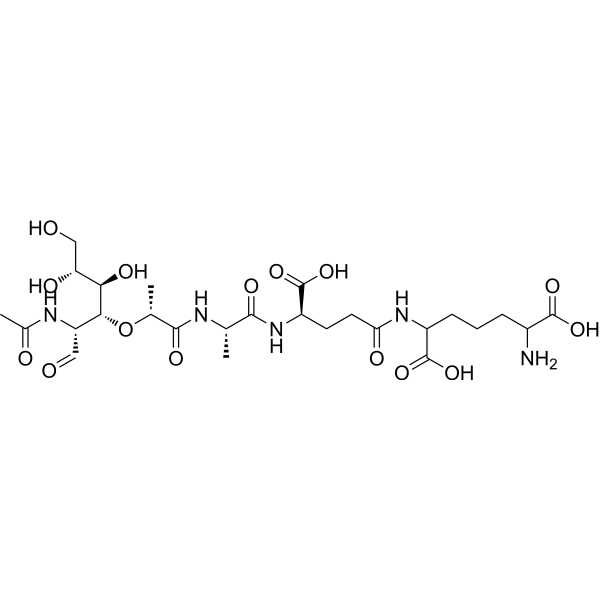
M-TriDAP (N-Acetylmuramyl-L-Ala-γ-D-Glu-meso-diaminopimelic acid) is a NOD1/2 agoist and biological active peptide .
|
-
-
- HY-139787A
-
|
ISIS-721744; IONIS-PKK-LRX
|
Kallikrein
|
Cardiovascular Disease
Inflammation/Immunology
|
|
Donidalorsen (ISIS-721744; IONIS-PKK-LRX) sodium is an antisense oligonucleotide targeting prekallikrein (PKK). Donidalorsen sodium inhibits kallikrein activity and reduces the production of Bradykinin (HY-P0206) by specifically binding to and degrading PKK mRNA in the liver. Donidalorsen sodium can be used in the research of hereditary angioedema .
|
-
-
- HY-145720A
-
|
ALN-CC5 sodium
|
Complement System
|
Others
|
|
Cemdisiran sodium is an N-acetylgalactosamine (GalNAc) conjugated siRNA for the research of complement-mediated diseases by suppressing liver production of complement 5 (C5) protein.
|
-
-
- HY-132604A
-
|
ARO-AAT sodium
|
Small Interfering RNA (siRNA)
|
Metabolic Disease
|
|
Fazirsiran sodium is a second-generation RNAi agent. Fazirsiran sodium consistes of a cholesterol-conjugated RNAi trigger (chol-RNAi) to selectively degrade Alpha1-antitrypsin (AAT) mRNA by RNAi and a melittin-derived peptide conjugated to N-acetylgalactosamine (NAG) formulated as the excipient EX1 to promote endosomal escape of the chol-RNAi in hepatocytes . Fazirsiran sodium can be used in the study of Alpha-1 Antitrypsin Deficiency (AATD) liver disease. AATD is caused by mutations in the alpha-1 antitrypsin (SERPINA1) gene.
|
-
-
- HY-132600A
-
|
Temavirsen sodium
|
MicroRNA
HCV
|
Infection
|
|
RG-101 sodium is a hepatocyte targeted N-acetylgalactosamine conjugated oligonucleotide that antagonises miR-122. miR-122 is an important host factor for hepatitis C virus (HCV) replication .
|
-
-
- HY-164221A
-
|
ALN-HSD sodium
|
17β-HSD
|
Metabolic Disease
|
|
Rapirosiran sodium is a N-acetylgalactosamine-conjugated small-interfering RNA targeting liver-expressed hydroxysteroid 17-beta dehydrogenase 13 (HSD17B13) mRNA. Loss-of-function variants in the HSD17B13 associated with reduced risk of chronic liver disease. Rapirosiran sodium can be used for the study of Non-alcoholic steatohepatitis.
|
-
-
- HY-W1008621
-
|
|
Biochemical Assay Reagents
|
Others
|
|
GalNAc-THA C6 phosphoramidite is a phosphoramidite derivative containing N-acetylgalactosamine (GalNAc) part linked to Trishexylamino (THA), which can be used for the synthesis of oligonucleotides.
|
-
-
- HY-132604
-
|
ARO-AAT
|
Small Interfering RNA (siRNA)
|
Metabolic Disease
|
|
Fazirsiran (ARO-AAT) is a second-generation RNAi agent. Fazirsiran consistes of a cholesterol-conjugated RNAi trigger (chol-RNAi) to selectively reduce Alpha1-antitrypsin (AAT) synthesis and a melittin-derived peptide conjugated to N-acetylgalactosamine (NAG) formulated as the excipient EX1 to promote endosomal escape of the chol-RNAi in hepatocytes . Fazirsiran can be used in the study of Alpha-1 Antitrypsin Deficiency (AATD) liver disease. Alpha-1 antitrypsin deficiency (AATD) is caused by mutations in the alpha-1 antitrypsin (SERPINA1) gene.
|
-
-
- HY-132600
-
|
Temavirsen
|
MicroRNA
HCV
|
Infection
|
|
RG-101 is a hepatocyte targeted N-acetylgalactosamine conjugated oligonucleotide that antagonises miR-122. miR-122 is an important host factor for hepatitis C virus (HCV) replication .
|
-
-
- HY-NP186A
-
|
HPA (Biotin)
|
Biochemical Assay Reagents
|
Others
|
|
Helix pomatia Agglutinin (Biotin) (HPA (Biotin)) is a biotinylated hexameric glycoprotein that is specific for N-acetylgalactosamine (GalNAc) .
|
-
-
- HY-W1141596
-
|
|
Drug Derivative
|
Others
|
|
N-Acetylgalactosamine trimer (the second structure in example 59) is a trimer of N-Acetylgalactosamine. N-Acetylgalactosamine trimer can be used for liver-targeted delivery of oligonucleotides .
|
-
-
- HY-33212S
-
-
-
- HY-D1633A
-
|
|
Fluorescent Dye
|
Others
|
|
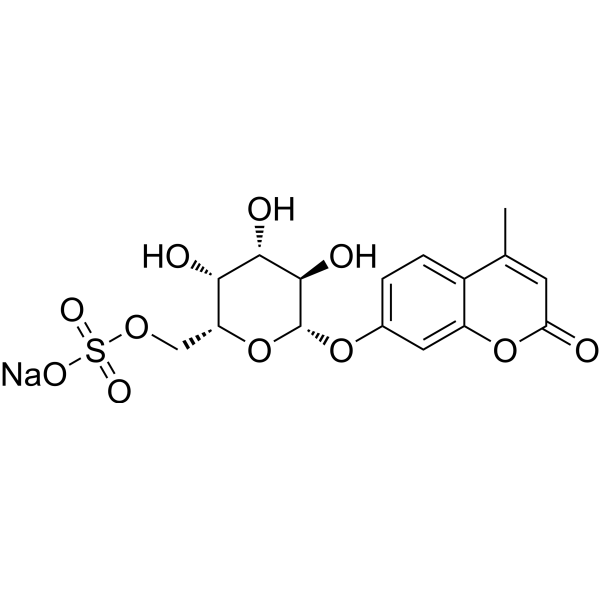
4-Methylumbelliferyl-β-D-galactopyranoside 6-sulfate sodium is a fluorescent dye. 4-Methylumbelliferyl-β-D-galactopyranoside 6-sulfate sodium undergoes desulphation by galactose-6-sulphate sulphatase to form 4-methylumbelliferyl-β-D-galactopyranoside, which is cleaved by β-galactosidase to release fluorescent 4-methylumbelliferone. 4-Methylumbelliferyl-β-D-galactopyranoside 6-sulfate sodium interacts with N-acetylgalactosamine-6-sulfate sulfatase (GALNS) via hydrogen bonds, electrostatic interactions, and steric interactions. 4-Methylumbelliferyl-β-D-galactopyranoside 6-sulfate sodium serves as a substrate in assays measuring galactose-6-sulphate sulphatase and GALNS activity. 4-Methylumbelliferyl-β-D-galactopyranoside 6-sulfate sodium can be used for the research of Morquio disease type A (mucopolysaccharidosis IV A) .
|
-
-
- HY-D1633
-
|
|
Fluorescent Dye
|
Metabolic Disease
|
|
4-Methylumbelliferyl-β-D-galactopyranoside 6-sulfate is a fluorescent dye. 4-Methylumbelliferyl-β-D-galactopyranoside 6-sulfate undergoes desulphation by galactose-6-sulphate sulphatase to form 4-methylumbelliferyl-β-D-galactopyranoside, which is cleaved by β-galactosidase to release fluorescent 4-methylumbelliferone. 4-Methylumbelliferyl-β-D-galactopyranoside 6-sulfate interacts with N-acetylgalactosamine-6-sulfate sulfatase (GALNS) via hydrogen bonds, electrostatic interactions, and steric interactions. 4-Methylumbelliferyl-β-D-galactopyranoside 6-sulfate serves as a substrate in assays measuring galactose-6-sulphate sulphatase and GALNS activity. 4-Methylumbelliferyl-β-D-galactopyranoside 6-sulfate can be used for the research of Morquio disease type A (mucopolysaccharidosis IV A) .
|
-
-
- HY-164221
-
|
ALN-HSD; ALN-288996; AD-288996
|
17β-HSD
|
Metabolic Disease
|
|
Rapirosiran is a N-acetylgalactosamine-conjugated small-interfering RNA targeting liver-expressed hydroxysteroid 17-beta dehydrogenase 13 (HSD17B13) mRNA. Loss-of-function variants in the HSD17B13 associated with reduced risk of chronic liver disease. Rapirosiran can be used for the study of Non-alcoholic steatohepatitis.
|
-
-
- HY-132590
-
|
ALN-TTRSC
|
Small Interfering RNA (siRNA)
Transthyretin (TTR)
|
Neurological Disease
|
|
Revusiran (ALN-TTRSC) is an RNA interference agent targeting the mRNA of transthyretin (Transthyretin, TTR). Revusiran mediates sequence-specific degradation of TTR mRNA through RNA interference, reduces the synthesis of TTR protein, binds to GalNAc ligands, and is taken up by hepatocytes via the asialoglycoprotein receptor. Revusiran exhibits favorable nonclinical safety profiles. Revusiran can be used in studies related to transthyretin-mediated amyloidosis .
|
-
-
- HY-P2161
-
|
|
Kisspeptin Receptor
|
Cancer
|
|
TAK-683 is a potent full KISS1 receptor (KISS1R) agonist (IC50=170 pM) with improved metabolic stability. TAK-683 is a nonapeptide metastin analog, exhibits agonistic activities to KISS1R with EC50 values of 0.96 nM and 1.6 nM for human and rat, respectively . TAK-683 depletes GnRH in the hypothalamus and reduces plasma FSH, LH, and testosterone levels in vivo, it has the potential for the study of hormone-dependent prostate cancer .
|
-
-
- HY-173248
-
-
-
- HY-173246
-
|
|
Biochemical Assay Reagents
|
Others
|
|
GalNAc-NAG-25 phosphoramidite is a phosphoramidite derivative containing N-acetylgalactosamine (GalNAc) part linked to NAG, which can be used for the synthesis of oligonucleotides.
|
-
-
- HY-W005729
-
|
|
Biochemical Assay Reagents
|
Others
|
|
β-D-Galactosamine pentaacetate is an intermediate in the synthesis of triantennary N-Acetylgalactosamine ligands. β-D-Galactosamine pentaacetate can be studied in liver-targeted delivery of siRNA research .
|
-
-
- HY-E70188
-
|
EC:3.1.6.4; GALNS
|
Biochemical Assay Reagents
|
Cancer
|
|
N-Acetylgalactosamine-6-Sulfatase (GALNS) is a potential general biomarker for multiple malignancies (such as lung cancer, breast cancer, head and neck cancer, etc.). N-Acetylgalactosamine-6-Sulfatase deficiency causes mucopolysaccharidosis type IVA (MPS IVA), also known as Morquio A syndrome. N-Acetylgalactosamine-6-Sulfatase can be used in MPS IVA as well as cancer research .
|
-
-
- HY-E70287
-
|
ST6GALNAC5
|
Glycosyltransferase
|
Metabolic Disease
|
|
ST6 Sialyltransferase 5 (EC:2.4.3.3, ST6GALNAC5, SIAT7E, ST6 N-acetylgalactosaminide alpha-2,6-sialyltransferase 5) transfers a sialic acid to N-acetylgalactosamine (GalNAc) residues. ST6 Sialyltransferase 5 is a bio-marker in cervical screening samples .
|
-
-
- HY-33212R
-
-
-
- HY-166965
-
|
|
Biochemical Assay Reagents
|
Others
|
|
Neu5Gc(α2,6)N-Acetylgalactosamine is a class of biochemical reagents used in glycobiology research. Glycobiology studies the structure, synthesis, biology, and evolution of sugars. It involves carbohydrate chemistry, enzymology of glycan formation and degradation, protein-glycan recognition, and the role of glycans in biological systems. This field is closely related to basic research, biomedicine, and biotechnology .
|
-
-
- HY-P2115
-
|
|
GnRH Receptor
|
Cancer
|
|
Ramorelix is a luteinizing-hormone-releasing hormone (LHRH) antagonist. Ramorelix can inhibit tumor progression in vivo. Ramorelix can be studied in anti-cancer research .
|
-
-
- HY-178770
-
|
|
Others
|
Others
|
|
(α-D-Mannopyranosyloxy)3-N3 is a type of N-acetylgalactosamine (GalNAc) that exhibits liver-targeting properties and can be used in the synthesis of oligonucleotides .
|
-
-
- HY-108830
-
|
Aryplase; BM-102
|
Biochemical Assay Reagents
|
Metabolic Disease
|
|
Galsulfase (Aryplase, BM-102) is recombinant human N-acetylgalactosamine-4-sulfatase. Galsulfase (Aryplase, BM-102) can be used for mucopolysaccharidosis (MPS) research .
|
-
-
- HY-E70293
-
|
GALNT12
|
Endogenous Metabolite
YAP
|
Cancer
|
|
N-Acetylgalactosaminyltransferase 12 (GALNT12) belongs to the uridine diphosphate N-acetylgalactosamine gene family and is involved in the biological processes of many diseases, such as tumor progression. N-Acetylgalactosaminyltransferase 12 is a potential biomarker for fibrosarcoma, and its high expression level is closely related to the yes1-associated transcriptional regulator (YAP1) signaling pathway .
|
-
-
- HY-NP186
-
|
|
Biochemical Assay Reagents
|
Cancer
|
|
Helix pomatia Agglutinin is a N-acetylgalactosamine (GalNAc) binding lectin, found in the reproductive gland of a Roman snail. Helix pomatia Agglutinin binds with high affinity (kD = 1.9-2.4 μM) steroid hormones: testosterone and progesterone. Helix pomatia Agglutinin interacts with adenine (kD = 5.4 μM) and arylaminonaphthalene sulfonate TNS (kD = 12 μM). Helix pomatia Agglutinin is commonly used for characterizing, imaging, or targeting glycoconjugates, and is also a very useful tool for glycomics analysis . Helix pomatia Agglutinin can be used for cancer prognosis study .
|
-
-
- HY-E70569
-
|
|
Biochemical Assay Reagents
|
Others
|
|
α-N-acetylgalactosidase (EC 3.2.1.4) is a highly specific exoglycosidase that efficiently hydrolyzes α-N-acetylgalactosamine (GalNAc) linked to serine or threonine residues in glycoproteins (Tn antigen). α-N-acetylgalactosidase shows activity against α 1-3 linked terminal GalNAc . α-N-acetylgalactosidase is suitable for use in the pH range of 6.0-7.6 and does not require cofactors or special buffer systems.
|
-
-
- HY-156905A
-
|
|
Biochemical Assay Reagents
|
Cancer
|
|
6-Azido-N-acetylgalactosamine-UDP diammonium (compound 5) is an active sugar donor in the beta-1, 3-N-Acetylhexaminyltransferase (LgtA)-catalyzed glycosylation of lactose .
|
-
-
- HY-P5544A
-
|
N-Acetylmuramyl-L-Ala-γ-D-Glu-meso-diaminopimelic acid TFA
|
NOD-like Receptor (NLR)
|
Others
|
|
M-TriDAP (N-Acetylmuramyl-L-Ala-γ-D-Glu-meso-diaminopimelic acid) TFA is a NOD1/2 agoist and biological active peptide .
|
-
-
- HY-P2161A
-
|
|
Kisspeptin Receptor
|
Cancer
|
|
TAK-683 TFA is a potent full KISS1 receptor (KISS1R) agonist (IC50=170 pM) with improved metabolic stability. TAK-683 TFA is a nonapeptide metastin analog, exhibits agonistic activities to KISS1R with EC50 values of 0.96 nM and 1.6 nM for human and rat, respectively . TAK-683 TFA depletes GnRH in the hypothalamus and reduces plasma FSH, LH, and testosterone levels in vivo, it has the potential for the study of hormone-dependent prostate cancer .
|
-
-
- HY-P2999B
-
|
|
Endogenous Metabolite
|
Metabolic Disease
|
|
β-N-Acetylglucosaminidase, Canavalia ensiformis (EC 3.2.1.52), can release terminally β-linked N-acetylglucosamine and N-acetylgalactosamine from a variety of substrates. The activity of β-N-Acetylglucosaminidase can be determined using the chromogenic substrate p-nitrophenyl-N-acetyl-β-D-glucosinolate. β-N-Acetylglucosaminidase degrades the terminal non-reducing N-acetyl-D-aminohexose residue.
|
-
-
- HY-P2999C
-
|
|
Endogenous Metabolite
|
Metabolic Disease
|
|
β-N-Acetylglucosaminidase, Human (EC 3.2.1.52), can release terminally β-linked N-acetylglucosamine and N-acetylgalactosamine from a variety of substrates. The activity of β-N-Acetylglucosaminidase can be determined using the chromogenic substrate p-nitrophenyl-N-acetyl-β-D-glucosinolate. β-N-Acetylglucosaminidase degrades the terminal non-reducing N-acetyl-D-aminohexose residue.
|
-
-
- HY-P2999A
-
|
|
Endogenous Metabolite
|
Metabolic Disease
|
|
β-N-Acetylglucosaminidase, Bovine (EC 3.2.1.52), can release terminally β-linked N-acetylglucosamine and N-acetylgalactosamine from a variety of substrates. The activity of β-N-Acetylglucosaminidase can be determined using the chromogenic substrate p-nitrophenyl-N-acetyl-β-D-glucosinolate. β-N-Acetylglucosaminidase degrades the terminal non-reducing N-acetyl-D-aminohexose residue.
|
-
-
- HY-E70917
-
-
-
- HY-E71244
-
|
|
Biochemical Assay Reagents
|
Others
|
|
α-N-Acetylneuraminyl-2,3-β-Galactosyl-1,3-N-acetylgalactosaminide 6-α-sialyltransferase (EC 2.4.99.7) attaches N-acetylneuraminic acid in alpha-2,6-linkage to N-acetyl-galactosamine only when present in the structure, where R may be protein or p-nitrophenol.
|
-
| Cat. No. |
Product Name |
Type |
-
- HY-D1633A
-
|
|
Fluorescent Dyes
|
|
4-Methylumbelliferyl-β-D-galactopyranoside 6-sulfate sodium is a fluorescent dye. 4-Methylumbelliferyl-β-D-galactopyranoside 6-sulfate sodium undergoes desulphation by galactose-6-sulphate sulphatase to form 4-methylumbelliferyl-β-D-galactopyranoside, which is cleaved by β-galactosidase to release fluorescent 4-methylumbelliferone. 4-Methylumbelliferyl-β-D-galactopyranoside 6-sulfate sodium interacts with N-acetylgalactosamine-6-sulfate sulfatase (GALNS) via hydrogen bonds, electrostatic interactions, and steric interactions. 4-Methylumbelliferyl-β-D-galactopyranoside 6-sulfate sodium serves as a substrate in assays measuring galactose-6-sulphate sulphatase and GALNS activity. 4-Methylumbelliferyl-β-D-galactopyranoside 6-sulfate sodium can be used for the research of Morquio disease type A (mucopolysaccharidosis IV A) .
|
-
- HY-D1633
-
|
|
Fluorescent Dyes
|
|
4-Methylumbelliferyl-β-D-galactopyranoside 6-sulfate is a fluorescent dye. 4-Methylumbelliferyl-β-D-galactopyranoside 6-sulfate undergoes desulphation by galactose-6-sulphate sulphatase to form 4-methylumbelliferyl-β-D-galactopyranoside, which is cleaved by β-galactosidase to release fluorescent 4-methylumbelliferone. 4-Methylumbelliferyl-β-D-galactopyranoside 6-sulfate interacts with N-acetylgalactosamine-6-sulfate sulfatase (GALNS) via hydrogen bonds, electrostatic interactions, and steric interactions. 4-Methylumbelliferyl-β-D-galactopyranoside 6-sulfate serves as a substrate in assays measuring galactose-6-sulphate sulphatase and GALNS activity. 4-Methylumbelliferyl-β-D-galactopyranoside 6-sulfate can be used for the research of Morquio disease type A (mucopolysaccharidosis IV A) .
|
| Cat. No. |
Product Name |
Type |
-
- HY-173247
-
|
|
Biochemical Assay Reagents
|
|
GalNAc-NAG37 phosphoramidite is an N-acetylgalactosamine (GalNAc) derivative that acts as a ligand for the asialoglycoprotein receptor (ASGPR). GalNAc-NAG37 phosphoramidite can be used to synthesize GalNAc-siRNA and for oligonucleotide delivery .
|
-
- HY-W1008621
-
|
|
Biochemical Assay Reagents
|
|
GalNAc-THA C6 phosphoramidite is a phosphoramidite derivative containing N-acetylgalactosamine (GalNAc) part linked to Trishexylamino (THA), which can be used for the synthesis of oligonucleotides.
|
-
- HY-NP186A
-
|
HPA (Biotin)
|
Biochemical Assay Reagents
|
|
Helix pomatia Agglutinin (Biotin) (HPA (Biotin)) is a biotinylated hexameric glycoprotein that is specific for N-acetylgalactosamine (GalNAc) .
|
-
- HY-173248
-
|
|
Biochemical Assay Reagents
|
|
GalNAc-NAG-15 phosphoramidite is a phosphoramidite derivative containing N-acetylgalactosamine (GalNAc) part linked to NAG, which can be used for the synthesis of oligonucleotides.
|
-
- HY-173246
-
|
|
Biochemical Assay Reagents
|
|
GalNAc-NAG-25 phosphoramidite is a phosphoramidite derivative containing N-acetylgalactosamine (GalNAc) part linked to NAG, which can be used for the synthesis of oligonucleotides.
|
-
- HY-E70188
-
|
EC:3.1.6.4; GALNS
|
Biochemical Assay Reagents
|
|
N-Acetylgalactosamine-6-Sulfatase (GALNS) is a potential general biomarker for multiple malignancies (such as lung cancer, breast cancer, head and neck cancer, etc.). N-Acetylgalactosamine-6-Sulfatase deficiency causes mucopolysaccharidosis type IVA (MPS IVA), also known as Morquio A syndrome. N-Acetylgalactosamine-6-Sulfatase can be used in MPS IVA as well as cancer research .
|
-
- HY-166965
-
|
|
Biochemical Assay Reagents
|
|
Neu5Gc(α2,6)N-Acetylgalactosamine is a class of biochemical reagents used in glycobiology research. Glycobiology studies the structure, synthesis, biology, and evolution of sugars. It involves carbohydrate chemistry, enzymology of glycan formation and degradation, protein-glycan recognition, and the role of glycans in biological systems. This field is closely related to basic research, biomedicine, and biotechnology .
|
-
- HY-NP186
-
|
|
Biochemical Assay Reagents
|
|
Helix pomatia Agglutinin is a N-acetylgalactosamine (GalNAc) binding lectin, found in the reproductive gland of a Roman snail. Helix pomatia Agglutinin binds with high affinity (kD = 1.9-2.4 μM) steroid hormones: testosterone and progesterone. Helix pomatia Agglutinin interacts with adenine (kD = 5.4 μM) and arylaminonaphthalene sulfonate TNS (kD = 12 μM). Helix pomatia Agglutinin is commonly used for characterizing, imaging, or targeting glycoconjugates, and is also a very useful tool for glycomics analysis . Helix pomatia Agglutinin can be used for cancer prognosis study .
|
| Cat. No. |
Product Name |
Target |
Research Area |
-
- HY-P2161B
-
|
|
Kisspeptin Receptor
|
Cancer
|
|
TAK-683 acetate is a potent full KISS1 receptor (KISS1R) agonist (IC50=170 pM) with improved metabolic stability. TAK-683 acetate is a nonapeptide metastin analog, exhibits agonistic activities to KISS1R with EC50 values of 0.96 nM and 1.6 nM for human and rat, respectively . TAK-683 acetate depletes GnRH in the hypothalamus and reduces plasma FSH, LH, and testosterone levels in vivo, it has the potential for the study of hormone-dependent prostate cancer .
|
-
- HY-P5544
-
|
N-Acetylmuramyl-L-Ala-γ-D-Glu-meso-diaminopimelic acid
|
NOD-like Receptor (NLR)
|
Others
|
|
M-TriDAP (N-Acetylmuramyl-L-Ala-γ-D-Glu-meso-diaminopimelic acid) is a NOD1/2 agoist and biological active peptide .
|
-
- HY-P2161
-
|
|
Kisspeptin Receptor
|
Cancer
|
|
TAK-683 is a potent full KISS1 receptor (KISS1R) agonist (IC50=170 pM) with improved metabolic stability. TAK-683 is a nonapeptide metastin analog, exhibits agonistic activities to KISS1R with EC50 values of 0.96 nM and 1.6 nM for human and rat, respectively . TAK-683 depletes GnRH in the hypothalamus and reduces plasma FSH, LH, and testosterone levels in vivo, it has the potential for the study of hormone-dependent prostate cancer .
|
-
- HY-P2115
-
|
|
GnRH Receptor
|
Cancer
|
|
Ramorelix is a luteinizing-hormone-releasing hormone (LHRH) antagonist. Ramorelix can inhibit tumor progression in vivo. Ramorelix can be studied in anti-cancer research .
|
-
- HY-P5544A
-
|
N-Acetylmuramyl-L-Ala-γ-D-Glu-meso-diaminopimelic acid TFA
|
NOD-like Receptor (NLR)
|
Others
|
|
M-TriDAP (N-Acetylmuramyl-L-Ala-γ-D-Glu-meso-diaminopimelic acid) TFA is a NOD1/2 agoist and biological active peptide .
|
-
- HY-P2161A
-
|
|
Kisspeptin Receptor
|
Cancer
|
|
TAK-683 TFA is a potent full KISS1 receptor (KISS1R) agonist (IC50=170 pM) with improved metabolic stability. TAK-683 TFA is a nonapeptide metastin analog, exhibits agonistic activities to KISS1R with EC50 values of 0.96 nM and 1.6 nM for human and rat, respectively . TAK-683 TFA depletes GnRH in the hypothalamus and reduces plasma FSH, LH, and testosterone levels in vivo, it has the potential for the study of hormone-dependent prostate cancer .
|
| Cat. No. |
Product Name |
Category |
Target |
Chemical Structure |
| Cat. No. |
Compare |
Product Name |
Species |
Source |
Image |
Compare Products
|
| Products |
|
| Cat. No. |
|
| Species |
|
| Source |
|
| Tag |
|
| Accession |
|
| Gene ID |
|
| Molecular Weight |
|
| Purity |
|
| Endotoxin Level |
|
| Biological Activity |
|
| Appearance |
|
| Formulation |
|
| Storage & Stability |
|
| Shipping |
|
| Free Sample |
Yes
No
|
| Size |
* This product has been "discontinued".
Optimized version of product available:
|
| Cat. No. |
Product Name |
Chemical Structure |
-
- HY-33212S
-
1 Publications Verification
|
|
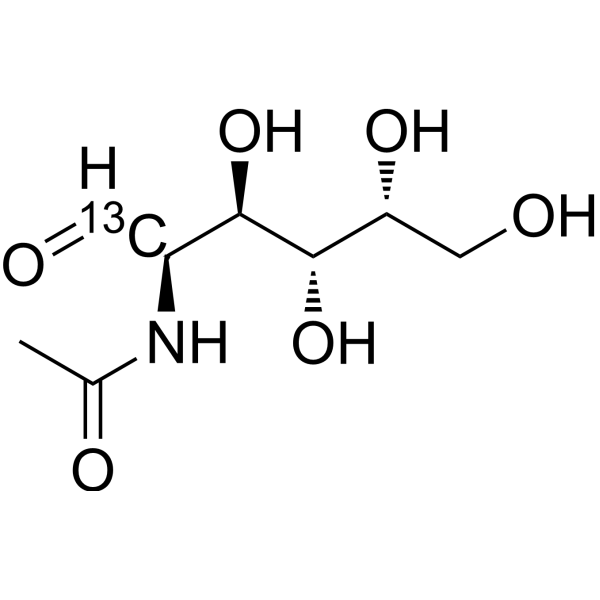
D-N-Acetylgalactosamine- 13C is the 13C labeled D-N-Acetylgalactosamine. D-N-Acetylgalactosamine is an endogenous metabolite .
|
-
| Cat. No. |
Product Name |
|
Classification |
-
- HY-156905A
-
|
|
|
Azide
|
|
6-Azido-N-acetylgalactosamine-UDP diammonium (compound 5) is an active sugar donor in the beta-1, 3-N-Acetylhexaminyltransferase (LgtA)-catalyzed glycosylation of lactose .
|
| Cat. No. |
Product Name |
|
Classification |
-
- HY-157950
-
|
|
|
Pegylated Lipids
|
|
DSPE-PEG2K-triGalNAc ammonium is a polar lipid composed of DSPE and tri-N-acetylgalactosamine that can be used to construct liposomes target to asialoglycoprotein receptor (ASGPR).
|
-
- HY-145720
-
|
ALN-CC5
|
|
siRNAs
siRNA drugs
|
|
Cemdisiran (ALN-CC5) is an N-acetylgalactosamine-conjugated RNAi agent and also a complement component C5 inhibitor. Cemdisiran targets C5 mRNA, cleaves C5 mRNA via the endogenous RNA interference pathway, and inhibits the production of C5 protein in the liver. Cemdisiran exerts a dose-dependent inhibitory effect on total C5 concentrations in cynomolgus monkeys. When used in combination with Pozelimab (HY-P99786) in cynomolgus monkeys, Cemdisiran achieves a more sustained and complete inhibitory effect on complement activity. Cemdisiran can be used in the research of paroxysmal nocturnal hemoglobinuria and other complement-mediated diseases .
|
-
- HY-139787A
-
|
ISIS-721744; IONIS-PKK-LRX
|
|
Antisense Oligonucleotides
|
|
Donidalorsen (ISIS-721744; IONIS-PKK-LRX) sodium is an antisense oligonucleotide targeting prekallikrein (PKK). Donidalorsen sodium inhibits kallikrein activity and reduces the production of Bradykinin (HY-P0206) by specifically binding to and degrading PKK mRNA in the liver. Donidalorsen sodium can be used in the research of hereditary angioedema .
|
-
- HY-145720A
-
|
ALN-CC5 sodium
|
|
siRNAs
siRNA drugs
|
|
Cemdisiran sodium is an N-acetylgalactosamine (GalNAc) conjugated siRNA for the research of complement-mediated diseases by suppressing liver production of complement 5 (C5) protein.
|
-
- HY-132604A
-
|
ARO-AAT sodium
|
|
siRNAs
siRNA drugs
|
|
Fazirsiran sodium is a second-generation RNAi agent. Fazirsiran sodium consistes of a cholesterol-conjugated RNAi trigger (chol-RNAi) to selectively degrade Alpha1-antitrypsin (AAT) mRNA by RNAi and a melittin-derived peptide conjugated to N-acetylgalactosamine (NAG) formulated as the excipient EX1 to promote endosomal escape of the chol-RNAi in hepatocytes . Fazirsiran sodium can be used in the study of Alpha-1 Antitrypsin Deficiency (AATD) liver disease. AATD is caused by mutations in the alpha-1 antitrypsin (SERPINA1) gene.
|
-
- HY-132600A
-
|
Temavirsen sodium
|
|
Antisense Oligonucleotides
|
|
RG-101 sodium is a hepatocyte targeted N-acetylgalactosamine conjugated oligonucleotide that antagonises miR-122. miR-122 is an important host factor for hepatitis C virus (HCV) replication .
|
-
- HY-164221A
-
|
ALN-HSD sodium
|
|
siRNAs
siRNA drugs
|
|
Rapirosiran sodium is a N-acetylgalactosamine-conjugated small-interfering RNA targeting liver-expressed hydroxysteroid 17-beta dehydrogenase 13 (HSD17B13) mRNA. Loss-of-function variants in the HSD17B13 associated with reduced risk of chronic liver disease. Rapirosiran sodium can be used for the study of Non-alcoholic steatohepatitis.
|
-
- HY-132604
-
|
ARO-AAT
|
|
siRNAs
siRNA drugs
|
|
Fazirsiran (ARO-AAT) is a second-generation RNAi agent. Fazirsiran consistes of a cholesterol-conjugated RNAi trigger (chol-RNAi) to selectively reduce Alpha1-antitrypsin (AAT) synthesis and a melittin-derived peptide conjugated to N-acetylgalactosamine (NAG) formulated as the excipient EX1 to promote endosomal escape of the chol-RNAi in hepatocytes . Fazirsiran can be used in the study of Alpha-1 Antitrypsin Deficiency (AATD) liver disease. Alpha-1 antitrypsin deficiency (AATD) is caused by mutations in the alpha-1 antitrypsin (SERPINA1) gene.
|
-
- HY-132600
-
|
Temavirsen
|
|
Antisense Oligonucleotides
|
|
RG-101 is a hepatocyte targeted N-acetylgalactosamine conjugated oligonucleotide that antagonises miR-122. miR-122 is an important host factor for hepatitis C virus (HCV) replication .
|
-
- HY-164221
-
|
ALN-HSD; ALN-288996; AD-288996
|
|
siRNAs
|
|
Rapirosiran is a N-acetylgalactosamine-conjugated small-interfering RNA targeting liver-expressed hydroxysteroid 17-beta dehydrogenase 13 (HSD17B13) mRNA. Loss-of-function variants in the HSD17B13 associated with reduced risk of chronic liver disease. Rapirosiran can be used for the study of Non-alcoholic steatohepatitis.
|
-
- HY-132590
-
|
ALN-TTRSC
|
|
siRNAs
siRNA drugs
|
|
Revusiran (ALN-TTRSC) is an RNA interference agent targeting the mRNA of transthyretin (Transthyretin, TTR). Revusiran mediates sequence-specific degradation of TTR mRNA through RNA interference, reduces the synthesis of TTR protein, binds to GalNAc ligands, and is taken up by hepatocytes via the asialoglycoprotein receptor. Revusiran exhibits favorable nonclinical safety profiles. Revusiran can be used in studies related to transthyretin-mediated amyloidosis .
|
-
- HY-173248
-
|
|
|
Phosphoramidites
Other Phosphoramidite
|
|
GalNAc-NAG-15 phosphoramidite is a phosphoramidite derivative containing N-acetylgalactosamine (GalNAc) part linked to NAG, which can be used for the synthesis of oligonucleotides.
|
Your information is safe with us. * Required Fields.
Inquiry Information
- Product Name:
- Cat. No.:
- Quantity:
- MCE Japan Authorized Agent:

