1. Search Result
Search Result
Results for "

SK-N-SH

" in MedChemExpress (MCE) Product Catalog:

23

Inhibitors & Agonists

2

Peptides

4

Natural
Products

Cat. No. Product Name Target Research Areas Chemical Structure
  • HY-A0019
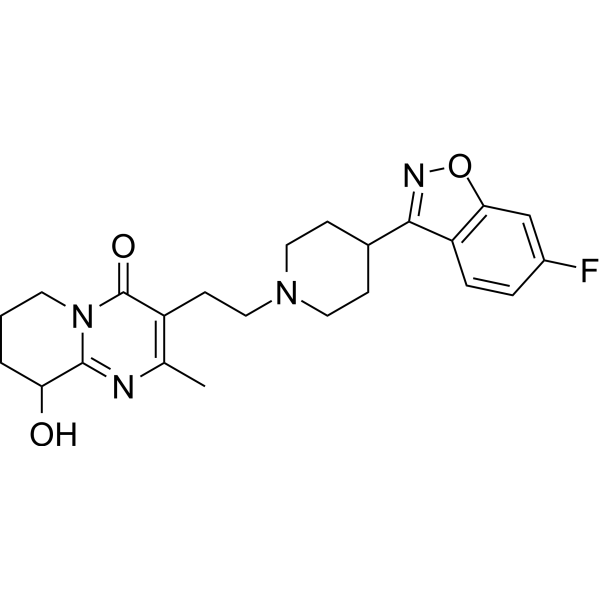
    Paliperidone
    3 Publications Verification

    9-Hydroxyrisperidone

    Drug Metabolite Dopamine Receptor 5-HT Receptor Adrenergic Receptor Neurological Disease
    Paliperidone (9-Hydroxyrisperidone), the major active metabolite of Risperidone, is a dopamine D2 antagonist and 5-HT2A antagonist. Paliperidone is also active as an antagonist at α1 and α2 adrenergic receptors and H1-histaminergic receptors. Paliperidone, a antipsychotic agent, shows efficacy against schizophrenia .
    Paliperidone
  • HY-P5322

    Transmembrane Glycoprotein Cardiovascular Disease Cancer
    Thrombospondin (TSP-1)-derived CD36 binding motif is a bioactive hexapeptide. Thrombospondin (TSP-1)-derived CD36 binding motif interferes with the interaction between cells and the extracellular matrix by binding to CD36 and angiostatin, thereby affecting the cell adhesion and migration process. Thrombospondin (TSP-1)-derived CD36 binding motif inhibits platelet aggregation. Thrombospondin (TSP-1)-derived CD36 binding motif exerts an anti-tumor effect against colon cancer .
    Thrombospondin (TSP-1)-derived CD36 binding motif
  • HY-B0558
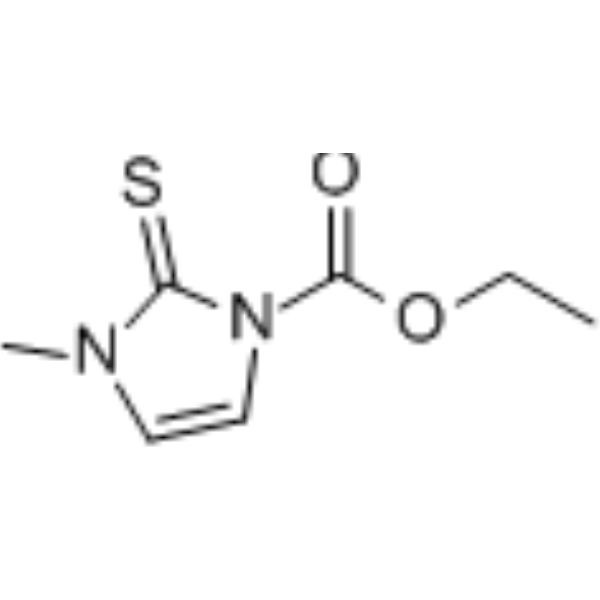
    Carbimazole
    2 Publications Verification

    p38 MAPK Neurological Disease Endocrinology
    Carbimazole is an orally active antithyroid agent which rapidly converts to Methimazole after absorption and prevents thyroid peroxidase enzyme from iodinating and coupling the tyrosine residues on thyroglobulin, hence reducing the production of thyroxine. Carbimazole also displays anti-inflammatory and neuronal-protective activities, suggesting its application for hyperthyroidism and neurological research .
    Carbimazole
  • HY-147288
    NSC 694621
    1 Publications Verification

    Histone Acetyltransferase Cancer
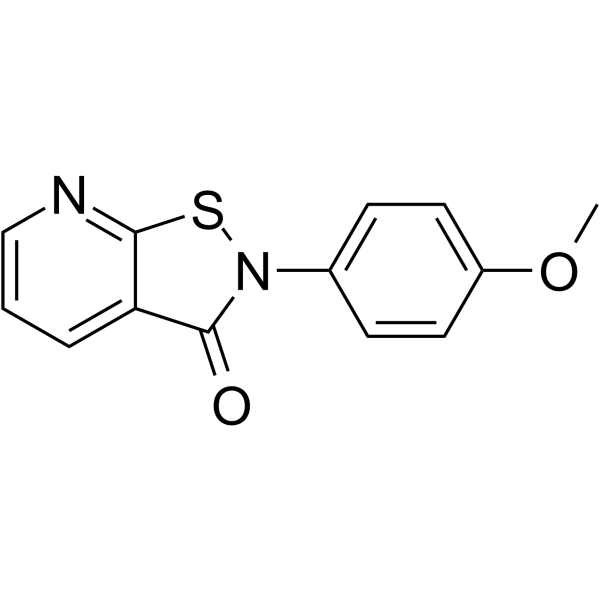
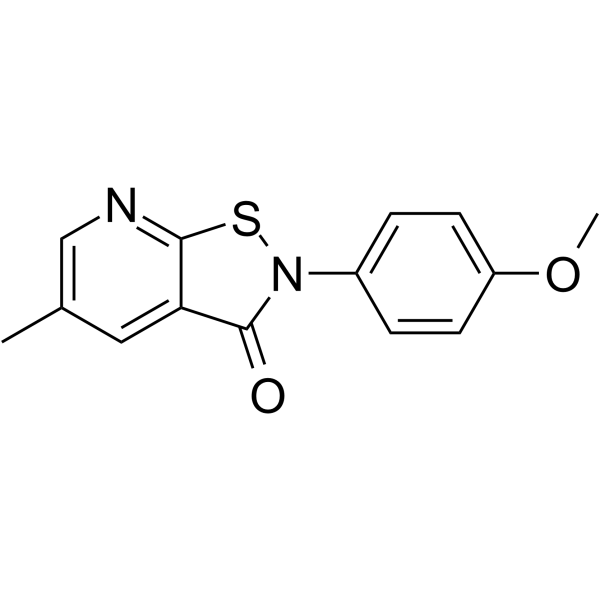
    NSC 694621 is a potent PCAF inhibitor, with an IC50 of 5.71 µM (PCAF/H31-21). NSC 694621 exhibits good activity of inhibiting the proliferation of cancer cells .
    NSC 694621
  • HY-172609

    Phosphatase Apoptosis MDM-2/p53 Caspase Metabolic Disease Cancer
    SL-176 is a PPM1D (Wip1) inhibitor. SL-176 inhibits lipid droplet formation, downregulates the mRNA and protein expression of PPARγ and C/EBPα, and blocks adipocyte differentiation. SL-176 induces G2/M cell cycle arrest, apoptosis and inhibits cell proliferation in breast cancer cells overexpressing PPM1D, and activates components of the p53 pathway. SL-176 suppresses tumor growth in a zebrafish model of neuroblastoma. SL-176 is applicable to research related to obesity, breast cancer and neuroblastoma .
    SL-176
  • HY-N8671

    Amyloid-β Apoptosis Reactive Oxygen Species (ROS) SARS-CoV Infection Neurological Disease
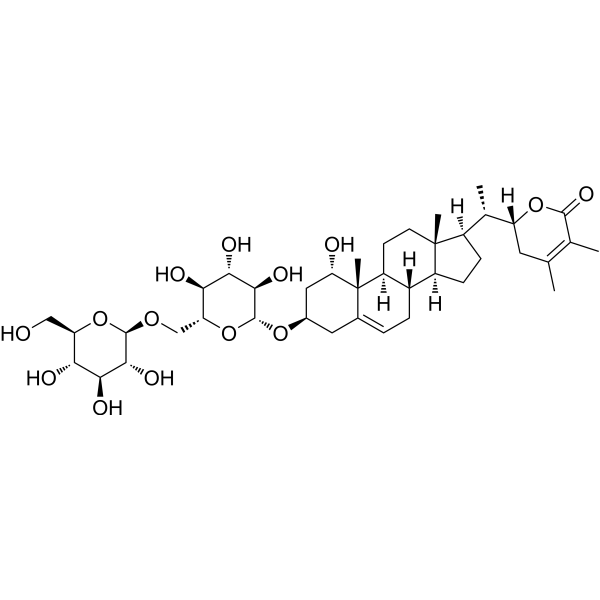
    Withanoside V is a blood-brain barrier-permeable withanolide derivative . Withanoside V binds strongly to Sudlow I (domain IIA) of human serum albumin (HSA) to form a stable complex and alter the secondary structure of albumin, thereby increasing helix content and reducing β-sheet and random coil. Withanoside V binds to Aβ (1-42) to block the interaction between monomers and subsequent aggregation. Withanoside V inhibits the viability of neuroblastoma cells, reduces the number of apoptotic cells induced by Aβ (1-42), and decreases ROS production. Withanoside V inhibits SARS-CoV-2 Mpro. Withanoside V can be used for research on Alzheimer's disease and coronavirus disease 2019 .
    Withanoside V
  • HY-N15314

    MDM-2/p53 Akt Apoptosis Cancer
    Syringolin A is a plant elicitor that can be produced by the plant pathogen Pseudomonas syringae pv. syringae. Syringolin A exhibits anti-proliferative activity against a variety of cancer cells (IC50 for SK-N-SH, LAN-1, SKOV3 is 20-25 µM), induces apoptosis in SK-N-SH through upregulation of p53 expression and downregulation of Akt/PKB proteins .
    Syringolin A
  • HY-170405

    PROTACs mTOR Cancer
    YB-3-17 is a bifunctional molecule, that inhibits mTOR (IC50=0.22 nM) or degrades G1 to S phase transition 1 gene (GSPT1, DC50=5 nM) in a PROTAC mechanism. YB-3-17 exhibits antiproliferative activity in multi glioblastoma cell lines with IC50 of nanomolare levels. YB-3-17 exhibits antitumor efficacy in mouse models . (Pink: ligand for target protein (HY-170407); Black: linker (HY-A0102); Blue: ligand for E3 ligase Cereblon (HY-14658))
    YB-3–17
  • HY-109583

    4-Oxo-4-HPR

    Apoptosis Reactive Oxygen Species (ROS) Drug Metabolite Cancer
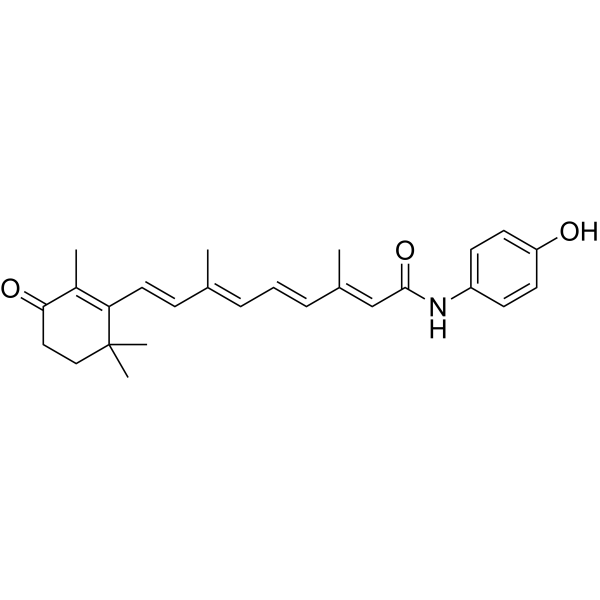
    4-Oxofenretinide (4-Oxo-4-HPR) is a metabolite of Fenretinide (HY-15373). 4-Oxofenretinide induces cell growth inhibition in ovarian, breast, and neuroblastoma tumor cell lines. 4-Oxofenretinide causes a marked accumulation of cells in G2-M. 4-Oxofenretinide induces cancer cell apoptosis through caspase-9 .
    4-Oxofenretinide
  • HY-175236

    PD-1/PD-L1 Apoptosis ERK JNK Cadherin p38 MAPK GSK-3 IFNAR Caspase Bcl-2 Family Cancer
    SF-9-2 is a PD-L1/PD-1 binding inhibitor (IC50 = 24.9 nM). SF-9-2 inhibits epithelial-mesenchymal transition, migration, invasion, and proliferation of SK-N-SH cells, and also induces apoptosis and cell cycle arrest. SF-9-2 blocks PD-L1-induced SK-N-SH cell growth through the MAPK signaling pathway. SF-9-2 restores GSK-3β activity and enhances PD-L1 degradation through the ubiquitin-proteasome pathway. SF-9-2 inhibits tumor growth in the SK-N-SH NOG mouse model without significant toxicity. SF-9-2 also acts as an immune checkpoint inhibitor, blocking PD-L1 to restore T cell function. SF-9-2 can be used in neuroblastoma research .
    SF-9-2
  • HY-147290

    Histone Acetyltransferase Cancer
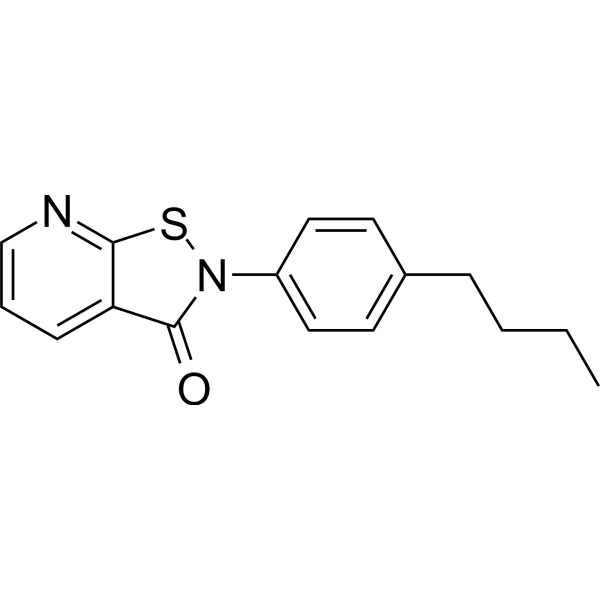
    NSC 694623 is a potent histone acetyltransferase (HAT) inhibitor with an IC50 value of 15.9 μM for recombinant HAT p300/CBP-associated factor (PCAF). NSC 694623 has antiproliferative activity against certain cancer cells. NSC 694623 can be used for researching anticancer .
    NSC 694623
  • HY-119386

    Sigma Receptor Calcium Channel Neurological Disease
    SAS-0132 is a selective Sigma 2 receptor (Sig2R) antagonist (Ki: 90 nM) that can cross the blood-brain barrier. SAS-0132 is capable of regulating intracellular Ca 2+ levels and modulating PGRMC1-related pathways. SAS-0132 exhibits neuroprotective activity and can improve cognitive impairment in Alzheimer's disease mice. SAS-0132 can be used in the research of neurocognitive disorders such as Alzheimer's disease .
    SAS-0132
  • HY-120360

    Sigma Receptor Apoptosis Cancer
    CB-64D is the agonist for sigma receptor 2 and sigma receptor 1 with Ki of 16.5 and 3063 nM. CB-64D induces apoptosis in cancer cell SK-N-SH .
    CB-64D
  • HY-170929

    Bcl-2 Family Cytochrome P450 Apoptosis Caspase Cancer
    EMT inhibitor-3 (compound 11i) is a epithelial-mesenchymal transition (EMT) inhibitor. EMT inhibitor-3 inhibits neuroblastoma SK-N-SH cells with an IC50 of 2.5 μM. EMT inhibitor-3 inhibits SK-N-SH cell proliferation, migration, and invasion. EMT inhibitor-3 increases the Bax/Bcl-2 protein expression ratio, promotes Cytochrome C ( HY-125857) release from mitochondria, and activates caspases 9 and caspases 3, inducing mitochondria-mediated endogenous tumor cell Apoptosis. EMT inhibitor-3 is potential for cancer research .
    EMT inhibitor-3
  • HY-122112

    Sigma Receptor Cancer
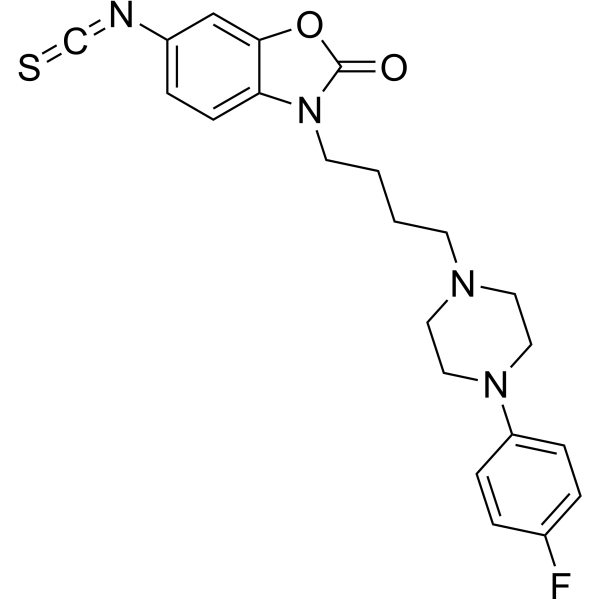
    CM572 is a selective irreversible partial sigma-2 receptor agonist. CM572 has antitumor activity. CM572 induces dose-dependent cell death, with an EC50 of 7.6 μM in SK-N-SH neuroblastoma cells. CM572 can be used for the research of kinds of diseases such as neuroblastoma, breast cancer .
    CM572
  • HY-133195

    Fenazoxine

    Sodium Channel Neurological Disease
    Nefopam (Fenazoxine) is an orally active, non-opioid and non-steroidal centrally acting analgesic agent. Nefopam blocks voltage-sensitive sodium channels (IC50=27 μM) and modulates glutamatergic transmission in rodents. Nefopam can be used in studies of neuropathic pain, anticonvulsant, as well as the prevention of postoperative shivering and hiccups .
    Nefopam
  • HY-118829

    Drug Derivative Neurological Disease
    3,4-Methylenedioxy PV9 hydrochloride is a drug derivative. 3,4-Methylenedioxy PV9 hydrochloride shows toxicity against BEAS-2B, human aortic endothelia, HASM, SK-N-SH, A172, HepG2, MKN45, and DLD1cells (LC50=12.8-67.5 μM) .
    3,4-Methylenedioxy PV9 hydrochloride
  • HY-117420

    Sigma Receptor Cancer
    CM764 is an activator for sigma receptor with Ki of 86.6 and 3.5 nM for sigma-1 receptor and sigma-2 receptor. CM764 increases cytoplasmic calcium, NAD +/NADH, and ATP levels, and decreases the concentration of ROS .
    CM764
  • HY-147289

    Histone Acetyltransferase Cancer
    NSC 698600 is a potent PCAF inhibitor, with IC50 of 6.51 µM (PCAF/H31-21). NSC 698600 exhibits good activity of inhibiting the proliferation of cancer cells .
    NSC 698600
  • HY-A0019R

    9-Hydroxyrisperidone (Standard)

    Drug Metabolite Reference Standards Dopamine Receptor 5-HT Receptor Adrenergic Receptor Neurological Disease
    Paliperidone (Standard) is the analytical standard of Paliperidone. This product is intended for research and analytical applications. Paliperidone (9-Hydroxyrisperidone), the major active metabolite of Risperidone, is a dopamine D2 antagonist and 5-HT2A antagonist. Paliperidone is also active as an antagonist at α1 and α2 adrenergic receptors and H1-histaminergic receptors. Paliperidone, a antipsychotic agent, shows efficacy against schizophrenia .
    Paliperidone (Standard)
  • HY-120679A

    NSC 697887 sodium

    Topoisomerase Neurological Disease Cancer
    XK469 (NSC 697887) sodium is a quinoxaline-based topoisomerase II inhibitor. XK469 sodium exhibits antiproliferative activity against neuroblastoma cells. XK469 sodium can be used in the research of neuroblastoma .
    XK469 sodium
  • HY-P11677

    Neurological Disease
    CPO_Aβ17-21P is a apoE/Aβ interaction inhibitor with an IC50 of 1.02 nM. CPO_Aβ17-21P significantly inhibits ApoE4-mediated aggregation of Aβ40 and Aβ42. CPO_Aβ17-21P significantly improves cognitive function and comprehensively alleviates Alzheimer's disease (AD)-related pathologies in mouse models. CPO_Aβ17-21P is applicable to the research of AD .
    CPO_Aβ17-21P
  • HY-108241A

    Glycosidase Neurological Disease
    Galacto-PUGNAc is a selective competitive inhibitor of lysosomal β-hexosaminidases (HEX), with Ki values of 51 and 18 nM, for hHEXA and hHEXB, respectively. Galacto-PUGNAc elevates GM2 ganglioside levels in neuroblastoma cells. Galacto-PUGNAc can be used for the research of neurodegenerative disorders .
    Galacto-PUGNAc

Inquiry Online

Your information is safe with us. * Required Fields.

Salutation


Country or Region *

Applicant Name *


Organization Name *

Department *


Email Address *


Product Name *

Cat. No.


Requested quantity *

Phone Number *


Remarks

Inquiry Online

Inquiry Information

Product Name:
Cat. No.:
Quantity:
MCE Japan Authorized Agent:

