


Search Result
Results for "
anticoagulant effects
" in MedChemExpress (MCE) Product Catalog:
1
Biochemical Assay Reagents
4
Isotope-Labeled Compounds
| Cat. No. |
Product Name |
Target |
Research Areas |
Chemical Structure |
-
- HY-P1929
-
Bivalirudin
Maximum Cited Publications
9 Publications Verification
|
Thrombin
Interleukin Related
RSV
|
Infection
Cardiovascular Disease
Inflammation/Immunology
|
|
Bivalirudin, a hirudin analog and anticoagulant, is a direct thrombin inhibitor. Bivalirudin inhibits thrombin-mediated fibrinogen cleavage, coagulation factor activation, and platelet activation by reversibly binding to thrombin. In addition, Bivalirudin also has certain effects of anti-virus, anti-inflammation, and vascular endothelial barrier function protection. Bivalirudin can be used for the research of thrombotic diseases and others .
|
-
-
- HY-10274
-
|
BIBR 1048
|
Thrombin
|
Cardiovascular Disease
|
|
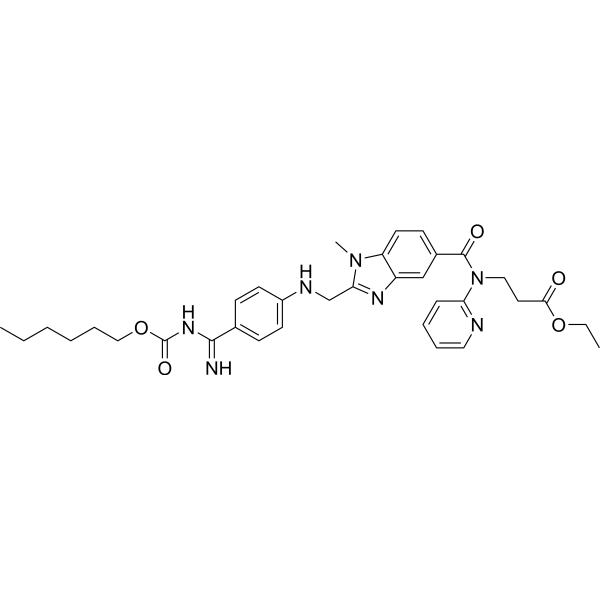
Dabigatran etexilate (BIBR 1048) is an orally active proagent of Dabigatran (a direct inhibitor of thrombin). Dabigatran etexilate has anticoagulant effects and is used for the prophylaxis of venousthromboembolism and stroke due to atrial fibrillation .
|
-
-
- HY-P2813
-
Hirudin
3 Publications Verification
|
Thrombin
Apoptosis
|
Cardiovascular Disease
Cancer
|
|
Hirudin is a thrombin inhibitor with blood anticoagulant property. Hirudin has potent anti-thrombotic, wound repair, anti-fibrosis, anti-tumor and anti-hyperuricemia effects. Hirudin also affects diabetic complications, cerebral hemorrhage, and others .
|
-
-
- HY-D0836
-
|
Ethylenediaminetetraacetic acid dipotassium dihydrate
|
DNA/RNA Synthesis
|
Others
|
|
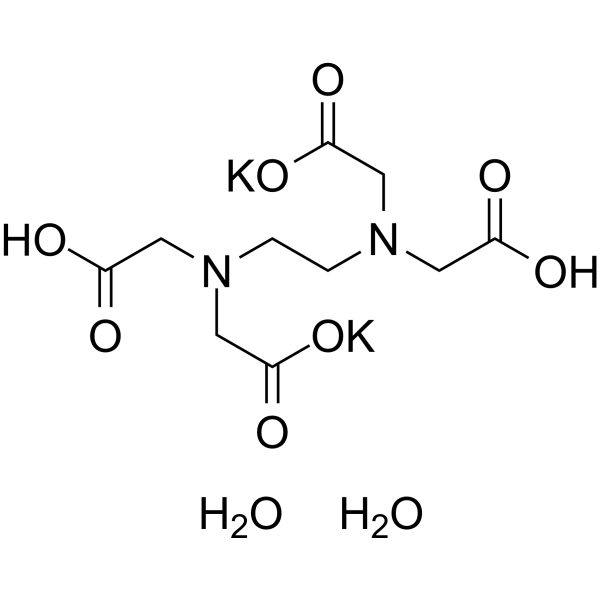
EDTA dipotassium dihydrate is a metal ion chelator that forms stable and water-soluble chelates with a variety of metal ions. EDTA dipotassium is commonly used as a blood anticoagulant, which can effectively prevent blood coagulation and maintain the morphology and function of cells in blood samples. In the industrial field, EDTA dipotassium can be used to remove the adverse effects of metal ions and prevent oxidation and deterioration caused by metal ions .
|
-
-
- HY-10274A
-
|
BIBR 1048MS; Dabigatran etexilate methanesulfonate
|
Thrombin
|
Cardiovascular Disease
|
|
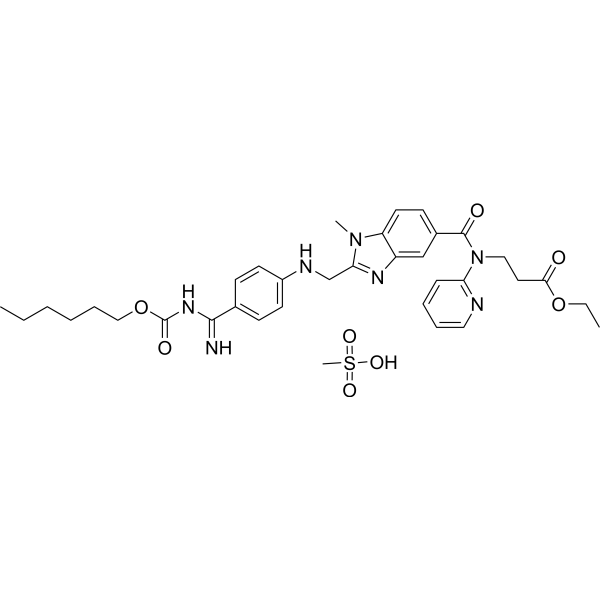
Dabigatran etexilate mesylate (BIBR 1048MS) is an orally active proagent of Dabigatran (a direct inhibitor of thrombin). Dabigatran etexilate mesylate has anticoagulant effects and is used for the prophylaxis of venousthromboembolism and stroke due to atrial fibrillation .
|
-
-
- HY-15664
-
|
|
Thrombin
Interleukin Related
RSV
|
Infection
Cardiovascular Disease
Inflammation/Immunology
|
|
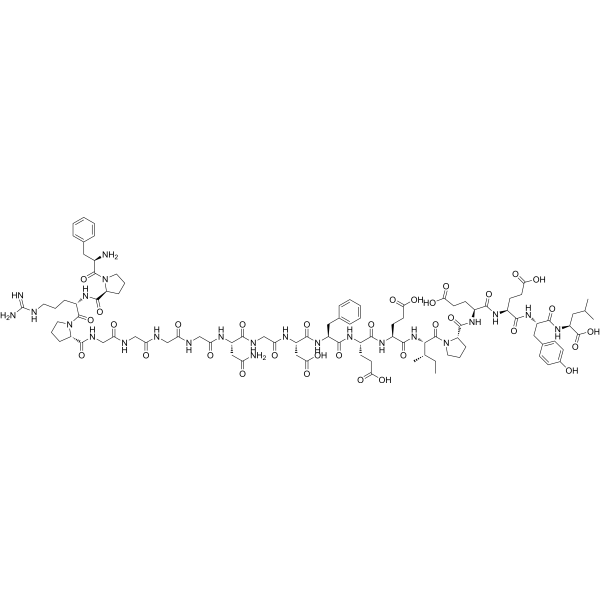
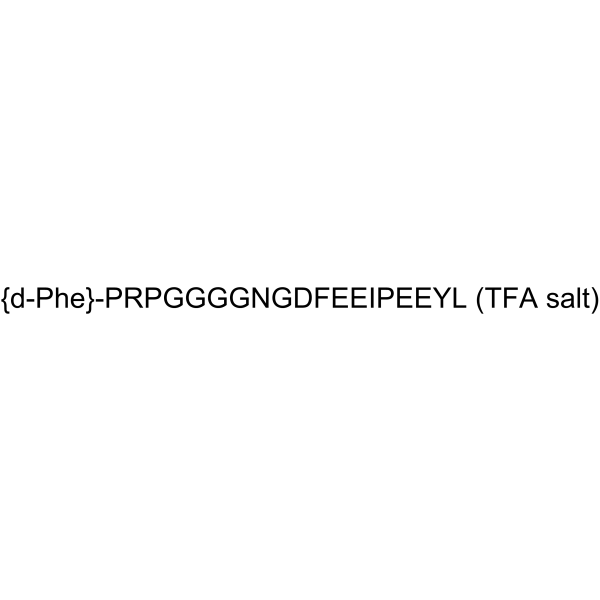
Bivalirudin TFA, a hirudin analog and anticoagulant, is a direct thrombin inhibitor. Bivalirudin TFA inhibits thrombin-mediated fibrinogen cleavage, coagulation factor activation, and platelet activation by reversibly binding to thrombin. In addition, Bivalirudin TFA also has certain effects of anti-virus, anti-inflammation, and vascular endothelial barrier function protection. Bivalirudin TFA can be used for the research of thrombotic diseases and others .
|
-
-
- HY-111186
-
|
WL 108366
|
Glucocorticoid Receptor
MMP
VKOR
|
Others
|
|
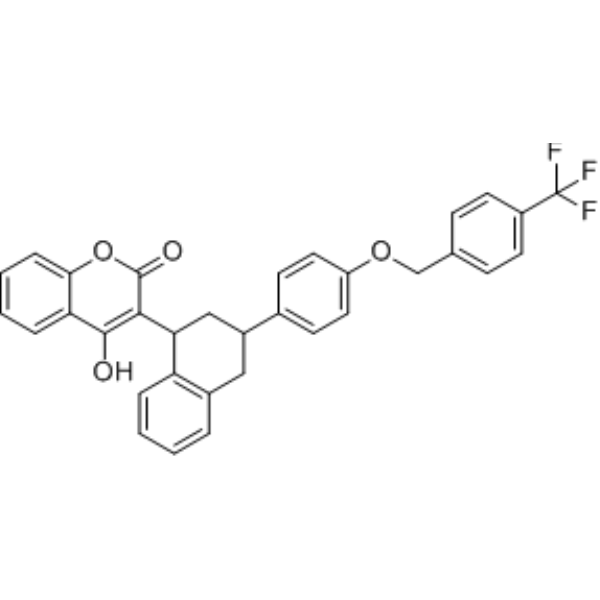
Flocoumafen (WL 108366) is an orally active vitamin K epoxide reductase inhibitor and a multi-target ligand, which includes prostaglandin F synthase, serum albumin, glucocorticoid receptor 2, and MMP-9. Flocoumafen is a second-generation anticoagulant rodenticide (ARs) with a half-life of 177.4 hours and has deadly anticoagulant effects .
|
-
-
- HY-P99794
-
|
BAY 1213790
|
Factor Xa
|
Cardiovascular Disease
|
|
Osocimab (BAY 1213790), an anti-FXIa antibody (Ki=2.4 nM; EC50=0.2 nM). FXI inhibition may reduce the risk of thrombosis. Osocimab inhibits thrombin generation, and prolongs activated partial thromboplastin time. Osocimab exhibits anticoagulant effects .
|
-
-
- HY-N1400
-
|
|
PKC
|
Cardiovascular Disease
|
|
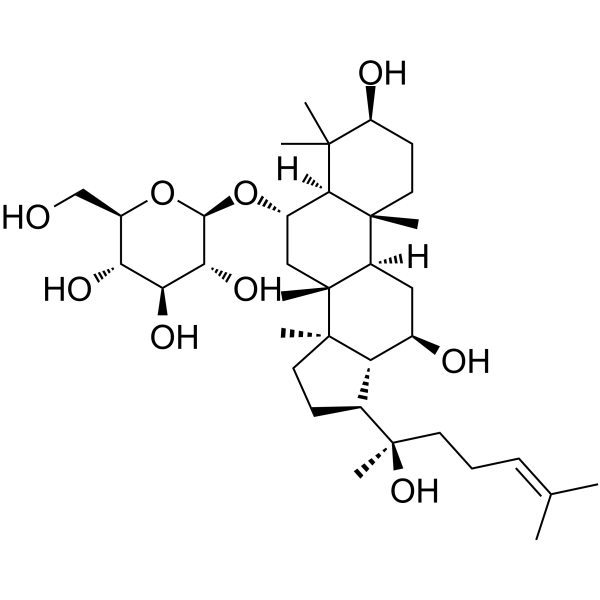
(20R)-Ginsenoside Rh1 is the R-isomer of Ginsenoside Rh1 (HY-N0604), and it is found in red ginseng, ginseng, and other sources. (20R)-Ginsenoside Rh1 inhibits thrombin-induced conversion of fibrinogen to fibrin, exerting anticoagulant and antithrombotic effects .
|
-
-
- HY-18660
-
|
PER977
|
Factor Xa
Thrombin
|
Cardiovascular Disease
|
|
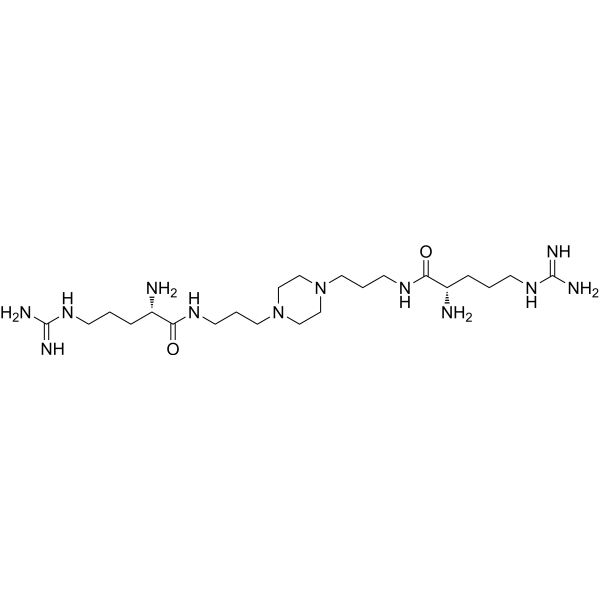
Ciraparantag (PER977) is a thrombin and factor Xa inhibitor. Ciraparantag is a broad-spectrum reversal agent for anticoagulants, including low-molecular-weight heparin, unfractionated heparin, and certain direct oral anticoagulants. It is reported to antagonize the effects of all coagulants except VKAs and agratroban .
|
-
-
- HY-P2933
-
|
|
Factor Xa
Protease Activated Receptor (PAR)
|
Cardiovascular Disease
|
|
Activated protein C is an anticoagulant targeting coagulation factors Va and VIIIa. Activated protein C demonstrates cytoprotective effects through binding to endothelial cell protein C receptor (EPCR) and protease-activated receptor-1 (PAR-1), regulating gene expression, anti-inflammation, anti-apoptosis, and stabilizing endothelial barriers. Activated protein C is promising for research of diseases such as severe sepsis and ischemic stroke .
|
-
-
- HY-P4325
-
|
|
Thrombin
|
Others
|
|
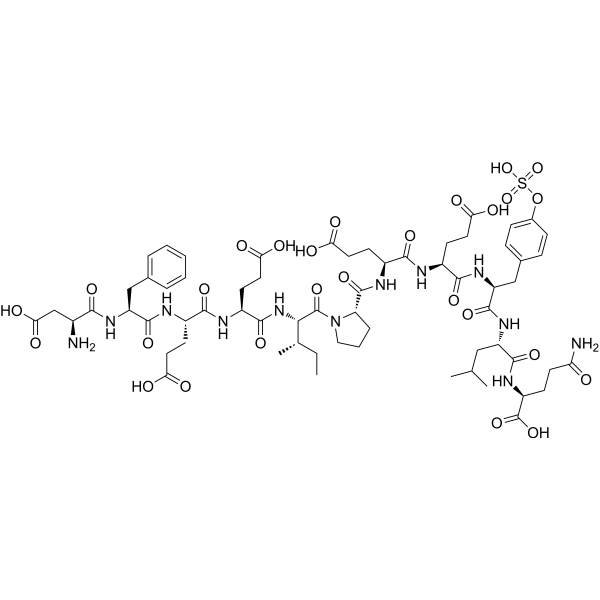
Hirudin (55-65) (sulfated) is a fragment of Hirudin with anticoagulant effects. Hirudin is a thrombin inhibitor with blood anticoagulant property.
|
-
-
- HY-108739
-
|
BI 655075
|
Thrombin
|
Cardiovascular Disease
|
|
Idarucizumab is a humanized monoclonal antibody fragment. Idarucizumab is first reversal agent for a direct oral anticoagulant (DOAC). Idarucizumab can specifically neutralize the effects of the oral direct thrombin inhibitor in order to restore hemostasis .
|
-
-
- HY-10274R
-
|
BIBR 1048 (Standard)
|
Reference Standards
Thrombin
|
Cardiovascular Disease
|
|
Dabigatran etexilate (Standard) is the analytical standard of Dabigatran etexilate. This product is intended for research and analytical applications. Dabigatran etexilate (BIBR 1048) is an orally active proagent of Dabigatran (a direct inhibitor of thrombin). Dabigatran etexilate has anticoagulant effects and is used for the prophylaxis of venousthromboembolism and stroke due to atrial fibrillation .
|
-
-
- HY-10274S
-
|
|
Isotope-Labeled Compounds
Thrombin
|
Cardiovascular Disease
|
|
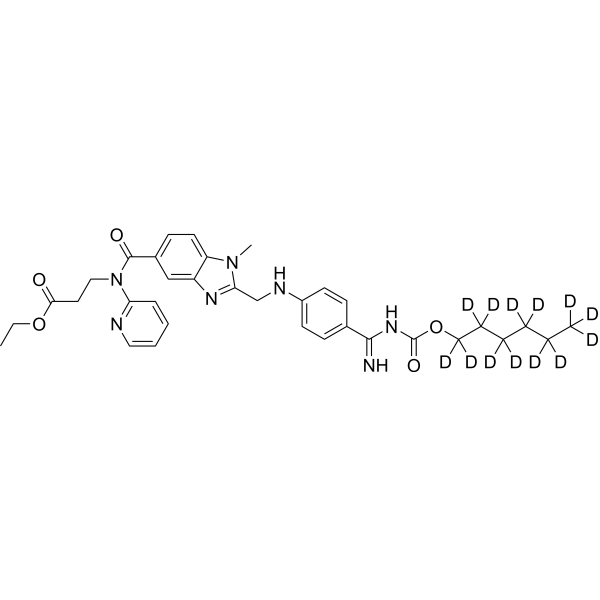
Dabigatran etexilate-d13 is the deuterium labeled Dabigatran etexilate. Dabigatran etexilate (BIBR 1048) is an orally active proagent of Dabigatran. Dabigatran etexilate has anticoagulant effects and is used for the prophylaxis of venousthromboembolism and stroke due to atrial fibrillation .
|
-
-
- HY-14853
-
|
YM150
|
Factor Xa
Ser/Thr Protease
|
Cardiovascular Disease
|
|
Darexaban (YM150) is a potent, selective and orally active factor Xa (FXa) inhibitor with an IC50 of 54.6 nM. Darexaban shows high selectivity against other related serine proteases, such as trypsin, thrombin, and kallikrein. Darexaban has anticoagulant and antithrombotic effects .
|
-
-
- HY-15759A
-
|
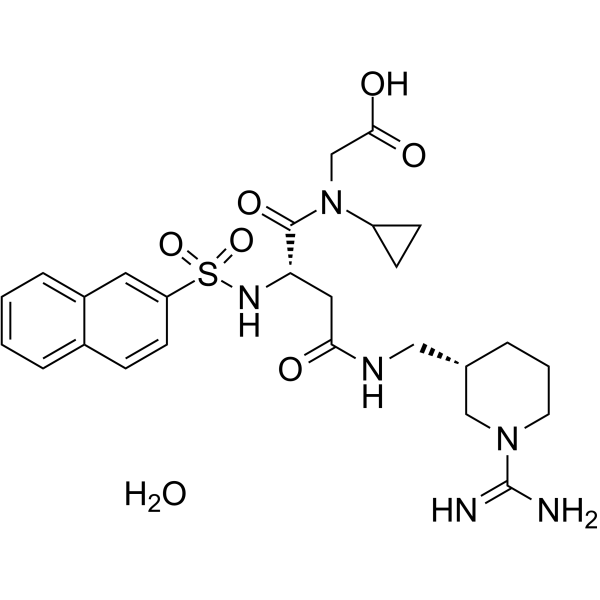
Ro 46-6240 hydrate; Ro 46-6240/010 hydrate
|
Thrombin
|
Cardiovascular Disease
|
|
Napsagatran (Ro 46-6240) hydrate is a potent thrombin inhibitor. Napsagatran hydrate exhibits anticoagulant effects in vitro and in vivo. Napsagatran hydrate can be used in antithrombotic research [1][2].
|
-
-
- HY-172316
-
|
|
Factor Xa
|
Cardiovascular Disease
|
|
BAY 3389934 is a selective dual inhibitor of factor IIa and factor Xa, with an IC50 of 4.9 nM for factor IIa and an IC50 of 0.66 nM for factor Xa. BAY 3389934 directly inhibits the activities of factor IIa and factor Xa and regulates the common coagulation pathway. BAY 3389934 exhibits anticoagulant and organ-protective effects. BAY 3389934 can be used in the research of sepsis and coagulopathy .
|
-
-
- HY-172231
-
|
|
Estrogen Receptor/ERR
|
Cardiovascular Disease
Cancer
|
|
Hexolame is an estrogen receptors agonist with dual anticoagulant and estrogenic properties. Hexolame binds to estrogen receptors to induce anticoagulant effects by modulating clotting factors or platelet activity. Hexolame is promising for research of prostatic cancer and prevention of thrombosis .
|
-
-
- HY-10274AR
-
|
BIBR 1048MS (Standard); Dabigatran etexilate methanesulfonate (Standard)
|
Reference Standards
Thrombin
|
Cardiovascular Disease
|
|
Dabigatran etexilate (mesylate) (Standard) is the analytical standard of Dabigatran etexilate (mesylate). This product is intended for research and analytical applications. Dabigatran etexilate mesylate (BIBR 1048MS) is an orally active proagent of Dabigatran (a direct inhibitor of thrombin). Dabigatran etexilate mesylate has anticoagulant effects and is used for the prophylaxis of venousthromboembolism and stroke due to atrial fibrillation .
|
-
-
- HY-P1636A
-
|
|
Thrombin
|
Cardiovascular Disease
|
|
Hirudin (54-65) TFA is a fragment of Hirudin with anticoagulant effects. Hirudin is a thrombin inhibitor with blood anticoagulant property .
|
-
-
- HY-18660A
-
|
PER977 TFA
|
Factor Xa
Thrombin
|
Cardiovascular Disease
|
|
Ciraparantag (PER977) TFA is a thrombin and factor Xa inhibitor. Ciraparantag TFA is a broad-spectrum reversal agent for anticoagulants, including low-molecular-weight heparin, unfractionated heparin, and certain direct oral anticoagulants. It is reported to antagonize the effects of all coagulants except VKAs and agratroban .
|
-
-
- HY-15759
-
|
Ro 46-6240; Ro 46-6240/010
|
Thrombin
|
Cardiovascular Disease
|
|
Napsagatran (Ro 46-6240) is a potent thrombin inhibitor. Napsagatran exhibits anticoagulant effects in vitro and in vivo. Napsagatran can be used in antithrombotic research [1][2].
|
-
-
- HY-111186R
-
|
WL 108366 (Standard)
|
Reference Standards
VKOR
Glucocorticoid Receptor
MMP
|
Others
|
|
Flocoumafen (Standard) is the analytical standard of Flocoumafen. This product is intended for research and analytical applications. Flocoumafen (WL 108366) is an orally active vitamin K epoxide reductase inhibitor and a multi-target ligand, which includes prostaglandin F synthase, serum albumin, glucocorticoid receptor 2, and MMP-9. Flocoumafen is a second-generation anticoagulant rodenticide (ARs) with a half-life of 177.4 hours and has deadly anticoagulant effects .
|
-
-
- HY-18660S
-
|
PER977-d8 tetrahydrochloride diacetate
|
Isotope-Labeled Compounds
Factor Xa
Thrombin
|
Cardiovascular Disease
|
|
Ciraparantag-d8 (PER977-d8) tetrahydrochloride diacetate is the deuterium labeled Ciraparantag (HY-18660). Ciraparantag is a thrombin and factor Xa inhibitor. Ciraparantag is a broad-spectrum reversal agent for anticoagulants, including low-molecular-weight heparin, unfractionated heparin, and certain direct oral anticoagulants. It is reported to antagonize the effects of all coagulants except VKAs and agratroban .
|
-
-
- HY-W705434
-
|
BIBR 1048-d11
|
Isotope-Labeled Compounds
Thrombin
|
Cardiovascular Disease
|
|
Dabigatran etexilate-d11 (BIBR 1048-d11) is the deuterium labeled Dabigatran etexilate (HY-10274). Dabigatran etexilate (BIBR 1048) is an orally active proagent of Dabigatran (a direct inhibitor of thrombin). Dabigatran etexilate has anticoagulant effects and is used for the prophylaxis of venousthromboembolism and stroke due to atrial fibrillation .
|
-
-
- HY-10275
-
|
AR-H067637
|
Thrombin
|
Cardiovascular Disease
|
|
Atecegatran (AR-H067637) is an orally active competitive thrombin inhibitor with a Ki of 2-4 nM. AR-H067637 inhibits platelet activation and aggregation by blocking thrombin binding to fibrin and thrombomodulin. Atecegatran demonstrates significant anticoagulant effects in various plasma coagulation assays, with an IC50 ranging from 93 to 220 nM. Atecegatran can be used in research related to thromboembolic disorders .
|
-
-
- HY-N1400R
-
|
|
Reference Standards
PKC
|
Cardiovascular Disease
|
|
(20R)-Ginsenoside Rh1 (Standard) is the analytical standard of (20R)-Ginsenoside Rh1 (HY-N1400). This product is intended for research and analytical applications. (20R)-Ginsenoside Rh1 is the R-isomer of Ginsenoside Rh1 (HY-N0604), and it is found in red ginseng, ginseng, and other sources. (20R)-Ginsenoside Rh1 inhibits thrombin-induced conversion of fibrinogen to fibrin, exerting anticoagulant and antithrombotic effects .
|
-
-
- HY-14854A
-
|
ATI-5923 sodium
|
VKOR
|
Cardiovascular Disease
|
|
Tecarfarin (ATI-5923) sodium is an orally active VKOR inhibitor with an IC50 of 0.67 μM against VKORC1. Tecarfarin sodium blocks the post-translational modification of vitamin K-dependent coagulation factors II, VII, IX and X, reducing their levels and activities. Tecarfarin sodium prolongs prothrombin time, attenuates venous and arterial thrombosis, increases ear incision bleeding volume, and exerts reversible anticoagulant effects. Tecarfarin sodium is applicable to research related to arterial and venous thrombosis as well as other diseases requiring anticoagulation .
|
-
-
- HY-14854R
-
|
ATI-5923 (Standard)
|
Reference Standards
VKOR
|
Cardiovascular Disease
|
|
Tecarfarin (ATI-5923) (Standard) is the analytical standard of Tecarfarin. This product is intended for research and analytical applications. Tecarfarin is an orally active VKOR inhibitor with an IC50 of 0.67 μM against VKORC1. Tecarfarin blocks the post-translational modification of vitamin K-dependent coagulation factors II, VII, IX and X, reducing their levels and activities. Tecarfarin prolongs prothrombin time, attenuates venous and arterial thrombosis, increases ear incision bleeding volume, and exerts reversible anticoagulant effects. Tecarfarin is applicable to research related to arterial and venous thrombosis as well as other diseases requiring anticoagulation .
|
-
-
- HY-14854S
-
|
ATI-5923-13C,d3
|
Isotope-Labeled Compounds
VKOR
|
Cardiovascular Disease
|
|
Tecarfarin- 13C,d3 (ATI-5923- 13C,d3) is 13C labeled Tecarfarin. Tecarfarin is an orally active VKOR inhibitor with an IC50 of 0.67 μM against VKORC1. Tecarfarin blocks the post-translational modification of vitamin K-dependent coagulation factors II, VII, IX and X, reducing their levels and activities. Tecarfarin prolongs prothrombin time, attenuates venous and arterial thrombosis, increases ear incision bleeding volume, and exerts reversible anticoagulant effects. Tecarfarin is applicable to research related to arterial and venous thrombosis as well as other diseases requiring anticoagulation .
|
-
-
- HY-183649
-
|
|
Biochemical Assay Reagents
|
Cardiovascular Disease
|
|
BCN-PEG6-OH is a neutralizing agent and anticoagulant inhibitor containing strained alkyne. BCN-PEG6-OH undergoes strain-promoted alkyne-azide cycloaddition (SPAAC) click reaction with azido-Warfarin to generate an inactive product that can be rapidly cleared via the kidneys. In mice, BCN-PEG6-OH effectively reduces the anticoagulant activity of azido-Warfarin in a dose-dependent manner, normalizes prothrombin time, and exhibits no inherent anticoagulant or procoagulant effects when administered alone. BCN-PEG6-OH can be used for the research of drug-induced coagulopathy .
|
-
-
- HY-N18642
-
|
|
Bacterial
|
Infection
Inflammation/Immunology
|
|
Soapnut extract is a natural nonionic surfactant that can be used as a skin conditioning agent. It possesses strong detergency, antibacterial, non-polluting, and skin-softening properties. Soapnut extract also exhibits anti-inflammatory, antioxidant, free radical scavenging, and anticoagulant effects.
|
-
-
- HY-19517
-
|
|
Endogenous Metabolite
|
Cardiovascular Disease
|
|
R1663 is a factor Xa inhibitor with anticoagulant activity. R1663 does not affect bleeding time. The pharmacodynamic effects (such as inhibition of thrombin generation) and plasma concentrations of R1663 are dose-dependent. R1663 prolongs clotting time in a concentration-dependent manner and inhibits the peak height of thrombin generation and endogenous thrombin potential .
|
-
-
- HY-W982689
-
|
|
Biochemical Assay Reagents
|
Metabolic Disease
|
|
Fluindarol is a phenylindandione derivative and an orally active anticoagulant. Fluindarol acts as a toxicant that induces organ and tissue haemorrhages and liver parenchymal necrosis in rats. Fluindarol exhibits acute and cumulative preclinical toxicity in rats, rabbits, and dogs, with higher toxicity in female rats than male rats. Fluindarol lacks analgesic action, produces only minor blood pressure effects, and does not alter circulation, respiration, CNS, or cardiac activity. Fluindarol is considered too toxic for clinical use based on preclinical data .
|
-
-
- HY-106830
-
|
|
Phosphodiesterase (PDE)
|
Cardiovascular Disease
|
|
Pelrinone is an orally active cardiotonic agent and PDE III inhibitor with an IC50 of 36 μM. Pelrinone elevates intracellular cAMP levels. The action of Pelrinone is independent of β-adrenergic receptors, and it does not inhibit Na +/K +-ATPase. Pelrinone exerts positive inotropic and vasodilatory effects. Pelrinone inhibits platelet aggregation, reduces thrombus formation, and exerts weak anticoagulant activity without altering hematocrit or circulating platelet counts. Pelrinone can be used in research related to congestive heart failure and coronary thrombosis .
|
-
| Cat. No. |
Product Name |
Type |
-
- HY-D0836
-
|
Ethylenediaminetetraacetic acid dipotassium dihydrate
|
Biochemical Assay Reagents
|
|
EDTA dipotassium dihydrate is a metal ion chelator that forms stable and water-soluble chelates with a variety of metal ions. EDTA dipotassium is commonly used as a blood anticoagulant, which can effectively prevent blood coagulation and maintain the morphology and function of cells in blood samples. In the industrial field, EDTA dipotassium can be used to remove the adverse effects of metal ions and prevent oxidation and deterioration caused by metal ions .
|
| Cat. No. |
Product Name |
Target |
Research Area |
-
- HY-P1929
-
Bivalirudin
Maximum Cited Publications
9 Publications Verification
|
Thrombin
Interleukin Related
RSV
|
Infection
Cardiovascular Disease
Inflammation/Immunology
|
|
Bivalirudin, a hirudin analog and anticoagulant, is a direct thrombin inhibitor. Bivalirudin inhibits thrombin-mediated fibrinogen cleavage, coagulation factor activation, and platelet activation by reversibly binding to thrombin. In addition, Bivalirudin also has certain effects of anti-virus, anti-inflammation, and vascular endothelial barrier function protection. Bivalirudin can be used for the research of thrombotic diseases and others .
|
-
- HY-P2813
-
Hirudin
3 Publications Verification
|
Thrombin
Apoptosis
|
Cardiovascular Disease
Cancer
|
|
Hirudin is a thrombin inhibitor with blood anticoagulant property. Hirudin has potent anti-thrombotic, wound repair, anti-fibrosis, anti-tumor and anti-hyperuricemia effects. Hirudin also affects diabetic complications, cerebral hemorrhage, and others .
|
-
- HY-15664
-
|
|
Thrombin
Interleukin Related
RSV
|
Infection
Cardiovascular Disease
Inflammation/Immunology
|
|
Bivalirudin TFA, a hirudin analog and anticoagulant, is a direct thrombin inhibitor. Bivalirudin TFA inhibits thrombin-mediated fibrinogen cleavage, coagulation factor activation, and platelet activation by reversibly binding to thrombin. In addition, Bivalirudin TFA also has certain effects of anti-virus, anti-inflammation, and vascular endothelial barrier function protection. Bivalirudin TFA can be used for the research of thrombotic diseases and others .
|
-
- HY-P4325
-
|
|
Thrombin
|
Others
|
|
Hirudin (55-65) (sulfated) is a fragment of Hirudin with anticoagulant effects. Hirudin is a thrombin inhibitor with blood anticoagulant property.
|
-
- HY-P1636A
-
|
|
Thrombin
|
Cardiovascular Disease
|
|
Hirudin (54-65) TFA is a fragment of Hirudin with anticoagulant effects. Hirudin is a thrombin inhibitor with blood anticoagulant property .
|
| Cat. No. |
Product Name |
Target |
Research Area |
Image |
-
- HY-P99794
-
|
BAY 1213790
|
Factor Xa
|
Cardiovascular Disease
|
|
Osocimab (BAY 1213790), an anti-FXIa antibody (Ki=2.4 nM; EC50=0.2 nM). FXI inhibition may reduce the risk of thrombosis. Osocimab inhibits thrombin generation, and prolongs activated partial thromboplastin time. Osocimab exhibits anticoagulant effects .
|
-
(5)
-
- HY-108739
-
|
BI 655075
|
Thrombin
|
Cardiovascular Disease
|
|
Idarucizumab is a humanized monoclonal antibody fragment. Idarucizumab is first reversal agent for a direct oral anticoagulant (DOAC). Idarucizumab can specifically neutralize the effects of the oral direct thrombin inhibitor in order to restore hemostasis .
|
-
(5)
| Cat. No. |
Product Name |
Category |
Target |
Chemical Structure |
| Cat. No. |
Product Name |
Chemical Structure |
-
- HY-10274S
-
|
|
|
Dabigatran etexilate-d13 is the deuterium labeled Dabigatran etexilate. Dabigatran etexilate (BIBR 1048) is an orally active proagent of Dabigatran. Dabigatran etexilate has anticoagulant effects and is used for the prophylaxis of venousthromboembolism and stroke due to atrial fibrillation .
|
-
-
- HY-18660S
-
|
|
|
Ciraparantag-d8 (PER977-d8) tetrahydrochloride diacetate is the deuterium labeled Ciraparantag (HY-18660). Ciraparantag is a thrombin and factor Xa inhibitor. Ciraparantag is a broad-spectrum reversal agent for anticoagulants, including low-molecular-weight heparin, unfractionated heparin, and certain direct oral anticoagulants. It is reported to antagonize the effects of all coagulants except VKAs and agratroban .
|
-
-
- HY-W705434
-
|
|
|
Dabigatran etexilate-d11 (BIBR 1048-d11) is the deuterium labeled Dabigatran etexilate (HY-10274). Dabigatran etexilate (BIBR 1048) is an orally active proagent of Dabigatran (a direct inhibitor of thrombin). Dabigatran etexilate has anticoagulant effects and is used for the prophylaxis of venousthromboembolism and stroke due to atrial fibrillation .
|
-
-
- HY-14854S
-
|
|
|
Tecarfarin- 13C,d3 (ATI-5923- 13C,d3) is 13C labeled Tecarfarin. Tecarfarin is an orally active VKOR inhibitor with an IC50 of 0.67 μM against VKORC1. Tecarfarin blocks the post-translational modification of vitamin K-dependent coagulation factors II, VII, IX and X, reducing their levels and activities. Tecarfarin prolongs prothrombin time, attenuates venous and arterial thrombosis, increases ear incision bleeding volume, and exerts reversible anticoagulant effects. Tecarfarin is applicable to research related to arterial and venous thrombosis as well as other diseases requiring anticoagulation .
|
-
Your information is safe with us. * Required Fields.
Inquiry Information
- Product Name:
- Cat. No.:
- Quantity:
- MCE Japan Authorized Agent:

