


Search Result
Results for "
biotinylated proteins
" in MedChemExpress (MCE) Product Catalog:
23
Biochemical Assay Reagents
| Cat. No. |
Product Name |
Target |
Research Areas |
Chemical Structure |
-
- HY-W076543
-
|
|
Transglutaminase
|
Others
|
|
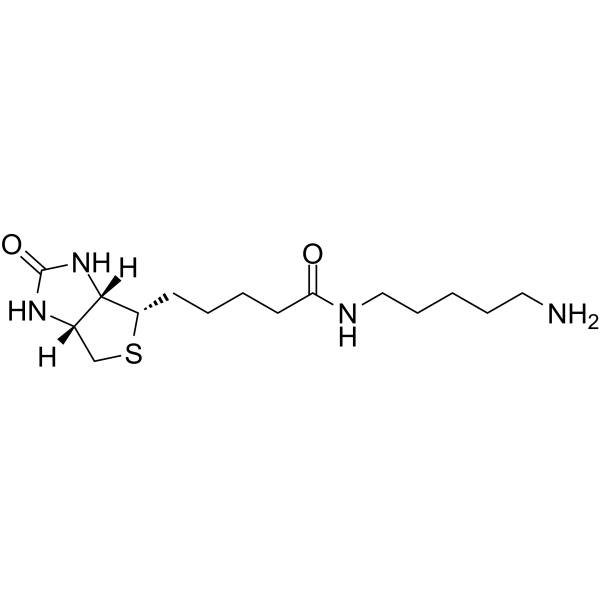
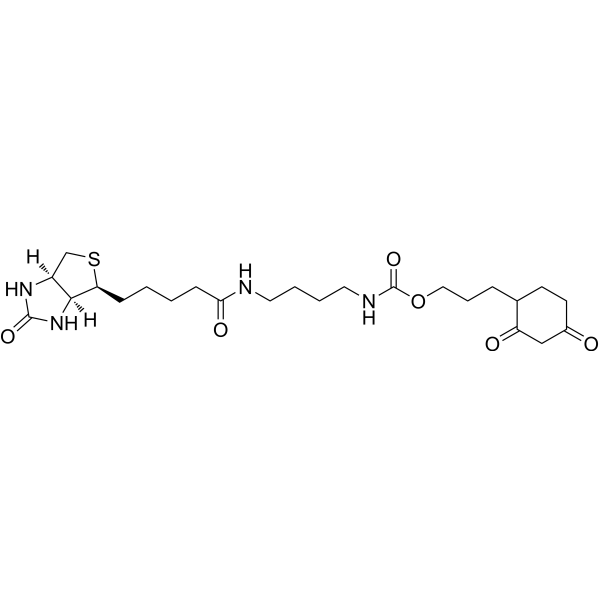
5-(Biotinamido)pentylamine is an amine donor substrate for transglutaminase. 5-(Biotinamido)pentylamine can be used as a biotin-labeled probe to specifically participate in the calcium-dependent reaction catalyzed by TG, bind to the γ-carboxamide group of the glutamine residue in the protein, introduce the biotin tag into the target protein, and form a biotinylated protein product. 5-(Biotinamido)pentylamine can be used for the labeling, separation, and detection of TG amine receptor protein substrates .
|
-
-
- HY-147168
-
|
|
Biochemical Assay Reagents
|
Others
|
|
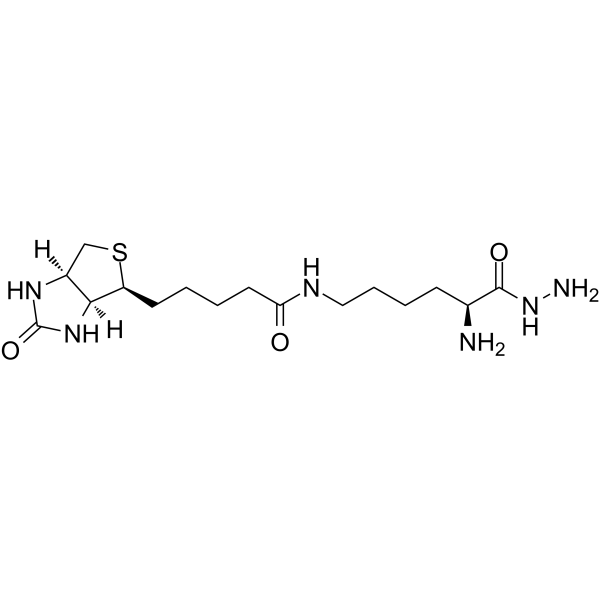
Biocytin hydrazide is a long-chain biotin-containing hydrazide, serving as a biotin-derived active coupling reagent, selective labeling agent and biotinylating reagent. Biocytin hydrazide targets aldehyde, carboxyl, amino and guanidino groups to biotinylate glycoconjugates, K99 lectin, peptides and proteins through its hydrazide moiety, and achieves nonradioactive detection of sialic acid- and galactose-containing glycoconjugates via the avidin–biotin system .
|
-
-
- HY-W040254
-
|
|
Fluorescent Dye
|
Others
|
|
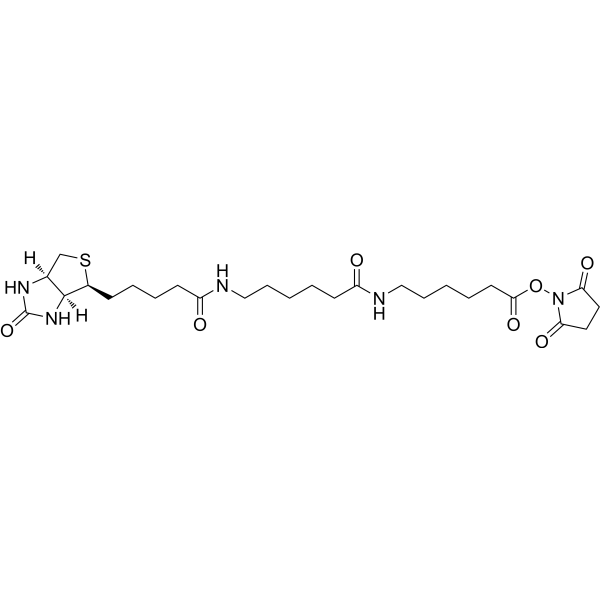
Biotin-LC-LC-NHS is a biotinylation reagent that contains an NHS moiety, which can react efficiently with primary amino (-NH2). Biotin-LC-LC-NHS enables simple and efficient biotinylation of antibodies, proteins, and any other primary amine-containing biomolecules in solution. Biotin-LC-LC-NHS can be used to biotinylate small molecules such as Paclitaxel (HY-B0015) for use in binding site characterization.
|
-
-
- HY-N12931F
-
|
|
Fluorescent Dye
|
Others
Cancer
|
|
Maackia amurensis Lectin (MAA/MAL II)-Biotinylated is a plant lectin modified by biotin. Maackia amurensis Lectin (MAA/MAL II)-Biotinylated has the activity to recognize specific sugar structures, specifically the alpha-2, 3-linked sialic acid (HY-I0400). Maackia amurensis Lectin (MAA/MAL II)-Biotinylated has a very high affinity with avidin or streptavidin and this interaction can be used to fix it to solid surfaces or bind it to other molecules. Maackia amurensis Lectin (MAA/MAL II)-Biotinylated can be used to isolate and purify proteins or other molecules with specific sugar chain structures in affinity chromatography as well as for disease marker discovery and cancer research .
|
-
-
- HY-W437745
-
|
|
Fluorescent Dye
|
Others
|
|
Desthiobiotin-NHS ester is a biotinylated biochemical assay reagent that reacts with amine groups (such as lysine residues) of proteins or other biomolecules to form stable amide bonds. Desthiobiotin-NHS ester can be used as probes for metalloproteins .
|
-
-
- HY-NP0190
-
|
UEA I (biotinylated)
|
Fluorescent Dye
|
Others
|
|
Ulex Europaeus Agglutinin I Biotinylated (UEA I Biotinylated) is a biotinylated lectin that binds to α1,2-fucosylated proteins and cell-surface glycoconjugates containing α-L-fucose. Ulex Europaeus Agglutinin I Biotinylated serves as a histochemical marker for endothelial cells .
|
-
-
- HY-138065
-
|
|
Apoptosis
|
Others
|
|
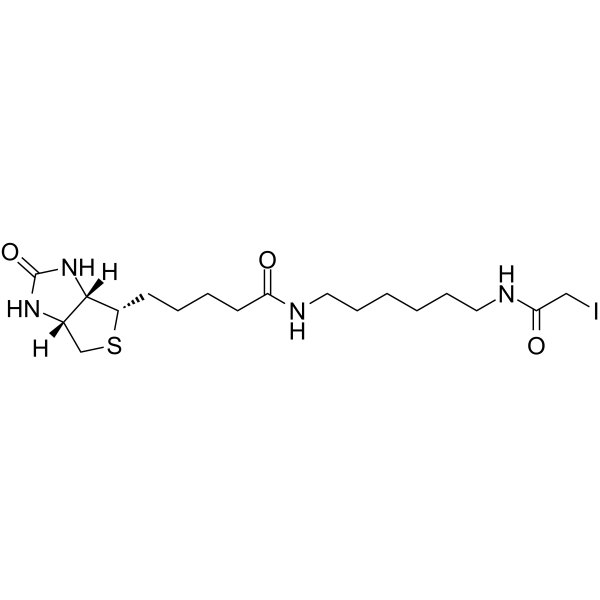
Iodoacetyl-LC-biotin is a biotinylated electrophile probe that can be used to investigate the scope and characteristics of protein covalent binding to subcellular proteomes .
|
-
-
- HY-P4928
-
|
|
Amylin Receptor
|
Metabolic Disease
|
|
Biotinyl-Amylin (mouse, rat) is a biotinylated Amylin (mouse, rat). Amylin (mouse, rat) is a 37-aminoacid pancreatic protein that exerts control over several metabolic events such as glycemia and lacticemia .
|
-
-
- HY-164710
-
|
b-LMB
|
CRM1
|
Others
|
|
Biotinylated leptomycin B is a compound used to quantify nuclear export protein 1 (XPO1) occupancy and is used to study the interaction of SINE compounds with XPO1 and the response of cancer cells to related compounds.
|
-
-
- HY-143678
-
|
|
Biochemical Assay Reagents
|
Others
|
|
Citrulline-specific probe-biotin is a biotinylated probe for detection of citrulline. Citrulline is the hydrolysis product of arginine catalyzed by protein arginine deiminase (PAD). PAD is abnormally activated in many diseases, leading to increased citrulline levels. Citrulline-specific probe-biotin is a biological probe that can identify diseases showing abnormal increases in PAD activity .
|
-
-
- HY-D2170
-
|
|
Fluorescent Dye
|
Others
|
|
AF488 streptavidin is a fluorescently labeled streptavidin. AF488 streptavidin is a streptavidin conjugated to Alexa Fluor 488, with 4 fluorophores per protein molecule, enabling stoichiometric fluorescent labeling of cell surface targets. AF488 streptavidin can form a complex with biotinylated E07 aptamer to stain cells expressing EGFR, and the staining is reversible after treatment with mA9 detoxifying oligonucleotides (Ex/Em = 470/520 nm) .
|
-
-
- HY-P11118A
-
|
CAPture peptide, biotin-CCDC61 (334-366) TFA
|
Biochemical Assay Reagents
|
Others
|
|
Biotinylated CCDC61 peptide (CAPture peptide, biotin-CCDC61 (334-366)) TFA is a biotinylated peptide derived from the centrosomal protein CCDC61. Biotinylated CCDC61 peptide TFA specifically isolates intact centrosomes .
|
-
-
- HY-131933
-
|
|
Fluorescent Dye
|
Others
|
|
DCP-Bio3 is a biotinylated probe that can detect labeled proteins in polyacrylamide gels. DCP-Bio3 can be used in research for the identification of oxidized and modified proteins .
|
-
-
- HY-W591393
-
|
|
Biochemical Assay Reagents
|
Cancer
|
|
Biotin Azide Plus is an oxazolidine reagent that integrates azide-biotin click chemistry and a photocleavable linker arm. Biotin Azide Plus not only reacts with biotin thioether to form stable sulfinimide products, but also enables bioconjugation of proteins and DNA through biotin redox-activated chemical labeling technology. Taking advantage of the streptavidin capture and photo-release properties, Biotin Azide Plus effectively facilitates the isolation of lipid-derived electrophile-protein adducts, thus finding wide application in scientific research related to fields such as SKBR3 cancer .
|
-
-
- HY-NP153
-
|
LTL (biotinylated)
|
Glycosidase
|
Others
|
|
Lotus Tetragonolobus Lectin (LTL) (Biotinylated) is a biotinylated derivative of Lotus Tetragonolobus Lectin (HY-NP070), with both sugar-binding specificity and biotin labeling. Lotus Tetragonolobus Lectin (Biotinylated) is used to detect proteins, glycoproteins and lectins on nitrocellulose membranes .
|
-
-
- HY-E70805
-
|
|
SRPK
|
Cancer
|
|
SRPK2 (serine-arginine protein kinase 2) is a protein kinase that is involved in cell cycle regulation and cell apoptosis. Biotin-SRPK2 Recombinant Human Active Protein Kinase is a recombinant SRPK2 protein that can be used to study SRPK2-related functions, and is biotinylated .
|
-
-
- HY-144013B
-
|
DSPE-mPEG550 ammonium; 1,2-Distearoyl-sn-glycero-3-phosphoethanolamine-N-[methoxy(polyethylene glycol)-550] ammonium
|
Biochemical Assay Reagents
Liposome
|
Others
|
|
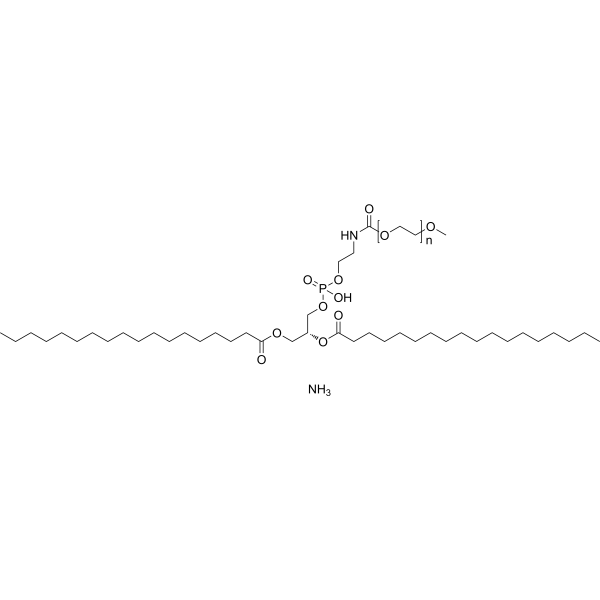
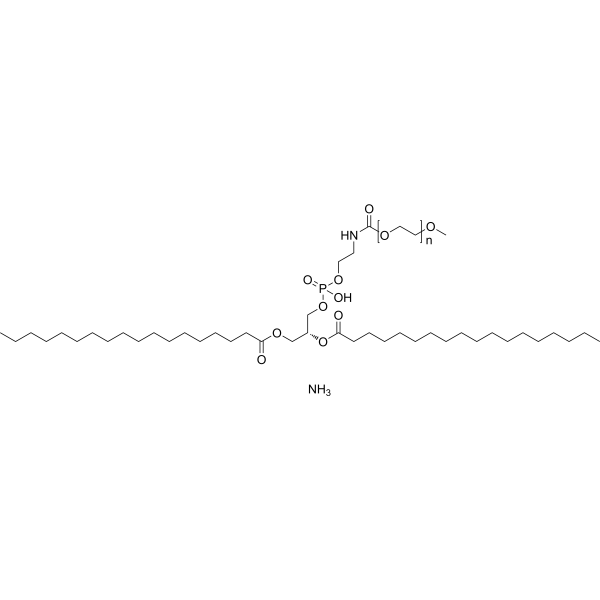
18:0 mPEG550 PE (ammonium) is a PEG lipid functional end group used in the synthesis of liposomes (LPs) for the design of conjugated polymeric nanoparticles. Through biotin modification and carboxyl terminus, lipid nanoparticles (LNPs) further coupling with other biomolecules can be achieved. Functionalized nanoparticles can be used for targeted labeling of specific cellular proteins. With streptavidin as a linker, biotinylated PEG lipid-conjugated polymer nanoparticles are able to bind to biotinylated antibodies on cell surface receptors, yielding the utility of fluorescence-based imaging and sensing.
|
-
-
- HY-144013A
-
|
DSPE-mPEG350 ammonium; 1,2-Distearoyl-sn-glycero-3-phosphoethanolamine-N-[methoxy(polyethylene glycol)-350] ammonium
|
Liposome
|
Others
|
|
18:0 mPEG350 PE (ammonium) is a PEG lipid functional end group used in the synthesis of liposomes (LPs) for the design of conjugated polymer nanoparticles. Through biotin modification and carboxyl terminus, lipid nanoparticles (LNPs) further coupling with other biomolecules can be achieved. Functionalized nanoparticles can be used for targeted labeling of specific cellular proteins. With streptavidin as a linker, biotinylated PEG lipid-conjugated polymer nanoparticles are able to bind to biotinylated antibodies on cell surface receptors, yielding the utility of fluorescence-based imaging and sensing.
|
-
-
- HY-144013D
-
|
DSPE-mPEG1000 ammonium; 1,2-Distearoyl-sn-glycero-3-phosphoethanolamine-N-[methoxy(polyethylene glycol)-1000] ammonium
|
Liposome
|
Others
|
|
18:0 mPEG1000 PE (ammonium) is a PEG lipid functional end group used in the synthesis of liposomes (LPs) for the design of conjugated polymeric nanoparticles. Through biotin modification and carboxyl terminus, lipid nanoparticles (LNPs) further coupling with other biomolecules can be achieved. Functionalized nanoparticles can be used for targeted labeling of specific cellular proteins. With streptavidin as a linker, biotinylated PEG lipid-conjugated polymer nanoparticles are able to bind to biotinylated antibodies on cell surface receptors, yielding the utility of fluorescence-based imaging and sensing.
|
-
-
- HY-144013E
-
|
DSPE-mPEG3000 ammonium; 1,2-Distearoyl-sn-glycero-3-phosphoethanolamine-N-[methoxy(polyethylene glycol)-3000] ammonium
|
Liposome
|
Others
|
|
18:0 mPEG3000 PE (ammonium) is a PEG lipid functional end group used in the synthesis of liposomes (LPs) for the design of conjugated polymeric nanoparticles. Through biotin modification and carboxyl terminus, lipid nanoparticles (LNPs) further coupling with other biomolecules can be achieved. Functionalized nanoparticles can be used for targeted labeling of specific cellular proteins. With streptavidin as a linker, biotinylated PEG lipid-conjugated polymer nanoparticles are able to bind to biotinylated antibodies on cell surface receptors, yielding the utility of fluorescence-based imaging and sensing.
|
-
-
- HY-144013C
-
|
DSPE-mPEG750 ammonium; 1,2-Distearoyl-sn-glycero-3-phosphoethanolamine-N-[methoxy(polyethylene glycol)-750] ammonium
|
Biochemical Assay Reagents
Liposome
|
Others
|
|
18:0 mPEG750 PE (ammonium) is a PEG lipid functional end group used in the synthesis of liposomes (LPs) for the design of conjugated polymeric nanoparticles. Through biotin modification and carboxyl terminus, lipid nanoparticles (LNPs) further coupling with other biomolecules can be achieved. Functionalized nanoparticles can be used for targeted labeling of specific cellular proteins. With streptavidin as a linker, biotinylated PEG lipid-conjugated polymer nanoparticles are able to bind to biotinylated antibodies on cell surface receptors, yielding the utility of fluorescence-based imaging and sensing.
|
-
-
- HY-155934
-
|
DOPE-PEG5000 ammonium; 1,2-Dioleoyl-sn-glycero-3-phosphoethanolamine-N-[methoxy(polyethylene glycol)-5000] ammonium
|
Liposome
|
Others
|
|
18:1 PEG5000 PE ammonium (DOPE-PEG5000 ammonium) is a PEG lipid functional end group used in the synthesis of liposomes (LPs) for the design of conjugated polymer nanoparticles. Through biotin modification and carboxyl terminus, lipid nanoparticles (LNPs) further coupling with other biomolecules can be achieved. Functionalized nanoparticles can be used for targeted labeling of specific cellular proteins. With streptavidin as a linker, biotinylated PEG lipid-conjugated polymer nanoparticles are able to bind to biotinylated antibodies on cell surface receptors, yielding the utility of fluorescence-based imaging and sensing.
|
-
-
- HY-155926
-
|
14:0 PEG750 PE ammonium; 1,2-Dimyristoyl-sn-glycero-3-phosphoethanolamine-N-[methoxy(polyethylene glycol)-750] ammonium
|
Liposome
|
Others
|
|
DMPE-PEG750 ammonium (14:0 PEG750 PE ammonium) is a PEG lipid functional end group used in the synthesis of liposomes (LPs) for the design of conjugated polymeric nanoparticles. Through biotin modification and carboxyl terminus, lipid nanoparticles (LNPs) further coupling with other biomolecules can be achieved. Functionalized nanoparticles can be used for targeted labeling of specific cellular proteins. With streptavidin as a linker, biotinylated PEG lipid-conjugated polymer nanoparticles are able to bind to biotinylated antibodies on cell surface receptors, yielding the utility of fluorescence-based imaging and sensing.
|
-
-
- HY-155924
-
|
14:0 PEG350 PE ammonium; 1,2-Dimyristoyl-sn-glycero-3-phosphoethanolamine-N-[methoxy(polyethylene glycol)-350] ammonium
|
Liposome
|
Others
|
|
DMPE-PEG350 ammonium (14:0 PEG350 PE ammonium) is a PEG lipid functional end group used in the synthesis of liposomes (LPs) for the design of conjugated polymer nanoparticles. Through biotin modification and carboxyl terminus, lipid nanoparticles (LNPs) further coupling with other biomolecules can be achieved. Functionalized nanoparticles can be used for targeted labeling of specific cellular proteins. With streptavidin as a linker, biotinylated PEG lipid-conjugated polymer nanoparticles are able to bind to biotinylated antibodies on cell surface receptors, yielding the utility of fluorescence-based imaging and sensing.
|
-
-
- HY-155927
-
|
14:0 PEG1000 PE ammonium; 1,2-Dimyristoyl-sn-glycero-3-phosphoethanolamine-N-[methoxy(polyethylene glycol)-1000] ammonium
|
Liposome
|
Others
|
|
DMPE-PEG1000 ammonium (14:0 PEG1000 PE ammonium) is a PEG lipid functional end group used in the synthesis of liposomes (LPs) for the design of conjugated polymer nanoparticles. Through biotin modification and carboxyl terminus, lipid nanoparticles (LNPs) further coupling with other biomolecules can be achieved. Functionalized nanoparticles can be used for targeted labeling of specific cellular proteins. With streptavidin as a linker, biotinylated PEG lipid-conjugated polymer nanoparticles are able to bind to biotinylated antibodies on cell surface receptors, yielding the utility of fluorescence-based imaging and sensing.
|
-
-
- HY-155925
-
|
14:0 PEG550 PE ammonium; 1,2-Dimyristoyl-sn-glycero-3-phosphoethanolamine-N-[methoxy(polyethylene glycol)-550] ammonium
|
Liposome
|
Others
|
|
DMPE-PEG550 ammonium (14:0 PEG550 PE ammonium) is a PEG lipid functional end group used in the synthesis of liposomes (LPs) for the design of conjugated polymeric nanoparticles. Through biotin modification and carboxyl terminus, lipid nanoparticles (LNPs) further coupling with other biomolecules can be achieved. Functionalized nanoparticles can be used for targeted labeling of specific cellular proteins. With streptavidin as a linker, biotinylated PEG lipid-conjugated polymer nanoparticles are able to bind to biotinylated antibodies on cell surface receptors, yielding the utility of fluorescence-based imaging and sensing.
|
-
-
- HY-155929
-
|
14:0 PEG5000 PE ammonium; 1,2-Dimyristoyl-sn-glycero-3-phosphoethanolamine-N-[methoxy(polyethylene glycol)-5000] ammonium
|
Liposome
|
Others
|
|
DMPE-PEG5000 ammonium (14:0 PEG5000 PE ammonium) is a PEG lipid functional end group used in the synthesis of liposomes (LPs) for the design of conjugated polymer nanoparticles. Through biotin modification and carboxyl terminus, lipid nanoparticles (LNPs) further coupling with other biomolecules can be achieved. Functionalized nanoparticles can be used for targeted labeling of specific cellular proteins. With streptavidin as a linker, biotinylated PEG lipid-conjugated polymer nanoparticles are able to bind to biotinylated antibodies on cell surface receptors, yielding the utility of fluorescence-based imaging and sensing.
|
-
-
- HY-155928
-
|
14:0 PEG3000 PE ammonium; 1,2-Dimyristoyl-sn-glycero-3-phosphoethanolamine-N-[methoxy(polyethylene glycol)-3000] ammonium
|
Liposome
|
Others
|
|
DMPE-PEG3000 ammonium (14:0 PEG3000 PE ammonium) is a PEG lipid functional end group used in the synthesis of liposomes (LPs) for the design of conjugated polymer nanoparticles. Through biotin modification and carboxyl terminus, lipid nanoparticles (LNPs) further coupling with other biomolecules can be achieved. Functionalized nanoparticles can be used for targeted labeling of specific cellular proteins. With streptavidin as a linker, biotinylated PEG lipid-conjugated polymer nanoparticles are able to bind to biotinylated antibodies on cell surface receptors, yielding the utility of fluorescence-based imaging and sensing.
|
-
-
- HY-175008
-
|
|
HSP
|
Others
|
|
Hsp90β-IN-1 (Compound 7b) is a selective biotinylated inhibitor of heat shock protein 90β (HSP90β) with an IC50 = 0.33 μM .
|
-
-
- HY-144012B
-
|
16:0 PEG550 PE; 1,2-Dipalmitoyl-sn-glycero-3-phosphoethanolamine-N-[methoxy(polyethylene glycol)-550] ammonium
|
Biochemical Assay Reagents
Liposome
|
Others
|
|
DPPE-PEG550 is a PEG lipid functional end group used in the synthesis of liposomes (LPs) for the design of conjugated polymer nanoparticles. Through biotin modification and carboxyl terminus, lipid nanoparticles (LNPs) further coupling with other biomolecules can be achieved. Functionalized nanoparticles can be used for targeted labeling of specific cellular proteins. With streptavidin as a linker, biotinylated PEG lipid-conjugated polymer nanoparticles are able to bind to biotinylated antibodies on cell surface receptors, yielding the utility of fluorescence-based imaging and sensing.
|
-
-
- HY-144012C
-
|
16:0 PEG750 PE; 1,2-Dipalmitoyl-sn-glycero-3-phosphoethanolamine-N-[methoxy(polyethylene glycol)-750] ammonium
|
Biochemical Assay Reagents
Liposome
|
Others
|
|
DPPE-PEG750 is a PEG lipid functional end group used in the synthesis of liposomes (LPs) for the design of conjugated polymer nanoparticles. Through biotin modification and carboxyl terminus, lipid nanoparticles (LNPs) further coupling with other biomolecules can be achieved. Functionalized nanoparticles can be used for targeted labeling of specific cellular proteins. With streptavidin as a linker, biotinylated PEG lipid-conjugated polymer nanoparticles are able to bind to biotinylated antibodies on cell surface receptors, yielding the utility of fluorescence-based imaging and sensing.
|
-
-
- HY-144012E
-
|
16:0 PEG3000 PE; 1,2-Dipalmitoyl-sn-glycero-3-phosphoethanolamine-N-[methoxy(polyethylene glycol)-3000] ammonium
|
Liposome
|
Others
|
|
DPPE-PEG3000 is a PEG lipid functional end group used in the synthesis of liposomes (LPs) for the design of conjugated polymer nanoparticles. Through biotin modification and carboxyl terminus, lipid nanoparticles (LNPs) further coupling with other biomolecules can be achieved. Functionalized nanoparticles can be used for targeted labeling of specific cellular proteins. With streptavidin as a linker, biotinylated PEG lipid-conjugated polymer nanoparticles are able to bind to biotinylated antibodies on cell surface receptors, yielding the utility of fluorescence-based imaging and sensing.
|
-
-
- HY-144012D
-
|
16:0 PEG1000 PE; 1,2-Dipalmitoyl-sn-glycero-3-phosphoethanolamine-N-[methoxy(polyethylene glycol)-1000] ammonium
|
Liposome
|
Others
|
|
DPPE-PEG1000 is a PEG lipid functional end group used in the synthesis of liposomes (LPs) for the design of conjugated polymer nanoparticles. Through biotin modification and carboxyl terminus, lipid nanoparticles (LNPs) further coupling with other biomolecules can be achieved. Functionalized nanoparticles can be used for targeted labeling of specific cellular proteins. With streptavidin as a linker, biotinylated PEG lipid-conjugated polymer nanoparticles are able to bind to biotinylated antibodies on cell surface receptors, yielding the utility of fluorescence-based imaging and sensing.
|
-
-
- HY-E70793
-
|
|
AMPK
|
Cancer
|
|
AMPK is an αβγ heterotrimeric serinethreonine kinase activated by decreasing concentrations of adenosine triphosphate (ATP) and increasing AMP concentrations. Biotin-AMPKα1β1γ1 Recombinant Human Active Protein Kinase is obtained by co-expressing AMPKα1, AMPKβ1, and AMPKγ1 proteins and is biotinylated .
|
-
-
- HY-155931
-
|
DOPE-PEG550 ammonium; 1,2-Dioleoyl-sn-glycero-3-phosphoethanolamine-N-[methoxy(polyethylene glycol)-550] ammonium
|
Liposome
|
Others
|
|
18:1 PEG550 PE ammonium (DOPE-PEG550 ammonium) is a PEG lipid functional end group used in the synthesis of liposomes (LPs) for the design of conjugated polymer nanoparticles. Through biotin modification and carboxyl terminus, lipid nanoparticles (LNPs) further coupling with other biomolecules can be achieved. Functionalized nanoparticles can be used for targeted labeling of specific cellular proteins. With streptavidin as a linker, biotinylated PEG lipid-conjugated polymer nanoparticles are able to bind to biotinylated antibodies on cell surface receptors, yielding the utility of fluorescence-based imaging and sensing.
|
-
-
- HY-155933
-
|
DOPE-PEG3000 ammonium; 1,2-Dioleoyl-sn-glycero-3-phosphoethanolamine-N-[methoxy(polyethylene glycol)-3000] ammonium
|
Liposome
|
Others
|
|
18:1 PEG3000 PE ammonium (DOPE-PEG3000 ammonium) is a PEG lipid functional end group used in the synthesis of liposomes (LPs) for the design of conjugated polymer nanoparticles. Through biotin modification and carboxyl terminus, lipid nanoparticles (LNPs) further coupling with other biomolecules can be achieved. Functionalized nanoparticles can be used for targeted labeling of specific cellular proteins. With streptavidin as a linker, biotinylated PEG lipid-conjugated polymer nanoparticles are able to bind to biotinylated antibodies on cell surface receptors, yielding the utility of fluorescence-based imaging and sensing.
|
-
-
- HY-155932
-
|
DOPE-PEG1000 ammonium; 1,2-Dioleoyl-sn-glycero-3-phosphoethanolamine-N-[methoxy(polyethylene glycol)-1000] ammonium
|
Liposome
|
Others
|
|
18:1 PEG1000 PE ammonium (DOPE-PEG1000 ammonium) is a PEG lipid functional end group used in the synthesis of liposomes (LPs) for the design of conjugated polymer nanoparticles. Through biotin modification and carboxyl terminus, lipid nanoparticles (LNPs) further coupling with other biomolecules can be achieved. Functionalized nanoparticles can be used for targeted labeling of specific cellular proteins. With streptavidin as a linker, biotinylated PEG lipid-conjugated polymer nanoparticles are able to bind to biotinylated antibodies on cell surface receptors, yielding the utility of fluorescence-based imaging and sensing.
|
-
-
- HY-155930
-
|
DOPE-PEG350 ammonium; 1,2-Dioleoyl-sn-glycero-3-phosphoethanolamine-N-[methoxy(polyethylene glycol)-350] ammonium
|
Liposome
|
Others
|
|
18:1 PEG350 PE ammonium (DOPE-PEG350 ammonium) is a PEG lipid functional end group used in the synthesis of liposomes (LPs) for the design of conjugated polymer nanoparticles. Through biotin modification and carboxyl terminus, lipid nanoparticles (LNPs) further coupling with other biomolecules can be achieved. Functionalized nanoparticles can be used for targeted labeling of specific cellular proteins. With streptavidin as a linker, biotinylated PEG lipid-conjugated polymer nanoparticles are able to bind to biotinylated antibodies on cell surface receptors, yielding the utility of fluorescence-based imaging and sensing.
|
-
-
- HY-P4928A
-
|
|
Amylin Receptor
|
Metabolic Disease
|
|
Biotinyl-Amylin (mouse, rat) TFA is a biotinylated Amylin (mouse, rat). Amylin (mouse, rat) is a 37-aminoacid pancreatic protein that exerts control over several metabolic events such as glycemia and lacticemia .
|
-
-
- HY-P11118
-
|
CAPture peptide, biotin-CCDC61 (334-366)
|
Biochemical Assay Reagents
|
Others
|
|
Biotinylated CCDC61 peptide (CAPture peptide, biotin-CCDC61 (334-366)) is a biotinylated peptide derived from the centrosomal protein CCDC61. Biotinylated CCDC61 peptide specifically isolates intact centrosomes .
|
-
-
- HY-E70798
-
|
|
ERK
|
Cancer
|
|
ERK2 is a serine/threonine-specific protein kinase capable of phosphorylating multiple protein substrates within a cell. Biotin-ERK2 Recombinant Human Active Protein Kinase is obtained by expressing ERK2 proteins and is biotinylated .
|
-
-
- HY-E70806
-
|
|
WNK Kinase
|
Cancer
|
|
WNK1 is a WNK kinase that is involved in embryonic angiogenesis and tumor-induced angiogenesis. Biotin-WNK1 Recombinant Human Active Protein Kinase is obtained by expressing WNK1 proteins and is biotinylated .
|
-
-
- HY-E70804
-
|
|
SRPK
|
Cancer
|
|
SRPK1 (serine-arginine protein kinase 1) is a protein kinase that specifically phosphorylates proteins containing serine-arginine-rich domains. Biotin-SRPK1 Recombinant Human Active Protein Kinase is a recombinant SRPK1 protein that can be used to study SRPK1-related functions, and is biotinylated .
|
-
-
- HY-P2551
-
|
|
Amyloid-β
|
Neurological Disease
|
|
Biotin-β-Amyloid (17-40) is a N-terminal-labelled biotinylated amyloid-β(1-40) peptide. β-Amyloid (17-40) is a 24-residue fragment of the Aβ protein via post-translational processing of amyloid precursor protein (APP) .
|
-
-
- HY-E70800
-
|
|
Mixed Lineage Kinase
|
Cancer
|
|
MLK2 is a kinase for phosphorylation of H3 at threonine 3 and is associated with the osmotic stress response. MLK2 is involved in multiple signaling pathways in the developmental process. Biotin-MLK2 Recombinant Human Active Protein Kinase is obtained by expressing MLK2 proteins and is biotinylated .
|
-
-
- HY-E70799
-
|
|
Mixed Lineage Kinase
|
Cancer
|
|
MLK1 is a kinase for phosphorylation of H3 at threonine 3 and is associated with the osmotic stress response. MLK1 is involved in multiple signaling pathways in the developmental process. Biotin-MLK1 Recombinant Human Active Protein Kinase is obtained by expressing MLK1 proteins and is biotinylated .
|
-
-
- HY-E70791
-
|
|
Akt
|
Cancer
|
|
AKT is the oncogenic protein kinase that regulates essential cellular functions such as migration, proliferation, differentiation, apoptosis, and metabolism. Mammalian cells are characterized by the expression of three different Akt isoforms, Akt1, Akt2, and Akt3. Biotin-AKT2 Recombinant Human Active Protein Kinase is obtained by expressing AKT2 proteins and is biotinylated .
|
-
-
- HY-E70790
-
|
|
Akt
|
Cancer
|
|
AKT is the oncogenic protein kinase that regulates essential cellular functions such as migration, proliferation, differentiation, apoptosis, and metabolism. Mammalian cells are characterized by the expression of three different Akt isoforms, Akt1, Akt2, and Akt3. Biotin-AKT1 Recombinant Human Active Protein Kinase is obtained by expressing AKT1 proteins and is biotinylated .
|
-
-
- HY-P3860
-
|
|
Amyloid-β
|
Neurological Disease
|
|
Biotinyl-Amyloid β-Protein (1-42) ammonium is a biotinylated Amyloid β-Protein (1-42) (HY-P1363). Biotinyl-Amyloid β-Protein (1-42) ammonium can be used for the research of Aβ1-42 converts to Aβ1-40 in brain .
|
-
-
- HY-E70801
-
|
|
Hippo (MST)
|
Cancer
|
|
MST2 is a class of serine/threonine protein kinases, which plays the central roles in the Hippo pathway controlling the cell proliferation, differentiation, and apoptosis during development. Biotin-MST2 Recombinant Human Active Protein Kinase is a recombinant MST2 protein that can be used to study MST2-related functions, and is biotinylated .
|
-
- HY-E70803
-
|
|
PDGFR
|
Cancer
|
|
PDGF-BB/PDGFRβ signaling plays an important role during vascularization by mediating pericyte recruitment to the vasculature, promoting the integrity and function of vessels. Biotin-PDGFRβ Recombinant Human Active Protein Kinase is a recombinant PDGFRβ protein that can be used to study PDGFRβ-related functions, and is biotinylated .
|
-
- HY-E70796
-
|
|
AMPK
|
Cancer
|
|
AMPK is an αβγ heterotrimeric serinethreonine kinase activated by decreasing concentrations of adenosine triphosphate (ATP) and increasing AMP concentrations. Biotin-AMPKα2β1γ1 Recombinant Human Active Protein Kinase is obtained by co-expressing AMPKα2, AMPKβ1, and AMPKγ1 proteins and is biotinylated .
|
-
- HY-E70795
-
|
|
AMPK
|
Cancer
|
|
AMPK is an αβγ heterotrimeric serinethreonine kinase activated by decreasing concentrations of adenosine triphosphate (ATP) and increasing AMP concentrations. Biotin-AMPKα1β2γ1 Recombinant Human Active Protein Kinase is obtained by co-expressing AMPKα1, AMPKβ2, and AMPKγ1 proteins and is biotinylated .
|
-
- HY-E70797
-
|
|
CaMK
|
Cardiovascular Disease
|
|
CAMK2 is involved in the regulation of cellular processes in a variety of tissues. One member, CAMK2δ CAMK2D is involved in vasopressin signaling in the renal collecting duct, which controls water excretion through regulation of the water channel aquaporin-2 (AQP2). Biotin-CaMK2δ CAMK2D Recombinant Human Active Protein Kinase is obtained by expressing CaMK2δ CAMK2D proteins and is biotinylated .
|
-
- HY-155817
-
|
|
Histone Methyltransferase
|
Others
|
|
UNC7096 (compound 53) is a biotinylated affinity reagent. The phenyl ring of UNC7096 replaces the pyrimidine ring in UNC6934 (HY-145103) and introduces biotin at the para position of the phenyl ring, which has a high binding affinity to the NSD2-PWWP1 domain (Kd=46 nM). UNC7096 blocks the interaction between NSD2-PWWP1 and nucleosomal H3K36me2 by occupying the methyl-lysine binding pocket of NSD2-PWWP1. This binding is achieved by covalent binding through the formation of hydrogen bonds and a specific aromatic cage structure. UNC7096 can be used to capture proteins that interact with the NSD2-PWWP1 domain to further analyze the biological significance of these interactions .
|
-
- HY-E71034
-
|
|
Thrombin
|
Others
|
|
Biotinylated-recombinant human thrombin (EC 3.4.21.5) enables on-column cleavage of fusion proteins with a thrombin cleavage site.
|
-
- HY-E70807
-
|
|
WNK Kinase
|
Neurological Disease
|
|
WNK3 is a WNK kinase that associates with and activate SPAK/OSR1 by phosphorylation of its T-loop at Thr233 and Thr185. Biotin-WNK3 Recombinant Human Active Protein Kinase is obtained by expressing WNK3 proteins and is biotinylated .
|
-
- HY-E70792
-
|
|
Akt
|
Cancer
|
|
AKT is the oncogenic protein kinase that regulates essential cellular functions such as migration, proliferation, differentiation, apoptosis, and metabolism. Mammalian cells are characterized by the expression of three different Akt isoforms, Akt1, Akt2, and Akt3. Biotin-AKT3 Recombinant Human Active Protein Kinase is obtained by expressing AKT3 proteins and is biotinylated .
|
-
- HY-E70794
-
|
|
AMPK
|
Cancer
|
|
AMPK is an αβγ heterotrimeric serinethreonine kinase activated by decreasing concentrations of adenosine triphosphate (ATP) and increasing AMP concentrations. Biotin-AMPKα1β1γ2 Recombinant Human Active Protein Kinase is obtained by co-expressing AMPKα1, AMPKβ1, and AMPKγ2 proteins and is biotinylated .
|
-
- HY-W130607
-
|
|
Biochemical Assay Reagents
|
Others
|
|
Biotinyl-8-amino-3,6-dioxaoctanoic acid is a biotinylating reagent linked with a PEG chain for improved water solubility. Biotin is an affinity ligand and it is used in biochemical applications such as pull-down assays or for ligating with streptavidin proteins. The carboxylic group can react with amine-containing molecules in the presence of activators such as HATU.
|
-
- HY-E70802
-
|
|
AMPK
|
Cancer
|
|
NUAK2 is a member of the SNF1/AMP kinase (AMPK) family (serine/threonine kinases) that is regulated by the putative tumor suppressor LKB1 (20-23) and also by death receptor signaling through NF-κB. Biotin-Nuak2 Recombinant Human Active Protein Kinase is a recombinant Nuak2 protein that can be used to study Nuak2-related functions, and is biotinylated .
|
-
- HY-136263
-
|
|
PARP
|
Cancer
|
|
Biotin-NAD + is a PARylation donor and also a substrate of poly (ADP-ribose) polymerase-1 (PARP1). Under the mediation of PARP1, Biotin-NAD + undergoes poly (ADP-ribosyl) ation to generate biotinylated poly (ADP-ribose) polymers. Biotin-NAD + can be used for pull-down assays of PARylated proteins in renal epithelial cells. Biotin-NAD + is applicable to cancer-related research .
|
-
| Cat. No. |
Product Name |
Type |
-
- HY-N12931F
-
|
|
Fluorescent Dyes
|
|
Maackia amurensis Lectin (MAA/MAL II)-Biotinylated is a plant lectin modified by biotin. Maackia amurensis Lectin (MAA/MAL II)-Biotinylated has the activity to recognize specific sugar structures, specifically the alpha-2, 3-linked sialic acid (HY-I0400). Maackia amurensis Lectin (MAA/MAL II)-Biotinylated has a very high affinity with avidin or streptavidin and this interaction can be used to fix it to solid surfaces or bind it to other molecules. Maackia amurensis Lectin (MAA/MAL II)-Biotinylated can be used to isolate and purify proteins or other molecules with specific sugar chain structures in affinity chromatography as well as for disease marker discovery and cancer research .
|
-
- HY-D2170
-
|
|
Fluorescent Dyes
|
|
AF488 streptavidin is a fluorescently labeled streptavidin. AF488 streptavidin is a streptavidin conjugated to Alexa Fluor 488, with 4 fluorophores per protein molecule, enabling stoichiometric fluorescent labeling of cell surface targets. AF488 streptavidin can form a complex with biotinylated E07 aptamer to stain cells expressing EGFR, and the staining is reversible after treatment with mA9 detoxifying oligonucleotides (Ex/Em = 470/520 nm) .
|
-
- HY-W591393
-
|
|
Fluorescent Dyes
|
|
Biotin Azide Plus is an oxazolidine reagent that integrates azide-biotin click chemistry and a photocleavable linker arm. Biotin Azide Plus not only reacts with biotin thioether to form stable sulfinimide products, but also enables bioconjugation of proteins and DNA through biotin redox-activated chemical labeling technology. Taking advantage of the streptavidin capture and photo-release properties, Biotin Azide Plus effectively facilitates the isolation of lipid-derived electrophile-protein adducts, thus finding wide application in scientific research related to fields such as SKBR3 cancer .
|
| Cat. No. |
Product Name |
Type |
-
- HY-W437745
-
|
|
Biochemical Assay Reagents
|
|
Desthiobiotin-NHS ester is a biotinylated biochemical assay reagent that reacts with amine groups (such as lysine residues) of proteins or other biomolecules to form stable amide bonds. Desthiobiotin-NHS ester can be used as probes for metalloproteins .
|
-
- HY-NP0190
-
|
UEA I (biotinylated)
|
Biochemical Assay Reagents
|
|
Ulex Europaeus Agglutinin I Biotinylated (UEA I Biotinylated) is a biotinylated lectin that binds to α1,2-fucosylated proteins and cell-surface glycoconjugates containing α-L-fucose. Ulex Europaeus Agglutinin I Biotinylated serves as a histochemical marker for endothelial cells .
|
-
- HY-NP153
-
|
LTL (biotinylated)
|
Biochemical Assay Reagents
|
|
Lotus Tetragonolobus Lectin (LTL) (Biotinylated) is a biotinylated derivative of Lotus Tetragonolobus Lectin (HY-NP070), with both sugar-binding specificity and biotin labeling. Lotus Tetragonolobus Lectin (Biotinylated) is used to detect proteins, glycoproteins and lectins on nitrocellulose membranes .
|
-
- HY-144013B
-
|
DSPE-mPEG550 ammonium; 1,2-Distearoyl-sn-glycero-3-phosphoethanolamine-N-[methoxy(polyethylene glycol)-550] ammonium
|
Biochemical Assay Reagents
|
|
18:0 mPEG550 PE (ammonium) is a PEG lipid functional end group used in the synthesis of liposomes (LPs) for the design of conjugated polymeric nanoparticles. Through biotin modification and carboxyl terminus, lipid nanoparticles (LNPs) further coupling with other biomolecules can be achieved. Functionalized nanoparticles can be used for targeted labeling of specific cellular proteins. With streptavidin as a linker, biotinylated PEG lipid-conjugated polymer nanoparticles are able to bind to biotinylated antibodies on cell surface receptors, yielding the utility of fluorescence-based imaging and sensing.
|
-
- HY-144013A
-
|
DSPE-mPEG350 ammonium; 1,2-Distearoyl-sn-glycero-3-phosphoethanolamine-N-[methoxy(polyethylene glycol)-350] ammonium
|
Biochemical Assay Reagents
|
|
18:0 mPEG350 PE (ammonium) is a PEG lipid functional end group used in the synthesis of liposomes (LPs) for the design of conjugated polymer nanoparticles. Through biotin modification and carboxyl terminus, lipid nanoparticles (LNPs) further coupling with other biomolecules can be achieved. Functionalized nanoparticles can be used for targeted labeling of specific cellular proteins. With streptavidin as a linker, biotinylated PEG lipid-conjugated polymer nanoparticles are able to bind to biotinylated antibodies on cell surface receptors, yielding the utility of fluorescence-based imaging and sensing.
|
-
- HY-144013D
-
|
DSPE-mPEG1000 ammonium; 1,2-Distearoyl-sn-glycero-3-phosphoethanolamine-N-[methoxy(polyethylene glycol)-1000] ammonium
|
Biochemical Assay Reagents
|
|
18:0 mPEG1000 PE (ammonium) is a PEG lipid functional end group used in the synthesis of liposomes (LPs) for the design of conjugated polymeric nanoparticles. Through biotin modification and carboxyl terminus, lipid nanoparticles (LNPs) further coupling with other biomolecules can be achieved. Functionalized nanoparticles can be used for targeted labeling of specific cellular proteins. With streptavidin as a linker, biotinylated PEG lipid-conjugated polymer nanoparticles are able to bind to biotinylated antibodies on cell surface receptors, yielding the utility of fluorescence-based imaging and sensing.
|
-
- HY-144013E
-
|
DSPE-mPEG3000 ammonium; 1,2-Distearoyl-sn-glycero-3-phosphoethanolamine-N-[methoxy(polyethylene glycol)-3000] ammonium
|
Biochemical Assay Reagents
|
|
18:0 mPEG3000 PE (ammonium) is a PEG lipid functional end group used in the synthesis of liposomes (LPs) for the design of conjugated polymeric nanoparticles. Through biotin modification and carboxyl terminus, lipid nanoparticles (LNPs) further coupling with other biomolecules can be achieved. Functionalized nanoparticles can be used for targeted labeling of specific cellular proteins. With streptavidin as a linker, biotinylated PEG lipid-conjugated polymer nanoparticles are able to bind to biotinylated antibodies on cell surface receptors, yielding the utility of fluorescence-based imaging and sensing.
|
-
- HY-144013C
-
|
DSPE-mPEG750 ammonium; 1,2-Distearoyl-sn-glycero-3-phosphoethanolamine-N-[methoxy(polyethylene glycol)-750] ammonium
|
Biochemical Assay Reagents
|
|
18:0 mPEG750 PE (ammonium) is a PEG lipid functional end group used in the synthesis of liposomes (LPs) for the design of conjugated polymeric nanoparticles. Through biotin modification and carboxyl terminus, lipid nanoparticles (LNPs) further coupling with other biomolecules can be achieved. Functionalized nanoparticles can be used for targeted labeling of specific cellular proteins. With streptavidin as a linker, biotinylated PEG lipid-conjugated polymer nanoparticles are able to bind to biotinylated antibodies on cell surface receptors, yielding the utility of fluorescence-based imaging and sensing.
|
-
- HY-155934
-
|
DOPE-PEG5000 ammonium; 1,2-Dioleoyl-sn-glycero-3-phosphoethanolamine-N-[methoxy(polyethylene glycol)-5000] ammonium
|
Biochemical Assay Reagents
|
|
18:1 PEG5000 PE ammonium (DOPE-PEG5000 ammonium) is a PEG lipid functional end group used in the synthesis of liposomes (LPs) for the design of conjugated polymer nanoparticles. Through biotin modification and carboxyl terminus, lipid nanoparticles (LNPs) further coupling with other biomolecules can be achieved. Functionalized nanoparticles can be used for targeted labeling of specific cellular proteins. With streptavidin as a linker, biotinylated PEG lipid-conjugated polymer nanoparticles are able to bind to biotinylated antibodies on cell surface receptors, yielding the utility of fluorescence-based imaging and sensing.
|
-
- HY-155926
-
|
14:0 PEG750 PE ammonium; 1,2-Dimyristoyl-sn-glycero-3-phosphoethanolamine-N-[methoxy(polyethylene glycol)-750] ammonium
|
Biochemical Assay Reagents
|
|
DMPE-PEG750 ammonium (14:0 PEG750 PE ammonium) is a PEG lipid functional end group used in the synthesis of liposomes (LPs) for the design of conjugated polymeric nanoparticles. Through biotin modification and carboxyl terminus, lipid nanoparticles (LNPs) further coupling with other biomolecules can be achieved. Functionalized nanoparticles can be used for targeted labeling of specific cellular proteins. With streptavidin as a linker, biotinylated PEG lipid-conjugated polymer nanoparticles are able to bind to biotinylated antibodies on cell surface receptors, yielding the utility of fluorescence-based imaging and sensing.
|
-
- HY-155924
-
|
14:0 PEG350 PE ammonium; 1,2-Dimyristoyl-sn-glycero-3-phosphoethanolamine-N-[methoxy(polyethylene glycol)-350] ammonium
|
Biochemical Assay Reagents
|
|
DMPE-PEG350 ammonium (14:0 PEG350 PE ammonium) is a PEG lipid functional end group used in the synthesis of liposomes (LPs) for the design of conjugated polymer nanoparticles. Through biotin modification and carboxyl terminus, lipid nanoparticles (LNPs) further coupling with other biomolecules can be achieved. Functionalized nanoparticles can be used for targeted labeling of specific cellular proteins. With streptavidin as a linker, biotinylated PEG lipid-conjugated polymer nanoparticles are able to bind to biotinylated antibodies on cell surface receptors, yielding the utility of fluorescence-based imaging and sensing.
|
-
- HY-155927
-
|
14:0 PEG1000 PE ammonium; 1,2-Dimyristoyl-sn-glycero-3-phosphoethanolamine-N-[methoxy(polyethylene glycol)-1000] ammonium
|
Biochemical Assay Reagents
|
|
DMPE-PEG1000 ammonium (14:0 PEG1000 PE ammonium) is a PEG lipid functional end group used in the synthesis of liposomes (LPs) for the design of conjugated polymer nanoparticles. Through biotin modification and carboxyl terminus, lipid nanoparticles (LNPs) further coupling with other biomolecules can be achieved. Functionalized nanoparticles can be used for targeted labeling of specific cellular proteins. With streptavidin as a linker, biotinylated PEG lipid-conjugated polymer nanoparticles are able to bind to biotinylated antibodies on cell surface receptors, yielding the utility of fluorescence-based imaging and sensing.
|
-
- HY-155925
-
|
14:0 PEG550 PE ammonium; 1,2-Dimyristoyl-sn-glycero-3-phosphoethanolamine-N-[methoxy(polyethylene glycol)-550] ammonium
|
Biochemical Assay Reagents
|
|
DMPE-PEG550 ammonium (14:0 PEG550 PE ammonium) is a PEG lipid functional end group used in the synthesis of liposomes (LPs) for the design of conjugated polymeric nanoparticles. Through biotin modification and carboxyl terminus, lipid nanoparticles (LNPs) further coupling with other biomolecules can be achieved. Functionalized nanoparticles can be used for targeted labeling of specific cellular proteins. With streptavidin as a linker, biotinylated PEG lipid-conjugated polymer nanoparticles are able to bind to biotinylated antibodies on cell surface receptors, yielding the utility of fluorescence-based imaging and sensing.
|
-
- HY-155929
-
|
14:0 PEG5000 PE ammonium; 1,2-Dimyristoyl-sn-glycero-3-phosphoethanolamine-N-[methoxy(polyethylene glycol)-5000] ammonium
|
Biochemical Assay Reagents
|
|
DMPE-PEG5000 ammonium (14:0 PEG5000 PE ammonium) is a PEG lipid functional end group used in the synthesis of liposomes (LPs) for the design of conjugated polymer nanoparticles. Through biotin modification and carboxyl terminus, lipid nanoparticles (LNPs) further coupling with other biomolecules can be achieved. Functionalized nanoparticles can be used for targeted labeling of specific cellular proteins. With streptavidin as a linker, biotinylated PEG lipid-conjugated polymer nanoparticles are able to bind to biotinylated antibodies on cell surface receptors, yielding the utility of fluorescence-based imaging and sensing.
|
-
- HY-155928
-
|
14:0 PEG3000 PE ammonium; 1,2-Dimyristoyl-sn-glycero-3-phosphoethanolamine-N-[methoxy(polyethylene glycol)-3000] ammonium
|
Biochemical Assay Reagents
|
|
DMPE-PEG3000 ammonium (14:0 PEG3000 PE ammonium) is a PEG lipid functional end group used in the synthesis of liposomes (LPs) for the design of conjugated polymer nanoparticles. Through biotin modification and carboxyl terminus, lipid nanoparticles (LNPs) further coupling with other biomolecules can be achieved. Functionalized nanoparticles can be used for targeted labeling of specific cellular proteins. With streptavidin as a linker, biotinylated PEG lipid-conjugated polymer nanoparticles are able to bind to biotinylated antibodies on cell surface receptors, yielding the utility of fluorescence-based imaging and sensing.
|
-
- HY-144012B
-
|
16:0 PEG550 PE; 1,2-Dipalmitoyl-sn-glycero-3-phosphoethanolamine-N-[methoxy(polyethylene glycol)-550] ammonium
|
Biochemical Assay Reagents
|
|
DPPE-PEG550 is a PEG lipid functional end group used in the synthesis of liposomes (LPs) for the design of conjugated polymer nanoparticles. Through biotin modification and carboxyl terminus, lipid nanoparticles (LNPs) further coupling with other biomolecules can be achieved. Functionalized nanoparticles can be used for targeted labeling of specific cellular proteins. With streptavidin as a linker, biotinylated PEG lipid-conjugated polymer nanoparticles are able to bind to biotinylated antibodies on cell surface receptors, yielding the utility of fluorescence-based imaging and sensing.
|
-
- HY-144012C
-
|
16:0 PEG750 PE; 1,2-Dipalmitoyl-sn-glycero-3-phosphoethanolamine-N-[methoxy(polyethylene glycol)-750] ammonium
|
Biochemical Assay Reagents
|
|
DPPE-PEG750 is a PEG lipid functional end group used in the synthesis of liposomes (LPs) for the design of conjugated polymer nanoparticles. Through biotin modification and carboxyl terminus, lipid nanoparticles (LNPs) further coupling with other biomolecules can be achieved. Functionalized nanoparticles can be used for targeted labeling of specific cellular proteins. With streptavidin as a linker, biotinylated PEG lipid-conjugated polymer nanoparticles are able to bind to biotinylated antibodies on cell surface receptors, yielding the utility of fluorescence-based imaging and sensing.
|
-
- HY-144012E
-
|
16:0 PEG3000 PE; 1,2-Dipalmitoyl-sn-glycero-3-phosphoethanolamine-N-[methoxy(polyethylene glycol)-3000] ammonium
|
Biochemical Assay Reagents
|
|
DPPE-PEG3000 is a PEG lipid functional end group used in the synthesis of liposomes (LPs) for the design of conjugated polymer nanoparticles. Through biotin modification and carboxyl terminus, lipid nanoparticles (LNPs) further coupling with other biomolecules can be achieved. Functionalized nanoparticles can be used for targeted labeling of specific cellular proteins. With streptavidin as a linker, biotinylated PEG lipid-conjugated polymer nanoparticles are able to bind to biotinylated antibodies on cell surface receptors, yielding the utility of fluorescence-based imaging and sensing.
|
-
- HY-144012D
-
|
16:0 PEG1000 PE; 1,2-Dipalmitoyl-sn-glycero-3-phosphoethanolamine-N-[methoxy(polyethylene glycol)-1000] ammonium
|
Biochemical Assay Reagents
|
|
DPPE-PEG1000 is a PEG lipid functional end group used in the synthesis of liposomes (LPs) for the design of conjugated polymer nanoparticles. Through biotin modification and carboxyl terminus, lipid nanoparticles (LNPs) further coupling with other biomolecules can be achieved. Functionalized nanoparticles can be used for targeted labeling of specific cellular proteins. With streptavidin as a linker, biotinylated PEG lipid-conjugated polymer nanoparticles are able to bind to biotinylated antibodies on cell surface receptors, yielding the utility of fluorescence-based imaging and sensing.
|
-
- HY-155931
-
|
DOPE-PEG550 ammonium; 1,2-Dioleoyl-sn-glycero-3-phosphoethanolamine-N-[methoxy(polyethylene glycol)-550] ammonium
|
Biochemical Assay Reagents
|
|
18:1 PEG550 PE ammonium (DOPE-PEG550 ammonium) is a PEG lipid functional end group used in the synthesis of liposomes (LPs) for the design of conjugated polymer nanoparticles. Through biotin modification and carboxyl terminus, lipid nanoparticles (LNPs) further coupling with other biomolecules can be achieved. Functionalized nanoparticles can be used for targeted labeling of specific cellular proteins. With streptavidin as a linker, biotinylated PEG lipid-conjugated polymer nanoparticles are able to bind to biotinylated antibodies on cell surface receptors, yielding the utility of fluorescence-based imaging and sensing.
|
-
- HY-155933
-
|
DOPE-PEG3000 ammonium; 1,2-Dioleoyl-sn-glycero-3-phosphoethanolamine-N-[methoxy(polyethylene glycol)-3000] ammonium
|
Biochemical Assay Reagents
|
|
18:1 PEG3000 PE ammonium (DOPE-PEG3000 ammonium) is a PEG lipid functional end group used in the synthesis of liposomes (LPs) for the design of conjugated polymer nanoparticles. Through biotin modification and carboxyl terminus, lipid nanoparticles (LNPs) further coupling with other biomolecules can be achieved. Functionalized nanoparticles can be used for targeted labeling of specific cellular proteins. With streptavidin as a linker, biotinylated PEG lipid-conjugated polymer nanoparticles are able to bind to biotinylated antibodies on cell surface receptors, yielding the utility of fluorescence-based imaging and sensing.
|
-
- HY-155932
-
|
DOPE-PEG1000 ammonium; 1,2-Dioleoyl-sn-glycero-3-phosphoethanolamine-N-[methoxy(polyethylene glycol)-1000] ammonium
|
Biochemical Assay Reagents
|
|
18:1 PEG1000 PE ammonium (DOPE-PEG1000 ammonium) is a PEG lipid functional end group used in the synthesis of liposomes (LPs) for the design of conjugated polymer nanoparticles. Through biotin modification and carboxyl terminus, lipid nanoparticles (LNPs) further coupling with other biomolecules can be achieved. Functionalized nanoparticles can be used for targeted labeling of specific cellular proteins. With streptavidin as a linker, biotinylated PEG lipid-conjugated polymer nanoparticles are able to bind to biotinylated antibodies on cell surface receptors, yielding the utility of fluorescence-based imaging and sensing.
|
-
- HY-155930
-
|
DOPE-PEG350 ammonium; 1,2-Dioleoyl-sn-glycero-3-phosphoethanolamine-N-[methoxy(polyethylene glycol)-350] ammonium
|
Biochemical Assay Reagents
|
|
18:1 PEG350 PE ammonium (DOPE-PEG350 ammonium) is a PEG lipid functional end group used in the synthesis of liposomes (LPs) for the design of conjugated polymer nanoparticles. Through biotin modification and carboxyl terminus, lipid nanoparticles (LNPs) further coupling with other biomolecules can be achieved. Functionalized nanoparticles can be used for targeted labeling of specific cellular proteins. With streptavidin as a linker, biotinylated PEG lipid-conjugated polymer nanoparticles are able to bind to biotinylated antibodies on cell surface receptors, yielding the utility of fluorescence-based imaging and sensing.
|
| Cat. No. |
Product Name |
Target |
Research Area |
-
- HY-P4928
-
|
|
Amylin Receptor
|
Metabolic Disease
|
|
Biotinyl-Amylin (mouse, rat) is a biotinylated Amylin (mouse, rat). Amylin (mouse, rat) is a 37-aminoacid pancreatic protein that exerts control over several metabolic events such as glycemia and lacticemia .
|
-
- HY-P11118A
-
|
CAPture peptide, biotin-CCDC61 (334-366) TFA
|
Biochemical Assay Reagents
|
Others
|
|
Biotinylated CCDC61 peptide (CAPture peptide, biotin-CCDC61 (334-366)) TFA is a biotinylated peptide derived from the centrosomal protein CCDC61. Biotinylated CCDC61 peptide TFA specifically isolates intact centrosomes .
|
-
- HY-P4928A
-
|
|
Amylin Receptor
|
Metabolic Disease
|
|
Biotinyl-Amylin (mouse, rat) TFA is a biotinylated Amylin (mouse, rat). Amylin (mouse, rat) is a 37-aminoacid pancreatic protein that exerts control over several metabolic events such as glycemia and lacticemia .
|
-
- HY-P11118
-
|
CAPture peptide, biotin-CCDC61 (334-366)
|
Biochemical Assay Reagents
|
Others
|
|
Biotinylated CCDC61 peptide (CAPture peptide, biotin-CCDC61 (334-366)) is a biotinylated peptide derived from the centrosomal protein CCDC61. Biotinylated CCDC61 peptide specifically isolates intact centrosomes .
|
-
- HY-P2551
-
|
|
Amyloid-β
|
Neurological Disease
|
|
Biotin-β-Amyloid (17-40) is a N-terminal-labelled biotinylated amyloid-β(1-40) peptide. β-Amyloid (17-40) is a 24-residue fragment of the Aβ protein via post-translational processing of amyloid precursor protein (APP) .
|
-
- HY-P3860
-
|
|
Amyloid-β
|
Neurological Disease
|
|
Biotinyl-Amyloid β-Protein (1-42) ammonium is a biotinylated Amyloid β-Protein (1-42) (HY-P1363). Biotinyl-Amyloid β-Protein (1-42) ammonium can be used for the research of Aβ1-42 converts to Aβ1-40 in brain .
|
| Cat. No. |
Product Name |
|
Classification |
-
- HY-144013B
-
|
DSPE-mPEG550 ammonium; 1,2-Distearoyl-sn-glycero-3-phosphoethanolamine-N-[methoxy(polyethylene glycol)-550] ammonium
|
|
Pegylated Lipids
|
|
18:0 mPEG550 PE (ammonium) is a PEG lipid functional end group used in the synthesis of liposomes (LPs) for the design of conjugated polymeric nanoparticles. Through biotin modification and carboxyl terminus, lipid nanoparticles (LNPs) further coupling with other biomolecules can be achieved. Functionalized nanoparticles can be used for targeted labeling of specific cellular proteins. With streptavidin as a linker, biotinylated PEG lipid-conjugated polymer nanoparticles are able to bind to biotinylated antibodies on cell surface receptors, yielding the utility of fluorescence-based imaging and sensing.
|
-
- HY-144013A
-
|
DSPE-mPEG350 ammonium; 1,2-Distearoyl-sn-glycero-3-phosphoethanolamine-N-[methoxy(polyethylene glycol)-350] ammonium
|
|
Pegylated Lipids
|
|
18:0 mPEG350 PE (ammonium) is a PEG lipid functional end group used in the synthesis of liposomes (LPs) for the design of conjugated polymer nanoparticles. Through biotin modification and carboxyl terminus, lipid nanoparticles (LNPs) further coupling with other biomolecules can be achieved. Functionalized nanoparticles can be used for targeted labeling of specific cellular proteins. With streptavidin as a linker, biotinylated PEG lipid-conjugated polymer nanoparticles are able to bind to biotinylated antibodies on cell surface receptors, yielding the utility of fluorescence-based imaging and sensing.
|
-
- HY-144013D
-
|
DSPE-mPEG1000 ammonium; 1,2-Distearoyl-sn-glycero-3-phosphoethanolamine-N-[methoxy(polyethylene glycol)-1000] ammonium
|
|
Pegylated Lipids
|
|
18:0 mPEG1000 PE (ammonium) is a PEG lipid functional end group used in the synthesis of liposomes (LPs) for the design of conjugated polymeric nanoparticles. Through biotin modification and carboxyl terminus, lipid nanoparticles (LNPs) further coupling with other biomolecules can be achieved. Functionalized nanoparticles can be used for targeted labeling of specific cellular proteins. With streptavidin as a linker, biotinylated PEG lipid-conjugated polymer nanoparticles are able to bind to biotinylated antibodies on cell surface receptors, yielding the utility of fluorescence-based imaging and sensing.
|
-
- HY-144013E
-
|
DSPE-mPEG3000 ammonium; 1,2-Distearoyl-sn-glycero-3-phosphoethanolamine-N-[methoxy(polyethylene glycol)-3000] ammonium
|
|
Pegylated Lipids
|
|
18:0 mPEG3000 PE (ammonium) is a PEG lipid functional end group used in the synthesis of liposomes (LPs) for the design of conjugated polymeric nanoparticles. Through biotin modification and carboxyl terminus, lipid nanoparticles (LNPs) further coupling with other biomolecules can be achieved. Functionalized nanoparticles can be used for targeted labeling of specific cellular proteins. With streptavidin as a linker, biotinylated PEG lipid-conjugated polymer nanoparticles are able to bind to biotinylated antibodies on cell surface receptors, yielding the utility of fluorescence-based imaging and sensing.
|
-
- HY-144013C
-
|
DSPE-mPEG750 ammonium; 1,2-Distearoyl-sn-glycero-3-phosphoethanolamine-N-[methoxy(polyethylene glycol)-750] ammonium
|
|
Pegylated Lipids
|
|
18:0 mPEG750 PE (ammonium) is a PEG lipid functional end group used in the synthesis of liposomes (LPs) for the design of conjugated polymeric nanoparticles. Through biotin modification and carboxyl terminus, lipid nanoparticles (LNPs) further coupling with other biomolecules can be achieved. Functionalized nanoparticles can be used for targeted labeling of specific cellular proteins. With streptavidin as a linker, biotinylated PEG lipid-conjugated polymer nanoparticles are able to bind to biotinylated antibodies on cell surface receptors, yielding the utility of fluorescence-based imaging and sensing.
|
-
- HY-155934
-
|
DOPE-PEG5000 ammonium; 1,2-Dioleoyl-sn-glycero-3-phosphoethanolamine-N-[methoxy(polyethylene glycol)-5000] ammonium
|
|
Pegylated Lipids
|
|
18:1 PEG5000 PE ammonium (DOPE-PEG5000 ammonium) is a PEG lipid functional end group used in the synthesis of liposomes (LPs) for the design of conjugated polymer nanoparticles. Through biotin modification and carboxyl terminus, lipid nanoparticles (LNPs) further coupling with other biomolecules can be achieved. Functionalized nanoparticles can be used for targeted labeling of specific cellular proteins. With streptavidin as a linker, biotinylated PEG lipid-conjugated polymer nanoparticles are able to bind to biotinylated antibodies on cell surface receptors, yielding the utility of fluorescence-based imaging and sensing.
|
-
- HY-155926
-
|
14:0 PEG750 PE ammonium; 1,2-Dimyristoyl-sn-glycero-3-phosphoethanolamine-N-[methoxy(polyethylene glycol)-750] ammonium
|
|
Pegylated Lipids
|
|
DMPE-PEG750 ammonium (14:0 PEG750 PE ammonium) is a PEG lipid functional end group used in the synthesis of liposomes (LPs) for the design of conjugated polymeric nanoparticles. Through biotin modification and carboxyl terminus, lipid nanoparticles (LNPs) further coupling with other biomolecules can be achieved. Functionalized nanoparticles can be used for targeted labeling of specific cellular proteins. With streptavidin as a linker, biotinylated PEG lipid-conjugated polymer nanoparticles are able to bind to biotinylated antibodies on cell surface receptors, yielding the utility of fluorescence-based imaging and sensing.
|
-
- HY-155924
-
|
14:0 PEG350 PE ammonium; 1,2-Dimyristoyl-sn-glycero-3-phosphoethanolamine-N-[methoxy(polyethylene glycol)-350] ammonium
|
|
Pegylated Lipids
|
|
DMPE-PEG350 ammonium (14:0 PEG350 PE ammonium) is a PEG lipid functional end group used in the synthesis of liposomes (LPs) for the design of conjugated polymer nanoparticles. Through biotin modification and carboxyl terminus, lipid nanoparticles (LNPs) further coupling with other biomolecules can be achieved. Functionalized nanoparticles can be used for targeted labeling of specific cellular proteins. With streptavidin as a linker, biotinylated PEG lipid-conjugated polymer nanoparticles are able to bind to biotinylated antibodies on cell surface receptors, yielding the utility of fluorescence-based imaging and sensing.
|
-
- HY-155927
-
|
14:0 PEG1000 PE ammonium; 1,2-Dimyristoyl-sn-glycero-3-phosphoethanolamine-N-[methoxy(polyethylene glycol)-1000] ammonium
|
|
Pegylated Lipids
|
|
DMPE-PEG1000 ammonium (14:0 PEG1000 PE ammonium) is a PEG lipid functional end group used in the synthesis of liposomes (LPs) for the design of conjugated polymer nanoparticles. Through biotin modification and carboxyl terminus, lipid nanoparticles (LNPs) further coupling with other biomolecules can be achieved. Functionalized nanoparticles can be used for targeted labeling of specific cellular proteins. With streptavidin as a linker, biotinylated PEG lipid-conjugated polymer nanoparticles are able to bind to biotinylated antibodies on cell surface receptors, yielding the utility of fluorescence-based imaging and sensing.
|
-
- HY-155925
-
|
14:0 PEG550 PE ammonium; 1,2-Dimyristoyl-sn-glycero-3-phosphoethanolamine-N-[methoxy(polyethylene glycol)-550] ammonium
|
|
Pegylated Lipids
|
|
DMPE-PEG550 ammonium (14:0 PEG550 PE ammonium) is a PEG lipid functional end group used in the synthesis of liposomes (LPs) for the design of conjugated polymeric nanoparticles. Through biotin modification and carboxyl terminus, lipid nanoparticles (LNPs) further coupling with other biomolecules can be achieved. Functionalized nanoparticles can be used for targeted labeling of specific cellular proteins. With streptavidin as a linker, biotinylated PEG lipid-conjugated polymer nanoparticles are able to bind to biotinylated antibodies on cell surface receptors, yielding the utility of fluorescence-based imaging and sensing.
|
-
- HY-155929
-
|
14:0 PEG5000 PE ammonium; 1,2-Dimyristoyl-sn-glycero-3-phosphoethanolamine-N-[methoxy(polyethylene glycol)-5000] ammonium
|
|
Pegylated Lipids
|
|
DMPE-PEG5000 ammonium (14:0 PEG5000 PE ammonium) is a PEG lipid functional end group used in the synthesis of liposomes (LPs) for the design of conjugated polymer nanoparticles. Through biotin modification and carboxyl terminus, lipid nanoparticles (LNPs) further coupling with other biomolecules can be achieved. Functionalized nanoparticles can be used for targeted labeling of specific cellular proteins. With streptavidin as a linker, biotinylated PEG lipid-conjugated polymer nanoparticles are able to bind to biotinylated antibodies on cell surface receptors, yielding the utility of fluorescence-based imaging and sensing.
|
-
- HY-155928
-
|
14:0 PEG3000 PE ammonium; 1,2-Dimyristoyl-sn-glycero-3-phosphoethanolamine-N-[methoxy(polyethylene glycol)-3000] ammonium
|
|
Pegylated Lipids
|
|
DMPE-PEG3000 ammonium (14:0 PEG3000 PE ammonium) is a PEG lipid functional end group used in the synthesis of liposomes (LPs) for the design of conjugated polymer nanoparticles. Through biotin modification and carboxyl terminus, lipid nanoparticles (LNPs) further coupling with other biomolecules can be achieved. Functionalized nanoparticles can be used for targeted labeling of specific cellular proteins. With streptavidin as a linker, biotinylated PEG lipid-conjugated polymer nanoparticles are able to bind to biotinylated antibodies on cell surface receptors, yielding the utility of fluorescence-based imaging and sensing.
|
-
- HY-144012B
-
|
16:0 PEG550 PE; 1,2-Dipalmitoyl-sn-glycero-3-phosphoethanolamine-N-[methoxy(polyethylene glycol)-550] ammonium
|
|
Pegylated Lipids
|
|
DPPE-PEG550 is a PEG lipid functional end group used in the synthesis of liposomes (LPs) for the design of conjugated polymer nanoparticles. Through biotin modification and carboxyl terminus, lipid nanoparticles (LNPs) further coupling with other biomolecules can be achieved. Functionalized nanoparticles can be used for targeted labeling of specific cellular proteins. With streptavidin as a linker, biotinylated PEG lipid-conjugated polymer nanoparticles are able to bind to biotinylated antibodies on cell surface receptors, yielding the utility of fluorescence-based imaging and sensing.
|
-
- HY-144012C
-
|
16:0 PEG750 PE; 1,2-Dipalmitoyl-sn-glycero-3-phosphoethanolamine-N-[methoxy(polyethylene glycol)-750] ammonium
|
|
Pegylated Lipids
|
|
DPPE-PEG750 is a PEG lipid functional end group used in the synthesis of liposomes (LPs) for the design of conjugated polymer nanoparticles. Through biotin modification and carboxyl terminus, lipid nanoparticles (LNPs) further coupling with other biomolecules can be achieved. Functionalized nanoparticles can be used for targeted labeling of specific cellular proteins. With streptavidin as a linker, biotinylated PEG lipid-conjugated polymer nanoparticles are able to bind to biotinylated antibodies on cell surface receptors, yielding the utility of fluorescence-based imaging and sensing.
|
-
- HY-144012E
-
|
16:0 PEG3000 PE; 1,2-Dipalmitoyl-sn-glycero-3-phosphoethanolamine-N-[methoxy(polyethylene glycol)-3000] ammonium
|
|
Pegylated Lipids
|
|
DPPE-PEG3000 is a PEG lipid functional end group used in the synthesis of liposomes (LPs) for the design of conjugated polymer nanoparticles. Through biotin modification and carboxyl terminus, lipid nanoparticles (LNPs) further coupling with other biomolecules can be achieved. Functionalized nanoparticles can be used for targeted labeling of specific cellular proteins. With streptavidin as a linker, biotinylated PEG lipid-conjugated polymer nanoparticles are able to bind to biotinylated antibodies on cell surface receptors, yielding the utility of fluorescence-based imaging and sensing.
|
-
- HY-144012D
-
|
16:0 PEG1000 PE; 1,2-Dipalmitoyl-sn-glycero-3-phosphoethanolamine-N-[methoxy(polyethylene glycol)-1000] ammonium
|
|
Pegylated Lipids
|
|
DPPE-PEG1000 is a PEG lipid functional end group used in the synthesis of liposomes (LPs) for the design of conjugated polymer nanoparticles. Through biotin modification and carboxyl terminus, lipid nanoparticles (LNPs) further coupling with other biomolecules can be achieved. Functionalized nanoparticles can be used for targeted labeling of specific cellular proteins. With streptavidin as a linker, biotinylated PEG lipid-conjugated polymer nanoparticles are able to bind to biotinylated antibodies on cell surface receptors, yielding the utility of fluorescence-based imaging and sensing.
|
-
- HY-155931
-
|
DOPE-PEG550 ammonium; 1,2-Dioleoyl-sn-glycero-3-phosphoethanolamine-N-[methoxy(polyethylene glycol)-550] ammonium
|
|
Pegylated Lipids
|
|
18:1 PEG550 PE ammonium (DOPE-PEG550 ammonium) is a PEG lipid functional end group used in the synthesis of liposomes (LPs) for the design of conjugated polymer nanoparticles. Through biotin modification and carboxyl terminus, lipid nanoparticles (LNPs) further coupling with other biomolecules can be achieved. Functionalized nanoparticles can be used for targeted labeling of specific cellular proteins. With streptavidin as a linker, biotinylated PEG lipid-conjugated polymer nanoparticles are able to bind to biotinylated antibodies on cell surface receptors, yielding the utility of fluorescence-based imaging and sensing.
|
-
- HY-155933
-
|
DOPE-PEG3000 ammonium; 1,2-Dioleoyl-sn-glycero-3-phosphoethanolamine-N-[methoxy(polyethylene glycol)-3000] ammonium
|
|
Pegylated Lipids
|
|
18:1 PEG3000 PE ammonium (DOPE-PEG3000 ammonium) is a PEG lipid functional end group used in the synthesis of liposomes (LPs) for the design of conjugated polymer nanoparticles. Through biotin modification and carboxyl terminus, lipid nanoparticles (LNPs) further coupling with other biomolecules can be achieved. Functionalized nanoparticles can be used for targeted labeling of specific cellular proteins. With streptavidin as a linker, biotinylated PEG lipid-conjugated polymer nanoparticles are able to bind to biotinylated antibodies on cell surface receptors, yielding the utility of fluorescence-based imaging and sensing.
|
-
- HY-155932
-
|
DOPE-PEG1000 ammonium; 1,2-Dioleoyl-sn-glycero-3-phosphoethanolamine-N-[methoxy(polyethylene glycol)-1000] ammonium
|
|
Pegylated Lipids
|
|
18:1 PEG1000 PE ammonium (DOPE-PEG1000 ammonium) is a PEG lipid functional end group used in the synthesis of liposomes (LPs) for the design of conjugated polymer nanoparticles. Through biotin modification and carboxyl terminus, lipid nanoparticles (LNPs) further coupling with other biomolecules can be achieved. Functionalized nanoparticles can be used for targeted labeling of specific cellular proteins. With streptavidin as a linker, biotinylated PEG lipid-conjugated polymer nanoparticles are able to bind to biotinylated antibodies on cell surface receptors, yielding the utility of fluorescence-based imaging and sensing.
|
-
- HY-155930
-
|
DOPE-PEG350 ammonium; 1,2-Dioleoyl-sn-glycero-3-phosphoethanolamine-N-[methoxy(polyethylene glycol)-350] ammonium
|
|
Pegylated Lipids
|
|
18:1 PEG350 PE ammonium (DOPE-PEG350 ammonium) is a PEG lipid functional end group used in the synthesis of liposomes (LPs) for the design of conjugated polymer nanoparticles. Through biotin modification and carboxyl terminus, lipid nanoparticles (LNPs) further coupling with other biomolecules can be achieved. Functionalized nanoparticles can be used for targeted labeling of specific cellular proteins. With streptavidin as a linker, biotinylated PEG lipid-conjugated polymer nanoparticles are able to bind to biotinylated antibodies on cell surface receptors, yielding the utility of fluorescence-based imaging and sensing.
|
Your information is safe with us. * Required Fields.
Inquiry Information
- Product Name:
- Cat. No.:
- Quantity:
- MCE Japan Authorized Agent:

