



Transglutaminase
转谷氨酰胺酶
Transglutaminases are Ca²⁺-dependent enzymes that catalyze post-translational modifications of proteins by deamidation, transamidation, or esterification, transferring the γ-carboxamide group of protein-bound L-glutamine to primary amines. The transglutaminase superfamily includes TGM1-7 and Factor XIIIA, with Transglutaminase 2 (TG2), also known as tissue transglutaminase (tTG), being the most abundant and extensively studied member. TG2 plays diverse roles across tissues and is highly expressed in the liver and cytosol, while other isoforms exhibit tissue-specific expression: TG1, TG3, and TG5 in epithelial tissues; TG4 in the prostate gland; Factor XIII (FXIII) in blood; TG6 in the brain, lungs, and testis; and TG7 predominantly in the testis and lungs. TG2 has been implicated in a wide range of human diseases, including preeclampsia, hypertension, cardiovascular disease, organ fibrosis, cancer, neurodegenerative disorders such as Alzheimer's disease, and celiac disease, where it acts as a key autoantigen. This enzyme family’s functional diversity and pathological relevance make it a critical focus for therapeutic research[1][2].
References:
- [1]. Odii BO, et al. Biological functionalities of transglutaminase 2 and the possibility of its compensation by other members of the transglutaminase family. ScientificWorldJournal. 2014 Mar 23;2014:714561.
- [2]. Yao Z, et al. Tissue transglutaminase: a multifunctional and multisite regulator in health and disease. Physiol Rev. 2024 Jan 1;104(1):281-325. [Content Brief]
Transglutaminase Isoform Specific Products
All Product Categories
-
Transglutaminase Related Products (10)
Related Products (10)

-
Transglutaminase Isoform Comparison
-
5-(Biotinamido)pentylamine
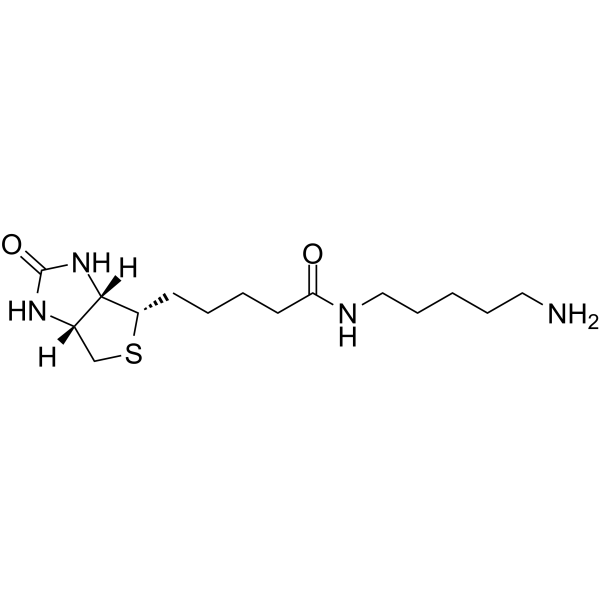 0 Images5-(Biotinamido)pentylamine is an amine donor substrate for transglutaminase. 5-(Biotinamido)pentylamine can be used as a biotin-labeled probe to specifically participate in the calcium-dependent reaction catalyzed by TG, bind to the γ-carboxamide group of the glutamine residue in the protein, introduce the biotin tag into the target protein, and form a biotinylated protein product. 5-(Biotinamido)pentylamine can be used for the labeling, separation, and detection of TG amine receptor protein substrates.
-
MT-4
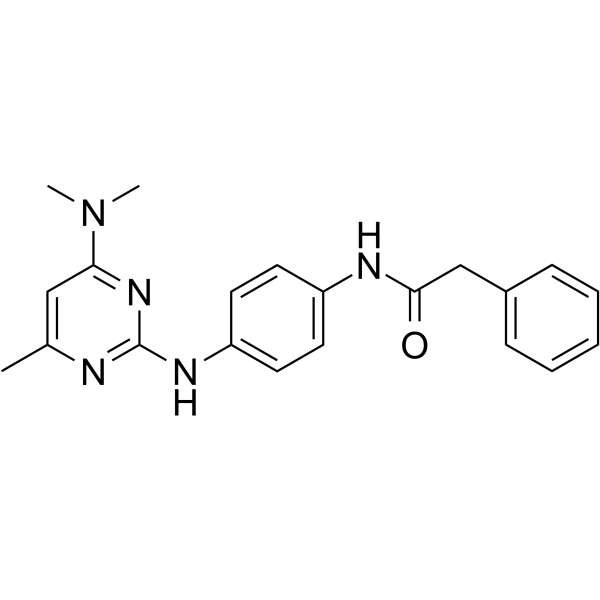 0 ImagesMT-4 is a derivative of a tissue transglutaminase (TG2) inhibitor. MT-4 targets the complex of TG2 and fibronectin (FN) (TG2/FN) and inhibits the adhesion of tumor cells to the matrix. MT-4 inhibits the adhesion of ovarian cancer (OC) cells to the peritoneum and increases the sensitivity of OC cells to paclitaxel.
-
Suvigletistat
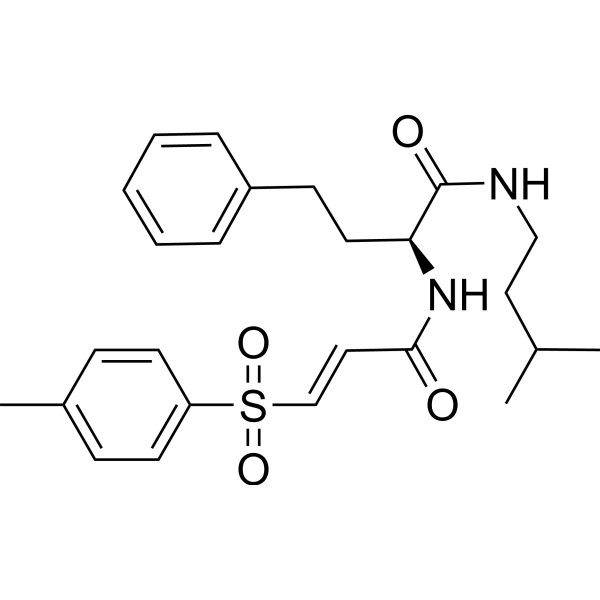
 0 ImagesSuvigletistat is a Transglutaminase 2 (TG2) inhibitor with an IC50 <0.5 μM. Suvigletistat can be used for the research of inflammatory disorders.
-
Q-Peptide
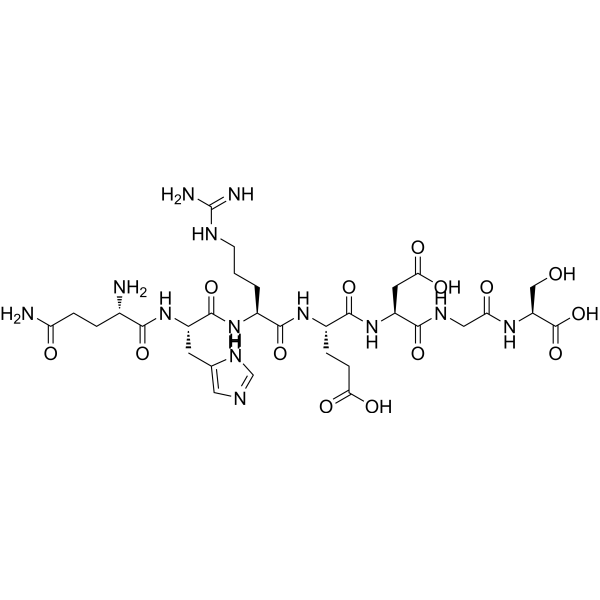 0 ImagesCat. No.: HY-P4866CAS No.: 1361235-89-3Q-Peptide is an angiopoietin-1 derived peptide (QHREDGS). Q-Peptide interacts with β1-integrin, binds to integrins on the surface of osteoblasts, and serves as an acyl donor substrate for Streptomyces mobaraensis transglutaminase. Q-Peptide activates Akt, MAPKp42/44, ILK, ERK1/2, and downregulates caspase-3/7. Q-Peptide inhibits cell apoptosis, enhances cell adhesion and migration, and promotes osteoblast differentiation, bone matrix deposition and mineralization. Q-Peptide can be used in studies related to myocardial infarction, bone regeneration, diabetic wound repair and human induced pluripotent stem cells.
-
Anti-NGLY1 Antibody
 0 ImagesCat. No.: HY-P992274
-
Biotinylated transglutaminase, Human
 0 ImagesCat. No.: HY-E71033Biotinylated transglutaminase, Human (EC 2.3.2.13) belongs to the family of transferases, specifically those transferring phosphorus-containing groups (phosphotransferases) with a phosphate group as acceptor.
-
Biotinylated transglutaminase, Human, Proenzyme (Zymogen)
 0 ImagesCat. No.: HY-E71033ABiotinylated transglutaminase, Human, Proenzyme (EC 2.3.2.13) belongs to the family of transferases, specifically those transferring phosphorus-containing groups (phosphotransferases) with a phosphate group as acceptor.
-
HB-230
 0 ImagesCat. No.: HY-165426CAS No.: 3031522-14-9HB-230 is a Transglutaminase-2 (TG2) (human IC50 = 4.9 μM) inhibitor and a selective fluorescent imaging probe for active TG2 localization. HB-230 modifies TG2 Cys277 to sustain the enzyme open conformation. HB-230 forms a ternary complex with TG2 and α2-macroglobulin, undergoes receptor-mediated endocytosis, and trafficks directly to lysosomes without early/late endosome fusion. HB-230 exhibits TG2 activity-dependent and α2-macroglobulin-dependent uptake. HB-230 can be used for the research of celiac disease, (Ex/Em = 649/665 nm).




