



TGM2
Transglutaminase 2 (TGM2, TG2) is the most ubiquitously expressed member of the transglutaminase family and functions as a multifunctional enzyme that catalyzes protein transamidation while also exhibiting GTP-binding and GTP-hydrolyzing activities involved in signal transduction[1][2]. Mechanistically, TGM2-mediated protein crosslinking, post-translational modification, and conformational switching between GTP-bound closed and calcium-bound open states regulate cellular differentiation, cell adhesion, endocytosis, and cell death pathways[2][3]. Through these activities, TGM2 contributes to diverse physiological processes in neural and non-neural tissues and participates in extracellular matrix remodeling through both enzymatic and non-enzymatic interactions[1][2]. Dysregulated TGM2 expression or activity has been implicated in neurodegenerative disorders, celiac disease, fibrosis, and multiple cancers, where it influences tumor survival, progression, inflammation, angiogenesis, metastasis, and therapeutic resistance[1][3][4][5]. In experimental tumor models, elevated TGM2 expression is associated with aggressive phenotypes, whereas stabilization of the open conformational state can induce cytotoxic effects in cancer cells[3][5]. Compared with other transglutaminase family members that display tissue-restricted expression patterns, TGM2 is distinguished by its ubiquitous distribution, multifunctional catalytic repertoire, and dual transamidase/GTP-binding activities[1]. Alternative TGM2 isoforms exhibit distinct biological functions; notably, the TG2-S isoform lacks a critical C-terminal residue required for GTP-dependent regulation, promoting constitutive transamidase activity and cellular differentiation, whereas TG2-L represses differentiation and supports cell growth in neuroblastoma models[1]. For experimental applications, small-molecule inhibitors including TTGM5826 and LM11 have been used to stabilize cytotoxic open conformations of TGM2 and suppress cancer cell growth, supporting TGM2 as a mechanistically informative therapeutic target[1][3].
References:
- [1]. Buccarelli M, et al. Biological Implications and Functional Significance of Transglutaminase Type 2 in Nervous System Tumors. Cells. 2024 Apr 11;13(8):667. [Content Brief]
- [2]. Rabezanahary H, et al. Live virus neutralizing antibodies against pre and post Omicron strains in food and retail workers in Québec, Canada. Heliyon. 2024 May 21;10(10):e31026. [Content Brief]
- [3]. Aplin C, et al. Distinct conformational states enable transglutaminase 2 to promote cancer cell survival versus cell death. Commun Biol. 2024 Aug 13;7(1):982. [Content Brief]
- [4]. Szondy Z, et al. Transglutaminase 2 in human diseases. Biomedicine (Taipei). 2017 Sep;7(3):15. doi: 10.1051/bmdcn/2017070315. Epub 2017 Aug 25. PMID: 28840829; PMCID: PMC5571667. [Content Brief]
- [5]. Zaltron E, et al. The Role of Transglutaminase 2 in Cancer: An Update. Int J Mol Sci. 2024 Feb 28;25(5):2797. [Content Brief]
All Product Categories
-
TGM2 관련 제품 (3)
관련 제품 (3)

-
MT-4
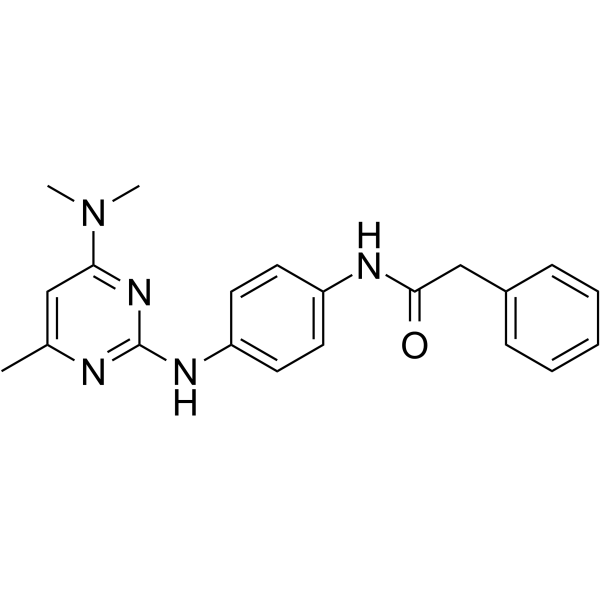 0 ImagesMT-4 is a derivative of a tissue transglutaminase (TG2) inhibitor. MT-4 targets the complex of TG2 and fibronectin (FN) (TG2/FN) and inhibits the adhesion of tumor cells to the matrix. MT-4 inhibits the adhesion of ovarian cancer (OC) cells to the peritoneum and increases the sensitivity of OC cells to paclitaxel.
-
Suvigletistat
 0 ImagesSuvigletistat is a Transglutaminase 2 (TG2) inhibitor with an IC50 <0.5 μM. Suvigletistat can be used for the research of inflammatory disorders.
-
PROTAC TG2 Degrader-3
 0 ImagesCat. No.: HY-181732CAS No.: 3054388-18-7PROTAC TG2 Degrader-3 is a TG2 (TGM2) PROTAC degrader. PROTAC TG2 Degrader-3 inhibits the adhesion and migration of ovarian cancer cells. PROTAC TG2 Degrader-3 can be used for the research of ovarian cancer.



