



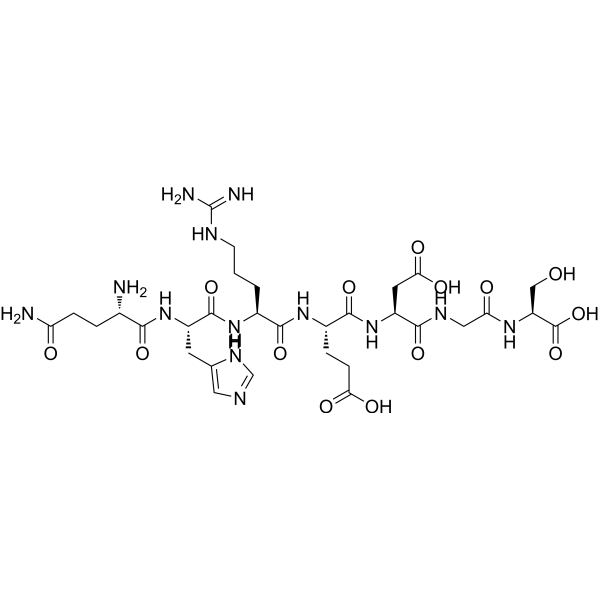
Q-Peptide
Q-Peptide is an angiopoietin-1 derived peptide (QHREDGS). Q-Peptide interacts with β1-integrin, binds to integrins on the surface of osteoblasts, and serves as an acyl donor substrate for Streptomyces mobaraensis transglutaminase. Q-Peptide activates Akt, MAPKp42/44, ILK, ERK1/2, and downregulates caspase-3/7. Q-Peptide inhibits cell apoptosis, enhances cell adhesion and migration, and promotes osteoblast differentiation, bone matrix deposition and mineralization. Q-Peptide can be used in studies related to myocardial infarction, bone regeneration, diabetic wound repair and human induced pluripotent stem cells.
For research use only. We do not sell to patients.
- CAS No.: 1361235-89-3
- Formula: C31H49N13O14
- Molecular Weight:827.80
-
Storage:
Sealed storage, away from moisture.
Powder -80°C, 2 years , -20°C, 1 year* In solvent : -80°C, 6 months; -20°C, 1 month (sealed storage, away from moisture)

To place orders, for customer services and technical support, please contact: MedChemExpress USA
Tel: 609-228-6898 E-mail: [email protected] [email protected]


-
 Biological Activity
-
Chemical Information
-
Solvent & Solubility
- Protocols
- Purity & Documentation
- References
-
 Help & FAQs


All Caspase Isoforms
More

Biological Activity
Description
|
Akt |
p38 MAPK |
ERK1 |
ERK2 |
Caspase 3 |
Caspase-7 |
In Vitro
Q-Peptide (QHREDGS) (5-500 μM; 5 continuous passages, 7 days) improves human induced pluripotent stem cell (BJ1D, 0901B, IMR90) expansion and viability in feeder-dependent culture by reducing caspase-dependent apoptosis, without altering proliferation, while having no significant effect on human embryonic stem cells (H9)[1].
Q-Peptide (50 μM; 5 continuous passages) preserves the in vitro pluripotency of human induced pluripotent stem cells (BJ1D, 0901B)[1].
Q-Peptide (5-500 μM; 48h) significantly increases colony number and size in feeder-free human induced pluripotent stem cells cultured on Matrigel[1].
Q-Peptide (50 μM; 0min-24h) increases integrin-linked kinase (ILK) expression, and increases expression and activation of extracellular signal-regulated kinases 1/2 (ERK1/2) across multiple time points, without affecting AKT activation[1].
Q-Peptide (7.2-29.0 mM; 6h) dose-dependently enhances human induced pluripotent stem cell adhesion to non-adhesive PEG hydrogels, and this interaction is mediated by β1-integrins[1].
Q-Peptide (200 μM; 40 min) potently acts as a substrate for Streptomyces mobaraensis transglutaminase (STG), with a cross-linking conversion yield of 93.0%[4].
MedChemExpress (MCE) has not independently confirmed the accuracy of these methods. They are for reference only. Further protocols information, click here.
-
Cell Line:human induced pluripotent stem cells
-
Concentration:50 μM
-
Incubation Time:0min, 30min, 1.5h, 2h, 4h, 24h
-
Result:Increased ILK protein expression.
Significantly upregulated ERK1/2 expression.
Showed no increase in AKT phosphorylation.
In Vivo
QP-derived functional peptide hydrogel (1% w/v, for local single injection) mediated mesenchymal stem cell transplantation can improve cardiac function (EF and FS), reduce infarct size, collagen content and cardiomyocyte apoptosis in rat myocardial infarction models. This treatment also elevates the survival rate of transplanted cells and promotes angiogenesis. Ctf1 pretreatment can further enhance the therapeutic effects of QP-based hydrogel mediated mesenchymal stem cell transplantation[5].
MedChemExpress (MCE) has not independently confirmed the accuracy of these methods. They are for reference only.
-
Animal Model:BKS.Cg-Dock7m+/+Leprdb/J (db/db) (8-week-old male, leptin-receptor deficient type 2 diabetic, full-thickness 8-mm dorsal excisional wounds)[3]
-
Dosage:2.2 nmol
5.9 nmol -
Administration:topical; single application
-
Result:Showed faster wound closure starting on day 8.
Reduced normalized wound area significantly by day 14 compared to blank or peptide-free hydrogel controls.
Reduced epithelial gap significantly compared to controls.
Increased re-epithelialization percentage significantly compared to controls.
Enlarged granulation tissue area significantly compared to controls.
Thinned advancing epidermal tongue significantly compared to controls.
Increased total number of blood vessels in the wound significantly compared to blank and peptide-free hydrogel controls.
Was significantly superior to clinically approved collagen dressings in accelerating diabetic wound healing in db/db mice, achieving near-complete wound closure by day 21


Chemical Information
-
CAS No. 1361235-89-3
-
Appearance Solid
-
Molecular Weight 827.80
-
Formula C31H49N13O14
-
Color White to off-white
-
Sequence
Gln-His-Arg-Glu-Asp-Gly-Ser
-
Sequence Shortening
QHREDGS
-
Shipping
Room temperature in continental US; may vary elsewhere.
-
Storage
Sealed storage, away from moisture
Powder -80°C 2 years -20°C 1 year * In solvent : -80°C, 6 months; -20°C, 1 month (sealed storage, away from moisture)


Solvent & Solubility
In Vitro:
DMSO : 100 mg/mL (120.80 mM; Need ultrasonic; Hygroscopic DMSO has a significant impact on the solubility of product, please use newly opened DMSO)
Please refer to the solubility information to select the appropriate solvent. Once prepared, please aliquot and store the solution to prevent product inactivation from repeated freeze-thaw cycles.
Storage method and period of stock solution: -80°C, 6 months; -20°C, 1 month (sealed storage, away from moisture). When stored at -80°C, please use it within 6 months. When stored at -20°C, please use it within 1 month.
Please refer to the solubility information to select the appropriate solvent. Once prepared, please aliquot and store the solution to prevent product inactivation from repeated freeze-thaw cycles.
Storage method and period of stock solution: -80°C, 6 months; -20°C, 1 month (sealed storage, away from moisture). When stored at -80°C, please use it within 6 months. When stored at -20°C, please use it within 1 month.
Concentration (start) × Volume (start) = Concentration (final) × Volume (final)

Protocols
-
Detection of Apoptosis
Apoptosis, also called programmed cell death, is generally characterized by distinct morphological characteristics.
-
TUNEL staining for apoptotic DNA fragmentation
TUNEL staining detects DNA strand breaks by using terminal deoxynucleotidyl transferase to add labeled nucleotides to exposed 3′-OH DNA termini, generating either microscopic staining in fixed cells or tissue sections, or fluorescence/cytometric signal in cell suspensions. TUNEL positivity reflects DNA fragmentation but should not be interpreted alone as definitive apoptosis, because TUNEL can also label necrotic, autolytic, mechanically damaged, or DNA-repair-associated DNA breaks.
-
Annexin V plus membrane-impermeant dye apoptosis staining
Annexin V-based apoptosis assays rely on the detection of phosphatidylserine (PS) externalization from the inner leaflet of the plasma membrane to the outer leaflet, an early biochemical hallmark of apoptosis. Fluorescently labeled Annexin V binds PS in a calcium-dependent manner, enabling identification of early apoptotic cells by flow cytometry or fluorescence microscopy. When combined with a membrane-impermeant DNA-binding dye (e. g. , propidium iodide), this approach allows discrimination between viable (Annexin V−/dye−), early apoptotic (Annexin V+/dye−), and late apoptotic or necrotic (Annexin V+/dye+) cell populations by assessing membrane integrity and PS exposure.
-
Human iPSC generation/reprogramming culture
Human iPSC reprogramming converts somatic cells into pluripotent cells by introducing defined transcription factors; classic human studies used OCT3/4, SOX2, KLF4, and c-MYC, or OCT4, SOX2, NANOG, and LIN28, and judged reprogramming by embryonic-stem-cell-like morphology, pluripotency-marker expression, normal karyotype, and differentiation into derivatives of the three germ layers. This protocol is framed around non-integrating reprogramming culture, with Sendai virus, episomal plasmids, or synthetic modified mRNA as literature-supported delivery options; Sendai virus is an RNA vector reported to avoid host-genome integration, episomal vectors can generate integration-free human iPSCs, and modified mRNA can reprogram human cells while avoiding genomic modification.
-
Cell migration
Cell migration is a method that plays an important role in wound healing, cell differentiation, embryonic development, etc.
-
Mesenchymal stromal/stem cell osteogenic differentiation
Mesenchymal stromal/stem cells can be induced toward an osteoblast-like lineage in vitro by culture in osteogenic medium containing dexamethasone, ascorbic acid or ascorbate-2-phosphate, and β-glycerophosphate; the differentiation process is commonly evaluated by alkaline phosphatase activity, osteogenic marker expression, collagenous matrix formation, and calcium-rich matrix mineralization. The main readouts are alkaline phosphatase activity as an early osteogenic marker and Alizarin Red S staining as a calcium-deposit readout for mineralized extracellular matrix; Alizarin Red S can be inspected microscopically or extracted and measured colorimetrically at 405 nm.
-
Apoptosis Solutions
Apoptosis is a regulated, generally non-lytic cell-death pathway that removes unwanted, damaged, infected, or abnormal cells through coordinated morphological changes, caspase activation, DNA fragmentation, and membrane remodeling. The intrinsic apoptosis pathway is controlled mainly by mitochondrial outer membrane permeabilization, BCL-2 family proteins, cytochrome c release, apoptosome formation, caspase-9 activation, and downstream executioner caspase-3/7 activation. The extrinsic apoptosis pathway is initiated by death receptors such as Fas, TNFR, and TRAIL receptors, which recruit adaptor proteins and activate caspase-8 before engaging executioner caspases or mitochondrial amplification through BID cleavage. Apoptosis is linked to many phenotypes, including cancer cell killing, tissue homeostasis, immune regulation, neurodegeneration, infection response, and treatment-induced cytotoxicity; unresolved questions include how apoptosis interacts with necroptosis, pyroptosis, ferroptos
-
Research Protocol for Cardiovascular Diseases
Cardiovascular disease can be modeled as maladaptive cardiac remodeling, where ischemic injury or pressure overload activates inflammatory signaling, fibroblast activation, extracellular-matrix deposition, cardiomyocyte hypertrophy, vascular remodeling, and progressive ventricular dysfunction. The TGF-β/SMAD axis is a central profibrotic pathway after myocardial injury and pressure overload, while innate immune and cytokine pathways regulate leukocyte recruitment, scar formation, and adverse remodeling. Key unresolved questions include which inflammatory signals are reparative versus harmful, when fibrosis is protective versus maladaptive, and whether pathway inhibition improves function without weakening necessary infarct healing or compensatory remodeling.
-
CRISPR-Cas9 editing of human pluripotent stem cells
CRISPR-Cas9 editing of human pluripotent stem cells uses a guide RNA to direct Cas9 to a genomic target, where Cas9 creates a double-strand break that is repaired mainly by non-homologous end joining for knockout mutations or by homology-directed repair when a donor template is supplied for precise knock-in or sequence correction. The readout is generated by genotyping edited bulk populations or single-cell-derived clones, using PCR, sequencing, restriction-based assays, reporter fluorescence, or allele-specific analysis to distinguish unedited alleles, indels, precise donor-mediated edits, biallelic deletions, and unwanted on-target lesions.


Purity & Documentation
-
Data Sheet (280 KB)
-
SDS (252 KB)
- English - EN (252 KB)
- Français - FR (252 KB)
- Deutsch - DE (252 KB)
- Norwegian - NO (252 KB)
- Español - ES (252 KB)
- Swedish - SV (252 KB)
- Italian - IT (252 KB)
- Korean - KR (252 KB)
- Portuguese - PT (252 KB)
-
Handling Instructions (2659 KB)
References
[1]. Dang LT, et al. Inhibition of apoptosis in human induced pluripotent stem cells during expansion in a defined culture using angiopoietin-1 derived peptide QHREDGS. Biomaterials. 2014;35(27):7786-7799. [Content Brief]
[2]. Feric N, et al. Angiopoietin-1 peptide QHREDGS promotes osteoblast differentiation, bone matrix deposition and mineralization on biomedical materials. Biomater Sci. 2014;2(10):1384-1398. [Content Brief]
[3]. Xiao Y, et al. Diabetic wound regeneration using peptide-modified hydrogels to target re-epithelialization. Proc Natl Acad Sci U S A. 2016;113(40):E5792-E5801. [Content Brief]
[4]. Lee JH, et al. Glutamine (Q)-peptide screening for transglutaminase reaction using mRNA display. Biotechnol Bioeng. 2013;110(2):353-362. [Content Brief]
[5]. Cai H, et al. Self-assembling peptide modified with QHREDGS as a novel delivery system for mesenchymal stem cell transplantation after myocardial infarction. FASEB J. 2019;33(7):8306-8320. [Content Brief]


Complete Stock Solution Preparation Table
Please refer to the solubility information to select the appropriate solvent. Once prepared, please aliquot and store the solution to prevent product inactivation from repeated freeze-thaw cycles.
Storage method and period of stock solution: -80°C, 6 months; -20°C, 1 month (sealed storage, away from moisture). When stored at -80°C, please use it within 6 months. When stored at -20°C, please use it within 1 month.
| Optional Solvent | Concentration Solvent Mass | 1 mg | 5 mg | 10 mg | 25 mg |
|---|---|---|---|---|---|
| DMSO | 1 mM | 1.2080 mL | 6.0401 mL | 12.0802 mL | 30.2005 mL |
| 5 mM | 0.2416 mL | 1.2080 mL | 2.4160 mL | 6.0401 mL | |
| 10 mM | 0.1208 mL | 0.6040 mL | 1.2080 mL | 3.0201 mL | |
| 15 mM | 0.0805 mL | 0.4027 mL | 0.8053 mL | 2.0134 mL | |
| 20 mM | 0.0604 mL | 0.3020 mL | 0.6040 mL | 1.5100 mL | |
| 25 mM | 0.0483 mL | 0.2416 mL | 0.4832 mL | 1.2080 mL | |
| 30 mM | 0.0403 mL | 0.2013 mL | 0.4027 mL | 1.0067 mL | |
| 40 mM | 0.0302 mL | 0.1510 mL | 0.3020 mL | 0.7550 mL | |
| 50 mM | 0.0242 mL | 0.1208 mL | 0.2416 mL | 0.6040 mL | |
| 60 mM | 0.0201 mL | 0.1007 mL | 0.2013 mL | 0.5033 mL | |
| 80 mM | 0.0151 mL | 0.0755 mL | 0.1510 mL | 0.3775 mL | |
| 100 mM | 0.0121 mL | 0.0604 mL | 0.1208 mL | 0.3020 mL |


Q-Peptide Related Classifications
HY-P4866 Related Classifications
 Powered by Bioz