1. Search Result
Search Result
Results for "

cardiac muscle contraction

" in MedChemExpress (MCE) Product Catalog:

14

Inhibitors & Agonists

2

Biochemical Assay Reagents

1

Peptides

4

Natural
Products

Cat. No. Product Name Target Research Areas Chemical Structure
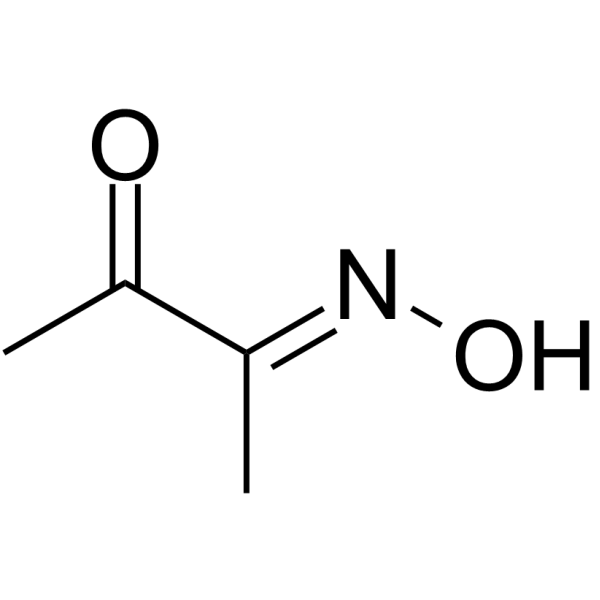
  • HY-Y0413

    Diacetyl monoxime; DAM

    Na+/K+ ATPase Myosin Cardiovascular Disease Metabolic Disease
    Biacetyl monoxime (Diacetyl monoxime), a myosin ATPase inhibitor, is a skeletal and cardiac muscle contraction inhibitor. Biacetyl monoxime is also a well-characterized non-competitive inhibitor of chemical and motile activity of skeletal muscle myosin-II. Biacetyl monoxime induces sarcoplasmic reticulum Ca 2+ release .
    Biacetyl monoxime
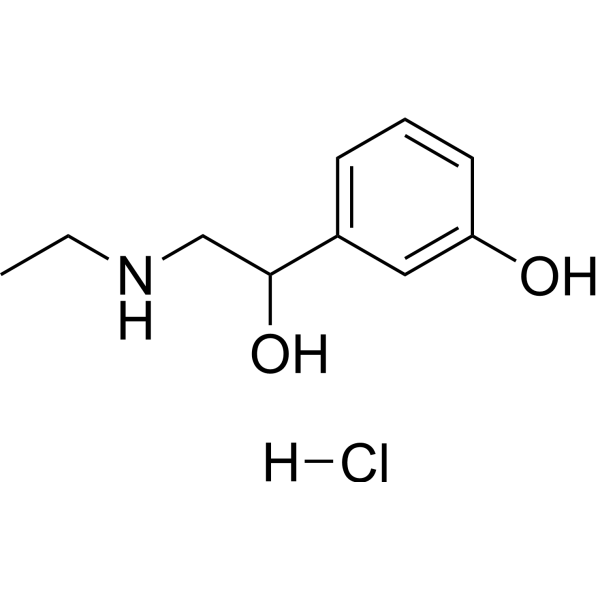
  • HY-A0144A

    Adrenergic Receptor AMPK Akt Cardiovascular Disease
    Etilefrine hydrochloride is a sympathetic nerve agonist and AMPK activator that selectively targets α1/β1 adrenergic receptors. Etilefrine hydrochloride stimulates α1 adrenergic receptors, leading to contraction of vascular smooth muscle and increased peripheral resistance. Etilefrine hydrochloride also stimulates β1 receptors to enhance myocardial contractility and increase heart rate, thereby increasing blood pressure and improving cardiac output. Etilefrine hydrochloride also bidirectionally regulates the AMPK/Akt pathway and modulates the phosphorylation levels. Etilefrine hydrochloride can be used in cardiovascular research, such as postural hypotension, chylothorax, and improving low cardiac output .
    Etilefrine hydrochloride
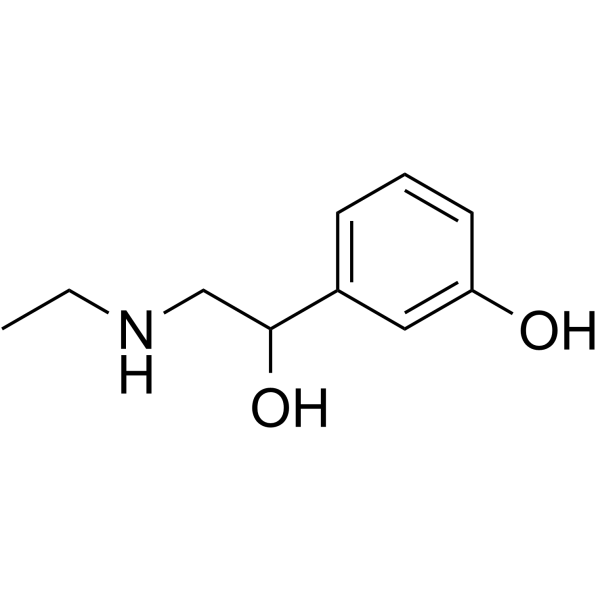
  • HY-A0144

    Adrenergic Receptor AMPK Akt Cardiovascular Disease
    Etilefrine is a sympathetic nerve agonist and AMPK activator that selectively targets α1/β1 adrenergic receptors. Etilefrine stimulates α1 adrenergic receptors, leading to contraction of vascular smooth muscle and increased peripheral resistance. Etilefrine also stimulates β1 receptors to enhance myocardial contractility and increase heart rate, thereby increasing blood pressure and improving cardiac output. Etilefrine also bidirectionally regulates the AMPK/Akt pathway and modulates the phosphorylation levels. Etilefrine can be used in cardiovascular research, such as postural hypotension, chylothorax, and improving low cardiac output .
    Etilefrine
  • HY-B0962

    mAChR Cardiovascular Disease
    Piperidolate hydrochloride is a cholinergic antagonist. Piperidolate hydrochloride prevents ventricular fibrillation during hypothermic cardiac manipulations to support cardiac procedures post-preoperative defibrillation. Piperidolate hydrochloride causes dose-dependent cardiac depression. Piperidolate hydrochloride can be used for the research of ventricular fibrillation .
    Piperidolate hydrochloride
  • HY-B0962A

    mAChR Cardiovascular Disease
    Piperidolate is a cholinergic antagonist. Piperidolate prevents ventricular fibrillation during hypothermic cardiac manipulations to support cardiac procedures post-preoperative defibrillation. Piperidolate causes dose-dependent cardiac depression. Piperidolate can be used for the research of ventricular fibrillation .
    Piperidolate
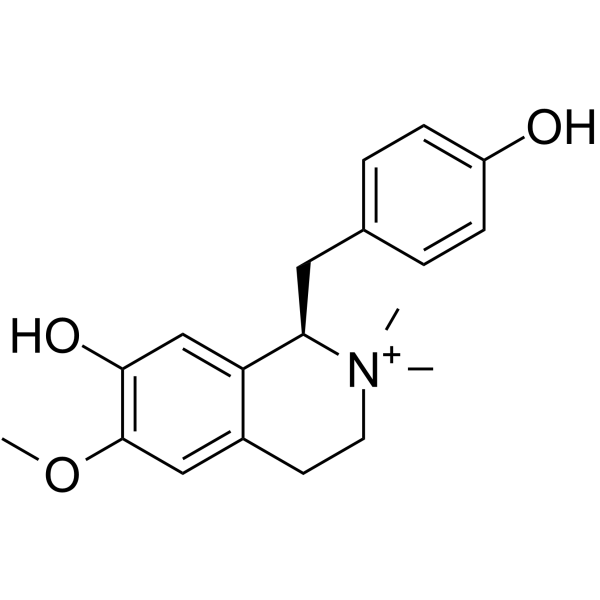
  • HY-N6609

    nAChR Others
    Magnocurarine is a neuromuscular junction blocker that inhibits muscle contraction by functionally blocking signal transmission without directly damaging nerve or muscle tissues. In frog, mouse and rabbit models, Magnocurarine exerts a dose-dependent paralytic effect, which progresses gradually from limb weakness and loss of righting reflex to respiratory depression and even cardiac arrest. Although high doses cause complete cessation of movement, Magnocurarine does not affect the spinal multineuronal reflex in frogs. Magnocurarine exhibits biological activity similar to that of tubocurarine (HY-125901) in various animal models .
    Magnocurarine
  • HY-A0144AR

    Reference Standards AMPK Adrenergic Receptor Akt Cardiovascular Disease
    Etilefrine hydrochloride (Standard) is the analytical standard of Etilefrine hydrochloride (HY-A0144A). This product is intended for research and analytical applications. Etilefrine hydrochloride is a sympathetic nerve agonist and AMPK activator that selectively targets α1/β1 adrenergic receptors. Etilefrine hydrochloride stimulates α1 adrenergic receptors, leading to contraction of vascular smooth muscle and increased peripheral resistance. Etilefrine hydrochloride also stimulates β1 receptors to enhance myocardial contractility and increase heart rate, thereby increasing blood pressure and improving cardiac output. Etilefrine hydrochloride also bidirectionally regulates the AMPK/Akt pathway and modulates the phosphorylation levels. Etilefrine hydrochloride can be used in cardiovascular research, such as postural hypotension, chylothorax, and improving low cardiac output .
    Etilefrine hydrochloride (Standard)
  • HY-A0144R

    Adrenergic Receptor AMPK Akt Reference Standards Cardiovascular Disease
    Etilefrine (Standard) is the analytical standard of Etilefrine. This product is intended for research and analytical applications. Etilefrine is a sympathetic nerve agonist and AMPK activator that selectively targets α1/β1 adrenergic receptors. Etilefrine stimulates α1 adrenergic receptors, leading to contraction of vascular smooth muscle and increased peripheral resistance. Etilefrine also stimulates β1 receptors to enhance myocardial contractility and increase heart rate, thereby increasing blood pressure and improving cardiac output. Etilefrine also bidirectionally regulates the AMPK/Akt pathway and modulates the phosphorylation levels. Etilefrine can be used in cardiovascular research, such as postural hypotension, chylothorax, and improving low cardiac output .
    Etilefrine (Standard)
  • HY-B0962AR

    Reference Standards mAChR Neurological Disease
    Piperidolate (Standard) is the analytical standard of Piperidolate. This product is intended for research and analytical applications. Piperidolate is a cholinergic antagonist. Piperidolate prevents ventricular fibrillation during hypothermic cardiac manipulations to support cardiac procedures post-preoperative defibrillation. Piperidolate causes dose-dependent cardiac depression. Piperidolate can be used for the research of ventricular fibrillation .
    Piperidolate (Standard)
  • HY-182599

    Calcium Channel mAChR Neurological Disease
    RCC-36 hydrochloride is an L-type calcium channel inhibitor and competitive muscarinic receptor antagonist. RCC-36 hydrochloride inhibits L-type calcium currents in voltage- and concentration-dependent fashion with no effect on cardiac K + currents. RCC-36 hydrochloride suppresses maximum acetylcholine-induced contractile responses, inhibits detrusor muscle contractions induced by potassium chloride, calcium chloride, and electric field stimulation, including atropine-resistant contractions. RCC-36 hydrochloride can be used for the research of urinary frequency, urinary incontinence, and bladder overactivity .
    RCC-36 hydrochloride
  • HY-W748419

    Others Cardiovascular Disease
    Acetylstrophanthidin is a cardiac glycoside compound and a positive inotropic agent. Acetylstrophanthidin increases myocardial oxygen consumption in cat papillary muscles under constant load or tension, as well as under afterload (isotonic) and isometric contraction conditions .
    Acetylstrophanthidin
  • HY-E70854

    PKC Cardiovascular Disease
    PKCε is an isoform of the large PKC family of protein kinases. In cardiac muscle cells, PKCε regulates muscle contraction through its actions at sarcomeric proteins, and PKCε modulates cardiac cell metabolism through its actions at mitochondria. PKCε Recombinant Human Active Protein Kinase is a recombinant PKCε protein that can be used to study PKCε-related functions .
    PKCε Recombinant Human Active Protein Kinase
  • HY-N6609B

    nAChR Cardiovascular Disease
    Magnocurarine chloride is a neuromuscular junction blocker that inhibits muscle contraction by functionally blocking signal transmission without directly damaging nerve or muscle tissues. In frog, mouse and rabbit models, Magnocurarine chloride exerts a dose-dependent paralytic effect, which progresses gradually from limb weakness and loss of righting reflex to respiratory depression and even cardiac arrest. Although high doses cause complete cessation of movement, Magnocurarine chloride does not affect the spinal multineuronal reflex in frogs. Magnocurarine chloride exhibits biological activity similar to that of tubocurarine (HY-125901) in various animal models .
    Magnocurarine chloride
  • HY-N18431

    ST-A TFA

    Fungal Infection
    Stellettamide A TFA is a marine toxin found in a marine sponge. Stellettamide A TFA is a calmodulin inhibitor. Stellettamide A TFA can inhibit Ca 2+/Mg 2+ ATPase, phosphodiesterase, myosin light chain , and Mg 2+-ATPase. Stellettamide A TFA inhibits high K +- and Ca 2+-induced contraction in permeabilized smooth muscle. Stellettamide A TFA exhibits antifungal activity against Mortierella remannianus. Stellettamide A TFA can be used for the research of fungal infection .
    Stellettamide A TFA

Inquiry Online

Your information is safe with us. * Required Fields.

Salutation


Country or Region *

Applicant Name *


Organization Name *

Department *


Email Address *


Product Name *

Cat. No.


Requested quantity *

Phone Number *


Remarks

Inquiry Online

Inquiry Information

Product Name:
Cat. No.:
Quantity:
MCE Japan Authorized Agent:

