1. Search Result
Search Result
Results for "

catalepsy

" in MedChemExpress (MCE) Product Catalog:

20

Inhibitors & Agonists

2

Natural
Products

1

Isotope-Labeled Compounds

Cat. No. Product Name Target Research Areas Chemical Structure
  • HY-109139
    Taminadenant
    1 Publications Verification

    NIR178; PBF509

    Adenosine Receptor Neurological Disease Cancer
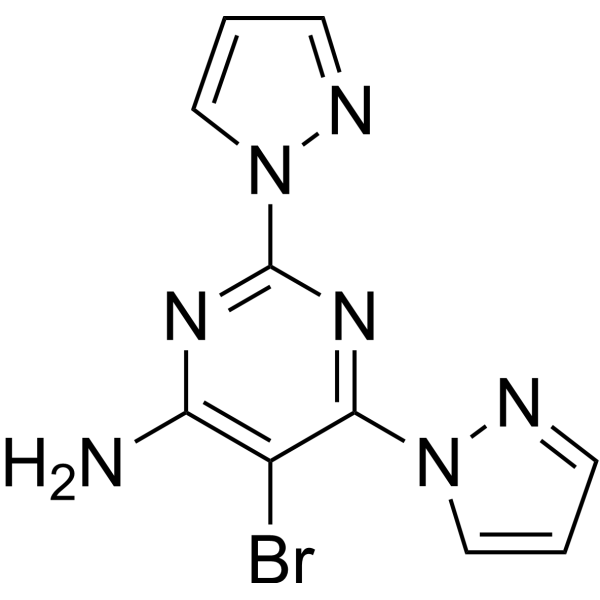
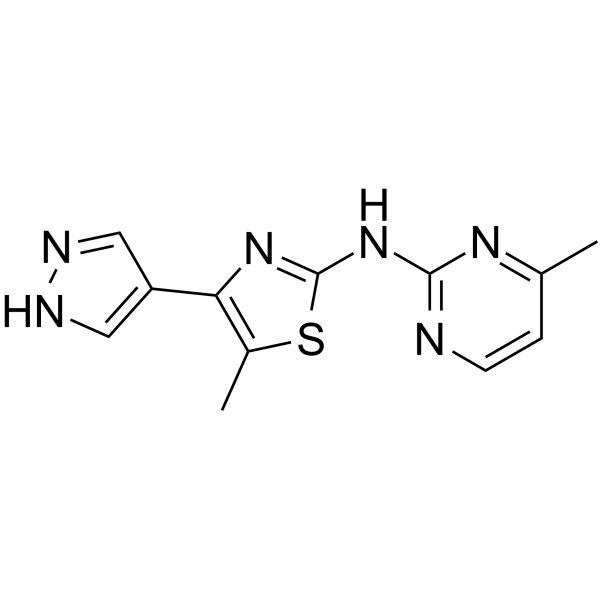
    Taminadenant (NIR178; PBF509) is a highly potent and orally active adenosine A2A receptor (A2AR) antagonist. Taminadenant can antagonize A2AR agonist-mediated cAMP accumulation and impedance responses with KB values of 72.8 nM and 8.2 nM, respectively. Taminadenant reverses motor impairments in several rat models of movement disorders, including catalepsy, tremor, and hemiparkinsonism. Taminadenant can also inhibit tumor growth when combined with Spartalizumab (HY-P9972). Taminadenant reactivate the antitumor immune response .
    Taminadenant
  • HY-116819

    GCGR Neurological Disease Metabolic Disease
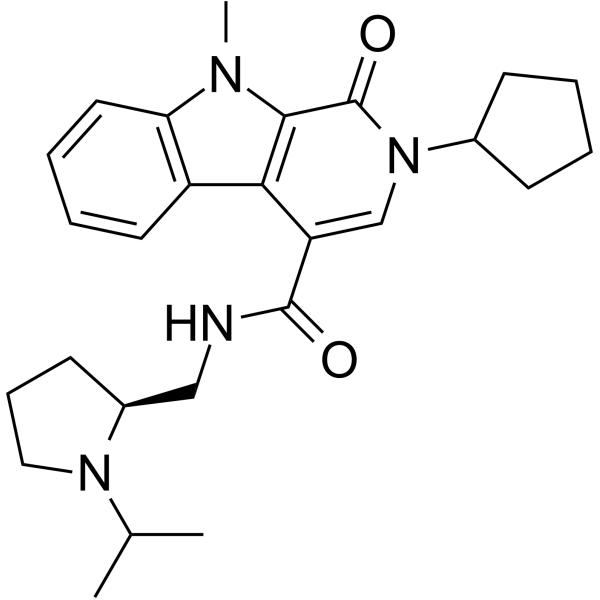
    VU0453379 is a blood-brain barrier permeable GLP-1R positive allosteric modulator (PAM) with an EC50 value of 1.3 μM. VU0453379 potentiates the actions of endogenous GLP-1 and synthetic peptide agonists, and promotes GLP-1 receptor internalization. VU0453379 stimulates insulin secretion from primary mouse islets. VU0453379 enhances the function of endogenous GLP-1R and reverses catalepsy in animal models. VU0453379 is useful for research on Parkinson's disease and type 2 diabetes .
    VU0453379
  • HY-113421

    Linoleic acid monoethanolamide

    Cannabinoid Receptor Neurological Disease
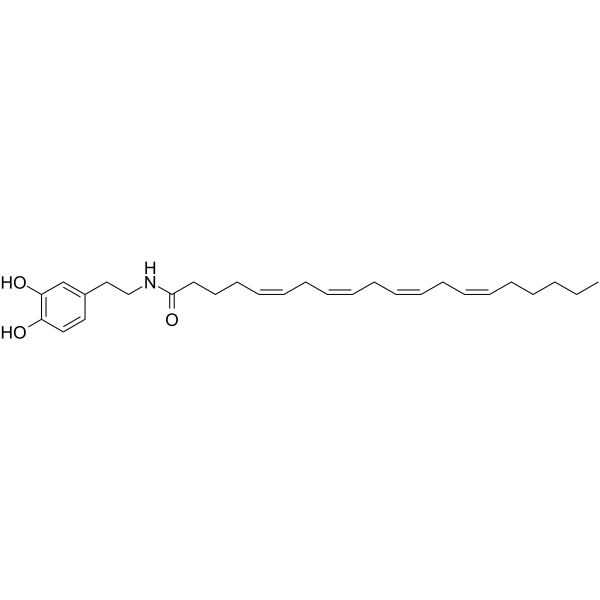
    Linoleoyl ethanolamide (Linoleic acid monoethanolamide) is classified as a fatty acid ethanolamide. Linoleoyl ethanolamide only weakly binds G-protein-coupled cannabinoid receptors of type-1(CB1)and CB2 receptors, and inhibits the binding of [3H]CP-55,940 with Kis of 10 and 25 μM, respectively. Linoleoyl ethanolamide is 4-fold less potent than anandamide at causing catalepsy in mice and it does not prolong sleep time .
    Linoleoyl ethanolamide
  • HY-113421S

    Isotope-Labeled Compounds Cannabinoid Receptor Neurological Disease
    Linoleoyl ethanolamide-d4 is a deuterated labeled Linoleoyl ethanolamide . Linoleoyl ethanolamide (Linoleic acid monoethanolamide) is classified as a fatty acid ethanolamide. Linoleoyl ethanolamide only weakly binds G-protein-coupled cannabinoid receptors of type-1(CB1)and CB2 receptors, and inhibits the binding of [3H]CP-55,940 with Kis of 10 and 25 μM, respectively. Linoleoyl ethanolamide is 4-fold less potent than anandamide at causing catalepsy in mice and it does not prolong sleep time .
    Linoleoyl ethanolamide-d4
  • HY-14866

    ADX-10059

    mGluR Neurological Disease
    Raseglurant (ADX-10059) is a mGlu5 receptor negative allosteric modulator. Raseglurant is effective against migraine. Raseglurant reduces the Haloperidol (HY-14538)-induced catalepsy in mice .
    Raseglurant
  • HY-105879

    HR-592 free base

    Drug Derivative Neurological Disease
    Tepirindole (HR-592 free base) is an orally active Indole (HY-W001132) derivative. Tepirindole reduces incidence of catalepsy induced by Haloperidol (HY-14538). Tepirindole suppresses the turning behavior induced by Methamphetamine .
    Tepirindole
  • HY-178203

    Cannabinoid Receptor Neurological Disease
    AM12814 is a potent and partial CB1 and CB2 agonist with Ki values of 0.7 nM and 3.4 nM. AM12814 can inhibit cAMP accumulation and recruitse β-arrestin 2. AM12814 exhibits cannabimimetic effects. AM12814 can be used for the research of neurological disease, suah as catalepsy .
    AM12814
  • HY-122647

    VU0652957; VU2957

    mGluR Neurological Disease
    Valiglurax (VU0652957) is a potent, orally active and selective mGlu4 positive allosteric modulator with EC50 values of 64.6 nM and 197 nM for hmGlu4/Gqi5 and rmGlu4 GIRK, respectively. Valiglurax is a central nervous system (CNS) penetrant. Valiglurax can be used in research of Parkinson's disease .
    Valiglurax
  • HY-B1573A

    AY-23,028; dl-Butaclamol hydrochloride

    Adrenergic Receptor Dopamine Receptor Neurological Disease
    (±)-Butaclamol hydrochloride (AY-23,028) is the antagonist for adrenergic receptor and dopamine receptor. (±)-Butaclamol hydrochloride antagonizes amphetamine or Apomorphine (HY-12723)-induced stereotyped behaviors and emesis, inhibits discriminative avoidance behavior, and induces catalepsy in rats models .
    (±)-Butaclamol hydrochloride
  • HY-111136

    GABA Receptor 5-HT Receptor Dopamine Receptor Histamine Receptor Neurological Disease
    BL-1020 mesylate is the mesylate salt form of BL-1020. BL-1020 mesylate is an antipsychotic agent. BL-1020 mesylate is inhibitor for dopamine receptor and serotonin receptor (5-HT receptor), with Ki of 0.066, 0.062 and 0.21 nM, for D2L, D2S and 5-HT2A receptors, respectively. BL-1020 mesylate is agonist for GABAA receptor with Ki of 3.74 μM, and enhances the GABA release. BL-1020 mesylate exhibits high affinity with histamine receptor (Ki is 0.47 nM). BL-1020 mesylate reduces Amphetamine-induced hyperactivity, with lower catalepsy and sedation. BL-1020 mesylate is blood-brain barrier penetrate .
    BL-1020 mesylate
  • HY-109139A

    NIR178 mesylate; PBF509 mesylate

    Adenosine Receptor Cancer
    Taminadenant mesylate (NIR178 mesylate) is a potent adenosine A2A receptor antagonist with potential anti-tumor activity. Taminadenant mesylate can selectively bind and inhibit A2AR on T lymphocytes, thereby releasing adenosine/A2AR-mediated inhibition of T lymphocytes and activating T cell-mediated immune responses against tumor cells. Taminadenant mesylate works by reducing the proliferation of susceptible tumor cells. Taminadenant mesylate also showed effectiveness in reversing dyskinesias in Parkinson's disease models and was able to inhibit dyskinesias caused by L-DOPA .
    Taminadenant mesylate
  • HY-135222

    5-Methoxy-6-methyl-2-aminoindan hydrochloride

    5-HT Receptor Neurological Disease
    MMAI (5-Methoxy-6-methyl-2-aminoindan) hydrochloride is a selective serotonin releaser that does not produce psychoactive or hallucinogenic effects in the context of drug discrimination in rats. MMAI hydrochloride induces a behavioral syndrome in rats, including hypokinesia with freezing, spinning, Straub tail, flat posture, and reduced sleep time .
    MMAI hydrochloride
  • HY-105704

    NSC 170955; WA 335

    5-HT Receptor Neurological Disease
    Danitracen (NSC 170955) is an orally active, CNS penetrant serotonin antagonist with antidepressant activity. Danitracen reduces serotonin levels in the cerebrum, cerebellum, medulla and the whole brain. Danitracen exhibits anticataleptic effects in rat catalepsy models. Danitracen can be used for catalepsy and depression research .
    Danitracen
  • HY-179436

    9β,10β-EHHC; 9β,10β-epoxy HHC

    Cannabinoid Receptor Neurological Disease
    9β,10β-epoxy Hexahydrocannabinol is a cannabinoid receptor 1 (CB1) and CB2 receptor ligand with a binding affinity of 224 nM for CB1 and 335 nM for CB2. 9β,10β-epoxy Hexahydrocannabinol reduces locomotor activity, induces catalepsy, lowers body temperature, and produces antinociceptive effects in mice. 9β,10β-epoxy Hexahydrocannabinol can be used for the study of nervous system diseases .
    9β,10β-epoxy Hexahydrocannabinol
  • HY-108942

    Adenosine Receptor Cardiovascular Disease Neurological Disease
    ASP5854 is an orally active, blood-brain barrier permeable adenosine A1/A2a dual receptor antagonist. ASP5854 blocks receptor activity and agonist-induced intracellular calcium elevation, and exhibits the characteristic of slow dissociation from striatal A2a receptors in primates. ASP5854 reverses catalepsy, enhances cognitive ability, improves motor function and exerts neuroprotective effects, while also alleviating dyskinesia and increasing contralateral turning behavior. ASP5854 is mainly used in studies related to ischemic stroke and Parkinson's disease .
    ASP5854
  • HY-182638

    Phosphodiesterase (PDE) mAChR Potassium Channel Neurological Disease
    CPL500036 is an orally active, blood-brain barrier permeable phosphodiesterase 10A (PDE10A) inhibitor with IC50 values of 1 nM (Reference 1) and 35 nM (Reference 2). CPL500036 acts as a negative allosteric modulator of the M2 muscarinic receptor with an IC50 of 9.2 μM. CPL500036 alters cyclic nucleotide levels in basal ganglia circuits, inhibits the hydrolysis of cAMP and cGMP, and suppresses hERG potassium channel tail currents. CPL500036 induces catalepsy in rats and reverses injury-induced contralateral forelimb use impairment. CPL500036 can be used in research related to schizophrenia, Parkinson's disease, and levodopa-induced dyskinesia .
    CPL500036
  • HY-182381

    Dopamine Receptor Neurological Disease
    FLA-797 is a brain-penetrant dopamine D2 receptor blocker and very low affinity for dopamine D1 receptors. FLA-797 selectively binds to and blocks postsynaptic dopamine D2 receptors. FLA-797 induces catalepsy in male rats. FLA-797 blocks dopamine agonist-induced hypothermia in male rats. FLA-797 contributes marginally to the dopamine D2 receptor-blocking activity of Remoxipride (HY-101313) in male rats. FLA-797 does not mimic the atypical antipsychotic profile of Remoxipride. FLA-797 can be used for research on mental disorders .
    FLA-797
  • HY-18654A

    mGluR Neurological Disease
    ADX88178 TFA is an orally active, blood-brain barrier-penetrant, selective positive allosteric modulator of mGluR4, with an EC50 of 3.5 nM against hmGluR4. ADX88178 TFA modulates mGlu4 activity, enhances glutamate-mediated receptor activation, and increases the apparent affinity of glutamate for the receptor. ADX88178 TFA reverses haloperidol-induced catalepsy, potentiates the effects of levodopa (L-DOPA) and quinpirole, but fails to alleviate established abnormal involuntary movements, does not exacerbate L-DOPA-induced dyskinesia, and does not affect forelimb akinesia when administered alone. ADX88178 TFA can be used in research related to L-DOPA-induced dyskinesia and Parkinson's disease .
    ADX88178 TFA
  • HY-N7773

    TNF Receptor Interleukin Related Caspase SOD Neurological Disease Metabolic Disease
    Hibiscetin is an orally active anti-inflammatory, antioxidant, antihyperglycemic, hypolipidemic, hepatoprotective and neuroprotective agent. Hibiscetin reduces the levels of TNF-α, IL-1β and IL-6. Hibiscetin inhibits lipid peroxidation, reduces MDA levels, and induces the activities of antioxidant enzymes CAT, GSH and SOD. Hibiscetin lowers blood glucose, reverses reduced insulin levels, regulates adipokine levels, and reduces elevated AST and ALT levels. Hibiscetin alleviates Rotenone (HY-B1756)-induced akinesia and catalepsy, normalizes neurotransmitter levels, and modulates the activities of activated caspase 3 and BDNF. Hibiscetin can be used in the research of type 2 diabetes, Parkinson's disease and Huntington's disease .
    Hibiscetin
  • HY-W744266

    Drug Metabolite Neurological Disease
    9α,10α-Epoxyhexahydrocannabinol is an active metabolite of delta 9-tetrahydrocannabinol. 9α,10α-Epoxyhexahydrocannabinol has anti-convulsant activity. 9α,10α-Epoxyhexahydrocannabinol reduces body temperature, prolongs pentobarbital-induced sleep, and exerts anticonvulsant activity against pentylenetetrazol-induced seizures in mice .
    9α,10α-Epoxyhexahydrocannabinol

Inquiry Online

Your information is safe with us. * Required Fields.

Salutation


Country or Region *

Applicant Name *


Organization Name *

Department *


Email Address *


Product Name *

Cat. No.


Requested quantity *

Phone Number *


Remarks

Inquiry Online

Inquiry Information

Product Name:
Cat. No.:
Quantity:
MCE Japan Authorized Agent:

