



Linoleoyl ethanolamide

Based on 1 Customer Validation
Linoleoyl ethanolamide (Linoleic acid monoethanolamide) is classified as a fatty acid ethanolamide. Linoleoyl ethanolamide only weakly binds G-protein-coupled cannabinoid receptors of type-1(CB1)and CB2 receptors, and inhibits the binding of [3H]CP-55,940 with Kis of 10 and 25 μM, respectively. Linoleoyl ethanolamide is 4-fold less potent than anandamide at causing catalepsy in mice and it does not prolong sleep time.
For research use only. We do not sell to patients.
- Purity : 99.98%
- CAS No.: 68171-52-8
- Formula: C20H37NO2
- Molecular Weight:323.51
-
Storage:Pure form -20°C, 3 years ; In solvent -80°C, 6 months , -20°C, 1 month


To place orders, for customer services and technical support, please contact: MedChemExpress USA
Tel: 609-228-6898 E-mail: [email protected] [email protected]


-
 Biological Activity
-
Chemical Information
-
Solvent & Solubility
- Purity & Documentation
- References
-
 Help & FAQs


-
HY-10863
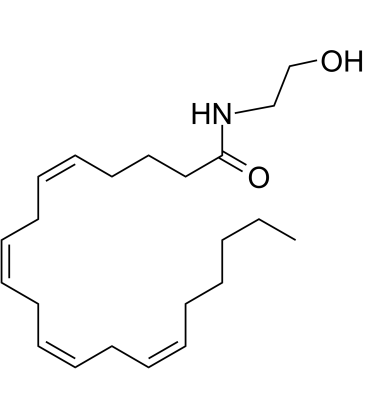
AnandamideCB1/2 Agonist -
HY-W011051
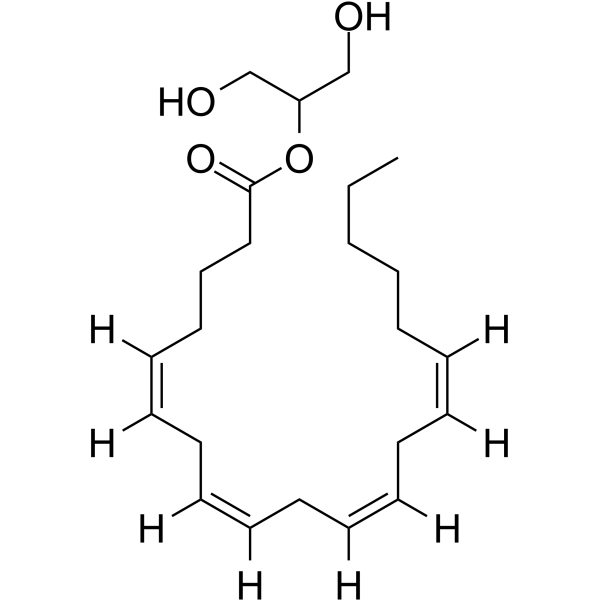
2-Arachidonoylglycerol -
HY-100197
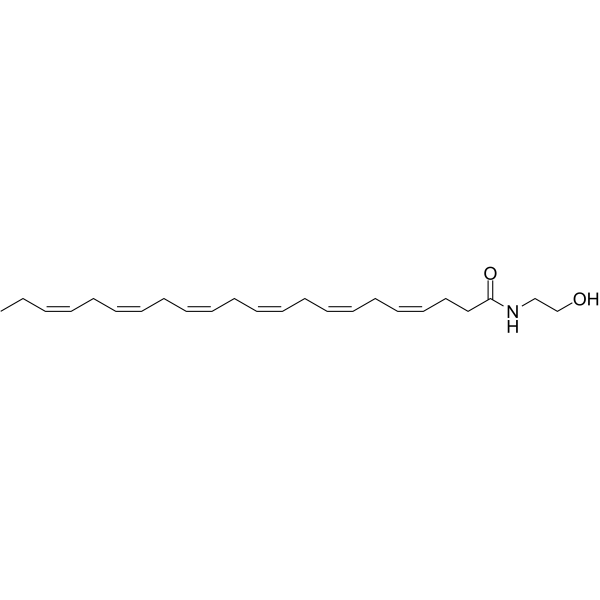
SynaptamideaGPCR Ligand -

HY-113070
Dihomo-γ-Linolenoyl EthanolamideCannabinoid Receptor Agonist -

HY-113421S
Linoleoyl ethanolamide-d4Stable Isotope -
HY-127061
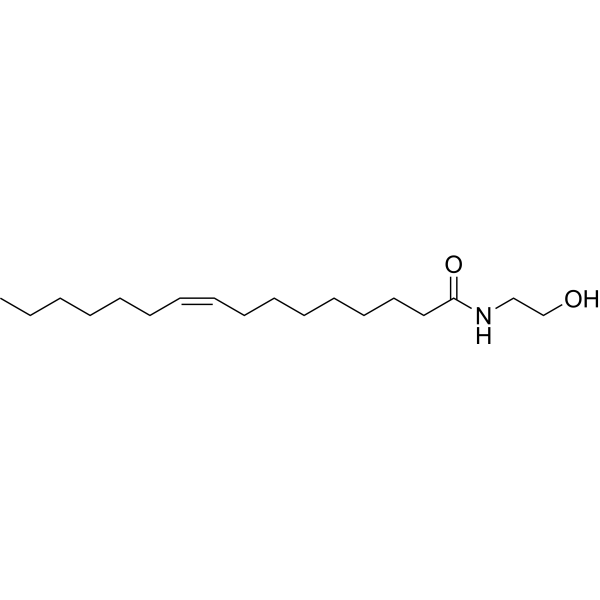
Palmitoleoyl ethanolamideEndogenous Metabolite -

HY-110003
ArachidonylcyclopropylamideCB1 Receptors Agonist -
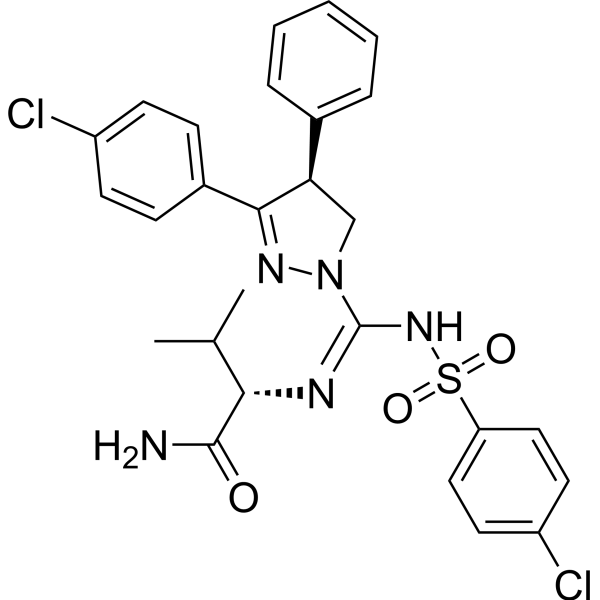
HY-18697
JD-5037CB1 Receptor Antagonist -
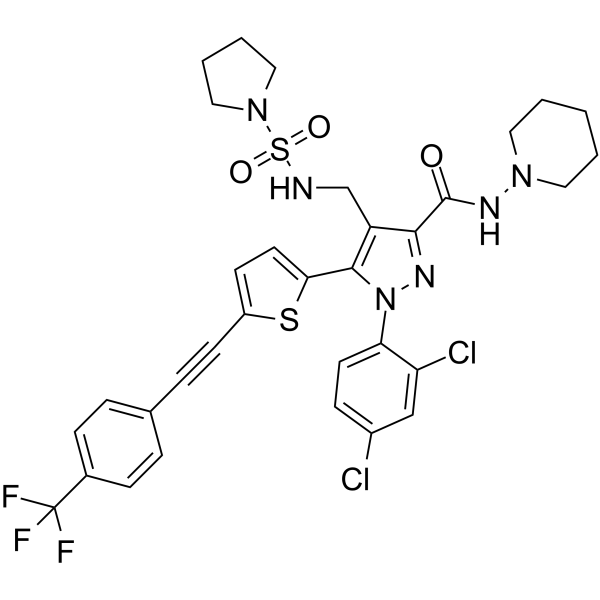
HY-12790
BPRCB1184CB1 Antagonist -
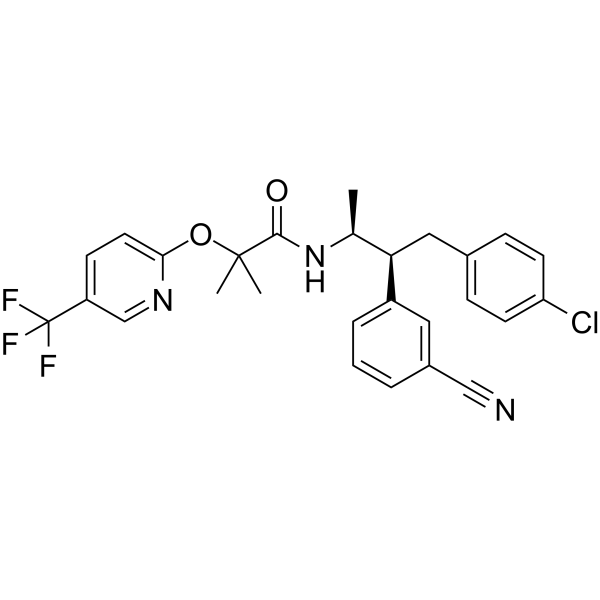
HY-10013
TaranabantCB1 Receptor Invert Agonist -
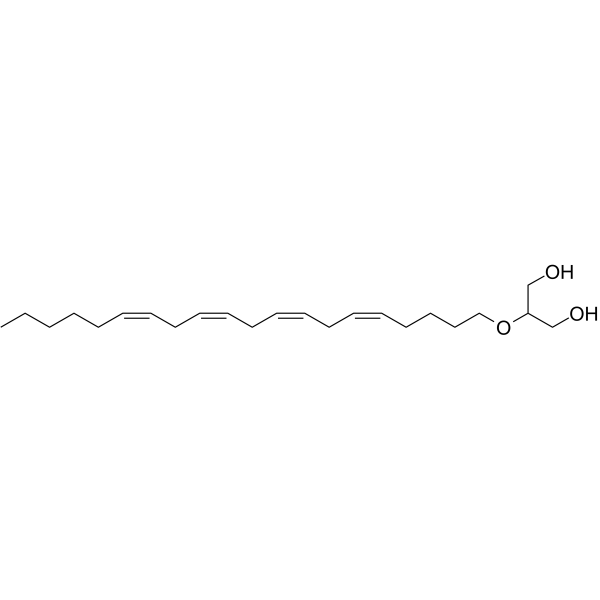
HY-110014
Noladin etherCB1 Agonist -
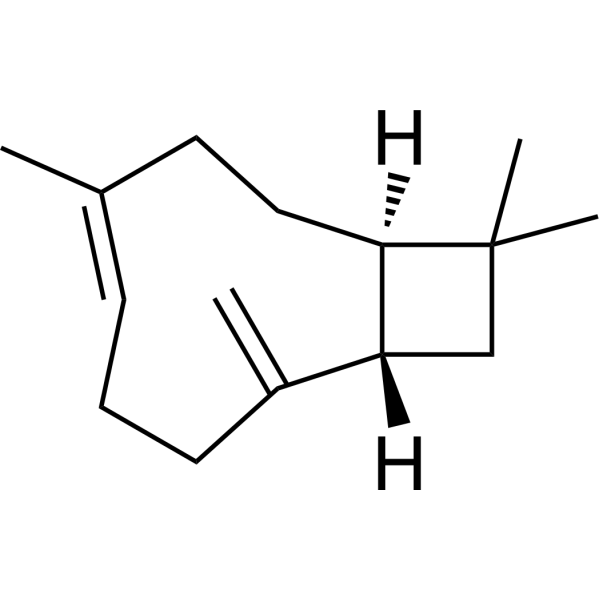
HY-N1415
β-CaryophylleneCannabinoid Receptor Agonist


Biological Activity
Description
Cellular Effect
|
Cell Line

|
Type | Value | Description | References |
|---|---|---|---|---|
| RBL-2H3 | IC50 |
48 μM
Compound: 11
|
Antiallergic activity in rat RBL2H3 cells assessed as inhibition of DNP-HSA-mediated degranulation by measuring decrease in beta-hexosaminidase activity preincubated for 30 mins followed by DNP-HSA stimulation and measured after 30 mins by 4-nitrophenyl 2
Antiallergic activity in rat RBL2H3 cells assessed as inhibition of DNP-HSA-mediated degranulation by measuring decrease in beta-hexosaminidase activity preincubated for 30 mins followed by DNP-HSA stimulation and measured after 30 mins by 4-nitrophenyl 2
|
[PMID: 31618024] |
In Vitro
Linoleoyl ethanolamide competitively inhibits the hydrolysis of anandamide and may be involved in the regulation of food intake by selective prolongation of feeding latency and post-meal interval[3].
MedChemExpress (MCE) has not independently confirmed the accuracy of these methods. They are for reference only. .
In Vivo
MedChemExpress (MCE) has not independently confirmed the accuracy of these methods. They are for reference only.


Chemical Information
-
CAS No. 68171-52-8
-
Appearance <38°C Solid, >40°C Liquid
-
Molecular Weight 323.51
-
Formula C20H37NO2
-
Color White to light yellow
-
SMILES
CCCCC/C=C\C/C=C\CCCCCCCC(NCCO)=O
-
Synonyms
Linoleic acid monoethanolamide
-
Shipping
Room temperature in continental US; may vary elsewhere.
-
Storage
Pure form -20°C 3 years In solvent -80°C 6 months -20°C 1 month


Solvent & Solubility
In Vitro:
DMSO : 100 mg/mL (309.11 mM; Need ultrasonic; Hygroscopic DMSO has a significant impact on the solubility of product, please use newly opened DMSO)
Please refer to the solubility information to select the appropriate solvent. Once prepared, please aliquot and store the solution to prevent product inactivation from repeated freeze-thaw cycles.
Storage method and period of stock solution: -80°C, 6 months; -20°C, 1 month. When stored at -80°C, please use it within 6 months. When stored at -20°C, please use it within 1 month.
Please refer to the solubility information to select the appropriate solvent. Once prepared, please aliquot and store the solution to prevent product inactivation from repeated freeze-thaw cycles.
Storage method and period of stock solution: -80°C, 6 months; -20°C, 1 month. When stored at -80°C, please use it within 6 months. When stored at -20°C, please use it within 1 month.
Concentration (start) × Volume (start) = Concentration (final) × Volume (final)
In Vivo:
Select the appropriate dissolution method based on your experimental animal and administration route.
- For the following dissolution methods, please ensure to first prepare a clear stock solution using an In Vitro approach and then sequentially add co-solvents:
- To ensure reliable experimental results, the clarified stock solution can be appropriately stored based on storage conditions. As for the working solution for In Vivo experiments, it is recommended to prepare freshly and use it on the same day.
- The percentages shown for the solvents indicate their volumetric ratio in the final prepared solution. If precipitation or phase separation occurs during preparation, heat and/or sonication can be used to aid dissolution.
Add each solvent one by one: 10% DMSO 40% PEG300 5% Tween-80 45% Saline
Solubility: ≥ 2.5 mg/mL (7.73 mM); Clear solution
This protocol yields a clear solution of ≥ 2.5 mg/mL (saturation unknown).
Taking 1 mL working solution as an example, add 100 μL DMSO stock solution (25.0 mg/mL) to 400 μL PEG300, and mix evenly; then add 50 μL Tween-80 and mix evenly; then add 450 μL Saline to adjust the volume to 1 mL.
Preparation of Saline: Dissolve 0.9 g sodium chloride in ddH₂O and dilute to 100 mL to obtain a clear Saline solution.
In Vivo Dissolution Calculator
Please enter the basic information of animal experiments:
-
-
-
-
Recommended: Prepare an additional quantity of animals to account for potential losses during experiments.
Please enter your animal formula composition:
-
%DMSO +
Recommended: Keep the proportion of DMSO in working solution below 2% if your animal is weak.
-
%+
-
+%Tween-80 + +
-
%Saline +
The co-solvents required include: DMSO, . All of co-solvents are available by MedChemExpress (MCE). , Tween 80. All of co-solvents are available by MedChemExpress (MCE).
Working solution concentration: 0.22 mg/mL
Method for preparing stock solution: mg drug dissolved in μL DMSO. Stock solution concentration: mg/mL.
1. Take μL DMSO stock solution;
2. Add μL .
μL , mix evenly;
3. Then add μL Tween 80, mix evenly;
4. Then add μL
Please ensure that the stock solution in the first step is dissolved to a clear state, and add co-solvents in sequence. You can use ultrasonic heating (ultrasonic cleaner, recommended frequency 20-40 kHz), vortexing, etc. to assist dissolution.


Purity & Documentation
-
Data Sheet (268 KB)
-
SDS (606 KB)
- English - EN (606 KB)
- Français - FR (606 KB)
- Deutsch - DE (606 KB)
- Norwegian - NO (606 KB)
- Español - ES (606 KB)
- Swedish - SV (606 KB)
- Italian - IT (606 KB)
- Korean - KR (606 KB)
- Portuguese - PT (606 KB)
-
Handling Instructions (2659 KB)
References
[1]. Wang X, et al. X. Synthesis of linoleoyl ethanolamide. J Oleo Sci. 2013;62(6):427-433. [Content Brief]
[2]. Lin S, et al. Novel analogues of arachidonylethanolamide (anandamide): affinities for the CB1 and CB2 cannabinoid receptors and metabolic stability. J Med Chem. 1998;41(27):5353-5361. [Content Brief]


Complete Stock Solution Preparation Table
Please refer to the solubility information to select the appropriate solvent. Once prepared, please aliquot and store the solution to prevent product inactivation from repeated freeze-thaw cycles.
Storage method and period of stock solution: -80°C, 6 months; -20°C, 1 month. When stored at -80°C, please use it within 6 months. When stored at -20°C, please use it within 1 month.
| Optional Solvent | Concentration Solvent Mass | 1 mg | 5 mg | 10 mg | 25 mg |
|---|---|---|---|---|---|
| DMSO | 1 mM | 3.0911 mL | 15.4555 mL | 30.9109 mL | 77.2774 mL |
| 5 mM | 0.6182 mL | 3.0911 mL | 6.1822 mL | 15.4555 mL | |
| 10 mM | 0.3091 mL | 1.5455 mL | 3.0911 mL | 7.7277 mL | |
| 15 mM | 0.2061 mL | 1.0304 mL | 2.0607 mL | 5.1518 mL | |
| 20 mM | 0.1546 mL | 0.7728 mL | 1.5455 mL | 3.8639 mL | |
| 25 mM | 0.1236 mL | 0.6182 mL | 1.2364 mL | 3.0911 mL | |
| 30 mM | 0.1030 mL | 0.5152 mL | 1.0304 mL | 2.5759 mL | |
| 40 mM | 0.0773 mL | 0.3864 mL | 0.7728 mL | 1.9319 mL | |
| 50 mM | 0.0618 mL | 0.3091 mL | 0.6182 mL | 1.5455 mL | |
| 60 mM | 0.0515 mL | 0.2576 mL | 0.5152 mL | 1.2880 mL | |
| 80 mM | 0.0386 mL | 0.1932 mL | 0.3864 mL | 0.9660 mL | |
| 100 mM | 0.0309 mL | 0.1546 mL | 0.3091 mL | 0.7728 mL |


Linoleoyl ethanolamide Related Classifications
HY-113421 Related Classifications
 Powered by Bioz