



VU0453379

Based on 1 Customer Validation
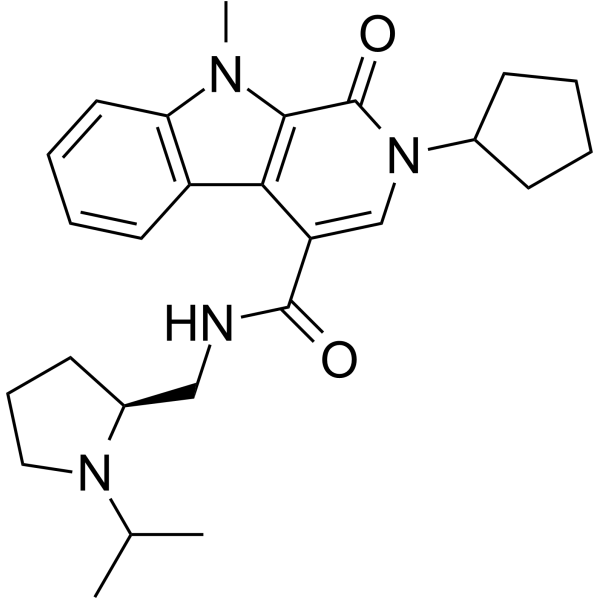
VU0453379 is a blood-brain barrier permeable GLP-1R positive allosteric modulator (PAM) with an EC50 value of 1.3 μM. VU0453379 potentiates the actions of endogenous GLP-1 and synthetic peptide agonists, and promotes GLP-1 receptor internalization. VU0453379 stimulates insulin secretion from primary mouse islets. VU0453379 enhances the function of endogenous GLP-1R and reverses catalepsy in animal models. VU0453379 is useful for research on Parkinson's disease and type 2 diabetes.
Nos produits utilisent uniquement pour la recherche. Nous ne vendons pas aux patients.
- Pureté : 98.0%
- CAS No.: 1638646-27-1
- Formule: C26H34N4O2
- Masse moléculaire:434.57
-
Stockage:
4°C, sealed storage, away from moisture
* In solvent : -80°C, 6 months; -20°C, 1 month (sealed storage, away from moisture)

To place orders, for customer services and technical support, please contact: MedChemExpress USA
Tel: 609-228-6898 E-mail: [email protected] [email protected]


-
 Activité biologique
-
Chemical Information
-
Solvant et solubilité
- Protocole
- Pureté et documentation
- Références
-
 Help & FAQs


-
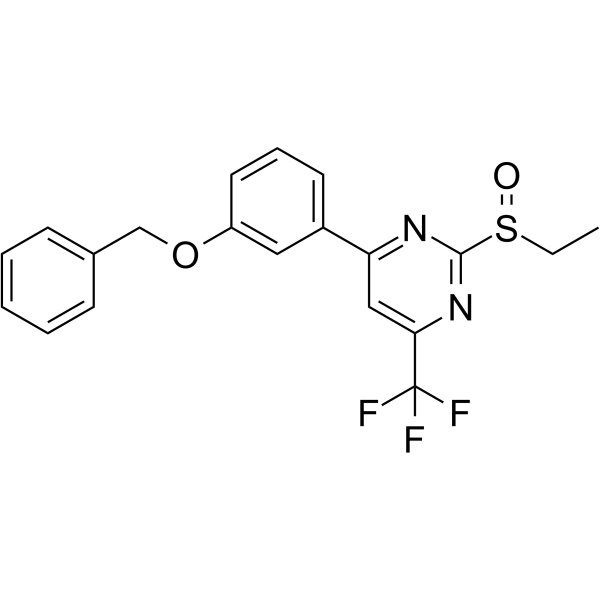
HY-103546
BETPGLP-1 Agonist -
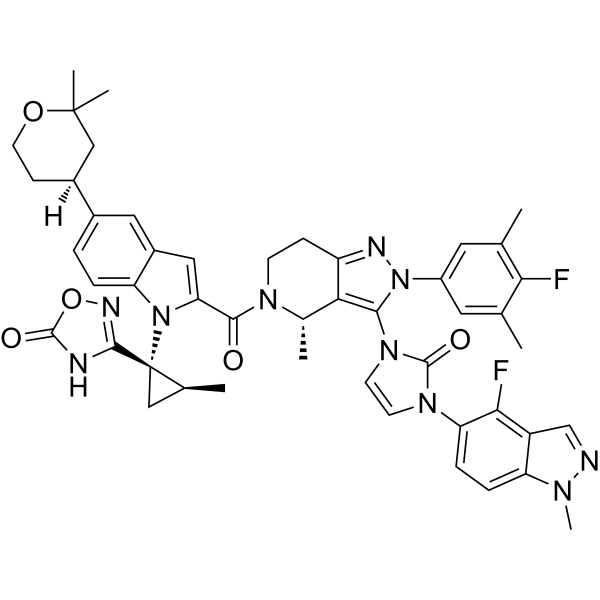
HY-112185
OrforglipronGLP-1R Agonist -
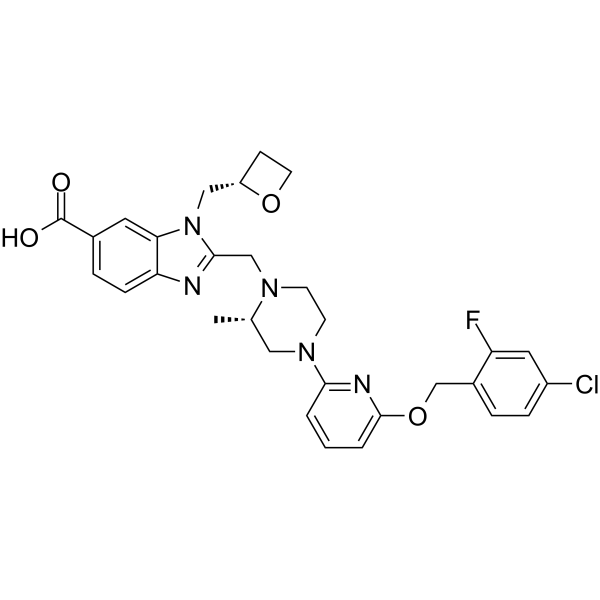
HY-112679
GLP-1 receptor agonist 2GCGR Agonist -
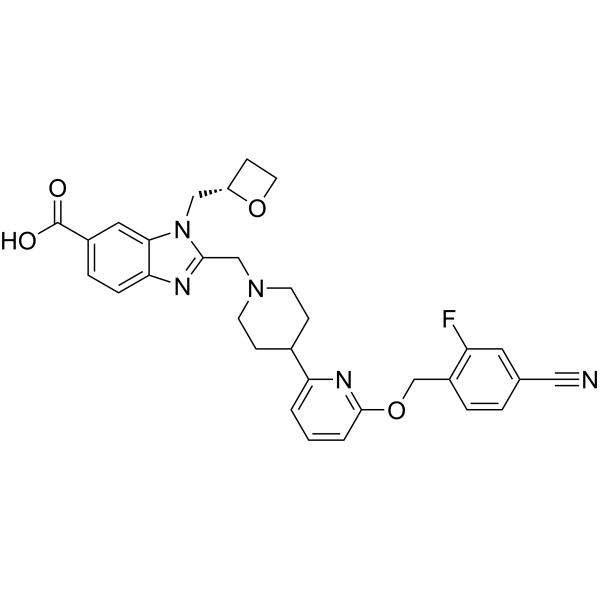
HY-125824
DanuglipronGLP-1R Agonist -

HY-P0014
LiraglutideGLP-1R Agonist -

HY-114118
SemaglutideGLP-1R Agonist -

HY-P0264
Exendin(9-39) amideGLP-1R Antagonist -

HY-P0119
LixisenatideGLP-1 Agonist -
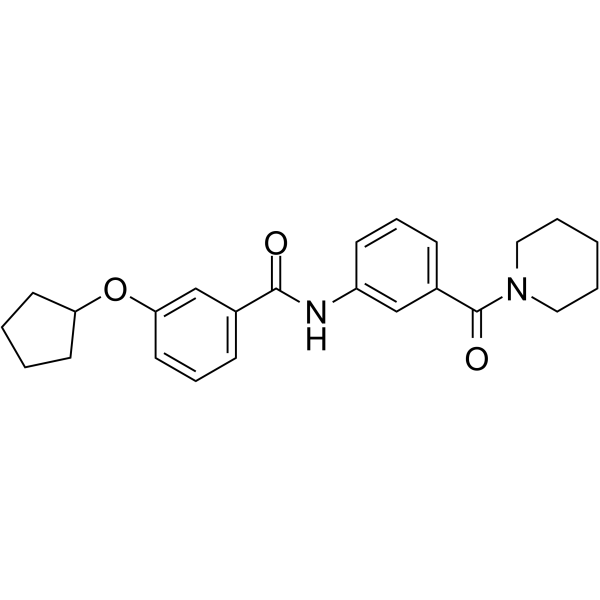
HY-141842
GLP-1R modulator L7-028GCGR Modulator -
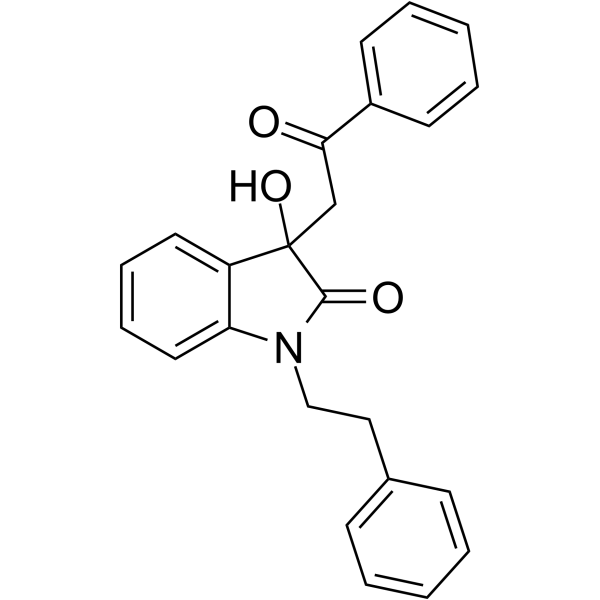
HY-141840
GLP-1R modulator C5GCGR Modulator -

HY-P0120
DulaglutideGLP-1 Receptor Agonist


Activité biologique
Description
IC50 & Target
EC50: 1.3 μM (GLP-1R)[1]
In Vitro
VU0453379 (1.3-30 μM) potentiates native GLP-1, exenatide, and liraglutide in human GLP-1R 9-3-H cells with EC50 values ranging from 1.8 μM to 30 μM, acts as an ago-PAM alone, and enhances GLP-1 receptor internalization without significant β-arrestin recruitment effects[1].
MedChemExpress (MCE) has not independently confirmed the accuracy of these methods. They are for reference only. Further protocols information, click here.
Parmacokinetics
| Species | Dose | Route | CL | T1/2 | Vss | F |
|---|---|---|---|---|---|---|
| Rat[1] | 1 mg/kg | p.o. | 72 mL/min/kg | 58 min | 4.0 L/kg | <1 % |
In Vivo
MedChemExpress (MCE) has not independently confirmed the accuracy of these methods. They are for reference only.
-
Animal Model:Sprague-Dawley (male; 10-12 per treatment group; Haloperidol-induced catalepsy model)[1]
-
Dosage:10 mg/kg; 30 mg/kg
-
Administration:i.p.; single dose
-
Result:Produced a 36.3% reversal of catalepsy in rats challenged with 0.75 mg/kg Haloperidol.
Produced a 50.4% reversal of catalepsy in rats challenged with 0.75 mg/kg Haloperidol.
Produced a 36.6% reversal of catalepsy in rats challenged with 1.5 mg/kg Haloperidol.
Reduced latency to withdraw forepaws from a horizontal bar relative to vehicle controls with statistical significance.


Chemical Information
-
CAS No. 1638646-27-1
-
Appearance Solid
-
Masse moléculaire 434.57
-
Formule C26H34N4O2
-
Color Off-white to light yellow
-
SMILES
O=C(NC[C@H]1N(CCC1)C(C)C)C(C2=C3N(C4=C2C=CC=C4)C)=CN(C3=O)C5CCCC5
-
Livraison
Room temperature in continental US; may vary elsewhere.
-
Stockage
4°C, sealed storage, away from moisture
* In solvent : -80°C, 6 months; -20°C, 1 month (sealed storage, away from moisture)


Solvant et solubilité
In Vitro:
DMSO : 100 mg/mL (230.11 mM; Need ultrasonic; Hygroscopic DMSO has a significant impact on the solubility of product, please use newly opened DMSO)
Please refer to the solubility information to select the appropriate solvent. Once prepared, please aliquot and store the solution to prevent product inactivation from repeated freeze-thaw cycles.
Storage method and period of stock solution: -80°C, 6 months; -20°C, 1 month (sealed storage, away from moisture). When stored at -80°C, please use it within 6 months. When stored at -20°C, please use it within 1 month.
Please refer to the solubility information to select the appropriate solvent. Once prepared, please aliquot and store the solution to prevent product inactivation from repeated freeze-thaw cycles.
Storage method and period of stock solution: -80°C, 6 months; -20°C, 1 month (sealed storage, away from moisture). When stored at -80°C, please use it within 6 months. When stored at -20°C, please use it within 1 month.
Concentration (start) × Volume (start) = Concentration (final) × Volume (final)
In Vivo:
Select the appropriate dissolution method based on your experimental animal and administration route.
- For the following dissolution methods, please ensure to first prepare a clear stock solution using an In Vitro approach and then sequentially add co-solvents:
- To ensure reliable experimental results, the clarified stock solution can be appropriately stored based on storage conditions. As for the working solution for In Vivo experiments, it is recommended to prepare freshly and use it on the same day.
- The percentages shown for the solvents indicate their volumetric ratio in the final prepared solution. If precipitation or phase separation occurs during preparation, heat and/or sonication can be used to aid dissolution.
Add each solvent one by one: 10% DMSO 40% PEG300 5% Tween-80 45% Saline
Solubility: ≥ 2.5 mg/mL (5.75 mM); Clear solution
This protocol yields a clear solution of ≥ 2.5 mg/mL (saturation unknown).
Taking 1 mL working solution as an example, add 100 μL DMSO stock solution (25.0 mg/mL) to 400 μL PEG300, and mix evenly; then add 50 μL Tween-80 and mix evenly; then add 450 μL Saline to adjust the volume to 1 mL.
Preparation of Saline: Dissolve 0.9 g sodium chloride in ddH₂O and dilute to 100 mL to obtain a clear Saline solution.
In Vivo Dissolution Calculator
Please enter the basic information of animal experiments:
-
-
-
-
Recommended: Prepare an additional quantity of animals to account for potential losses during experiments.
Please enter your animal formula composition:
-
%DMSO +
Recommended: Keep the proportion of DMSO in working solution below 2% if your animal is weak.
-
%+
-
+%Tween-80 + +
-
%Saline +
The co-solvents required include: DMSO, . All of co-solvents are available by MedChemExpress (MCE). , Tween 80. All of co-solvents are available by MedChemExpress (MCE).
Working solution concentration: 0.22 mg/mL
Method for preparing stock solution: mg drug dissolved in μL DMSO. Stock solution concentration: mg/mL. * In solvent : -80°C, 6 months; -20°C, 1 month (sealed storage, away from moisture)
1. Take μL DMSO stock solution;
2. Add μL .
μL , mix evenly;
3. Then add μL Tween 80, mix evenly;
4. Then add μL
Please ensure that the stock solution in the first step is dissolved to a clear state, and add co-solvents in sequence. You can use ultrasonic heating (ultrasonic cleaner, recommended frequency 20-40 kHz), vortexing, etc. to assist dissolution.

Protocole
-
Research Protocol for Endocrine Diseases
Endocrine diseases often arise from disrupted hormone production, hormone signaling, or target-tissue responsiveness; for diabetes-focused endocrine disease models, insulin signaling regulates glucose uptake, hepatic glucose output, lipid metabolism, and β-cell compensation. Type 2 diabetes develops through interacting defects in insulin resistance, β-cell dysfunction, adipose inflammation, hepatic glucose overproduction, altered incretin signaling, and ectopic lipid metabolism. A major unresolved question is whether endocrine dysfunction is driven primarily by target-tissue insulin resistance, intrinsic β-cell failure, immune/inflammatory stress, or combined multi-organ failure that differs by disease stage.
-
Human pluripotent stem cell midbrain dopaminergic neuron differentiation
Human pluripotent stem cells are directed toward midbrain dopaminergic neurons by first inducing a neural floor-plate-like progenitor state, then patterning cells with ventralizing SHH signaling and midbrain/WNT-FGF cues, and finally maturing progenitors into neurons expressing dopaminergic markers such as TH, NURR1/NR4A2, PITX3, DAT/SLC6A3, VMAT2/SLC18A2, GIRK2/KCNJ6, FOXA2, LMX1A, and EN1. The main readouts are loss of pluripotency, acquisition of FOXA2+/LMX1A+ midbrain floor-plate progenitors, emergence of βIII-tubulin+/MAP2+ neurons, and production of TH+ dopaminergic neurons with molecular, dopamine-release, and electrophysiological features of midbrain dopaminergic identity.
-
Human Islet Cell Culture
The method of preserving islets in vitro, with purified reduced immunogenicity. The steps are islet isolation, islet cell purification, in vitro determination of islet function and islet cell culture.
-
Research Protocol for Metabolic Diseases
AMP-activated protein kinase, AMPK, is a conserved cellular energy sensor that responds to reduced cellular energy status and coordinates metabolism by increasing ATP-generating catabolic pathways while suppressing ATP-consuming anabolic processes. In metabolic disease research, the AMPK pathway is experimentally relevant because it regulates hepatic lipid synthesis, fatty acid oxidation, glucose production, skeletal-muscle glucose disposal, mTORC1-linked biosynthesis, autophagy, mitochondrial homeostasis, and whole-body energy balance. The central pathway logic is that energy stress, metformin, exercise-like stimulation, or direct AMPK activators increase AMPKα Thr172 phosphorylation and downstream substrate phosphorylation, including ACC and RAPTOR. Phosphorylation of ACC suppresses lipogenesis and supports fatty acid oxidation, whereas phosphorylation of RAPTOR suppresses mTORC1 signaling and links cellular energy status to growth and protein synthesis control. The pathway is linked


Pureté et documentation
-
Fiche technique (281 KB)
-
SDS (252 KB)
- English - EN (252 KB)
- Français - FR (252 KB)
- Deutsch - DE (252 KB)
- Norwegian - NO (252 KB)
- Español - ES (252 KB)
- Swedish - SV (252 KB)
- Italian - IT (252 KB)
- Korean - KR (252 KB)
- Portuguese - PT (252 KB)
-
Instruction de manipulation (2659 KB)
Références
[1]. Morris LC, et al. Discovery of (S)-2-cyclopentyl-N-((1-isopropylpyrrolidin2-yl)-9-methyl-1-oxo-2,9-dihydro-1H-pyrrido[3,4-b]indole-4-carboxamide (VU0453379): a novel, CNS penetrant glucagon-like peptide 1 receptor (GLP-1R) positive allosteric modulator (PAM). J Med Chem. 2014 Dec 11;57(23):10192-7. [Content Brief]


Complete Stock Solution Preparation Table
Please refer to the solubility information to select the appropriate solvent. Once prepared, please aliquot and store the solution to prevent product inactivation from repeated freeze-thaw cycles.
Storage method and period of stock solution: -80°C, 6 months; -20°C, 1 month (sealed storage, away from moisture). When stored at -80°C, please use it within 6 months. When stored at -20°C, please use it within 1 month.
| Optional Solvent | Concentration Solvent Mass | 1 mg | 5 mg | 10 mg | 25 mg |
|---|---|---|---|---|---|
| DMSO | 1 mM | 2.3011 mL | 11.5056 mL | 23.0113 mL | 57.5281 mL |
| 5 mM | 0.4602 mL | 2.3011 mL | 4.6023 mL | 11.5056 mL | |
| 10 mM | 0.2301 mL | 1.1506 mL | 2.3011 mL | 5.7528 mL | |
| 15 mM | 0.1534 mL | 0.7670 mL | 1.5341 mL | 3.8352 mL | |
| 20 mM | 0.1151 mL | 0.5753 mL | 1.1506 mL | 2.8764 mL | |
| 25 mM | 0.0920 mL | 0.4602 mL | 0.9205 mL | 2.3011 mL | |
| 30 mM | 0.0767 mL | 0.3835 mL | 0.7670 mL | 1.9176 mL | |
| 40 mM | 0.0575 mL | 0.2876 mL | 0.5753 mL | 1.4382 mL | |
| 50 mM | 0.0460 mL | 0.2301 mL | 0.4602 mL | 1.1506 mL | |
| 60 mM | 0.0384 mL | 0.1918 mL | 0.3835 mL | 0.9588 mL | |
| 80 mM | 0.0288 mL | 0.1438 mL | 0.2876 mL | 0.7191 mL | |
| 100 mM | 0.0230 mL | 0.1151 mL | 0.2301 mL | 0.5753 mL |


VU0453379 Related Classifications
HY-116819 Related Classifications
 Powered by Bioz