
1. Search Result
Search Result
Results for "

catalytic pocket

" in MedChemExpress (MCE) Product Catalog:

22

Inhibitors & Agonists

1

Natural
Products

Cat. No. Product Name Target Research Areas Chemical Structure
  • HY-100671

    Histone Acetyltransferase STAT Cardiovascular Disease Inflammation/Immunology Cancer
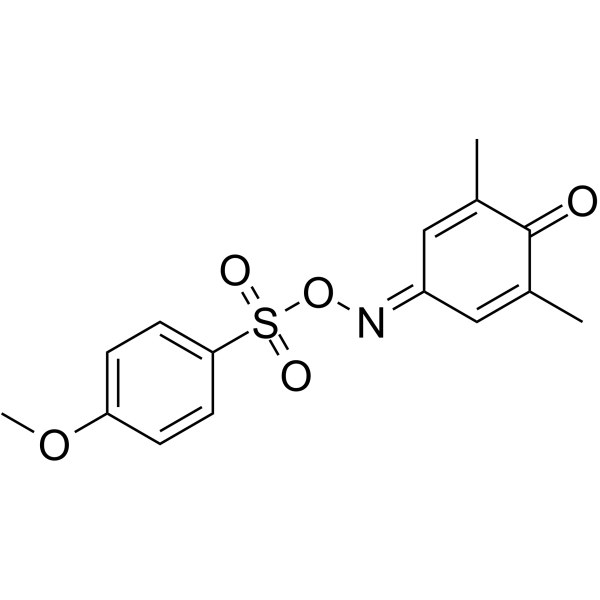
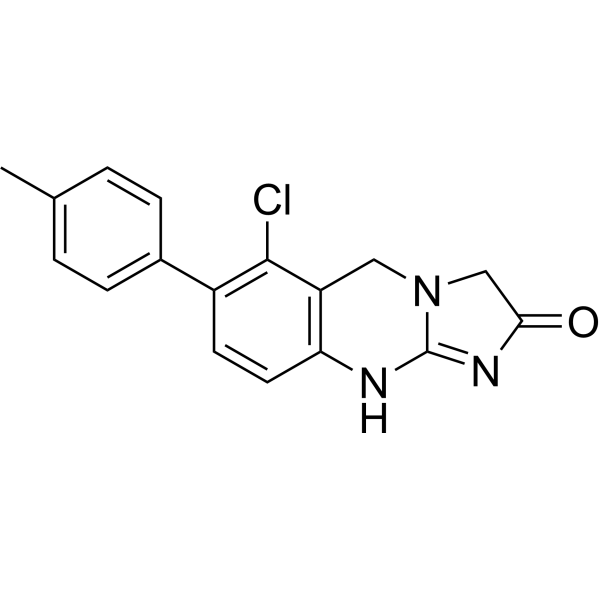
    L002 is a potent, cell permeable, reversible and specific acetyltransferase p300 (KAT3B) inhibitor with an IC50 of 1.98 μM . L002 binds the acetyl-CoA pocket and competitively inhibits the FATp300 catalytic domain, blocks histone acetylation and p53 acetylation, and inhibits STAT3 activation . L002 has the potential for hypertension-induced cardiac hypertrophy and fibrogenesis treatment .
    L002
  • HY-114645

    PDK-1 Cancer
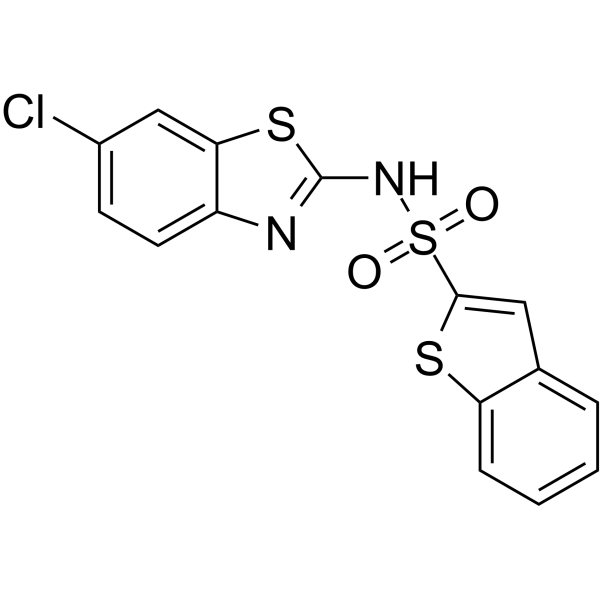
    PDK1-IN-RS2 is a mimic of peptide docking motif (PIFtide) and is a substrate-selective PDK1 inhibitor with a Kd of 9 μM. PDK1-IN-RS2 suppresses the activation of the downstream kinases S6K1 by PDK1 .
    PDK1-IN-RS2
  • HY-16138

    CG-200745

    HDAC MDM-2/p53 Apoptosis Cancer
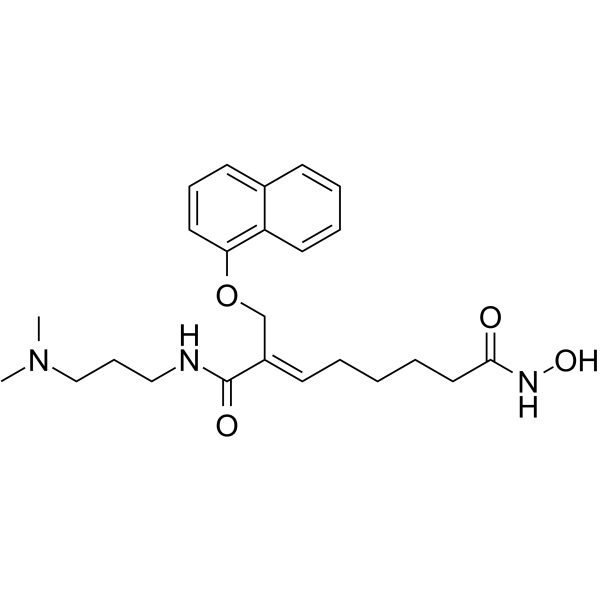
    Ivaltinostat (CG-200745) is an orally active, potent pan-HDAC inhibitor which has the hydroxamic acid moiety to bind zinc at the bottom of catalytic pocket. Ivaltinostat inhibits deacetylation of histone H3 and tubulin. Ivaltinostat induces the accumulation of p53, promotes p53-dependent transactivation, and enhances the expression of MDM2 and p21 (Waf1/Cip1) proteins. Ivaltinostat enhances the sensitivity of Gemcitabine-resistant cells to Gemcitabine (HY-16138) and 5-Fluorouracil (5-FU; HY-90006). Ivaltinostat induces apoptosis and has anti-tumour effects .
    Ivaltinostat
  • HY-16138A

    CG-200745 formic

    HDAC MDM-2/p53 Apoptosis Inflammation/Immunology Endocrinology Cancer
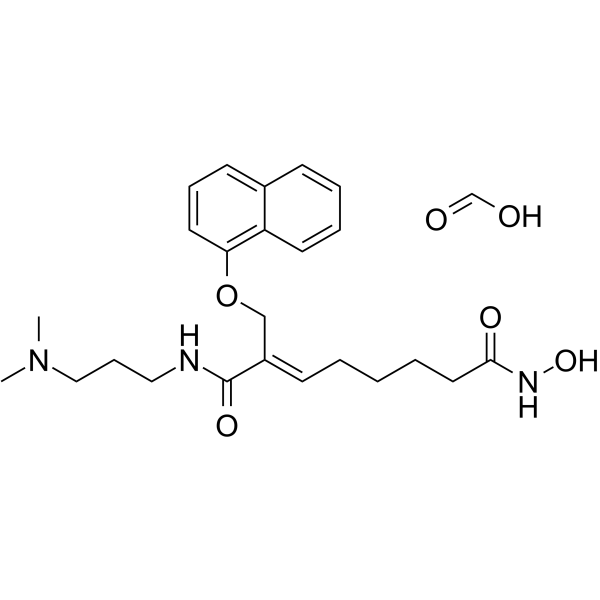
    Ivaltinostat (CG-200745) formic is an orally active, potent pan-HDAC inhibitor which has the hydroxamic acid moiety to bind zinc at the bottom of catalytic pocket. Ivaltinostat formic inhibits deacetylation of histone H3 and tubulin. Ivaltinostat formic induces the accumulation of p53, promotes p53-dependent transactivation, and enhances the expression of MDM2 and p21 (Waf1/Cip1) proteins. Ivaltinostat formic enhances the sensitivity of Gemcitabine-resistant cells to Gemcitabine (HY-16138) and 5-Fluorouracil (5-FU; HY-90006). Ivaltinostat formic induces apoptosis and has anti-tumour effects .
    Ivaltinostat formic
  • HY-168432

    Phytohormone Others
    KK181N1 is a potent inhibitor of karrikin (KAR) receptor KAI2. KK181N1 binds to the catalytic pockets of KAI2 in a non-covalent binding manner. KK181N1 selectively depress the KAR-induced phenotypes in Arabidopsis .
    KK181N1
  • HY-152158

    Glycosidase Metabolic Disease
    α-Glucosidase-IN-22 (Compound 7i) is a α-glucosidase inhibitor with an IC50 value of 0.64 μM. α-Glucosidase-IN-22 can be used for the research of type 2 diabetes .
    α-Glucosidase-IN-22
  • HY-158038

    Aurora Kinase Mitosis Cancer
    AurkA allosteric-IN-1 (compound 6h) is an Aurora A (AurkA) inhibitor (IC50: 6.50 μM) that inhibits the catalytic activity and non-catalytic functions of Aurora A. Aurora A regulates the assembly of the bipolar mitotic spindle and the fidelity of chromosome segregation during mitosis and has non-catalytic functions. AurkA allosteric-IN-1 blocks the interaction of AurkA with the activator TPX2 by binding to the Y pocket of AurkA .
    AurkA allosteric-IN-1
  • HY-124308

    PKC Cancer
    PS315, a derivative of PS48 (HY-15967), is an allosteric PKC inhibitor by binding to the PIF-pocket of aPKC and inducing a displacement of the active site residue Lys111. PS315 inhibits the full-length and catalytic domain constructs of PKCζ (IC50=10 μM) and PKCη (IC50=30 μM). PS315 has anti-cancer activity .
    PS315
  • HY-N12399

    PKA Inflammation/Immunology
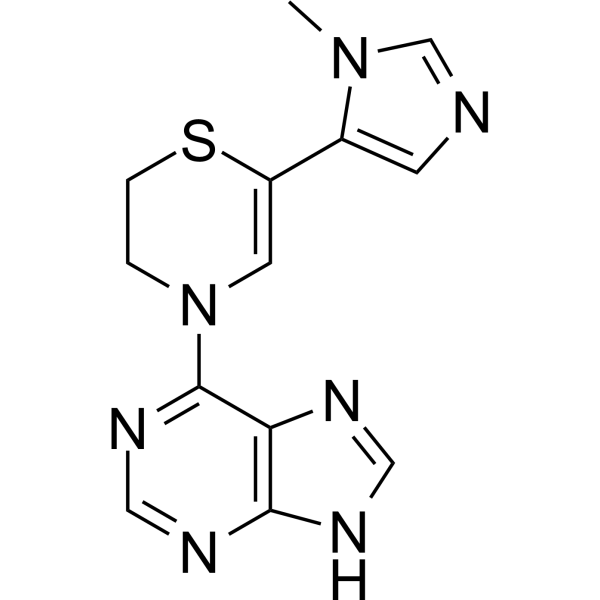
    Aplithianines A is a potent inhibitor against J-PKA with an IC50 of 1 μM , and inhibits wild-type PKA with an IC50 of 84 nM. Aplithianines A inhibits J-PKAcα catalytic activity by competitively binding to the ATP pocket .
    Aplithianines A
  • HY-126229

    Phosphodiesterase (PDE) Cancer
    PAT-078 is a type II autotaxin (ATX) inhibitor. PAT-078 mainly occupies the hydrophobic pocket of ATX, blocks the bottleneck region between the hydrophobic channel and the catalytic site, and does not interact with the zinc ion at the catalytic site .
    PAT-078
  • HY-182615

    Cholinesterase (ChE) Neurological Disease
    Cymserine is a blood-brain barrier-permeable butyrylcholinesterase (BuChE) inhibitor with an IC50 value of 56.43 nM and a Ki of 38 nM. Cymserine binds to the catalytic domain of BuChE in a concentration-dependent manner to form a stable carbamylated enzyme complex, and exhibits BuChE selectivity over acetylcholinesterase due to its structural compatibility with the larger acyl-binding pocket of BuChE. Cymserine can be used in the research of Alzheimer's disease .
    Cymserine
  • HY-183060

    Cancer
    Antitumor agent-215 is an antitumor agent. Antitumor agent-215 occupies the binding pocket of thymidylate synthase and interacts with key catalytic residues. Antitumor agent-215 induces cancer cell apoptosis and cell cycle arrest, and inhibits cell proliferation. Antitumor agent-215 can be used in the research of breast cancer and colorectal cancer .
    Antitumor agent-215
  • HY-137744

    Adenylate Cyclase Nucleoside Antimetabolite/Analog Infection
    MANT-GppNHp is a competitive adenyl cyclase (AC) inhibitor. MANT-GppNHp is a fluorescently labeled GTP (HY-113225) analogue. MANT-GppNHp interacts with the hydrophobic pocket near the AC catalytic site through its MANT group, thereby directly blocking the binding of the substrate ATP. MANT-GppNHp can be used to study diseases related to the increased activity of AC (such as cholera) .
    MANT-GppNHp
  • HY-181698

    MMP Inflammation/Immunology
    MMP13-IN-6 (Compound 10a) is a MMP-13 inhibitor with a Ki value of 40 nM against hMMP-13. MMP13-IN-6 can be used in the research of osteoarthritis and rheumatoid arthritis .
    MMP13-IN-6
  • HY-183282

    Deubiquitinase Cancer
    LC-U7-44 is a potent USP7 inhibitor with an IC50 of 0.96 μM. LC-U7-44 binds to the hydrophobic catalytic pocket of USP7, forming hydrogen bonds with Gln297, Arg408, Asp295, Val296, and Gln351, and hydrophobic interactions with Leu406. LC-U7-44 exerts anti-proliferative effects on prostate cancer cells. LC-U7-44 can be used for the research of prostate cancer .
    LC-U7-44
  • HY-100671R

    Histone Acetyltransferase Reference Standards STAT Cardiovascular Disease Inflammation/Immunology Cancer
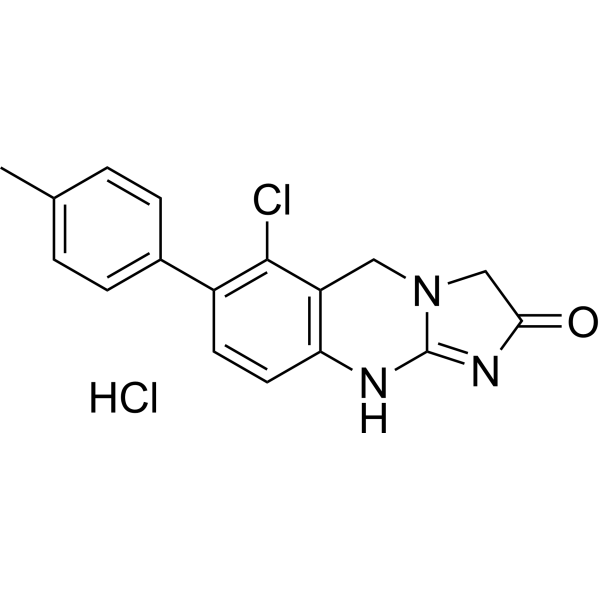
    L002 (Standard) is the analytical standard of L002 (HY-100671). This product is intended for research and analytical applications. L002 is a potent, cell permeable, reversible and specific acetyltransferase p300 (KAT3B) inhibitor with an IC50 of 1.98 μM . L002 binds the acetyl-CoA pocket and competitively inhibits the FATp300 catalytic domain, blocks histone acetylation and p53 acetylation, and inhibits STAT3 activation . L002 has the potential for hypertension-induced cardiac hypertrophy and fibrogenesis treatment .
    L002 (Standard)
  • HY-124420

    Phosphatase Metabolic Disease
    MLS-0322825 is a selective low molecular weight protein tyrosine phosphatase (LMPTP) inhibitor with an IC50 of 3.3 μM for LMPTP-A. MLS-0322825 shows exquisite selectivity over other phosphatases (class I tyrosine-specific lymphoid phosphatase (LYP) and class I dual-specific vaccinia H1-related phosphatase (VHR)). MLS-0322825 can be used for the research of type 2 diabetes [1].
    MLS-0322825
  • HY-183325

    Fat Mass and Obesity-associated Protein (FTO) CXCR TNF Receptor Neurological Disease
    FTO-IN-17 is an orally active and brain-penetrant FTO (m6A RNA demethylase) inhibitor with an IC50 of 1.1 μM. FTO-IN-17 stably binds the FTO catalytic pocket. FTO-IN-17 protects against Aβ1-42-induced toxicity while increasing global m6A levels and dampening pro-inflammatory gene (CXCL10, TNF-α) expression. FTO-IN-17 ameliorates anxiety-like behavior and rescues hippocampal-dependent spatial, recognition memory and neuroinflammation in Alzheimer's disease mice models .
    FTO-IN-17
  • HY-183373

    EGFR PARP Cancer
    EGFR/PARP-1-IN-1 is a dual EGFR and PARP-1 inhibitor with IC50 values of 64 nM and 12 nM, respectively. EGFR/PARP-1-IN-1 binds to the ATP-binding pocket of EGFR and interacts with the catalytic domain of PARP-1, inhibiting kinase and enzymatic activity via hydrogen bond formation with key residues in both targets. EGFR/PARP-1-IN-1 induces apoptosis through the endogenous mitochondrial pathway, arrests the cell cycle at the G2 phase, and inhibits cell proliferation. EGFR/PARP-1-IN-1 can be used for research on triple-negative breast cancer .
    EGFR/PARP-1-IN-1
  • HY-183701

    NTPDase CD73 Inflammation/Immunology Cancer
    CD73/NTPDase1-IN-1 is a dual NTPDase1 and CD73 inhibitor, with IC50 values of 2.20 μM and 1.70 μM against human targets, respectively. CD73/NTPDase1-IN-1 can be used in the research of diseases such as inflammation, immunity and tumors .
    CD73/NTPDase1-IN-1
  • HY-182024

    SARS-CoV Virus Protease Infection
    SARS-CoV-2 3CLpro-IN-36 is a SARS-CoV-2 3CLpro inhibitor and antiviral agent with a human sub-micromolar IC50 against SARS-CoV-2 3CLpro.SARS-CoV-2 3CLpro-IN-36 forms a covalent bond with catalytic Cys145 of SARS-CoV-2 3CLpro; its tetrazole core occupies the S1 pocket and interacts with His163, while its chloroacetamide carbonyl forms hydrogen bonds with the backbone amides of Gly143 and Ser144 in the oxyanion hole.SARS-CoV-2 3CLpro-IN-36 reduces SARS-CoV-2 replication in infected cells.SARS-CoV-2 3CLpro-IN-36 can be used for the research of SARS-CoV-2 infection .
    SARS-CoV-2 3CLpro-IN-36
  • HY-W154247

    Bacterial Infection
    IP6C is a specific inhibitor and phage sensitizer targeting type II Thoeris systems. IP6C competitively binds to histidine in the catalytic pocket of ThsB, blocks the production of the His-ADPR alarm signal and inhibits ThsA activation, thereby relieving bacterial stasis of phage replication. IP6C selectively resensitizes drug-resistant bacteria carrying type II Thoeris systems (such as Pseudomonas aeruginosa) to phage lysis, without affecting other bacteria, and shows no toxicity to mice and human cell lines. IP6C significantly improves the survival rate of infected mice, and can be used to overcome bacterial phage defense mechanisms and study Pseudomonas aeruginosa infections .
    Thoeris system: (named after the Egyptian goddess of fertility and protection), is a widespread anti-phage immune defense system in bacteria and archaea. Thoeris system belongs to the "Abortion Infection (Abi)" mechanism of bacteria: when an individual bacterium detects phage invasion, it initiates a suicide program and dies, thereby blocking phage replication and spread, and protecting the surrounding bacterial population from infection.
    IP6C

Inquiry Online

Your information is safe with us. * Required Fields.

Salutation


Country or Region *

Applicant Name *


Organization Name *

Department *


Email Address *


Product Name *

Cat. No.


Requested quantity *

Phone Number *


Remarks

Inquiry Online

Inquiry Information

Product Name:
Cat. No.:
Quantity:
MCE Japan Authorized Agent:

