Search Result
Results for "
embryonic angiogenesis
" in MedChemExpress (MCE) Product Catalog:
2
Biochemical Assay Reagents
| Cat. No. |
Product Name |
Target |
Research Areas |
Chemical Structure |
-
- HY-B0633A
-
|
Hyaluronan; Hyaluronate
|
Endogenous Metabolite
Bacterial
Akt
PI3K
|
Infection
Neurological Disease
Inflammation/Immunology
Cancer
|
|
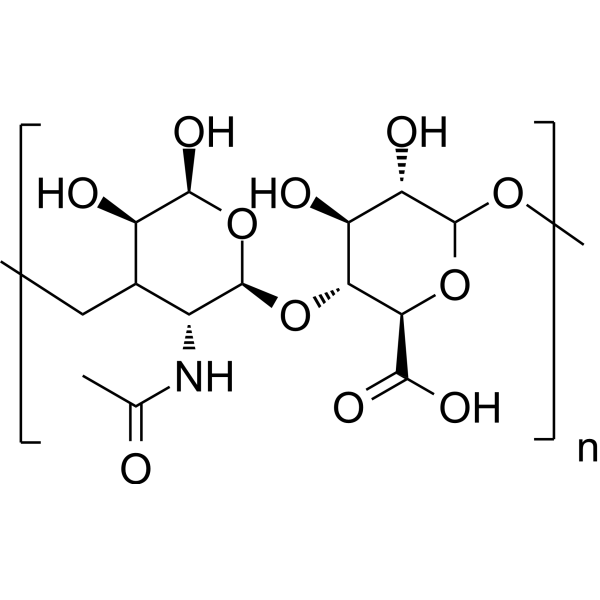
Hyaluronic acid is a biopolymer composed of repeating units of disaccharides with various applications. Hyaluronic acid is a major component of the extracellular matrix (ECM). Hyaluronic acid is synthesized at the plasma membrane. Increased hyaluronic acid levels are associated with tumor cell growth, adhesion, migration, invasion and angiogenesis in digestive cancers. Hyaluronic acid participates in tissue remodeling and rapid cell proliferation in some physiological processes including embryonic morphogenesis and wound-healing. Hyaluronic acid activates the PI3K-Akt signaling. Hyaluronic acid acts as a regulator of cancer-associated lymphangiogenesis. Hyaluronic acid also enhances cell invasion and angiogenesis by promoting proteolytic MMP-9 binding to cell surface or stimulating MMP-9 binding to cell surface. Hyaluronic acid can be used as drug delivery for sodium butyrate to improve the anti-proliferative activity on breast cancer cell line. Hyaluronic acid can be studied in joint diseases, wound healing and cancer .
|
-
-
- HY-B0633
-
|
Sodium hyaluronate
|
Endogenous Metabolite
Bacterial
PI3K
Akt
|
Inflammation/Immunology
Cancer
|
|
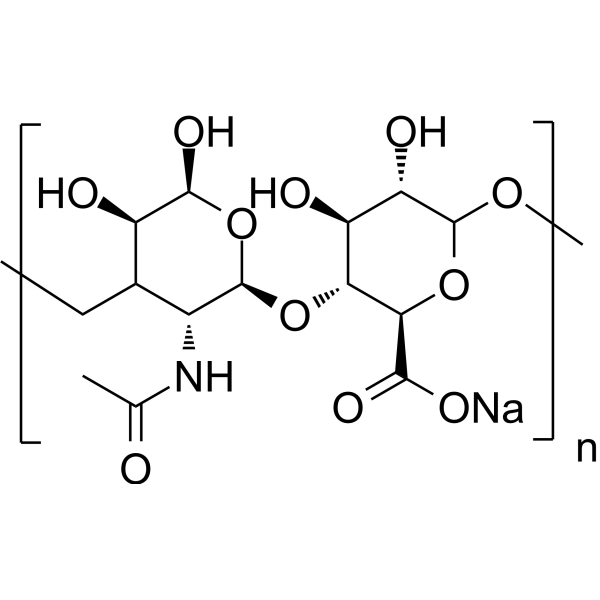
Hyaluronic acid sodium (Sodium hyaluronate) is a biopolymer composed of repeating units of disaccharides with various applications. Hyaluronic acid sodium is a major component of the extracellular matrix (ECM). Hyaluronic acid sodium is synthesized at the plasma membrane. Increased hyaluronic acid sodium levels are associated with tumor cell growth, adhesion, migration, invasion and angiogenesis in digestive cancers. Hyaluronic acid sodium participates in tissue remodeling and rapid cell proliferation in some physiological processes including embryonic morphogenesis and wound-healing. Hyaluronic acid sodium activates the PI3K-Akt signaling. Hyaluronic acid sodium acts as a regulator of cancer-associated lymphangiogenesis. Hyaluronic acid sodium also enhances cell invasion and angiogenesis by promoting proteolytic MMP-9 binding to cell surface or stimulating MMP-9 binding to cell surface. Hyaluronic acid sodium can be used as drug delivery for sodium butyrate to improve the anti-proliferative activity on breast cancer cell line. Hyaluronic acid sodium can be studied in joint diseases, wound healing and cancer .
|
-
-
- HY-P0254
-
|
|
Kisspeptin Receptor
|
Cardiovascular Disease
Cancer
|
|
Kisspeptin-10, human is a potent vasoconstrictor and inhibitor of angiogenesis. Kisspeptin-10, human acts as a tumor metastasis suppressor via its receptor GPR54. Kisspeptin-10-GPR54 system plays an important role in embryonic kidney development. Kisspeptin-10/GPR54 signaling induces osteoblast differentiation via NFATc4-mediated BMP2 expression .
|
-

-
- HY-B0633D
-
|
|
CD44
Endogenous Metabolite
Bacterial
Akt
PI3K
|
Neurological Disease
Metabolic Disease
Inflammation/Immunology
Cancer
|
|
Hyaluronic acid sodium (MW 200-1560) is a biopolymer composed of repeating disaccharide units, with a molecular weight of 200-1560. Hyaluronic acid sodium is a major component of the extracellular matrix (ECM). It is synthesized on the plasma membrane. Hyaluronic acid sodium exerts its effects by binding to receptors CD44 and RHAMM. Hyaluronic acid sodium activates PI3K-Akt signaling. Hyaluronic acid sodium also enhances cell invasion and angiogenesis by promoting or stimulating the binding of proteolytic MMP-9 to the cell surface. Elevated hyaluronic acid levels are associated with tumor cell growth, adhesion, migration, invasion, and angiogenesis in digestive system cancers. Hyaluronic acid sodium is involved in tissue remodeling and rapid cell proliferation in several physiological processes, including embryonic morphogenesis and wound healing. Hyaluronic acid sodium can be used as a regulator of cancer-associated lymphangiogenesis. Hyaluronic acid sodium can be used as a drug delivery carrier for sodium butyrate, enhancing its anti-proliferative activity against breast cancer cell lines. Hyaluronic acid sodium can lubricate the corneal endothelium. Hyaluronic acid sodium can improve tissue hydration and enhance the resistance of cells to mechanical damage. Hyaluronic acid sodium has been conjugated with antibodies to ensure that the active compound continues to exert its effects at the site of inflammation. Hyaluronic acid sodium can be used in research in the fields of osteoarthritis, ophthalmology, cosmetic dermatology, oncology, and liver diseases .
|
-

-
- HY-B0633E
-
|
Hyaluronan, low endotoxin; Hyaluronate, low endotoxin
|
Endogenous Metabolite
CD44
Bacterial
Akt
PI3K
|
Neurological Disease
Metabolic Disease
Inflammation/Immunology
Cancer
|
|
Hyaluronic acid, low endotoxin (Hyaluronan, low endotoxin) is a biopolymer composed of repeating disaccharide units containing low levels of endotoxin. Hyaluronic acid is a major component of the extracellular matrix (ECM). It is synthesized on the plasma membrane. Hyaluronic acid exerts its effects by binding to receptors CD44 and RHAMM. Hyaluronic acid activates PI3K-Akt signaling. Hyaluronic acid also enhances cell invasion and angiogenesis by promoting or stimulating the binding of proteolytic MMP-9 to the cell surface. Elevated hyaluronic acid levels are associated with tumor cell growth, adhesion, migration, invasion, and angiogenesis in digestive system cancers. Hyaluronic acid is involved in tissue remodeling and rapid cell proliferation in several physiological processes, including embryonic morphogenesis and wound healing. Hyaluronic acid can be used as a regulator of cancer-associated lymphangiogenesis. Hyaluronic acid can be used as a drug delivery carrier for sodium butyrate, enhancing its anti-proliferative activity against breast cancer cell lines. Hyaluronic acid can lubricate the corneal endothelium. Hyaluronic acid can improve tissue hydration and enhance the resistance of cells to mechanical damage. Hyaluronic acid has been conjugated with antibodies to ensure that the active compound continues to exert its effects at the site of inflammation. Hyaluronic acid can be used in research in the fields of osteoarthritis, ophthalmology, cosmetic dermatology, oncology, and liver diseases .
|
-

-
- HY-B0633I
-
|
|
Endogenous Metabolite
Bacterial
PI3K
Akt
|
Inflammation/Immunology
Cancer
|
|
Hyaluronic acid sodium (MW 800kDa) is a biopolymer composed of repeating units of disaccharides with various applications. Hyaluronic acid sodium is a major component of the extracellular matrix (ECM). Hyaluronic acid sodium is synthesized at the plasma membrane. Increased hyaluronic acid sodium levels are associated with tumor cell growth, adhesion, migration, invasion and angiogenesis in digestive cancers. Hyaluronic acid sodium participates in tissue remodeling and rapid cell proliferation in some physiological processes including embryonic morphogenesis and wound-healing. Hyaluronic acid sodium activates the PI3K-Akt signaling. Hyaluronic acid sodium acts as a regulator of cancer-associated lymphangiogenesis. Hyaluronic acid sodium also enhances cell invasion and angiogenesis by promoting proteolytic MMP-9 binding to cell surface or stimulating MMP-9 binding to cell surface. Hyaluronic acid sodium can be used as drug delivery for sodium butyrate to improve the anti-proliferative activity on breast cancer cell line. Hyaluronic acid sodium can be studied in joint diseases, wound healing and cancer .
|
-

-
- HY-P0254A
-
|
|
Kisspeptin Receptor
|
Cardiovascular Disease
Cancer
|
|
Kisspeptin-10, human TFA is a potent vasoconstrictor and inhibitor of angiogenesis. Kisspeptin-10, human TFA acts as a tumor metastasis suppressor via its receptor GPR54. Kisspeptin-10-GPR54 system plays an important role in embryonic kidney development. Kisspeptin-10/GPR54 signaling induces osteoblast differentiation via NFATc4-mediated BMP2 expression .
|
-

-
- HY-P5351A
-
|
|
Transmembrane Glycoprotein
|
Inflammation/Immunology
Cancer
|
|
Hyaluronan-binding peptide, biotin labeled TFA is a biological active peptide. (This peptide is a hyaluronan-binding peptide biotinylated through a C-terminal GGGSK linker. Hyaluronan (HA) is a nonsulfated glycosaminoglycan expressed in the extracellular matrix and on cell surfaces. HA plays a role in fertilization, embryonic development, wound healing, angiogenesis, leukocyte trafficking to inflamed tissues, and cancer metastasis. This peptide has been shown to block HA binding to CD44 receptors and inhibit T cell proliferation.) .
|
-

-
- HY-146369
-
|
|
PROTACs
VEGFR
|
Cancer
|
|
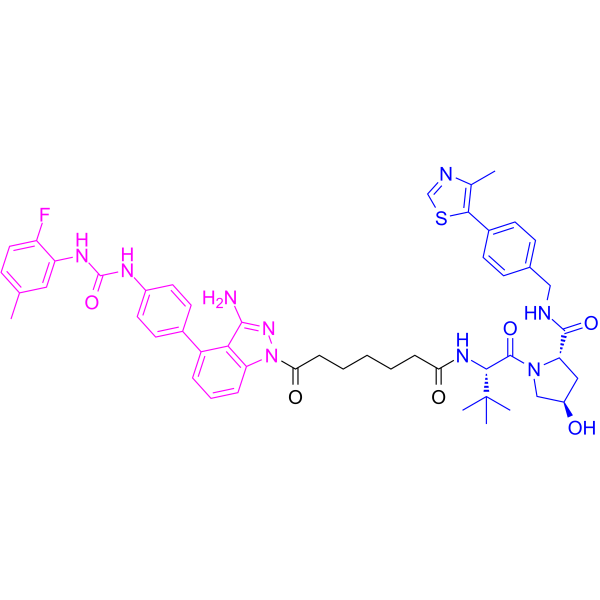
PROTAC VEGFR-2 degrader-2 is a VEGFR-2 (KDR) PROTAC degrader with weak inhibitory activity against VEGFR-2 (IC50 > 1 μM). It is applicable to the research of cancer-related pathological angiogenesis .
|
-
-
- HY-175540
-
|
|
PDGFR
|
Cardiovascular Disease
Cancer
|
|
PDGFRα kinase-IN-2 is a potent PDGFR-α inhibitor with an IC50 of 2.1 nM. PDGFRα kinase-IN-2 exhibits anticancer activity against human colon cancer HT-29 cell with an IC50 of 1.48 μM. PDGFRα kinase-IN-2 has anti-angiogenic activity in zebrafish models and low embryonic lethality. PDGFRα kinase-IN-2 can used for the studies of colon cancer and anti-angiogenesis .
|
-

-
- HY-E70806
-
|
|
WNK Kinase
|
Cancer
|
|
WNK1 is a WNK kinase that is involved in embryonic angiogenesis and tumor-induced angiogenesis. Biotin-WNK1 Recombinant Human Active Protein Kinase is obtained by expressing WNK1 proteins and is biotinylated .
|
-

-
- HY-W714183
-
|
|
Herbicide
ERK
p38 MAPK
JNK
PI3K
Akt
Apoptosis
Microtubule/Tubulin
|
Metabolic Disease
|
|
Dinitramine is a herbicide. Dinitramine activates the Erk/P38/JNK/MAPK pathway and inactivates the PI3k/Akt pathway in testicular cells. Dinitramine induces endoplasmic reticulum stress, dysregulation of calcium homeostasis in the cytoplasm and mitochondria, apoptosis, and downregulated expression of cell cycle genes in testicular cells. Dinitramine reduces the viability and proliferation capacity of testicular cells, and inhibits cell division by suppressing the synthesis of tubulin. Dinitramine induces abnormal heart development, inhibited angiogenesis, inflammatory responses, apoptosis, and impaired embryonic growth in zebrafish embryos .
|
-

-
-
HY-L088
-
|
|
3,431 compounds
|
|
Angiogenesis is the physiological process through which new blood vessels are formed from pre-existing vessels. It occurs in various physiological processes e.g. embryonic development, menstrual cycle, exercise and wound healing etc. Angiogenesis is regulated by both endogenous activators and inhibitors. Some key activators of angiogenesis include vascular endothelial growth factor (VEGF), basic fibroblast growth factor (bFGF), angiogenin, TGF-β, etc. whereas angiogenesis inhibitors are angiostatin, endostatin, interferon, platelet factor 4, etc. The loss of balance between these opposing signals leads to life threatening diseases like cancer, cardiovascular and ischemic diseases etc. which are thus controlled by exogenous angiogenesis activators (for cardiovascular/ischemic disorders) and inhibitors (for cancer).
MCE offers a unique collection of 3,431 compounds with validated angiogenesis targets modulating properties. MCE angiogenesis-related compound library is an effective tool for angiogenesis research and discovery of angiogenesis-related drugs.
|
| Cat. No. |
Product Name |
Type |
-
- HY-B0633A
-
|
Hyaluronan; Hyaluronate
|
Biochemical Assay Reagents
|
|
Hyaluronic acid is a biopolymer composed of repeating units of disaccharides with various applications. Hyaluronic acid is a major component of the extracellular matrix (ECM). Hyaluronic acid is synthesized at the plasma membrane. Increased hyaluronic acid levels are associated with tumor cell growth, adhesion, migration, invasion and angiogenesis in digestive cancers. Hyaluronic acid participates in tissue remodeling and rapid cell proliferation in some physiological processes including embryonic morphogenesis and wound-healing. Hyaluronic acid activates the PI3K-Akt signaling. Hyaluronic acid acts as a regulator of cancer-associated lymphangiogenesis. Hyaluronic acid also enhances cell invasion and angiogenesis by promoting proteolytic MMP-9 binding to cell surface or stimulating MMP-9 binding to cell surface. Hyaluronic acid can be used as drug delivery for sodium butyrate to improve the anti-proliferative activity on breast cancer cell line. Hyaluronic acid can be studied in joint diseases, wound healing and cancer .
|
-
- HY-B0633E
-
|
Hyaluronan, low endotoxin; Hyaluronate, low endotoxin
|
Biochemical Assay Reagents
|
|
Hyaluronic acid, low endotoxin (Hyaluronan, low endotoxin) is a biopolymer composed of repeating disaccharide units containing low levels of endotoxin. Hyaluronic acid is a major component of the extracellular matrix (ECM). It is synthesized on the plasma membrane. Hyaluronic acid exerts its effects by binding to receptors CD44 and RHAMM. Hyaluronic acid activates PI3K-Akt signaling. Hyaluronic acid also enhances cell invasion and angiogenesis by promoting or stimulating the binding of proteolytic MMP-9 to the cell surface. Elevated hyaluronic acid levels are associated with tumor cell growth, adhesion, migration, invasion, and angiogenesis in digestive system cancers. Hyaluronic acid is involved in tissue remodeling and rapid cell proliferation in several physiological processes, including embryonic morphogenesis and wound healing. Hyaluronic acid can be used as a regulator of cancer-associated lymphangiogenesis. Hyaluronic acid can be used as a drug delivery carrier for sodium butyrate, enhancing its anti-proliferative activity against breast cancer cell lines. Hyaluronic acid can lubricate the corneal endothelium. Hyaluronic acid can improve tissue hydration and enhance the resistance of cells to mechanical damage. Hyaluronic acid has been conjugated with antibodies to ensure that the active compound continues to exert its effects at the site of inflammation. Hyaluronic acid can be used in research in the fields of osteoarthritis, ophthalmology, cosmetic dermatology, oncology, and liver diseases .
|
| Cat. No. |
Product Name |
Target |
Research Area |
-
- HY-P0254
-
|
|
Kisspeptin Receptor
|
Cardiovascular Disease
Cancer
|
|
Kisspeptin-10, human is a potent vasoconstrictor and inhibitor of angiogenesis. Kisspeptin-10, human acts as a tumor metastasis suppressor via its receptor GPR54. Kisspeptin-10-GPR54 system plays an important role in embryonic kidney development. Kisspeptin-10/GPR54 signaling induces osteoblast differentiation via NFATc4-mediated BMP2 expression .
|
-
- HY-P0131A
-
|
Laminin (925-933) TFA
|
Peptides
|
Cancer
|
|
Laminin peptide CDPGYIGSR (Laminin (925-933)) TFA is a 67 kDa laminin receptor ligand and selective cell adhesion inducer. Laminin peptide CDPGYIGSR TFA not only promotes cell adhesion and mediates directed neurite outgrowth via matrix coating or covalent immobilization, but also inhibits neural crest cell migration under specific conditions. Laminin peptide CDPGYIGSR TFA inhibits lung colonization of melanoma cells, and suppresses the growth of Sarcoma 180 solid tumors and Lewis lung carcinoma (3LL) in mice. Laminin peptide CDPGYIGSR TFA also exerts significant anti-angiogenic effects by inhibiting embryonic angiogenesis in the chick chorioallantoic membrane and vascular endothelial cell migration induced by tumor-conditioned medium. Laminin peptide CDPGYIGSR TFA can be widely used in studies related to melanoma, Sarcoma 180, Lewis lung carcinoma (3LL), and other relevant areas .
|
-
- HY-P0254A
-
|
|
Kisspeptin Receptor
|
Cardiovascular Disease
Cancer
|
|
Kisspeptin-10, human TFA is a potent vasoconstrictor and inhibitor of angiogenesis. Kisspeptin-10, human TFA acts as a tumor metastasis suppressor via its receptor GPR54. Kisspeptin-10-GPR54 system plays an important role in embryonic kidney development. Kisspeptin-10/GPR54 signaling induces osteoblast differentiation via NFATc4-mediated BMP2 expression .
|
-
- HY-P5351A
-
|
|
Transmembrane Glycoprotein
|
Inflammation/Immunology
Cancer
|
|
Hyaluronan-binding peptide, biotin labeled TFA is a biological active peptide. (This peptide is a hyaluronan-binding peptide biotinylated through a C-terminal GGGSK linker. Hyaluronan (HA) is a nonsulfated glycosaminoglycan expressed in the extracellular matrix and on cell surfaces. HA plays a role in fertilization, embryonic development, wound healing, angiogenesis, leukocyte trafficking to inflamed tissues, and cancer metastasis. This peptide has been shown to block HA binding to CD44 receptors and inhibit T cell proliferation.) .
|
-
- HY-P5351
-
|
|
Peptides
|
Others
|
|
Hyaluronan-binding peptide, biotin labeled is a biological active peptide. (This peptide is a hyaluronan-binding peptide biotinylated through a C-terminal GGGSK linker. Hyaluronan (HA) is a nonsulfated glycosaminoglycan expressed in the extracellular matrix and on cell surfaces. HA plays a role in fertilization, embryonic development, wound healing, angiogenesis, leukocyte trafficking to inflamed tissues, and cancer metastasis. This peptide has been shown to block HA binding to CD44 receptors and inhibit T cell proliferation.)
|
| Cat. No. |
Product Name |
Category |
Target |
Chemical Structure |
-
- HY-B0633A
-
-
-
- HY-B0633
-
|
Sodium hyaluronate
|
Structural Classification
Microorganisms
Animals
Classification of Application Fields
Cosmetic Research
Disease Research Fields
Saccharides
Source Classification
Cancer
|
Endogenous Metabolite
Bacterial
PI3K
Akt
|
|
Hyaluronic acid sodium (Sodium hyaluronate) is a biopolymer composed of repeating units of disaccharides with various applications. Hyaluronic acid sodium is a major component of the extracellular matrix (ECM). Hyaluronic acid sodium is synthesized at the plasma membrane. Increased hyaluronic acid sodium levels are associated with tumor cell growth, adhesion, migration, invasion and angiogenesis in digestive cancers. Hyaluronic acid sodium participates in tissue remodeling and rapid cell proliferation in some physiological processes including embryonic morphogenesis and wound-healing. Hyaluronic acid sodium activates the PI3K-Akt signaling. Hyaluronic acid sodium acts as a regulator of cancer-associated lymphangiogenesis. Hyaluronic acid sodium also enhances cell invasion and angiogenesis by promoting proteolytic MMP-9 binding to cell surface or stimulating MMP-9 binding to cell surface. Hyaluronic acid sodium can be used as drug delivery for sodium butyrate to improve the anti-proliferative activity on breast cancer cell line. Hyaluronic acid sodium can be studied in joint diseases, wound healing and cancer .
|
-
| Cat. No. |
Product Name |
|
Classification |
-
- HY-B0633A
-
|
Hyaluronan; Hyaluronate
|
|
Polymers
|
|
Hyaluronic acid is a biopolymer composed of repeating units of disaccharides with various applications. Hyaluronic acid is a major component of the extracellular matrix (ECM). Hyaluronic acid is synthesized at the plasma membrane. Increased hyaluronic acid levels are associated with tumor cell growth, adhesion, migration, invasion and angiogenesis in digestive cancers. Hyaluronic acid participates in tissue remodeling and rapid cell proliferation in some physiological processes including embryonic morphogenesis and wound-healing. Hyaluronic acid activates the PI3K-Akt signaling. Hyaluronic acid acts as a regulator of cancer-associated lymphangiogenesis. Hyaluronic acid also enhances cell invasion and angiogenesis by promoting proteolytic MMP-9 binding to cell surface or stimulating MMP-9 binding to cell surface. Hyaluronic acid can be used as drug delivery for sodium butyrate to improve the anti-proliferative activity on breast cancer cell line. Hyaluronic acid can be studied in joint diseases, wound healing and cancer .
|
Your information is safe with us. * Required Fields.
Inquiry Information
- Product Name:
- Cat. No.:
- Quantity:
- MCE Japan Authorized Agent:








