



CD44
In (Lu)-related protein p80; Pgp-1/Ly-24; ECMRIII; HUTCH-1
CD44 is a non-kinase cell surface transmembrane glycoprotein. It was cloned and classified as a member of the cartilage junction protein family. CD44 is considered to be the major cell surface receptor for hyaluronan, a major extracellular matrix (ECM) component. CD44 is prominently expressed on lymphocytes, smooth muscle, fibroblasts, and various types of epithelium and is involved in lymphocyte homing, cell adhesion and aggregation, cell migration, leukocyte activation, lymphopoiesis and myelopoiesis, angiogenesis, and cytokine release.
All Product Categories
-
CD44 Related Products (17)
Related Products (17)

- 1
-
Anti-Mouse/Human CD44 Antibody (IM7)
 0 ImagesCat. No.: HY-P99126Purity: 99.63%Anti-Mouse/Human CD44 Antibody (IM7) is an anti-huamn and mouse CD44 IgG2b monoclonal antibody that recognizes a conserved epitope outside the HA-binding domain of the CD44 molecule. Anti-Mouse/Human CD44 Antibody (IM7) exerts a potent anti-inflammatory effect by inducing the shedding of cell surface CD44, significantly improving symptoms in mice with rheumatoid arthritis without affecting relevant immune responses. Anti-Mouse/Human CD44 Antibody (IM7) can be used for researches on inflammation conditions and cancer such as arthritis and osteosarcoma.
-
Gintemetostat
 0 ImagesSynonyms: KTX-1001Gintemetostat (KTX-1001) is an orally active, highly specific NSD2/MMSET histone methyltransferase inhibitor with human NSD2 IC50 values ranging 0.460-2.17 nM and NSD2 SET domain IC50 of 2.32 nM and Kd values ranging 6.3-70.4 nM.Gintemetostat reduces H3K36me2 levels, impairs multiple myeloma cell adhesion and colony formation, enhances cytotoxicity, boosts T-cell activation, and sensitizes resistant multiple myeloma cells to other agents.Gintemetostat can be used for the research of multiple myeloma and relapsed and refractory multiple myeloma.
-
HA-CD44 interaction inhibitor 2
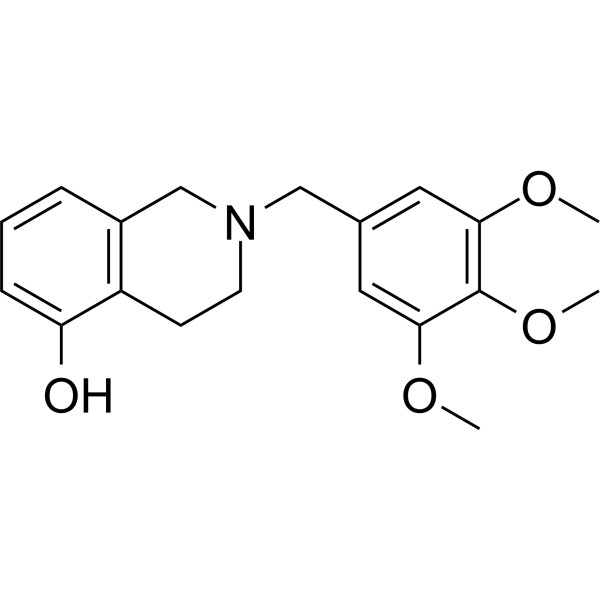 0 ImagesHA-CD44 interaction inhibitor 2 is a CD44 inhibitor that can inhibit the interaction between Hyaluronic acid (HA) (HY-B0633A) and CD44. HA-CD44 interaction inhibitor 2 acts as an antiproliferative agent against CD44+ cancer cells. HA-CD44 interaction inhibitor 2 can disrupt the integrity of cancer spheres and reduce cancer cell viability in a dose-dependent manner. HA-CD44 interaction inhibitor 2 is applicable for tumor research.
-
HA-CD44 interaction inhibitor 1
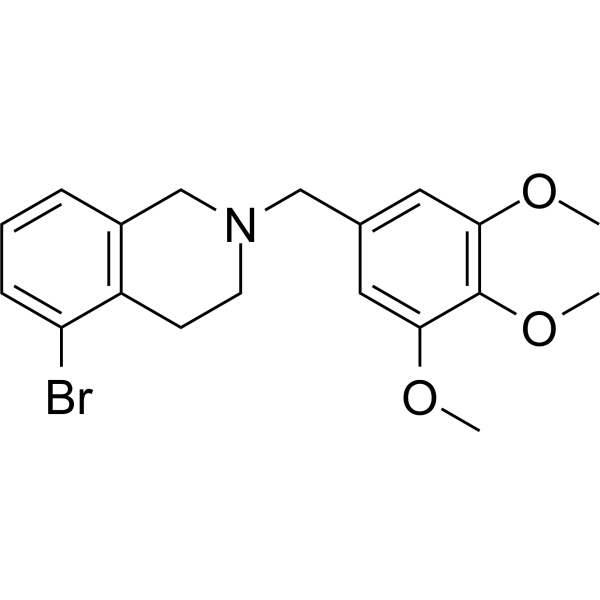 0 ImagesHA-CD44 interaction inhibitor 1 is a CD44 inhibitor that can inhibit the interaction between Hyaluronic acid (HA) (HY-B0633A) and CD44. HA-CD44 interaction inhibitor 1 exerts an antiproliferative effect on CD44+ cancer cell lines. HA-CD44 interaction inhibitor 1 can be used for the research of cancer.
-
Hyaluronic acid sodium (MW 200-1560)
 0 ImagesHyaluronic acid sodium (MW 200-1560) is a biopolymer composed of repeating disaccharide units, with a molecular weight of 200-1560. Hyaluronic acid sodium is a major component of the extracellular matrix (ECM). It is synthesized on the plasma membrane. Hyaluronic acid sodium exerts its effects by binding to receptors CD44 and RHAMM. Hyaluronic acid sodium activates PI3K-Akt signaling. Hyaluronic acid sodium also enhances cell invasion and angiogenesis by promoting or stimulating the binding of proteolytic MMP-9 to the cell surface. Elevated hyaluronic acid levels are associated with tumor cell growth, adhesion, migration, invasion, and angiogenesis in digestive system cancers. Hyaluronic acid sodium is involved in tissue remodeling and rapid cell proliferation in several physiological processes, including embryonic morphogenesis and wound healing. Hyaluronic acid sodium can be used as a regulator of cancer-associated lymphangiogenesis. Hyaluronic acid sodium can be used as a drug delivery carrier for sodium butyrate, enhancing its anti-proliferative activity against breast cancer cell lines. Hyaluronic acid sodium can lubricate the corneal endothelium. Hyaluronic acid sodium can improve tissue hydration and enhance the resistance of cells to mechanical damage. Hyaluronic acid sodium has been conjugated with antibodies to ensure that the active compound continues to exert its effects at the site of inflammation. Hyaluronic acid sodium can be used in research in the fields of osteoarthritis, ophthalmology, cosmetic dermatology, oncology, and liver diseases.
-
Ptaquiloside
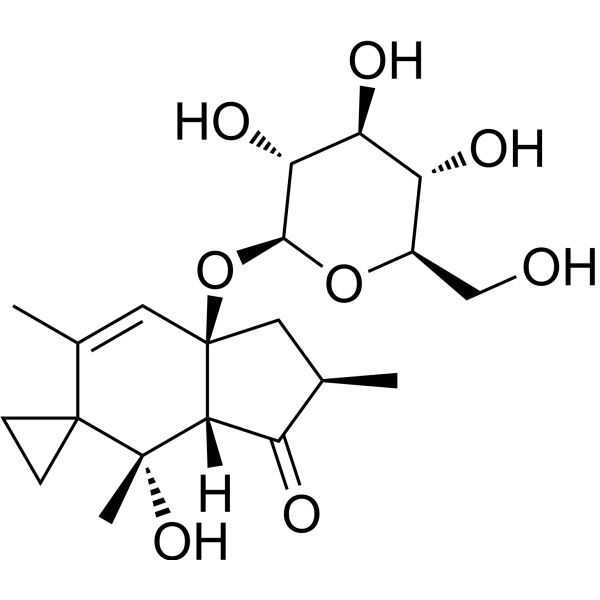 0 ImagesCat. No.: HY-N7882CAS No.: 87625-62-5Synonyms: Braxin C; Aquilide APtaquiloside (Braxin C; Aquilide A) is an illudane-type sesquiterpene glycoside natural toxin derived from ferns, with carcinogenic properties. Ptaquiloside can be converted to Pterosin B (HY-N1570). Ptaquiloside upregulates the expression of metallothioneins Mt1 and Mt2, and depletes intracellular free zinc ions. Ptaquiloside downregulates the expression of CD44 and CD107a in lesion-infiltrating CD8+ T cells, impairs T cell activation and degranulation capacity, and promotes immune evasion. Ptaquiloside can be used in cancer-related research.
-
PF-03475952
 0 ImagesCat. No.: HY-P992437PF-03475952 is a fully human IgG2 monoclonal antibody targeting CD44. PF-03475952 binds an epitope in CD44’s constant exons, blocks CD44-hyaluronic acid interaction, reduces cell surface CD44, and does not cross-react with rodent CD44 or LYVE-1. PF-03475952 induces cancer cell apoptosis, inhibits LPS (HY-D1056)-induced leukocyte cytokine release and cancer metastasis, and reduces CD44 expression on circulating CD3+ lymphocytes in cynomolgus monkeys. PF-03475952 can be used for the research of rheumatoid arthritis and hepatocellular carcinoma.
-
Hyaluronic acid, low endotoxin
 0 ImagesSynonyms: Hyaluronan, low endotoxin; Hyaluronate, low endotoxinHyaluronic acid, low endotoxin (Hyaluronan, low endotoxin) is a biopolymer composed of repeating disaccharide units containing low levels of endotoxin. Hyaluronic acid is a major component of the extracellular matrix (ECM). It is synthesized on the plasma membrane. Hyaluronic acid exerts its effects by binding to receptors CD44 and RHAMM. Hyaluronic acid activates PI3K-Akt signaling. Hyaluronic acid also enhances cell invasion and angiogenesis by promoting or stimulating the binding of proteolytic MMP-9 to the cell surface. Elevated hyaluronic acid levels are associated with tumor cell growth, adhesion, migration, invasion, and angiogenesis in digestive system cancers. Hyaluronic acid is involved in tissue remodeling and rapid cell proliferation in several physiological processes, including embryonic morphogenesis and wound healing. Hyaluronic acid can be used as a regulator of cancer-associated lymphangiogenesis. Hyaluronic acid can be used as a drug delivery carrier for sodium butyrate, enhancing its anti-proliferative activity against breast cancer cell lines. Hyaluronic acid can lubricate the corneal endothelium. Hyaluronic acid can improve tissue hydration and enhance the resistance of cells to mechanical damage. Hyaluronic acid has been conjugated with antibodies to ensure that the active compound continues to exert its effects at the site of inflammation. Hyaluronic acid can be used in research in the fields of osteoarthritis, ophthalmology, cosmetic dermatology, oncology, and liver diseases.
-
Hyaluronan-IN-1
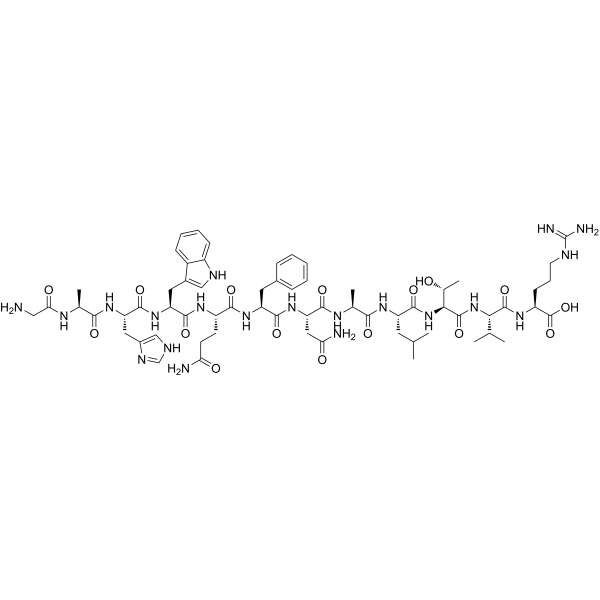 0 ImagesHyaluronan-IN-1 (Pep-1) is a Hyaluronan inhibitor with a Kd value of 1.65 μM. Hyaluronan-IN-1 blocks CD44-dependent cell adhesion. Hyaluronan-IN-1 inhibits cell adhesion to hyaluronan substrates. Hyaluronan-IN-1 suppresses the development of contact hypersensitivity in mice by blocking the homing process of inflammatory cells to the skin. Hyaluronan-IN-1 also inhibits responses during the sensitization phase. Hyaluronan-IN-1 reduces lung metastasis of melanoma and prolongs the survival of mice. Hyaluronan-IN-1 can be used in research related to contact hypersensitivity, chronic skin inflammation, and melanoma.
-
3-Methylbenzene-1,2-diamine
 0 ImagesCat. No.: HY-W015860CAS No.: 2687-25-4Synonyms: Tolylene-2,3-diamine3-Methylbenzene-1,2-diamine (Tolylene-2,3-diamine) is a CD44 hyaluronic acid-binding domain ligand, with a Kd of 8.5 mM for hCD44 HABD and a Kd of 6.4 mM for mCD44 HABD. 3-Methylbenzene-1,2-diamine acts as a non-inhibitor that does not interfere with the binding of CD44 HABD to polymeric hyaluronic acid in vitro.
-
Hyaluronidase 2
 0 ImagesCat. No.: HY-E70182Synonyms: EC:3.2.1.35; HYAL2Hyaluronidase 2 (EC:3.2.1.35; HYAL2) is a hyaluronidase. Hyaluronidase 2 cleaves high-molecular-weight hyaluronan into intermediate, ~20 kDa, and tetrasaccharide fragments. Hyaluronidase 2 directly interacts with CD44 and ERM proteins, reduces CD44 hyaluronan binding capacity and ERM activation. Hyaluronidase 2 can be used for the research of gliomas, inflammatory bowel disease, congenital heart defects, heart failure.
-
A5G27
 0 ImagesCat. No.: HY-P12263CAS No.: 288307-57-3A5G27 is a laminin-derived peptide ligand and CD44 antagonist that binds to CD44, CD44v3, and CD44v6, driving receptor-mediated endocytosis and internalization into CD44-expressing cells. A5G27 alleviates mechanical hyperalgesia induced by substances such as carrageenan and Hyaluronidase. A5G27 exhibits antitumor activity. A5G27 can be used in research on cancer, inflammatory pain, and wound healing.
-
LSD1-IN-48
 0 ImagesCat. No.: HY-181781CAS No.: 3104325-26-7LSD1-IN-48 is a tranylcypromine-pyrimidine derivative and selective LSD1 inhibitor with a human IC50 of 7.87 nM. LSD1-IN-48 increases H3K4me1/2 histone methylation levels. LSD1-IN-48 induces apoptosis, upregulates CD86, downregulates SOX2 and CD44, inhibits proliferation in cancer cells. LSD1-IN-48 can be used for the research of acute myeloid leukemia.
-
SRT6
 0 ImagesCat. No.: HY-175809Purity: 99.90%SRT6 is a CD44 inhibitor. SRT6 exerts antiproliferative activity in CD44+ breast cancer and lung cancer cells. SRT6 inhibits CD44-associated SRC kinase, as well as EGFR, ERBB2, ERBB4, MAP3K10 and MAPKAPK2. SRT6 can be used for the research of breast cancer and lung cancer.
-
Anti-Mouse CD44 Antibody (KM703)
 0 ImagesCat. No.: HY-P991756Anti-Mouse CD44 Antibody (KM703) recognizes mouse CD44. CD44 is the main receptor for hyaluronan (HA). Anti-Mouse CD44 Antibody (KM703) does not recognize the HA binding site of CD44. Anti-Mouse CD44 Antibody (KM703) is a non-HA-blocking antibody. Recommend Isotype Controls: Rat IgG2a kappa, Isotype Control (HY-P990679).
-
BXL0124
 0 ImagesCat. No.: HY-187731CAS No.: 685141-23-5BXL0124 is an orally effective CD44 inhibitor and Notch signaling pathway inhibitor. BXL0124 has a vitamin D receptor-dependent mechanism and can downregulate the expression of CD44, Notch1/2/3, HES1, OCT4, LAMA5, JAG1, JAG2, NF-κB and DLL1. BXL0124 inhibits c-Myc expression and the levels of phosphorylated ERK, AKT, ErbB2, reduces the level of activated Notch1 receptor and its nuclear localization, decreases the mRNA and protein levels of Jagged-1 and Jagged-2, and inhibits the STAT3 signaling pathway by reducing the formation of the CD44-STAT3-JAK2 complex, while also inhibiting the transcriptional activity of the CD44 promoter in a p53-dependent manner. BXL0124 can induce myoepithelial differentiation and inhibit the self-renewal of cancer stem cell-like cells, cancer cell proliferation, invasion, and growth. BXL0124 can be used in research related to triple-negative breast cancer, basal-like breast cancer, ErbB2-overexpressing mammary tumorigenesis, and breast cancer.
-
Anti-CD44 Antibody
 0 ImagesCat. No.: HY-P991559Synonyms: VB6-008 antibody; VB1-008
- 1



