



Hyaluronan-IN-1

Based on 1 Customer Validation
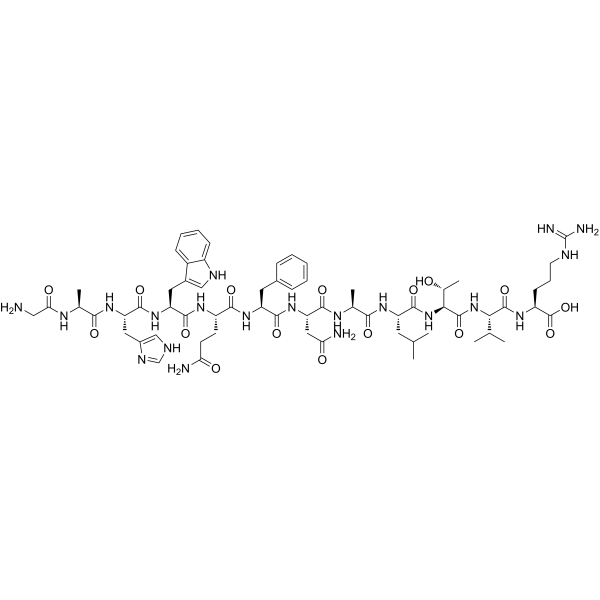
Hyaluronan-IN-1 (Pep-1) is a Hyaluronan inhibitor with a Kd value of 1.65 μM. Hyaluronan-IN-1 blocks CD44-dependent cell adhesion. Hyaluronan-IN-1 inhibits cell adhesion to hyaluronan substrates. Hyaluronan-IN-1 suppresses the development of contact hypersensitivity in mice by blocking the homing process of inflammatory cells to the skin. Hyaluronan-IN-1 also inhibits responses during the sensitization phase. Hyaluronan-IN-1 reduces lung metastasis of melanoma and prolongs the survival of mice. Hyaluronan-IN-1 can be used in research related to contact hypersensitivity, chronic skin inflammation, and melanoma.
For research use only. We do not sell to patients.
- Purity : 99.84%
- CAS No.: 299157-43-0
- Formula: C64H94N20O16
- Molecular Weight:1399.56
-
Storage:
Sealed storage, away from moisture.
Powder -80°C, 2 years , -20°C, 1 year* In solvent : -80°C, 6 months; -20°C, 1 month (sealed storage, away from moisture)

To place orders, for customer services and technical support, please contact: MedChemExpress USA
Tel: 609-228-6898 E-mail: [email protected] [email protected]


-
 Biological Activity
-
Chemical Information
- Protocols
- Purity & Documentation
- References
-
 Help & FAQs




Biological Activity
Description
In Vitro
Hyaluronan-IN-1 (125 μg/mL; 72 h) does not directly affect the proliferation or the expression of proliferation marker genes in small intestinal organoids derived from wild-type (WT) C57BL/6 mice[1].
Hyaluronan-IN-1 (125I-labeled peptide; 50 μg/mL; 1 h) specifically binds to immobilized HA in a dose-dependent manner via HA-coated paramagnetic bead binding assay, with an apparent affinity constant Kd of 1.65 μM[2].
Hyaluronan-IN-1 (0-500 μg/mL; 2 h) inhibits the binding of soluble HA to BW5147 thymoma cells in a dose-dependent manner, with an inhibition rate of approximately 75% observed at the concentration of 500 μg/mL[2].
Hyaluronan-IN-1 (500 μg/mL; 1 h) potently inhibits CD44-dependent adhesion of B16-F10 melanoma cells to HA-coated substrates[3].
Hyaluronan-IN-1 (500 μg/mL; 1 h) potently inhibits the adhesion of RPMI 7591 melanoma cells to HA-coated substrates[3].
Hyaluronan-IN-1 (500 μg/mL; 1 h) potently inhibits the adhesion of B16-BL6 melanoma cells to HA-coated substrates[3].
Hyaluronan-IN-1 (0-250 μg/mL; 24 h) does not alter the proliferation of B16-F10 melanoma cells in vitro[3].
MedChemExpress (MCE) has not independently confirmed the accuracy of these methods. They are for reference only. Further protocols information, click here.
-
Cell Line:WT C57BL/6 mouse small intestinal enteroids
-
Concentration:125 μg/mL
-
Incubation Time:72 h
-
Result:Showed no effect on enteroid growth measured by MTT incorporation in either stem cell-supporting or differentiation-supporting conditions.
Showed no effect on the mRNA expression of proliferation markers Ki-67 or Cyclin-D1, with no significant differences compared to control enteroids.
-
Cell Line:B16-F10 melanoma cells
-
Concentration:0-250 μg/mL
-
Incubation Time:24 h
-
Result:Had no effect on [3H]thymidine uptake at any tested concentration, indicating no impact on in vitro cell proliferation.
In Vivo
Hyaluronan-IN-1 (40 mg/kg; i.p.; every other day; 7 days) reduces crypt fission, impairs Lgr5+ stem cell proliferation, suppresses crypt base epithelial proliferation, increases apoptosis, and reduces Paneth cell numbers in wild-type and CD44-/- postnatal mice, but not in TLR4-/- mice, indicating dependence on TLR4 signaling for these postnatal intestinal development effects[1].
Hyaluronan-IN-1 (13.3-40 µg/ear; s.c.; single or two injections; 1-3 days pre-DNFB exposure) inhibits hapten-triggered Langerhans cell migration from the murine epidermis in a dose- and time-dependent manner, with complete inhibition achieved via two 40 µg/ear injections 24 h and 1 h before DNFB exposure[2].
Hyaluronan-IN-1 (40 µg/ear/injection; s.c.; two injections; 24 h and 1 h before sensitization) locally and temporally suppresses the sensitization phase of murine contact hypersensitivity responses, with no induction of long-term unresponsiveness[2].
Hyaluronan-IN-1 (40 µg/ear-1 mg/animal; s.c., i.v., topical; single or two injections; 1-24 h before challenge) inhibits the elicitation phase of acute murine contact hypersensitivity responses, reducing ear swelling, edema, and leukocyte infiltration[2].
Hyaluronan-IN-1 (40 µg/ear/injection; s.c.; injections on days 0, 1, 3, and 5) significantly inhibits murine chronic dermatitis induced by repeated hapten applications[2].
Hyaluronan-IN-1 (500 μg/mouse; i.v.; single co-injection) significantly reduces B16-F10 melanoma lung metastasis incidence and prolongs survival in female C57BL/6 mice, with a 35.1% survival rate at 48 days post-tumor inoculation[3].
MedChemExpress (MCE) has not independently confirmed the accuracy of these methods. They are for reference only.
-
Animal Model:C57BL/6J (male, wild-type, CD44-/-, TLR4-/-, 3 weeks old at study start)[1]
-
Dosage:40 mg/kg
-
Administration:i.p.; twice a week; 5 weeks
-
Result:Reduced small intestinal length, reduced colonic length, decreased jejunal villus height, decreased jejunal crypt depth, decreased colonic crypt depth, reduced number of BrdU-positive epithelial cells per proximal jejunum crypt section, reduced number of BrdU-positive epithelial cells per distal colon crypt section, and lowered average body weight by 10% compared to controls in wild-type mice.
Reduced small intestinal length, reduced colonic length, decreased jejunal villus height, decreased jejunal crypt depth, decreased colonic crypt depth, reduced number of BrdU-positive epithelial cells per proximal jejunum crypt section, reduced number of BrdU-positive epithelial cells per distal colon crypt section, and lowered average body weight by 8% compared to controls in CD44-/- mice.
Showed no significant effects on small intestinal length, colonic length, villus height, crypt depth, BrdU-positive cell counts, or body weight compared to controls in TLR4-/- mice.
-
Animal Model:Lgr5/EGFP C57BL/6J (wild-type, CD44-/-, TLR4-/-, 7 days old at study start)[1]
-
Dosage:40 mg/kg
-
Administration:i.p.; every other day; 7 days
-
Result:Reduced small intestinal crypt fission frequency, reduced colonic crypt fission frequency, decreased percentage of Lgr5+/BrdU+ epithelial cells in nonfissioning crypts, reduced positional epithelial proliferation at crypt base positions 1-4, increased positional apoptosis at crypt positions 1-7, and reduced Paneth cell number per crypt section in wild-type mice.
Reduced small intestinal crypt fission frequency, reduced colonic crypt fission frequency, decreased percentage of Lgr5+/BrdU+ epithelial cells in nonfissioning crypts, reduced positional epithelial proliferation at crypt base positions 1-4, showed no significant effect on apoptosis, and showed no significant effect on Paneth cell number in CD44-/- mice.
Showed no significant effects on crypt fission frequency, Lgr5+ stem cell proliferation, positional epithelial proliferation, apoptosis, or Paneth cell number compared to controls in TLR4-/- mice.
-
Animal Model:BALB/c (female, 6-8 weeks old)[2]
-
Dosage:40 µg/ear/injection (complete inhibition); 13.3 µg/ear (partial inhibition); 40 µg/ear (single injection, complete inhibition at 1-2 days pre-DNFB, no inhibition at 3 days pre-DNFB)
-
Administration:s.c.; two injections at 24 h and 1 h before DNFB application; single injection at 24 h, 1 day, 2 days, or 3 days before DNFB application
-
Result:Prevented DNFB-triggered Langerhans cell migration almost completely (≥80% inhibition across seven independent experiments) with two 40 µg/ear/injection doses.
Caused partial inhibition of DNFB-triggered Langerhans cell migration with a single 13.3 µg/ear dose.
Caused more prominent inhibition of DNFB-triggered Langerhans cell migration with a single 40 µg/ear dose.
Blocked DNFB-triggered Langerhans cell migration completely with a single 40 µg/ear dose administered 1 or 2 days before DNFB application.
Lost inhibitory activity for DNFB-triggered Langerhans cell migration with a single 40 µg/ear dose administered 3 days before DNFB application.
Showed equivalent inhibitory activity to its His→Ala mutant.
Abrogated inhibitory activity in its Trp→Ala mutant form.
Did not affect Langerhans cell densities in the absence of DNFB.
-
Animal Model:BALB/c (female, 6-8 weeks old)[2]
-
Dosage:40 µg/ear/injection
-
Administration:s.c.; two injections at 24 h and 1 h before sensitization
-
Result:Significantly reduced ear swelling responses to DNFB when sensitized with DNFB on the peptide-injected left ear.
Showed comparable ear swelling responses to OX (sensitized on the abdomen) relative to control peptide-treated mice.
Significantly reduced swelling responses to OX when sensitized with OX on the left ear.
Showed comparable swelling responses to DNFB (sensitized on the abdomen) relative to control peptide-treated mice.
Showed similar swelling responses to control peptide-treated mice when resensitized and rechallenged with DNFB, indicating no long-term unresponsiveness.
-
Animal Model:BALB/c (female, 6-8 weeks old)[2]
-
Dosage:40 µg/ear/injection (s.c.); 1 mg/animal (i.v.); 40 µg/ear (topical)
-
Administration:s.c.; two injections at 24 h and 1 h before challenge; i.v.; single injection 1 h before challenge; topical; single application 1 h before challenge after acetone skin barrier disruption
-
Result:Caused a significant reduction in ear swelling compared to PBS, control peptide, or Pep-2-treated mice via subcutaneous administration.
Caused significant reductions in ear swelling relative to control peptide-treated mice via intravenous and topical administration.
Reduced skin edema and leukocyte infiltration compared to controls, with statistically significant decreases in measured ear thickness and infiltrating leukocyte counts.
-
Animal Model:BALB/c (female, 6-8 weeks old)[2]
-
Dosage:40 µg/ear/injection
-
Administration:s.c.; injections on days 0, 1, 3, and 5
-
Result:Significantly reduced ear swelling at every time point tested compared to control peptide-treated mice, with progressive suppression of the chronic inflammatory response.
-
Animal Model:C57BL/6 (female, 6-8 weeks old)[3]
-
Dosage:500 μg/mouse (co-injection); 40 μg/mouse (days 3 and 6 post-inoculation)
-
Administration:s.c.; single co-injection; two additional injections on days 3 and 6
-
Result:Had no significant effect on local tumor growth at the inoculation sites, with tumor size measurements comparable to control groups.
-
Animal Model:C57BL/6 (female, 6-8 weeks old)[3]
-
Dosage:500 μg/mouse
-
Administration:i.v.; single co-injection
-
Result:Reduced the number of lung metastatic lesions with statistical significance (P < 0.05) compared to control groups.
Prolonged survival significantly (P < 0.01), with a median survival time of 32 days, compared to 26 days for the control peptide group and 25 days for the PBS group.
Achieved a 35.1% survival rate (13 of 37 mice) at 48 days post-inoculation, while all PBS-treated mice died by day 28 and only 2 of 30 control peptide-treated mice survived.
Resulted in no macroscopically discernible lung metastatic lesions in surviving mice.


Chemical Information
-
CAS No. 299157-43-0
-
Appearance Solid
-
Molecular Weight 1399.56
-
Formula C64H94N20O16
-
Color White to off-white
-
Sequence
Gly-Ala-His-Trp-Gln-Phe-Asn-Ala-Leu-Thr-Val-Arg
-
Sequence Shortening
GAHWQFNALTVR
-
Shipping
Room temperature in continental US; may vary elsewhere.
-
Storage
Sealed storage, away from moisture
Powder -80°C 2 years -20°C 1 year * In solvent : -80°C, 6 months; -20°C, 1 month (sealed storage, away from moisture)

Protocols
-
Imiquimod-Induced Psoriasiform Dermatitis
Imiquimod (IMQ)-induced psoriasiform dermatitis is a widely used murine model in which topical application of IMQ, a Toll-like receptor 7 (TLR7) agonist, triggers innate immune activation in the skin and induces a psoriasis-like inflammatory cascade characterized by epidermal hyperplasia, immune cell infiltration, and cytokine production dominated by the IL-23/IL-17 axis. This inflammatory response is mediated through activation of dendritic cells and downstream induction of IL-23, IL-17A, IL-22, and related pro-inflammatory mediators, recapitulating key features of human plaque psoriasis and enabling mechanistic and therapeutic studies. The model is commonly induced using Aldara (5% IMQ cream) applied topically to murine skin, resulting in rapid onset of erythema, scaling, and thickening that can be quantified as disease severity indices and validated histologically.
-
TPA/Croton Oil Ear Edema and Dermatitis
The TPA (12-O-tetradecanoylphorbol-13-acetate) and croton oil-induced mouse ear edema model is a well-established acute cutaneous inflammation system used to evaluate topical anti-inflammatory activity by measuring edema formation, neutrophil infiltration, vascular permeability, and cytokine-mediated skin responses in vivo. The inflammatory response is triggered by topical application of phorbol esters (TPA) or croton oil constituents, leading to rapid activation of protein kinase C signaling, leukocyte recruitment, and increased vascular permeability, which can be quantified by ear thickness, weight, dye extravasation, and biochemical markers such as myeloperoxidase (MPO) activity and pro-inflammatory mediators in ear tissue homogenates. This model is widely used for screening anti-inflammatory agents, where reductions in edema and inflammatory biomarkers reflect suppression of acute dermal inflammation and immune cell infiltration. Histological evaluation typically confirms epidermal
-
Tail-Vein Experimental Metastasis Xenograft
Tail-vein experimental metastasis xenograft models assess the ability of injected tumor cells to survive circulation, arrest in vascular beds, extravasate, and colonize distant organs, most commonly lung after lateral tail-vein injection; this model bypasses primary-tumor formation, local invasion, and intravasation, so the readout reflects late metastatic colonization rather than the full metastatic cascade. The main readouts are metastatic burden measured by bioluminescence imaging, gross metastatic nodules, histology, organ weight, survival, or ex vivo tumor-cell quantification; luciferase-labeled tumor cells permit longitudinal noninvasive monitoring, while histology confirms organ colonization and tissue localization.
-
Contact Hypersensitivity Dermatitis
Contact hypersensitivity (CHS) dermatitis is a T cell-mediated delayed-type (Type IV) immune reaction in which low-molecular-weight haptens applied to the skin bind host proteins to form complete antigens, triggering sensitization followed by a secondary inflammatory response upon re-exposure (elicitation phase), which is commonly quantified by ear swelling as a readout of skin inflammation in murine models. This model is widely used to study allergic contact dermatitis because it is antigen-specific, reproducible, and reflects key immunological events including dendritic cell activation, T cell priming in draining lymph nodes, and effector T cell-driven tissue inflammation. DNFB- and oxazolone-induced CHS models are standard systems for evaluating both acute and chronic T cell-dependent skin inflammation and for testing immunomodulatory interventions.
-
Research Protocol for Inflammation-related Diseases
The NLRP3 inflammasome is a cytosolic innate immune signaling platform that integrates priming signals and danger-signal activation to promote caspase-1 activation, maturation of IL-1β and IL-18, and gasdermin D-mediated pyroptotic cell death. The core experimental logic is to determine whether inflammatory disease phenotypes are driven by increased NLRP3 expression, ASC-containing inflammasome assembly, caspase-1 cleavage, GSDMD cleavage, and extracellular release of IL-1β/IL-18 rather than by nonspecific cell injury alone. The pathway is strongly linked to inflammation-related disease phenotypes because monosodium urate crystals activate NALP3/NLRP3 inflammasome signaling in gout-like crystal inflammation, cholesterol crystals activate NLRP3 inflammasomes in atherogenesis models, and DSS-induced intestinal inflammation has been reported to involve NLRP3 inflammasome activity. However, experimental colitis studies also show context-dependent protective effects of NLRP3 inflammasome co
-
Orthotopic Cell-Line Xenograft
Orthotopic cell-line xenograft models involve implantation of human cancer cell lines into the anatomically corresponding organ of immunodeficient mice to reproduce tumor growth within a native microenvironment, enabling more clinically relevant tumor behavior compared with subcutaneous models. These models are widely used because orthotopic placement better recapitulates tumor progression, including invasion and metastatic spread, which are often underrepresented in heterotopic implantation systems. Compared with conventional xenografts, orthotopic implantation is described as more technically complex but provides improved simulation of tumor-microenvironment interactions and metastatic behavior, making it particularly valuable for translational oncology research. Surgical orthotopic implantation approaches have been emphasized as enabling faithful reproduction of clinical cancer features, including metastasis and disease progression patterns that align with the tumor’s organ of origi


Purity & Documentation
-
Data Sheet (278 KB)
-
SDS (254 KB)
- English - EN (254 KB)
- Français - FR (254 KB)
- Deutsch - DE (254 KB)
- Norwegian - NO (254 KB)
- Español - ES (254 KB)
- Swedish - SV (254 KB)
- Italian - IT (254 KB)
- Korean - KR (254 KB)
- Portuguese - PT (254 KB)
-
Handling Instructions (2659 KB)
References
[1]. Riehl TE, et al. CD44 and TLR4 mediate hyaluronic acid regulation of Lgr5+ stem cell proliferation, crypt fission, and intestinal growth in postnatal and adult mice. Am J Physiol Gastrointest Liver Physiol. 2015;309(11):G874-G887. [Content Brief]
[2]. Mummert ME, et al. Development of a peptide inhibitor of hyaluronan-mediated leukocyte trafficking. J Exp Med. 2000;192(6):769-779. [Content Brief]
[3]. Mummert ME, et al. Functional roles of hyaluronan in B16-F10 melanoma growth and experimental metastasis in mice. Mol Cancer Ther. 2003 Mar;2(3):295-300. [Content Brief]

Calculators
Concentration (start) × Volume (start) = Concentration (final) × Volume (final)


Hyaluronan-IN-1 Related Classifications
HY-P5352 Related Classifications
 Powered by Bioz