


Search Result
Results for "
glycosidic bonds
" in MedChemExpress (MCE) Product Catalog:
6
Biochemical Assay Reagents
| Cat. No. |
Product Name |
Target |
Research Areas |
Chemical Structure |
-
- HY-107910
-
|
Hyaluronate 4-glycanohydrolase, Bovine testes; Hyaluronoglucosaminidase, Bovine testes
|
NF-κB
|
Inflammation/Immunology
Cancer
|
|
Hyaluronidase, Bovine testes (Hyaluronate 4-glycanohydrolase; Hyaluronoglucosaminidase) is an endoglycosidase that depolymerizes Hyaluronic acid (HA) (HY-B0633A) by cleavage of glycosidic bonds. Hyaluronidase degrades HA and activates membrane receptors that trigger pathways converging in NF-κB activation. Hyaluronidase is employed in the research of granulomatous foreign body reactions, soft-tissue necrosis caused by vascular compromise and uncomplicated nodules, overcorrection, inflamed nodules or tissue ischemia associated with HA filler injection .
|
-
-
- HY-112624B
-
|
Dextran 70; Dextran D70; Dextran T70(MW 64000-76000)
|
Bacterial
|
Others
|
|
Dextran 70,000 is a high molecular weight polysaccharide formed by glucose linked by α-(1→6) glycosidic bonds. Dextran 70,000 can expand blood volume through colloidal osmotic pressure effect and inhibit cell adhesion and platelet aggregation through steric hindrance. At the same time, Dextran 70,000 can be used as a drug carrier to achieve targeted delivery through endocytosis. Dextran 70,000 is biologically inert and has low immunogenicity. It can be used for clinical blood volume expansion, anti-thrombotic research, and evaluation of vascular permeability in in vitro experiments. It can also be combined with fluorescent dyes for cell tracking and drug delivery research. The Dextran series of compounds are also natural polysaccharide drug carriers that can be connected to drugs through covalent bonding methods such as ester bonds, amide bonds or click chemistry, or self-assembled to form carriers such as nanoparticles and hydrogels. Dextran is biodegradable and biocompatible, and can achieve targeted delivery and controlled release of drugs. Dextran derivatives can prolong the half-life of drugs, increase local concentrations, and reduce the activity of immune clearance.
|
-
-
- HY-P2869
-
|
EC 3.2.1.23; GAL
|
Glycosidase
|
Metabolic Disease
|
|
β-Galactosidase, E. coli (EC 3.2.1.23; GAL) is a glycoside hydrolase that hydrolyzes the β-glycosidic bonds formed between galactose and its organic moieties. β-Galactosidase, E. coli can hydrolyze lactose to form glucose and galactose, and enter glycolysis; it can also catalyze the transgalactosylation of lactose into allolactose; allolactose can be cracked into monosaccharides .
|
-
-
- HY-P3004
-
|
Lyticase
|
Endogenous Metabolite
Fungal
|
Infection
|
|
Endo-1,3-β-glucanase (Lyticase) is an endoenzyme that can specifically cleave β-1,3-glycosidic bonds. Endo-1,3-β-glucanase recognizes and binds to β-1,3-glucan chains, catalyzing the cleavage of glycosidic bonds and hydrolyzing polysaccharides into oligosaccharides. Endo-1,3-β-glucanase eliminates vaginal Candida. Endo-1,3-β-glucanase can be used in the study of recurrent Candida vaginitis .
|
-
-
- HY-108903A
-
|
|
Glycosidase
Biochemical Assay Reagents
|
Endocrinology
|
|
Hyaluronidase, Ovine testes is an endoglycosidase. Hyaluronidase, Ovine testes specifically degrades Hyaluronic acid (HY-B0633A) and Chondroitin sulfate (HY-B2162) by hydrolyzing β-glycosidic bonds in acidic mucopolysaccharides. Hyaluronidase, Ovine testes disperses follicular cells during fertilization by breaking down the hyaluronic acid-rich cumulus. Hyaluronidase, Ovine testes can be used in the study of fertility-related diseases .
|
-
-
- HY-112624C
-
|
|
Biochemical Assay Reagents
Endogenous Metabolite
|
Others
|
|
Dextran (MW 40000) is a complex carbohydrate polymer consisting of glucose molecules linked by glycosidic bonds. Dextran has excellent solubility in water, making it useful as a viscosity modifier or stabilizer in foods, paints and adhesives. In the biomedical field, dextran is often used as a plasma expander because of its ability to increase blood volume when administered intravenously. It can also be modified to create dextran-based drug delivery systems, such as targeted nanoparticles.
|
-
-
- HY-W134327A
-
|
Diethylaminoethyl dextran (MW 500000)
|
Biochemical Assay Reagents
|
Others
|
|
DEAE-Dextran (MW 500000) is a complex carbohydrate polymer consisting of glucose molecules linked by glycosidic bonds and modified with diethylaminoethyl (DEAE) groups. DEAE-Dextran is a cationic molecule that can be used as a transfection reagent to deliver nucleic acids such as DNA or RNA into cells. Its positive charge interacts with negatively charged cell membranes, facilitating the uptake of nucleic acids. DEAE-Dextran can also be used as an ion-exchange chromatography resin, allowing the separation and purification of biomolecules based on their charge.
|
-
-
- HY-111951
-
-
-
- HY-N6839
-
|
|
Glycosidase
|
Others
|
|
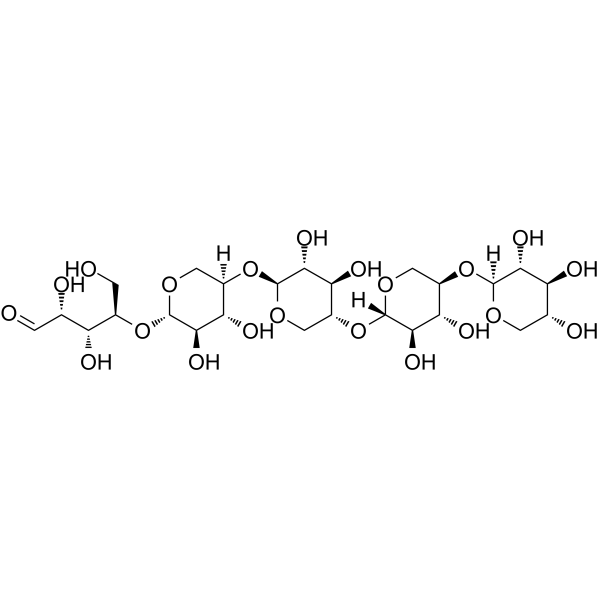
1,4-b-D-Xylopentaose is a linear pentasaccharide composed of 5 β-D-xylose units linked via 1,4-glycosidic bonds, and serves as a specific substrate for barley α-L-arabinofuranosidase .
|
-
-
- HY-N7948
-
|
|
Endogenous Metabolite
|
Others
|
|
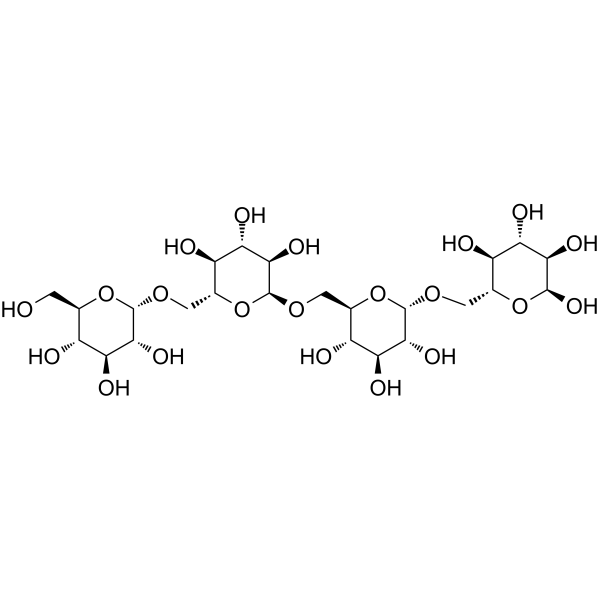
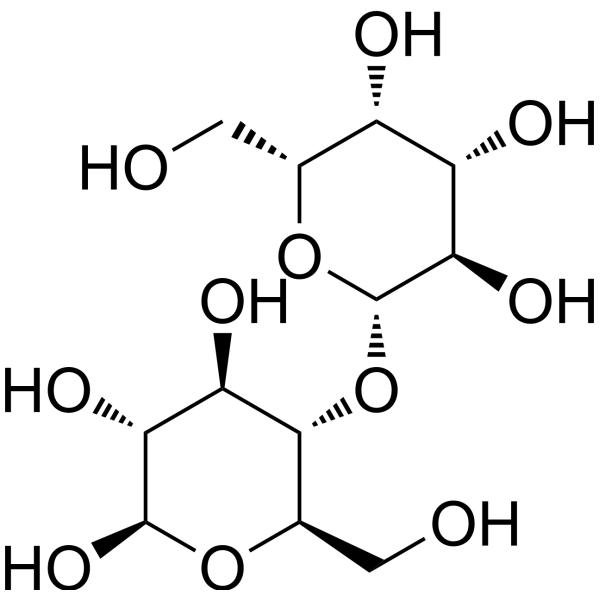
Isomaltotetraose is an orally active branched isomaltooligosaccharide with α-(1,6) glycosidic linkages. Isomaltotetraose is a prebiotic oligosaccharide present in honey and also a component of isomaltooligosaccharide mixtures. Isomaltotetraose maintains the growth of Prevotella or sustains the *Prevotella* enterotype in both in vitro systems and mouse models .
|
-
-
- HY-W039897
-
|
α-Methyl-D-mannoside
|
Environmental Pollutants
Bacterial
|
Infection
|
|
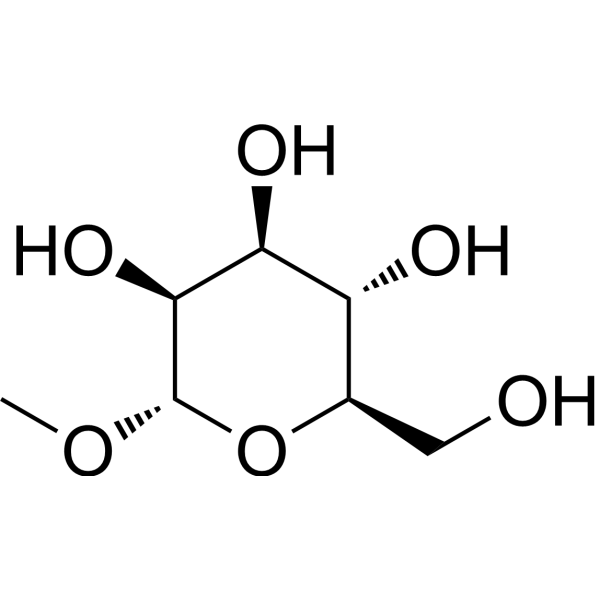
Methyl α-D-mannopyranoside (α-Methyl-D-mannoside) is a methyl glycoside derivative and conformational stabilizer of α-D-mannopyranose. The glycosidic bond conformation of Methyl α-D-mannopyranoside is significantly affected by the environment. In aqueous solution, Methyl α-D-mannopyranoside stabilizes into a trans conformation via intermolecular hydrogen bonds; in the gas phase, however, steric interactions drive Methyl α-D-mannopyranoside to prefer a clockwise gauche conformation. Methyl α-D-mannopyranoside also serves as a major component of secondary cell wall polymers in some bacteria and an active precursor site for virus-targeted glycoproteins. Methyl α-D-mannopyranoside acts as an acceptor substrate for alternansucrase, mediating the transfer of D-glucopyranosyl groups to generate a variety of glycosylated oligosaccharide products, with methyl α-D-glucopyranosyl-(1→6)-α-D-mannopyranoside as the main component. Methyl α-D-mannopyranoside is applicable to studies on bacterial pathogenic mechanisms associated with mannose-specific fimbrial lectins .
|
-
-
- HY-P2929A
-
|
|
Glycosidase
|
Cancer
|
|
PNGase F-Fast is a glycosidase that catalyzes the cleavage of internal glycosidic bonds in oligosaccharides. PNGase F-Fast removes almost all N-linked oligosaccharides from glycoproteins. PNGase F-Fast can release N-glycans from glycoproteins in the sugar analysis workflow. The cleavage site is: the glycosidic bond between the innermost N-acetylglucosamine and asparagine. PNGase F-Fast is an improved reagent that allows for rapid deglycosylation of antibodies and antibody fusions within minutes .
|
-
-
- HY-112624H
-
|
Dextran 2; Dextran D2; Dextran T2(MW 1600-2400)
|
Biochemical Assay Reagents
|
Others
|
|
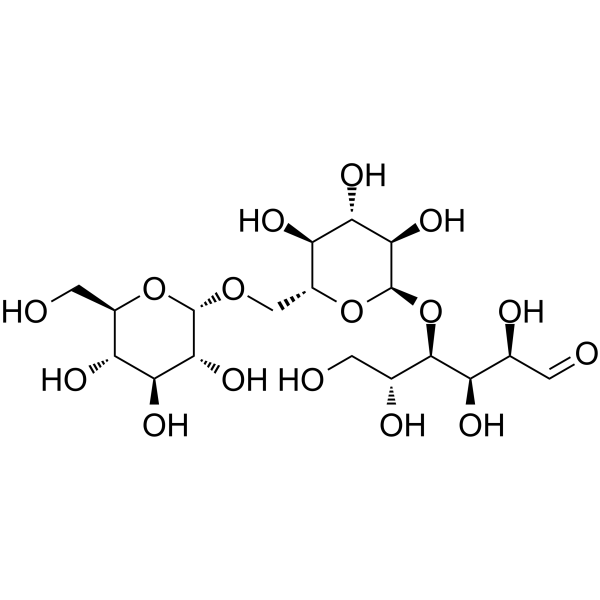
Dextran T2 (Dextran 2; Dextran T2(MW 1600-2400)) is a natural high molecular weight polysaccharide, the glycosidic bonds in its structure can be recognized by endo-dextranase and exo-dextranase. Dextran T2 (MW 2,000) breaks the glycosidic bonds in the enzymatic hydrolysis mechanism, releasing products such as D-glucose, Isomaltose (IM2), and Isomaltotriose (IM3). Dextran T2 (MW 2,000) can be used as a model substrate to characterize the catalytic properties of dextranase (such as optimal pH, temperature and product specificity), and to study enzymatic mechanism research and polysaccharide degradation pathways in glycobiology. The Dextran series of compounds are also a natural polysaccharide drug carrier, which can be connected to drugs through covalent bonding methods such as ester bonds, amide bonds or click chemistry, or self-assembled to form carriers such as nanoparticles and hydrogels. Dextran is biodegradable and biocompatible, and can achieve targeted delivery and controlled release of drugs. Dextran derivatives can prolong drug half-life, increase local concentration and reduce immune clearance activity .
|
-
-
- HY-P2866
-
|
|
Endogenous Metabolite
Bacterial
|
Infection
Inflammation/Immunology
|
|
β-N-Acetylhexosaminidase, Streptococcus pneumoniae is a cell surface virulence factor of Streptococcus pneumoniae, which contains two synergistically acting GH20 domains (with higher activity in GH20-2). β-N-Acetylhexosaminidase, Streptococcus pneumoniae specifically recognizes and hydrolyzes substrates with β(1,2) glycosidic bonds via Trp-443 and Tyr-482 residues. β-N-Acetylhexosaminidase, Streptococcus pneumoniae catalyzes the hydrolysis of β(1,2)-linked N-acetylglucosamine groups and related disaccharides, and promotes persistent colonization of bacteria in the airway by modifying host defense molecules and releasing monosaccharides for bacterial growth. β-N-Acetylhexosaminidase, Streptococcus pneumoniae can be used in studies related to Streptococcus pneumoniae infection, acute pneumonia, otitis media and meningitis .
|
-
-
- HY-P3187
-
|
|
DNA/RNA Synthesis
|
Others
|
|
Exo-1,4-β-xylosidase is an exonuclease that specifically acts on the β-1,4 glycosidic bonds at the non-reducing ends of xylan and xylooligosaccharides. Exo-1,4-β-xylosidase is Ca 2+-dependent and reversibly binds to metal ions to catalyze the hydrolysis of β-1,4 glycosidic bonds, thereby degrading xylan to produce xylose. Exo-1,4-β-xylosidase can be used in research fields such as lignocellulose bioconversion, bioethanol production, and optimization of xylan saccharification processes .
|
-
-
- HY-N6836
-
|
|
Others
|
Others
|
|
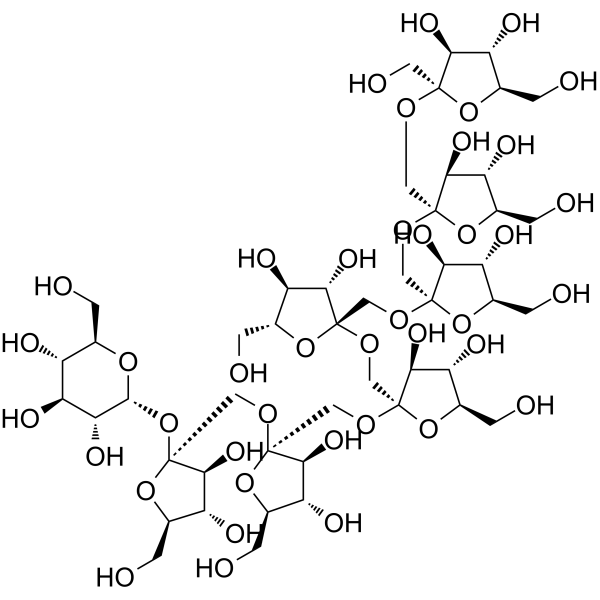
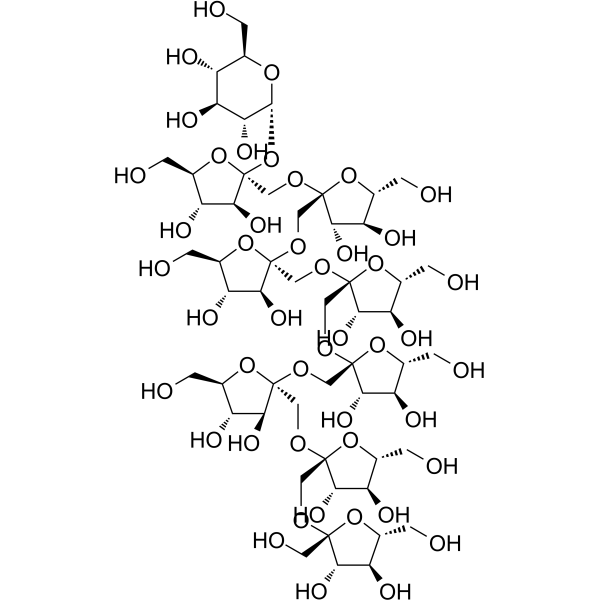
Fructo-oligosaccharide DP8/GF7 belongs to fructooligosaccharides (FOS) with degree of polymerization (DP=8). Fructo-oligosaccharides (FOS) are composed of 7 fructose units linked by (2→1)-β-glycosidic bonds and having a single D-glucosyl unit at the non-reducing end .
|
-
-
- HY-W150340
-
|
|
Galectin
Biochemical Assay Reagents
|
Cancer
|
|
β-Lactose is a disaccharide commonly found in milk and dairy products. It consists of two monosaccharides, glucose and galactose, linked by β-glycosidic bonds. β-Lactose has various applications in the food industry, especially as a sweetener and bulking agent. Furthermore, it can be used as a substrate for enzymes involved in lactose metabolism and as a model compound for studying carbohydrate-protein interactions.
|
-
-
- HY-N6835
-
|
|
Others
|
Others
|
|
Fructo-oligosaccharide DP9/GF8 belongs to fructooligosaccharides (FOS) with degree of polymerization (DP=9). Fructo-oligosaccharides (FOS) are composed of 8 fructose units linked by (2→1)-β-glycosidic bonds and having a single D-glucosyl unit at the non-reducing end .
|
-
-
- HY-N6837
-
|
|
Others
|
Others
|
|
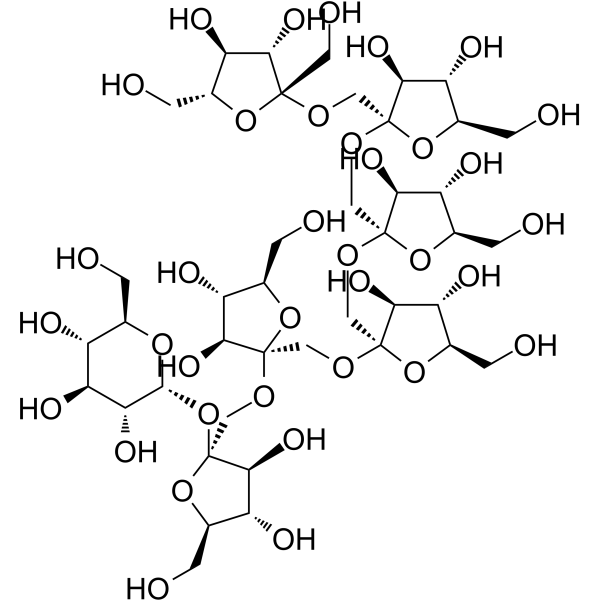
Fructo-oligosaccharide DP7/GF6 belongs to fructooligosaccharides (FOS) with degree of polymerization (DP=7). Fructo-oligosaccharides (FOS) are composed of 6 fructose units linked by (2→1)-β-glycosidic bonds and having a single D-glucosyl unit at the non-reducing end .
|
-
-
- HY-P2802B
-
|
|
Glycosidase
|
Metabolic Disease
|
|
α-Glucosidase, rice is a GH31 glycoside hydrolase in rice seeds, with high selectivity for α-1,4-glycosidic bonds. α-Glucosidase, rice can be inhibited by rice husk extracts (IC50 = 1.25 μg/mL) and steroidal components (IC50 = 1.83 μg/mL). α-Glucosidase, rice exists in two major isoforms, among which isoform II is more sensitive to inhibitors. α-Glucosidase, rice can directly bind to and degrade starch granules in rice seeds. α-Glucosidase, rice can form ONG2-I and ONG2-II via post-translational proteolysis. α-Glucosidase, rice can be used in type 2 diabetes research .
|
-
-
- HY-P2859
-
|
|
Endogenous Metabolite
|
Metabolic Disease
|
|
Chitosanase is a glycosyl hydrolase that catalyzes the endo hydrolysis of β-1,4-glycosidic bonds of partially acetylated chitosan to release chitosan oligosaccharides (COS). Chitosanases can convert high molecular weight chitosan into functional chitooligosaccharides with low molecular weight .
|
-
-
- HY-B2220B
-
|
|
Endogenous Metabolite
|
Others
|
|
Thermostable cellulase recombinant is a cellulose hydrolase present in hyperthermophiles, which catalyzes the hydrolysis of β-1,4 glycosidic bonds in cellulose. Thermostable cellulase recombinant targets carboxymethyl cellulose (CMC) as its primary substrate, and retains high residual activity even after incubation at high temperatures. The activity of Thermostable cellulase recombinant is inhibited by ionic and non-ionic detergents, and can be enhanced by cobalt ions. Thermostable cellulase recombinant can be applied in the paper industry .
|
-
-
- HY-P3187B
-
|
|
DNA/RNA Synthesis
|
Others
|
|
exo-β-1,4-xylosidase, Bacteroides ovatus (EC.3.2.1.37) is an exonuclease that specifically acts on the β-1,4 glycosidic bonds at the non-reducing ends of xylan and xylooligosaccharides. exo-β-1,4-xylosidase is Ca 2+-dependent and reversibly binds to metal ions to catalyze the hydrolysis of β-1,4 glycosidic bonds, thereby degrading xylan to produce xylose. exo-β-1,4-xylosidase can be used in research fields such as lignocellulose bioconversion, bioethanol production, and optimization of xylan saccharification processes .
|
-
-
- HY-P3187A
-
|
|
DNA/RNA Synthesis
|
Others
|
|
exo-β-1,4-xylosidase,Clostridium stercorarium (EC.3.2.1.37) is an exonuclease that specifically acts on the β-1,4 glycosidic bonds at the non-reducing ends of xylan and xylooligosaccharides. exo-β-1,4-xylosidase is Ca 2+-dependent and reversibly binds to metal ions to catalyze the hydrolysis of β-1,4 glycosidic bonds, thereby degrading xylan to produce xylose. exo-β-1,4-xylosidase can be used in research fields such as lignocellulose bioconversion, bioethanol production, and optimization of xylan saccharification processes .
|
-
-
- HY-N6834
-
|
|
Others
|
Others
|
|
Fructo-oligosaccharide DP10/GF9 belongs to fructooligosaccharides (FOS) with degree of polymerization (DP=10). Fructo-oligosaccharides (FOS) are composed of 9 fructose units linked by (2→1)-β-glycosidic bonds and having a single D-glucosyl unit at the non-reducing end .
|
-
-
- HY-N7009
-
|
|
Others
|
Metabolic Disease
|
|
Fructo-oligosaccharide DP12/GF11 belongs to fructooligosaccharides (FOS) with degree of polymerization (DP=12). Fructo-oligosaccharides (FOS) are composed of 11 fructose units linked by (2→1)-β-glycosidic bonds and having a single D-glucosyl unit at the non-reducing end .
|
-
-
- HY-P2869I
-
|
|
Glycosidase
|
Metabolic Disease
|
|
β-Galactosidase, Sweet almond is a glycoside hydrolase that hydrolyzes the β-glycosidic bonds formed between galactose and its organic moieties. β-Galactosidase, Sweet almond can hydrolyze lactose to form glucose and galactose, and enter glycolysis; it can also catalyze the transgalactosylation of lactose into allolactose; allolactose can be cracked into monosaccharides .
|
-
-
- HY-W145682
-
|
Blood Group H
|
Biochemical Assay Reagents
|
Others
|
|
Blood group H carbohydrate is a carbohydrate containing two monosaccharides, fucose and galactose, linked by α1-2 glycosidic bonds. It is the precursor of ABO blood group antigens, which are present on the surface of red blood cells and play a role in immune recognition and transfusion compatibility. Type H disaccharides have diverse applications in biochemical research, especially in the study of carbohydrate-protein interactions and the biosynthesis of blood group antigens. In addition, it can be used as a diagnostic tool to identify ABO blood group phenotypes.
|
-
-
- HY-N8279
-
|
Endo-β-1,3-1,4-glucanase
|
Glycosidase
|
Metabolic Disease
|
|
β-1,3-1,4-glucanase (Endo-β-1,3-1,4-glucanase) is a glycoside hydrolase family 16 enzyme (some members belong to subfamily 25). β-1,3-1,4-glucanase shows high substrate specificity toward mixed‑linked β‑glucans and cleaves β‑1,4 glycosidic bonds adjacent to β‑1,3 linkages in an endo‑type pattern. β-1,3-1,4-glucanase can be used in industrial enzyme applications and monogastric animal feed supplementation .
|
-
-
- HY-112108D
-
|
COS (MW 2000)
|
Biochemical Assay Reagents
|
Others
|
|
Chitosan oligosaccharide (MW 2000) (COS (MW 2000)) is a degradation product of chitosan. It is an oligosaccharide composed of 2-20 glucosamine groups linked by β-(1→4) glycosidic bonds .
|
-
-
- HY-N7008
-
|
|
Others
|
Metabolic Disease
|
|
Fructo-oligosaccharide DP11/GF10 belongs to fructooligosaccharides (FOS) with degree of polymerization (DP=11). Fructo-oligosaccharides (FOS) are composed of 10 fructose units linked by (2→1)-β-glycosidic bonds and having a single D-glucosyl unit at the non-reducing end .
|
-
-
- HY-111951R
-
|
|
Endogenous Metabolite
Reference Standards
|
Others
|
|
D-Panose (Standard) is the analytical standard of D-Panose (HY-111951). This product is intended for research and analytical applications. D-Panose is an oligosaccharide composed of glucose units linked by specific glycosidic bonds.
|
-
-
- HY-E70118
-
|
|
Glycosidase
|
Others
|
|
oligo-α-1,6-Glucosidase, Bacillus cereus ATCC7064 is a hydrolase that mainly hydrolyzes oligosaccharides with α-1,6-glycosidic bonds. oligo-α-1,6-Glucosidase, Bacillus cereus ATCC7064 can catalyzes the exo hydrolysis of α-1,6-glucoside bonds from the nonreducing ends of panose, palatinose, α-limit dextrins, and isomaltooligosaccharides. oligo-α-1,6-Glucosidase, Bacillus cereus ATCC7064 participates in the degradation pathway of starch and glycogen, assisting enzymes such as α-amylase to completely hydrolyzes amylopectin .
|
-
-
- HY-172757
-
|
|
Glycosidase
|
Metabolic Disease
|
|
α-Glucosidase-IN-88 (Compound 3K) is an orally active and potent α-glucosidase inhibitor with an IC50 value of 6.40 µM. α-Glucosidase-IN-88 inhibits carbohydrate hydrolysis by blocking the enzyme's ability to break down glycosidic bonds, thereby reducing postprandial blood glucose levels. α-Glucosidase-IN-88 is promising for research of type 2 diabetes mellitus (T2DM) .
|
-
-
- HY-138111
-
|
p-Nitopheyl β-D-cellotetaoside
|
Fluorescent Dye
|
Others
|
|
4-Nitrophenyl β-D-cellotetraoside (p-Nitopheyl β-D-cellotetaoside) is a small molecule cellulose mimetic consisting of a tetramer of D-glucose units linked by β-1-4 glycosidic bonds. The fragmentation pattern of 4-Nitrophenyl β-D-cellotetraoside after enzymatic hydrolysis can be analyzed by TLC or by the release of 4-nitrophenol, which has a strong absorbance at 395 nm in alkaline solutions. 4-Nitrophenyl β-D-cellotetraoside can be used in cellulose degradation studies to determine the specificity of cellulases .
|
-
-
- HY-P2802H
-
|
|
Endogenous Metabolite
|
Metabolic Disease
|
|
α-Glucosidase, Saccharomyces cerevisiae (EC 3.2.1.20), is a glucosidase located at the brush border of the small intestine, acting on 1,4-α-glycosidic bonds. α-Glucosidase breaks down starch and disaccharides into glucose.
|
-
-
- HY-P2802E
-
|
|
Endogenous Metabolite
|
Metabolic Disease
|
|
α-Glucosidase, Escherichia coli (EC 3.2.1.20), is a glucosidase located at the brush border of the small intestine, acting on 1,4-α-glycosidic bonds. α-Glucosidase breaks down starch and disaccharides into glucose.
|
-
-
- HY-108903B
-
|
|
Glycosidase
|
Metabolic Disease
|
|
Hyaluronidase, Streptomyces hyalurolyticus (EC 3.2.1.35) degrades hyaluronan and has been found to be inappropriately regulated during cancer progression. Hyaluronidase randomly cleaves β-N-acetylhexosamine-[1→4] glycosidic bonds in hyaluronic acid, chondroitin, and chondroitin sulfates.
|
-
-
- HY-E71366
-
|
|
Glycosidase
Endogenous Metabolite
|
Metabolic Disease
|
|
Endo-1,4-β-D-glucanase is a glycoside hydrolase that cleaves internal β-1,4-glycosidic bonds in cellulose and related β-D-glucans (β-D-Glucan) (HY-139413). Endo-1,4-β-D-glucanase randomly cuts long, insoluble cellulose polymer chains into shorter, soluble fragments such as oligosaccharides, thereby paving the way for further digestion into glucose .
|
-
-
- HY-E70116A
-
|
|
Glycosidase
|
Metabolic Disease
|
|
Isoamylase, Pseudomonas sp. (EC 3.2.1.68) is an enzyme systematically named glycogen 6-α-D-glucan hydrolase. Isoamylase catalyzes the hydrolysis of (1→6)-α-D-glycosidic bonds in glycogen, amylopectin, and their β-limited dextrins. Isoamylase can also effectively hydrolyze amylopectin.
|
-
-
- HY-E70928
-
|
|
Biochemical Assay Reagents
|
Metabolic Disease
|
|
Laminarinase,Trichoderma sp. (EC 3.2.1.6) degrades β-1,4-glucans of cellulose, xyloglucan and β-1,4-xylan. β-Glucanase represents a group of carbohydrate enzymes which break down glycosidic bonds within beta-glucan.
|
-
| Cat. No. |
Product Name |
Type |
-
- HY-138111
-
|
p-Nitopheyl β-D-cellotetaoside
|
Fluorescent Dyes
|
|
4-Nitrophenyl β-D-cellotetraoside (p-Nitopheyl β-D-cellotetaoside) is a small molecule cellulose mimetic consisting of a tetramer of D-glucose units linked by β-1-4 glycosidic bonds. The fragmentation pattern of 4-Nitrophenyl β-D-cellotetraoside after enzymatic hydrolysis can be analyzed by TLC or by the release of 4-nitrophenol, which has a strong absorbance at 395 nm in alkaline solutions. 4-Nitrophenyl β-D-cellotetraoside can be used in cellulose degradation studies to determine the specificity of cellulases .
|
| Cat. No. |
Product Name |
Type |
-
- HY-112624B
-
|
Dextran 70; Dextran D70; Dextran T70(MW 64000-76000)
|
Biochemical Assay Reagents
|
|
Dextran 70,000 is a high molecular weight polysaccharide formed by glucose linked by α-(1→6) glycosidic bonds. Dextran 70,000 can expand blood volume through colloidal osmotic pressure effect and inhibit cell adhesion and platelet aggregation through steric hindrance. At the same time, Dextran 70,000 can be used as a drug carrier to achieve targeted delivery through endocytosis. Dextran 70,000 is biologically inert and has low immunogenicity. It can be used for clinical blood volume expansion, anti-thrombotic research, and evaluation of vascular permeability in in vitro experiments. It can also be combined with fluorescent dyes for cell tracking and drug delivery research. The Dextran series of compounds are also natural polysaccharide drug carriers that can be connected to drugs through covalent bonding methods such as ester bonds, amide bonds or click chemistry, or self-assembled to form carriers such as nanoparticles and hydrogels. Dextran is biodegradable and biocompatible, and can achieve targeted delivery and controlled release of drugs. Dextran derivatives can prolong the half-life of drugs, increase local concentrations, and reduce the activity of immune clearance.
|
-
- HY-112624C
-
|
|
Biochemical Assay Reagents
|
|
Dextran (MW 40000) is a complex carbohydrate polymer consisting of glucose molecules linked by glycosidic bonds. Dextran has excellent solubility in water, making it useful as a viscosity modifier or stabilizer in foods, paints and adhesives. In the biomedical field, dextran is often used as a plasma expander because of its ability to increase blood volume when administered intravenously. It can also be modified to create dextran-based drug delivery systems, such as targeted nanoparticles.
|
-
- HY-W134327A
-
|
Diethylaminoethyl dextran (MW 500000)
|
Biochemical Assay Reagents
|
|
DEAE-Dextran (MW 500000) is a complex carbohydrate polymer consisting of glucose molecules linked by glycosidic bonds and modified with diethylaminoethyl (DEAE) groups. DEAE-Dextran is a cationic molecule that can be used as a transfection reagent to deliver nucleic acids such as DNA or RNA into cells. Its positive charge interacts with negatively charged cell membranes, facilitating the uptake of nucleic acids. DEAE-Dextran can also be used as an ion-exchange chromatography resin, allowing the separation and purification of biomolecules based on their charge.
|
-
- HY-112624H
-
|
Dextran 2; Dextran D2; Dextran T2(MW 1600-2400)
|
Biochemical Assay Reagents
|
|
Dextran T2 (Dextran 2; Dextran T2(MW 1600-2400)) is a natural high molecular weight polysaccharide, the glycosidic bonds in its structure can be recognized by endo-dextranase and exo-dextranase. Dextran T2 (MW 2,000) breaks the glycosidic bonds in the enzymatic hydrolysis mechanism, releasing products such as D-glucose, Isomaltose (IM2), and Isomaltotriose (IM3). Dextran T2 (MW 2,000) can be used as a model substrate to characterize the catalytic properties of dextranase (such as optimal pH, temperature and product specificity), and to study enzymatic mechanism research and polysaccharide degradation pathways in glycobiology. The Dextran series of compounds are also a natural polysaccharide drug carrier, which can be connected to drugs through covalent bonding methods such as ester bonds, amide bonds or click chemistry, or self-assembled to form carriers such as nanoparticles and hydrogels. Dextran is biodegradable and biocompatible, and can achieve targeted delivery and controlled release of drugs. Dextran derivatives can prolong drug half-life, increase local concentration and reduce immune clearance activity .
|
-
- HY-W145682
-
|
Blood Group H
|
Biochemical Assay Reagents
|
|
Blood group H carbohydrate is a carbohydrate containing two monosaccharides, fucose and galactose, linked by α1-2 glycosidic bonds. It is the precursor of ABO blood group antigens, which are present on the surface of red blood cells and play a role in immune recognition and transfusion compatibility. Type H disaccharides have diverse applications in biochemical research, especially in the study of carbohydrate-protein interactions and the biosynthesis of blood group antigens. In addition, it can be used as a diagnostic tool to identify ABO blood group phenotypes.
|
-
- HY-112108D
-
|
COS (MW 2000)
|
Biochemical Assay Reagents
|
|
Chitosan oligosaccharide (MW 2000) (COS (MW 2000)) is a degradation product of chitosan. It is an oligosaccharide composed of 2-20 glucosamine groups linked by β-(1→4) glycosidic bonds .
|
| Cat. No. |
Product Name |
Category |
Target |
Chemical Structure |
| Cat. No. |
Product Name |
|
Classification |
-
- HY-112624B
-
|
Dextran 70; Dextran D70; Dextran T70(MW 64000-76000)
|
|
Polymers
|
|
Dextran 70,000 is a high molecular weight polysaccharide formed by glucose linked by α-(1→6) glycosidic bonds. Dextran 70,000 can expand blood volume through colloidal osmotic pressure effect and inhibit cell adhesion and platelet aggregation through steric hindrance. At the same time, Dextran 70,000 can be used as a drug carrier to achieve targeted delivery through endocytosis. Dextran 70,000 is biologically inert and has low immunogenicity. It can be used for clinical blood volume expansion, anti-thrombotic research, and evaluation of vascular permeability in in vitro experiments. It can also be combined with fluorescent dyes for cell tracking and drug delivery research. The Dextran series of compounds are also natural polysaccharide drug carriers that can be connected to drugs through covalent bonding methods such as ester bonds, amide bonds or click chemistry, or self-assembled to form carriers such as nanoparticles and hydrogels. Dextran is biodegradable and biocompatible, and can achieve targeted delivery and controlled release of drugs. Dextran derivatives can prolong the half-life of drugs, increase local concentrations, and reduce the activity of immune clearance.
|
Your information is safe with us. * Required Fields.
Inquiry Information
- Product Name:
- Cat. No.:
- Quantity:
- MCE Japan Authorized Agent:

