Search Result
Results for "
histamine metabolite
" in MedChemExpress (MCE) Product Catalog:
9
Isotope-Labeled Compounds
| Cat. No. |
Product Name |
Target |
Research Areas |
Chemical Structure |
-
- HY-17042
-
|
|
Histamine Receptor
|
Inflammation/Immunology
Endocrinology
|
|
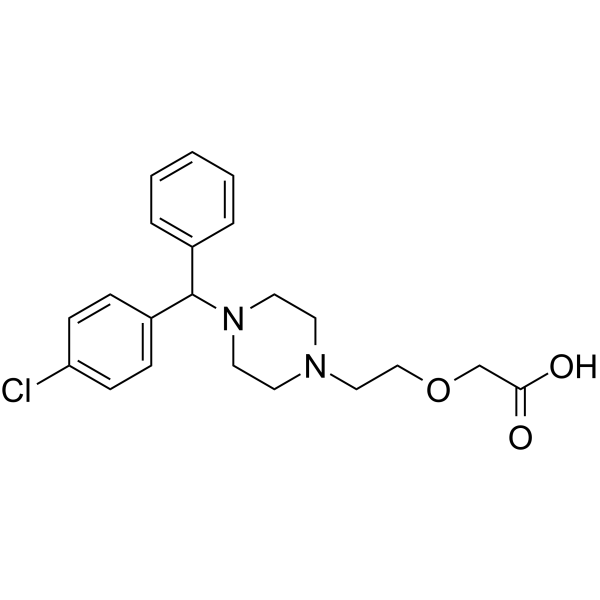
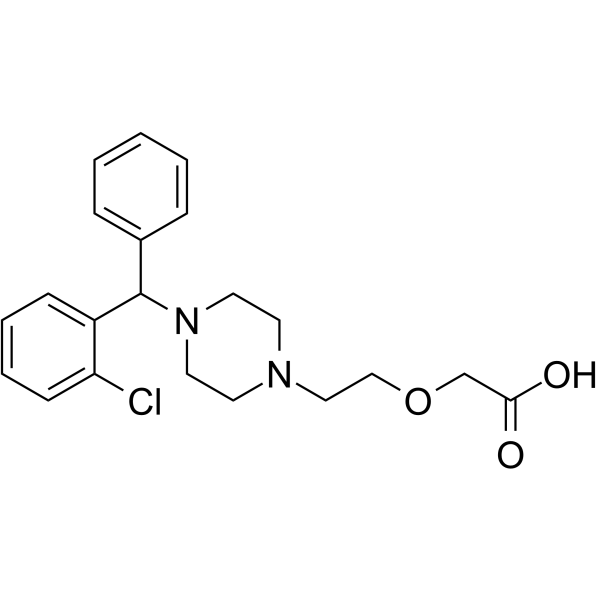
Cetirizine, a second-generation antihistamine and the carboxylated metabolite of hydroxyzine, is a specific, orally active and long-acting histamine H1-receptor antagonist. Cetirizine marks antiallergic properties and inhibits eosinophil chemotaxis during the allergic response .
|
-
-
- HY-17042A
-
|
P071
|
Histamine Receptor
|
Inflammation/Immunology
Endocrinology
Cancer
|
|
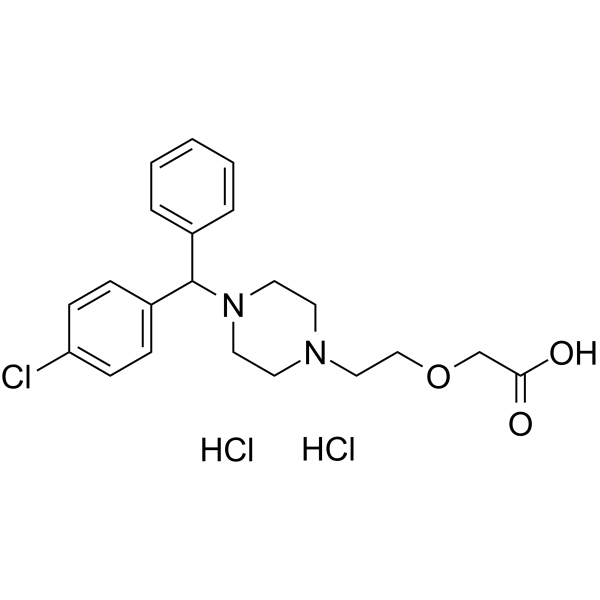
Cetirizine dihydrochloride, a second-generation antihistamine and the carboxylated metabolite of hydroxyzine, is a specific, orally active and long-acting histamine H1-receptor antagonist. Cetirizine dihydrochloride marks antiallergic properties and inhibits eosinophil chemotaxis during the allergic response .
|
-
-
- HY-W053787
-
-
-
- HY-W062542
-
-
-
- HY-112175
-
-
-
- HY-13568
-
|
LRCL 3794
|
Cytochrome P450
COX
Lipoxygenase
PGE synthase
|
Inflammation/Immunology
|
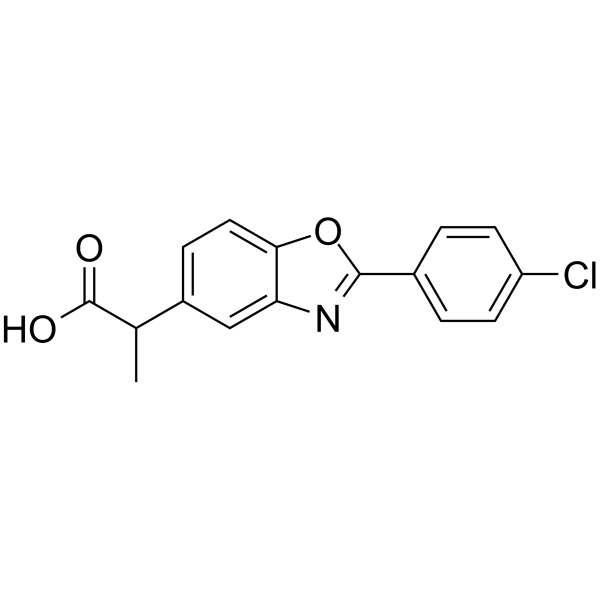
Benoxaprofen (LRCL 3794) is a nonsteroidal anti-inflammatory agent that blocks the biosynthesis of inflammatory mediators such as leukotrienes and prostaglandins by inhibiting 5-LOX, PGH2 synthase and cytochrome P-450. Benoxaprofen exhibits significant toxicity: it not only alters cellular redox status, uncouples oxidative phosphorylation and disrupts calcium ion homeostasis, but also causes liver injury through the formation of covalent adducts between its active metabolites and hepatic proteins. Benoxaprofen shows strong phototoxicity under ultraviolet irradiation, and induces erythrocyte lysis, mast cell degranulation and histamine release. Benoxaprofen is widely used in studies of urticaria and related phototoxic mechanisms .
|
-
-
- HY-13936
-
|
1-Methylimidazole-4-acetic acid
|
Endogenous Metabolite
|
Others
|
|
1-Methylimidazoleacetic acid (1-Methylimidazole-4-acetic acid) is a histamine metabolite in urine that can be used in the study of mastocytosis .
|
-
-
- HY-W053787S
-
|
|
Endogenous Metabolite
|
Metabolic Disease
|
|
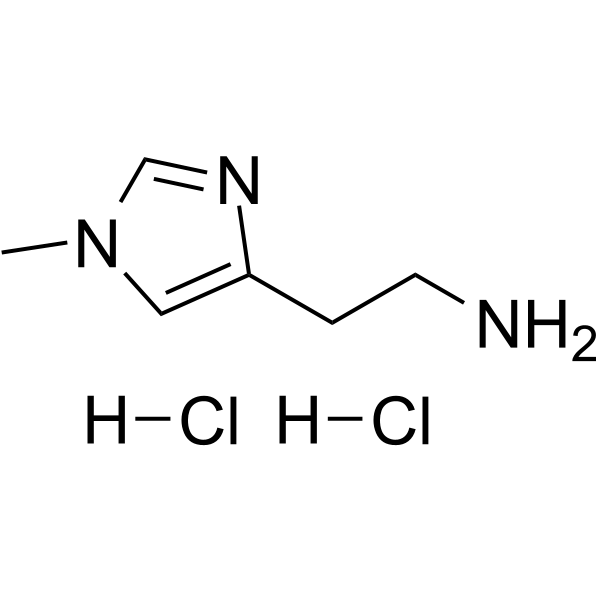
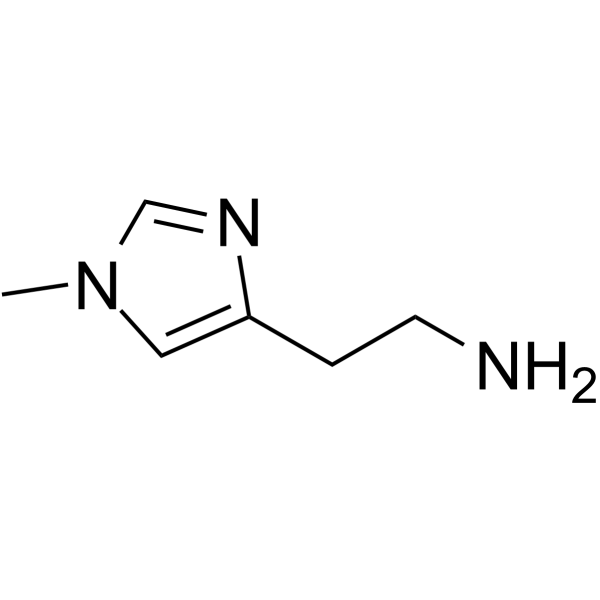
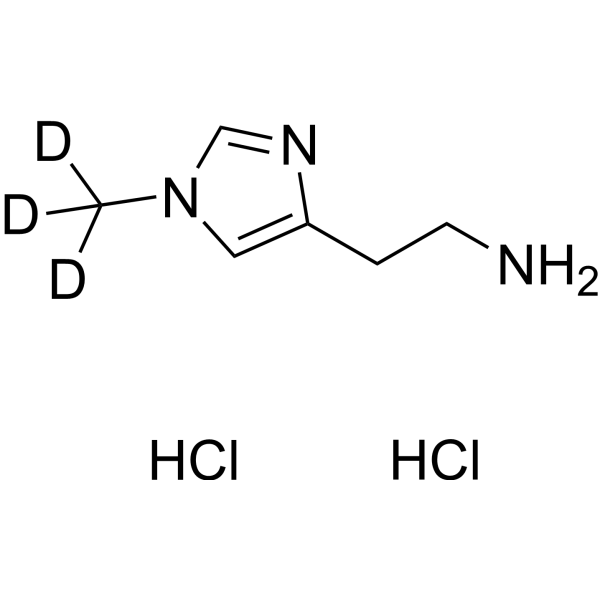
1-Methylhistamine-d3 (dihydrochloride) is the deuterium labeled 1-Methylhistamine (dihydrochloride) . 1-Methylhistamine dihydrochloride is a histamine metabolite .
|
-
-
- HY-137941
-
|
|
Histamine Receptor
Caspase
NF-κB
p38 MAPK
|
Inflammation/Immunology
|
|
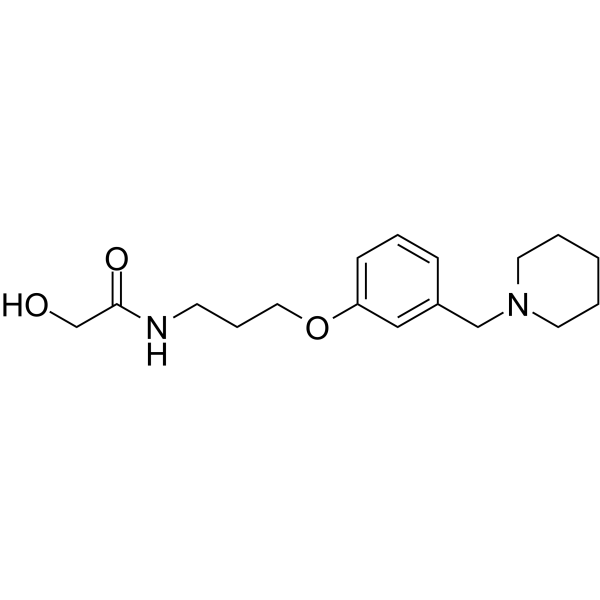
Roxatidine is an active metabolite of Roxatidine acetate hydrochloride, is an orally active histamine H2-receptor antagonist. Roxatidine, an anti-ulcer agent, suppresses histamine release (thus inhibiting proton secretion) and inhibits the production of VEGF-1, an important marker of inflammation and angiogenesis. Anti-allergic inflammatory effect. Roxatidine is promising for research of gastric and duodenal ulcers .
|
-
-
- HY-17042S1
-
|
|
Histamine Receptor
|
Inflammation/Immunology
|
|
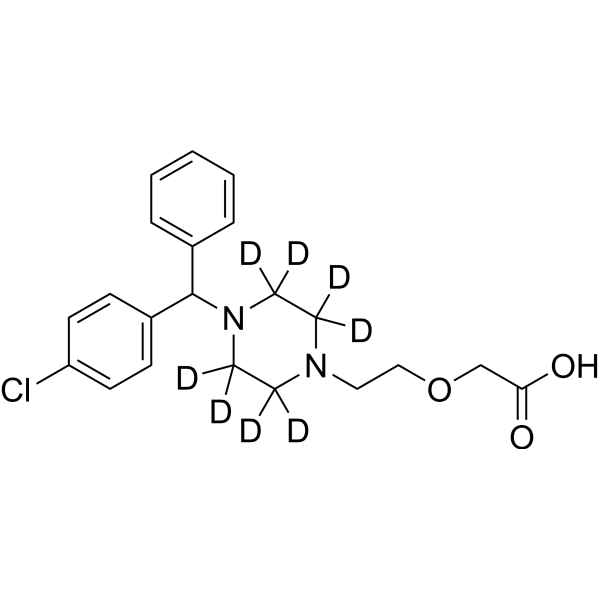
Cetirizine-d8 is a deuterium labeled Cetirizine. Cetirizine, a second-generation antihistamine and the carboxylated metabolite of hydroxyzine, is a specific, orally active and long-acting histamine H1-receptor antagonist. Cetirizine marks antiallergic properties and inhibits eosinophil chemotaxis during the allergic response .
|
-
-
- HY-W060470
-
|
|
Histamine Receptor
|
Neurological Disease
|
|
1-Methyl-4-imidazoleacetic acid hydrochloride is a stable metabolite of Histamine (HY-B1204) that is produced by the oxidation of the primary metabolite, N-methylhistamine .
|
-
-
- HY-W516880
-
|
O-Demethylastemizole
|
Drug Metabolite
Parasite
Histamine Receptor
Potassium Channel
|
Infection
Cardiovascular Disease
|
|
Desmethylastemizole (O-Demethylastemizole) , a metabolite of Astemizole (HY-12532), is a β-hematin (βH) inhibitor. Desmethylastemizole has an antiplasmodium activity against P. falciparum with IC50 of 0.12, 0.11 and 0.06 μM for Pf3D7, PfDd2, and PfItG strains, respectively. Desmethylastemizole is also a Histamine H1 receptor antagonist. Desmethylastemizole significantly blocks hERG K + channels and also inhibits histone-lysine N-methyltransferase EZH2 activity. Desmethylastemizole can be used for long QT syndrome and malaria research .
|
-
-
- HY-W053787R
-
-
-
- HY-A0178
-
-
-
- HY-122508
-
|
|
Drug Metabolite
|
Neurological Disease
|
|
Hydroxyebastine is an Ebastine (HY-B0674) (a histamine H1-receptor antagonist) metabolite. Hydroxyebastine is metabolized to Carebastine (HY-121356) by CYP2J2 and CYP3A4 .
|
-
-
- HY-N15364
-
|
|
Endogenous Metabolite
|
Metabolic Disease
|
|
Imidazoleacetic acid riboside is a metabolite of histamine, belonging to the riboside conjugates of imidazoleacetic acid. Imidazoleacetic acid riboside is generated by dephosphorylation of imidazoleacetic acid ribonucleotide in rats. Imidazoleacetic acid riboside can be detected in the kidney and brain tissue after administration of labeled histamine or histidine, and exists as a urinary metabolite of histamine in both rats and humans. Imidazoleacetic acid riboside is not only excreted in urine, but also can be used to capture and isolate ribose for studying the metabolic pathways of ribose synthesis from glucose or glucuronolactone via the pentose phosphate pathway or the C-6 oxidation pathway in vivo .
|
-
-
- HY-Z9101
-
|
|
Histamine Receptor
|
Neurological Disease
|
|
Promethazine sulfoxide is a metabolite of the histamine H1 receptor antagonist Promethazine (HY-B1296). It is formed from promethazine by the cytochrome P450 (CYP) isoform CYP2D6.
|
-
-
- HY-136338
-
|
Cimetidine sulphoxide
|
Histamine Receptor
|
Inflammation/Immunology
|
|
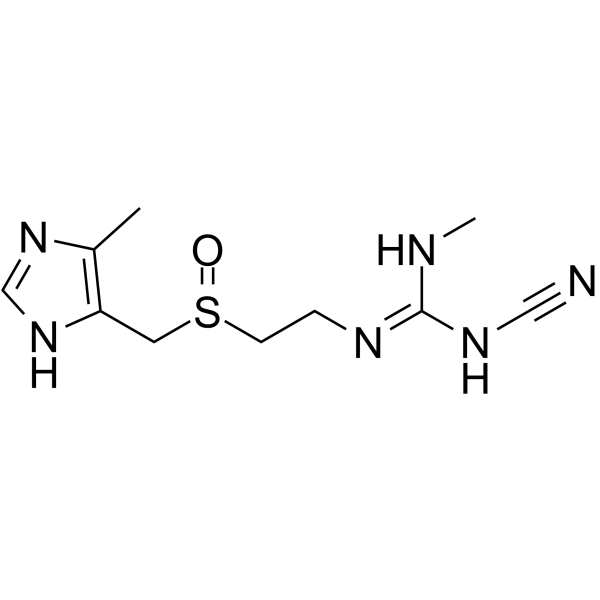
Cimetidine sulfoxide (Cimetidine sulphoxide) is a sulfoxide metabolite of Cimetidine. Cimetidine is a histamine H2-receptor antagonist. Cimetidine has the potential for peptic ulcer disease and upper gastrointestinal haemorrhage treatment .
|
-
-
- HY-131256
-
|
|
Histamine Receptor
|
Inflammation/Immunology
Endocrinology
|
|
Cetirizine Impurity C is an impurity of Cetirizine. Cetirizine, a second-generation antihistamine and the carboxylated metabolite of hydroxyzine, is a specific, orally active and long-acting histamine H1-receptor antagonist [1] [2] .
|
-
-
- HY-12966
-
|
|
Histamine Receptor
|
Inflammation/Immunology
Endocrinology
|
|
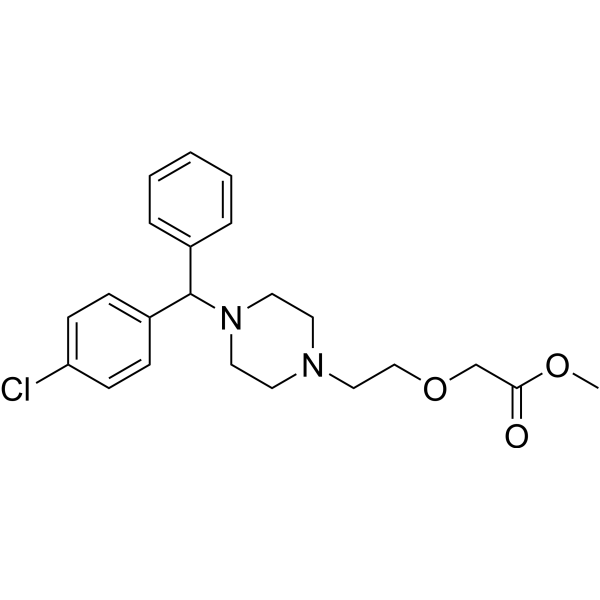
Cetirizine methyl ester is an impurity of Cetirizine (HY-17042). Cetirizine, a second-generation antihistamine and the carboxylated metabolite of hydroxyzine, is a specific, orally active and long-acting histamine H1-receptor antagonist .
|
-
-
- HY-W011245
-
|
|
Drug Metabolite
|
Metabolic Disease
|
|
Ranitidine S-oxide is the metabolite of Ranitidine (HY-B0693). Ranitidine is a potent, selective and orally active histamine H2-receptor antagonist with an IC50 of 3.3 μM that inhibits gastric secretion .
|
-
-
- HY-17042S
-
|
|
Histamine Receptor
|
Inflammation/Immunology
|
|
Cetirizine-d4 is a deuterium labeled Cetirizine. Cetirizine, a second-generation antihistamine and the carboxylated metabolite of hydroxyzine, is a specific, orally active and long-acting histamine H1-receptor antagonist. Cetirizine marks antiallergic properties and inhibits eosinophil chemotaxis during the allergic response[1][2][3].
|
-
-
- HY-147336
-
|
|
Drug Metabolite
|
Infection
Cardiovascular Disease
Metabolic Disease
Inflammation/Immunology
|
|
Desmethylazelastine is a main active metabolite of Azelastine that is oxidatively metabolized by the cytochrome P450 enzyme system with a protein binding rate of 97% and an elimination half-life of 54 hours. Azelastine is an orally active, selective and high-affinity histamine H1-receptor antagonist. Azelastine can be used in studies of allergic rhinitis, asthma, diabetic hyperlipidemic and SARS-CoV-2 .
|
-
-
- HY-13936R
-
|
1-Methylimidazole-4-acetic acid (Standard)
|
Reference Standards
Endogenous Metabolite
|
Others
|
|
1-Methylimidazoleacetic acid (1-Methylimidazole-4-acetic acid) (Standard) is the analytical standard of 1-Methylimidazoleacetic acid. This product is intended for research and analytical applications. 1-Methylimidazoleacetic acid is a Histamine (HY-B1204) metabolite. 1-Methylimidazoleacetic acid serves as a biomarker for the detection of mastocytosis .
|
-
-
- HY-137941R
-
|
|
Reference Standards
Histamine Receptor
|
Inflammation/Immunology
|
|
Roxatidine (Standard) is the analytical standard of Roxatidine. This product is intended for research and analytical applications. Roxatidine is an active metabolite of Roxatidine acetate hydrochloride, is a histamine H2-receptor antagonist. Roxatidine, an anti-ulcer agent, suppresses histamine release (thus inhibiting proton secretion) and inhibits the production of VEGF-1, an important marker of inflammation and angiogenesis. Anti-allergic inflammatory effect .
|
-
-
- HY-W701635
-
-
-
- HY-A0178A
-
-
-
- HY-172004
-
|
|
5-HT Receptor
|
Neurological Disease
|
|
N-Desmethyl asenapine is a metabolite of Asenapine (HY-10121). Asenapine, an atypical antipsychotic agent, is an antagonist of serotonin receptors, adrenoceptors, dopamine receptors and histamine receptors .
|
-
-
- HY-131579
-
|
|
Drug Metabolite
|
Inflammation/Immunology
|
|
Deschloro Cetirizine Dihydrochloride is a Cetirizine impurity. Cetirizine, a second-generation antihistamine and the carboxylated metabolite of hydroxyzine, is a specific, orally active and long-acting histamine H1-receptor antagonist.
|
-
-
- HY-W750960R
-
|
|
Reference Standards
Antibiotic
|
Others
|
|
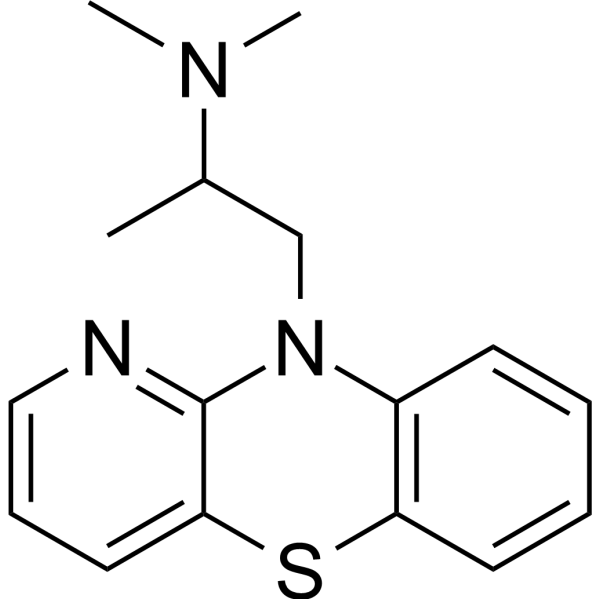
Isothipendyl (hydrochloride) (Standard) is the analytical standard of Isothipendyl (hydrochloride). This product is intended for research and analytical applications. Isothipendyl hydrochloride (), an azaphenothiazine derivative, is a potent histamine 1 (H1) receptor antagonist.othipendyl is a primary metabolite .
|
-
-
- HY-A0178AR
-
|
NSC 169186 (Standard)
|
Reference Standards
Endogenous Metabolite
Histamine Receptor
|
Inflammation/Immunology
|
|
Isothipendyl (hydrochloride) (Standard) is the analytical standard of Isothipendyl (hydrochloride). This product is intended for research and analytical applications. Isothipendyl hydrochloride (), an azaphenothiazine derivative, is a potent histamine 1 (H1) receptor antagonist.othipendyl is a primary metabolite .
|
-
-
- HY-131256A
-
|
|
Histamine Receptor
|
Inflammation/Immunology
Endocrinology
|
|
Cetirizine Impurity C dihydrochloride is an impurity of Cetirizine. Cetirizine, a second-generation antihistamine and the carboxylated metabolite of hydroxyzine, is a specific, orally active and long-acting histamine H1-receptor antagonist [1] [2] .
|
-
-
- HY-135740
-
-
-
- HY-124626
-
|
|
Histamine Receptor
|
Inflammation/Immunology
|
(R)-(+)-Mequitazine is a histamine H1 receptor antagonist that mainly undergoes bio-transformation via human liver microsomes, resulting in hydroxylated and S-oxidized metabolites. (R)-(+)-Mequitazine competitively binds to the H1 receptors in gastrointestinal, vascular, and respiratory effect cells, thus blocking the endogenous activity of histamine. (R)-(+)-Mequitazine has an inhibitory effect on CYP3A-catalyzed midazolam 1’-hydroxylase. (R)-(+)-Mequitazine can be used in the study of various allergic diseases .
|
-
-
- HY-136338R
-
|
Cimetidine sulphoxide (Standard)
|
Reference Standards
Histamine Receptor
|
Inflammation/Immunology
|
|
Cimetidine sulfoxide (Standard) is the analytical standard of Cimetidine sulfoxide. This product is intended for research and analytical applications. Cimetidine sulfoxide (Cimetidine sulphoxide) is a sulfoxide metabolite of Cimetidine. Cimetidine is a histamine H2-receptor antagonist. Cimetidine has the potential for peptic ulcer disease and upper gastrointestinal haemorrhage treatment .
|
-
-
- HY-121356S
-
|
|
Isotope-Labeled Compounds
Histamine Receptor
|
Endocrinology
Cancer
|
|
Carebastine-d5 is the deuterium labeled Carebastine. Carebastine is the active metabolite of Ebastine. Carebastine is a histamine H1 receptor antagonist. Carebastine inhibits VEGF-induced HUVEC and HPAEC proliferation, migration and angiogenesis in a dose-dependent manner . Carebastine suppresses the expression of macrophage migration inhibitory factor .
|
-
-
- HY-17042AS1
-
|
|
Isotope-Labeled Compounds
Histamine Receptor
|
Inflammation/Immunology
|
|
Cetirizine-d8 (dihydrochloride) is a deuterium labeled Cetirizine. Cetirizine, a second-generation antihistamine and the carboxylated metabolite of hydroxyzine, is a specific, orally active and long-acting histamine H1-receptor antagonist. Cetirizine marks antiallergic properties and inhibits eosinophil chemotaxis during the allergic response .
|
-
-
- HY-17042AS
-
|
|
Isotope-Labeled Compounds
Histamine Receptor
|
Inflammation/Immunology
|
|
Cetirizine-d4 (dihydrochloride) is a deuterium labeled Cetirizine. Cetirizine, a second-generation antihistamine and the carboxylated metabolite of hydroxyzine, is a specific, orally active and long-acting histamine H1-receptor antagonist. Cetirizine marks antiallergic properties and inhibits eosinophil chemotaxis during the allergic response .
|
-
-
- HY-13936S
-
|
1-Methylimidazole-4-acetic acid-d3
|
Isotope-Labeled Compounds
Endogenous Metabolite
|
Others
|
|
1-Methylimidazoleacetic acid (1-Methylimidazole-4-acetic acid)-d3 is deuterium labeled 1-Methylimidazoleacetic acid (HY-13936). 1-Methylimidazoleacetic acid is a Histamine (HY-B1204) metabolite. 1-Methylimidazoleacetic acid serves as a biomarker for the detection of mastocytosis .
|
-
-
- HY-121356S1
-
|
|
Isotope-Labeled Compounds
Histamine Receptor
|
Endocrinology
Cancer
|
|
Carebastine-d5 Methyl Ester is the deuterium labeled Carebastine. Carebastine is the active metabolite of Ebastine. Carebastine is a histamine H1 receptor antagonist. Carebastine inhibits VEGF-induced HUVEC and HPAEC proliferation, migration and angiogenesis in a dose-dependent manner . Carebastine suppresses the expression of macrophage migration inhibitory factor .
|
-
-
- HY-17042R
-
|
|
Reference Standards
Histamine Receptor
|
Inflammation/Immunology
Endocrinology
Cancer
|
|
Cetirizine (Standard) is the analytical standard of Cetirizine. This product is intended for research and analytical applications. Cetirizine, a second-generation antihistamine and the carboxylated metabolite of hydroxyzine, is a specific, orally active and long-acting histamine H1-receptor antagonist. Cetirizine marks antiallergic properties and inhibits eosinophil chemotaxis during the allergic response .
|
-
-
- HY-17042AR
-
|
P071 (Standard)
|
Reference Standards
Histamine Receptor
|
Inflammation/Immunology
Endocrinology
Cancer
|
|
Cetirizine (dihydrochloride) (Standard) is the analytical standard of Cetirizine (dihydrochloride). This product is intended for research and analytical applications. Cetirizine dihydrochloride, a second-generation antihistamine and the carboxylated metabolite of hydroxyzine, is a specific, orally active and long-acting histamine H1-receptor antagonist. Cetirizine dihydrochloride marks antiallergic properties and inhibits eosinophil chemotaxis during the allergic response .
|
-
-
- HY-W011245R
-
|
|
Reference Standards
Drug Metabolite
|
Metabolic Disease
|
|
Ranitidine S-oxide (Standard) is the analytical standard of Ranitidine S-oxide. This product is intended for research and analytical applications. Ranitidine S-oxide is the metabolite of Ranitidine (HY-B0693). Ranitidine is a potent, selective and orally active histamine H2-receptor antagonist with an IC50 of 3.3 μM that inhibits gastric secretion .
|
-
-
- HY-115356
-
|
14,15-LTE4; EoxE4
|
Drug Metabolite
|
Cardiovascular Disease
|
|
Eoxin E4 (14,15-LTE4) is the metabolite of 14,15-LTC4 and 14,15-LTD4. Eoxin E4 increases vascular permeability of human endothelial cell monolayers with about 10-fold less potency than LTC4, but approximately 100-fold greater potency than histamine .
|
-
-
- HY-W778179
-
|
LRCL 3794-13C,d3
|
Isotope-Labeled Compounds
COX
Cytochrome P450
Lipoxygenase
PGE synthase
|
Inflammation/Immunology
|
|
Benoxaprofen- 13C, d3 is the 13C-labeled Benoxaprofen (HY-13568). Benoxaprofen (LRCL 3794) is a nonsteroidal anti-inflammatory agent that blocks the biosynthesis of inflammatory mediators such as leukotrienes and prostaglandins by inhibiting 5-LOX, PGH2 synthase and cytochrome P-450. Benoxaprofen exhibits significant toxicity: it not only alters cellular redox status, uncouples oxidative phosphorylation and disrupts calcium ion homeostasis, but also causes liver injury through the formation of covalent adducts between its active metabolites and hepatic proteins. Benoxaprofen shows strong phototoxicity under ultraviolet irradiation, and induces erythrocyte lysis, mast cell degranulation and histamine release. Benoxaprofen is widely used in studies of urticaria and related phototoxic mechanisms .
|
-
-
- HY-13568R
-
|
LRCL 3794 (Standard)
|
Reference Standards
COX
Cytochrome P450
Lipoxygenase
PGE synthase
|
Inflammation/Immunology
|
|
Benoxaprofen (Standard) is the analytical standard of Benoxaprofen. This product is intended for research and analytical applications. Benoxaprofen (LRCL 3794) is a nonsteroidal anti-inflammatory agent that blocks the biosynthesis of inflammatory mediators such as leukotrienes and prostaglandins by inhibiting 5-LOX, PGH2 synthase and cytochrome P-450. Benoxaprofen exhibits significant toxicity: it not only alters cellular redox status, uncouples oxidative phosphorylation and disrupts calcium ion homeostasis, but also causes liver injury through the formation of covalent adducts between its active metabolites and hepatic proteins. Benoxaprofen shows strong phototoxicity under ultraviolet irradiation, and induces erythrocyte lysis, mast cell degranulation and histamine release. Benoxaprofen is widely used in studies of urticaria and related phototoxic mechanisms .
|
-
-
- HY-135621
-
-
-
- HY-W665882
-
|
|
TNF Receptor
Parasite
Drug Metabolite
|
Infection
Inflammation/Immunology
|
|
Norketotifen is the active metabolite of Ketotifen (HY-B0157). Norketotifen exhibits skin anti-inflammatory activity, anti-malarial activity, and antipruritic activity against non-histamine-mediated dog itching in mice. Norketotifen effectively inhibits TNF-α release without causing any sedative side effects. Norketotifen can be used for research on non-sedating anti-inflammatory agents .
|
-
| Cat. No. |
Product Name |
Category |
Target |
Chemical Structure |
| Cat. No. |
Product Name |
Chemical Structure |
-
- HY-W053787S
-
|
|
|
1-Methylhistamine-d3 (dihydrochloride) is the deuterium labeled 1-Methylhistamine (dihydrochloride) . 1-Methylhistamine dihydrochloride is a histamine metabolite .
|
-
-
- HY-17042S1
-
|
|
|
Cetirizine-d8 is a deuterium labeled Cetirizine. Cetirizine, a second-generation antihistamine and the carboxylated metabolite of hydroxyzine, is a specific, orally active and long-acting histamine H1-receptor antagonist. Cetirizine marks antiallergic properties and inhibits eosinophil chemotaxis during the allergic response .
|
-
-
- HY-17042S
-
|
|
|
Cetirizine-d4 is a deuterium labeled Cetirizine. Cetirizine, a second-generation antihistamine and the carboxylated metabolite of hydroxyzine, is a specific, orally active and long-acting histamine H1-receptor antagonist. Cetirizine marks antiallergic properties and inhibits eosinophil chemotaxis during the allergic response[1][2][3].
|
-
-
- HY-121356S
-
|
|
|
Carebastine-d5 is the deuterium labeled Carebastine. Carebastine is the active metabolite of Ebastine. Carebastine is a histamine H1 receptor antagonist. Carebastine inhibits VEGF-induced HUVEC and HPAEC proliferation, migration and angiogenesis in a dose-dependent manner . Carebastine suppresses the expression of macrophage migration inhibitory factor .
|
-
-
- HY-17042AS1
-
|
|
|
Cetirizine-d8 (dihydrochloride) is a deuterium labeled Cetirizine. Cetirizine, a second-generation antihistamine and the carboxylated metabolite of hydroxyzine, is a specific, orally active and long-acting histamine H1-receptor antagonist. Cetirizine marks antiallergic properties and inhibits eosinophil chemotaxis during the allergic response .
|
-
-
- HY-17042AS
-
|
|
|
Cetirizine-d4 (dihydrochloride) is a deuterium labeled Cetirizine. Cetirizine, a second-generation antihistamine and the carboxylated metabolite of hydroxyzine, is a specific, orally active and long-acting histamine H1-receptor antagonist. Cetirizine marks antiallergic properties and inhibits eosinophil chemotaxis during the allergic response .
|
-
-
- HY-13936S
-
|
|
|
1-Methylimidazoleacetic acid (1-Methylimidazole-4-acetic acid)-d3 is deuterium labeled 1-Methylimidazoleacetic acid (HY-13936). 1-Methylimidazoleacetic acid is a Histamine (HY-B1204) metabolite. 1-Methylimidazoleacetic acid serves as a biomarker for the detection of mastocytosis .
|
-
-
- HY-121356S1
-
|
|
|
Carebastine-d5 Methyl Ester is the deuterium labeled Carebastine. Carebastine is the active metabolite of Ebastine. Carebastine is a histamine H1 receptor antagonist. Carebastine inhibits VEGF-induced HUVEC and HPAEC proliferation, migration and angiogenesis in a dose-dependent manner . Carebastine suppresses the expression of macrophage migration inhibitory factor .
|
-
-
- HY-W778179
-
|
|
|
Benoxaprofen- 13C, d3 is the 13C-labeled Benoxaprofen (HY-13568). Benoxaprofen (LRCL 3794) is a nonsteroidal anti-inflammatory agent that blocks the biosynthesis of inflammatory mediators such as leukotrienes and prostaglandins by inhibiting 5-LOX, PGH2 synthase and cytochrome P-450. Benoxaprofen exhibits significant toxicity: it not only alters cellular redox status, uncouples oxidative phosphorylation and disrupts calcium ion homeostasis, but also causes liver injury through the formation of covalent adducts between its active metabolites and hepatic proteins. Benoxaprofen shows strong phototoxicity under ultraviolet irradiation, and induces erythrocyte lysis, mast cell degranulation and histamine release. Benoxaprofen is widely used in studies of urticaria and related phototoxic mechanisms .
|
-
Your information is safe with us. * Required Fields.
Inquiry Information
- Product Name:
- Cat. No.:
- Quantity:
- MCE Japan Authorized Agent:

