Search Result
Results for "
human serotonin receptors
" in MedChemExpress (MCE) Product Catalog:
2
Isotope-Labeled Compounds
| Cat. No. |
Product Name |
Target |
Research Areas |
Chemical Structure |
-
- HY-B1213
-
|
|
5-HT Receptor
Bacterial
|
Neurological Disease
|
|
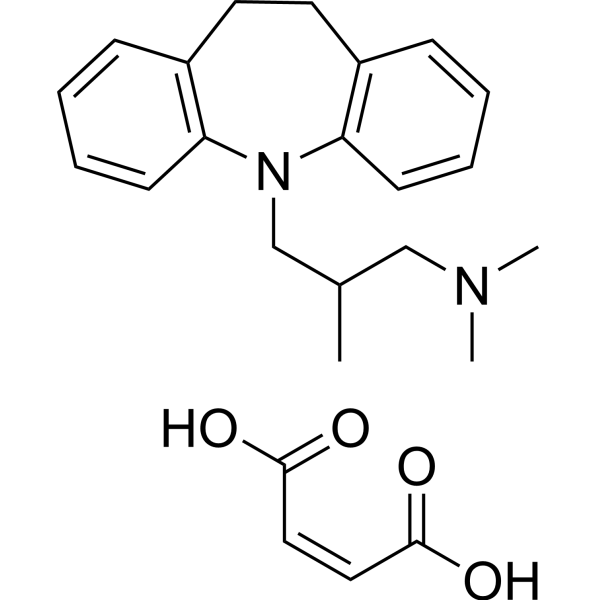
Trimipramine maleate is a 5-HT receptor antagonist, with blood-brain barrier permeability. Trimipramine maleate has pKi binding values of 6.39, 8.10, 4.66 for 5-HT1C, 5-HT2 and 5-HT1A, respectively. Trimipramine maleate is also a potent and selective inhibitor targeting human noradrenaline (hNAT), serotonin (hSERT) and organic cation transporters (hOCT1, hOCT2) with IC50 values of 4.99 μM, 2.11 μM, 3.72 μM, 8.00 μM, respectively. Trimipramine maleate has vascular activity and anxiolytic efficacy .
|
-
-
- HY-14153
-
|
|
5-HT Receptor
Apoptosis
|
Metabolic Disease
Cancer
|
|
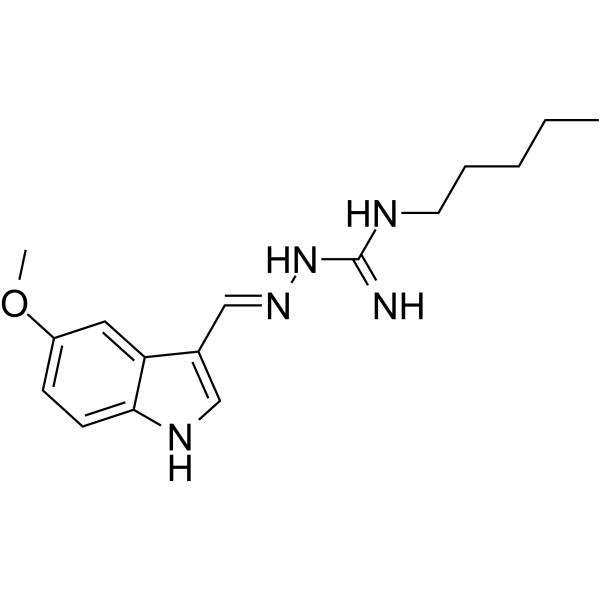
Tegaserod is an orally active serotonin receptor 4 (HTR4; 5-HT4R) agonist and a 5-HT2B receptor antagonist. Tegaserod has pKis of 7.5, 8.4 and 7.0 for human recombinant 5-HT2A, 5-HT2B and 5-HT2C receptors, respectively. Tegaserod causes tumor cell apoptosis, blunts PI3K/Akt/mTOR signaling and decreases S6 phosphorylation. Tegaserod has anti-tumor activity and has the potential for irritable bowel syndrome (IBS) research .
|
-
-
- HY-14153A
-
|
SDZ-HTF-919; HTF-919
|
5-HT Receptor
Apoptosis
|
Neurological Disease
Metabolic Disease
Cancer
|
|
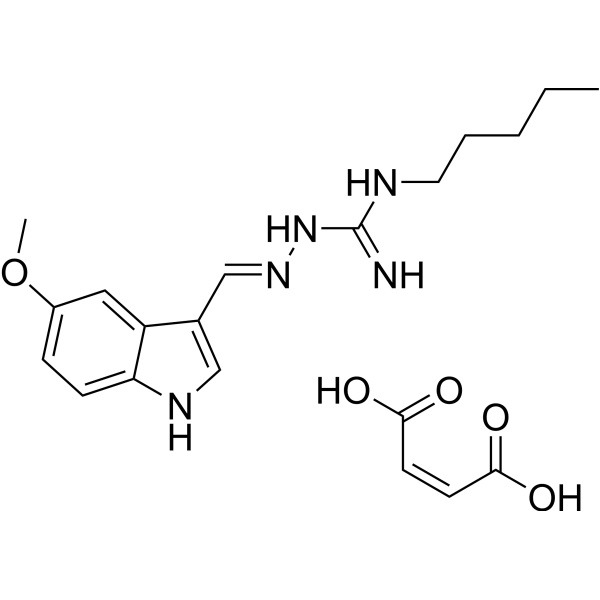
Tegaserod maleate (SDZ-HTF-919) is an orally active serotonin receptor 4 (HTR4; 5-HT4R) agonist and a 5-HT2B receptor antagonist. Tegaserod maleate has pKis of 7.5, 8.4 and 7.0 for human recombinant 5-HT2A, 5-HT2B and 5-HT2C receptors, respectively. Tegaserod maleate causes tumor cell apoptosis, blunts PI3K/Akt/mTOR signaling and decreases S6 phosphorylation. Tegaserod maleate has anti-tumor activity and has the potential for irritable bowel syndrome (IBS) research .
|
-
-
- HY-B1165
-
|
|
p38 MAPK
Checkpoint Kinase (Chk)
Histamine Receptor
5-HT Receptor
CDK
PARP
Apoptosis
|
Cancer
|
|
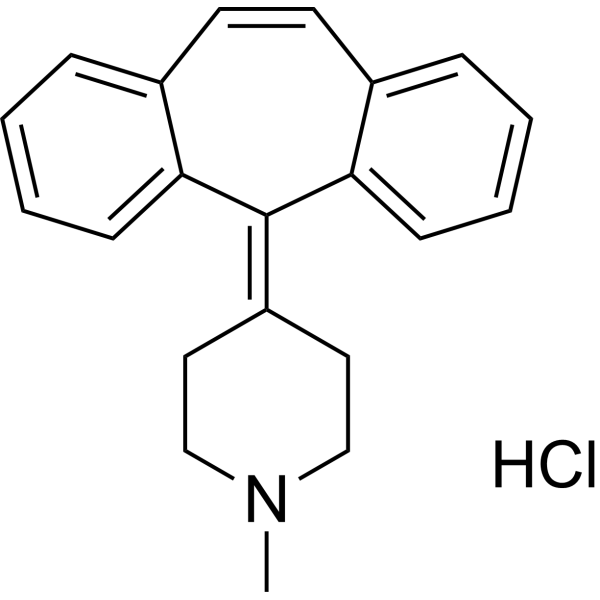
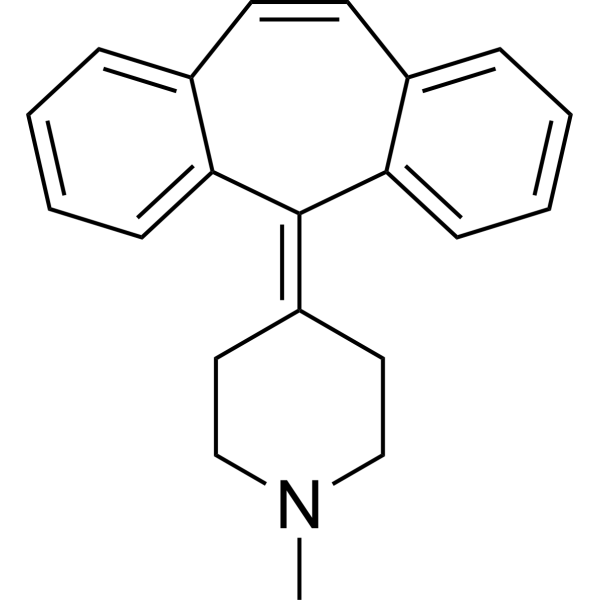
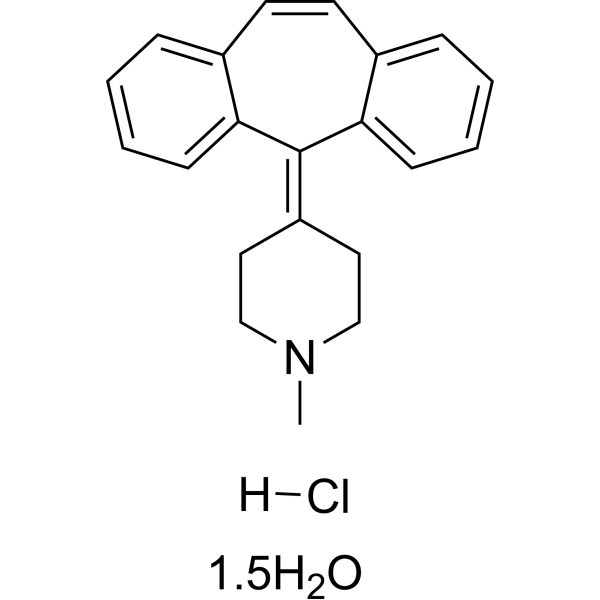
Cyproheptadine hydrochloride sesquihydrate acts as a p38 MAP kinase activator, CHK2 activator, histamine H1 receptor inhibitor and serotonin receptor inhibitor. Cyproheptadine hydrochloride sesquihydrate mediates cell cycle arrest via G1 phase arrest, G1/S transition arrest, G0/G1 phase arrest, reduced expression of cyclins D1/D2/D3, upregulated expression of HBP1, p16, p21, p27, and decreased phosphorylation of retinoblastoma protein. Cyproheptadine hydrochloride sesquihydrate induces Apoptosis by increasing PARP and cleaved PARP, as well as activating the mitochondrial caspase pathway. Cyproheptadine hydrochloride sesquihydrate inhibits tumor growth with extremely low toxicity to normal cells. Cyproheptadine hydrochloride sesquihydrate can be used in research related to hepatocellular carcinoma, multiple myeloma and acute myeloid leukemia .
|
-
-
- HY-100656
-
|
|
Dopamine Receptor
5-HT Receptor
|
Neurological Disease
|
|
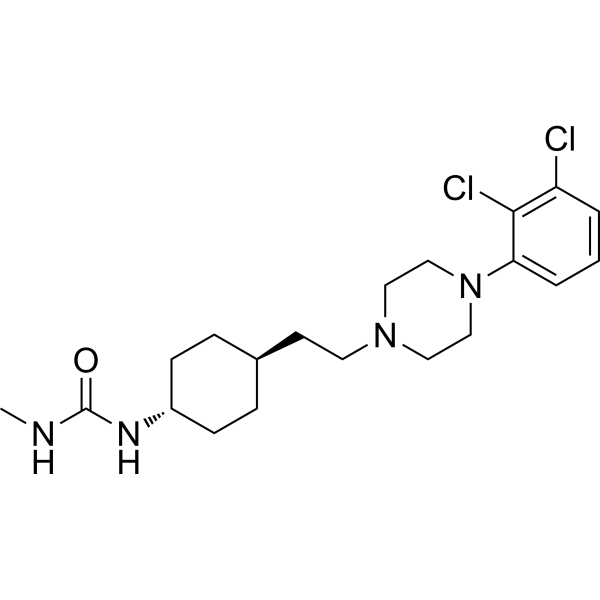
Desmethyl cariprazine is a major active metabolite of cariprazine, with activities at human dopamine receptors and serotonin receptors, showing a pEC50 of 8.90 at human D2 receptors, a pEC50 of 8.09 at D3 receptors, and a pEC50 of 6.28 at 5-HT1A receptors. Desmethyl cariprazine inhibits forskolin-induced cAMP production at D2, D3 and 5-HT1A receptors, and suppresses serotonin-induced Ca 2+ release at 5-HT2B receptors. Desmethyl cariprazine is applicable to research related to schizophrenia, bipolar disorder type I and bipolar disorder.
|
-
-
- HY-147276
-
|
JW1601
|
Histamine Receptor
|
Inflammation/Immunology
|
|
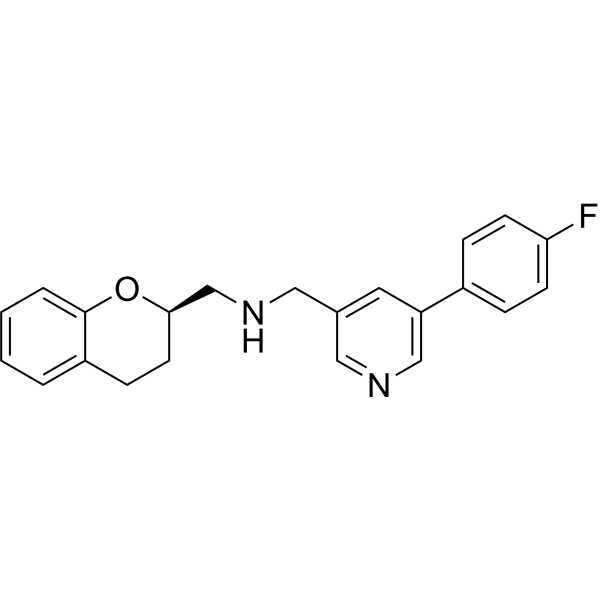
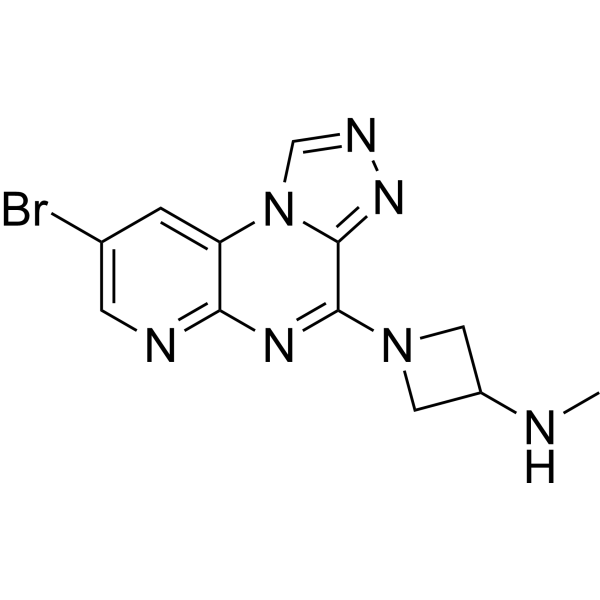
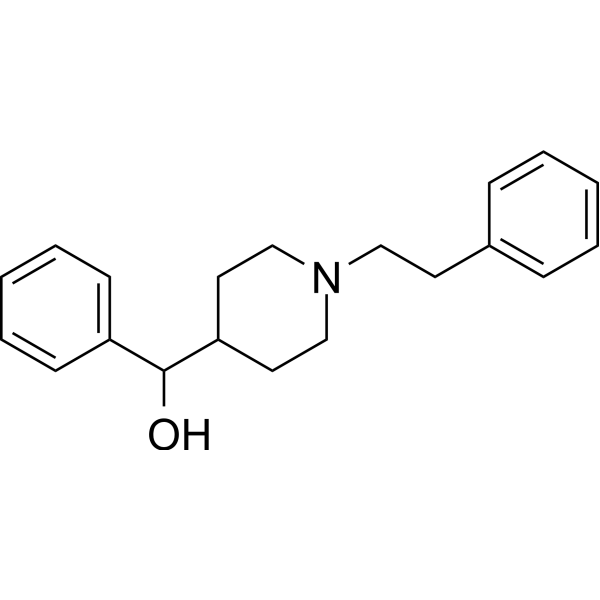
Izuforant (JW1601) (Compound 24) is an orally active histamine H4 receptor (H4R) antagonist with an IC50 of 36 nM against human H4R. Izuforant also shows binding affinity of human serotonin 3 receptor (h5-HT3R) with an IC50 of 9.1 μM. Izuforant exhibits strong anti-pruritic and anti-inflammatory efficacies .
|
-
-
- HY-100820
-
|
EMD 128130
|
5-HT Receptor
Dopamine Receptor
|
Neurological Disease
|
|
Sarizotan (EMD 128130) is an orally active serotonin 5-HT1A receptor and dopamine receptor agonist. Sarizotan (EMD 128130) exhibits IC50 values of 6.5 nM (rat 5-HT1A), 0.1 nM (human 5-HT1A), 15.1 nM (rat D2), 17 nM (human D2), 6.8 nM (human D3) and 2.4 nM (human D4.2), respectively .
|
-
-
- HY-N2411
-
|
|
5-HT Receptor
|
Neurological Disease
|
|
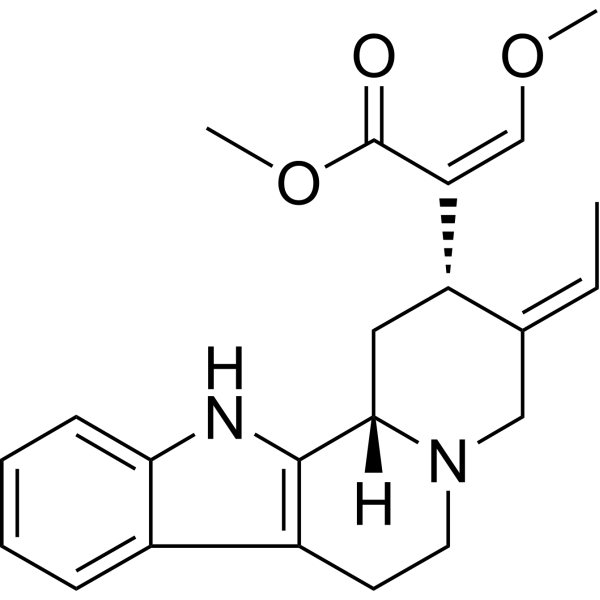
Geissoschizine methyl ether is an orally active, blood-brain barrier permeable alkaloid, and a partial agonist of the 5-HT1A receptor. It can be isolated from Uncaria hook. Geissoschizine methyl ether potently inhibits the binding of [ 3H]8-OH-DPAT to the 5-HT1A receptor in a concentration-dependent manner, with an IC50 of 0.904 μM. It ameliorates isolation-induced increased aggression and reduced sociability in mice. Geissoschizine methyl ether promotes oligodendrocyte differentiation and remyelination in the medial prefrontal cortex of adult mice .
|
-
-
- HY-B0170A
-
|
Azatadine maleate
|
Histamine Receptor
SARS-CoV
|
Inflammation/Immunology
|
|
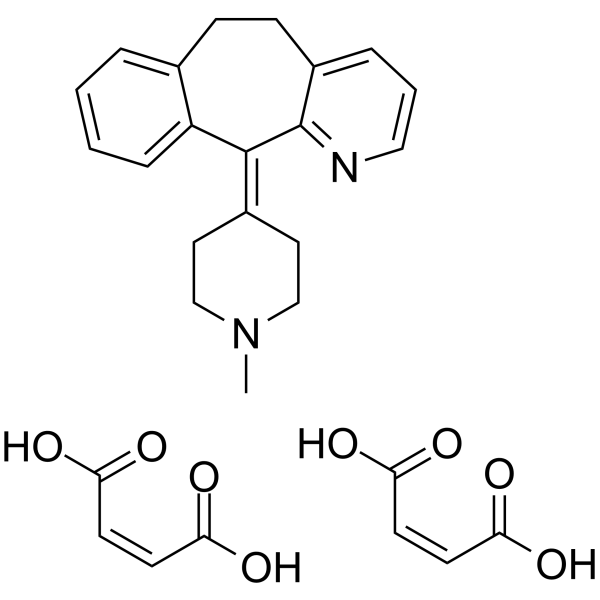
Azatadine dimaleate (Azatadine maleate) is an orally active histamine H1 receptor inhibitor, cetylcholine receptor inhibitor, and serotonin receptor inhibitor. Azatadine dimaleate induces sedation and exhibits topical anesthetic properties. Azatadine dimaleate can be used for the research of allergic rhinitis .
|
-
-
- HY-18137
-
|
|
5-HT Receptor
|
Neurological Disease
|
|
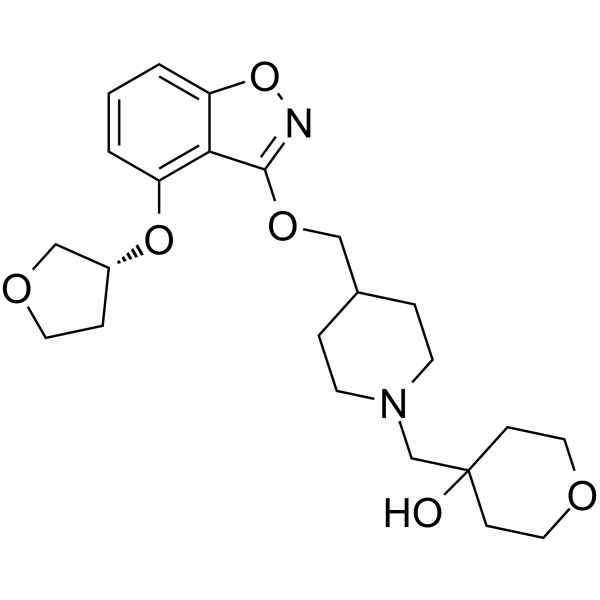
PF-04995274 is a potent, high-affinity, orally active and partial serotonin 4 receptor (5-HT4R) agonist. PF-04995274 has an EC50 range of 0.26-0.47 nM for human 5-HT4A/4B/4D/4E (Ki range of 0.15-0.46 nM), and has an EC50 range of 0.59-0.65 nM for rat 5-HT4S/4L/4E (Ki of 0.30 nM for rat 5-HT4S). PF-04995274 is brain penetrant and can be used for cognitive disorders associated with Alzheimer's disease .
|
-
-
- HY-101250
-
|
MDL11939
|
Serotonin Transporter
|
Neurological Disease
|
|
Glemanserin (MDL11939) is a potent and selective antagonist for serotonin receptor 5-HT2A (Ki=2.89, 0.54 and 2.5 nM for rat 5-HT2A, rabbit 5-HT2A and human 5-HT2A, respectively) .
|
-
-
- HY-110023
-
|
|
Serotonin Transporter
|
Neurological Disease
|
|
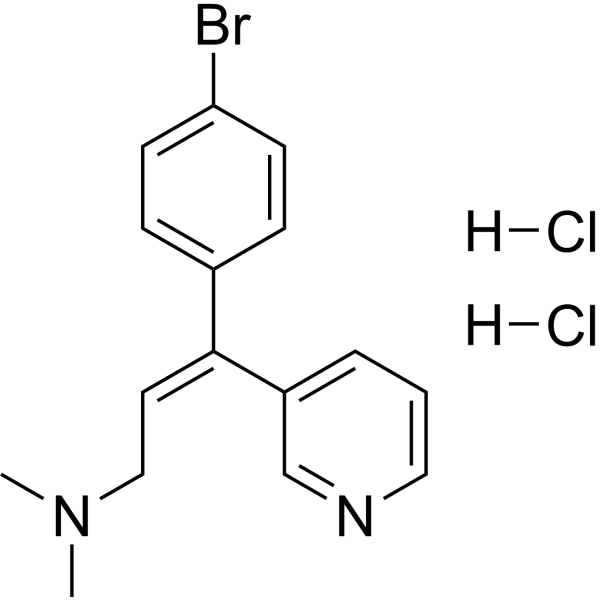
Zimelidine dihydrochloride is an orally active selective serotonin reuptake inhibitor. Zimelidine dihydrochloride competitively inhibits central 5-HT uptake and desensitizes 5-HT autoreceptors in dorsal raphe nucleus. Zimelidine dihydrochloride time-dependently modulates 5-HT neuronal firing and hippocampal CA3 responses. Zimelidine dihydrochloride strengthens central serotonergic neurotransmission and produces related behavioral changes. Zimelidine dihydrochloride exerts anxiolytic, analgesic, feeding-suppressive and tolerance-attenuating effects. Zimelidine dihydrochloride is used for the study of depressive disorders and analgesic tolerance .
|
-
-
- HY-135096
-
|
|
Serotonin Transporter
5-HT Receptor
Histamine Receptor
mAChR
Adrenergic Receptor
Sodium Channel
Trk Receptor
|
Neurological Disease
|
|
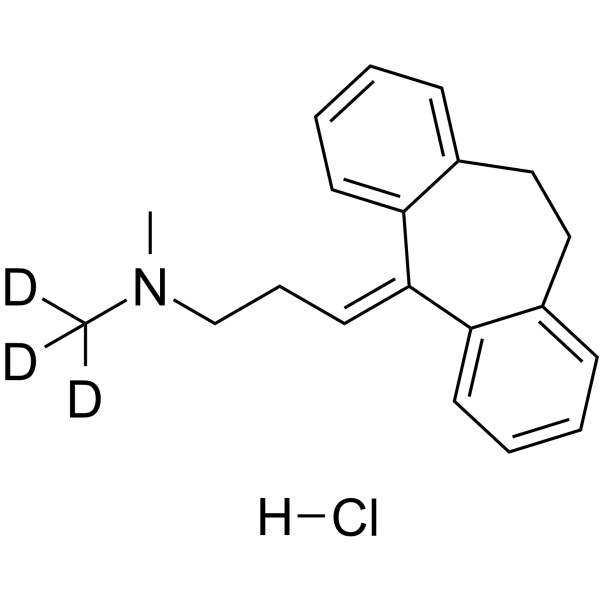
Amitriptyline-d3 hydrochloride is the deuterium labeled Amitriptyline (hydrochloride). Amitriptyline hydrochloride is an inhibitor of serotonin reuptake transporter (SERT) and noradrenaline reuptake transporter (NET), with Kis of 3.45 nM and 13.3 nM for human SERT and NET, respectively. Amitriptyline hydrochloride also weakly binds to dopamine reuptake transporter (DAT) with a Ki of 2.58 μM. Amitriptyline hydrochloride also inhibits adrenergic, muscarinic, histamine and 5-HT receptors. Amitriptyline hydrochloride is a TrkA and TrkB receptors agonist with potent neurotrophic activity. Amitriptyline hydrochloride has antidepressant activity .
|
-
-
- HY-118796
-
|
4-HO-MET; 4-Hydroxy-N-methyl-N-ethyltryptamine
|
5-HT Receptor
Serotonin Transporter
|
Neurological Disease
|
|
4-Hydroxy MET (4-HO-MET; 4-Hydroxy-N-methyl-N-ethyltryptamine) is a synthetic tryptamine psychoactive substance. 4-Hydroxy MET is a partial 5-HT2A receptor agonist, a serotonin transporter inhibitor and weak norepinephrine transporter inhibitor. 4-Hydroxy MET affects emotional, motoric, and cognitive functions via serotonergic hallucinogenic activity .
|
-
-
- HY-B1213A
-
|
|
5-HT Receptor
Bacterial
|
Neurological Disease
|
|
Trimipramine is a 5-HT receptor antagonist, with pKi binding values of 6.39, 8.10, 4.66 for 5-HT1C, 5-HT2 and 5-HT1A, respectively. Trimipramine is also a potent and selective inhibitor targeting human noradrenaline (hNAT), serotonin (hSERT) and organic cation transporters (hOCT1, hOCT2) with IC50 values of 4.99 μM, 2.11 μM, 3.72 μM, 8.00 μM, respectively. Trimipramine has vascular activity and anxiolytic efficacy .
|
-
-
- HY-103115
-
|
EMD 281014; LY 2422347 hydrochloride
|
5-HT Receptor
|
Neurological Disease
|
|
Pruvanserin hydrochloride (EMD 281014) is a selective serotonin 5-HT2A receptor antagonist with IC50 values of 0.35 nM and 1 nM for human and rat 5-HT2A receptors. Pruvanserin (hydrochloride) can be used for the research of schizophrenia .
|
-
-
- HY-W128798
-
|
|
5-HT Receptor
|
Neurological Disease
|
|
Sulfabenz (Compound 9) is an amine-substituted N1-phenylsulfonyl indole derivative. Sulfabenz has binding activity to human 5-HT6 serotonin receptor (Ki: 200 nM). Sulfabenz can be used to study the ligand binding mechanism of 5-HT6 receptor and 5-HT6 receptor-related neurological diseases .
|
-
-
- HY-120464
-
|
SAM-760
|
5-HT Receptor
|
Neurological Disease
|
|
PF-05212377 (SAM-760) is an inhibitor for serotonin receptor 5-HT6. PF-05212377 is a substrate for P-gp/non-BCRP human transporter. PF-05212377 exhibits blood brain barrier permeability in non-human primates. PF-05212377 can be used for Alzheimer’s Disease research .
|
-
-
- HY-B0170
-
|
|
Histamine Receptor
mAChR
nAChR
5-HT Receptor
|
Inflammation/Immunology
|
|
Azatadine is an orally active histamine H1 receptor inhibitor, cetylcholine receptor inhibitor, and serotonin receptor inhibitor. Azatadine induces sedation and exhibits topical anesthetic properties. Azatadine can be used for the research of allergic rhinitis .
|
-
-
- HY-B1213AR
-
|
|
Reference Standards
5-HT Receptor
Bacterial
|
Neurological Disease
|
|
Trimipramine (Standard) is the analytical standard of Trimipramine. This product is intended for research and analytical applications. Trimipramine is a 5-HT receptor antagonist, with pKi binding values of 6.39, 8.10, 4.66 for 5-HT1C, 5-HT2 and 5-HT1A, respectively. Trimipramine is also a potent and selective inhibitor targeting human noradrenaline (hNAT), serotonin (hSERT) and organic cation transporters (hOCT1, hOCT2) with IC50 values of 4.99 μM, 2.11 μM, 3.72 μM, 8.00 μM, respectively. Trimipramine has vascular activity and anxiolytic efficacy .
|
-
-
- HY-B1213R
-
|
|
Reference Standards
5-HT Receptor
Bacterial
|
Neurological Disease
|
|
Trimipramine (maleate) (Standard) is the analytical standard of Trimipramine (maleate). This product is intended for research and analytical applications. Trimipramine maleate is a 5-HT receptor antagonist, with pKi binding values of 6.39, 8.10, 4.66 for 5-HT1C, 5-HT2 and 5-HT1A, respectively . Trimipramine maleate is also a potent and selective inhibitor targeting human noradrenaline (hNAT), serotonin (hSERT) and organic cation transporters (hOCT1, hOCT2) with IC50 values of 4.99 μM, 2.11 μM, 3.72 μM, 8.00 μM, respectively . Trimipramine maleate has vascular activity and anxiolytic efficacy .
|
-
-
- HY-130351
-
|
|
5-HT Receptor
|
Neurological Disease
|
|
25H-NBOMe hydrochloride is an agonist for the rat and human serotonin 5-HT2A receptors with Ki values of 1.19 and 2.83 nM, respectively .
|
-
-
- HY-117574
-
|
|
5-HT Receptor
|
Cardiovascular Disease
|
|
SB 207710 is a highly selective antagonist of the 5-HT4 receptor that has been shown to effectively block the positive inotropic effect induced by serotonin in human right atrial appendage preparations .
|
-
-
- HY-100820B
-
|
EMD 128130 dihydrochloride
|
5-HT Receptor
Dopamine Receptor
|
Neurological Disease
|
|
Sarizotan dihydrochloride (EMD 128130) is an orally active serotonin 5-HT1A receptor and dopamine receptor agonist. Sarizotan (EMD 128130) exhibits IC50 values of 6.5 nM (rat 5-HT1A), 0.1 nM (human 5-HT1A), 15.1 nM (rat D2), 17 nM (human D2), 6.8 nM (human D3) and 2.4 nM (human D4.2), respectively .
|
-
-
- HY-100820A
-
|
EMD 128130 hydrochloride
|
5-HT Receptor
Dopamine Receptor
|
Neurological Disease
|
|
Sarizotan hydrochloride is an orally active serotonin 5-HT1A receptor and dopamine receptor agonist. Sarizotan hydrochloride (EMD 128130) exhibits IC50 values of 6.5 nM (rat 5-HT1A), 0.1 nM (human 5-HT1A), 15.1 nM (rat D2), 17 nM (human D2), 6.8 nM (human D3) and 2.4 nM (human D4.2), respectively .
|
-
-
- HY-100820R
-
|
EMD 128130 (Standard)
|
Reference Standards
5-HT Receptor
Dopamine Receptor
|
Neurological Disease
|
|
Sarizotan (Standard) is the analytical standard of Sarizotan. This product is intended for research and analytical applications. Sarizotan (EMD 128130) is an orally active serotonin 5-HT1A receptor and dopamine receptor agonist. Sarizotan (EMD 128130) exhibits IC50 values of 6.5 nM (rat 5-HT1A), 0.1 nM (human 5-HT1A), 15.1 nM (rat D2), 17 nM (human D2), 6.8 nM (human D3) and 2.4 nM (human D4.2), respectively .
|
-
-
- HY-171794
-
|
|
5-HT Receptor
|
Neurological Disease
|
|
AZD1134 is an orally active, brain-penetrant and highly selective 5-HT1B receptor antagonist with IC50 values of 2.9 nM (human) and 0.108 nM (guinea pig), respectively. AZD1134 increases synaptic serotonin levels in guinea pigs. AZD1134 is promising for research of psychiatric disorders, such as depression and anxiety .
|
-
-
- HY-W740014
-
|
183C91; DZT
|
5-HT Receptor
|
Neurological Disease
|
|
N-Desmethyl Zolmitriptan (183C91; DZT) is the active metabolite of the serotonin (5-HT) receptor subtype 5-HT1B and 5-HT1D agonist Zolmitriptan (HY-B0229). N-Desmethyl Zolmitriptan (183C91; DZT) is an agonist of 5-HT1B receptors and induces constriction in isolated human cerebral arteries (EC50=100 nM).
|
-
-
- HY-101250R
-
|
MDL11939 (Standard)
|
Reference Standards
Serotonin Transporter
|
Neurological Disease
|
|
Glemanserin (Standard) is the analytical standard of Glemanserin. This product is intended for research and analytical applications. Glemanserin (MDL11939) is a potent and selective antagonist for serotonin receptor 5-HT2A (Ki=2.89, 0.54 and 2.5 nM for rat 5-HT2A, rabbit 5-HT2A and human 5-HT2A, respectively) .
|
-
-
- HY-14153S
-
|
|
5-HT Receptor
Apoptosis
Isotope-Labeled Compounds
|
Metabolic Disease
Cancer
|
|
Tegaserod-d11 is deuterated labeled Tegaserod (HY-14153). Tegaserod is an orally active serotonin receptor 4 (HTR4; 5-HT4R) agonist and a 5-HT2B receptor antagonist. Tegaserod has pKis of 7.5, 8.4 and 7.0 for human recombinant 5-HT2A, 5-HT2B and 5-HT2C receptors, respectively. Tegaserod causes tumor cell apoptosis, blunts PI3K/Akt/mTOR signaling and decreases S6 phosphorylation. Tegaserod has anti-tumor activity and has the potential for irritable bowel syndrome (IBS) research .
|
-
-
- HY-B0170AR
-
|
Azatadine maleate (Standard)
|
Histamine Receptor
Reference Standards
|
Metabolic Disease
Inflammation/Immunology
|
|
Azatadine dimaleate (Standard) is the analytical standard of Azatadine dimaleate. This product is intended for research and analytical applications. Azatadine dimaleate (Azatadine maleate) is an orally active histamine H1 receptor inhibitor, cetylcholine receptor inhibitor, and serotonin receptor inhibitor. Azatadine dimaleate induces sedation and exhibits topical anesthetic properties. Azatadine dimaleate can be used for the research of allergic rhinitis .
|
-
-
- HY-100057
-
|
6-Hydroxybuspirone; 6'-Hydroxybuspirone; BMS 528215
|
5-HT Receptor
Drug Metabolite
Dopamine Receptor
|
Neurological Disease
|
|
BMY 28674 (6-Hydroxybuspirone) is the active metabolite of the anxiolytic buspirone (HY-B1115A) and is metabolized by CYP3A4.4. BMY 28674 binds to the serotonin (5-HT) receptor subtype 5-HT1A in the rat hippocampus and dorsal raphe (EC50s are 4 and 1 μM, respectively) and is an antagonist of dopamine D2, D3, and D4 receptors (IC50s are 3.1, 4.9, and 0.85 μM, respectively). BMY 28674 also inhibits organic cation transporter 1 (OCT1), OCT2, and OCT3 expressing human transporters in S2 proximal tubule cells in a concentration-dependent manner.
|
-
-
- HY-N9418R
-
|
|
Phytohormone
Reference Standards
|
Others
|
|
Trimipramine (Standard) is the analytical standard of Trimipramine. This product is intended for research and analytical applications. Trimipramine is a 5-HT receptor antagonist, with pKi binding values of 6.39, 8.10, 4.66 for 5-HT1C, 5-HT2 and 5-HT1A, respectively. Trimipramine is also a potent and selective inhibitor targeting human noradrenaline (hNAT), serotonin (hSERT) and organic cation transporters (hOCT1, hOCT2) with IC50 values of 4.99 μM, 2.11 μM, 3.72 μM, 8.00 μM, respectively. Trimipramine has vascular activity and anxiolytic efficacy .
|
-
-
- HY-100656AS
-
|
|
Isotope-Labeled Compounds
Dopamine Receptor
5-HT Receptor
|
Neurological Disease
|
|
Desmethyl cariprazine-d8 is the deuterium labeled Desmethyl cariprazine (HY-100656). Desmethyl cariprazine is a major active metabolite of cariprazine, with activities at human dopamine receptors and serotonin receptors, showing a pEC50 of 8.90 at human D2 receptors, a pEC50 of 8.09 at D3 receptors, and a pEC50 of 6.28 at 5-HT1A receptors. Desmethyl cariprazine inhibits forskolin-induced cAMP production at D2, D3 and 5-HT1A receptors, and suppresses serotonin-induced Ca 2+ release at 5-HT2B receptors. Desmethyl cariprazine is applicable to research related to schizophrenia, bipolar disorder type I and bipolar disorder.
|
-
-
- HY-W680886
-
|
|
Monoamine Transporter
Serotonin Transporter
Dopamine Transporter
5-HT Receptor
|
Neurological Disease
|
|
6-APDB is a class of monoamine neurotransmitter releaser and Monoamine Transporter modulator that exerts selective effects on human monoamine transporters and acts as a partial agonist at 5-HT2 family receptors. For NET, 6-APDB has an IC50 of 0.56 μM and a Ki of 18 μM; for SERT, it has an IC50 of 2.3 μM and a Ki of 23 μM; for DAT, it has an IC50 of 33 μM and a Ki of >30 μM, and affinity for rat and mouse TAAR1, with Ki values of 1.0 μM and 0.21 μM, respectively. 6-APDB inhibits norepinephrine and 5-HT reuptake, mediates the release of three types of monoamine neurotransmitters, shows a dose-dependent biphasic locomotor effect in mice, and fully substitutes the discriminative stimulus effect of MDMA. 6-APDB shows no significant cytotoxicity at high concentrations, and possesses empathogenic psychoactivity, potential hallucinogenic effects, and behavioral effects associated with intermittent abuse .
|
-
-
- HY-182247
-
|
|
Serotonin Transporter
Dopamine Transporter
|
Neurological Disease
|
|
D-473 is an orally active, blood-brain barrier penetrant and serotonin-preferring reuptake inhibitor. D-473 inhibits serotonin, dopamine and norepinephrine transporters, and significantly elevates the extracellular levels of these three neurotransmitters in rat brain regions. D-473 exhibits definite antidepressant-like activity without inducing motor activation. D-473 is widely used in studies related to major depressive disorder .
|
-
| Cat. No. |
Product Name |
Category |
Target |
Chemical Structure |
-
- HY-N2411
-
-
-
- HY-N9418R
-
|
|
Rosaceae
Plants
Rosa canina Gremli ex Christ
Source Classification
|
Phytohormone
Reference Standards
|
|
Trimipramine (Standard) is the analytical standard of Trimipramine. This product is intended for research and analytical applications. Trimipramine is a 5-HT receptor antagonist, with pKi binding values of 6.39, 8.10, 4.66 for 5-HT1C, 5-HT2 and 5-HT1A, respectively. Trimipramine is also a potent and selective inhibitor targeting human noradrenaline (hNAT), serotonin (hSERT) and organic cation transporters (hOCT1, hOCT2) with IC50 values of 4.99 μM, 2.11 μM, 3.72 μM, 8.00 μM, respectively. Trimipramine has vascular activity and anxiolytic efficacy .
|
-
| Cat. No. |
Product Name |
Chemical Structure |
-
- HY-14153S
-
|
|
|
Tegaserod-d11 is deuterated labeled Tegaserod (HY-14153). Tegaserod is an orally active serotonin receptor 4 (HTR4; 5-HT4R) agonist and a 5-HT2B receptor antagonist. Tegaserod has pKis of 7.5, 8.4 and 7.0 for human recombinant 5-HT2A, 5-HT2B and 5-HT2C receptors, respectively. Tegaserod causes tumor cell apoptosis, blunts PI3K/Akt/mTOR signaling and decreases S6 phosphorylation. Tegaserod has anti-tumor activity and has the potential for irritable bowel syndrome (IBS) research .
|
-
-
- HY-100656AS
-
|
|
|
Desmethyl cariprazine-d8 is the deuterium labeled Desmethyl cariprazine (HY-100656). Desmethyl cariprazine is a major active metabolite of cariprazine, with activities at human dopamine receptors and serotonin receptors, showing a pEC50 of 8.90 at human D2 receptors, a pEC50 of 8.09 at D3 receptors, and a pEC50 of 6.28 at 5-HT1A receptors. Desmethyl cariprazine inhibits forskolin-induced cAMP production at D2, D3 and 5-HT1A receptors, and suppresses serotonin-induced Ca 2+ release at 5-HT2B receptors. Desmethyl cariprazine is applicable to research related to schizophrenia, bipolar disorder type I and bipolar disorder.
|
-
Your information is safe with us. * Required Fields.
Inquiry Information
- Product Name:
- Cat. No.:
- Quantity:
- MCE Japan Authorized Agent:

