



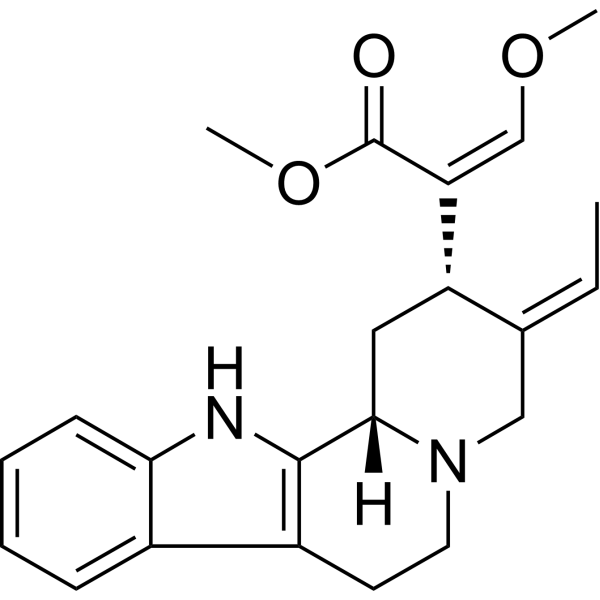
Geissoschizine methyl ether
Based on 1 publication(s) in Google Scholar
Geissoschizine methyl ether is an orally active, blood-brain barrier permeable alkaloid, and a partial agonist of the 5-HT1A receptor. It can be isolated from Uncaria hook. Geissoschizine methyl ether potently inhibits the binding of [3H]8-OH-DPAT to the 5-HT1A receptor in a concentration-dependent manner, with an IC50 of 0.904 μM. It ameliorates isolation-induced increased aggression and reduced sociability in mice. Geissoschizine methyl ether promotes oligodendrocyte differentiation and remyelination in the medial prefrontal cortex of adult mice.
For research use only. We do not sell to patients.
- Purity : 99.97%
- CAS No.: 60314-89-8
- Formula: C22H26N2O3
- Molecular Weight:366.45
-
Storage:
4°C, protect from light
* In solvent : -80°C, 6 months; -20°C, 1 month (protect from light)

To place orders, for customer services and technical support, please contact: MedChemExpress USA
Tel: 609-228-6898 E-mail: [email protected] [email protected]


-
 Biological Activity
-
Chemical Information
-
Solvent & Solubility
- Protocols
- Purity & Documentation
- References
-
 Help & FAQs


-
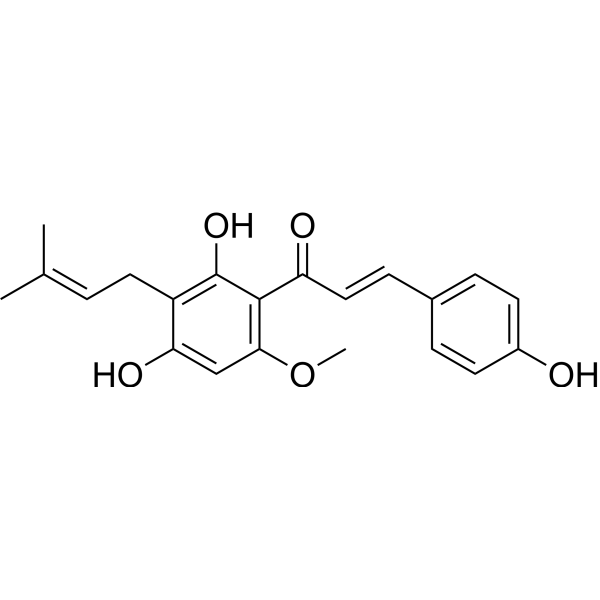
HY-N1067
XanthohumolCOX Inhibitor -
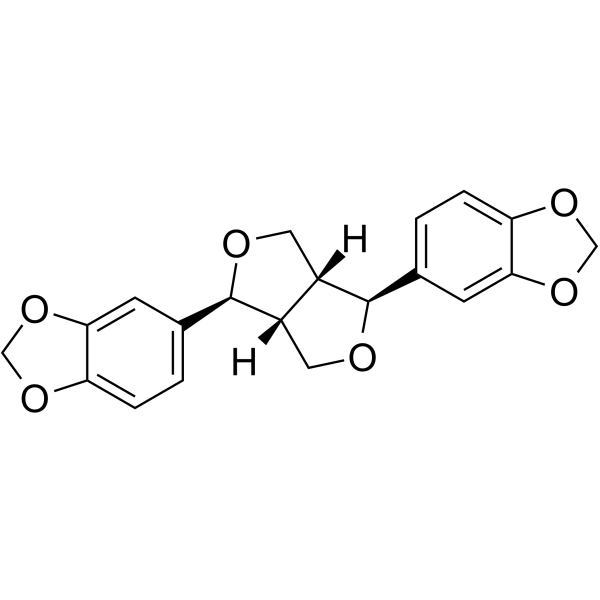
HY-N0121
SesaminDelta 5 Desaturase Inhibitor -
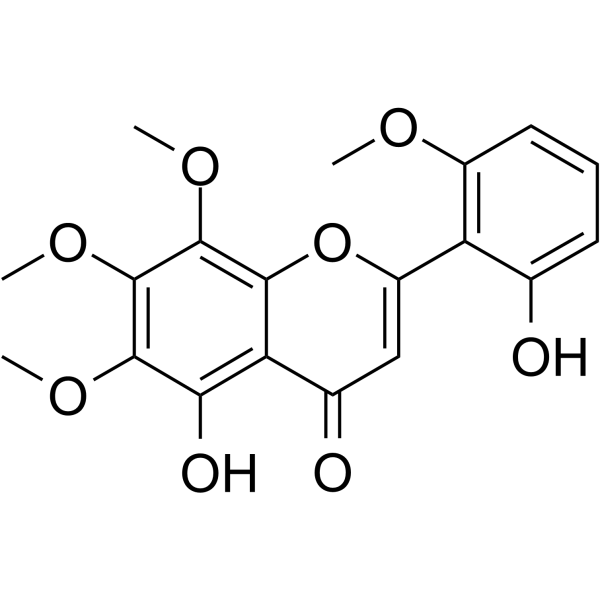
HY-N6624
Skullcapflavone IIBacterial Inhibitor -
HY-N0735
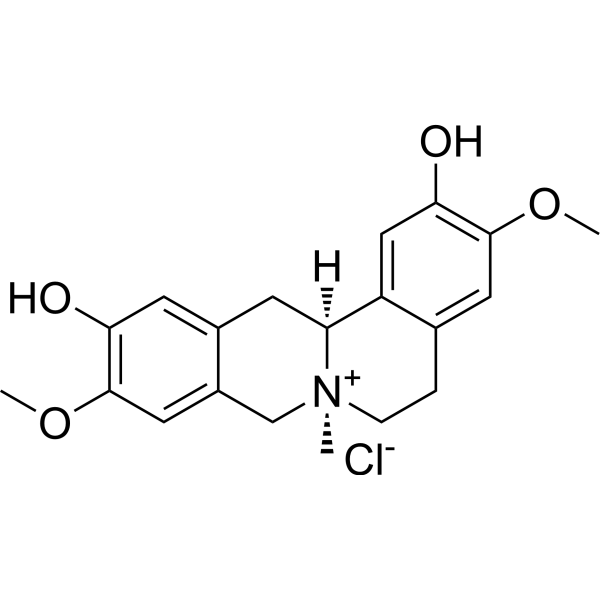
Phellodendrine chlorideAnti-inflammatory/Anti-tumor/Anti-allergic Agent -
HY-N0747
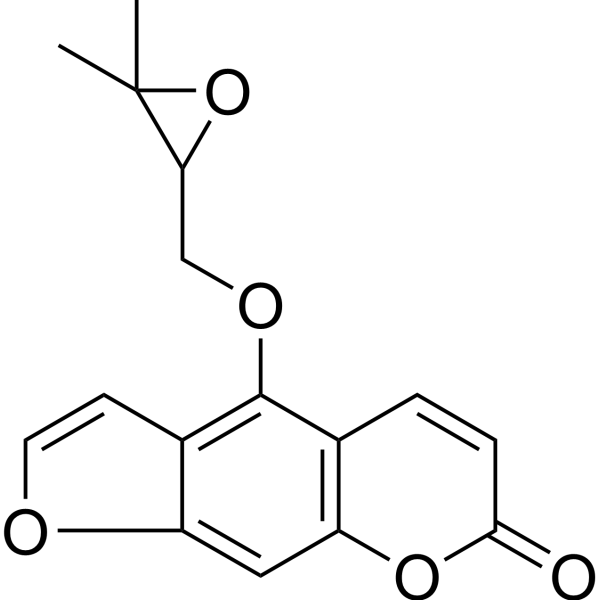
OxypeucedaninHKv1.5 Current Blocker -
HY-N8213
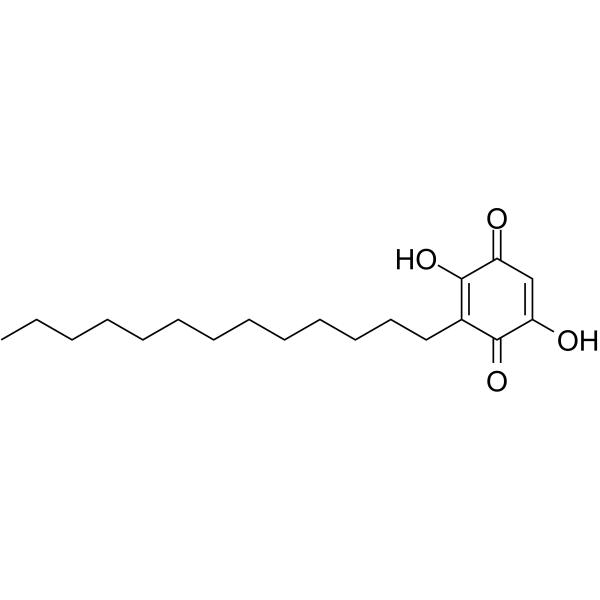
RapanoneAntioxidant Agent -
HY-N7004
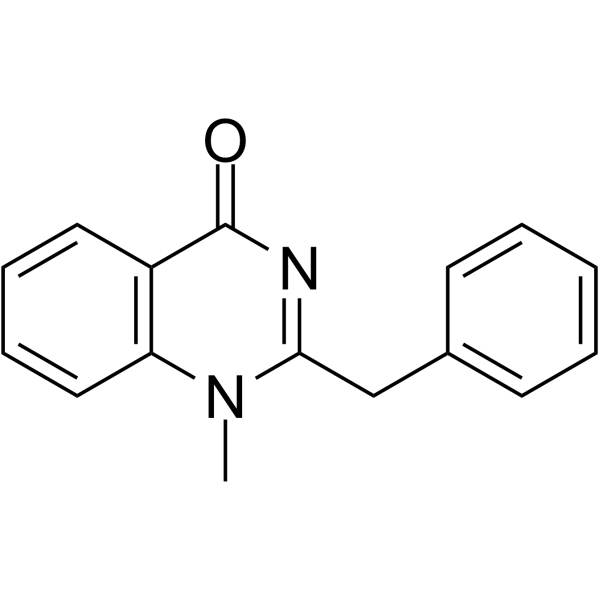
ArborinemAChR Inhibitor -
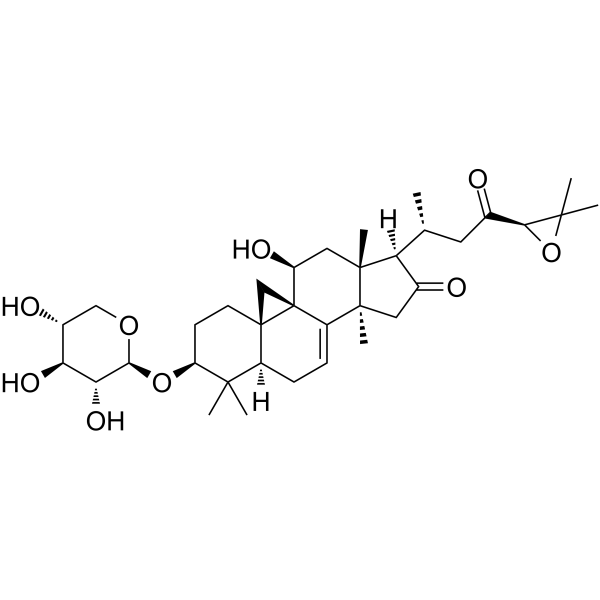
HY-N9331
Cimicifugoside H-1 -
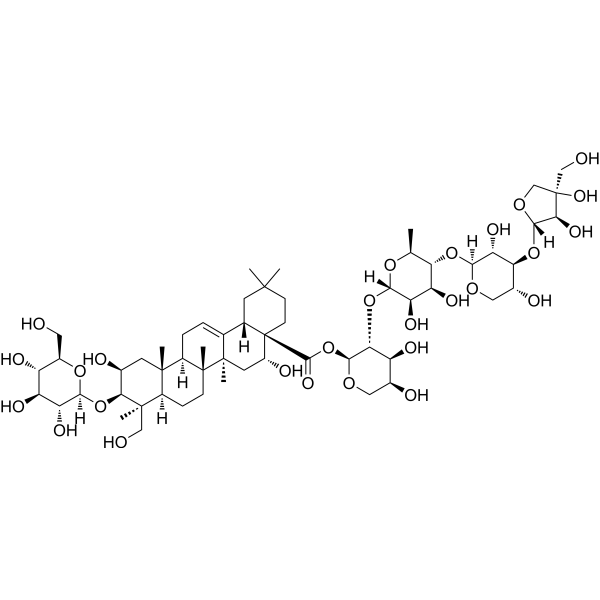
HY-N6064
Polygalacin DApoptosis Inducer -
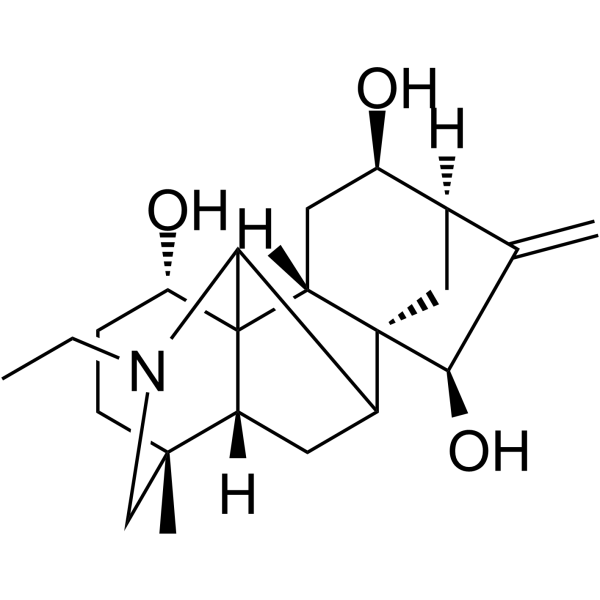
HY-N2162
12-EpinapellineAnti-Inflammatory Agent -
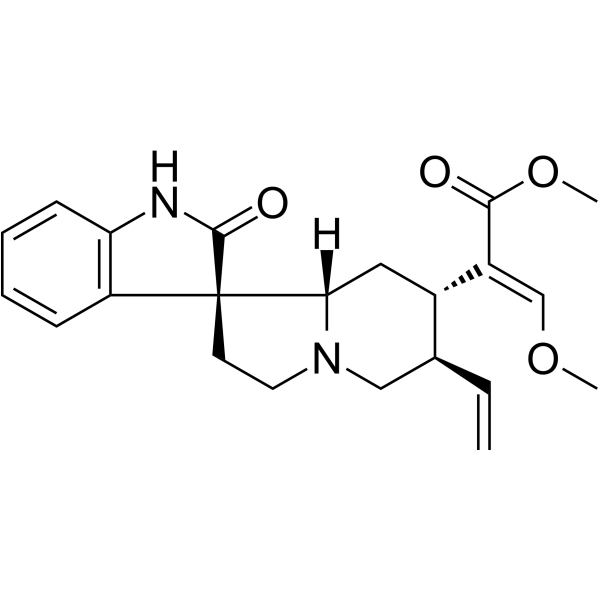
HY-N0775
Isocorynoxeine5-HT Receptor Inhibitor
Publications Citing Use of MedChemExpress (MCE) Geissoschizine methyl ether
MoreAll 5-HT Receptor Isoforms
More

Biological Activity
Description
IC50 & Target
[1]|
5-HT1A Receptor 0.904 μM (IC50) |
In Vitro
Geissoschizine methyl ether (0.01-100 μM) potently inhibits the binding of [3H]8-OH-DPAT to 5-HT1A receptors in a concentration-dependent manner, with an IC50 of 0.904 μM and a Ki of 0.517 μM[2].
Geissoschizine methyl ether (0.1-100 μM; 20 min preincubation) acts as a partial agonist of the 5-HT1A receptor in CHO-h5-HT1A cell membranes, and induces approximately 40% of the maximal [35S]GTPγS binding activity triggered by the full agonist 5-HT[2].
MedChemExpress (MCE) has not independently confirmed the accuracy of these methods. They are for reference only. Further protocols information, click here.
In Vivo
Geissoschizine methyl ether (0.3 mg/kg; p.o.; once daily; for 14 consecutive days) increases the generation of mature oligodendrocytes in the medial prefrontal cortex of cuprizone-induced demyelinated adult male C57BL/6J mice, and restores MBP immunoreactivity to approximately 85% of the control level[3].
Geissoschizine methyl ether (0.3 mg/kg; p.o.; once daily; for 14 consecutive days) exerts no effect on myelination or proliferating cell populations in the medial prefrontal cortex of healthy adult male C57BL/6J mice[3].
MedChemExpress (MCE) has not independently confirmed the accuracy of these methods. They are for reference only.
-
Animal Model:ddY (male, 4 weeks old at acquisition, habituated 1 week, isolation-housed 4 weeks to induce behavioral changes)[2]
-
Dosage:75 µg/kg (single dose); 150 µg/kg (single dose; 14-day repeated dose); 300 µg/kg (single dose; 14-day repeated dose; 15-day coadministration)
-
Administration:p.o.; single dose; once daily for 14 days; once daily for 15 days
-
Result:Significantly ameliorated isolation-induced decreased social behavior at 300 µg/kg single dose (P<0.01), with no effect on aggressive behavior at any single dose tested.
Significantly decreased isolation-induced increased aggressive behavior (P<0.01) and increased isolation-induced decreased social behavior (P<0.01) at 150 µg/kg and 300 µg/kg with 14-day repeated administration.
Counteracted the ameliorative effects of 14-day repeated GM administration on aggressive and social behaviors when 0.1 mg/kg WAY-100635 was given i.p. 30 minutes after final GM dose (P<0.01).
Counteracted the ameliorative effects of 300 µg/kg GM on aggressive and social behaviors when coadministered with 0.1 mg/kg WAY-100635 for 14 days (P<0.05).
Sustained ameliorative effects on aggressive (P<0.05) and social (P<0.01) behaviors on day 15 without GM administration at 300 µg/kg 14-day repeated dose.
Caused no significant changes in motor activity in any treated groups compared to controls.
-
Animal Model:C57BL/6J (adult male, aged 57-113 days, demyelination induced by 0.2% cuprizone-containing chow for 4 weeks)[3]
-
Dosage:0.3 mg/kg
-
Administration:p.o.; once daily; 14 days
-
Result:Increased the number of BrdU-labeled GSTpi+ mature oligodendrocytes to 21.1/mm2.
Restored MBP immunoreactivity to 85.19% of control levels.
Restored the ratio of MBP to neurofilament (NF) intensity to 0.28.
Showed no significant effect on body weight, the number of BrdU-labeled NG2+ oligodendrocyte progenitor cells, BrdU-labeled Iba1+ microglial cells, or total GSTpi+ mature oligodendrocytes.


Chemical Information
-
CAS No. 60314-89-8
-
Appearance Solid
-
Molecular Weight 366.45
-
Formula C22H26N2O3
-
Color White to off-white
-
SMILES
COC(/C([C@H]1C[C@@]2([H])C3=C(CCN2C/C1=C/C)C4=CC=CC=C4N3)=C\OC)=O
-
Structure Classification
-
Initial Source
-
Shipping
Room temperature in continental US; may vary elsewhere.
-
Storage
4°C, protect from light
* In solvent : -80°C, 6 months; -20°C, 1 month (protect from light)


Publications (1)
-
Journal Impact Factor
-
Most Recent
-
Plant Biotechnol (Tokyo)
A sterile plant culture system of Uncaria rhynchophylla as a biosynthetic model of monoterpenoid indole alkaloids. [Abstract]2025 Jun 25;42(2):145-154. PMID: 40636431


Solvent & Solubility
In Vitro:
DMSO : 100 mg/mL (272.89 mM; Need ultrasonic; Hygroscopic DMSO has a significant impact on the solubility of product, please use newly opened DMSO)
Please refer to the solubility information to select the appropriate solvent. Once prepared, please aliquot and store the solution to prevent product inactivation from repeated freeze-thaw cycles.
Storage method and period of stock solution: -80°C, 6 months; -20°C, 1 month (protect from light). When stored at -80°C, please use it within 6 months. When stored at -20°C, please use it within 1 month.
Please refer to the solubility information to select the appropriate solvent. Once prepared, please aliquot and store the solution to prevent product inactivation from repeated freeze-thaw cycles.
Storage method and period of stock solution: -80°C, 6 months; -20°C, 1 month (protect from light). When stored at -80°C, please use it within 6 months. When stored at -20°C, please use it within 1 month.
Concentration (start) × Volume (start) = Concentration (final) × Volume (final)

Protocols
-
Cell Cytotoxicity Assay
Cytotoxicity assays are usually based on the assessment of cell membrane damage, which can also be indirectly detected by measuring cell viability. Detection methods include MTT assay, CKK-8 assay, LDH assay and ATP assay, etc.


Purity & Documentation
-
Data Sheet (284 KB)
-
SDS (393 KB)
- English - EN (393 KB)
- Français - FR (393 KB)
- Deutsch - DE (393 KB)
- Norwegian - NO (393 KB)
- Español - ES (393 KB)
- Swedish - SV (393 KB)
- Italian - IT (393 KB)
- Korean - KR (393 KB)
- Portuguese - PT (393 KB)
-
Handling Instructions (2659 KB)
References
[1]. Matsumoto T, et al. In vitro identification of human cytochrome P450 isoforms involved in the metabolism of Geissoschizine methyl ether, an active component of the traditional Japanese medicine Yokukansan. Xenobiotica. 2016;46(4):325-34. [Content Brief]
[2]. Nishi A, et al. Geissoschizine methyl ether, an alkaloid in Uncaria hook, is a potent serotonin ₁A receptor agonist and candidate for amelioration of aggressiveness and sociality by yokukansan. Neuroscience. 2012 Apr 5;207:124-36. [Content Brief]
[3]. Morita S, et al. Geissoschizine methyl ether, an alkaloid from the Uncaria hook, improves remyelination after cuprizone-induced demyelination in medial prefrontal cortex of adult mice. Neurochem Res. 2014;39(1):59-67. [Content Brief]


Complete Stock Solution Preparation Table
Please refer to the solubility information to select the appropriate solvent. Once prepared, please aliquot and store the solution to prevent product inactivation from repeated freeze-thaw cycles.
Storage method and period of stock solution: -80°C, 6 months; -20°C, 1 month (protect from light). When stored at -80°C, please use it within 6 months. When stored at -20°C, please use it within 1 month.
| Optional Solvent | Concentration Solvent Mass | 1 mg | 5 mg | 10 mg | 25 mg |
|---|---|---|---|---|---|
| DMSO | 1 mM | 2.7289 mL | 13.6444 mL | 27.2889 mL | 68.2221 mL |
| 5 mM | 0.5458 mL | 2.7289 mL | 5.4578 mL | 13.6444 mL | |
| 10 mM | 0.2729 mL | 1.3644 mL | 2.7289 mL | 6.8222 mL | |
| 15 mM | 0.1819 mL | 0.9096 mL | 1.8193 mL | 4.5481 mL | |
| 20 mM | 0.1364 mL | 0.6822 mL | 1.3644 mL | 3.4111 mL | |
| 25 mM | 0.1092 mL | 0.5458 mL | 1.0916 mL | 2.7289 mL | |
| 30 mM | 0.0910 mL | 0.4548 mL | 0.9096 mL | 2.2741 mL | |
| 40 mM | 0.0682 mL | 0.3411 mL | 0.6822 mL | 1.7056 mL | |
| 50 mM | 0.0546 mL | 0.2729 mL | 0.5458 mL | 1.3644 mL | |
| 60 mM | 0.0455 mL | 0.2274 mL | 0.4548 mL | 1.1370 mL | |
| 80 mM | 0.0341 mL | 0.1706 mL | 0.3411 mL | 0.8528 mL | |
| 100 mM | 0.0273 mL | 0.1364 mL | 0.2729 mL | 0.6822 mL |


Geissoschizine methyl ether Related Classifications
HY-N2411 Related Classifications
 Powered by Bioz