



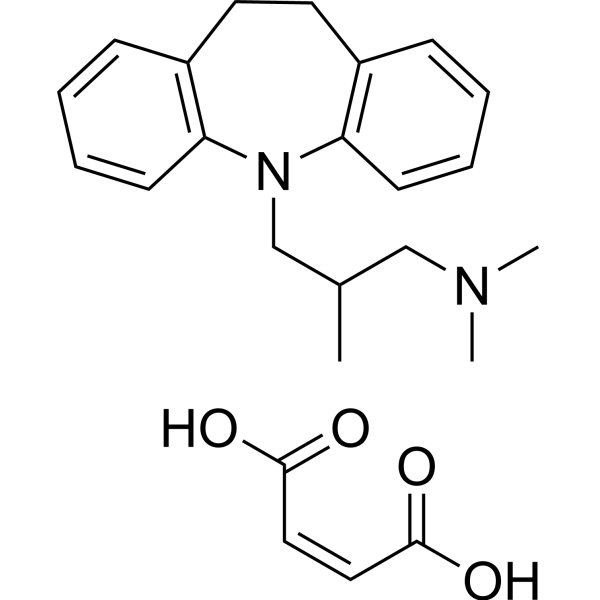
Trimipramine maleate
Based on 1 publication(s) in Google Scholar
Trimipramine maleate is a 5-HT receptor antagonist, with blood-brain barrier permeability. Trimipramine maleate has pKi binding values of 6.39, 8.10, 4.66 for 5-HT1C, 5-HT2 and 5-HT1A, respectively. Trimipramine maleate is also a potent and selective inhibitor targeting human noradrenaline (hNAT), serotonin (hSERT) and organic cation transporters (hOCT1, hOCT2) with IC50 values of 4.99 μM, 2.11 μM, 3.72 μM, 8.00 μM, respectively. Trimipramine maleate has vascular activity and anxiolytic efficacy.
For research use only. We do not sell to patients.
- Purity : 99.88%
- CAS No.: 521-78-8
- Formula: C24H30N2O4
- Molecular Weight:410.51
-
Storage:
4°C, sealed storage, away from moisture
* In solvent : -80°C, 6 months; -20°C, 1 month (sealed storage, away from moisture)

To place orders, for customer services and technical support, please contact: MedChemExpress USA
Tel: 609-228-6898 E-mail: [email protected] [email protected]


-
 Biological Activity
-
Chemical Information
-
Solvent & Solubility
- Protocols
- Purity & Documentation
- References
-
 Help & FAQs


-
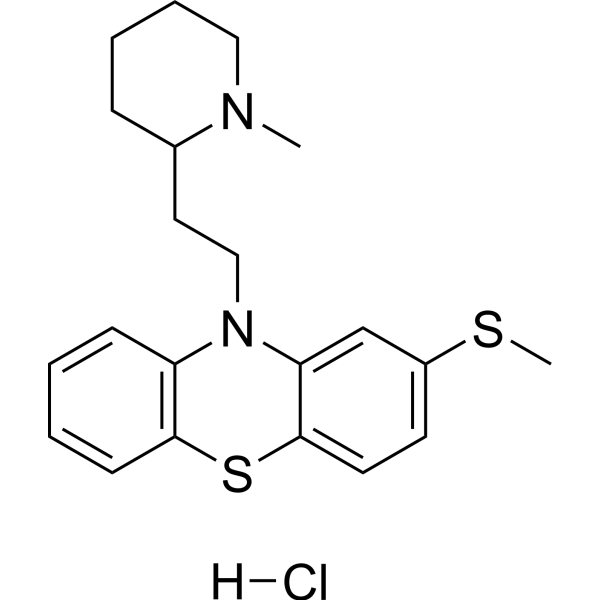
HY-B0965
Thioridazine hydrochlorideDopamine Receptor Antagonist -
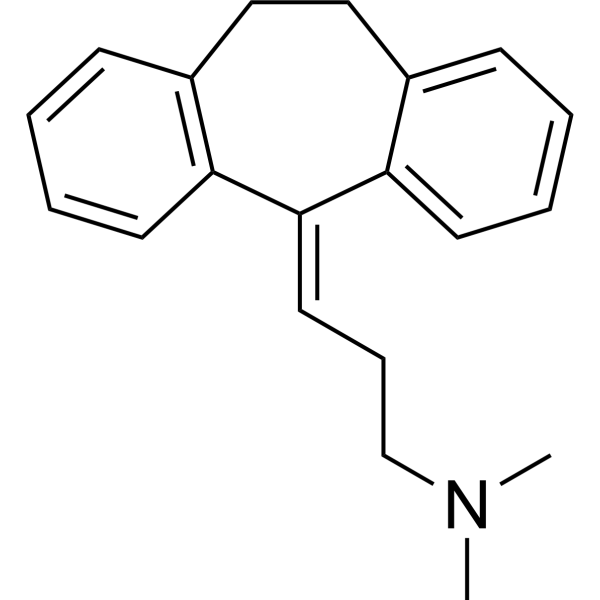
HY-B0527
AmitriptylineSERT/NET Inhibitor -
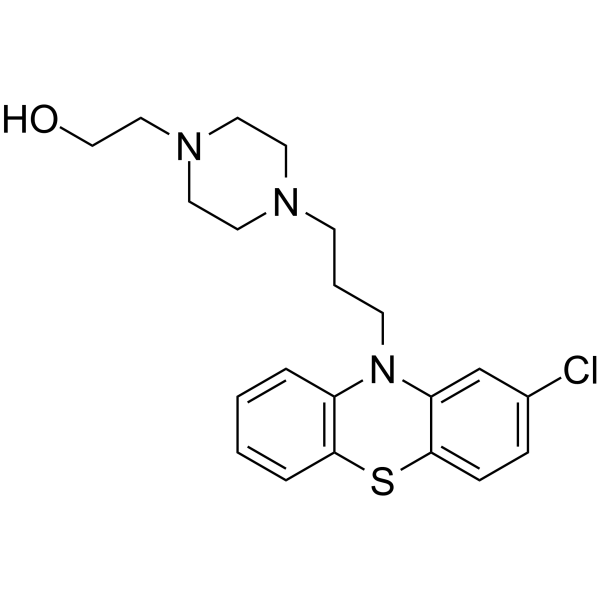
HY-A0077
PerphenazineDopamine Receptor Antagonist -
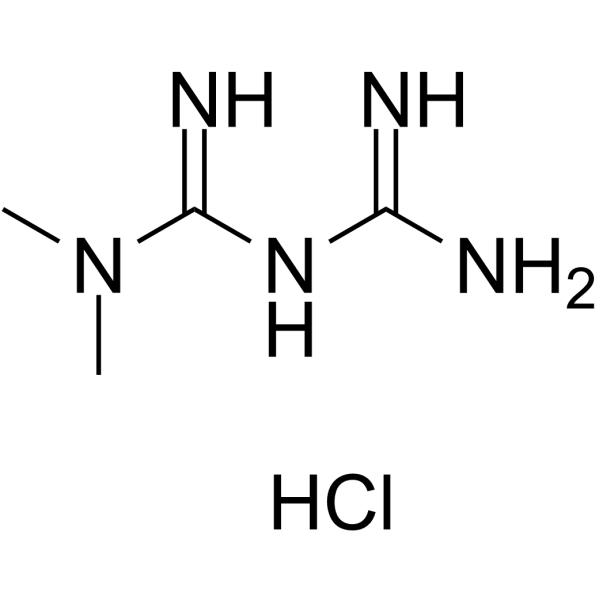
HY-17471A
Metformin hydrochlorideAntihyperglycemic Agent -
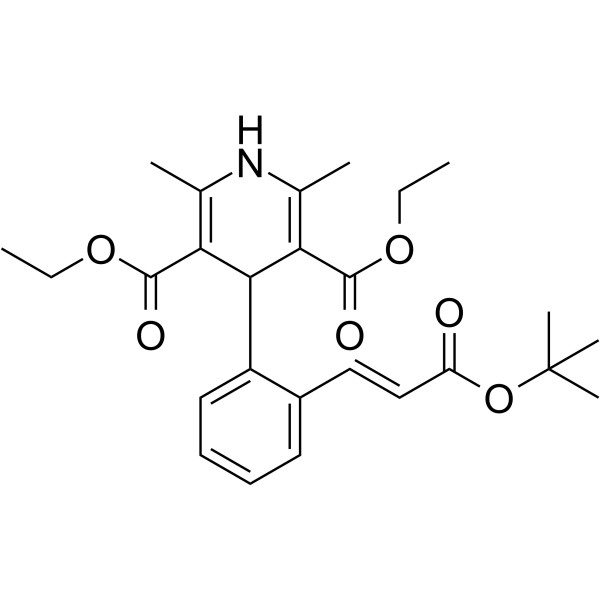
HY-B0347
LacidipineCalcium Channel Blocker -
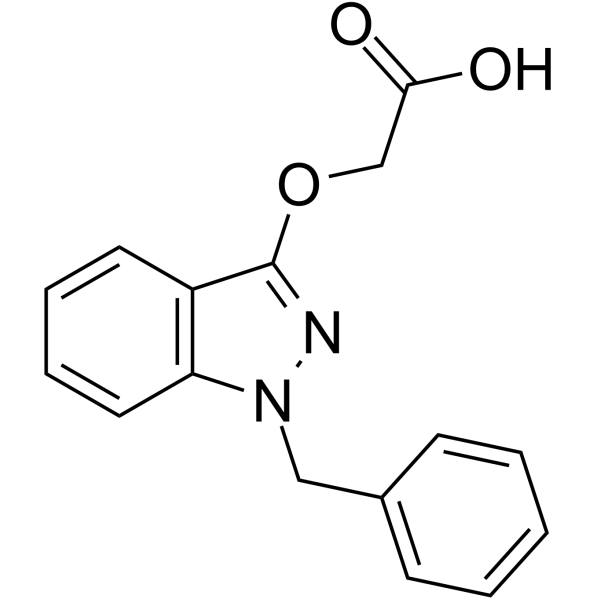
HY-17480
BendazacAnti-Inflammatory Agent -

HY-B1213R
Trimipramine maleate (Standard)5-HT Receptor Antagonist -
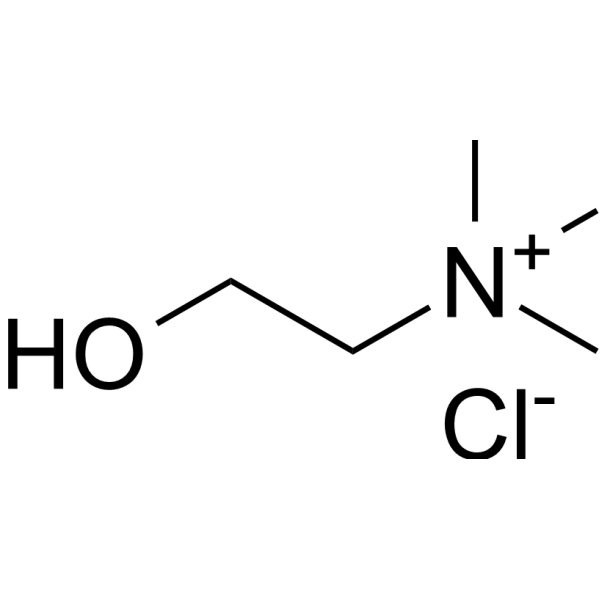
HY-B1337
Choline chlorideBronchodilator -
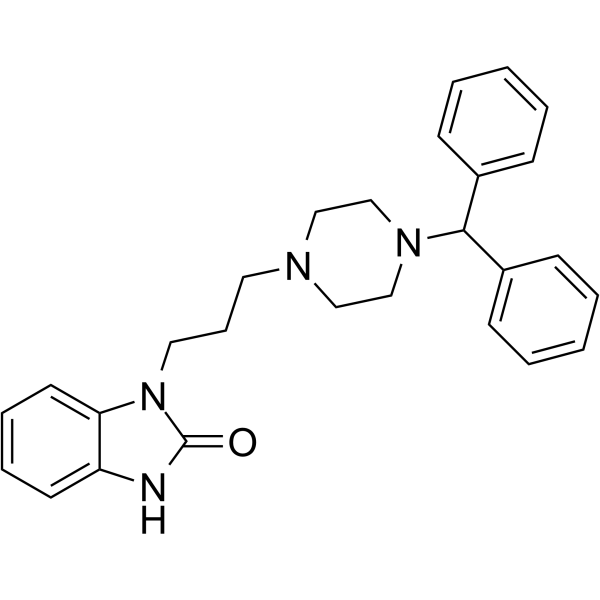
HY-123205
OxatomideH1-histamine/P2X7 Receptor Antagonist -

HY-B1337R
Choline chloride (Standard)Reference Standard -
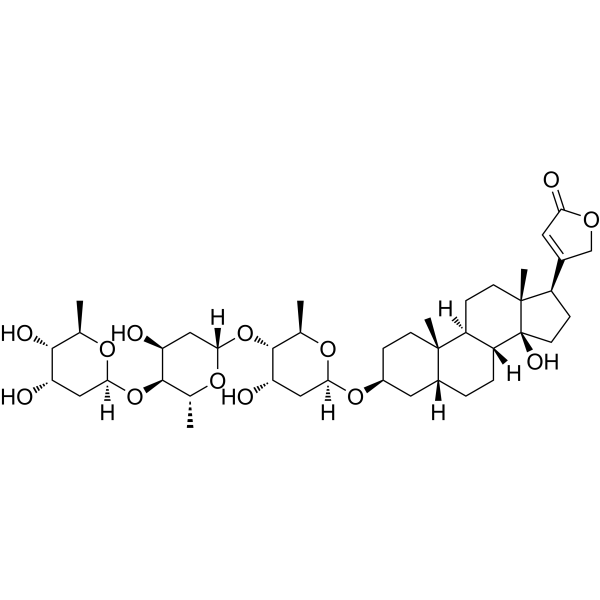
HY-B1357
DigitoxinAnti-cancer Agent -
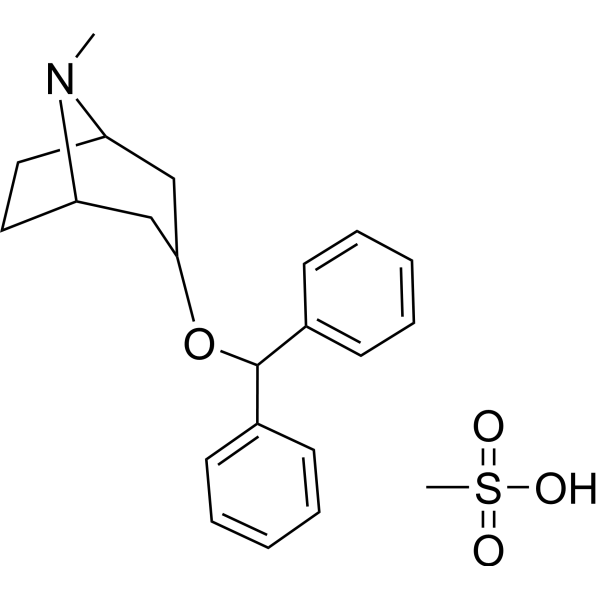
HY-B0520A
Benztropine mesylateAnticholinergic Agent
Publications Citing Use of MedChemExpress (MCE) Trimipramine maleate
MoreAll 5-HT Receptor Isoforms
More

Biological Activity
Description
IC50 & Target
|
5-HT1A Receptor |
5-HT1C Receptor |
5-HT1C Receptor 6.39 (pKi) |
5-HT2 Receptor 8.10 (pKi) |
sPLA2 4.66 (pKi) |
In Vitro
Trimipramine maleate displays much higher affinity for 5-HT2 than for 5-HT1C receptors[1].
Trimipramine maleate is a moderate inhibitor of the human NAT and SERT, with the IC50 values of 4.99 μM and 2.11 μM, respectively[2].
SERT and NAT could represent a target for the antidepressant effects of trimipramine maleate (1 mM, 0.1 mM, 0.01 mM, 1 μM, 0.1 μM; 10 min; HEK293 cells)[2].
MedChemExpress (MCE) has not independently confirmed the accuracy of these methods. They are for reference only. Further protocols information, click here.
In Vivo
MedChemExpress (MCE) has not independently confirmed the accuracy of these methods. They are for reference only.
-
Animal Model:Male Wistar rats (220-250 g); implanted osmotic minipump subcutaneously in the dorsal thoracic interscapular region[3]
-
Dosage:5 mg/kg/day
-
Administration:Delivered by smotic minipump; 14 days
-
Result:Decreased the number of frontal cortex 5-HT2 and striatal DA D2 receptors, thus blocked the uptake of 5-HT and dopamine (DA).
Clinical Trial
| NCT Number | Sponsor | Condition | Start Date |
Phase

|
|---|---|---|---|---|
| NCT01329991 | Plexxikon| | 2011-05 | PHASE1 |


Chemical Information
-
CAS No. 521-78-8
-
Appearance Solid
-
Molecular Weight 410.51
-
Formula C24H30N2O4
-
Color White to off-white
-
SMILES
CC(CN(C)C)CN1C2=C(C=CC=C2)CCC3=C1C=CC=C3.O=C(O)/C=C\C(O)=O
-
Shipping
Room temperature in continental US; may vary elsewhere.
-
Storage
4°C, sealed storage, away from moisture
* In solvent : -80°C, 6 months; -20°C, 1 month (sealed storage, away from moisture)


Publications (1)
-
Journal Impact Factor
-
Most Recent
-
Chirality
Evaluation of Acetonitrile in Combination With Alcohols as Modifiers in Chiral Supercritical Fluid Chromatography. [Abstract]2026 Mar 5;38(3):e70092. PMID: 41786509


Solvent & Solubility
In Vitro:
DMSO : ≥ 100 mg/mL (243.60 mM; Hygroscopic DMSO has a significant impact on the solubility of product, please use newly opened DMSO)
H2O : 14.29 mg/mL (34.81 mM; ultrasonic and warming and heat to 60°C)
* "≥" means soluble, but saturation unknown.
Please refer to the solubility information to select the appropriate solvent. Once prepared, please aliquot and store the solution to prevent product inactivation from repeated freeze-thaw cycles.
Storage method and period of stock solution: -80°C, 6 months; -20°C, 1 month (sealed storage, away from moisture). When stored at -80°C, please use it within 6 months. When stored at -20°C, please use it within 1 month.
* Note: If you choose water as the stock solution, please dilute it to the working solution, then filter and sterilize it with a 0.22 μm filter before use.
Please refer to the solubility information to select the appropriate solvent. Once prepared, please aliquot and store the solution to prevent product inactivation from repeated freeze-thaw cycles.
Storage method and period of stock solution: -80°C, 6 months; -20°C, 1 month (sealed storage, away from moisture). When stored at -80°C, please use it within 6 months. When stored at -20°C, please use it within 1 month.
* Note: If you choose water as the stock solution, please dilute it to the working solution, then filter and sterilize it with a 0.22 μm filter before use.
Concentration (start) × Volume (start) = Concentration (final) × Volume (final)
In Vivo:
Select the appropriate dissolution method based on your experimental animal and administration route.
- For the following dissolution methods, please ensure to first prepare a clear stock solution using an In Vitro approach and then sequentially add co-solvents:
- To ensure reliable experimental results, the clarified stock solution can be appropriately stored based on storage conditions. As for the working solution for In Vivo experiments, it is recommended to prepare freshly and use it on the same day.
- The percentages shown for the solvents indicate their volumetric ratio in the final prepared solution. If precipitation or phase separation occurs during preparation, heat and/or sonication can be used to aid dissolution.
Add each solvent one by one: 10% DMSO 40% PEG300 5% Tween-80 45% Saline
Solubility: ≥ 2.5 mg/mL (6.09 mM); Clear solution
This protocol yields a clear solution of ≥ 2.5 mg/mL (saturation unknown).
Taking 1 mL working solution as an example, add 100 μL DMSO stock solution (25.0 mg/mL) to 400 μL PEG300, and mix evenly; then add 50 μL Tween-80 and mix evenly; then add 450 μL Saline to adjust the volume to 1 mL.
Preparation of Saline: Dissolve 0.9 g sodium chloride in ddH₂O and dilute to 100 mL to obtain a clear Saline solution.
Add each solvent one by one: 10% DMSO 90% (20% SBE-β-CD in Saline)
Solubility: ≥ 2.5 mg/mL (6.09 mM); Clear solution
This protocol yields a clear solution of ≥ 2.5 mg/mL (saturation unknown).
Taking 1 mL working solution as an example, add 100 μL DMSO stock solution (25.0 mg/mL) to 900 μL 20% SBE-β-CD in Saline, and mix evenly.
Preparation of 20% SBE-β-CD in Saline (4°C, storage for one week): 2 g SBE-β-CD powder is dissolved in 10 mL Saline, completely dissolve until clear.
For the following dissolution methods, please prepare the working solution directly:
It is recommended to prepare fresh solutions and use them promptly within a short period of time.
The percentages shown for the solvents indicate their volumetric ratio in the final prepared solution. If precipitation or phase separation occurs during preparation, heat and/or sonication can be used to aid dissolution.
Add each solvent one by one: PBS
Solubility: 5.88 mg/mL (14.32 mM); Clear solution; Need ultrasonic and warming and heat to 60°C
In Vivo Dissolution Calculator
Please enter the basic information of animal experiments:
-
-
-
-
Recommended: Prepare an additional quantity of animals to account for potential losses during experiments.
Please enter your animal formula composition:
-
%DMSO +
Recommended: Keep the proportion of DMSO in working solution below 2% if your animal is weak.
-
%+
-
+%Tween-80 + +
-
%Saline +
The co-solvents required include: DMSO, . All of co-solvents are available by MedChemExpress (MCE). , Tween 80. All of co-solvents are available by MedChemExpress (MCE).
Working solution concentration: 0.22 mg/mL
Method for preparing stock solution: mg drug dissolved in μL DMSO. Stock solution concentration: mg/mL. * In solvent : -80°C, 6 months; -20°C, 1 month (sealed storage, away from moisture)
1. Take μL DMSO stock solution;
2. Add μL .
μL , mix evenly;
3. Then add μL Tween 80, mix evenly;
4. Then add μL
Please ensure that the stock solution in the first step is dissolved to a clear state, and add co-solvents in sequence. You can use ultrasonic heating (ultrasonic cleaner, recommended frequency 20-40 kHz), vortexing, etc. to assist dissolution.

Protocols
-
Cell Cytotoxicity Assay
Cytotoxicity assays are usually based on the assessment of cell membrane damage, which can also be indirectly detected by measuring cell viability. Detection methods include MTT assay, CKK-8 assay, LDH assay and ATP assay, etc.
-
Transepithelial/transendothelial electrical resistance assay
TEER measures electrical resistance across epithelial or endothelial monolayers cultured on permeable supports, and the readout reflects ionic conductance through the cell barrier, especially the paracellular pathway regulated by junctional integrity. TEER can be measured without destroying the monolayer and is commonly used before or during transport, permeability, barrier-disruption, and barrier-maturation experiments. TEER values are influenced by biological maturation and technical conditions; reported factors include temperature, medium formulation, passage number, electrode geometry, membrane properties, and junctional length during early monolayer maturation. Therefore, TEER should be interpreted with blank-insert subtraction, area normalization, repeated readings, and, when possible, orthogonal barrier readouts such as FITC-dextran flux or tight-junction staining.


Purity & Documentation
-
Data Sheet (283 KB)
-
SDS (422 KB)
- English - EN (422 KB)
- Français - FR (422 KB)
- Deutsch - DE (422 KB)
- Norwegian - NO (422 KB)
- Español - ES (422 KB)
- Swedish - SV (422 KB)
- Italian - IT (422 KB)
- Korean - KR (422 KB)
- Portuguese - PT (422 KB)
-
Handling Instructions (2659 KB)
References
[1]. Jenck F, et al. Evidence for a role of 5-HT1C receptors in the antiserotonergic properties of some antidepressant drugs. Eur J Pharmacol. 1993 Feb 9;231(2):223-9. [Content Brief]
[2]. Haenisch B, et al. Inhibitory potencies of trimipramine and its main metabolites at human monoamine and organic cation transporters. Psychopharmacology (Berl). 2011 Sep. 217(2):289-95. [Content Brief]
[3]. Juorio AV, et al. The effects of chronic trimipramine treatment on biogenic amine metabolism and on dopamine D2, 5-HT2 and tryptamine binding sites in rat brain. Gen Pharmacol. 1990;21(5):759-62. [Content Brief]


Complete Stock Solution Preparation Table
Please refer to the solubility information to select the appropriate solvent. Once prepared, please aliquot and store the solution to prevent product inactivation from repeated freeze-thaw cycles.
Storage method and period of stock solution: -80°C, 6 months; -20°C, 1 month (sealed storage, away from moisture). When stored at -80°C, please use it within 6 months. When stored at -20°C, please use it within 1 month.
| Optional Solvent | Concentration Solvent Mass | 1 mg | 5 mg | 10 mg | 25 mg |
|---|---|---|---|---|---|
| H2O / DMSO | 1 mM | 2.4360 mL | 12.1800 mL | 24.3599 mL | 60.8999 mL |
| 5 mM | 0.4872 mL | 2.4360 mL | 4.8720 mL | 12.1800 mL | |
| 10 mM | 0.2436 mL | 1.2180 mL | 2.4360 mL | 6.0900 mL | |
| 15 mM | 0.1624 mL | 0.8120 mL | 1.6240 mL | 4.0600 mL | |
| 20 mM | 0.1218 mL | 0.6090 mL | 1.2180 mL | 3.0450 mL | |
| 25 mM | 0.0974 mL | 0.4872 mL | 0.9744 mL | 2.4360 mL | |
| 30 mM | 0.0812 mL | 0.4060 mL | 0.8120 mL | 2.0300 mL | |
| DMSO | 40 mM | 0.0609 mL | 0.3045 mL | 0.6090 mL | 1.5225 mL |
| 50 mM | 0.0487 mL | 0.2436 mL | 0.4872 mL | 1.2180 mL | |
| 60 mM | 0.0406 mL | 0.2030 mL | 0.4060 mL | 1.0150 mL | |
| 80 mM | 0.0304 mL | 0.1522 mL | 0.3045 mL | 0.7612 mL | |
| 100 mM | 0.0244 mL | 0.1218 mL | 0.2436 mL | 0.6090 mL |
* Note: If you choose water as the stock solution, please dilute it to the working solution, then filter and sterilize it with a 0.22 μm filter before use.


Trimipramine maleate Related Classifications
HY-B1213 Related Classifications
 Powered by Bioz
Keywords