Search Result
Results for "
metabolic+product
" in MedChemExpress (MCE) Product Catalog:
1
Biochemical Assay Reagents
6
Isotope-Labeled Compounds
| Cat. No. |
Product Name |
Target |
Research Areas |
Chemical Structure |
-
- HY-N2024
-
Maltose
1 Publications Verification
|
Endogenous Metabolite
Glycosidase
|
Metabolic Disease
|
|
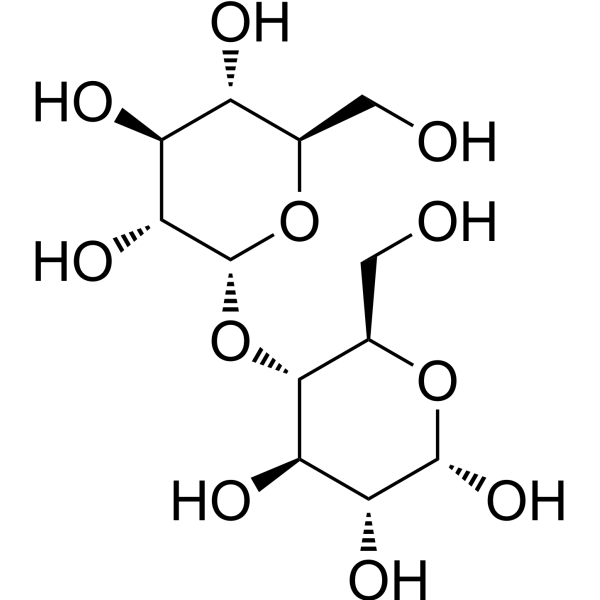
Maltose is a disaccharide composed of two glucose molecules linked together. Maltose is an endogenous metabolic product in plants, yeast, or bacteria, and it participates in carbon source storage and metabolism. Maltose is a key core metabolite and main transport form in the temporary starch degradation, carbon output, and subsequent sucrose synthesis metabolism of the night chloroplast. In X. dendrorhous, maltose can act as a sugar donor and is converted into isomaltulose by α-glucosidase). Maltose can act as a osmotic agent, supporting continuous capillary ultrafiltration and preventing severe metabolic disorders .
|
-
-
- HY-N2325
-
|
|
Endogenous Metabolite
|
Others
|
|
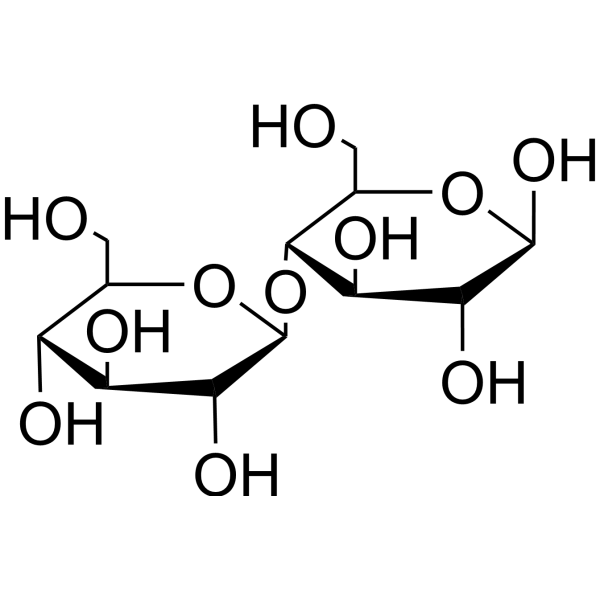
D-(+)-Cellobiose is a water-soluble disaccharide and an important intermediate product in the degradation process of cellulose and hemicellulose. D-(+)-cellobiose is used as a carbon source by microorganisms in fermentation processes, where it is converted into ethanol or other metabolic products. D-(+)-Cellobiose has significant application value in biofuel production, such as bioethanol .
|
-
-
- HY-128730
-
|
|
Endogenous Metabolite
Bacterial
|
Metabolic Disease
|
|
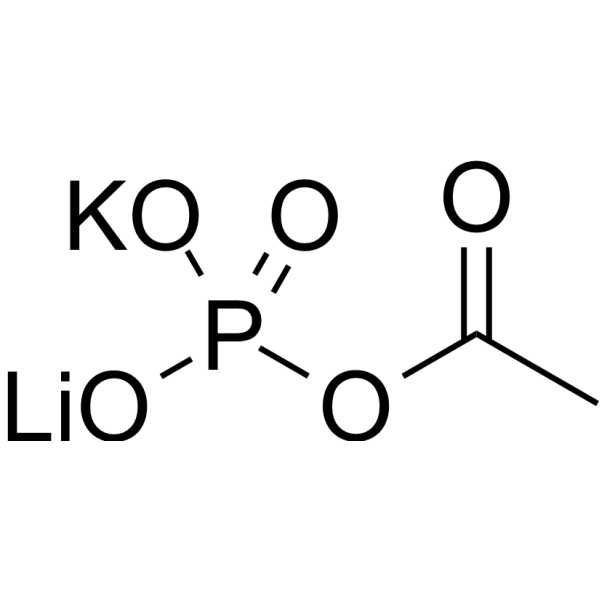
Acetyl phosphate lithium potassium is an endogenous metabolic product. Acetyl phosphate lithium potassium is a key substance in bacterial metabolic regulation, particularly in Lysine acetylation, and plays an important role in bacterial responses to environmental stress and adaptive reactions .
|
-
-
- HY-N2024A
-
|
|
Endogenous Metabolite
Glycosidase
|
Metabolic Disease
|
|
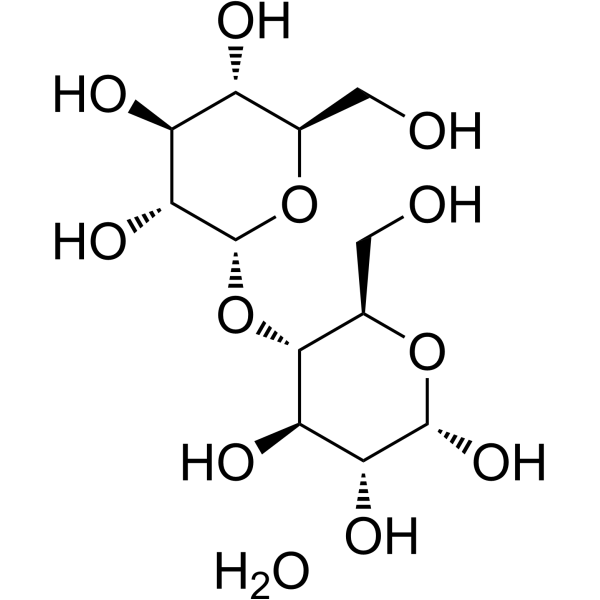
Maltose monohydrate is a disaccharide composed of two glucose molecules linked together. Maltose monohydrate is an endogenous metabolic product in plants, yeast, or bacteria, and it participates in carbon source storage and metabolism. Maltose monohydrate is a key core metabolite and main transport form in the temporary starch degradation, carbon output, and subsequent sucrose synthesis metabolism of the night chloroplast. In X. dendrorhous, maltose can act as a sugar donor and is converted into isomaltulose by α-glucosidase. Maltose monohydrate can act as a osmotic agent, supporting continuous capillary ultrafiltration and preventing severe metabolic disorders .
|
-
-
- HY-113284
-
|
N6-Succinyl adenosine
|
Endogenous Metabolite
|
Metabolic Disease
|
|
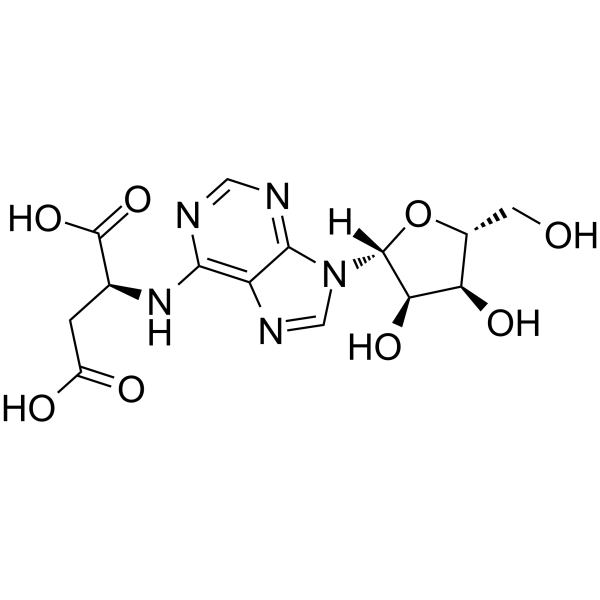
Succinyladenosine, the metabolic product of dephosphorylation of intracellular adenylosuccinic acid (S-AMP) by cytosolic 5-nucleotidase, is a biochemical marker of adenylosuccinase (ASL) deficiency .
|
-
-
- HY-Y1314
-
|
|
Bacterial
|
Metabolic Disease
|
|
Dimethyl sulfone (Methyl Sulfonyl Methane) is a metabolic product of endogenous methanethiol metabolism and intestinal bacterial metabolism. Dimethyl sulfone inhibits choriocapillary endothelial (CCE) cell proliferation, also has many biological effects, including antiinflammatory, antioxidant, and local anesthetic effects that could be neuroprotective .
|
-

-
- HY-113439
-
12-HETE
2 Publications Verification
|
Apoptosis
|
Cardiovascular Disease
Inflammation/Immunology
|
|
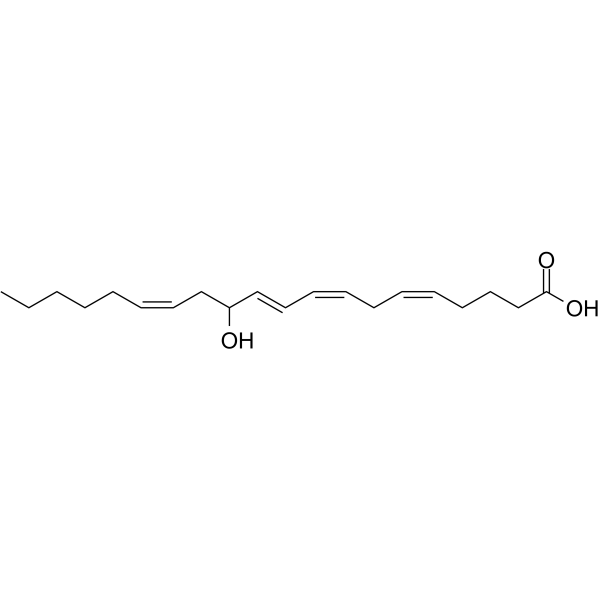
12-HETE, a major metabolic product of arachidonic acid using 12-LOX catalysis, inhibits cell apoptosis in a dose-dependent manner. 12-HETE promotes the activation and nuclear translocation of NF-κB through the integrin-linked kinase (ILK) pathway .12-HETE has both anti-thrombotic and pro-thrombotic effects . 12-HETE is a neuromodulator .
|
-
-
- HY-N2024AS1
-
|
|
Isotope-Labeled Compounds
Endogenous Metabolite
Glycosidase
|
Metabolic Disease
|
|
Maltose monohydrate- 13C12 is the 13C labeled isotope of Maltose monohydrate. Maltose monohydrate is a disaccharide composed of two glucose molecules linked together. Maltose monohydrate is an endogenous metabolic product in plants, yeast, or bacteria, and it participates in carbon source storage and metabolism. Maltose monohydrate is a key core metabolite and main transport form in the temporary starch degradation, carbon output, and subsequent sucrose synthesis metabolism of the night chloroplast. In X. dendrorhous, maltose can act as a sugar donor and is converted into isomaltulose by α-glucosidase. Maltose monohydrate can act as a osmotic agent, supporting continuous capillary ultrafiltration and preventing severe metabolic disorders.
|
-

-
- HY-113439S
-
|
|
Apoptosis
|
Cardiovascular Disease
Inflammation/Immunology
|
|
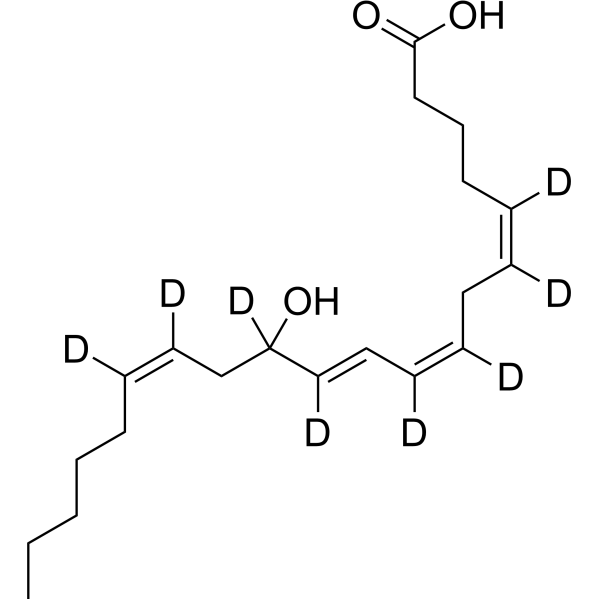
12-HETE-d8 is the deuterium labeled 12-HETE. 12-HETE, a major metabolic product of arachidonic acid using 12-LOX catalysis, inhibits cell apoptosis in a dose-dependent manner. 12-HETE promotes the activation and nuclear translocation of NF-κB through the integrin-linked kinase (ILK) pathway .12-HETE has both anti-thrombotic and pro-thrombotic effects . 12-HETE is a neuromodulator .
|
-
-
- HY-N2024R
-
|
|
Reference Standards
Endogenous Metabolite
Glycosidase
|
Metabolic Disease
|
|
Maltose (Standard) is the analytical standard of Maltose. This product is intended for research and analytical applications. Maltose is a disaccharide composed of two glucose molecules linked together. Maltose is an endogenous metabolic product in plants, yeast, or bacteria, and it participates in carbon source storage and metabolism. Maltose is a key core metabolite and main transport form in the temporary starch degradation, carbon output, and subsequent sucrose synthesis metabolism of the night chloroplast. In X. dendrorhous, maltose can act as a sugar donor and is converted into isomaltulose by α-glucosidase (α-Glucosidase). Maltose can act as a osmotic agent, supporting continuous capillary ultrafiltration and preventing severe metabolic disorders.
|
-

-
- HY-162836
-
|
4-O-(Carboxymethyl)-Rifamycin
|
Antibiotic
Bacterial
|
Infection
|
|
Rifamycin B (4-O-(Carboxymethyl)-Rifamycin) is a member of ansamycin antibiotics family with an anti-mycobacterial activity against tuberculosis, leprosy and AIDS-related mycobacterial infections. Rifamycin B is a metabolic product of Nocardia inediterranei, which can yield Rifamycin O and Rifamycin S (HY-125365) by microbial transformation .
|
-

-
- HY-W102516
-
|
Δ6-Progesterone
|
Endogenous Metabolite
|
Others
|
|
6-Dehydroprogesterone (Δ6-Progesterone) is a steroid compound that can be found in Botryodiplodia theobromae. 6-Dehydroprogesterone is a metabolic product of Progesterone (HY-N0437) after a microbial dehydrogenation reaction. 6-Dehydroprogesterone can be used to study steroid metabolism pathways, microbial dehydrogenase activity, and the biotransformation of steroids .
|
-

-
- HY-N2024AS
-
|
|
Isotope-Labeled Compounds
Endogenous Metabolite
Glycosidase
|
Metabolic Disease
|
|
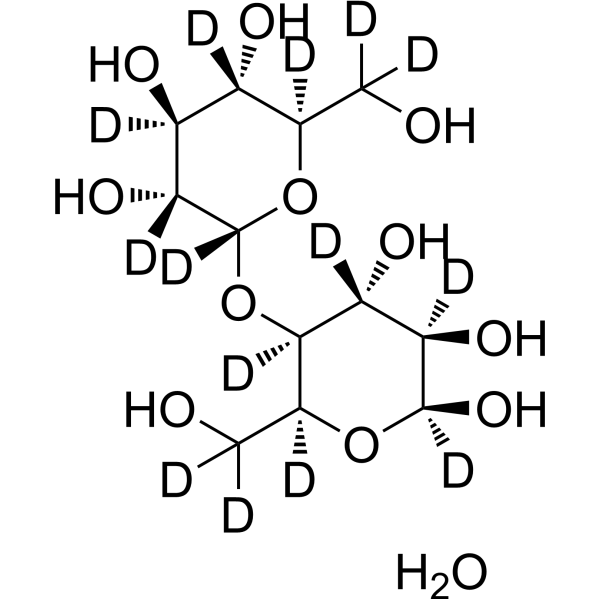
Maltose monohydrate-d14 is the deuterium labeled Maltose monohydrate. Maltose monohydrate is a disaccharide composed of two glucose molecules linked together. Maltose monohydrate is an endogenous metabolic product in plants, yeast, or bacteria, and it participates in carbon source storage and metabolism. Maltose monohydrate is a key core metabolite and main transport form in the temporary starch degradation, carbon output, and subsequent sucrose synthesis metabolism of the night chloroplast. In X. dendrorhous, maltose can act as a sugar donor and is converted into isomaltulose by α-glucosidase. Maltose monohydrate can act as a osmotic agent, supporting continuous capillary ultrafiltration and preventing severe metabolic disorders.
|
-
-
- HY-N2024B
-
|
|
Endogenous Metabolite
Glycosidase
|
Metabolic Disease
|
|
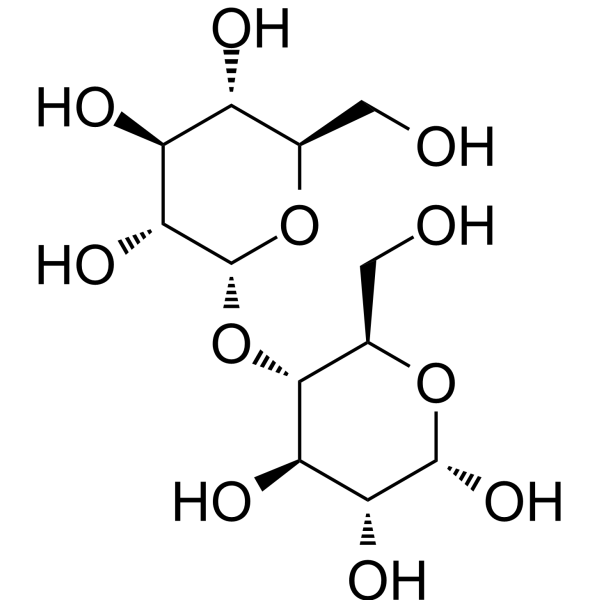
Maltose solution, 20% in H2O is a 20% aqueous maltose solution. Maltose is a disaccharide composed of two glucose molecules linked together. Maltose is an endogenous metabolic product in plants, yeast, or bacteria, and it participates in carbon source storage and metabolism. Maltose is a key core metabolite and main transport form in the temporary starch degradation, carbon output, and subsequent sucrose synthesis metabolism of the night chloroplast. In X. dendrorhous, maltose can act as a sugar donor and is converted into isomaltulose by α-glucosidase. Maltose can act as a osmotic agent, supporting continuous capillary ultrafiltration and preventing severe metabolic disorders .
|
-
-
- HY-N8519
-
|
|
Bacterial
Fungal
Antibiotic
|
Infection
Cancer
|
|
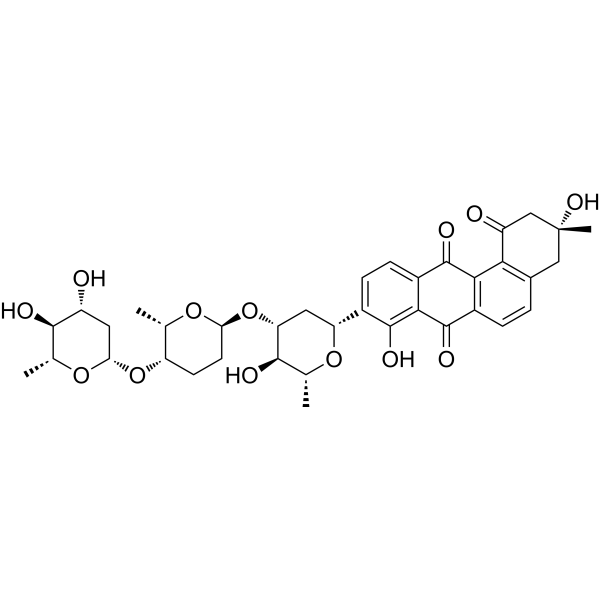
Urdamycin B is an antibiotic that effectively inhibits fungi and bacteria. Urdamycin B also exhibits anti-proliferative activity against mouse leukemia cells L1210. Urdamycin B can be obtained from the metabolic products of Streptomyces fradiae. Urdamycin B can be used for research on cancer as well as bacterial and fungal infections .
|
-
-
- HY-N2024AR
-
|
|
Reference Standards
Endogenous Metabolite
Glycosidase
|
Metabolic Disease
|
|
Maltose monohydrate (Standard) is the analytical standard of Maltose monohydrate. This product is intended for research and analytical applications. Maltose monohydrate is a disaccharide composed of two glucose molecules linked together. Maltose monohydrate is an endogenous metabolic product in plants, yeast, or bacteria, and it participates in carbon source storage and metabolism. Maltose monohydrate is a key core metabolite and main transport form in the temporary starch degradation, carbon output, and subsequent sucrose synthesis metabolism of the night chloroplast. In X. dendrorhous, maltose can act as a sugar donor and is converted into isomaltulose by α-glucosidase. Maltose monohydrate can act as a osmotic agent, supporting continuous capillary ultrafiltration and preventing severe metabolic disorders.
|
-

-
- HY-N10216
-
|
|
Others
|
Infection
|
|
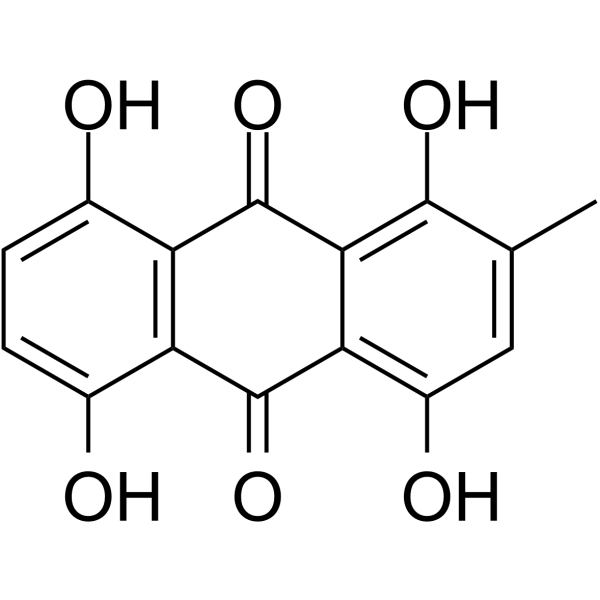
Cynodontin is a metabolic product of Helminthosporium cynodontis Marignoni and Helminthosporium euchlaenae Zimmermann .
|
-
-
- HY-N12528
-
|
|
Epoxide Hydrolase
|
Cardiovascular Disease
|
|
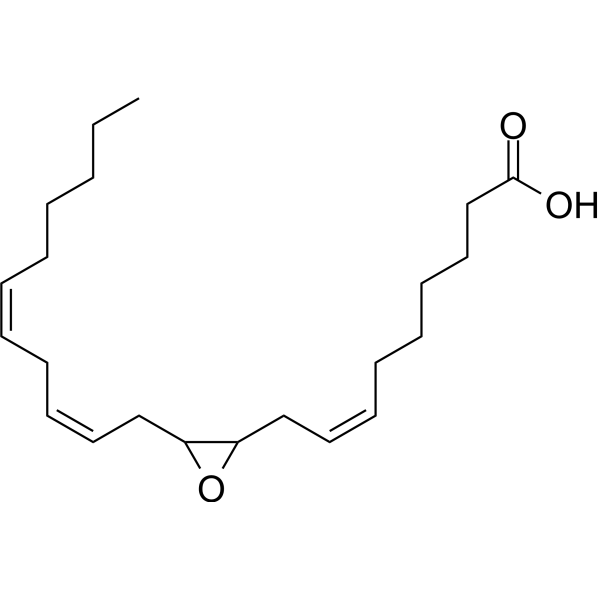
10,11-EDT, a soluble epoxide hydrolase (sEH) substrate, is a metabolic product of adrenic acid. 10,11-EDT is an endothelium-derived hyperpolarizing factor with strong vasorelaxant effects .
|
-
-
- HY-W722087
-
|
|
Endogenous Metabolite
|
Others
|
|
3,6-Dimethylundecane is a type of di-methyl alkanoid compound. 3,6-Dimethylundecane is one of the various branched alkanes identified in the metabolic products of the desert blue-green algae Microcoleus vaginatus .
|
-

-
- HY-W041195S
-
|
|
Isotope-Labeled Compounds
|
Others
|
|
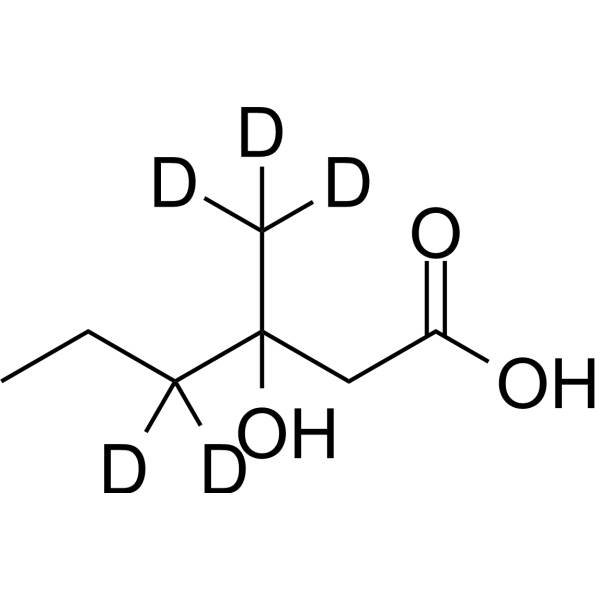
3-Hydroxy-3-methylhexanoic acid-d5 is the deuterium labeled 3-Hydroxy-3-methylhexanoic acid (HY-W041195). 3-Hydroxy-3-methylhexanoic acid is a fatty acid that is one of the metabolic products of leukocytes .
|
-
-
- HY-W752476
-
|
N6-Succinyl adenosine-13C4
|
Isotope-Labeled Compounds
Endogenous Metabolite
|
Metabolic Disease
|
|
Succinyladenosine- 13C4 (N6-Succinyl adenosine- 13C4) is the 13C-labeled Succinyladenosine (HY-113284). Succinyladenosine, the metabolic product of dephosphorylation of intracellular adenylosuccinic acid (S-AMP) by cytosolic 5-nucleotidase, is a biochemical marker of adenylosuccinase (ASL) deficiency .
|
-

-
- HY-Y1314R
-
|
|
Drug Metabolite
Reference Standards
Endogenous Metabolite
|
Metabolic Disease
|
|
Dimethyl sulfone (Standard) is the analytical standard of Dimethyl sulfone. This product is intended for research and analytical applications. Dimethyl sulfone (Methyl Sulfonyl Methane) is a metabolic product of endogenous methanethiol metabolism and intestinal bacterial metabolism. Dimethyl sulfone inhibits choriocapillary endothelial (CCE) cell proliferation, also has many biological effects, including antiinflammatory, antioxidant, and local anesthetic effects that could be neuroprotective .
|
-

-
- HY-N2024AS2
-
|
|
Isotope-Labeled Compounds
Endogenous Metabolite
Glycosidase
|
Metabolic Disease
|
|
Maltose monohydrate- 13C is the 13C labeled isotope of Maltose monohydrate. Maltose monohydrate is a disaccharide composed of two glucose molecules linked together. Maltose monohydrate is an endogenous metabolic product in plants, yeast, or bacteria, and it participates in carbon source storage and metabolism. Maltose monohydrate is a key core metabolite and main transport form in the temporary starch degradation, carbon output, and subsequent sucrose synthesis metabolism of the night chloroplast. In X. dendrorhous, maltose can act as a sugar donor and is converted into isomaltulose by α-glucosidase. Maltose monohydrate can act as a osmotic agent, supporting continuous capillary ultrafiltration and preventing severe metabolic disorders.
|
-

| Cat. No. |
Product Name |
Type |
-
- HY-N2024B
-
|
|
Biochemical Assay Reagents
|
|
Maltose solution, 20% in H2O is a 20% aqueous maltose solution. Maltose is a disaccharide composed of two glucose molecules linked together. Maltose is an endogenous metabolic product in plants, yeast, or bacteria, and it participates in carbon source storage and metabolism. Maltose is a key core metabolite and main transport form in the temporary starch degradation, carbon output, and subsequent sucrose synthesis metabolism of the night chloroplast. In X. dendrorhous, maltose can act as a sugar donor and is converted into isomaltulose by α-glucosidase. Maltose can act as a osmotic agent, supporting continuous capillary ultrafiltration and preventing severe metabolic disorders .
|
| Cat. No. |
Product Name |
Category |
Target |
Chemical Structure |
-
- HY-N2024
-
-
-
- HY-N2325
-
-
-
- HY-128730
-
-
-
- HY-N2024A
-
-
-
- HY-Y1314
-
-
-
- HY-113439
-
12-HETE
2 Publications Verification
|
Microorganisms
Source Classification
|
Apoptosis
|
|
12-HETE, a major metabolic product of arachidonic acid using 12-LOX catalysis, inhibits cell apoptosis in a dose-dependent manner. 12-HETE promotes the activation and nuclear translocation of NF-κB through the integrin-linked kinase (ILK) pathway .12-HETE has both anti-thrombotic and pro-thrombotic effects . 12-HETE is a neuromodulator .
|
-
-
- HY-N2024R
-
|
|
Structural Classification
Polysaccharides
Endogenous metabolite
Saccharides
Source Classification
|
Reference Standards
Endogenous Metabolite
Glycosidase
|
|
Maltose (Standard) is the analytical standard of Maltose. This product is intended for research and analytical applications. Maltose is a disaccharide composed of two glucose molecules linked together. Maltose is an endogenous metabolic product in plants, yeast, or bacteria, and it participates in carbon source storage and metabolism. Maltose is a key core metabolite and main transport form in the temporary starch degradation, carbon output, and subsequent sucrose synthesis metabolism of the night chloroplast. In X. dendrorhous, maltose can act as a sugar donor and is converted into isomaltulose by α-glucosidase (α-Glucosidase). Maltose can act as a osmotic agent, supporting continuous capillary ultrafiltration and preventing severe metabolic disorders.
|
-
-
- HY-W102516
-
|
Δ6-Progesterone
|
Endogenous metabolite
Steroids
Source Classification
|
Endogenous Metabolite
|
|
6-Dehydroprogesterone (Δ6-Progesterone) is a steroid compound that can be found in Botryodiplodia theobromae. 6-Dehydroprogesterone is a metabolic product of Progesterone (HY-N0437) after a microbial dehydrogenation reaction. 6-Dehydroprogesterone can be used to study steroid metabolism pathways, microbial dehydrogenase activity, and the biotransformation of steroids .
|
-
-
- HY-N8519
-
-
-
- HY-N2024AR
-
|
|
Structural Classification
Polysaccharides
other families
Plants
Endogenous metabolite
Saccharides
Source Classification
|
Reference Standards
Endogenous Metabolite
Glycosidase
|
|
Maltose monohydrate (Standard) is the analytical standard of Maltose monohydrate. This product is intended for research and analytical applications. Maltose monohydrate is a disaccharide composed of two glucose molecules linked together. Maltose monohydrate is an endogenous metabolic product in plants, yeast, or bacteria, and it participates in carbon source storage and metabolism. Maltose monohydrate is a key core metabolite and main transport form in the temporary starch degradation, carbon output, and subsequent sucrose synthesis metabolism of the night chloroplast. In X. dendrorhous, maltose can act as a sugar donor and is converted into isomaltulose by α-glucosidase. Maltose monohydrate can act as a osmotic agent, supporting continuous capillary ultrafiltration and preventing severe metabolic disorders.
|
-
-
- HY-N10216
-
-
-
- HY-N12528
-
-
-
- HY-W722087
-
-
-
- HY-Y1314R
-
-
| Cat. No. |
Product Name |
Chemical Structure |
-
- HY-N2024AS1
-
|
|
|
Maltose monohydrate- 13C12 is the 13C labeled isotope of Maltose monohydrate. Maltose monohydrate is a disaccharide composed of two glucose molecules linked together. Maltose monohydrate is an endogenous metabolic product in plants, yeast, or bacteria, and it participates in carbon source storage and metabolism. Maltose monohydrate is a key core metabolite and main transport form in the temporary starch degradation, carbon output, and subsequent sucrose synthesis metabolism of the night chloroplast. In X. dendrorhous, maltose can act as a sugar donor and is converted into isomaltulose by α-glucosidase. Maltose monohydrate can act as a osmotic agent, supporting continuous capillary ultrafiltration and preventing severe metabolic disorders.
|
-
-
- HY-113439S
-
2 Publications Verification
|
|
12-HETE-d8 is the deuterium labeled 12-HETE. 12-HETE, a major metabolic product of arachidonic acid using 12-LOX catalysis, inhibits cell apoptosis in a dose-dependent manner. 12-HETE promotes the activation and nuclear translocation of NF-κB through the integrin-linked kinase (ILK) pathway .12-HETE has both anti-thrombotic and pro-thrombotic effects . 12-HETE is a neuromodulator .
|
-
-
- HY-N2024AS
-
|
|
|
Maltose monohydrate-d14 is the deuterium labeled Maltose monohydrate. Maltose monohydrate is a disaccharide composed of two glucose molecules linked together. Maltose monohydrate is an endogenous metabolic product in plants, yeast, or bacteria, and it participates in carbon source storage and metabolism. Maltose monohydrate is a key core metabolite and main transport form in the temporary starch degradation, carbon output, and subsequent sucrose synthesis metabolism of the night chloroplast. In X. dendrorhous, maltose can act as a sugar donor and is converted into isomaltulose by α-glucosidase. Maltose monohydrate can act as a osmotic agent, supporting continuous capillary ultrafiltration and preventing severe metabolic disorders.
|
-
-
- HY-W041195S
-
|
|
|
3-Hydroxy-3-methylhexanoic acid-d5 is the deuterium labeled 3-Hydroxy-3-methylhexanoic acid (HY-W041195). 3-Hydroxy-3-methylhexanoic acid is a fatty acid that is one of the metabolic products of leukocytes .
|
-
-
- HY-W752476
-
|
|
|
Succinyladenosine- 13C4 (N6-Succinyl adenosine- 13C4) is the 13C-labeled Succinyladenosine (HY-113284). Succinyladenosine, the metabolic product of dephosphorylation of intracellular adenylosuccinic acid (S-AMP) by cytosolic 5-nucleotidase, is a biochemical marker of adenylosuccinase (ASL) deficiency .
|
-
-
- HY-N2024AS2
-
|
|
|
Maltose monohydrate- 13C is the 13C labeled isotope of Maltose monohydrate. Maltose monohydrate is a disaccharide composed of two glucose molecules linked together. Maltose monohydrate is an endogenous metabolic product in plants, yeast, or bacteria, and it participates in carbon source storage and metabolism. Maltose monohydrate is a key core metabolite and main transport form in the temporary starch degradation, carbon output, and subsequent sucrose synthesis metabolism of the night chloroplast. In X. dendrorhous, maltose can act as a sugar donor and is converted into isomaltulose by α-glucosidase. Maltose monohydrate can act as a osmotic agent, supporting continuous capillary ultrafiltration and preventing severe metabolic disorders.
|
-
| Cat. No. |
Product Name |
|
Classification |
-
- HY-N2024
-
Maltose
1 Publications Verification
|
|
Sweetening Agents
|
|
Maltose is a disaccharide composed of two glucose molecules linked together. Maltose is an endogenous metabolic product in plants, yeast, or bacteria, and it participates in carbon source storage and metabolism. Maltose is a key core metabolite and main transport form in the temporary starch degradation, carbon output, and subsequent sucrose synthesis metabolism of the night chloroplast. In X. dendrorhous, maltose can act as a sugar donor and is converted into isomaltulose by α-glucosidase). Maltose can act as a osmotic agent, supporting continuous capillary ultrafiltration and preventing severe metabolic disorders .
|
-
- HY-113284
-
|
N6-Succinyl adenosine
|
|
Nucleoside Analogs
Adenosine
|
|
Succinyladenosine, the metabolic product of dephosphorylation of intracellular adenylosuccinic acid (S-AMP) by cytosolic 5-nucleotidase, is a biochemical marker of adenylosuccinase (ASL) deficiency .
|
Your information is safe with us. * Required Fields.
Inquiry Information
- Product Name:
- Cat. No.:
- Quantity:
- MCE Japan Authorized Agent:








