
1. Search Result
Search Result
Results for "

microtubule networks

" in MedChemExpress (MCE) Product Catalog:

26

Inhibitors & Agonists

1

Fluorescent Dyes

1

Inhibitory Antibodies

1

Natural
Products

Cat. No. 상품명 Target 연구분야 Chemical Structure
  • HY-P99151
    Brentuximab
    1 Publications Verification

    CAC-10

    ADC Antibody TNF Receptor Cancer
    Brentuximab (CAC-10) is a chimeric antibody targeting CD30. Brentuximab is conjugated with Monomethyl auristatin E (MMAE) (HY-15162) to form the antibody-drug conjugate Brentuximab vedotin (HY-P99107A). Brentuximab can be used for the research of cancer, such as lymphoma .
    Brentuximab
  • HY-N7659A

    Phytohormone Microtubule/Tubulin Apoptosis Others
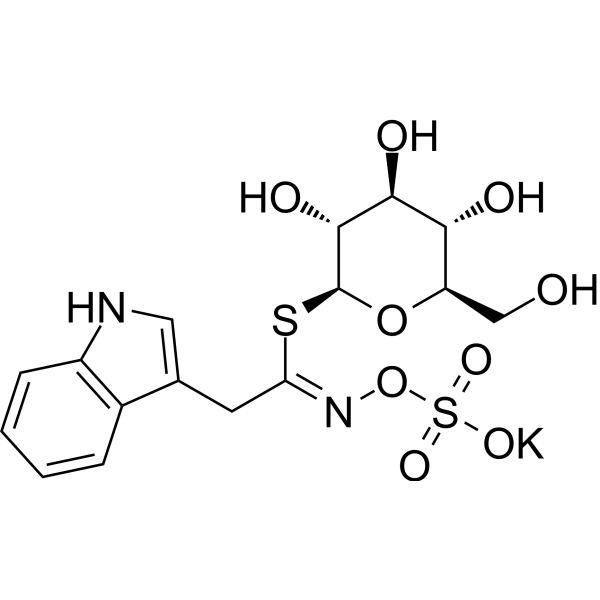
    Glucobrassicin potassium is an indole-based anticancer agent and plant growth-regulating hormone. Glucobrassicin potassium exerts its biological activity by disrupting the integrity of microtubule networks in both plant and mammalian cells. At high concentrations, Glucobrassicin potassium inhibits seed germination and root growth; it can also specifically induce apoptosis in mammalian cancer cells and interfere with the intercellular transmission of viruses that rely on microtubules. In plants, Glucobrassicin potassium can be catalyzed by myrosinase to release growth-regulating substances, exhibiting a concentration-dependent growth-regulating effect .
    Glucobrassicin potassium
  • HY-N7659

    Phytohormone Apoptosis Microtubule/Tubulin Cancer
    Glucobrassicin is an indole-based anticancer agent and plant growth-regulating hormone. Glucobrassicin exerts its biological activity by disrupting the integrity of microtubule networks in both plant and mammalian cells. At high concentrations, Glucobrassicin inhibits seed germination and root growth; it can also specifically induce apoptosis in mammalian cancer cells and interfere with the intercellular transmission of viruses that rely on microtubules. In plants, Glucobrassicin can be catalyzed by myrosinase to release growth-regulating substances, exhibiting a concentration-dependent growth-regulating effect .
    Glucobrassicin
  • HY-W008581

    3-O-Methyl estradiol; 17β-Estradiol 3-methyl ether; 3-Methoxyestradiol

    Biochemical Assay Reagents TRP Channel Microtubule/Tubulin Autophagy Metabolic Disease Cancer
    Estradiol 3-methyl ether (EDME) is a highly selective TRPML1 ion channel antagonist and microtubule (microtubule) depolymerizing agent, with IC50 values of 0.22 μM and 3.8 μM against TRPML1 and TRPML2, respectively; it shows no activity against TRPML3. Estradiol 3-methyl ether induces the disruption of cytoplasmic microtubule networks in mammalian cells, with an EC50 of 9 μM. Independent of estrogen receptors, Estradiol 3-methyl ether blocks autophagy (autophagy), TFEB nuclear translocation, and inhibits the migration and invasion of triple-negative breast cancer cells by suppressing TRPML1. Estradiol 3-methyl ether is applicable for relevant research on triple-negative breast cancer .
    Estradiol 3-methyl ether
  • HY-118143

    Endogenous Metabolite Others
    AG-1801, a nitrobenzopyridine derivative, is a tyrosine phosphorylation inhibitor. AG-1801 can induce the disintegration of the microtubule network in living cells, and does not inhibit microtubule polymerization in vitro. AG-1801 can be used for the study of microtubule-related signaling pathways .
    AG-1801
  • HY-175555

    Microtubule/Tubulin Apoptosis Cancer
    Tubulin-IN-54 is a tubulin inhibitor. Tubulin-IN-54 exhibits anti-proliferative activity against various cancer cells. Tubulin-IN-54 inhibits tubulin polymerization, disrupts microtubule networks, induces G2/M cell cycle arrest, and promotes cancer cell apoptosis. Tubulin-IN-54 demonstrates significant anti-tumor efficacy in mice bearing PC-3/TxR xenografts. Tubulin-IN-54 can be used for the study of taxane-resistant cancers (prostate cancer, melanoma) .
    Tubulin-IN-54
  • HY-176283

    Microtubule/Tubulin Histone Demethylase Apoptosis Wee1 Bcl-2 Family Caspase Cancer
    Tubulin/LSD1-IN-1 is an effective dual inhibitor of Tubulin polymerization and LSD1 (IC50 = 1.72 μM). Tubulin/LSD1-IN-1 has broad-spectrum antiproliferative activity against cancer cell lines. Tubulin/LSD1-IN-1 inhibits tubulin polymerization by targeting colchicine binding sites, thereby disrupting the microtubule network in gastric cancer cells. Tubulin/LSD1-IN-1 increases the methylation levels of H3K4me1/2 and H3K9me2/3, thereby achieving epigenetic regulation. Tubulin/LSD1-IN-1 induces G2/M arrest, promotes apoptosis, and effectively inhibits colony formation of gastric cancer cells .
    Tubulin/LSD1-IN-1
  • HY-155196

    Estrogen Receptor/ERR Cancer
    ER degrader 6 (compound 35s) is a potent Estrogen Receptor (ER)α degrader. ER degrader 6 disrupts the microtubule network by restraining tubulin polymerization. ER degrader 6 suppresses tumor growth without noticeable poisonousness .
    ER degrader 6
  • HY-161400

    TGF-β Receptor Cancer
    TGFβRII-IN-2 (Compound 3n) is an inhibitor for transforming growth factor-β type II receptor (TGFβRII) with IC50 of 2.4 μM, which blocks endothelial-to-mesenchymal transition and cell migration in different cancer cell lines without perturbing the microtubule network .
    TGFβRII-IN-2
  • HY-162695

    Microtubule/Tubulin Cancer
    Antitumor agent-168 (compound 21b) disrupts the microtubule network in tumor cells leading to G2/M cell cycle arrest and apoptosis induction. Antitumor agent-168 inhibits MCF-7 growth with an IC50 value of 1.4 nM .
    Antitumor agent-168
  • HY-155963

    Microtubule/Tubulin Cancer
    Tubulin polymerization-IN-48 (Compound 4k) is a tubulin polymerization inhibitor. Tubulin polymerization-IN-48 has a moderate effect on disruption of the microtubule network. Tubulin polymerization-IN-48 inhibits neuroblastoma cancer cell proliferation, with IC50s of 79 and 165 nM for Chp-134 and Kelly cell line .
    Tubulin polymerization-IN-48
  • HY-149363

    Microtubule/Tubulin Apoptosis Cancer
    Tubulin polymerization-IN-43 (compound 15h) is a tubulin polymerization inhibitor. Tubulin polymerization-IN-43 disrupts cellular microtubule networks by targeting the Colchicine (HY-16569) site, and promots cell cycle arrest of leukemia cells at G2/M phase and cell apoptosis, as well as inhibiting angiogenesis .
    Tubulin polymerization-IN-43
  • HY-163983

    Microtubule/Tubulin Apoptosis PARP Caspase Cancer
    Tubulin polymerization-IN-68 (compound 32) is a tubulin inhibitor that can inhibit tubulin polymerization and destroy the cellular microtubule network. Tubulin polymerization-IN-68 can upregulate the expression of PARP-1 and caspase-3 and induce cell apoptosis, and has anticancer activity. Tubulin polymerization-IN-68 can effectively inhibit HepG2 (IC50=93 nM) and significantly inhibit the growth of HepG2 xenograft tumors in nude mice by oral administration .
    Tubulin polymerization-IN-68
  • HY-175512

    Microtubule/Tubulin Apoptosis Reactive Oxygen Species (ROS) Cancer
    Tubulin-IN-53 is a potent Tubulin inhibitor with an IC50 of 6.06 μM. Tubulin-IN-53 inhibits the polymerization of tubulin by targeting the colchicine binding site of tubulin and destroys the microtubule network. Tubulin-IN-53 induces MCF-7 cell cycle arrest in the G2/M phase and apoptosis, and inhibits cell migration accompanied by the decrease of mitochondrial membrane potential and increase the accumulation of ROS. Tubulin-IN-53 destroys the angiogenesis of human umbilical vein endothelial cells.Tubulin-IN-53 can used for the study of cancers such as breast cancer and lung cancer .
    Tubulin-IN-53
  • HY-176171

    Microtubule/Tubulin Hippo (MST) YAP Apoptosis Cancer
    Tubulin polymerization-IN-79 (Compound C20) is a tubulin polymerization inhibitor. Tubulin polymerization-IN-79 shows potent antiproliferative activity against esophageal cancer cells (e.g., KYSE450, IC50=0.36 μM; EC-109, IC50=0.63 μM). Tubulin polymerization-IN-79 occupies the colchicine binding site to disrupt microtubule network integrity, activating the Hippo signaling pathway, downregulating the oncogenic protein YAP expression, and inducing G2/M phase arrest and apoptosis in esophageal cancer cells. Tubulin polymerization-IN-79 is promising for research of esophageal cancers .
    Tubulin polymerization-IN-79
  • HY-182753

    Microtubule/Tubulin P-glycoprotein Apoptosis CDK Bcl-2 Family Cancer
    Tubulin-IN-66 is a tubulin (tubulin) and P-gp inhibitor with antiproliferative activity against cancer cells. Tubulin-IN-66 covalently binds to the Colchicine (HY-16569)-binding site at Cys239 of the β-tubulin subunit, inhibits tubulin polymerization and disrupts the microtubule network. Tubulin-IN-66 inhibits P-gp function to overcome multidrug resistance. Tubulin-IN-66 arrests the cell cycle at the G2/M phase and induces apoptosis (apoptosis). Tubulin-IN-66 inhibits colony formation and migration of cancer cells. Tubulin-IN-66 can be used in the research of tumors such as breast cancer .
    Tubulin-IN-66
  • HY-119126

    Microtubule/Tubulin Cancer
    PK-3 is a cancer cell growth inhibitor with microtubule-binding activity. PK-3 binds to tubulin, disrupts the intracellular microtubule network required for mitosis, and induces cell death. PK-3 can be used in research related to chronic myeloid leukemia .
    PK-3
  • HY-182478

    Microtubule/Tubulin Cancer
    MDL-27048, a tubulin inhibitor, binds competitively, reversibly to the Colchicine (HY-16569)-binding site on tubulin heterodimers. MDL-27048 inhibits microtubule assembly, induces slow depolymerization of preassembled microtubules, disrupts microtubule polymerization-depolymerization dynamics, and disrupts cytoplasmic microtubule networks. MDL-27048 exerts growth inhibitory effects on human cancer cells, induces mitotic arrest, and does not disrupt actin filaments at microtubule-depolymerizing concentrations. MDL-27048 can be used for the research of malignant tumors .
    MDL-27048
  • HY-169882

    Microtubule/Tubulin Cancer
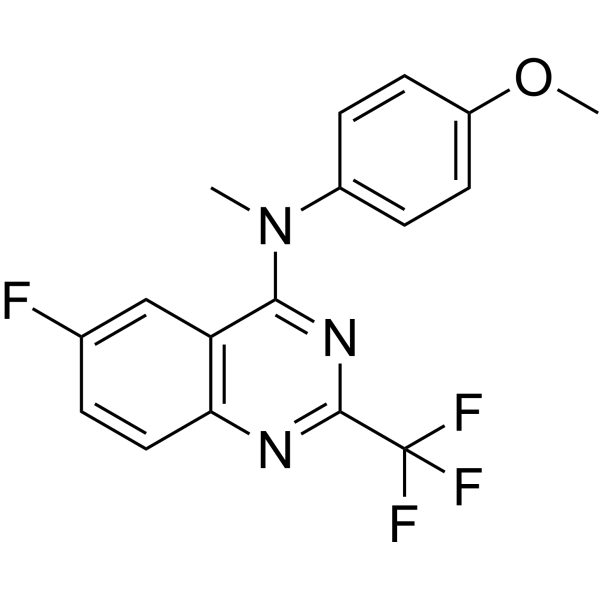
    Tubulin inhibitor 49 (Compound 18) is an inhibitor for tubulin polymerization with an IC50 of 48 μM. Tubulin inhibitor 49 disrupts the cell microtubule network, arrests the cell cycle at G2 phase, and exhibits cytotoxicity (IC50=8.8 μM in HeLa cell). Tubulin inhibitor 49 can be used in the research of cervical cancer .
    Tubulin inhibitor 49
  • HY-120120

    Microtubule/Tubulin Cancer
    DZ-2384 is a potent microtubule-targeting agent. DZ-2384 increases the rescue frequency and preserves the microtubule network in nonmitotic cells and primary neurons. DZ-2384 acts synergistically with anti-CTLA-4 immunotherapy in Taxane-sensitive and Taxane-resistant xenograft murine models of triple-negative breast cancer (TNBC). DZ-2384 exhibits potent antitumor activity in adult acute lymphocytic leukemia (ALL) models. DZ-2384 can be used for cancer research, such as TNBC and ALL [1][2].
    DZ-2384
  • HY-169882A

    Microtubule/Tubulin Cancer
    Tubulin inhibitor 49 (Compound 18) hydrobromide is an inhibitor for tubulin polymerization with an IC50 of 48 μM. Tubulin inhibitor 49 hydrobromide disrupts the cell microtubule network, arrests the cell cycle at G2 phase, and exhibits cytotoxicity (IC50=8.8 μM in HeLa cell). Tubulin inhibitor 49 hydrobromide can be used in the research of cervical cancer .
    Tubulin inhibitor 49 hydrobromide
  • HY-180159

    Microtubule/Tubulin Apoptosis Cancer
    Tubulin-IN-63 is a potent tubulin polymerization inhibitor targeting the colchicine-binding site, with an IC50 of 6.03 µM. Tubulin-IN-63 disrupts microtubule dynamics, induces G2/M arrest and apoptosis, thereby suppressing cancer cell proliferation. Tubulin-IN-63 disrupts capillary network formation in human umbilical vein endothelial cells (HUVECs) and exhibits in vivo antitumor efficacy in a B16-F10 mouse model. Tubulin-IN-63 can be used for the research of cancers, such as melanoma, lung cancer, and liver cancer .
    Tubulin-IN-63
  • HY-D3153

    Apoptosis Caspase Microtubule/Tubulin Inflammation/Immunology
    PbQ is a tubulin inhibitor (with an IC50 of 5 μM against goat tubulin) and a fluorescent probe for cuprous ions Cu (I). PbQ can penetrate the membrane of peripheral blood mononuclear cells, form a stable 1:1 complex with Cu + ions, and exhibits low toxicity and good biocompatibility toward macrophage cell lines. In addition, PbQ promotes tubulin degradation and disrupts the microtubule network in lung epithelial cells without affecting actin. PbQ also possesses genotoxicity by forming DNA base adducts, and it can activate caspase-3 and apoptosis-related genes, induce loss of mitochondrial membrane potential, and trigger cell apoptosis. PbQ can be used in studies related to chronic obstructive pulmonary disease .
    PbQ
  • HY-183632

    Microtubule/Tubulin Apoptosis Neurological Disease Cancer
    QW-5-70 is a potent colchicine‑site tubulin inhibitor that blocks tubulin polymerization. QW-5-70 induces mitotic and G2/M cell cycle arrest, triggers mitochondrial apoptosis, and suppresses cancer cell colony formation and migration. QW-5-70 overcomes P‑glycoprotein‑mediated multidrug resistance and inhibits drug‑resistant tumor growth. QW-5-70 demonstrates strong in vitro and in vivo antitumor efficacy in neuroblastoma and prostate cancer models. QW-5-70 can be used for the research of high-risk neuroblastoma and castration-resistant prostate cancer .
    QW-5-70
  • HY-170924

    Microtubule/Tubulin Apoptosis Mitosis Cancer
    Tubulin polymerization-IN-76 (compound 20b) is a potent and orally active Tubulin polymerization inhibitor. Tubulin polymerization-IN-76 inhibits Tubulin polymerization with an IC50 of 2.505 μM by acting on the colchicine binding site, thereby disrupting intracellular Microtubule networks and interfering with cell mitosis. Tubulin polymerization-IN-76 demonstrates exceptional efficacy against MGC-803 and HGC-27 cells with IC50s of 1.61 and 1.82 nM, respectively. Tubulin polymerization-IN-76 effectively inhibits the colony formation and cell migration activities, and induces G2/M phase cycle arrest and Apoptosis in MGC-803 and HGC-27 cells.Tubulin polymerization-IN-76 shows a broad-spectrum antiproliferative activity .
    Tubulin polymerization-IN-76
  • HY-183271

    Microtubule/Tubulin Cancer
    Tubulin-IN-67 is a tubulin inhibitor. Tubulin-IN-67 binds to the colchicine-binding site of tubulin, inhibiting tubulin polymerization. Tubulin-IN-67 arrests cancer cell cycle at the G2/M phase and triggers apoptosis in cancer cells. Tubulin-IN-67 can be used for the research of hepatocellular carcinoma, cervical carcinoma, breast carcinoma .
    Tubulin-IN-67

온라인 문의

Your information is safe with us. * Required Fields.

호칭


Country or Region *

고객명 *


회사명 *

Department *


메일주소 *


상품명 *

Cat. No.


Requested quantity *

전화번호 *


비고

온라인 문의

Inquiry Information

상품명:
Cat. No.:
수량:
MCE Japan Authorized Agent:

