
1. Search Result
Search Result
Results for "

permeability transition pore inhibitor

" in MedChemExpress (MCE) Product Catalog:

22

Inhibitors & Agonists

1

Peptides

3

Natural
Products

Cat. No. Product Name Target Research Areas Chemical Structure
  • HY-15763
    Erastin
    Maximum Cited Publications
    805 Publications Verification

    VDAC Ferroptosis Disulfidptosis Cancer
    Erastin is a ferroptosis inducer. Erastin exhibits the mechanism of ferroptosis induction related to ROS and iron-dependent signaling. Erastin inhibits voltage-dependent anion channels (VDAC2/VDAC3) and accelerates oxidation, leading to the accumulation of endogenous reactive oxygen species. Erastin also disrupts mitochondrial permeability transition pore (mPTP) with anti-tumor activity. Furthermore, Erastin can block the uptake of cystine mediated by SLC7A11 and also spares UMRC6-EV and -C91A cells from disulfidptosis under glucose starvation .
    Erastin
  • HY-131370B
    Intralipid 20%
    4 Publications Verification

    Biochemical Assay Reagents Cancer
    Intralipid 20% is a safe fat emulsion that can be used as a nutritional supplement. Intralipid 20% effectively inhibits the opening of the mitochondrial permeability transition pore, effectively protecting the heart from ischaemia-reperfusion injury and has some potential to modulate the innate immune response .
    Intralipid 20%
  • HY-100852
    ER-000444793
    5+ Cited Publications

    Mitochondrial Metabolism Cancer
    ER-000444793 is a potent inhibitor of mitochondrial permeability transition pore (mPTP) opening. ER-000444793 inhibits mPTP with an IC50 of 2.8 μM.
    ER-000444793
  • HY-175715

    Mitochondrial Metabolism Neurological Disease
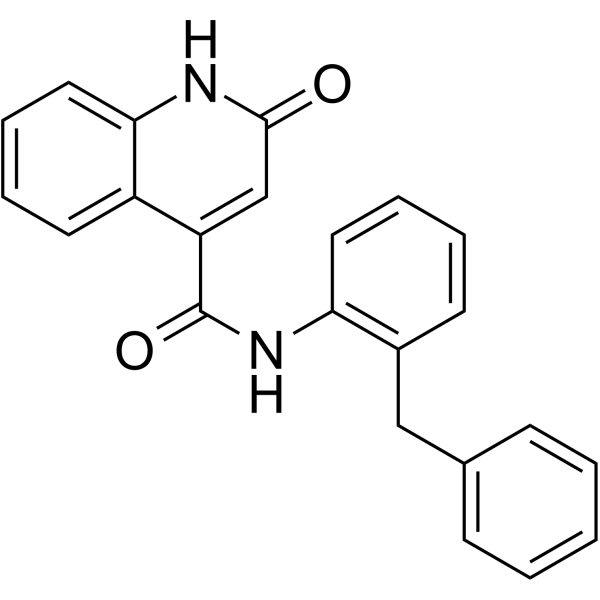
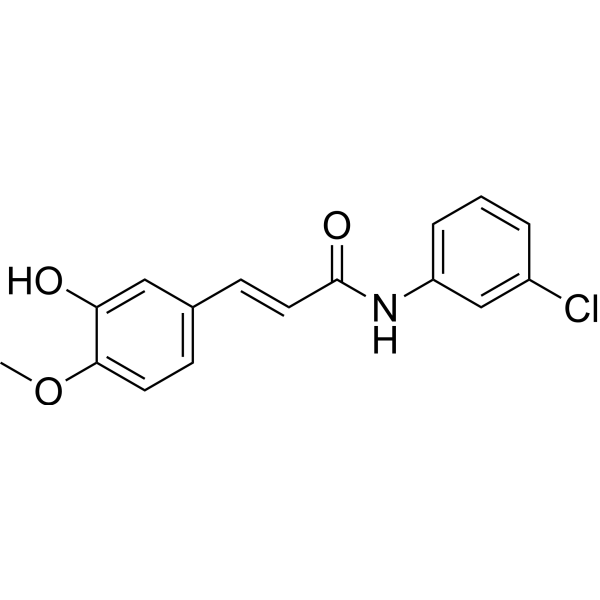
    NRG1271 is an orally active mitochondrial permeability transition pore (mPTP) inhibitor with blood-brain barrier penetration. NRG1271 can be used for the study of Neurological Disease .
    NRG1271
  • HY-N0663

    Mitochondrial Metabolism Cyclophilin Potassium Channel Cardiovascular Disease Neurological Disease Inflammation/Immunology
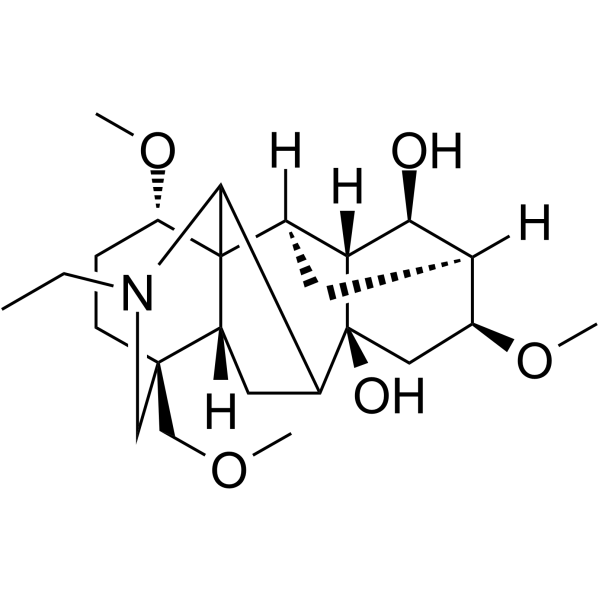
    Talatisamine is an orally active cyclophilin D activator isolated from the roots of Aconitum carmichaeli Debx. Talatisamine exerts biological functions by activating cyclophilin D, inhibiting Ca 2+-dependent opening of the mitochondrial permeability transition pore (mPTP) (IC50=78 μM), and blocking delayed rectifier K + channels (IC50=146 μM). Talatisamine possesses both antioxidant and membrane-stabilizing properties, effectively inhibits lipid peroxidation and protects mitochondrial membrane function. Talatisamine exhibits multiple activities including antiarrhythmic, hypotensive, anti-inflammatory, anticancer and neuroprotective effects. Talatisamine finds applications in the research of ischemic diseases, rheumatoid arthritis, inflammation-related diseases and Alzheimer's disease .
    Talatisamine
  • HY-N0237
    Atractyloside A
    3 Publications Verification

    Toll-like Receptor (TLR) MyD88 NF-κB Mitochondrial Metabolism Interleukin Related Aquaporin Cardiovascular Disease Metabolic Disease Inflammation/Immunology
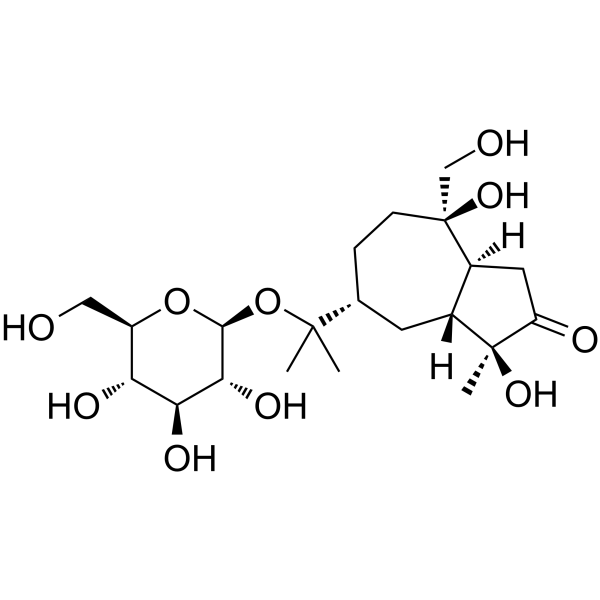
    Atractyloside A is an orally active inhibitor of the TLR4/MyD88/NF-κB signaling pathway and also an opener of the mitochondrial permeability transition pore (MPTP). Atractyloside A interferes with the activation of the TLR4/MyD88/NF-κB pathway, thereby inhibiting intestinal inflammatory responses. Atractyloside A reverses mucin synthesis impairment, improves intestinal barrier integrity, and restores homeostasis by altering the composition of the gut microbiota. Atractyloside A can be used in studies related to spleen deficiency diarrhea and myocardial injury .
    Atractyloside A
  • HY-119909

    Mitochondrial Metabolism Cardiovascular Disease
    GNX-865 is a mitochondrial permeability transition pore (mPTP) inhibitor that protects against ischemia-reperfusion injury in vivo .
    GNX-865
  • HY-112715

    ATP Synthase Cardiovascular Disease
    ATP synthase inhibitor 1 is a potent inhibitor of c subunit of the F1/FO-ATP synthase complex, inhibits mitochondrial permeability transition pore (mPTP) opening, does not affect ATP levels .
    ATP synthase inhibitor 1
  • HY-131139A

    Apoptosis Neurological Disease Cancer
    Ganglioside GD3 diammonium is an acidic glycosphingolipid. Ganglioside GD3 diammonium inhibits the proliferation of cancer cells, affects the opening of the mitochondrial permeability transition pore (PTPC), induces apoptosis and activates caspase family. Ganglioside GD3 diammonium can be used in research about cancer and neurodegenerative diseases .
    Ganglioside GD3 diammonium
  • HY-108984

    5-(Benzylsulfonyl)-4-bromo-2-methyl-3(2H)-pyridazinone

    Mitochondrial Metabolism Neurological Disease
    BBMP is a permeability transition pore (PTP) inhibitor. BBMP prevents Ca 2+-induced permeability transition and mitochondrial depolarization. BBMP possess potential for the neurodegenerative disorders research .
    BBMP
  • HY-172959

    Mitochondrial Metabolism Cardiovascular Disease
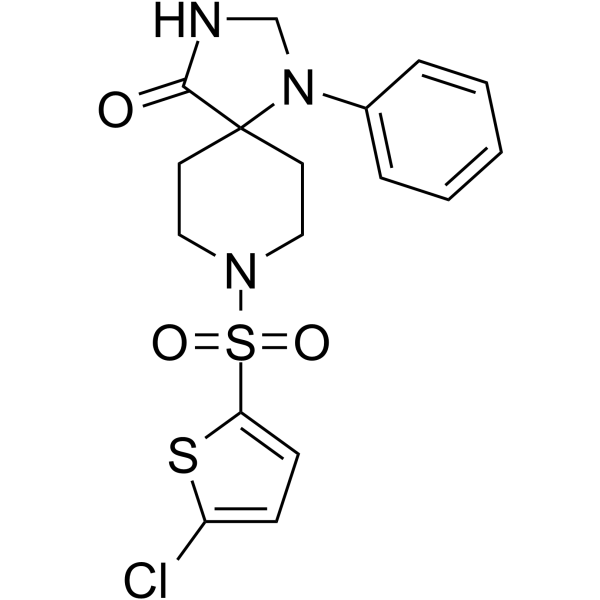
    mPTP-IN-1 (Compound 14e) is a mitochondrial permeability transition pore (mPTP) inhibitor. mPTP-IN-1 blocks calcium-induced mPTP opening by targeting the C subunit of ATP synthase. mPTP-IN-1 can be used to study myocardial ischemia/reperfusion injury (IRI) .
    mPTP-IN-1
  • HY-131139

    Apoptosis Neurological Disease Cancer
    Ganglioside GD3 disodium salt is an acidic glycosphingolipid. Ganglioside GD3 disodium salt inhibits the proliferation of cancer cells, affects the opening of the mitochondrial permeability transition pore (PTPC), induces apoptosis and activates caspase family. Ganglioside GD3 disodium salt can be used in research about cancer and neurodegenerative diseases .
    Ganglioside GD3 disodium salt
  • HY-172227

    Mitochondrial Metabolism Cardiovascular Disease
    S-15176 is an inhibitor of the mitochondrial permeability transition pore (PTP). S-15176 inhibits mitochondrial swelling induced by tert-butylhydroperoxide with an IC50 value of 45.7 μM. S-15176 inhibits PTP opening, prevents mitochondrial membrane potential dissipation and NAD(P)H oxidation, and increases mitochondrial calcium loading capacity. S-15176 is promising for research of ischemia-reperfusion injury .
    S-15176
  • HY-114898

    Mitochondrial Metabolism Cardiovascular Disease Neurological Disease
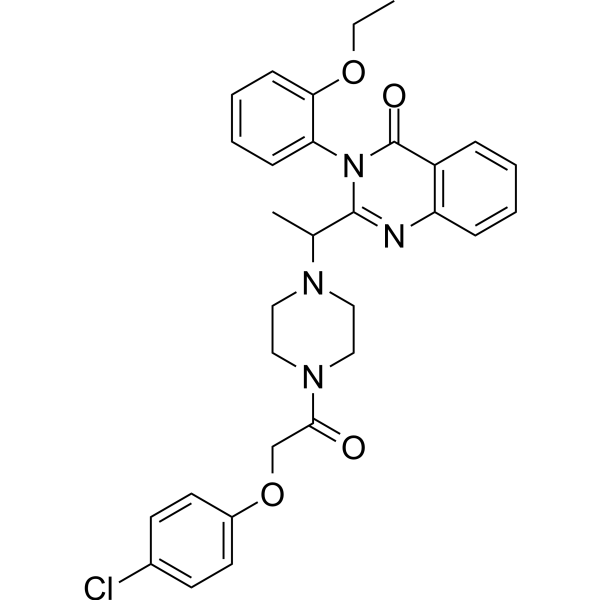
    ML404 (Compound 38) is an inhibitor of the mitochondrial permeability transition pore (mtPTP), which can suppress mitochondrial swelling (EC50=4.9 nM) and only disrupts mitochondrial coupling (an adverse effect) at concentrations > 100 μM. ML404 can be utilized in research related to multiple sclerosis (MS), amyotrophic lateral sclerosis (ALS), Alzheimer's disease (AD), muscular dystrophies (MD), myocardial infarction, and stroke .
    ML404
  • HY-N4280
    7,8-Dimethoxycoumarin
    1 Publications Verification

    Na+/K+ ATPase Glutathione Peroxidase NF-κB p38 MAPK Interleukin Related Neurological Disease Metabolic Disease Inflammation/Immunology
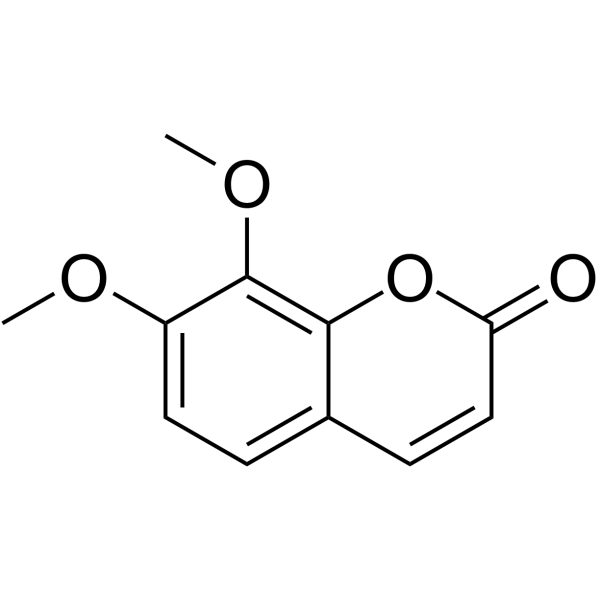
    7,8-Dimethoxycoumarin is a coumarin compound derived from Artemisia caruifolia with oral activity. 7,8-Dimethoxycoumarin inhibits mitochondrial permeability transition pore and H +/K +-ATPase, and exhibits antioxidant, anti-inflammatory, renoprotective, neuroprotective and gastroprotective effects. 7,8-Dimethoxycoumarin reduces lipid peroxidation (TBARS), increases GSH levels, inhibits myeloperoxidase (MPO) activity, and regulates the expression of inflammatory factors by inhibiting the NF‑κB and MAPK pathways. 7,8-Dimethoxycoumarin ameliorates gastric mucosal injury, alleviates renal tissue lesions and relieves neuropathic pain. 7,8-Dimethoxycoumarin can be used in studies related to acute renal failure, trigeminal neuralgia and gastritis .
    7,8-Dimethoxycoumarin
  • HY-136804

    Cyclophilin Neurological Disease
    CypD-IN-29 (compound 29) is an inhibitor of the Alzheimer's disease target CypD (KD=88.2 nM). CypD is a mitochondrial-specific cyclophilin that can bind to β-amyloid protein in brain mitochondria and promote the formation of mitochondrial permeability transition pore (mPTP).
    CypD-IN-29
  • HY-101999

    Bcl-2 Family Caspase Apoptosis Cancer
    EM20-25 is an inhibitor for Bcl-2, which interferes with the interaction between BCL-2 and BAX, activates caspase-9 and thus induces the apoptosis. EM20-25 affects the mitochondrial function, causes the open of permeability transition pore (PTP). EM20-25 enhances the sensitivity of cells to Staurosporine (HY-15141), and enhances the killing effect of BCL-2-expressing leukemia cells to Chlorambucil (HY-13593) and Fludarabine (HY-B0069) .
    EM20-25
  • HY-179417

    Cyclophilin Inflammation/Immunology
    CypD-IN-7 is a potent cyclophilin D (CypD/PPIF) inhibitor that inhibits CypD PPIase activity (K i = 2.4 nM) and provides protection against mitochondrial permeability transition pore (MPTP) opening. CypD-IN-7 can be used for pancreatitis research .
    CypD-IN-7
  • HY-179416

    Cyclophilin Inflammation/Immunology
    CypD-IN-6 is a potent cyclophilin D (CypD/PPIF) inhibitor that inhibits CypD PPIase activity (Ki = 32 nM) and binds to CypD (Kd = 60 nM). CypD-IN-6 can be used for mitochondrial permeability transition pore (MPTP) related disease research such as ischemia-reperfusion injury and acute pancreatitis 1.
    CypD-IN-6
  • HY-100852R

    Mitochondrial Metabolism Reference Standards Cancer
    ER-000444793 (Standard) is the analytical standard of ER-000444793 (HY-100852). This product is intended for research and analytical applications. ER-000444793 is a potent inhibitor of mitochondrial permeability transition pore (mPTP) opening. ER-000444793 inhibits mPTP with an IC50 of 2.8 μM.
    ER-000444793 (Standard)
  • HY-W223348

    Drug Intermediate Drug Derivative Drug Metabolite Cardiovascular Disease Neurological Disease
    Org-9768 (Compound (2-methyl-2,3-dihydro-1H-inden-2-yl)methanamine) is a drug intermediate for synthesizing the mitochondrial permeability transition pore (mPTP) inhibitor. Org-9768 can be used for the researches of neurological and cardiovascular disease, such as Parkinson's disease .
    Org-9768
  • HY-P11489

    Cyclophilin Reactive Oxygen Species (ROS) NF-κB Caspase Apoptosis Metabolic Disease
    RN-0001 is a cyclophilin (Cyp) inhibitor with Ki values of 4.1 nM and 12.0 nM against CypA and CypD, respectively, and an EC50 of 916 nM for CypD. RN-0001 binds directly to CypD, inhibits the peptidyl-prolyl cis-trans isomerase activities of CypD and CypA, and prevents CypD-dependent mitochondrial permeability transition pore opening. RN-0001 improves mitochondrial function, reduces ROS production, inhibits the expression of lipogenic markers, blocks the nuclear translocation of NF-κB p65, and decreases the release of activated caspase-3 and cytochrome c. RN-0001 can be used in the research of alcohol-associated liver disease .
    RN-0001

Inquiry Online

Your information is safe with us. * Required Fields.

Salutation


Country or Region *

Applicant Name *


Organization Name *

Department *


Email Address *


Product Name *

Cat. No.


Requested quantity *

Phone Number *


Remarks

Inquiry Online

Inquiry Information

Product Name:
Cat. No.:
Quantity:
MCE Japan Authorized Agent:

