



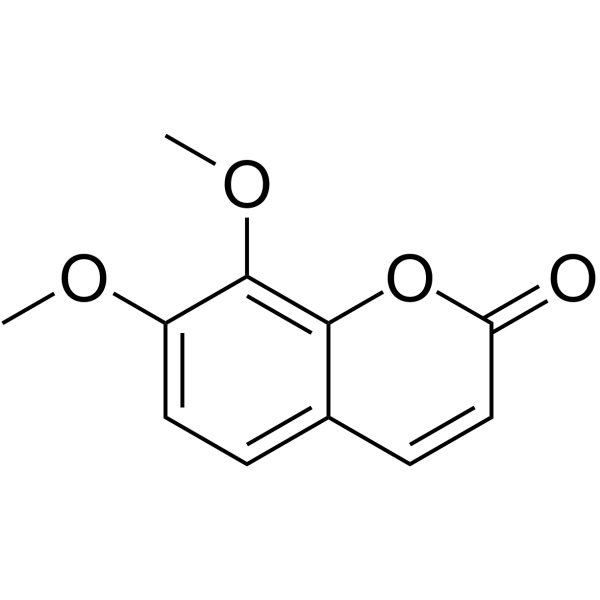
7,8-Dimethoxycoumarin
Based on 1 publication(s) in Google Scholar
7,8-Dimethoxycoumarin is a coumarin compound derived from Artemisia caruifolia with oral activity. 7,8-Dimethoxycoumarin inhibits mitochondrial permeability transition pore and H+/K+-ATPase, and exhibits antioxidant, anti-inflammatory, renoprotective, neuroprotective and gastroprotective effects. 7,8-Dimethoxycoumarin reduces lipid peroxidation (TBARS), increases GSH levels, inhibits myeloperoxidase (MPO) activity, and regulates the expression of inflammatory factors by inhibiting the NF‑κB and MAPK pathways. 7,8-Dimethoxycoumarin ameliorates gastric mucosal injury, alleviates renal tissue lesions and relieves neuropathic pain. 7,8-Dimethoxycoumarin can be used in studies related to acute renal failure, trigeminal neuralgia and gastritis.
For research use only. We do not sell to patients.
- Purity : 99.75%
- CAS No.: 2445-80-9
- Formula: C11H10O4
- Molecular Weight:206.19
-
Storage:Powder -20°C, 3 years ; In solvent -80°C, 6 months , -20°C, 1 month

To place orders, for customer services and technical support, please contact: MedChemExpress USA
Tel: 609-228-6898 E-mail: [email protected] [email protected]


-
 Biological Activity
-
Chemical Information
-
Solvent & Solubility
- Protocols
- Purity & Documentation
- References
-
 Help & FAQs


Publications Citing Use of MedChemExpress (MCE) 7,8-Dimethoxycoumarin
More

Biological Activity
Description
|
NF-κB |
IL-6 |
IL-8 |
In Vitro
7,8-Dimethoxycoumarin (DMC) protects human keratinocyte HaCaT cells from TNF-α-induced damage through inhibition of NF-κB activation and MAPK phosphorylation[2].
7,8-Dimethoxycoumarin stimulates melanogenesis via MAPK-mediated MITF upregulation and reduces IL-6, IL-8, and CCL2/MCP-1 expression in TNF-α-treated HaCaT cells[3].
MedChemExpress (MCE) has not independently confirmed the accuracy of these methods. They are for reference only. Further protocols information, click here.
In Vivo
7,8-Dimethoxycoumarin (100-200 mg/kg; p.o.; daily; 10 consecutive days) dose-dependently attenuates TNF-α-induced trigeminal neuralgia in rats and reversing oxidative stress and histopathological damage[2].
7,8-Dimethoxycoumarin (50-100 mg/kg; i.p.; single dose 1 hour pre-ligation) exerts significant gastroprotective and anti-inflammatory effects in pyloric ligation-induced gastritis in rats at a dose of 100 mg/kg[4].
MedChemExpress (MCE) has not independently confirmed the accuracy of these methods. They are for reference only.
-
Animal Model:Sprague Dawley (male, 180-250 g, cisplatin-induced)[1]
-
Dosage:50 mg/kg; 75 mg/kg; 100 mg/kg
-
Administration:p.o.; daily; 6 consecutive days
-
Result:Reduced serum BUN, creatinine, urinary NAG, and renal TBARS levels at 50, 75, and 100 mg/kg in a dose‑dependent manner.
Increased FrNa, creatinine clearance, renal GSH, cytochrome c oxidase activity, and ATP levels, while decreasing renal total calcium at 50, 75, and 100 mg/kg.
Attenuated cisplatin‑induced renal histopathological damage; 75 and 100 mg/kg exhibited significant renoprotection comparable to cyclosporin A.
-
Animal Model:Sprague Dawley (male, 180-250 g, ischemia/reperfusion-induced)[1]
-
Dosage:50 mg/kg; 75 mg/kg; 100 mg/kg
-
Administration:p.o.; daily; 6 consecutive days
-
Result:Reduced serum BUN, creatinine, urinary NAG, and renal TBARS levels at 50, 75, and 100 mg/kg in a dose‑dependent manner.
Increased FrNa, creatinine clearance, renal GSH, cytochrome c oxidase activity, and ATP levels, while lowering renal total calcium at 50, 75, and 100 mg/kg.
Attenuated ischemia/reperfusion‑induced renal histopathological damage; 75 and 100 mg/kg provided significant protection comparable to cyclosporin A.
-
Animal Model:Sprague Dawley (male, 180-250 g, cisplatin-induced or ischemia/reperfusion-induced)[1]
-
Dosage:25 mg/kg; 50 mg/kg; 100 mg/kg
-
Administration:p.o.; single dose
-
Result:Did not produce preventive or protective effects against cisplatin- or ischemia/reperfusion-induced acute renal failure at 25, 50, or 100 mg/kg.
-
Animal Model:Wistar rats (male, middle-aged 12-14 months, 200-230 g, trigeminal neuralgia induced by single endoneural TNF-α injection)[2]
-
Dosage:100 mg/kg; 200 mg/kg
-
Administration:p.o.; daily; 10 consecutive days
-
Result:Significantly reversed TNF-α-induced increases in percentage cold chemical sensitivity and percentage mechanical sensitivity response in a dose- and time-dependent manner.
Reduced trigeminal nerve TBARS and TNF-α levels while elevating GSH levels at 100 and 200 mg/kg.
Ameliorated TNF-α-induced histopathological alterations including axonal degeneration, neuronal hypertrophy, and neurovascular injury in trigeminal nerve tissue at both tested doses.
-
Animal Model:Wistar rats (either sex, fasted 24 hours prior to pyloric ligation)[4]
-
Dosage:50 mg/kg; 75 mg/kg; 100 mg/kg
-
Administration:i.p.; single dose 1 hour pre-ligation
-
Result:Reduced gastric volume, total acidity, ulcerative index, TBARS levels, and MPO activity at 50, 75, and 100 mg/kg in a dose-dependent manner.
Increased GSH levels at 50, 75, and 100 mg/kg in a dose-dependent manner.
Exhibited effects comparable to omeprazole and N-acetylcysteine at 100 mg/kg.


Chemical Information
-
CAS No. 2445-80-9
-
Appearance Solid
-
Molecular Weight 206.19
-
Formula C11H10O4
-
Color White to off-white
-
SMILES
O=C1C=CC2=CC=C(OC)C(OC)=C2O1
-
Structure Classification
-
Initial Source
-
Shipping
Room temperature in continental US; may vary elsewhere.
-
Storage
Powder -20°C 3 years In solvent -80°C 6 months -20°C 1 month


Publications (1)
-
Journal Impact Factor
-
Most Recent
-
Curr Issues Mol Biol
Therapeutic Potential of 7,8-Dimethoxycoumarin in Tumor Necrosis Factor-Alpha-Induced Trigeminal Neuralgia in a Rat Model. [Abstract]2025 Jul 4;47(7):518. PMID: 40728987


Solvent & Solubility
In Vitro:
DMSO : 100 mg/mL (484.99 mM; Need ultrasonic; Hygroscopic DMSO has a significant impact on the solubility of product, please use newly opened DMSO)
Please refer to the solubility information to select the appropriate solvent. Once prepared, please aliquot and store the solution to prevent product inactivation from repeated freeze-thaw cycles.
Storage method and period of stock solution: -80°C, 6 months; -20°C, 1 month. When stored at -80°C, please use it within 6 months. When stored at -20°C, please use it within 1 month.
Please refer to the solubility information to select the appropriate solvent. Once prepared, please aliquot and store the solution to prevent product inactivation from repeated freeze-thaw cycles.
Storage method and period of stock solution: -80°C, 6 months; -20°C, 1 month. When stored at -80°C, please use it within 6 months. When stored at -20°C, please use it within 1 month.
Concentration (start) × Volume (start) = Concentration (final) × Volume (final)
In Vivo:
Select the appropriate dissolution method based on your experimental animal and administration route.
- For the following dissolution methods, please ensure to first prepare a clear stock solution using an In Vitro approach and then sequentially add co-solvents:
- To ensure reliable experimental results, the clarified stock solution can be appropriately stored based on storage conditions. As for the working solution for In Vivo experiments, it is recommended to prepare freshly and use it on the same day.
- The percentages shown for the solvents indicate their volumetric ratio in the final prepared solution. If precipitation or phase separation occurs during preparation, heat and/or sonication can be used to aid dissolution.
Add each solvent one by one: 10% DMSO 90% (20% SBE-β-CD in Saline)
Solubility: ≥ 2.5 mg/mL (12.12 mM); Clear solution
This protocol yields a clear solution of ≥ 2.5 mg/mL (saturation unknown).
Taking 1 mL working solution as an example, add 100 μL DMSO stock solution (25.0 mg/mL) to 900 μL 20% SBE-β-CD in Saline, and mix evenly.
Preparation of 20% SBE-β-CD in Saline (4°C, storage for one week): 2 g SBE-β-CD powder is dissolved in 10 mL Saline, completely dissolve until clear.
In Vivo Dissolution Calculator
Please enter the basic information of animal experiments:
-
-
-
-
Recommended: Prepare an additional quantity of animals to account for potential losses during experiments.
Please enter your animal formula composition:
-
%DMSO +
Recommended: Keep the proportion of DMSO in working solution below 2% if your animal is weak.
-
%+
-
+%Tween-80 + +
-
%Saline +
The co-solvents required include: DMSO, . All of co-solvents are available by MedChemExpress (MCE). , Tween 80. All of co-solvents are available by MedChemExpress (MCE).
Working solution concentration: 0.22 mg/mL
Method for preparing stock solution: mg drug dissolved in μL DMSO. Stock solution concentration: mg/mL.
1. Take μL DMSO stock solution;
2. Add μL .
μL , mix evenly;
3. Then add μL Tween 80, mix evenly;
4. Then add μL
Please ensure that the stock solution in the first step is dissolved to a clear state, and add co-solvents in sequence. You can use ultrasonic heating (ultrasonic cleaner, recommended frequency 20-40 kHz), vortexing, etc. to assist dissolution.

Protocols
-
RNA extraction experimental
By lysing cells, releasing RNA, and removing impurities such as proteins and DNA, high-purity RNA products are finally obtained. The commonly used traditional method is the guanidine isothiocyanate/phenol/chloroform method (Trizol), which is suitable for a variety of animal materials including animal tissues, microorganisms, cultured cells, etc., and most plant materials.
-
Transepithelial/transendothelial electrical resistance assay
TEER measures electrical resistance across epithelial or endothelial monolayers cultured on permeable supports, and the readout reflects ionic conductance through the cell barrier, especially the paracellular pathway regulated by junctional integrity. TEER can be measured without destroying the monolayer and is commonly used before or during transport, permeability, barrier-disruption, and barrier-maturation experiments. TEER values are influenced by biological maturation and technical conditions; reported factors include temperature, medium formulation, passage number, electrode geometry, membrane properties, and junctional length during early monolayer maturation. Therefore, TEER should be interpreted with blank-insert subtraction, area normalization, repeated readings, and, when possible, orthogonal barrier readouts such as FITC-dextran flux or tight-junction staining.
-
Research Protocol for Inflammation-related Diseases
The NLRP3 inflammasome is a cytosolic innate immune signaling platform that integrates priming signals and danger-signal activation to promote caspase-1 activation, maturation of IL-1β and IL-18, and gasdermin D-mediated pyroptotic cell death. The core experimental logic is to determine whether inflammatory disease phenotypes are driven by increased NLRP3 expression, ASC-containing inflammasome assembly, caspase-1 cleavage, GSDMD cleavage, and extracellular release of IL-1β/IL-18 rather than by nonspecific cell injury alone. The pathway is strongly linked to inflammation-related disease phenotypes because monosodium urate crystals activate NALP3/NLRP3 inflammasome signaling in gout-like crystal inflammation, cholesterol crystals activate NLRP3 inflammasomes in atherogenesis models, and DSS-induced intestinal inflammation has been reported to involve NLRP3 inflammasome activity. However, experimental colitis studies also show context-dependent protective effects of NLRP3 inflammasome co
-
Ferroptosis Solutions
Ferroptosis is an iron-dependent, non-apoptotic form of regulated cell death characterized by lethal lipid peroxidation and sensitivity to suppression by iron chelators or lipophilic radical-trapping antioxidants. The core pathway links cystine uptake through system Xc−, glutathione availability, GPX4-dependent detoxification of phospholipid hydroperoxides, iron-dependent oxidative reactions, and polyunsaturated-phospholipid metabolism into a cell-death program that is biochemically and morphologically distinct from apoptosis, necrosis, and autophagy. The ferroptosis pathway is experimentally linked to phenotype through chemical and genetic perturbation. Erastin induces ferroptosis by inhibiting cystine uptake through system Xc− and weakening antioxidant defenses, while GPX4 inhibition or depletion causes lipid peroxide accumulation and ferroptotic cancer-cell death. ACSL4 and oxidizable arachidonoyl- or adrenoyl-containing phosphatidylethanolamines shape ferroptosis sensitivity by con


Purity & Documentation
-
Data Sheet (283 KB)
-
SDS (394 KB)
- English - EN (394 KB)
- Français - FR (394 KB)
- Deutsch - DE (394 KB)
- Norwegian - NO (394 KB)
- Español - ES (394 KB)
- Swedish - SV (394 KB)
- Italian - IT (394 KB)
- Korean - KR (394 KB)
- Portuguese - PT (394 KB)
-
Handling Instructions (2659 KB)
References
[1]. Muthuraman A, et al. Therapeutic potential of 7,8-dimethoxycoumarin on cisplatin- and ischemia/reperfusion injury-induced acute renal failure in rats. Naunyn Schmiedebergs Arch Pharmacol. 2012;385(7):739-748. [Content Brief]
[2]. Paramakrishnan N, et al. Therapeutic Potential of 7,8-Dimethoxycoumarin in Tumor Necrosis Factor-Alpha-Induced Trigeminal Neuralgia in a Rat Model. Curr Issues Mol Biol. 2025;47(7):518. Published 2025 Jul 4. [Content Brief]
[3]. Kang JK, et al. 4-Hydroxy-7-Methoxycoumarin Inhibits Inflammation in LPS-activated RAW264.7 Macrophages by Suppressing NF-κB and MAPK Activation. Molecules. 2020;25(19):4424. Published 2020 Sep 26. [Content Brief]


Complete Stock Solution Preparation Table
Please refer to the solubility information to select the appropriate solvent. Once prepared, please aliquot and store the solution to prevent product inactivation from repeated freeze-thaw cycles.
Storage method and period of stock solution: -80°C, 6 months; -20°C, 1 month. When stored at -80°C, please use it within 6 months. When stored at -20°C, please use it within 1 month.
| Optional Solvent | Concentration Solvent Mass | 1 mg | 5 mg | 10 mg | 25 mg |
|---|---|---|---|---|---|
| DMSO | 1 mM | 4.8499 mL | 24.2495 mL | 48.4990 mL | 121.2474 mL |
| 5 mM | 0.9700 mL | 4.8499 mL | 9.6998 mL | 24.2495 mL | |
| 10 mM | 0.4850 mL | 2.4249 mL | 4.8499 mL | 12.1247 mL | |
| 15 mM | 0.3233 mL | 1.6166 mL | 3.2333 mL | 8.0832 mL | |
| 20 mM | 0.2425 mL | 1.2125 mL | 2.4249 mL | 6.0624 mL | |
| 25 mM | 0.1940 mL | 0.9700 mL | 1.9400 mL | 4.8499 mL | |
| 30 mM | 0.1617 mL | 0.8083 mL | 1.6166 mL | 4.0416 mL | |
| 40 mM | 0.1212 mL | 0.6062 mL | 1.2125 mL | 3.0312 mL | |
| 50 mM | 0.0970 mL | 0.4850 mL | 0.9700 mL | 2.4249 mL | |
| 60 mM | 0.0808 mL | 0.4042 mL | 0.8083 mL | 2.0208 mL | |
| 80 mM | 0.0606 mL | 0.3031 mL | 0.6062 mL | 1.5156 mL | |
| 100 mM | 0.0485 mL | 0.2425 mL | 0.4850 mL | 1.2125 mL |


7,8-Dimethoxycoumarin Related Classifications
HY-N4280 Related Classifications
 Powered by Bioz