



Gastroenteritis
-
Gastroenteritis (8)

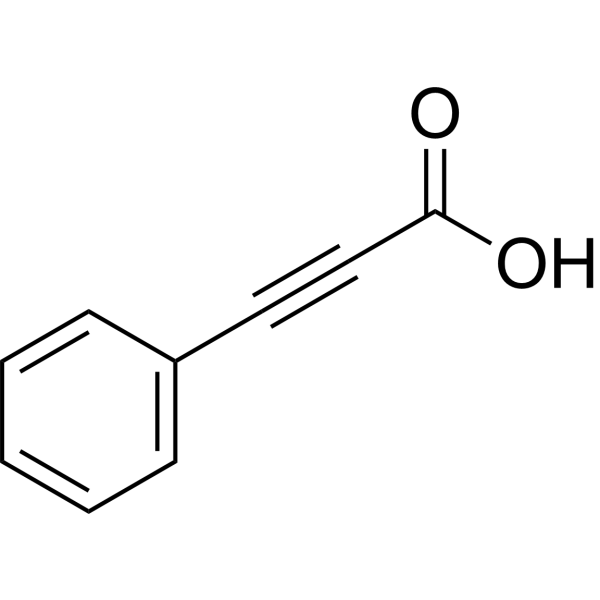
- Formula: C9H6O2
- Molecular Weight: 146.15
Phenylpropiolic acid is an Antibacterial agent. Phenylpropiolic acid is identified from the intracellular extract of Proteus mirabilis DMTMMR-11. Phenylpropiolic acid disrupts biofilm formation by reducing pathogen adhesion and enhancing biofilm clearance ability. Phenylpropiolic acid inhibits the growth of Yersinia enterocolitica, disrupts its cell membrane integrity, and increases the survival rate of infected Caenorhabditis elegans. Phenylpropiolic acid can be used in studies related to yersiniosis and gastroenteritis.

- Formula: C55H96N16O13
- Molecular Weight: 1189.45
Polymyxin B2 is a polypeptide antibiotic with particularly potent antibacterial activity against Gram-negative bacteria. Polymyxin B2 kills bacteria by binding to lipopolysaccharide molecules on the bacterial cell membrane, disrupting membrane integrity and causing leakage of intracellular contents. Polymyxin B2 is used in studies related to Pseudomonas aeruginosa infection and acute enteritis.
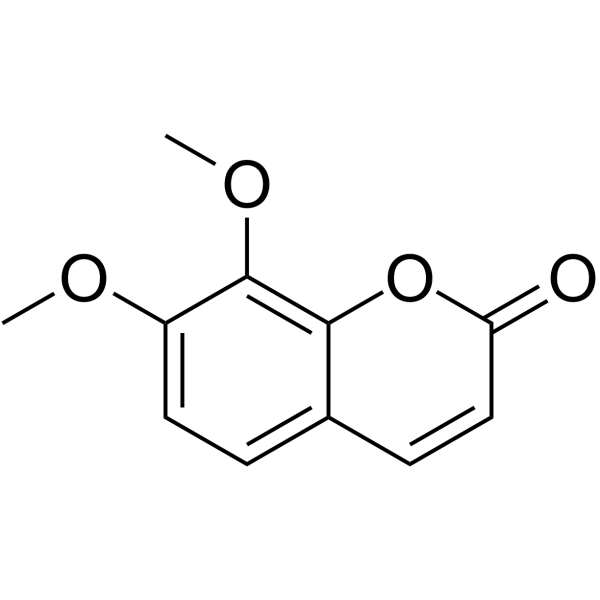
- Formula: C11H10O4
- Molecular Weight: 206.19
7,8-Dimethoxycoumarin is a coumarin compound derived from Artemisia caruifolia with oral activity. 7,8-Dimethoxycoumarin inhibits mitochondrial permeability transition pore and H+/K+-ATPase, and exhibits antioxidant, anti-inflammatory, renoprotective, neuroprotective and gastroprotective effects. 7,8-Dimethoxycoumarin reduces lipid peroxidation (TBARS), increases GSH levels, inhibits myeloperoxidase (MPO) activity, and regulates the expression of inflammatory factors by inhibiting the NF‑κB and MAPK pathways. 7,8-Dimethoxycoumarin ameliorates gastric mucosal injury, alleviates renal tissue lesions and relieves neuropathic pain. 7,8-Dimethoxycoumarin can be used in studies related to acute renal failure, trigeminal neuralgia and gastritis.
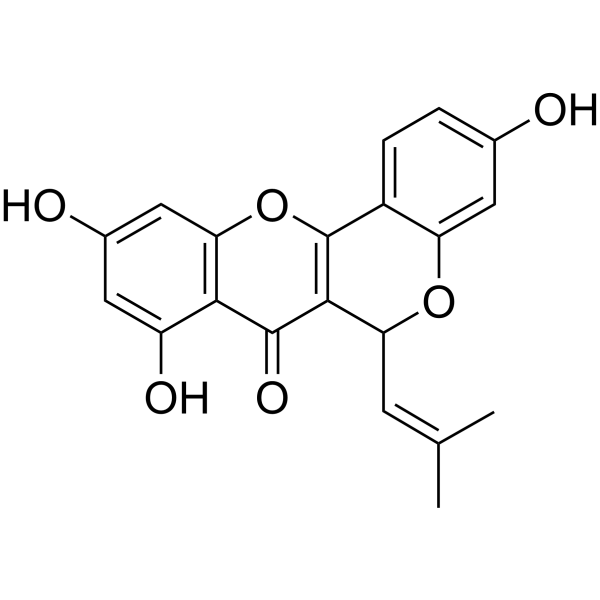
- Formula: C20H16O6
- Molecular Weight: 352.34
Cyclocommunol is a GST inhibitor with an IC50 of 3.0 μM. Cyclocommunol downregulates the expression of the anti-apoptotic (apoptosis) protein Mcl-1, reduces the levels of phosphorylated Akt and mTOR, and induces caspase-dependent apoptosis, reactive oxygen species (ROS) production and autophagy. Cyclocommunol can be used in research related to oral squamous cell carcinoma, breast cancer, lung cancer, norovirus-induced gastroenteritis and bacterial infections.

- Formula: C19H21N5OS3
- Molecular Weight: 431.60
15-PGDH-IN-5 is a sulfoxide-based inhibitor of 15-hydroxyprostaglandin dehydrogenase (15-PGDH). 15-PGDH-IN-5 exhibits great water solubility, metabolic stability, and in vivo exposure levels. 15-PGDH-IN-5 blocks the 15-PGDH-mediated irreversible oxidative degradation of PGE2 and increases the effective concentration of endogenous PGE2 in tissues, thereby exerting anti-inflammatory effects and promoting tissue repair and regeneration. 15-PGDH-IN-5 is suitable for research into tissue injury and fibrosis-related diseases, such as inflammatory bowel disease and idiopathic pulmonary fibrosis.

- Formula: C26H33N5O4S
- Molecular Weight: 511.64
CSLP43 is a selective RIPK2 and XIAP inhibitor with an IC50 of 19.9 nM against human RIPK2. CSLP43 binds to the ATP-binding pocket of RIPK2 and disrupts the interaction between RIPK2 and the BIR2 domain of XIAP or cIAP1. CSLP43 inhibits RIPK2 ubiquitination, NOD1-dependent inflammatory signaling pathways, NOD2-dependent inflammatory signaling pathways, as well as NF-κB activation associated with NOD agonists. CSLP43 is selective for the NOD1/NOD2 signaling pathway and does not inhibit the kinase activity of RIPK1 or RIPK3. CSLP43 is applicable to research related to Crohn's disease, Blau syndrome, early-onset sarcoidosis and early-onset inflammatory bowel disease.

- Formula: C29H33FN8
- Molecular Weight: 512.62
R 58639 is a histamine H1 receptor antagonist. R 58639 can be used for the study of gastric ulcers.

- Formula: C9H6O2
- Molecular Weight: 146.15
Phenylpropiolic acid (Standard) is the analytical standard of Phenylpropiolic acid (HY-W007319). This product is intended for research and analytical applications. Phenylpropiolic acid is an Antibacterial agent. Phenylpropiolic acid is identified from the intracellular extract of Proteus mirabilis DMTMMR-11. Phenylpropiolic acid disrupts biofilm formation by reducing pathogen adhesion and enhancing biofilm clearance ability. Phenylpropiolic acid inhibits the growth of Yersinia enterocolitica, disrupts its cell membrane integrity, and increases the survival rate of infected Caenorhabditis elegans. Phenylpropiolic acid can be used in studies related to yersiniosis and gastroenteritis.



