



Renal Failure
-
Renal Failure (16)

- 1
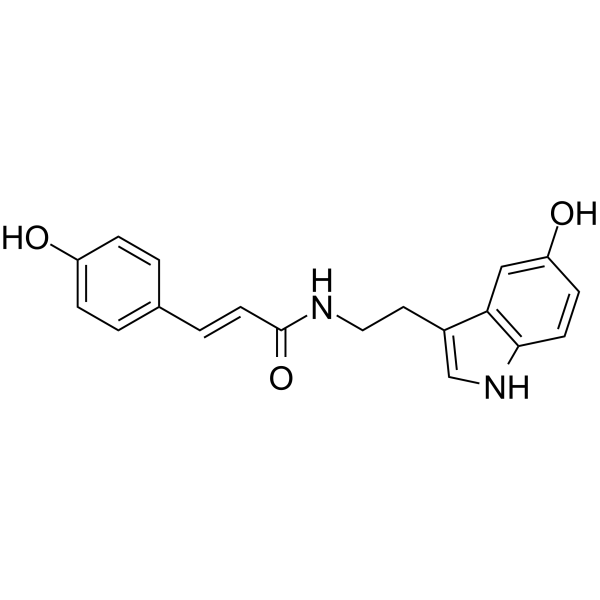
- Formula: C19H18N2O3
- Molecular Weight: 322.36
N-(p-Coumaroyl) Serotonin is an orally active polyphenol found in safflower seeds with potent anti-inflammatory, antioxidant, and antitumor activities. N-(p-Coumaroyl) Serotonin suppresses NF‑κB, TLR4/MyD88 and MAPK signaling, activates NQO1/HO‑1 pathways, and inhibits pro‑inflammatory cytokines, iNOS and COX‑2 and ROS production. N-(p-Coumaroyl) Serotonin induces S‑phase arrest and apoptosis in glioblastoma cells, reduces atherosclerotic lesions, and alleviates renal and vascular injuries. N-(p-Coumaroyl) Serotonin acts as a vasodilator, regulates calcium dynamics. N-(p-Coumaroyl) Serotonin can be used for the research of neurodegenerative diseases, atherosclerosis, glioblastoma, and acute renal failure.
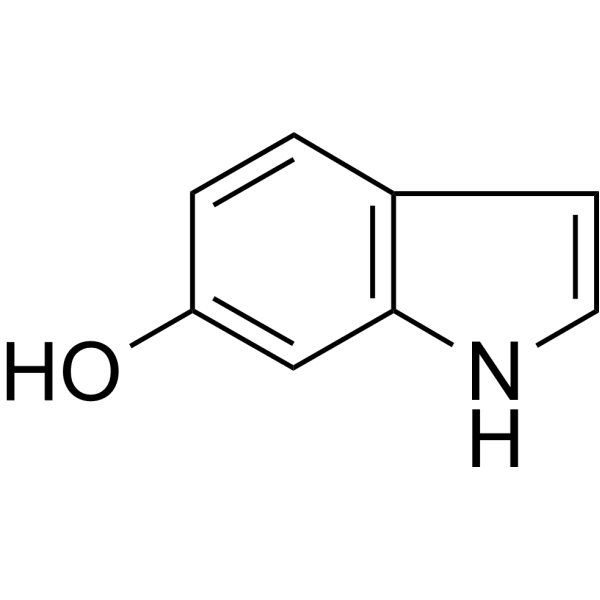
- Formula: C8H7NO
- Molecular Weight: 133.15
6-Hydroxyindole is an orally active, endogenous long-acting OATP1B1 inhibitor. 6-Hydroxyindole does not alter the cell surface expression or subcellular localization of OATP1B1. 6-Hydroxyindole protects cells against Ferroptosis. 6-Hydroxyindole possesses intrinsic radical-trapping antioxidant activity. 6-Hydroxyindole serves as a component of oxidative hair dyes. 6-Hydroxyindole can be used in research related to renal failure and neurodegenerative diseases.
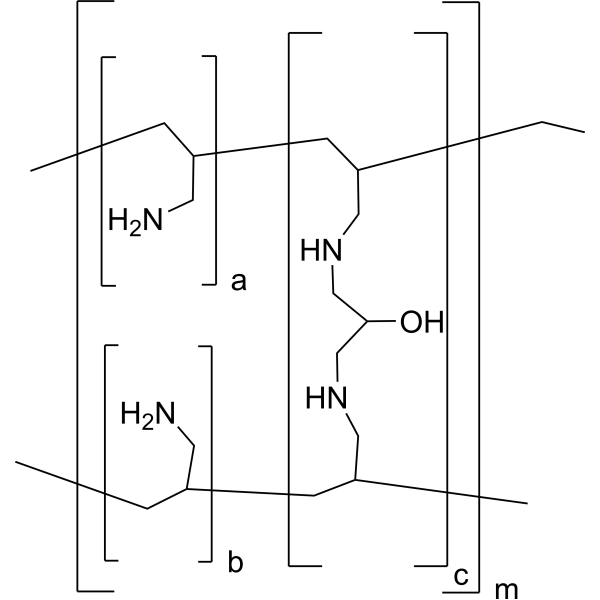
- Formula: [(C3H7N)a+b·(C9H18N2O)c]n
Sevelamer is an orally active polymeric phosphate binder and bile acid sequestrant. Sevelamer binds dietary phosphate in the gastrointestinal tract, reducing phosphate absorption and serum phosphorus levels, and reduces urinary phosphate excretion. Sevelamer binds polyanion bile acids, increases bile acid faecal excretion, and reduces total cholesterol and LDL cholesterol levels. Sevelamer can be used for the research of hyperphosphataemia, hyperparathyroidism, chronic renal failure, kidney disease, and type 2 diabetes.
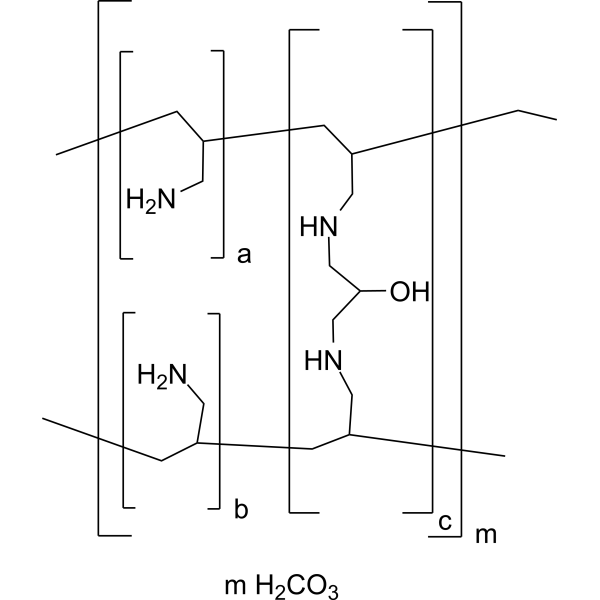
- Formula: [(C3H7N)a+b·(C9H18N2O)c]n·xH2CO3
Sevelamer carbonate is an orally active polymeric phosphate binder and bile acid sequestrant. Sevelamer carbonate binds dietary phosphate in the gastrointestinal tract, reducing phosphate absorption and serum phosphorus levels, and reduces urinary phosphate excretion. Sevelamer carbonate binds polyanion bile acids, increases bile acid faecal excretion, and reduces total cholesterol and LDL cholesterol levels. Sevelamer carbonate can be used for the research of hyperphosphataemia, hyperparathyroidism, chronic renal failure, kidney disease, and type 2 diabetes.
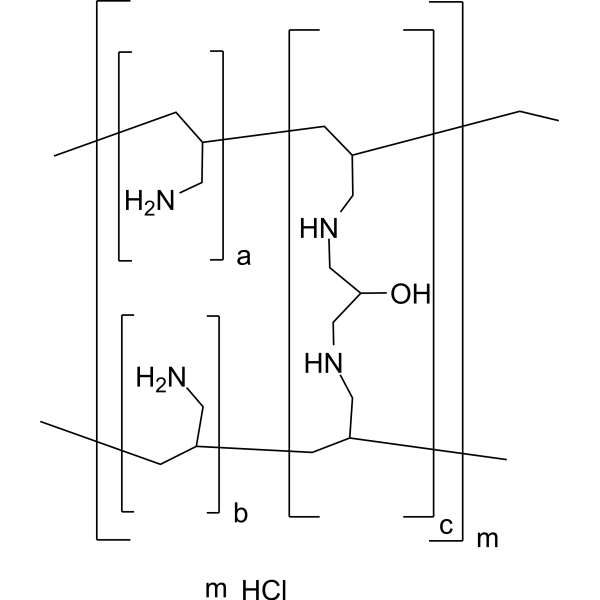
- Formula: [(C3H7N)a+b·(C9H18N2O)c]n·xHCl
- Molecular Weight: 186.08 (monomer)
Sevelamer hydrochloride is an orally active polymeric phosphate binder and bile acid sequestrant. Sevelamer hydrochloride binds dietary phosphate in the gastrointestinal tract, reducing phosphate absorption and serum phosphorus levels, and reduces urinary phosphate excretion. Sevelamer hydrochloride binds polyanion bile acids, increases bile acid faecal excretion, and reduces total cholesterol and LDL cholesterol levels. Sevelamer hydrochloride can be used for the research of hyperphosphataemia, hyperparathyroidism, chronic renal failure, kidney disease, and type 2 diabetes.

- Formula: C17H24Cl2N6O2
- Molecular Weight: 415.32
S3226 is a highly selective NHE-3 inhibitor (IC50<1 μM) that specifically blocks NHE-3-mediated sodium transport. S3226 significantly inhibits blastocyst formation and expansion in mouse embryos, and reduces fluid and electrolyte reabsorption in rat proximal tubules in a dose-dependent manner. S3226 effectively alleviates ischemia-induced acute renal failure by improving renal function parameters, reducing renal tubular injury and restoring intracellular pH homeostasis, without interfering with the normal tubuloglomerular feedback response. S3226 is widely used in studies of acute renal failure and related pathological mechanisms.

- Formula: C15H8ClN3O4
- Molecular Weight: 329.69
DAPK-IN-1 is a DAPK1 and DAPK3 inhibitor. DAPK-IN-1 is applicable to research related to cerebral infarction, myocardial infarction and renal failure.

- Formula: C5H10N2O3
- Molecular Weight: 146.15
H-Gly-D-Ala-OH is a dipeptide containing D-amino acid. H-Gly-D-Ala-OH can be specifically hydrolyzed by renal dipeptidase, which acts on peptide segments with a D-amino acid at the carboxyl terminus. H-Gly-D-Ala-OH enables highly specific detection of renal dipeptidase activity without interference from other serum or urine aminopeptidases. When used in combination with low-dose Sodium nitrite (HY-N11218), H-Gly-D-Ala-OH inhibits the initial spore growth of Clostridium botulinum in pork homogenate, whereas it has no such effect on its own. H-Gly-D-Ala-OH can be used in research related to chronic renal failure, diabetes mellitus and botulism.
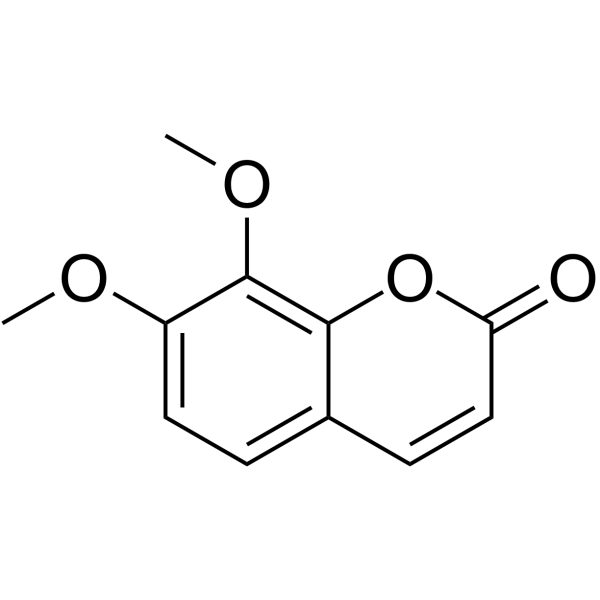
- Formula: C11H10O4
- Molecular Weight: 206.19
7,8-Dimethoxycoumarin is a coumarin compound derived from Artemisia caruifolia with oral activity. 7,8-Dimethoxycoumarin inhibits mitochondrial permeability transition pore and H+/K+-ATPase, and exhibits antioxidant, anti-inflammatory, renoprotective, neuroprotective and gastroprotective effects. 7,8-Dimethoxycoumarin reduces lipid peroxidation (TBARS), increases GSH levels, inhibits myeloperoxidase (MPO) activity, and regulates the expression of inflammatory factors by inhibiting the NF‑κB and MAPK pathways. 7,8-Dimethoxycoumarin ameliorates gastric mucosal injury, alleviates renal tissue lesions and relieves neuropathic pain. 7,8-Dimethoxycoumarin can be used in studies related to acute renal failure, trigeminal neuralgia and gastritis.

- Formula: C18H13ClN5NaO3S
- Molecular Weight: 437.84
SM19712 is an orally active, selective endothelin converting enzyme (ECE) inhibitor. SM19712 inhibits conversion of big ET-1 to ET-1. SM19712 attenuates colonic angiogenesis, tissue injury, inflammation, without altering colon shortening or myeloperoxidase levels in mice. SM19712 can be used for the research of inflammatory bowel disease (colitis), ischemic acute renal failure, acute myocardial infarction, and myocardial ischemia/reperfusion injury.

- Formula: C18H14ClN5O3S
- Molecular Weight: 415.85
SM19712 free acid is an orally active, selective endothelin converting enzyme (ECE) inhibitor. SM19712 free acid inhibits conversion of big ET-1 to ET-1. SM19712 free acid attenuates colonic angiogenesis, tissue injury, inflammation, without altering colon shortening or myeloperoxidase levels in mice. SM19712 free acid can be used for the research of inflammatory bowel disease (colitis), ischemic acute renal failure, acute myocardial infarction, and myocardial ischemia/reperfusion injury.

- Formula: C28H23NO8
- Molecular Weight: 501.48
HJP 272 is a selective endothelin peptide A (ETA) receptor antagonist with an IC50 of 37.01 nM. . HJP 272 can be used for the researches of pulmonary arterial hypertension, fibrosis, renal failure and cancer.

- Formula: C23H30N2
- Molecular Weight: 334.50
Levemopamil is a calcium channel blocker and 5-HT2 receptor antagonist. Levemopamil exerts renoprotective effects against ischemic acute kidney injury. Levemopamil is applicable to research related to ischemic acute renal failure.

- Formula: C16H16N3NaO4S
- Molecular Weight: 369.37
Cephalexin sodium is an orally active cephalosporin Antibiotic. Cephalexin sodium disrupts bacterial cell wall synthesis and inhibits the growth of susceptible Gram-positive bacteria and some Gram-negative bacteria. Cephalexin sodium induces acute renal failure when overdosed in laboratory animals. Cephalexin sodium can be used in studies related to bacterial infections.

- Formula: C19H18N2O3
- Molecular Weight: 322.36
N-(p-Coumaroyl) Serotonin (Standard) is the analytical standard of N-(p-Coumaroyl) Serotonin (HY-129440). This product is intended for research and analytical applications. N-(p-Coumaroyl) Serotonin is an orally active polyphenol found in safflower seeds with potent anti-inflammatory, antioxidant, and antitumor activities. N-(p-Coumaroyl) Serotonin suppresses NF‑κB, TLR4/MyD88 and MAPK signaling, activates NQO1/HO‑1 pathways, and inhibits pro‑inflammatory cytokines, iNOS and COX‑2 and ROS production. N-(p-Coumaroyl) Serotonin induces S‑phase arrest and apoptosis in glioblastoma cells, reduces atherosclerotic lesions, and alleviates renal and vascular injuries. N-(p-Coumaroyl) Serotonin acts as a vasodilator, regulates calcium dynamics. N-(p-Coumaroyl) Serotonin can be used for the research of neurodegenerative diseases, atherosclerosis, glioblastoma, and acute renal failure.

- Formula: C8H7NO
- Molecular Weight: 133.15
6-Hydroxyindole (Standard) is the analytical standard of 6-Hydroxyindole (HY-W002438). This product is intended for research and analytical applications. 6-Hydroxyindole is an orally active, endogenous long-acting OATP1B1 inhibitor. 6-Hydroxyindole does not alter the cell surface expression or subcellular localization of OATP1B1. 6-Hydroxyindole protects cells against Ferroptosis. 6-Hydroxyindole possesses intrinsic radical-trapping antioxidant activity. 6-Hydroxyindole serves as a component of oxidative hair dyes. 6-Hydroxyindole can be used in research related to renal failure and neurodegenerative diseases.
- 1



