



Aquaporin
AQP
Aquaporins (AQPs) are integral membrane proteins that facilitate the transport of water across biological membranes along an osmotic gradient. There have been 13 AQP isoforms (AQP0-AQP12) identified in humans and rodents to date. AQP0-2, 4-6 and 8 are generally considered to be exclusively water channels, whereas AQP3, 7, 9 and 10 are referred to as aquaglyceroporins, as they are also permeated by glycerol. AQPs usually adopt a tetramer conformation within the cell membrane, with each monomer consisting of a single aqueous pore that is permeable to water. The movement of water and solutes through AQP channels is a passive process that is dependent on the concentration of the transported molecule.
All Product Categories
-
Aquaporin Related Products (30)
Related Products (30)

-
Antibodies (6)
- 1
- 2
-
DFP00173
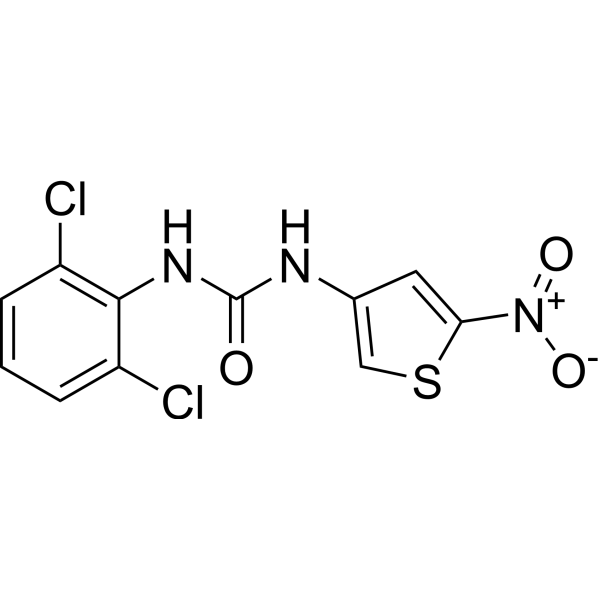 0 ImagesDFP00173 is a potent and selective aquaporin-3 (AQP3) inhibitor. DFP00173 inhibits mouse and human AQP3 with an IC50 of ~0.1-0.4 μM. DFP00173 is selective for AQP3 over the homologous AQP isoforms AQP7 and AQP9.
-
RG100204
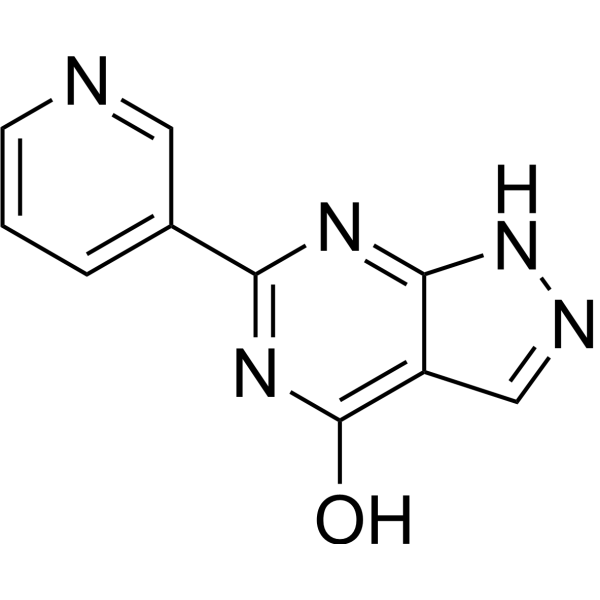
 0 ImagesRG100204 is a selective, orally available inhibitor of the aquaporin AQP9. RG100204 directly inhibits AQP9 channel function, preventing the transmembrane transport of water, glycerol, and H2O2. RG100204 reduces the activation of the NLRP3 inflammasome and p38 MAPK signaling pathways, thereby alleviating inflammation and pyroptosis. RG100204 reduces multi-organ dysfunction in a mouse sepsis model and shows glucose-regulating effects in diabetic db/db mice.
-
AER-271
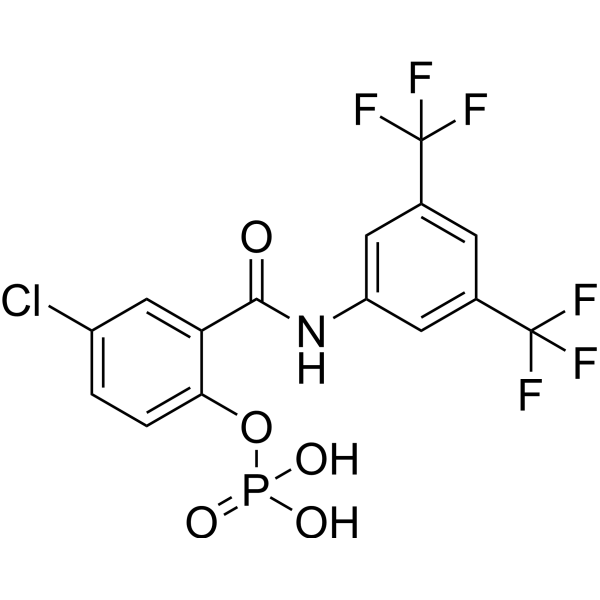 0 ImagesCat. No.: HY-115460CAS No.: 634913-39-6AER-271, a phosphonate proagent derivative of AER-270, is an aquaporin-4 (AQP4) inhibitor for the research of acute ischemic stroke.
-
TGN-073
 0 ImagesTGN-073 is an orally active, blood-brain barrier-permeable aquaporin 4 (AQP4) modulator. TGN-073 increases the uptake and distribution of brain MRI tracers in the brain parenchyma and reduces the levels of insoluble amyloid β-40 and β-42. TGN-073 can be used in research related to Alzheimer's disease, dementia, traumatic brain injury and pain.
-
PROTAC BCL6/GSPT1 Degrader-1
 0 ImagesCat. No.: HY-181084CAS No.: 3039500-55-2PROTAC BCL6/GSPT1 Degrader-1 is a dual-target PROTAC degrader that targets BCL6 and GSPT1. PROTAC BCL6/GSPT1 Degrader-1 inhibits cell proliferation, promotes DNA damage, and induces cell cycle arrest and apoptosis in diffuse large B-cell lymphoma. PROTAC BCL6/GSPT1 Degrader-1 can be used for research on tumors such as lymphoma.

-
AQP4 (201-220) TFA
 0 ImagesCat. No.: HY-P10936APurity: 99.91%AQP4 (201-220) TFA is an encephalitogenic epitope of AQP-4. AQP4 (201-220) TFA can induce experimental autoimmune encephalomyelitis (EAE) (characterized by midline lesions in the brain, retinal pathology, and lesions at the grey matter/white matter border zone in the spinal cord). AQP-4 is a target antigen in neuromyelitis optica.
-
Z433927330
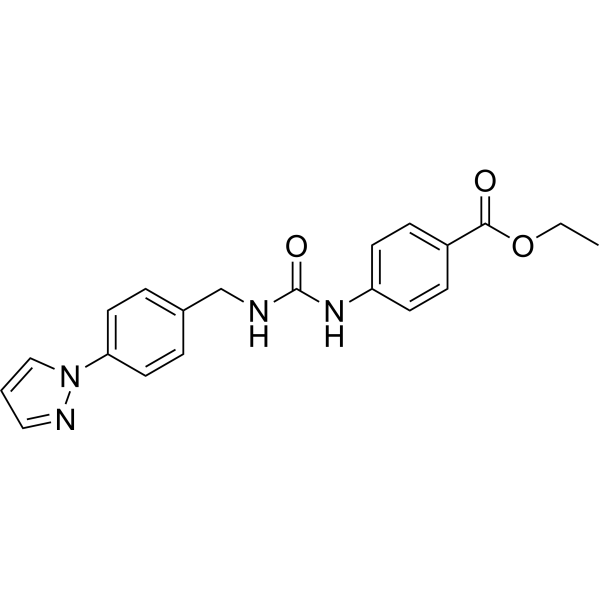 0 ImagesZ433927330 is a potent and selective inhibitor of Aquaporin-7 (AQP7), less potently inhibits AQP3 and AQPs9, with IC50s of ~0.2 µM, ~0.7 µM and ~1.1 µM for mAQP7, mAQP3 and mAQP9, respectively.
-
TC AQP1 1
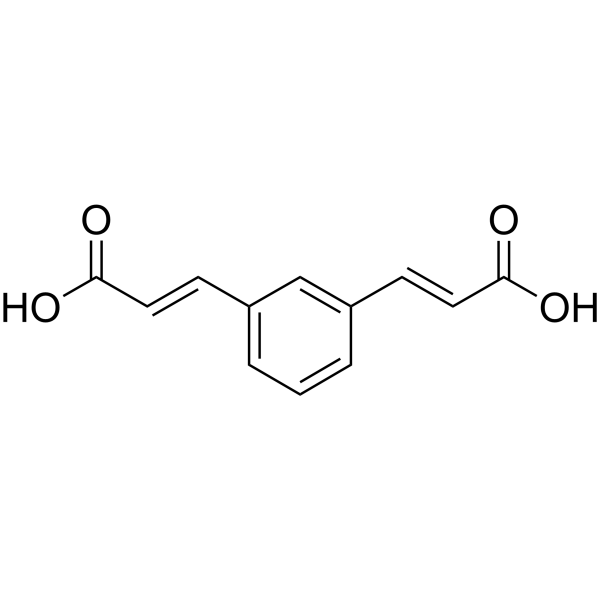 0 ImagesSynonyms: m-Phenylenediacrylic acid; m-Benzenediacrylic acidTC AQP1 1 (m-Phenylenediacrylic acid) is a potent AQP1 inhibitor. TC AQP1 1 inhibits AQP1-mediated water flux in oocytes, with an IC50 of 8 μM.
-
Steviol
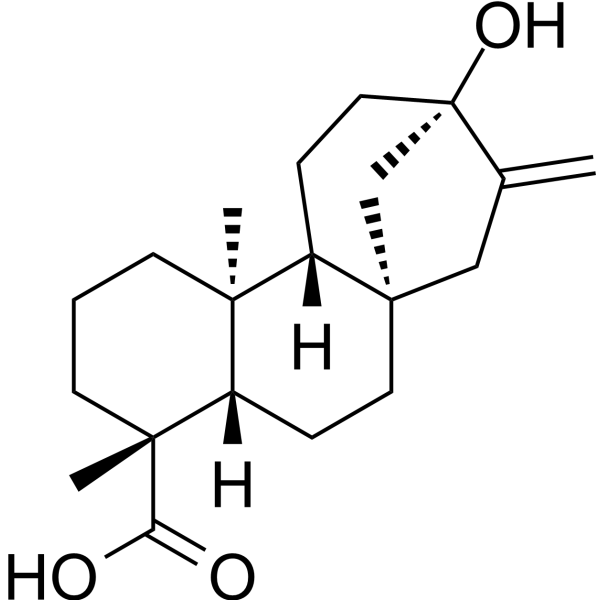 0 ImagesSteviol is the main metabolite of steviol glycosides and an inhibitor of AQP2/CFTR. Steviol slows down the growth of renal cysts by inhibiting the activity of CFTR, reducing the expression of AQP2, and promoting the degradation of AQP2 and CFTR. Steviol can be used in the research of polycystic kidney disease.
-
Aristolactam I
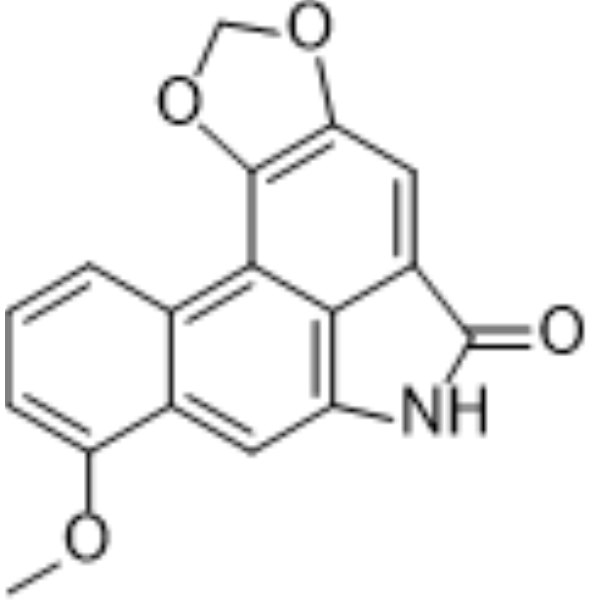 0 ImagesSynonyms: Aristololactam; AristolactamAristolactam I is an AQP1 inhibitor and Aristolochic acid I metabolite. Aristolactam I can be isolated from Aristolochia plants. Aristolactam I downregulates Twist1 expression, increases E-cadherin expression, and activates the TGF-β/Smad signaling pathway. Aristolactam I has anticancer activity against breast cancer. Aristolactam I is nephrotoxic. Aristolactam I is mainly used in the study of breast cancer and kidney diseases such as renal interstitial fibrosis.
-
Atractyloside A
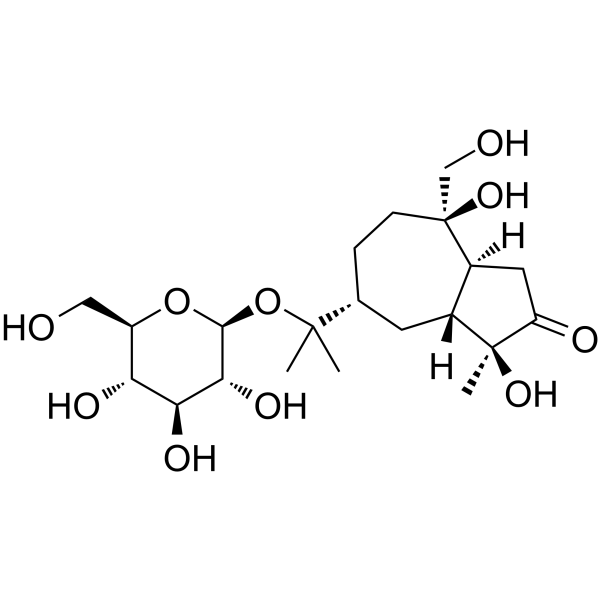 0 ImagesAtractyloside A is an orally active inhibitor of the TLR4/MyD88/NF-κB signaling pathway and also an opener of the mitochondrial permeability transition pore (MPTP). Atractyloside A interferes with the activation of the TLR4/MyD88/NF-κB pathway, thereby inhibiting intestinal inflammatory responses. Atractyloside A reverses mucin synthesis impairment, improves intestinal barrier integrity, and restores homeostasis by altering the composition of the gut microbiota. Atractyloside A can be used in studies related to spleen deficiency diarrhea and myocardial injury.
-
AqF026
 0 ImagesAqF026 is an aquaporin 1 (AQP1) agonist. AqF026 enhances the channel activity of human AQP1 in the Xenopus laevis oocyte system. AqF026 enhances the osmotic transport of water across the peritoneum in a mouse model of peritoneal dialysis. AqF026 can be used in studies related to ultrafiltration failure in peritoneal dialysis.
-
Bacopaside I
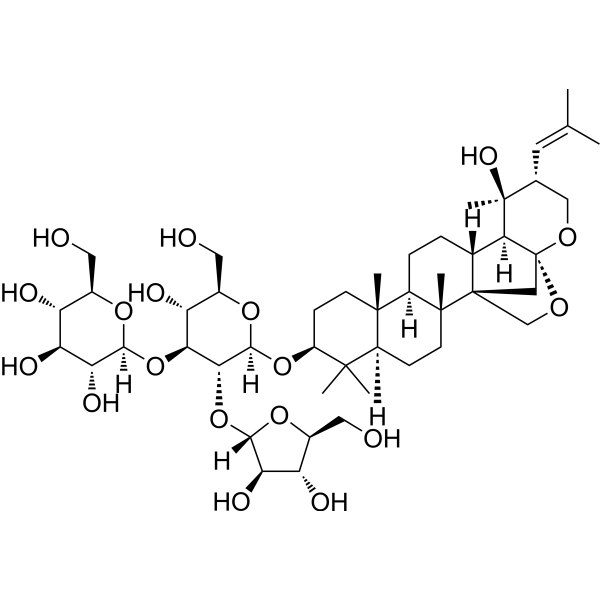
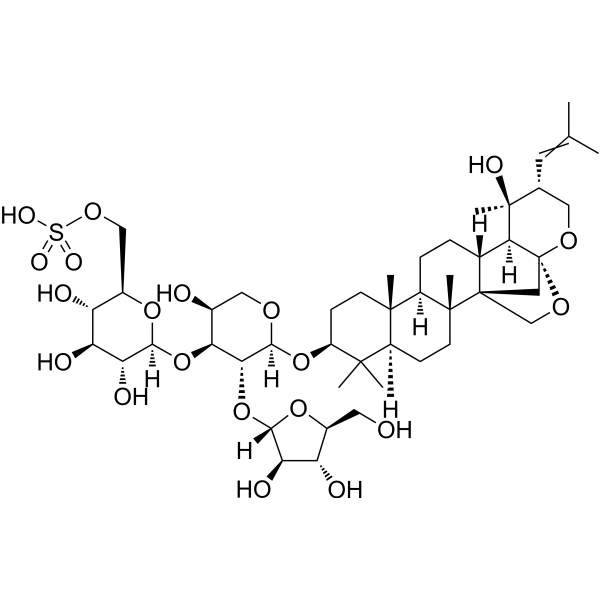 0 ImagesBacopaside I is an orally active aquaporin AQP1 inhibitor and PKC modulator with neuroprotective and anticancer activities. Bacopaside I specifically blocks the water channel and cGMP-gated ion channel activities of AQP1 without affecting AQP4, thereby inhibiting the migration of colon cancer cells expressing AQP1. Bacopaside I activates the Akt pathway by interacting with PI3K, specifically inhibits MAO-A, effectively alleviates neuron necrosis and apoptosis induced by oxygen-glucose deprivation, reduces oxidative stress, and regulates the surface expression of neuroreceptors. When combined with Bacopaside II (HY-N6016), Bacopaside I significantly reduces the viability, proliferation and invasion ability of breast cancer cells, and binds to the pregnane X receptor (PXR). Bacopaside I is applicable to the research of colon cancer, breast cancer, vascular dementia, cerebral ischemia and other related diseases.
-
Pegevongitide
 0 ImagesSynonyms: AV-001Pegevongitide (AV-001) is a Tie2 agonist. Pegevongitide resists the increased endothelial cell permeability induced by SARS-CoV-2 infection. Pegevongitide activates the angiogenin (angiogenin)/Tie2 signaling pathway. Pegevongitide reduces perivascular space dilation and upregulates perivascular Aquaporin-4 expression. Pegevongitide decreases the expression of TNF-α, PAI-1, CXCL9 and P-selectin, improves white matter integrity, enhances cognitive function and exerts neuroprotective effects. Pegevongitide improves white matter integrity in middle-aged rats with vascular dementia induced by multiple microinfarctions. Pegevongitide can be used in related research on diseases such as COVID-19 and vascular dementia.
-
3-Phenoxy-1,2-propanediol
 0 ImagesCat. No.: HY-W017091CAS No.: 538-43-23-Phenoxy-1,2-propanediol (compound 15) is a weak aquaporin 4 (AQP4) inhibitor. 3-Phenoxy-1,2-propanediol is an important intermediate for pharmaceuticals.
-
AQP4 (205-215) TFA
 0 ImagesCat. No.: HY-P10937AAQP4 (205-215) TFA is a fragment of Aquaporin-4 (AQP4). AQP4 is a neuromyelitis optica autoantigen that is upregulated and presented in B cells after engagement of CD40. AQP4 is associated with autoimmune inflammatory diseases of the central nervous system (CNS), neuromyelitis optica (NMO).
-
RF03176
 0 ImagesCat. No.: HY-148823CAS No.: 685123-50-6RF03176 is an aquaporin-9 (AQP-9) inhibitor, also exhibiting moderate inhibition effects on mAQP3 and mAQP7. RF03176 shows no activity against mAQP8.
- 1
- 2




