



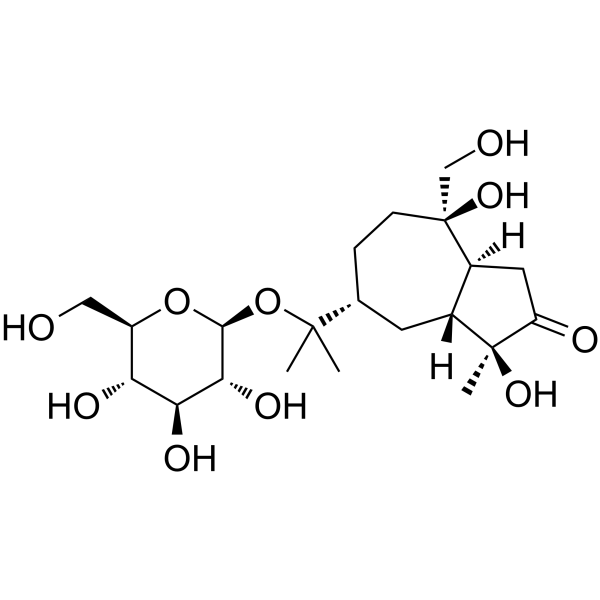
Atractyloside A
Based on 3 publication(s) in Google Scholar
Atractyloside A is an orally active inhibitor of the TLR4/MyD88/NF-κB signaling pathway and also an opener of the mitochondrial permeability transition pore (MPTP). Atractyloside A interferes with the activation of the TLR4/MyD88/NF-κB pathway, thereby inhibiting intestinal inflammatory responses. Atractyloside A reverses mucin synthesis impairment, improves intestinal barrier integrity, and restores homeostasis by altering the composition of the gut microbiota. Atractyloside A can be used in studies related to spleen deficiency diarrhea and myocardial injury.
商品は「研究用試薬」です。人や動物の医療用・臨床診断用・食品用の製品ではありません。
研究用途以外に使用した場合、当社は一切の責任を負いかねます。
- 純度 : 98.11%
- CAS 番号: 126054-77-1
- 分子式: C21H36O10
- 分子量:448.50
-
保管条件:Powder -20°C, 3 years , 4°C, 2 years ; In solvent -80°C, 2 years , -20°C, 1 year

To place orders, for customer services and technical support, please contact: MedChemExpress USA
Tel: 609-228-6898 E-mail: [email protected] [email protected]


-
 生物活性
生物活性
-
化学情報
-
溶剤 & 溶解度
- プロトコル
- 純度とドキュメンテーション
- 参考文献
-
 Help & FAQs


MedChemExpress(MCE)の使用を引用している文献 Atractyloside A
More Customer Validation & Images

-
Cell Proliferation/Viability Assay
-
IF
-
WB
-
Histological Imaging/Staining
-
Flow Cytometry


生物活性
製品説明
体外実験
Atractyloside A (10 μM; 12 h) abolishes the TRAP1-mediated protective effects on H9C2 cells in acidic medium (pH 6.5) by increasing MPTP opening, promoting apoptosis, reducing cell viability, impairing mitochondrial function, and disrupting mitochondrial ultrastructure[1].
MedChemExpress (MCE) has not independently confirmed the accuracy of these methods. They are for reference only. Further protocols information, click here.
体内実験
Atractyloside-A (10 mg/kg; p.o.; once daily; for 7 consecutive days) fails to alleviate SDD symptoms in male ICR mice with depleted gut microbiota, indicating that gut microbiota is essential for its therapeutic activity[2].
MedChemExpress (MCE) has not independently confirmed the accuracy of these methods. They are for reference only.
-
Animal Model:ICR mice (male, 3 weeks old)[2]
-
Dosage:5 mg/kg; 10 mg/kg
-
Administration:p.o.; daily; 7 days
-
Result:Increased body weight gain compared to SDD mice; reduced fecal moisture, diarrhea scores, and diarrhea index; partially restored colon morphological structure, reduced colonic inflammatory cell infiltration, and increased goblet cell and MUC2 levels; upregulated colon AQP3, AQP4, and AQP8 expression; increased colonic ZO-1 and occludin tight junction protein levels; downregulated colonic pro-inflammatory cytokines TNF-α, IL-1β, IL-6, and serum DAO and 5-HT levels; upregulated colonic anti-inflammatory cytokine IL-10 levels; downregulated colonic TLR4, MyD88, p-IKK-α, p-IκB-α, and p-p65 protein expression; shifted intestinal flora composition toward the control group, including increased Lactobacillus abundance.
Produced greater improvements than the 5 mg/kg dose, including significantly higher body weight gain from day 2 onward; significantly reduced fecal moisture, diarrhea scores, and diarrhea index; significantly increased colon length (exceeding control levels); fully restored colon morphological structure with reduced inflammation, increased goblet cell and MUC2 levels; significantly upregulated colon AQP3, AQP4, and AQP8 expression; significantly increased colonic ZO-1 and occludin levels; significantly downregulated colonic TNF-α, IL-1β, IL-6, serum DAO, and 5-HT levels; significantly upregulated colonic IL-10 levels; significantly downregulated colonic TNF-α, TLR4, MyD88, p-IKK-α, p-IκB-α, and p-p65 protein expression; normalized intestinal flora clustering to match the control group, with significant increases in Lactobacillus, Bacteroides, Ruminococcus, and Intestinimonas abundances.


化学情報
-
CAS 番号 126054-77-1
-
性状 Solid
-
分子量 448.50
-
分子式 C21H36O10
-
Color White to light yellow
-
SMILES
O=C1[C@@](C)(O)[C@]2([H])C[C@H](C(C)(O[C@H]3[C@@H]([C@H]([C@@H]([C@@H](CO)O3)O)O)O)C)CC[C@@](CO)(O)[C@@]2([H])C1
-
Structure Classification
-
輸送条件
Room temperature in continental US; may vary elsewhere.
-
保管条件
Powder -20°C 3 years 4°C 2 years In solvent -80°C 2 years -20°C 1 year


Publications (3)
-
Journal Impact Factor
-
Most Recent
-
Int J Mol Med
TRAP1 attenuates H9C2 myocardial cell injury induced by extracellular acidification via the inhibition of MPTP opening. [Abstract]2020 Aug;46(2):663-674. PMID: 32626957 -
Front Microbiol
Antiviral effects of Atractyloside A on the influenza B virus (Victoria strain) infection. [Abstract]2023 Jan 10:13:1067725. PMID: 36704555
Atractyloside A purchased from MedChemExpress. Usage Cited in: Front Microbiol. 2023 Jan 10:13:1067725. [Abstract]
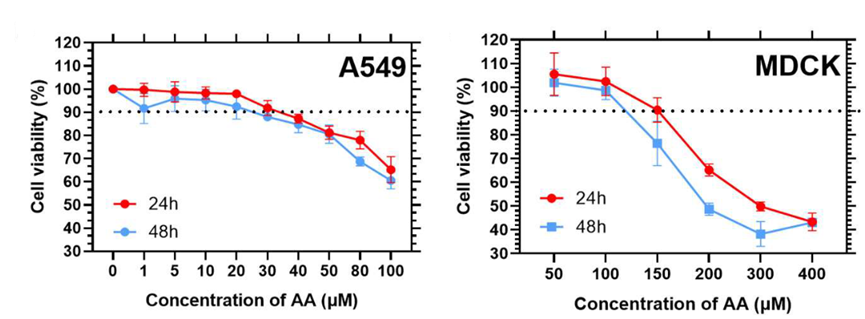
Cell viability of Atractyloside A (1, 5, 10, 20, 30, 40, 50, 80, 100 μM) on A549 and MDCK.
Atractyloside A purchased from MedChemExpress. Usage Cited in: Front Microbiol. 2023 Jan 10:13:1067725. [Abstract]
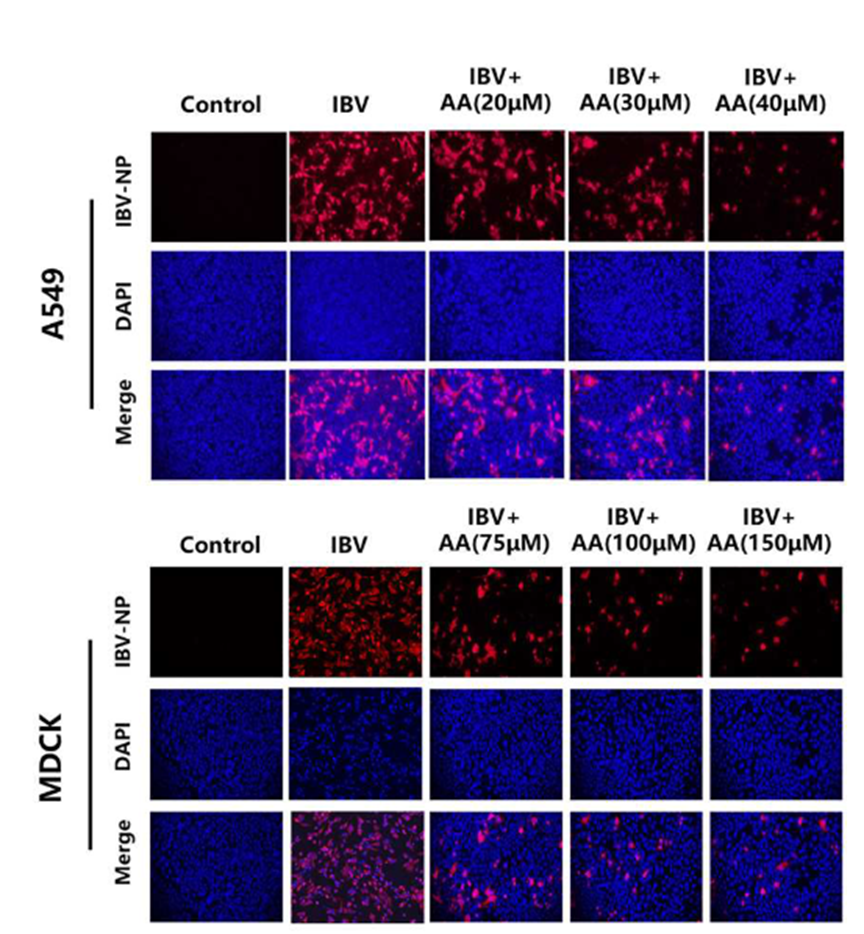
Immunofluorescence analysis of the expression of IBV nucleoprotein after infection treated with various concentrations of Atractyloside A (AA) for 24 h.
Atractyloside A purchased from MedChemExpress. Usage Cited in: Front Microbiol. 2023 Jan 10:13:1067725. [Abstract]
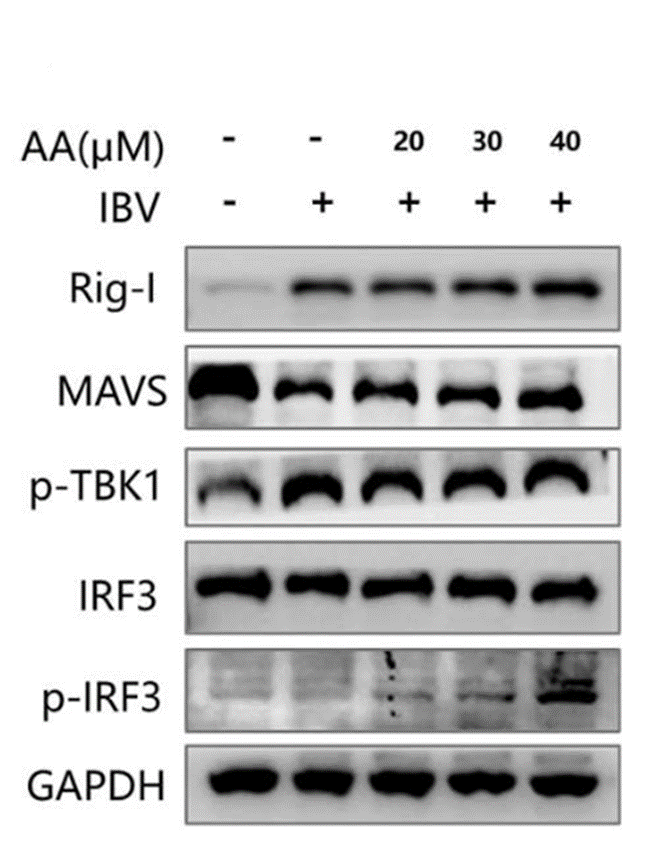
Western blot analysis of RIG-I pathway proteins after IBV infection in Atractyloside A (20, 30, 40 μM) treatment groups with different drug concentrations.
Atractyloside A purchased from MedChemExpress. Usage Cited in: Front Microbiol. 2023 Jan 10:13:1067725. [Abstract]
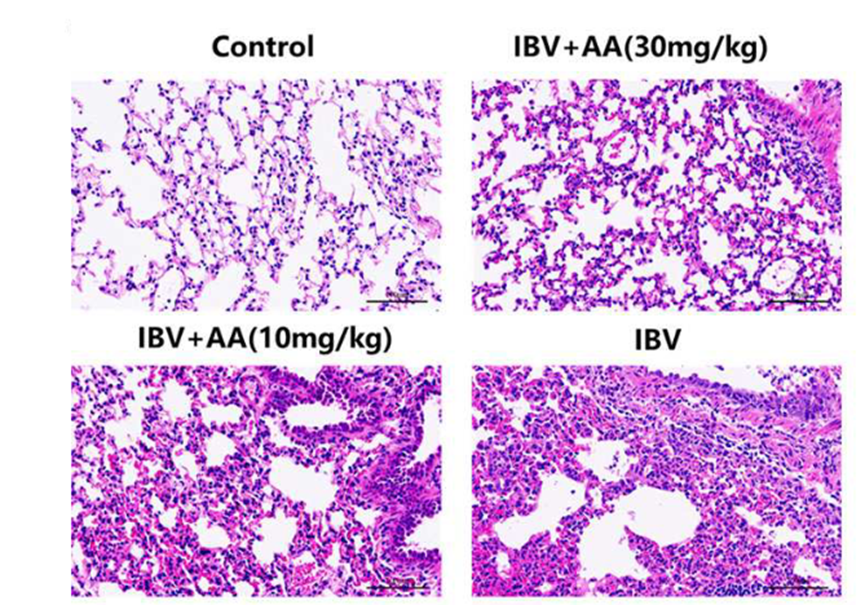
H&E analysis of lung tissue after infection treated with Atractyloside A (AA) (10, 30 mg/kg, p.o.).
Atractyloside A purchased from MedChemExpress. Usage Cited in: Front Microbiol. 2023 Jan 10:13:1067725. [Abstract]
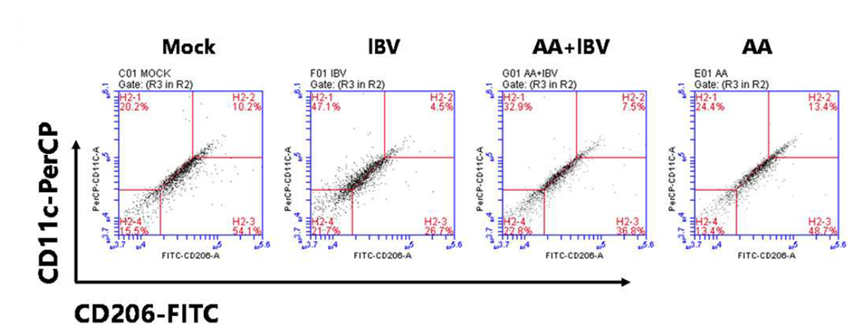
Effect of Atractyloside A treatment on the polarization levels of macrophages in vitro. Flow cytometry was performed to analyze the proportions of bone marrow-derived macrophages (BMMs).
-
Bull Exp Biol Med
The Role of NO Synthase, MPT pore, and Protein Kinase A in the Cardioprotective Effect of the Opioid Receptor Agonist Deltorphin II. [Abstract]2023 Apr;174(6):745-748. PMID: 37160797


溶剤 & 溶解度
体外:
DMSO : 50 mg/mL (111.48 mM; Need ultrasonic; Hygroscopic DMSO has a significant impact on the solubility of product, please use newly opened DMSO)
Please refer to the solubility information to select the appropriate solvent. Once prepared, please aliquot and store the solution to prevent product inactivation from repeated freeze-thaw cycles.
Storage method and period of stock solution: -80°C, 2 years; -20°C, 1 year. When stored at -80°C, please use it within 2 years. When stored at -20°C, please use it within 1 year.
Please refer to the solubility information to select the appropriate solvent. Once prepared, please aliquot and store the solution to prevent product inactivation from repeated freeze-thaw cycles.
Storage method and period of stock solution: -80°C, 2 years; -20°C, 1 year. When stored at -80°C, please use it within 2 years. When stored at -20°C, please use it within 1 year.
濃度 (開始) × 体積 (開始) = 濃度 (終了) × 体積 (終了)
体内:
Select the appropriate dissolution method based on your experimental animal and administration route.
- For the following dissolution methods, please ensure to first prepare a clear stock solution using an In Vitro approach and then sequentially add co-solvents:
- To ensure reliable experimental results, the clarified stock solution can be appropriately stored based on storage conditions. As for the working solution for In Vivo experiments, it is recommended to prepare freshly and use it on the same day.
- The percentages shown for the solvents indicate their volumetric ratio in the final prepared solution. If precipitation or phase separation occurs during preparation, heat and/or sonication can be used to aid dissolution.
Add each solvent one by one: 10% DMSO 40% PEG300 5% Tween-80 45% Saline
Solubility: ≥ 2.08 mg/mL (4.64 mM); Clear solution
This protocol yields a clear solution of ≥ 2.08 mg/mL (saturation unknown).
Taking 1 mL working solution as an example, add 100 μL DMSO stock solution (20.8 mg/mL) to 400 μL PEG300, and mix evenly; then add 50 μL Tween-80 and mix evenly; then add 450 μL Saline to adjust the volume to 1 mL.
Preparation of Saline: Dissolve 0.9 g sodium chloride in ddH₂O and dilute to 100 mL to obtain a clear Saline solution.
Add each solvent one by one: 10% DMSO 90% (20% SBE-β-CD in Saline)
Solubility: ≥ 2.08 mg/mL (4.64 mM); Clear solution
This protocol yields a clear solution of ≥ 2.08 mg/mL (saturation unknown).
Taking 1 mL working solution as an example, add 100 μL DMSO stock solution (20.8 mg/mL) to 900 μL 20% SBE-β-CD in Saline, and mix evenly.
Preparation of 20% SBE-β-CD in Saline (4°C, storage for one week): 2 g SBE-β-CD powder is dissolved in 10 mL Saline, completely dissolve until clear.
In Vivo Dissolution Calculator
Please enter the basic information of animal experiments:
-
-
-
-
Recommended: Prepare an additional quantity of animals to account for potential losses during experiments.
Please enter your animal formula composition:
-
%DMSO +
Recommended: Keep the proportion of DMSO in working solution below 2% if your animal is weak.
-
%+
-
+%Tween-80 + +
-
%Saline +
The co-solvents required include: DMSO, . All of co-solvents are available by MedChemExpress (MCE). , Tween 80. All of co-solvents are available by MedChemExpress (MCE).
Working solution concentration: 0.22 mg/mL
Method for preparing stock solution: mg drug dissolved in μL DMSO. Stock solution concentration: mg/mL.
1. Take μL DMSO stock solution;
2. Add μL .
μL , mix evenly;
3. Then add μL Tween 80, mix evenly;
4. Then add μL
Please ensure that the stock solution in the first step is dissolved to a clear state, and add co-solvents in sequence. You can use ultrasonic heating (ultrasonic cleaner, recommended frequency 20-40 kHz), vortexing, etc. to assist dissolution.

プロトコル
-
Transepithelial/transendothelial electrical resistance assay
TEER measures electrical resistance across epithelial or endothelial monolayers cultured on permeable supports, and the readout reflects ionic conductance through the cell barrier, especially the paracellular pathway regulated by junctional integrity. TEER can be measured without destroying the monolayer and is commonly used before or during transport, permeability, barrier-disruption, and barrier-maturation experiments. TEER values are influenced by biological maturation and technical conditions; reported factors include temperature, medium formulation, passage number, electrode geometry, membrane properties, and junctional length during early monolayer maturation. Therefore, TEER should be interpreted with blank-insert subtraction, area normalization, repeated readings, and, when possible, orthogonal barrier readouts such as FITC-dextran flux or tight-junction staining.
-
Research Protocol for Microbiome Analysis
Microbiome analysis characterizes microbial communities in biological or environmental samples by measuring community composition, diversity, taxonomic structure, functional potential, and associations with host or environmental phenotypes. 16S rRNA gene amplicon sequencing is commonly used for bacterial and archaeal taxonomic profiling, while shotgun metagenomics provides higher taxonomic resolution and direct functional information, including microbial genes, pathways, viruses, fungi, and antimicrobial-resistance genes when sequencing depth and host-DNA contamination are adequately controlled. Microbiome results are strongly affected by sample collection, storage, DNA extraction, contamination, sequencing method, reference database, and bioinformatic pipeline; therefore, standardized protocols, negative controls, mock communities, and transparent analysis workflows are required. Unresolved issues include low-biomass contamination, compositional-data bias, inconsistent species-level c
-
Research Protocol for Inflammation-related Diseases
The NLRP3 inflammasome is a cytosolic innate immune signaling platform that integrates priming signals and danger-signal activation to promote caspase-1 activation, maturation of IL-1β and IL-18, and gasdermin D-mediated pyroptotic cell death. The core experimental logic is to determine whether inflammatory disease phenotypes are driven by increased NLRP3 expression, ASC-containing inflammasome assembly, caspase-1 cleavage, GSDMD cleavage, and extracellular release of IL-1β/IL-18 rather than by nonspecific cell injury alone. The pathway is strongly linked to inflammation-related disease phenotypes because monosodium urate crystals activate NALP3/NLRP3 inflammasome signaling in gout-like crystal inflammation, cholesterol crystals activate NLRP3 inflammasomes in atherogenesis models, and DSS-induced intestinal inflammation has been reported to involve NLRP3 inflammasome activity. However, experimental colitis studies also show context-dependent protective effects of NLRP3 inflammasome co


純度とドキュメンテーション
-
データシート (282 KB)
-
SDS (393 KB)
- English - EN (393 KB)
- Français - FR (393 KB)
- Deutsch - DE (393 KB)
- Norwegian - NO (393 KB)
- Español - ES (393 KB)
- Swedish - SV (393 KB)
- Italian - IT (393 KB)
- Korean - KR (393 KB)
- Portuguese - PT (393 KB)
-
取扱説明書 (2659 KB)
参考文献
[1]. Zhang L, et al. TRAP1 attenuates H9C2 myocardial cell injury induced by extracellular acidification via the inhibition of MPTP opening. Int J Mol Med. 2020;46(2):663-674. [Content Brief]
[2]. Xu J, et al. Atractyloside-A ameliorates spleen deficiency diarrhea by interfering with TLR4/MyD88/NF-κB signaling activation and regulating intestinal flora homeostasis. Int Immunopharmacol. 2022;107:108679. [Content Brief]


Complete Stock Solution Preparation Table
Please refer to the solubility information to select the appropriate solvent. Once prepared, please aliquot and store the solution to prevent product inactivation from repeated freeze-thaw cycles.
Storage method and period of stock solution: -80°C, 2 years; -20°C, 1 year. When stored at -80°C, please use it within 2 years. When stored at -20°C, please use it within 1 year.
| Optional Solvent | Concentration Solvent Mass | 1 mg | 5 mg | 10 mg | 25 mg |
|---|---|---|---|---|---|
| DMSO | 1 mM | 2.2297 mL | 11.1483 mL | 22.2965 mL | 55.7414 mL |
| 5 mM | 0.4459 mL | 2.2297 mL | 4.4593 mL | 11.1483 mL | |
| 10 mM | 0.2230 mL | 1.1148 mL | 2.2297 mL | 5.5741 mL | |
| 15 mM | 0.1486 mL | 0.7432 mL | 1.4864 mL | 3.7161 mL | |
| 20 mM | 0.1115 mL | 0.5574 mL | 1.1148 mL | 2.7871 mL | |
| 25 mM | 0.0892 mL | 0.4459 mL | 0.8919 mL | 2.2297 mL | |
| 30 mM | 0.0743 mL | 0.3716 mL | 0.7432 mL | 1.8580 mL | |
| 40 mM | 0.0557 mL | 0.2787 mL | 0.5574 mL | 1.3935 mL | |
| 50 mM | 0.0446 mL | 0.2230 mL | 0.4459 mL | 1.1148 mL | |
| 60 mM | 0.0372 mL | 0.1858 mL | 0.3716 mL | 0.9290 mL | |
| 80 mM | 0.0279 mL | 0.1394 mL | 0.2787 mL | 0.6968 mL | |
| 100 mM | 0.0223 mL | 0.1115 mL | 0.2230 mL | 0.5574 mL |


Atractyloside A 関連分類
HY-N0237 関連分類
 Powered by Bioz
Keywords
- Atractyloside A
- 126054-77-1
- Toll-like Receptor (TLR)
- MyD88
- NF-κB
- Mitochondrial Metabolism
- Interleukin Related
- Aquaporin
- intestinal inflammatory responses
- mucin synthesis
- TRAP1
- H9C2 cells
- ICR mice
- mitochondrial permeability transition pore
- intestinal flora
- intestinal barrier integrity
- myocardial cells
- TLR4/MyD88/NF-κB signaling pathway
- Inhibitor
- inhibitor
- inhibit