1. Search Result
Search Result
Results for "

rat liver microsomal

" in MedChemExpress (MCE) Product Catalog:

18

Inhibitors & Agonists

1

Biochemical Assay Reagents

4

Natural
Products

2

Isotope-Labeled Compounds

Cat. No. Product Name Target Research Areas Chemical Structure
  • HY-107410
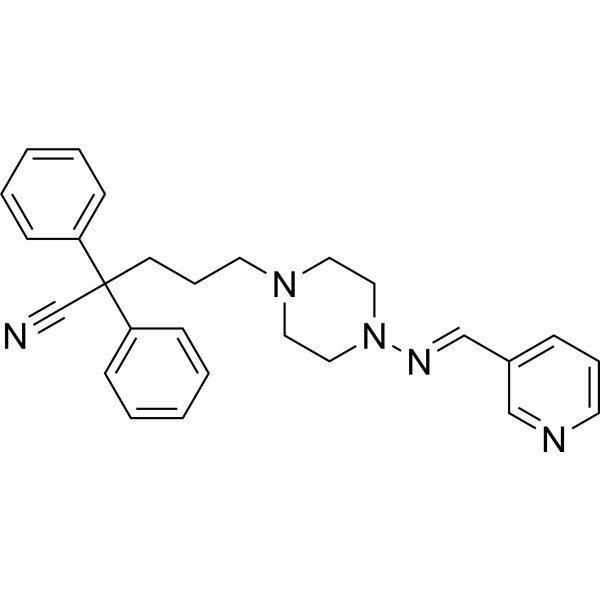
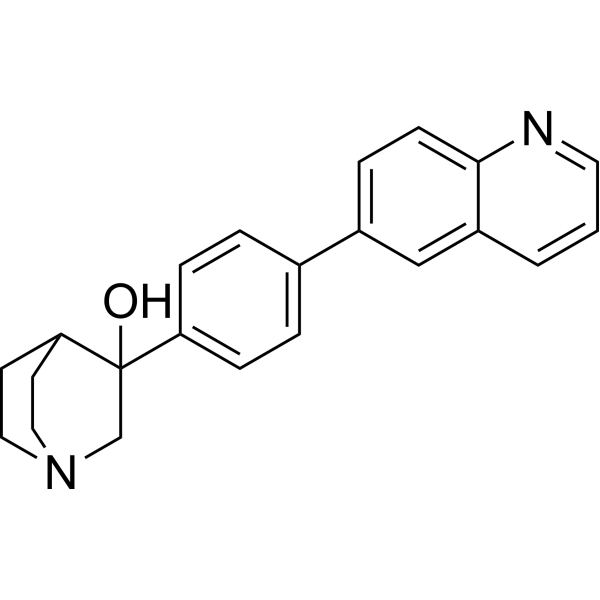
    SC-26196
    4 Publications Verification

    Stearoyl-CoA Desaturase (SCD) Inflammation/Immunology
    SC-26196 is a potent, orally active Delta6 desaturase (D6D, FADS2) inhibitor (IC50=0.2 μM in a rat liver microsomal assay). Antiinflammatory properties .
    SC-26196
  • HY-N4193
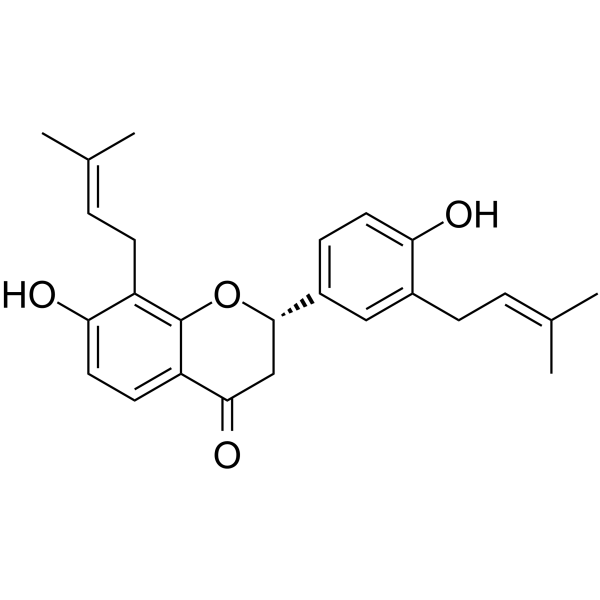
    Glabrol
    3 Publications Verification

    Acyltransferase Cardiovascular Disease
    Glabrol (Compound 1), One isoprenyl flavonoid was isolated from ethanol extract of licorice roots, is a potent and non-competitive Acyl-coenzyme A: cholesterol acyltransferase (ACAT) inhibitor with an IC50 value of 24.6 μM for rat liver microsomal ACAT activity .
    Glabrol
  • HY-150508
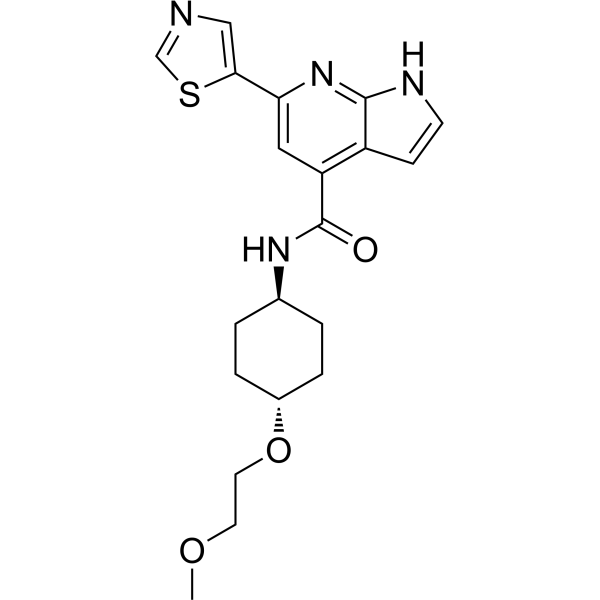
    MK-0159
    1 Publications Verification

    CD38 Cardiovascular Disease Metabolic Disease Inflammation/Immunology
    MK-0159 is an orally active, potent and selective CD38 inhibitor, with IC50 values of 22, 3, and 70 nM for human, mouse and rat CD38, respectively. MK-0159 also shows good microsomal stability for human and rodent liver microsomes. MK-0159 increases NAD + (nicotinamide adenine dinucleotide) and reduces ADPR (adenosine diphosphate ribose) in whole blood and heart .
    MK-0159
  • HY-W089800

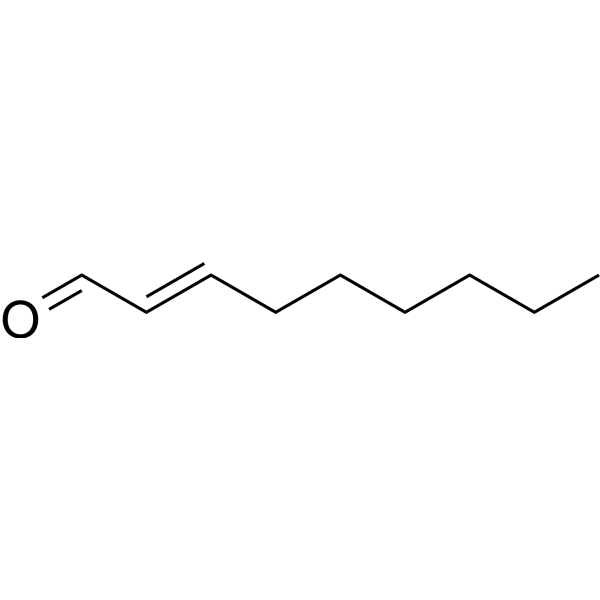
    trans-2-Nonen-1-al

    COX Lipoxygenase Apoptosis Cardiovascular Disease Inflammation/Immunology
    trans-2-Nonenal (trans-2-Nonen-1-al) is an endogenous peroxidation product of polyunsaturated fatty acids, acting as an inhibitor of COX and 12-LOX, as well as an inducer of apoptosis. trans-2-Nonenal is also a malodorous compound secreted by the human body, and its content gradually increases with aging. trans-2-Nonenal inhibits the activities of multiple enzymes such as platelet membrane-bound PTPase, preferentially covalently modifies proteins at lysine residues to form immunogenic adducts, and regulates platelet Arachidonic acid (HY-109590) metabolism. trans-2-Nonenal also exhibits significant cytotoxicity, reduces the viability of keratinocytes, promotes their apoptosis, and effectively decreases the thickness of epidermal models and the number of proliferating cells. trans-2-Nonenal is commonly used in studies of thrombotic, atherosclerotic diseases, renal adenocarcinoma, etc. .
    trans-2-Nonenal
  • HY-B2097

    YM 175; Bisphonal

    Farnesyl Transferase Metabolic Disease
    Incadronate disodium (YM 175) is a bisphosphonate with strong inhibitory activity on bone resorption. Incadronate disodium indirectly stimulates renal 25-hydroxyvitamin D-1-hydroxylase by increasing circulating parathyroid hormone. Incadronate disodium, a cholesterol-lowering agent, is a potent inhibitor of rat liver microsomal squalene synthase (Ki=57 nM). Incadronate disodium inhibits sterol biosynthesis in mouse macrophage J774 cells (IC50=64 μM). Incadronate disodium has the potential for malignant tumors research .
    Incadronate disodium
  • HY-100299A

    Farnesyl Transferase Cardiovascular Disease Metabolic Disease
    RPR107393 is an orally active potent selective squalene synthase (SQS) inhibitor. RPR107393 inhibits rat liver microsomal squalene synthase with an IC50 value of 0.8 nM. RPR107393 reduces triglyceride biosynthesis by suppressing fatty acid biosynthesis via an increase in intracellular farnesol and its derivatives. RPR107393 reduces plasma cholesterol in rats and marmosets. RPR107393 can be used for metabolic disease research, such as hypercholesterolemia, hypertriglyceridemia and atherosclerosis .
    RPR107393
  • HY-100299

    Farnesyl Transferase Cardiovascular Disease Metabolic Disease
    RPR107393 free base is an orally active potent selective squalene synthase (SQS) inhibitor. RPR107393 free base inhibits rat liver microsomal squalene synthase with an IC50 value of 0.8 nM. RPR107393 free base reduces triglyceride biosynthesis by suppressing fatty acid biosynthesis via an increase in intracellular farnesol and its derivatives. RPR107393 free base reduces plasma cholesterol in rats and marmosets. RPR107393 free base can be used for metabolic disease research, such as hypercholesterolemia, hypertriglyceridemia and atherosclerosis [1][2].
    RPR107393 free base
  • HY-113587

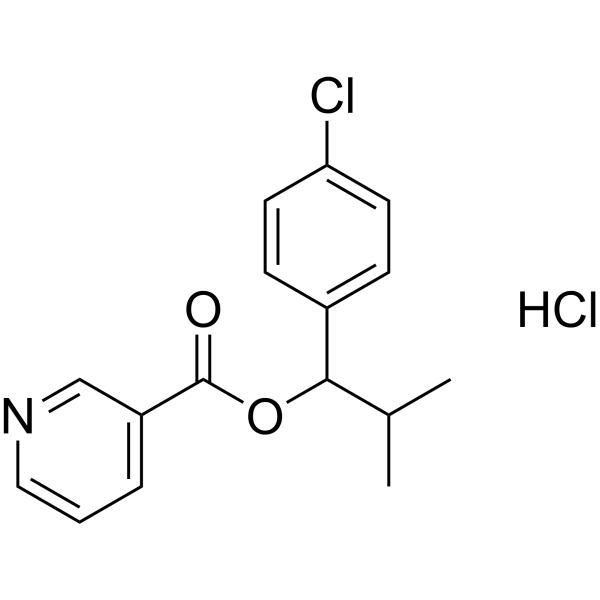
    Nicoclonol hydrochloride

    Others Others
    Nicoclonate (hydrochloride)(Nicoclonol (hydrochloride)) is an antilipemic agent .
    Nicoclonate hydrochloride
  • HY-177148

    Biochemical Assay Reagents Cardiovascular Disease
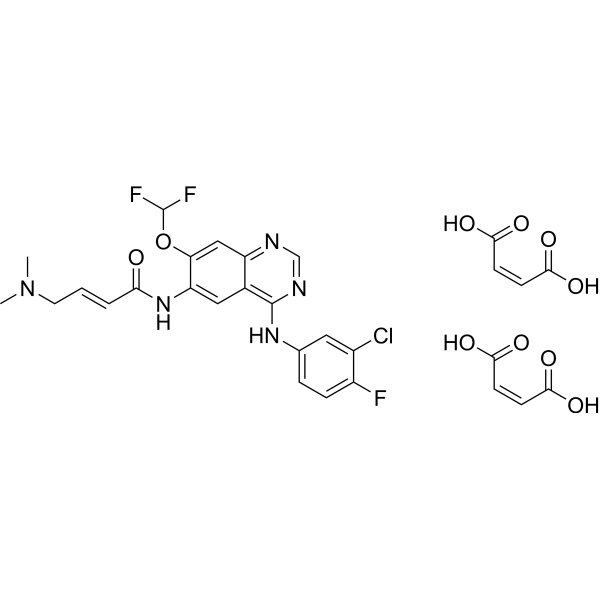
    G256 (Compound 1) is an amidinohydrazone. G256 can also be considered as a Schiff’s base of aminoguanidine. G256 exhibits antiarrhythmic activity. G256 is the reduced form of NOH-G256 by microsomal enzyme preparation from rabbit and rat liver homogenates in the presence of NADPH and NADH .
    G256
  • HY-177148A

    Biochemical Assay Reagents Cardiovascular Disease
    G256 (Compound 1) (dihydrochloride) is an amidinohydrazone. G256 (dihydrochloride) can also be considered as a Schiff’s base of aminoguanidine. G256 (dihydrochloride) exhibits antiarrhythmic activity. G256 (dihydrochloride) is the reduced form of NOH-G256 by microsomal enzyme preparation from rabbit and rat liver homogenates in the presence of NADPH and NADH .
    G256 dihydrochloride
  • HY-B0847S1

    Fungal Reactive Oxygen Species (ROS) Infection
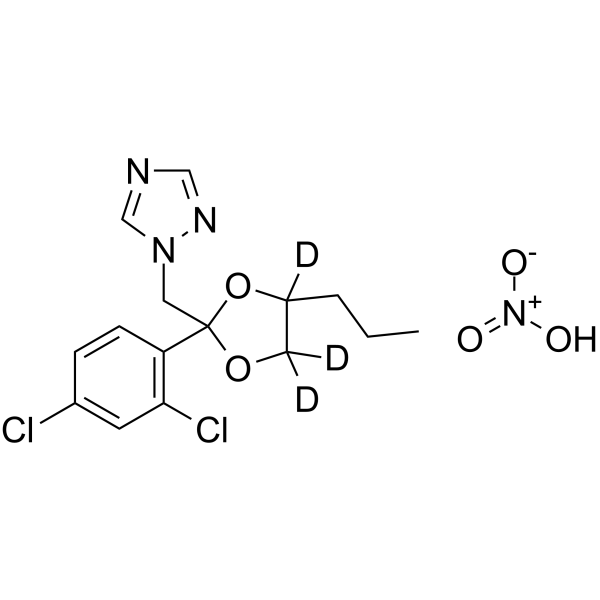
    Propiconazole-d3 (nitrate) is the deuterium labeled Propiconazole nitrate. Propiconazole is a broad-spectrum triazole fungicide that inhibits the conversion of lanosterol to ergosterol, leading to fungal cell membrane disruption. Propiconazole inhibits S. cerevisiae, but not rat liver, microsomal cytochrome P450 (IC50s=0.04 and >200 µM, respectively). Propiconazole inhibits the growth of T. deformans and R. stolonifer (ED50s=0.073 and 4.6 µg/mL, respectively). Propiconazole increases production of reactive oxygen species (ROS).
    Propiconazole-d3 nitrate
  • HY-B0847S

    Isotope-Labeled Compounds Fungal Reactive Oxygen Species (ROS) Infection
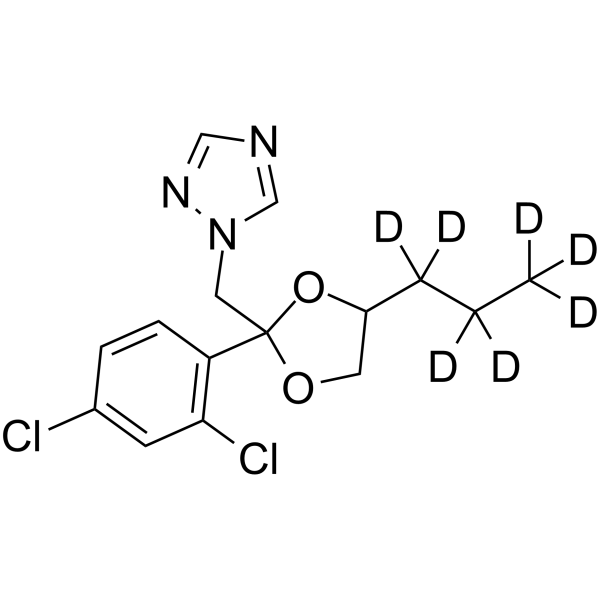
    Propiconazole-d7 is the deuterium labeled Propiconazole. Propiconazole is a broad-spectrum triazole fungicide that inhibits the conversion of lanosterol to ergosterol, leading to fungal cell membrane disruption. Propiconazole inhibits S. cerevisiae, but not rat liver, microsomal cytochrome P450 (IC50s=0.04 and >200 μM, respectively). Propiconazole inhibits the growth of T. deformans and R. stolonifer (ED50s=0.073 and 4.6 μg/mL, respectively). Propiconazole increases production of reactive oxygen species (ROS) .
    Propiconazole-d7
  • HY-W755367

    11β-HSD Others
    Methyl glycyrrhetinate, a 18β-glycyrrhetinic acid analogue, is a dual inhibitor of 11β-HSD1 and 11β-HSD2 .
    Methyl glycyrrhetinate
  • HY-107410R

    Reference Standards Stearoyl-CoA Desaturase (SCD) Inflammation/Immunology
    SC-26196 (Standard) is the analytical standard of SC-26196 (HY-107410). This product is intended for research and analytical applications. SC-26196 is a potent, orally active Delta6 desaturase (D6D, FADS2) inhibitor (IC50=0.2 μM in a rat liver microsomal assay). Antiinflammatory properties .
    SC-26196 (Standard)
  • HY-115516

    HCV HCV Protease Ras Infection
    BI-1388 is a macrocyclic acylsulfonamide-based HCV NS3-4A protease inhibitor. BI-1388 inhibits clinically relevant drug-resistant mutant strains (KRAS D168V gt 1b and KRAS R155K gt 1a) and exhibits high liver distribution. BI-1388 is applicable for the research of HCV infection .
    BI-1388
  • HY-169872

    Endogenous Metabolite Others
    17-Hydroxystearic acid isolable from Torulopsis magnoliae fermentation oil. 17-Hydroxystearic acid is a saturated C18 ω2-hydroxy fatty acid existing in D- and L-enantiomeric forms .
    17-Hydroxystearic acid
  • HY-105628

    CI-427

    Others Neurological Disease Inflammation/Immunology
    Prodilidine (CI-427) is an orally active, pyrrolidine-derived non-narcotic pain inhibitor. Prodilidine exerts analgesic activity against various nociceptive stimuli, and shows no antipyretic, anti-inflammatory or respiratory depressive effects. Prodilidine fails to inhibit withdrawal symptoms of addictive agents in monkeys, but exhibits excitatory effects and enhances the crossed extensor reflex at toxic doses. Prodilidine is well absorbed from the gastrointestinal tract and metabolized via hepatic microsomal N-demethylation, displaying isomer-specific activity, toxicity and metabolic characteristics. Prodilidine can be used in research related to chronic pain (e.g., cancer-, musculoskeletal/arthritis-derived), traumatic pain and arthritic pain .
    Prodilidine
  • HY-N17448

    Drug Derivative Others
    Fraxinuacidoside functions as a norditerpene glucopyranoside with a unique carbon skeleton. Fraxinuacidoside can be found in the stem bark of Fraxinus sieboldiana .
    Fraxinuacidoside

Inquiry Online

Your information is safe with us. * Required Fields.

Salutation


Country or Region *

Applicant Name *


Organization Name *

Department *


Email Address *


Product Name *

Cat. No.


Requested quantity *

Phone Number *


Remarks

Inquiry Online

Inquiry Information

Product Name:
Cat. No.:
Quantity:
MCE Japan Authorized Agent:

