1. Search Result
Search Result
Results for "

residual activity

" in MedChemExpress (MCE) Product Catalog:

20

Inhibitors & Agonists

5

Peptides

1

Natural
Products

Cat. No. Product Name Target Research Areas Chemical Structure
  • HY-108910B
    TLCK-treated Chymotrypsin
    1 Publications Verification

    Ser/Thr Protease Others
    TLCK-treated Chymotrypsin is a serine protease. Chymotrypsin cleaves protein chains at the carboxyl side of aromatic amino acids. TLCK treated to inactivate residual tryspin activity .
    TLCK-treated Chymotrypsin
  • HY-Y1422I

    Environmental Pollutants Biochemical Assay Reagents Lipase Others
    Lipase, Pseudomonas fluorescens (Immobilized) is an immobilized biocatalyst derived from Pseudomonas fluorescens. Lipase, Pseudomonas fluorescens (Immobilized) efficiently catalyzes the hydrolysis, esterification and transesterification of triacylglycerols in solvent-free systems, and is particularly suitable for biodiesel production from soybean oil and selective modification of oils rich in EPA and DHA. Lipase, Pseudomonas fluorescens (Immobilized) exhibits optimal activity at pH 8.5 and 45°C, and retains residual activity after repeated cycles of use. Lipase, Pseudomonas fluorescens (Immobilized) is activated by Ca 2+, but inhibited by Co 2+, Ni 2+, Fe 3+, Fe 2+ and EDTA .
    Lipase,Pseudomonas fluorescens (Immobilized)
  • HY-142021

    Cathepsin Parasite Infection Inflammation/Immunology
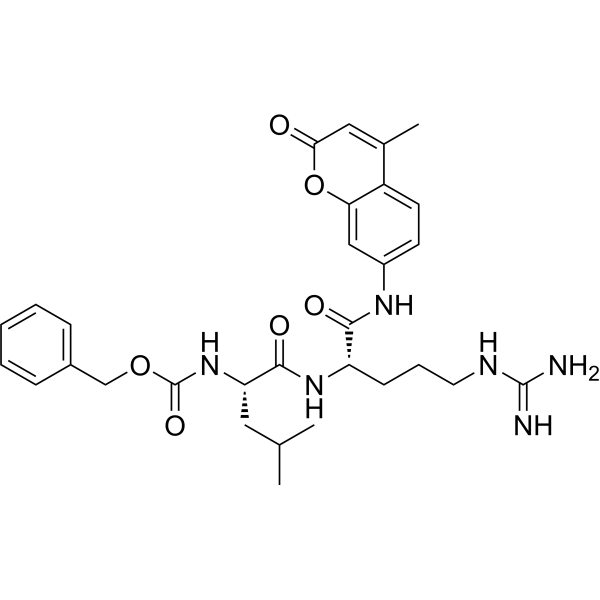
    Z-Leu-Arg-AMC is a fluorogenic peptide substrate for cysteine proteases (e.g., Cathepsin) (Ex=350 nm,Em=460 nm). Z-Leu-Arg-AMC is preferentially cleaved by Cathepsin K and S under weakly acidic conditions, while its hydrolysis relies on residual Cathepsin S activity at neutral pH. Z-Leu-Arg-AMC serves as a substrate for recombinant Sphenophorus levis Cathepsin L, falcipain-2, falcipain-3, berghepain-2, knowlepain-2, vivapain-2, as well as falcipain-2 chimeras and constructs. It enables quantitative detection of cysteine protease activity in human inflammatory bronchoalveolar lavage fluid via fluorescence generation. Z-Leu-Arg-AMC can be used in research related to pulmonary inflammatory diseases and malaria .
    Z-Leu-Arg-AMC
  • HY-137910

    Environmental Pollutants HPPD Herbicide Infection
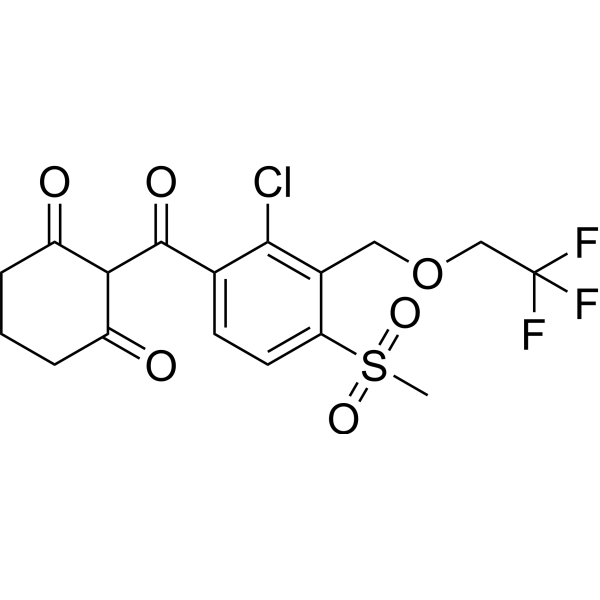
    Tembotrione is a herbicide belonging to the HPPD (dioxygenase) inhibitor class with crop selectivity. Tembotrione effectively controls a variety of weeds including broadleaf and gramineous species by disrupting carotenoid synthesis, which leads to chlorophyll degradation and leaf whitening. Mixing Tembotrione with isoxaflutole or adding surfactants optimizes its efficacy and reduces phytotoxicity, with no residual impact on subsequent cruciferous crops, thus helping to increase maize grain yield. The activity of Tembotrione decreases under drought conditions, and under specific conditions (such as double-dose treatment), it may cause reversible yellowing and even yield reduction in crops such as poppy .
    Tembotrione
  • HY-175352

    Nuclear Hormone Receptor 4A/NR4A SOD IAP Survivin Calcium Channel Neurological Disease
    Nurr1 agonist 14 (Compound 32) is a Nurr1 agonist with an EC50 of 0.09  μM for Nurr1. Nurr1 agonist 14 has significant neuroprotective activity with no influence of residual DHODH inhibition. Nurr1 agonist 14 upregulates neuroprotective genes including SOD2, SESN3, BIRC5, XIAP, FLRT2 and CRMP4 in dopaminergic neurons. Nurr1 agonist 14 can be used for neurodegenerative diseases such as Alzheimer′s disease (AD), Parkinson′s disease (PD) and multiple sclerosis (MS) research .
    Nurr1 agonist 14
  • HY-B2220B

    Endogenous Metabolite Others
    Thermostable cellulase recombinant is a cellulose hydrolase present in hyperthermophiles, which catalyzes the hydrolysis of β-1,4 glycosidic bonds in cellulose. Thermostable cellulase recombinant targets carboxymethyl cellulose (CMC) as its primary substrate, and retains high residual activity even after incubation at high temperatures. The activity of Thermostable cellulase recombinant is inhibited by ionic and non-ionic detergents, and can be enhanced by cobalt ions. Thermostable cellulase recombinant can be applied in the paper industry .
    Thermostable cellulase (recombinant)
  • HY-W099571
    Lithium stearate
    20+ Cited Publications

    Stearic acid lithium; Lithium octadecanoate

    Environmental Pollutants Biochemical Assay Reagents Others
    Lithium stearate (Stearic acid (lithium)) is a compound that forms vesicles in reaction with silver nitrate, thereby changing the reaction kinetics of the nucleation and self-assembly process of silver stearate. It has the activity that even in the presence of excess silver nitrate, only about 80% can be converted into silver stearate and the residual lithium stearate will inhibit the growth process of silver stearate crystals, thereby producing silver stearate crystals that are much smaller than those obtained from sodium stearate, providing an opportunity to further control the self-assembly and crystal growth of silver stearate.
    Lithium stearate
  • HY-179505

    YAP Cancer
    OPN-9652 is a potent, orally active, and covalent TEAD inhibitor (MSTO-211H TEAD IC50 = 0.005 µM) targeting the central palmitate binding pocket of TEADs. OPN-9652 reduces TEAD-dependent reporter activity and expression of TEAD targets (CTGF and CYR61). OPN-9652 resensitizes drug-tolerant SOX10 KO cells to BRAFi + MAPKi. OPN-9652 delays the onset of tumor resistance to BRAFi + MEKi from minimal residual disease (MRD) in a BRAF mutant A375 xenograft mouse model. OPN-9652 can be used for melanoma research .
    OPN-9652
  • HY-P1320

    Opioid Receptor Inflammation/Immunology
    [Nphe1]Nociceptin(1-13)NH2, a novel nociceptin/orphanin FQ (NC) endogenous ligand, is a selective and competitive ociceptin receptor antagonist without any residual agonist activity. [Nphe1]nociceptin(1-13)NH2 binds selectively to recombinant nociceptin receptors (pKi=8.4) and antagonizes the inhibitory effects of nociceptin on cyclic AMP accumulation in CHO cells (pA2=6.0). [Nphe1]Nociceptin(1-13)NH2 has the potential to act as an analgesic agent .
    [Nphe1]Nociceptin(1-13)NH2
  • HY-P1166

    Urotensin Receptor Cardiovascular Disease
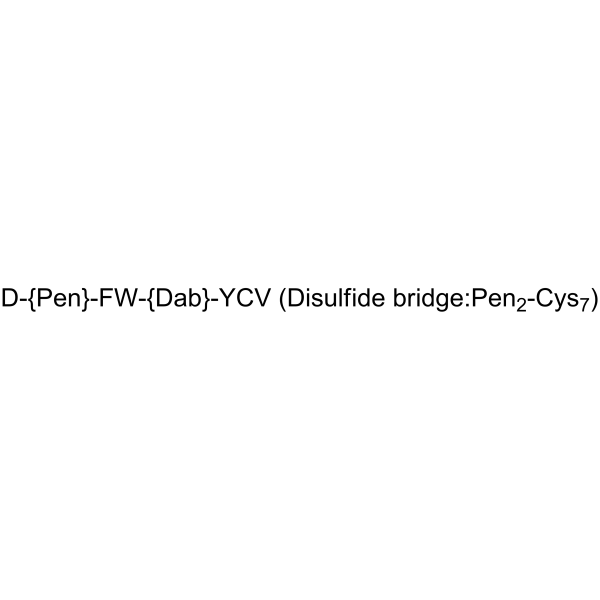
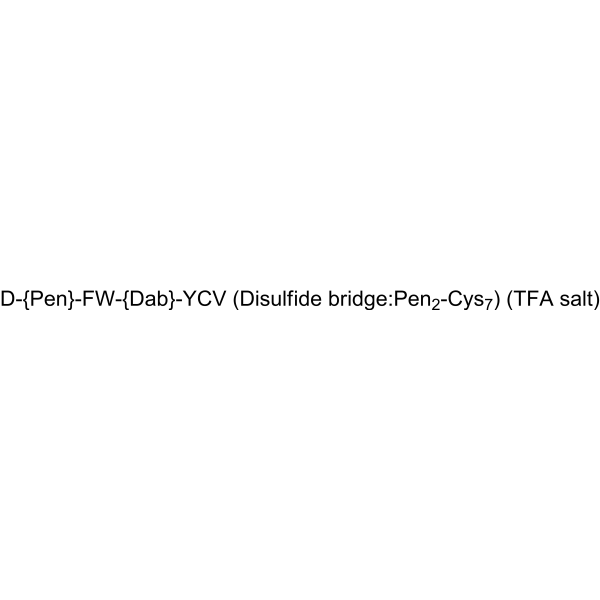
    UFP-803 is a potent urotensin-II receptor (UT) ligand. UFP-803 has lower residual agonist activity, so it may be an important tool for the investigations on the role played by the UT system in physiology and pathology .
    UFP-803
  • HY-W742324

    IKF-309

    Fungal Others
    Pyriofenone (IKF-309) is an arylphenyl ketone fungicide used primarily to control powdery mildew on crops such as cereals, rice, fruit trees, and vegetables. Pyriofenone has moderate efficacy against rice blast. Pyriofenone acts through preventive, residual, curative, rainfast, cross-stratum, and fumigant activities .
    Pyriofenone
  • HY-P4339

    Fluorescent Dye Others
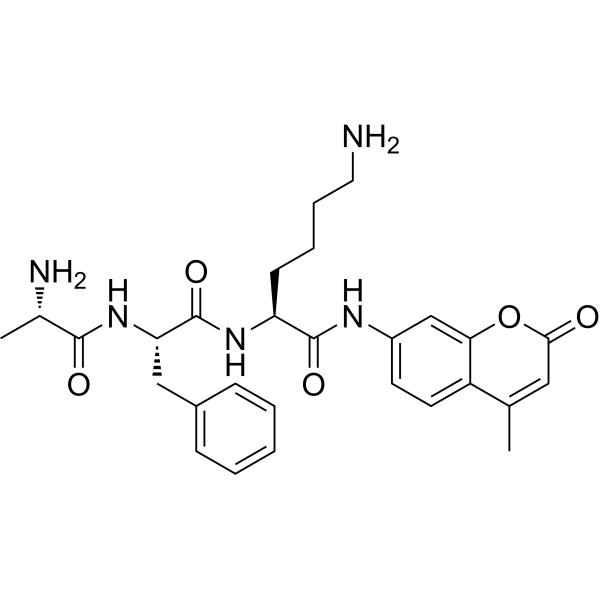
    Ala-Phe-Lys-AMC is a fluorogenic substrate, which can be used for residual plasmin activity assay .
    Ala-Phe-Lys-AMC
  • HY-N14990

    Fungal Infection
    Pneumocandin C0 is the isomer of Pneumocandin B0 (HY-17578) with antifungal activity, which is found by carrying out fermentations of Glarea lozoyensis at a high residual fructose concentration .
    Pneumocandin C0
  • HY-122319

    RP-020630

    Environmental Pollutants Herbicide Others
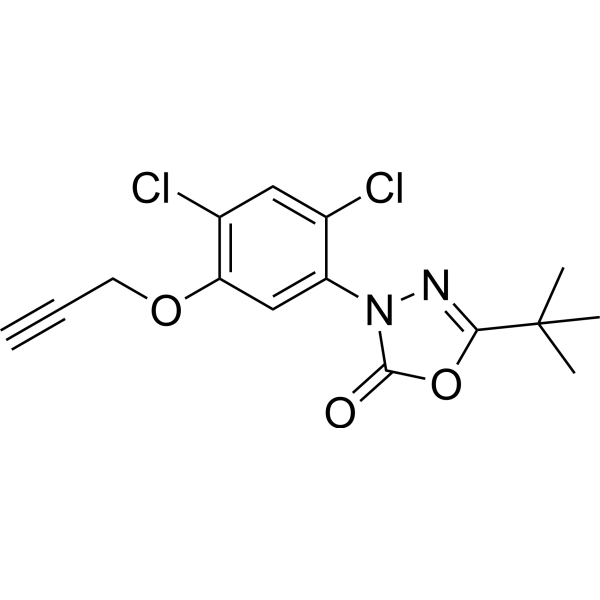
    Oxadiargyl (RP-020630) is an herbicide that inhibits protoporphyrinogen oxidase and has both pre- and early post-emergent weed activity. Oxadiargyl (RP-020630) has a short residual activity period, broad weed spectrum, and can be used in various soil types .
    Oxadiargyl
  • HY-P1166A

    Urotensin Receptor Cardiovascular Disease
    UFP-803 TFA is a potent urotensin-II receptor (UT) ligand. UFP-803 TFA has lower residual agonist activity, so it may be an important tool for the investigations on the role played by the UT system in physiology and pathology .
    UFP-803 TFA
  • HY-143249

    Bacterial Infection
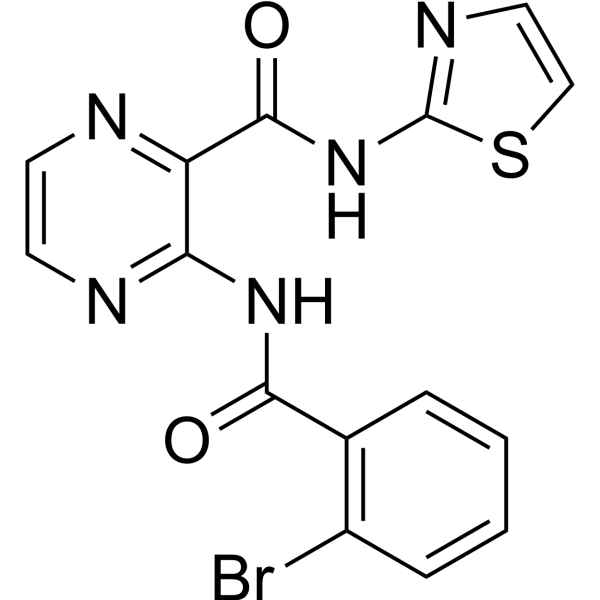
    MtMetAP1-IN-1 is an inhibitor of Mycobacterium tuberculosis (Mtb), targeting methionine aminopeptidase 1 (MetAP1). MtMetAP1-IN-1 exerts antimycobacterial activity .
    MtMetAP1-IN-1
  • HY-P1320A

    Opioid Receptor Inflammation/Immunology
    [Nphe1]Nociceptin(1-13)NH2, a novel nociceptin/orphanin FQ (NC) endogenous ligand, is a selective and competitive ociceptin receptor antagonist without any residual agonist activity. [Nphe1]nociceptin(1-13)NH2?binds selectively to recombinant nociceptin receptors (pKi=8.4) and antagonizes the inhibitory effects of nociceptin on cyclic AMP accumulation in CHO cells (pA2=6.0). [Nphe1]Nociceptin(1-13)NH2 has the potential to act as an analgesic agent .
    [Nphe1]Nociceptin(1-13)NH2 TFA
  • HY-137910R

    Reference Standards Herbicide HPPD Others
    Tembotrione (Standard) is the analytical standard of Tembotrione. This product is intended for research and analytical applications. Tembotrione is a drug that may reduce the productivity of carrots. Tembotrione has the activity of reducing carrot stem mass. Tembotrione can be used to study the total productivity of carrot . Tembotrione is a herbicide belonging to the HPPD (dioxygenase) inhibitor class with crop selectivity. Tembotrione effectively controls a variety of weeds including broadleaf and gramineous species by disrupting carotenoid synthesis, which leads to chlorophyll degradation and leaf whitening. Mixing Tembotrione with isoxaflutole or adding surfactants optimizes its efficacy and reduces phytotoxicity, with no residual impact on subsequent cruciferous crops, thus helping to increase maize grain yield. The activity of Tembotrione decreases under drought conditions, and under specific conditions (such as double-dose treatment), it may cause reversible yellowing and even yield reduction in crops such as poppy .
    Tembotrione (Standard)
  • HY-W721333

    Herbicide Acetolactate Synthase (ALS) Others
    Pyrimisulfan is a potent acetolactate synthase (ALS) inhibitor and a broad‑spectrum herbicide. Pyrimisulfan selectively inhibits plant acetolactate synthase. Pyrimisulfan controls a wide spectrum of paddy weeds including annual grasses, sedges, broadleaf weeds, and sulfonylurea‑resistant biotypes pre‑ and postemergence, with long residual activity and excellent rice safety. Pyrimisulfan can be used for research on paddy herbicides .
    Pyrimisulfan
  • HY-122670

    Pim Apoptosis AMPK DYRK STAT MDM-2/p53 Cancer
    VS-II-173 is a pan-Pim kinase inhibitor with IC50 values ​​of 0.07 μM and 0.02 μM for Pim1 and Pim3, respectively, and a residual activity of 46% for Pim2 at 1 μM. VS-II-173 also inhibits kinases such as HIPK2, PRK2, RSK1, DYRK1a and AMPKα1, selectively inhibiting acute myeloid leukemia (AML) cells with significantly lower toxicity to non-malignant cells (EC50 > 30 μM). VS-II-173 weakens the phosphorylation of substrates such as Stat5 (Y694), MDM2 (S166), Bad (S112), and 4E-BP1 (T37/46) by inhibiting Pim kinase-mediated signaling pathways, blocking pro-survival signals in AML cells and inducing apoptosis. VS-II-173 synergistically enhances anti-AML activity when combined with Daunorubicin (HY-13062A). VS-II-173 can be used in AML research, especially for AML with FLT3-ITD mutations and NPM1 mutations .
    VS-II-173

Inquiry Online

Your information is safe with us. * Required Fields.

Salutation


Country or Region *

Applicant Name *


Organization Name *

Department *


Email Address *


Product Name *

Cat. No.


Requested quantity *

Phone Number *


Remarks

Inquiry Online

Inquiry Information

Product Name:
Cat. No.:
Quantity:
MCE Japan Authorized Agent: