1. Epigenetics Stem Cell/Wnt Protein Tyrosine Kinase/RTK JAK/STAT Signaling
  2. JAK
  3. Pyridone 6

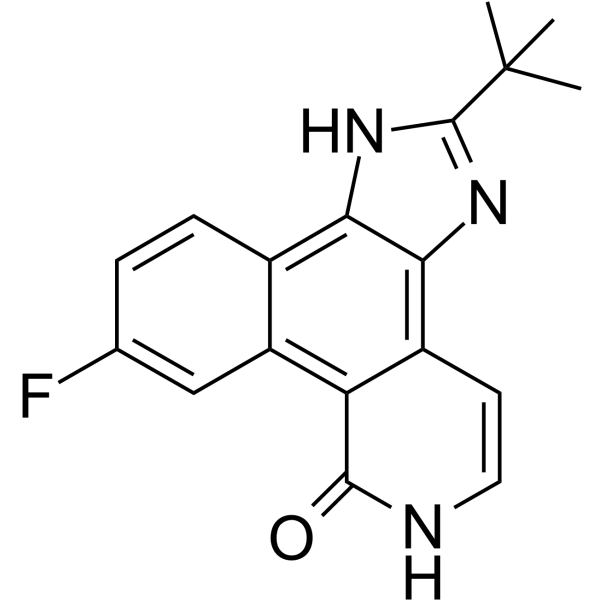
Pyridone 6 is a pan-JAK inhibitor, which potently inhibits the JAK kinase family, with IC50s of 1 nM for JAK2 and TYK2, 5 nM for JAK3, and 15 nM for JAK1, while displaying significantly weaker affinities (130 nM to >10 mM) for other protein tyrosine kinases.

연구목적의 판매만을 진행합니다. 환자를 대상으로 한 판매는 하지 않습니다.

CAS No. : 457081-03-7

사이즈 가격 재고 수량
무료 샘플 (0.1 - 0.2 mg)   지금 신청하기  
Solid + Solvent (Highly Recommended)
10 mM * 1 mL in DMSO
ready for reconstitution
해외재고보유
Solution
10 mM * 1 mL in DMSO 해외재고보유
Solid
2 mg 해외재고보유
5 mg 해외재고보유
10 mg 해외재고보유
25 mg 해외재고보유
50 mg 해외재고보유
100 mg 해외재고보유
200 mg   견적 받기  
500 mg   견적 받기  

* 장바구니에 담기 전 물품의 수량을 선택해 주십시오.

This product is a controlled substance and not for sale in your territory.

고객리뷰

Based on 11 publication(s) in Google Scholar

Other Forms of Pyridone 6:

Top Publications Citing Use of Products

    Pyridone 6 purchased from MedChemExpress. Usage Cited in: Leukemia. 2012 Oct;26(10):2233-44.  [Abstract]

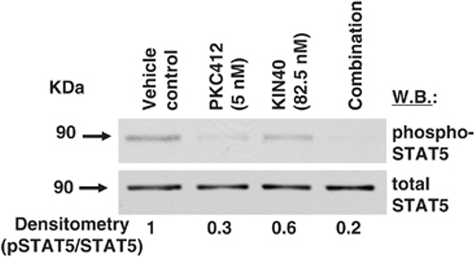
    SCM stimulation of phospho-STAT5 and drug combination effect on phosphorylation of phospho-STAT5. Expression of phospho-STAT5 and total STAT5 in MOLM13 cells treated for 1.5 h with DMSO vehicle, PKC412 (5 nM), KIN40 (82.5 nM) or a combination of both. Results shown are representative of two independent experiments in which similar results are observed.

    View All JAK Isoform Specific Products:

    • Biological Activity

    • Protocol

    • 순도&문서

    • References

    • 고객리뷰

    제품 설명

    Pyridone 6 is a pan-JAK inhibitor, which potently inhibits the JAK kinase family, with IC50s of 1 nM for JAK2 and TYK2, 5 nM for JAK3, and 15 nM for JAK1, while displaying significantly weaker affinities (130 nM to >10 mM) for other protein tyrosine kinases.

    IC50 & Target[1][2]

    JAK2

    1 nM (IC50)

    Tyk2

    1 nM (IC50)

    JAK3

    5 nM (IC50)

    Murine JAK1

    15 nM (IC50)

    CDK2

    3.3 μM (IC50)

    cAMP-dependent kinase

    7.1 μM (IC50)

    Csk

    2.1 μM (IC50)

    Hck

    7.7 μM (IC50)

    Fyn T

    0.5 μM (IC50)

    p38

    11 μM (IC50)

    MAPK

    1.78 μM (IC50)

    Mek

    0.16 μM (IC50)

    IκB Kinase 2

    0.3 μM (IC50)

    KDR

    1.4 μM (IC50)

    Flt-1

    1.52 μM (IC50)

    Flt-4

    0.69 μM (IC50)

    FGFR

    1.48 μM (IC50)

    FGFR2

    0.94 μM (IC50)

    Tek

    24 μM (IC50)

    PDGFR

    1.49 μM (IC50)

    PKC(α)

    1.2 μM (IC50)

    Cellular Effect
    Cell Line Type Value Description References
    A549 IC50
    > 10 3
    Compound: S30
    Inhibition of mPGES-1 in IL-1beta-stimulated human A549 cell microsomal membranes assessed as reduction in PGE2 formation incubated for 15 mins using PGH2 substrate by RP-HPLC method
    Inhibition of mPGES-1 in IL-1beta-stimulated human A549 cell microsomal membranes assessed as reduction in PGE2 formation incubated for 15 mins using PGH2 substrate by RP-HPLC method
    [PMID: 26088337]
    A549 IC50
    >10 3
    Compound: S30
    Inhibition of mPGES-1 in IL-1beta-stimulated human A549 cell microsomal membranes assessed as reduction in PGE2 formation incubated for 15 mins using PGH2 substrate by RP-HPLC method
    Inhibition of mPGES-1 in IL-1beta-stimulated human A549 cell microsomal membranes assessed as reduction in PGE2 formation incubated for 15 mins using PGH2 substrate by RP-HPLC method
    [PMID: 26088337]
    A549 IC50
    > 10 3
    Compound: S30
    Inhibition of mPGES-1 in IL-1beta-stimulated human A549 cell microsomal membranes assessed as reduction in PGE2 formation incubated for 15 mins using PGH2 substrate by RP-HPLC method
    Inhibition of mPGES-1 in IL-1beta-stimulated human A549 cell microsomal membranes assessed as reduction in PGE2 formation incubated for 15 mins using PGH2 substrate by RP-HPLC method
    [PMID: 26088337]
    CAL-33 IC50
    1.3 3
    Compound: 6
    Growth inhibition of human CAL33 cells
    Growth inhibition of human CAL33 cells
    [PMID: 25288188]
    CAL-33 IC50
    1.3 3
    Compound: 6
    Growth inhibition of human CAL33 cells
    Growth inhibition of human CAL33 cells
    [PMID: 25288188]
    CTLL IC50
    3.1 3
    Compound: 6
    Inhibition of PMA-induced murine T cell lymphoma cell proliferation
    Inhibition of PMA-induced murine T cell lymphoma cell proliferation
    [PMID: 11934592]
    CTLL IC50
    3.1 3
    Compound: 6
    Inhibition of PMA-induced murine T cell lymphoma cell proliferation
    Inhibition of PMA-induced murine T cell lymphoma cell proliferation
    [PMID: 11934592]
    FaDu IC50
    2.4 3
    Compound: 6
    Growth inhibition of human FADU cells
    Growth inhibition of human FADU cells
    [PMID: 25288188]
    FaDu IC50
    2.4 3
    Compound: 6
    Growth inhibition of human FADU cells
    Growth inhibition of human FADU cells
    [PMID: 25288188]
    U-266 IC50
    250 1
    Compound: 16
    Antiproliferative activity against human U266B1 cells assessed as inhibition of cell proliferation
    Antiproliferative activity against human U266B1 cells assessed as inhibition of cell proliferation
    [PMID: 32120325]
    U-266 IC50
    250 1
    Compound: 16
    Antiproliferative activity against human U266B1 cells assessed as inhibition of cell proliferation
    Antiproliferative activity against human U266B1 cells assessed as inhibition of cell proliferation
    [PMID: 32120325]
    In Vitro

    Pyridone 6 is tested as an inhibitor of 21 other protein kinases; Pyridone 6 inhibits these kinases with IC50s ranging from 130 nM to >10 μM. Pyridone 6 inhibits IL2 driven proliferation of CTLL cells with IC50=0.1 μM and IL4 driven proliferation with IC50=0.052 μM[1]. Pyridone 6 (P6) is shown to inhibit kinase by interacting within the ATP-binding cleft of each JAK. The IC50 of Pyridone 6 is 3 nM for all of these cytokines; this is comparable to the reported IC50s of Pyridone 6 for JAK2, Tyk2, and JAK3. Pyridone 6 strongly inhibits Th2 and modestly inhibits Th1, whereas it enhances Th17 development when present within a certain range of concentrations. Pyridone 6 reduces IFN-γ and IL-13, whereas it enhances IL-17 and IL-22 expression. Pyridone 6 also inhibits both Th1 and Th2 development, whereas it promotes Th17 differentiation from naive T cells when present within a certain range of concentrations[2].

    MedChemExpress (MCE) has not independently confirmed the accuracy of these methods. They are for reference only.

    In Vivo

    Pyridone 6 (P6) delays the onset and reduced the magnitude of skin disease in an AD-like skin-disease model of NC/Nga mice. P6-nano strongly ameliorates atopic dermatitis (AD) in NC/Nga mice, exerting an effect comparable to that of betamethasone ointment, a commonly used drug, which also tested as a positive control. In contrast, empty polylactic acid with glycolic acid (PLGA)? nanoparticles (C-nano) seemed to have no effect[2].

    MedChemExpress (MCE) has not independently confirmed the accuracy of these methods. They are for reference only.

    분자량

    309.34

    화학식

    C18H16FN3O

    CAS No.
    Appearance

    Solid

    Color

    Light brown to brown

    SMILES

    FC1=CC2=C(C(NC=C3)=O)C3=C(N=C(C(C)(C)C)N4)C4=C2C=C1

    선적

    Room temperature in continental US; may vary elsewhere.

    보관
    Powder -20°C 3 years
    4°C 2 years
    In solvent -80°C 2 years
    -20°C 1 year
    용액&용해도
    In Vitro: 

    DMSO : ≥ 100 mg/mL (323.27 mM; Hygroscopic DMSO has a significant impact on the solubility of product, please use newly opened DMSO)

    *"≥" means soluble, but saturation unknown.

    Preparing
    Stock Solutions
    Concentration Solvent Mass 1 mg 5 mg 10 mg
    1 mM 3.2327 mL 16.1634 mL 32.3269 mL
    5 mM 0.6465 mL 3.2327 mL 6.4654 mL
    View the Complete Stock Solution Preparation Table

    * Please refer to the solubility information to select the appropriate solvent. Once prepared, please aliquot and store the solution to prevent product inactivation from repeated freeze-thaw cycles.
    Storage method and period of stock solution: -80°C, 2 years; -20°C, 1 year. When stored at -80°C, please use it within 2 years. When stored at -20°C, please use it within 1 year.

    • 몰농도 계산기

    • 농도 희석 계산기

    Mass (g) = Concentration (mol/L) × Volume (L) × Molecular Weight (g/mol)

    Mass
    =
    Concentration
    ×
    Volume
    ×
    Molecular Weight *

    Concentration (start) × Volume (start) = Concentration (final) × Volume (final)

    This equation is commonly abbreviated as: C1V1 = C2V2

    Concentration (start)

    C1

    ×
    Volume (start)

    V1

    =
    Concentration (final)

    C2

    ×
    Volume (final)

    V2

    In Vivo:

    Select the appropriate dissolution method based on your experimental animal and administration route.

    For the following dissolution methods, please ensure to first prepare a clear stock solution using an In Vitro approach and then sequentially add co-solvents:
    To ensure reliable experimental results, the clarified stock solution can be appropriately stored based on storage conditions. As for the working solution for in vivo experiments, it is recommended to prepare freshly and use it on the same day.
    The percentages shown for the solvents indicate their volumetric ratio in the final prepared solution. If precipitation or phase separation occurs during preparation, heat and/or sonication can be used to aid dissolution.

    • Protocol 1

      Add each solvent one by one:  10% DMSO    40% PEG300    5% Tween-80    45% Saline

      Solubility: ≥ 2.5 mg/mL (8.08 mM); Clear solution

      This protocol yields a clear solution of ≥ 2.5 mg/mL (saturation unknown).

      Taking 1 mL working solution as an example, add 100 μL DMSO stock solution (25.0 mg/mL) to 400 μL PEG300, and mix evenly; then add 50 μL Tween-80 and mix evenly; then add 450 μL Saline to adjust the volume to 1 mL.

      Preparation of Saline: Dissolve 0.9 g sodium chloride in ddH₂O and dilute to 100 mL to obtain a clear Saline solution.
    • Protocol 2

      Add each solvent one by one:  10% DMSO    90% (20% SBE-β-CD in Saline)

      Solubility: 2.5 mg/mL (8.08 mM); Suspended solution; Need ultrasonic

      This protocol yields a suspended solution of 2.5 mg/mL. Suspended solution can be used for oral and intraperitoneal injection.

      Taking 1 mL working solution as an example, add 100 μL DMSO stock solution (25.0 mg/mL) to 900 μL 20% SBE-β-CD in Saline, and mix evenly.

      Preparation of 20% SBE-β-CD in Saline (4°C, storage for one week): 2 g SBE-β-CD powder is dissolved in 10 mL Saline, completely dissolve until clear.
    In Vivo Dissolution Calculator
    Please enter the basic information of animal experiments:

    Dosage

    mg/kg

    Animal weight
    (per animal)

    g

    Dosing volume
    (per animal)

    μL

    Number of animals

    Recommended: Prepare an additional quantity of animals to account for potential losses during experiments.
    Please enter your animal formula composition:
    %
    DMSO +
    +
    %
    Tween-80 +
    %
    Saline
    Recommended: Keep the proportion of DMSO in working solution below 2% if your animal is weak.
    The co-solvents required include: DMSO, . All of co-solvents are available by MedChemExpress (MCE). , Tween 80. All of co-solvents are available by MedChemExpress (MCE).
    Calculation results:
    Working solution concentration: mg/mL
    Method for preparing stock solution: mg drug dissolved in μL  DMSO (Stock solution concentration: mg/mL).
    The concentration of the stock solution you require exceeds the measured solubility. The following solution is for reference only. If necessary, please contact MedChemExpress (MCE).
    Method for preparing in vivo working solution for animal experiments: Take μL DMSO stock solution, add μL . μL , mix evenly, next add μL Tween 80, mix evenly, then add μL Saline.
     If the continuous dosing period exceeds half a month, please choose this protocol carefully.
    Please ensure that the stock solution in the first step is dissolved to a clear state, and add co-solvents in sequence. You can use ultrasonic heating (ultrasonic cleaner, recommended frequency 20-40 kHz), vortexing, etc. to assist dissolution.
    순도&문서
    References
    Cell Assay 
    [2]

    Naive CD4+ T cells are treated with various concentrations of Pyridone 6 (10 and 30 nM) in RPMI 1640 medium 1 h before the appropriate cytokines are added to create each Th-differentiating condition. Immunoblotting is performed using antiphospho-STAT protein Abs or anti-total STAT protein Abs[2].

    MCE 는 독립적으로 이러한 방법들의 정확성을 확인하지 않았습니다. 참고용으로만 봐주십시오.

    Animal Administration
    [2]

    Mice[2]
    NC/Nga mice are used at the age of 10-15 wk. To assess the effect of Pyridone 6 treatment on AD symptoms, nanoparticles containing Pyridone 6 (2 mg/body) or empty nanoparticles as a negative control (C-nano) are dissolved in 0.1 mL saline and administered s.c. 1 d after Dfb ointment application; this treatment is repeated twice a week. To assess the effects of recombinant murine IL-17 and IL-22, these cytokines (50 μg/kg) or 100 μL PBS is administered for the same duration as the nanoparticles. Twenty milligrams of 0.064% betamethasone ointment are applied to the dorsal lesion of mice once a week[2].

    MCE 는 독립적으로 이러한 방법들의 정확성을 확인하지 않았습니다. 참고용으로만 봐주십시오.

    References

    Complete Stock Solution Preparation Table

    * Please refer to the solubility information to select the appropriate solvent. Once prepared, please aliquot and store the solution to prevent product inactivation from repeated freeze-thaw cycles.
    Storage method and period of stock solution: -80°C, 2 years; -20°C, 1 year. When stored at -80°C, please use it within 2 years. When stored at -20°C, please use it within 1 year.

    Optional Solvent Concentration Solvent Mass 1 mg 5 mg 10 mg 25 mg
    DMSO 1 mM 3.2327 mL 16.1634 mL 32.3269 mL 80.8172 mL
    5 mM 0.6465 mL 3.2327 mL 6.4654 mL 16.1634 mL
    10 mM 0.3233 mL 1.6163 mL 3.2327 mL 8.0817 mL
    15 mM 0.2155 mL 1.0776 mL 2.1551 mL 5.3878 mL
    20 mM 0.1616 mL 0.8082 mL 1.6163 mL 4.0409 mL
    25 mM 0.1293 mL 0.6465 mL 1.2931 mL 3.2327 mL
    30 mM 0.1078 mL 0.5388 mL 1.0776 mL 2.6939 mL
    40 mM 0.0808 mL 0.4041 mL 0.8082 mL 2.0204 mL
    50 mM 0.0647 mL 0.3233 mL 0.6465 mL 1.6163 mL
    60 mM 0.0539 mL 0.2694 mL 0.5388 mL 1.3470 mL
    80 mM 0.0404 mL 0.2020 mL 0.4041 mL 1.0102 mL
    100 mM 0.0323 mL 0.1616 mL 0.3233 mL 0.8082 mL
    • No file chosen (Maximum size is: 1024 Kb)
    • If you have published this work, please enter the PubMed ID.
    • Your name will appear on the site.
    Help & FAQs
    • Do most proteins show cross-species activity?

      Species cross-reactivity must be investigated individually for each product. Many human cytokines will produce a nice response in mouse cell lines, and many mouse proteins will show activity on human cells. Other proteins may have a lower specific activity when used in the opposite species.

    최근 본 상품:

    온라인 문의

    Your information is safe with us. * Required Fields.

    상품명


    Requested Quantity *

    고객명 *


    호칭

    메일주소 *


    전화번호 *

    Department


    회사명 *

    City

    Country or Region *


    비고

    대량구매 문의

    Inquiry Information

    상품명:
    Pyridone 6
    Cat. No.:
    HY-14435
    수량:
    MCE Japan Authorized Agent: