Infection
-
Infection Related Products (18904)
Related Products (18904)

-
Antibodies (22)
-
N-Desmethylclozapine
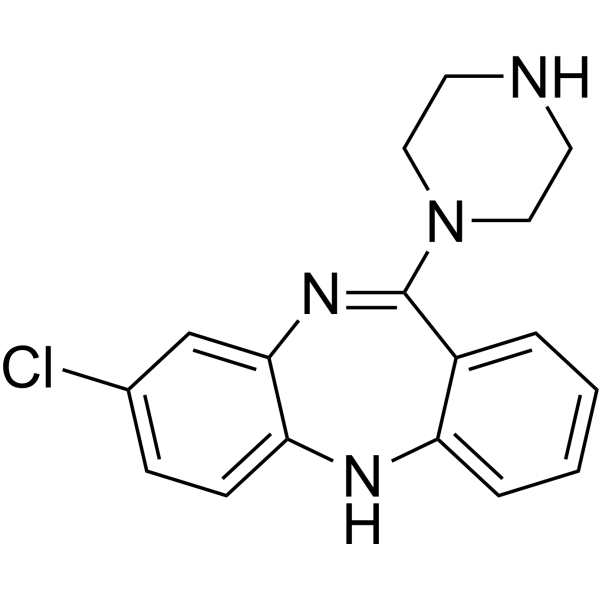 0 ImagesSynonyms: Norclozapine; Desmethylclozapine; Normethylclozapine
N-Desmethylclozapine is a major active metabolite of the atypical antipsychotic agent Clozapine. N-Desmethylclozapine is a potent, allosteric and partial M1 receptors agonist (EC50=115 nM) and is able to potentiate hippocampal N-methyl-d-aspartate (NMDA) receptor currents through M1 receptor activation. N-Desmethylclozapine is also a δ-opioid agonist.
-
Safranin
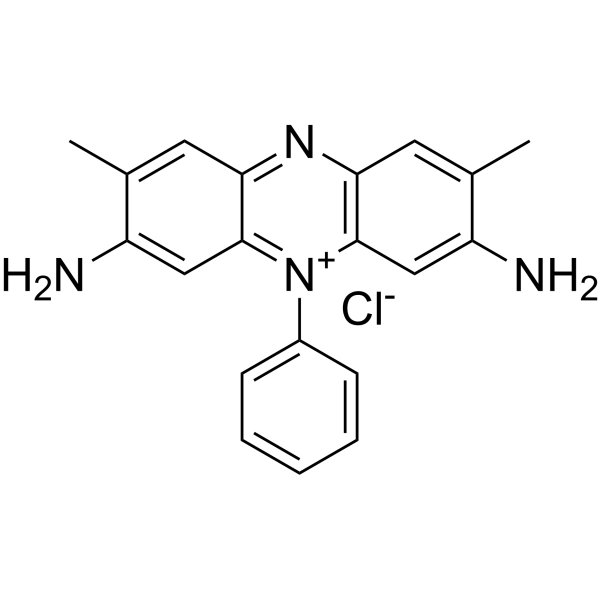 0 Images
Safranin (Safranin T) is an important and classical phenazinium dye. Safranin has been extensively used in the academic field as a spectroscopic probe and indicator. Safranin possesses a planar structure and cationic charge. Safranin can readily intercalate into biological macromolecules, including DNA and proteins. Safranin has antibacterial effects against gram-positive bacteria (S. aureus). Safranin can be used as a redox indicator in the determination of metal ion concentration.
-
G907
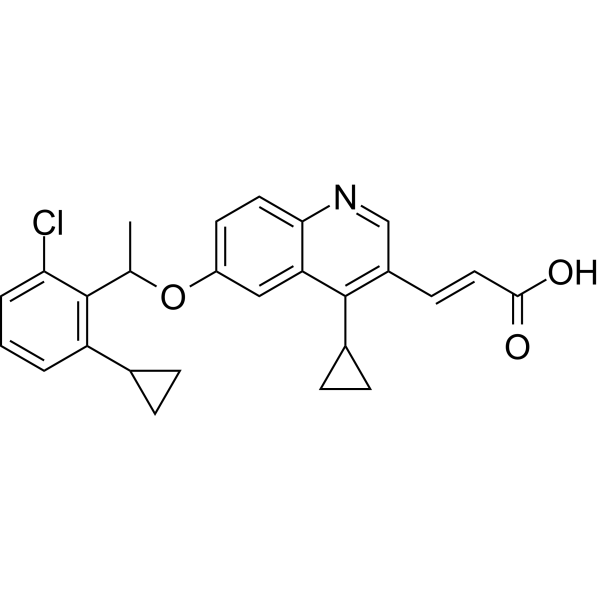 0 Images
G907 is a selective antagonist of ATP-binding cassette (ABC) transporter MsbA with anti-microbial activity. G907 inhibits E. coli MsbA with an IC50 value of 18 nM. G907 traps MsbA in an inward-facing, lipopolysaccharide-bound conformation by wedging into an architecturally conserved transmembrane pocket.
-
Azvudine hydrochloride
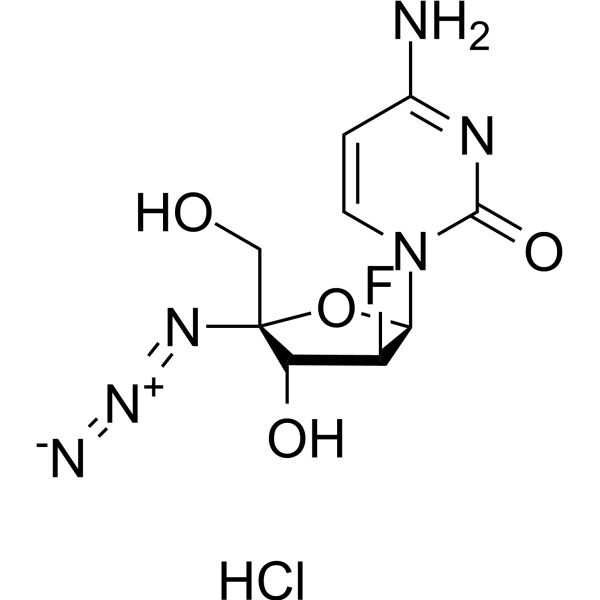 0 ImagesSynonyms: RO-0622 hydrochloride; FNC hydrochloride
Azvudine (RO-0622) hydrochloride is a potent nucleoside reverse transcriptase inhibitor (NRTI), with antiviral activity on HIV, HBV and HCV. Azvudine hydrochloride exerts highly potent inhibition on HIV-1 (EC50s ranging from 0.03 to 6.92 nM) and HIV-2 (EC50s ranging from 0.018 to 0.025 nM). Azvudine hydrochloride inhibits NRTI-resistant viral strains. Azvudine (hydrochloride) is a click chemistry reagent, it contains an Azide group and can undergo copper-catalyzed azide-alkyne cycloaddition reaction (CuAAc) with molecules containing Alkyne groups. It can also undergo strain-promoted alkyne-azide cycloaddition (SPAAC) reactions with molecules containing DBCO or BCN groups.
-
Delpazolid
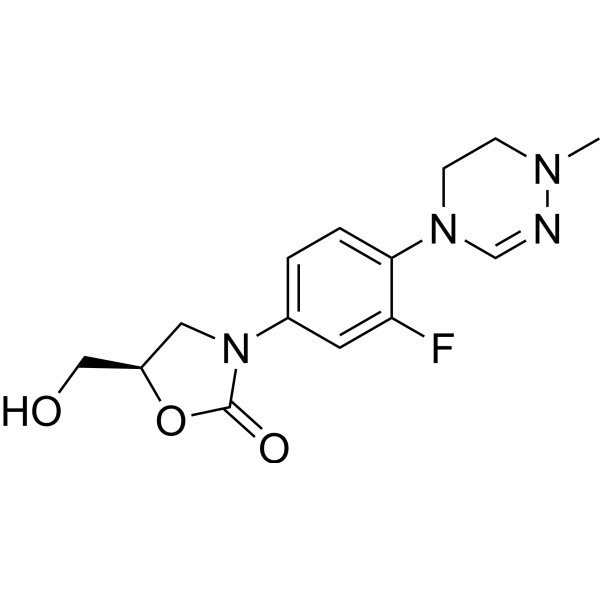 0 ImagesSynonyms: LCB01-0371
Delpazolid is a novel oxazolidinone antibiotic agent which can inhibit the growth of MSSA and MRSA with a MIC90 of 2 μg/mL for both of them.
-
Leronlimab
 0 ImagesSynonyms: PRO 140
-
Imdevimab
 0 ImagesCat. No.: HY-P99342CAS No.: 2415933-40-1Synonyms: REGN10987
Imdevimab (REGN10987) is a human monoclonal antibody that targets SARS-CoV-2 virus. Imdevimab can be used in combination with Casirivimab (HY-P99341) to reduce viral load and transiently increases anti-receptor-binding domain IgG titers. Imdevimab maintains most of its neutralization activity against viruses with B.1.1.7, B.1.351 and mink cluster 5 spike proteins.
-
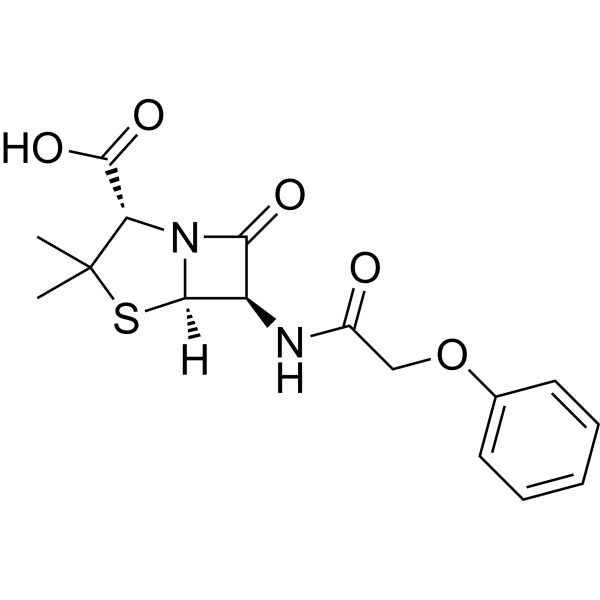
Penicillin V
 0 Images
Penicillin V (Phenoxymethylpenicillin) is a potent and orally active antibiotic. Penicillin V shows antibacterial activity for Streptococci, Clostridium difficile and staphylococcus aureus. Penicillin V has the potential for the research of otitis, sinusitis, pharyngitis and tonsillitis.
-
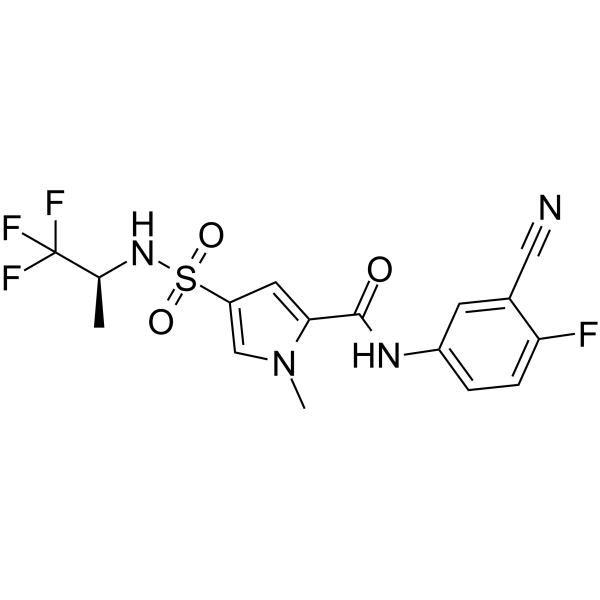
Bersacapavir
 0 ImagesSynonyms: JNJ-6379; JNJ-56136379
Bersacapavir (JNJ-6379) is an HBV capsid assembly modulator. Bersacapavir exerts a dual mechanism of action against both early and late stages of HBV infection by forming complete genome-free empty capsids and inhibiting de novo synthesis of cccDNA. Bersacapavir inhibits HBV replication. Bersacapavir can be used in the research of hepatitis B.
-
Teropavimab
 0 ImagesSynonyms: 3BNC117-LS; GS-5423
Teropavimab (3BNC117-LS) is a broadly neutralizing antibody targeting the CD4-binding site of the HIV-1 envelope. Teropavimab binds to the CD4-binding site of HIV-1 gp120 to neutralize viruses, including multidrug-resistant HIV-1. Teropavimab can be used in studies related to HIV-1 infection and multidrug-resistant HIV-1 infection.
-
Interferon alfa-2b
 0 ImagesCat. No.: HY-P99666
Interferon alfa-2b is a type I interferon that activates novel genes and exerts potent antiviral and antiproliferative activity on target cells. Signaling by Interferon alfa-2b requires receptor-dependent activation of Stat1 and Stat2 to form a heterodimeric STAT that binds to the DNA-binding protein IRF-9 (p48) and forms ISGF-3 (IFN-stimulated gene factor 3). The driver genes are then further activated by ISGF-3 to achieve antiviral function.
-
Cilgavimab
 0 ImagesCat. No.: HY-P99604CAS No.: 2420563-99-9Synonyms: AZD-1061; COV2-2130
Cilgavimab (AZD-1061; COV2-2130) is a human SARS-CoV-2-neutralizing monoclonal antibody, can compose monoclonal-antibody combination AZD7442 with Tixagevimab (HY-P99556). Cilgavimab shows protective action on mouse models of SARS-CoV-2 infection.
-
Tetramisole hydrochloride
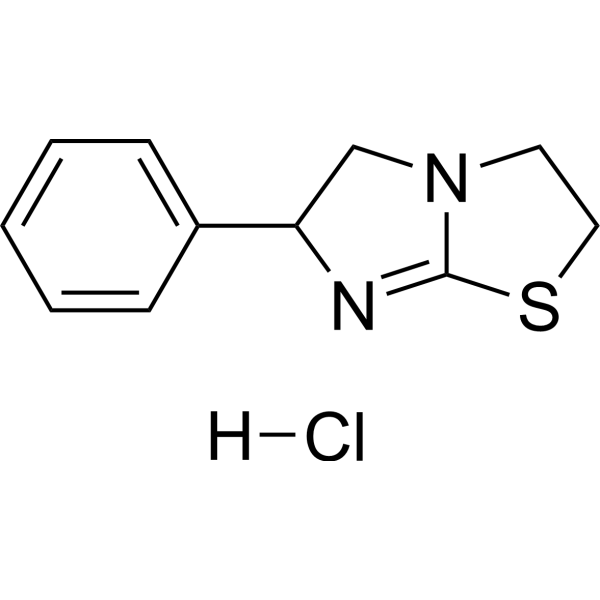 0 ImagesSynonyms: (±)-Tetramisole hydrochloride; DL-Tetramisole hydrochloride; R-829
Tetramisole hydrochloride is an orally active, selective inward rectifier potassium channel agonist with an EC50 of approximately 30 μM for the Kir2.1 subunit. Tetramisole hydrochloride is also an anti-nematode agent that blocks neuromuscular transmission by non-competitive depolarization. Tetramisole hydrochloride promotes the forward transport of Kir2.1 channels, hyperpolarizes the resting potential (RP), shortens the action potential duration (APD), inhibits intracellular calcium overload and the PKA signaling pathway, and exerts anti-arrhythmic and anti-myocardial remodeling activities. Tetramisole hydrochloride can be used in cardiac electrophysiology research and research related to myocardial ischemia and heart failure.
-
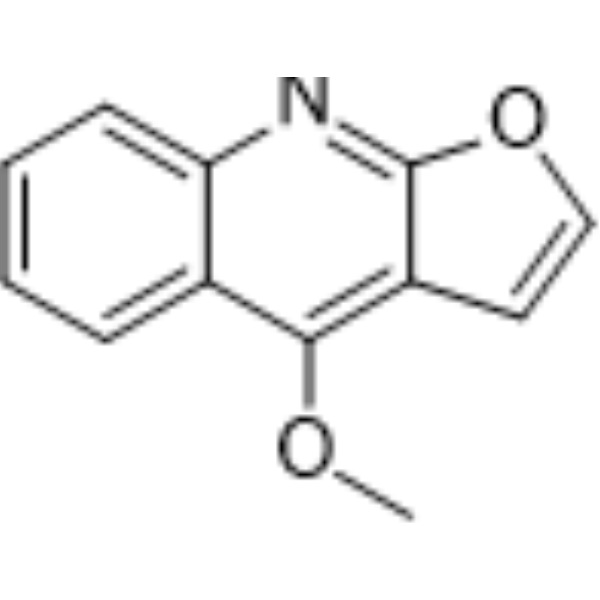
Dictamine
 0 Images
Dictamnine (Dictamine) exhibits cytotoxicity to human cervical and colon cancer cells and also has antibacterial and antifungal activities.
-
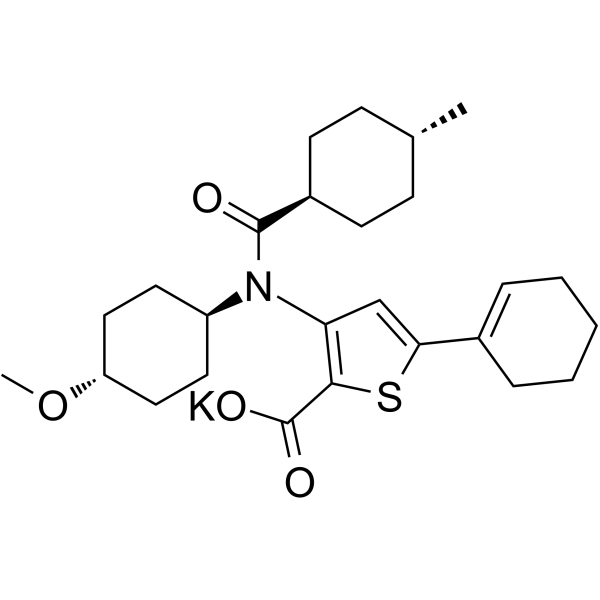
VCH-916
 0 Images
VCH-916 is a thiophene derivative and non-nucleoside inhibitor of HCV NS5B polymerase. VCH-916 binds to Thumb Site II. VCH-916 can be used for the research of hepatitis c virus (hcv) infection.