



Pyrantel pamoate
Based on 4 publication(s) in Google Scholar
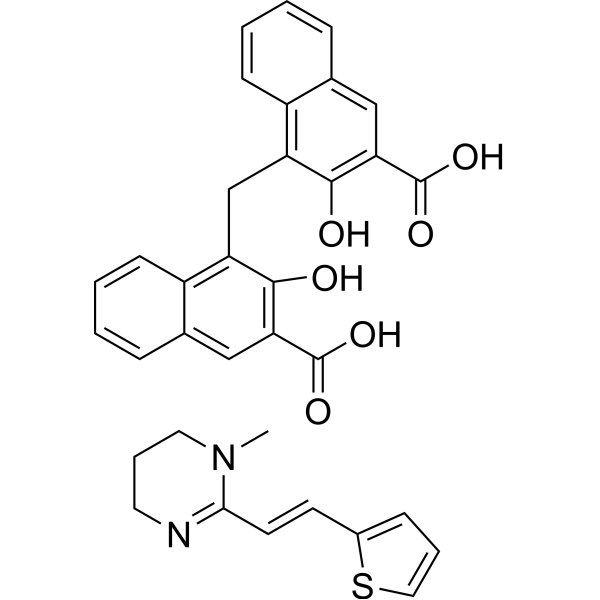
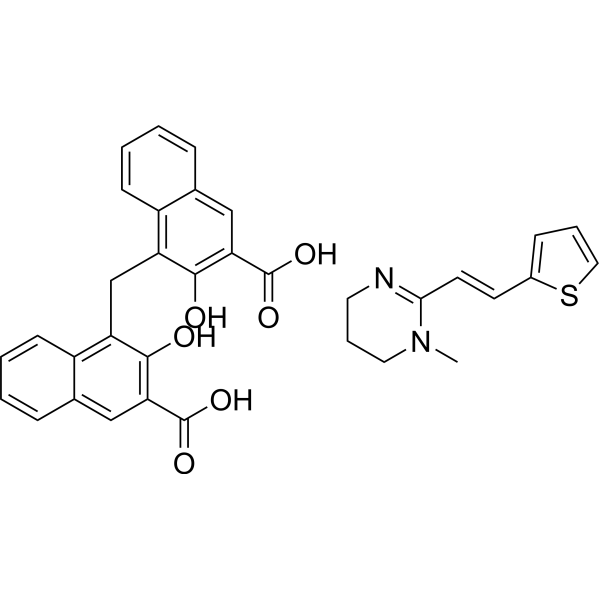
Pyrantel pamoate is an orally active antiparasitic agent. Pyrantel pamoate induces spastic paralysis in parasites via actions on neural and muscular cholinergic receptors as a nicotinic acetylcholine receptor (nAChR) agonist. Pyrantel pamoate eliminates both immature and mature endoparasites in horses. Pyrantel pamoate can be used in research related to parasitic infections.
For research use only. We do not sell to patients.
- Purity : 99.97%
- CAS No.: 22204-24-6
- Formula: C34H30N2O6S
- Molecular Weight:594.68
-
Storage:
4°C, sealed storage, away from moisture
* In solvent : -80°C, 6 months; -20°C, 1 month (sealed storage, away from moisture)

To place orders, for customer services and technical support, please contact: MedChemExpress USA
Tel: 609-228-6898 E-mail: [email protected] [email protected]


-
 Biological Activity
-
Chemical Information
-
Solvent & Solubility
- Purity & Documentation
- References
-
 Help & FAQs


-
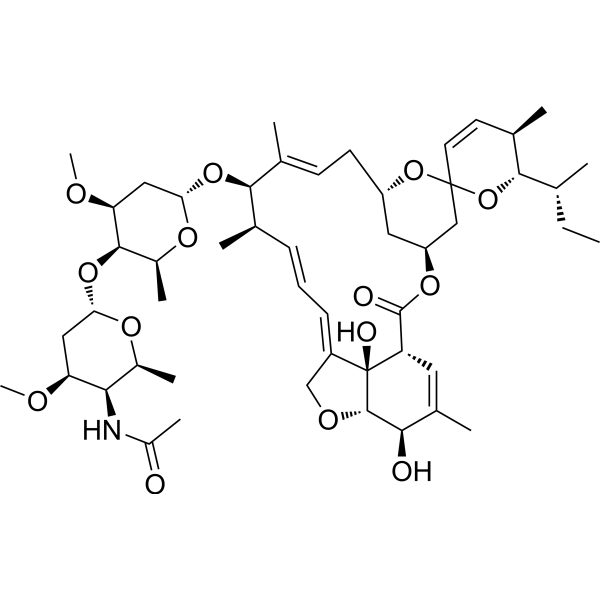
HY-12643
EprinomectinEndectocide -
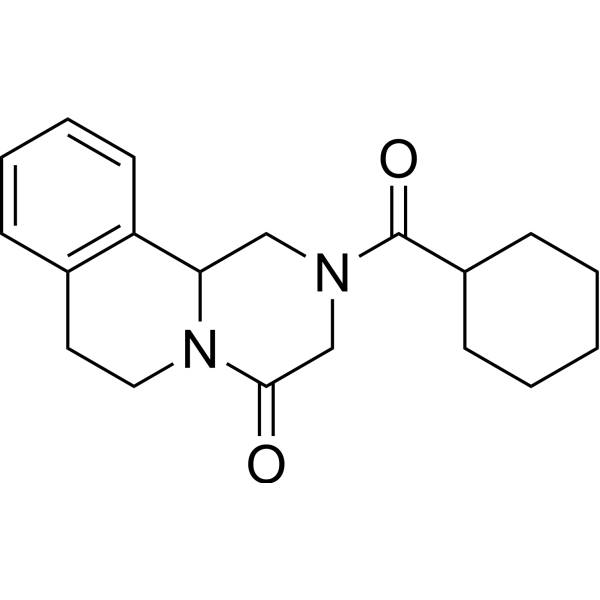
HY-B0244
PraziquantelTrematocide -
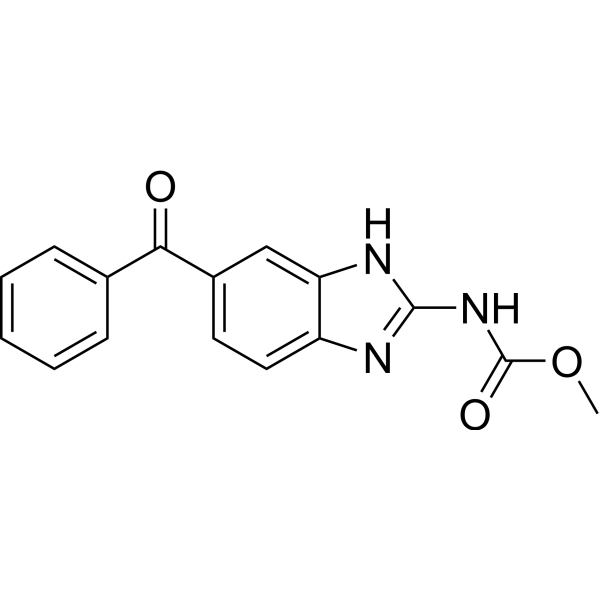
HY-17595
MebendazoleApoptosis Inducer -
HY-12640R
Pyrantel pamoate (Standard)Reference Standard -
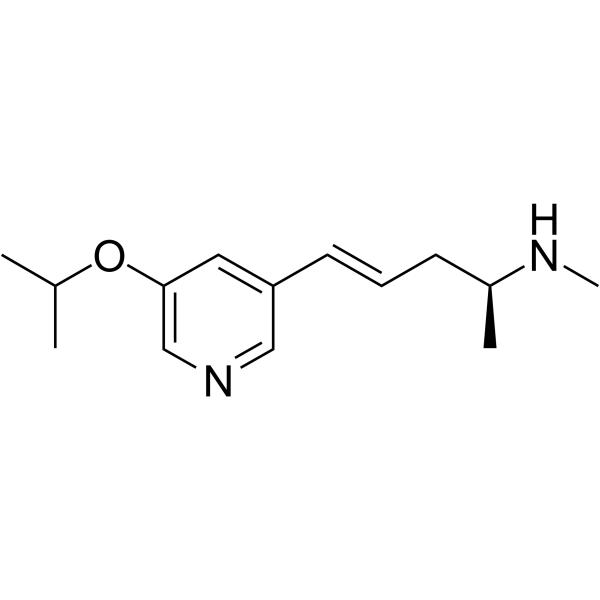
HY-10063
Isproniclineα4β2 nAChR Agonist -
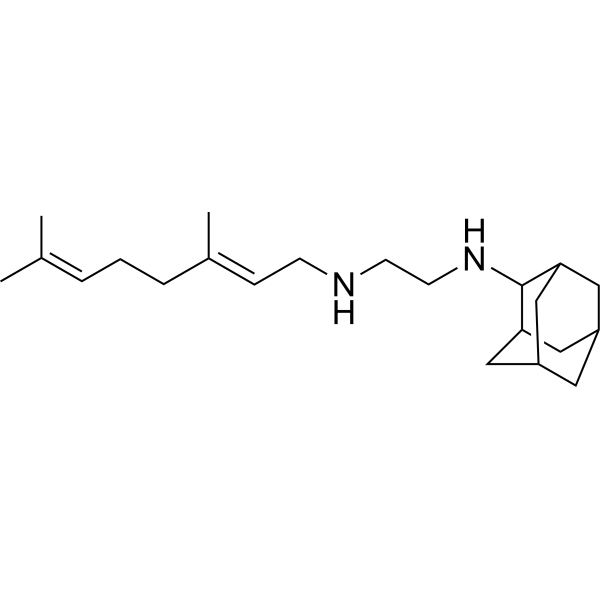
HY-14989
SQ109Antitubercular Agent -
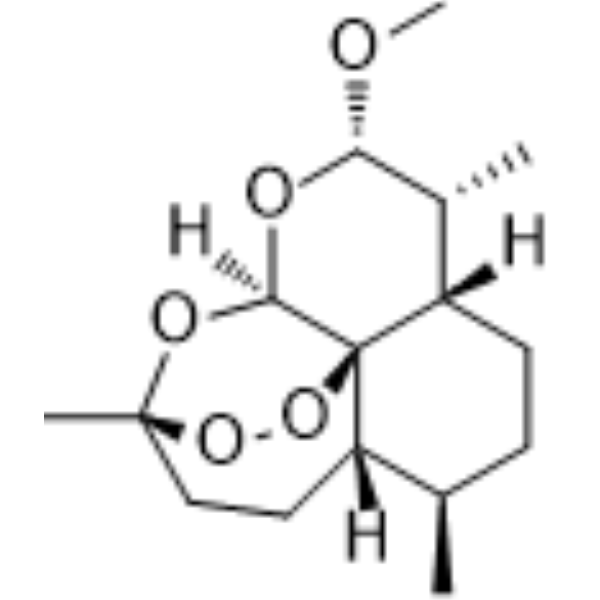
HY-N0402
ArtemetherParasite Inhibitor -
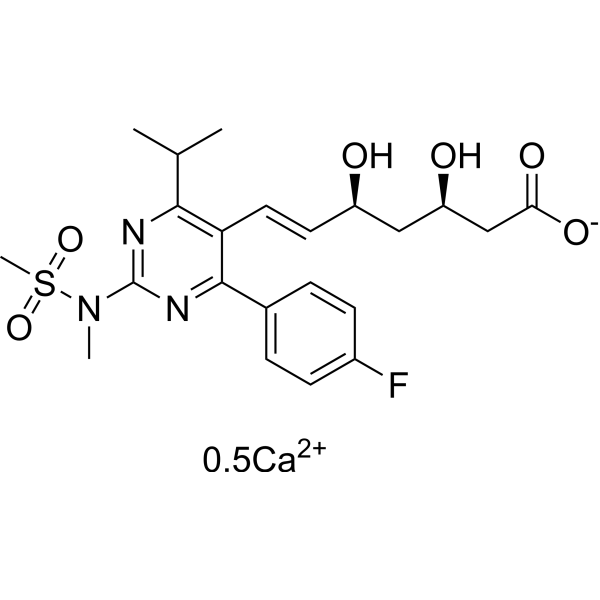
HY-17504
Rosuvastatin CalciumHMGCR Inhibitor -
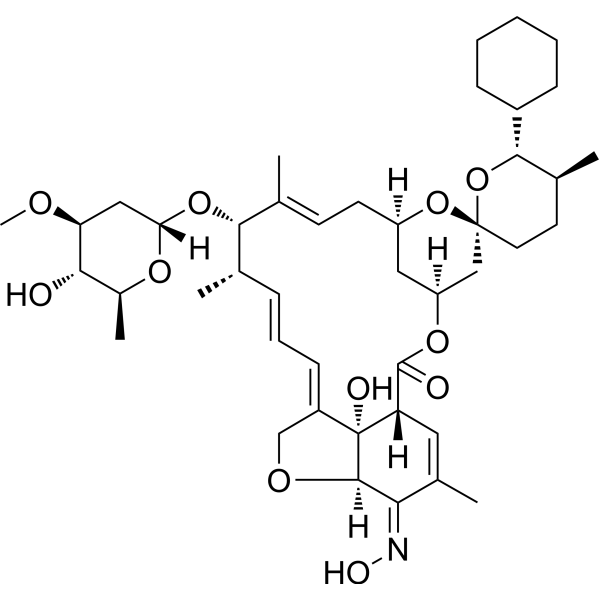
HY-107212
SelamectinParasiticide -
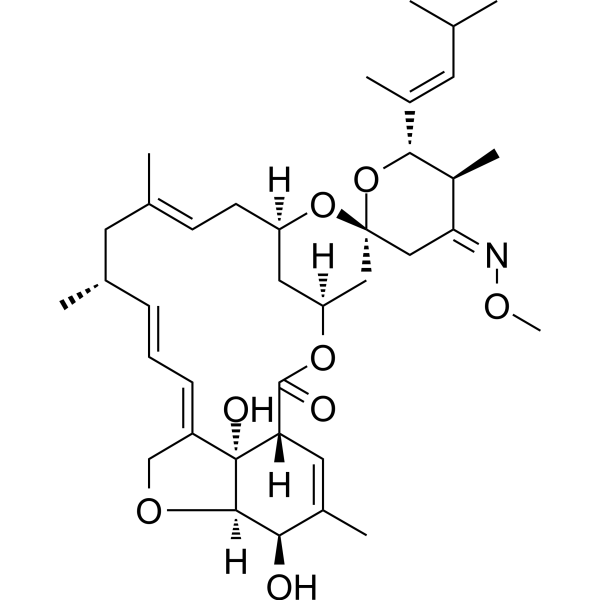
HY-B0777
MoxidectinAnthelmintic Agent -
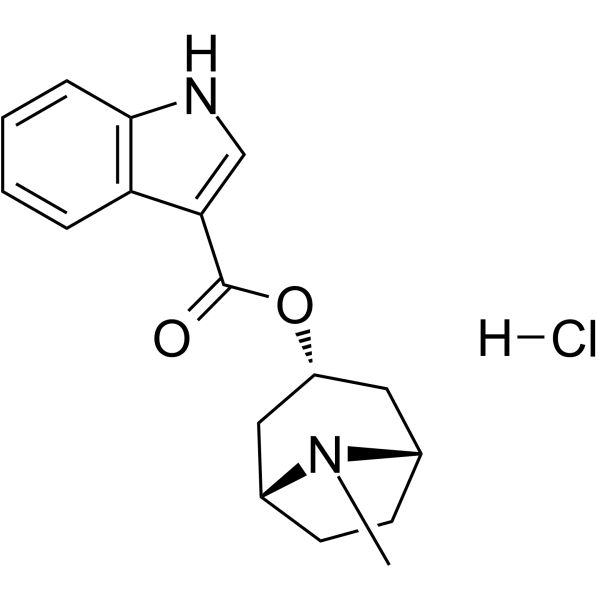
HY-B0020
Tropisetron Hydrochloride5-HT3 Receptor Antagonist -
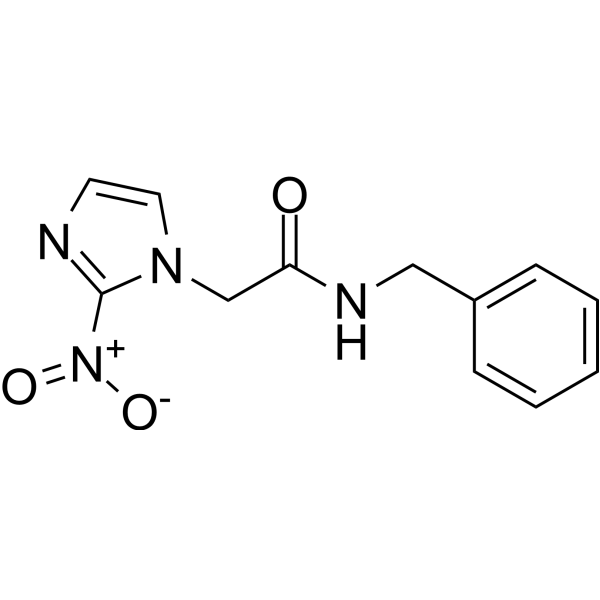
HY-B1548
BenznidazoleAntibiotic
Publications Citing Use of MedChemExpress (MCE) Pyrantel pamoate
MoreAll Parasite Isoforms
More

Biological Activity
Description
In Vitro
Pyrantel pamoate acts as an L-subtype cholinergic receptor agonist in Ascaris suum body-flap muscle, with a pEC50 of 7.24[2].
MedChemExpress (MCE) has not independently confirmed the accuracy of these methods. They are for reference only. .
In Vivo
MedChemExpress (MCE) has not independently confirmed the accuracy of these methods. They are for reference only.
Clinical Trial
| NCT Number | Sponsor | Condition | Start Date |
Phase

|
|---|---|---|---|---|
| NCT01329991 | Plexxikon| | 2011-05 | PHASE1 |


Chemical Information
-
CAS No. 22204-24-6
-
Appearance Solid
-
Molecular Weight 594.68
-
Formula C34H30N2O6S
-
Color Light yellow to yellow
-
SMILES
O=C(C1=C(O)C(CC2=C3C=CC=CC3=CC(C(O)=O)=C2O)=C4C=CC=CC4=C1)O.CN5CCCN=C5/C=C/C6=CC=CS6
-
Synonyms
Pyrantel embonate
-
Shipping
Room temperature in continental US; may vary elsewhere.
-
Storage
4°C, sealed storage, away from moisture
* In solvent : -80°C, 6 months; -20°C, 1 month (sealed storage, away from moisture)


Publications (4)
-
Journal Impact Factor
-
Most Recent
-
Clin Transl Med
EEPD1 regulates inflammation and endothelial apoptosis in atherosclerosis through KLF4-EEPD1-ERK axis. [Abstract]2025 Apr;15(4):e70311. PMID: 40268512 -
Eur J Med Chem
2024 Dec 5:279:116842. PMID: 39260319 -
Int Immunopharmacol
Eupatilin suppresses osteoclastogenesis and periodontal bone loss by inhibiting the MAPKs/Siglec-15 pathway. [Abstract]2024 Sep 30:139:112720. PMID: 39047450 -
Curr Eye Res
Kisspeptin Suppresses the Growth of Primary Pterygial Cells via Inhibiting Chemokine (C-X-C Motif) Ligands in Microenvironment. [Abstract]2025 Sep;50(9):894-902. PMID: 40555256


Solvent & Solubility
In Vitro:
DMSO : 20 mg/mL (33.63 mM; ultrasonic and warming and heat to 60°C; Hygroscopic DMSO has a significant impact on the solubility of product, please use newly opened DMSO)
Please refer to the solubility information to select the appropriate solvent. Once prepared, please aliquot and store the solution to prevent product inactivation from repeated freeze-thaw cycles.
Storage method and period of stock solution: -80°C, 6 months; -20°C, 1 month (sealed storage, away from moisture). When stored at -80°C, please use it within 6 months. When stored at -20°C, please use it within 1 month.
Please refer to the solubility information to select the appropriate solvent. Once prepared, please aliquot and store the solution to prevent product inactivation from repeated freeze-thaw cycles.
Storage method and period of stock solution: -80°C, 6 months; -20°C, 1 month (sealed storage, away from moisture). When stored at -80°C, please use it within 6 months. When stored at -20°C, please use it within 1 month.
Concentration (start) × Volume (start) = Concentration (final) × Volume (final)
In Vivo:
Select the appropriate dissolution method based on your experimental animal and administration route.
- For the following dissolution methods, please ensure to first prepare a clear stock solution using an In Vitro approach and then sequentially add co-solvents:
- To ensure reliable experimental results, the clarified stock solution can be appropriately stored based on storage conditions. As for the working solution for In Vivo experiments, it is recommended to prepare freshly and use it on the same day.
- The percentages shown for the solvents indicate their volumetric ratio in the final prepared solution. If precipitation or phase separation occurs during preparation, heat and/or sonication can be used to aid dissolution.
Add each solvent one by one: 10% DMSO 40% PEG300 5% Tween-80 45% Saline
Solubility: ≥ 2.5 mg/mL (4.20 mM); Clear solution
This protocol yields a clear solution of ≥ 2.5 mg/mL (saturation unknown).
Taking 1 mL working solution as an example, add 100 μL DMSO stock solution (25.0 mg/mL) to 400 μL PEG300, and mix evenly; then add 50 μL Tween-80 and mix evenly; then add 450 μL Saline to adjust the volume to 1 mL.
Preparation of Saline: Dissolve 0.9 g sodium chloride in ddH₂O and dilute to 100 mL to obtain a clear Saline solution.
In Vivo Dissolution Calculator
Please enter the basic information of animal experiments:
-
-
-
-
Recommended: Prepare an additional quantity of animals to account for potential losses during experiments.
Please enter your animal formula composition:
-
%DMSO +
Recommended: Keep the proportion of DMSO in working solution below 2% if your animal is weak.
-
%+
-
+%Tween-80 + +
-
%Saline +
The co-solvents required include: DMSO, . All of co-solvents are available by MedChemExpress (MCE). , Tween 80. All of co-solvents are available by MedChemExpress (MCE).
Working solution concentration: 0.22 mg/mL
Method for preparing stock solution: mg drug dissolved in μL DMSO. Stock solution concentration: mg/mL. * In solvent : -80°C, 6 months; -20°C, 1 month (sealed storage, away from moisture)
1. Take μL DMSO stock solution;
2. Add μL .
μL , mix evenly;
3. Then add μL Tween 80, mix evenly;
4. Then add μL
Please ensure that the stock solution in the first step is dissolved to a clear state, and add co-solvents in sequence. You can use ultrasonic heating (ultrasonic cleaner, recommended frequency 20-40 kHz), vortexing, etc. to assist dissolution.


Purity & Documentation
-
Data Sheet (292 KB)
-
SDS (396 KB)
- English - EN (396 KB)
- Français - FR (396 KB)
- Deutsch - DE (396 KB)
- Norwegian - NO (396 KB)
- Español - ES (396 KB)
- Swedish - SV (396 KB)
- Italian - IT (396 KB)
- Korean - KR (396 KB)
- Portuguese - PT (396 KB)
-
Handling Instructions (2659 KB)
References
[1]. Tritten L, et al. In vitro and in vivo efficacy of Monepantel (AAD 1566) against laboratory models of human intestinal nematode infections. PLoS neglected tropical diseases. 2011 Dec;5(12):e1457. [Content Brief]
[2]. Martin RJ, et al. Oxantel is an N-type (methyridine and nicotine) agonist not an L-type (levamisole and pyrantel) agonist: classification of cholinergic anthelmintics in Ascaris. International journal for parasitology. 2004 Aug;34(9):1083-90. [Content Brief]
[3]. Lyons ET, et al. Critical test of three salts of pyrantel against internal parasites of the horse. Am J Vet Res. 1974 Dec;35(12):1515-22. [Content Brief]


Complete Stock Solution Preparation Table
Please refer to the solubility information to select the appropriate solvent. Once prepared, please aliquot and store the solution to prevent product inactivation from repeated freeze-thaw cycles.
Storage method and period of stock solution: -80°C, 6 months; -20°C, 1 month (sealed storage, away from moisture). When stored at -80°C, please use it within 6 months. When stored at -20°C, please use it within 1 month.
| Optional Solvent | Concentration Solvent Mass | 1 mg | 5 mg | 10 mg | 25 mg |
|---|---|---|---|---|---|
| DMSO | 1 mM | 1.6816 mL | 8.4079 mL | 16.8158 mL | 42.0394 mL |
| 5 mM | 0.3363 mL | 1.6816 mL | 3.3632 mL | 8.4079 mL | |
| 10 mM | 0.1682 mL | 0.8408 mL | 1.6816 mL | 4.2039 mL | |
| 15 mM | 0.1121 mL | 0.5605 mL | 1.1211 mL | 2.8026 mL | |
| 20 mM | 0.0841 mL | 0.4204 mL | 0.8408 mL | 2.1020 mL | |
| 25 mM | 0.0673 mL | 0.3363 mL | 0.6726 mL | 1.6816 mL | |
| 30 mM | 0.0561 mL | 0.2803 mL | 0.5605 mL | 1.4013 mL |


Pyrantel pamoate Related Classifications
HY-12640 Related Classifications
 Powered by Bioz